

高等学校化学学报 ›› 2026, Vol. 47 ›› Issue (6): 20260015.doi: 10.7503/cjcu20260015
汪德州, 韩春雨, 高愉淇, 杨爽, 宋文植( )
)
收稿日期:2026-01-06
出版日期:2026-06-10
发布日期:2026-04-03
通讯作者:
宋文植
E-mail:songwz@jlu.edu.cn
基金资助:
WANG Dezhou, HAN Chunyu, GAO Yuqi, YANG Shuang, SONG Wenzhi()
Received:2026-01-06
Online:2026-06-10
Published:2026-04-03
Contact:
SONG Wenzhi
E-mail:songwz@jlu.edu.cn
Supported by:摘要:
首先通过固相合成方法制备了含有壳聚糖特异性结合结构域(ChiBD)的成纤维细胞生长因子模拟肽(CFAP1), CFAP1中的ChiBD序列能够与壳聚糖材料特异性地结合; 随后将CFAP1与甲基丙烯酰化羧甲基壳聚糖(CCSMA)按优化的比例共混, 通过光固化法制备了一种新型创面修复水凝胶——CCSMA@CFAP1水凝胶. 研究结果表明, CCSMA@CFAP1水凝胶对大肠杆菌(E.coli)和金黄色葡萄球菌(S.aureus)的生长有明显的抑制作用, 并且具有突出的抗氧化特性. 同时, CCSMA@CFAP1水凝胶能够显著促进NIH-3T3成纤维细胞的黏附与增殖, 并上调细胞中Ⅰ型胶原蛋白(COL-1)和血管内皮生长因子(VEGF)的表达. 动物实验结果表明, CCSMA@CFAP1能够通过抑制过度炎症、 促进组织血管化和组织再生. 在修复264 h后, CCSMA@CFAP1组的伤口愈合率达到94.68%. 同时, CCSMA@CFAP1水凝胶具有良好的生物安全性. 本文研究结果可为相关材料在创面修复方面的应用提供理论和实践数据.
中图分类号:
TrendMD:
汪德州, 韩春雨, 高愉淇, 杨爽, 宋文植. 负载新型多肽CFAP1的水凝胶敷料在伤口修复中的应用. 高等学校化学学报, 2026, 47(6): 20260015.
WANG Dezhou, HAN Chunyu, GAO Yuqi, YANG Shuang, SONG Wenzhi. Application of Hydrogel Dressings Loaded with a Novel Polypeptide CFAP1 in Wound Repair. Chem. J. Chinese Universities, 2026, 47(6): 20260015.
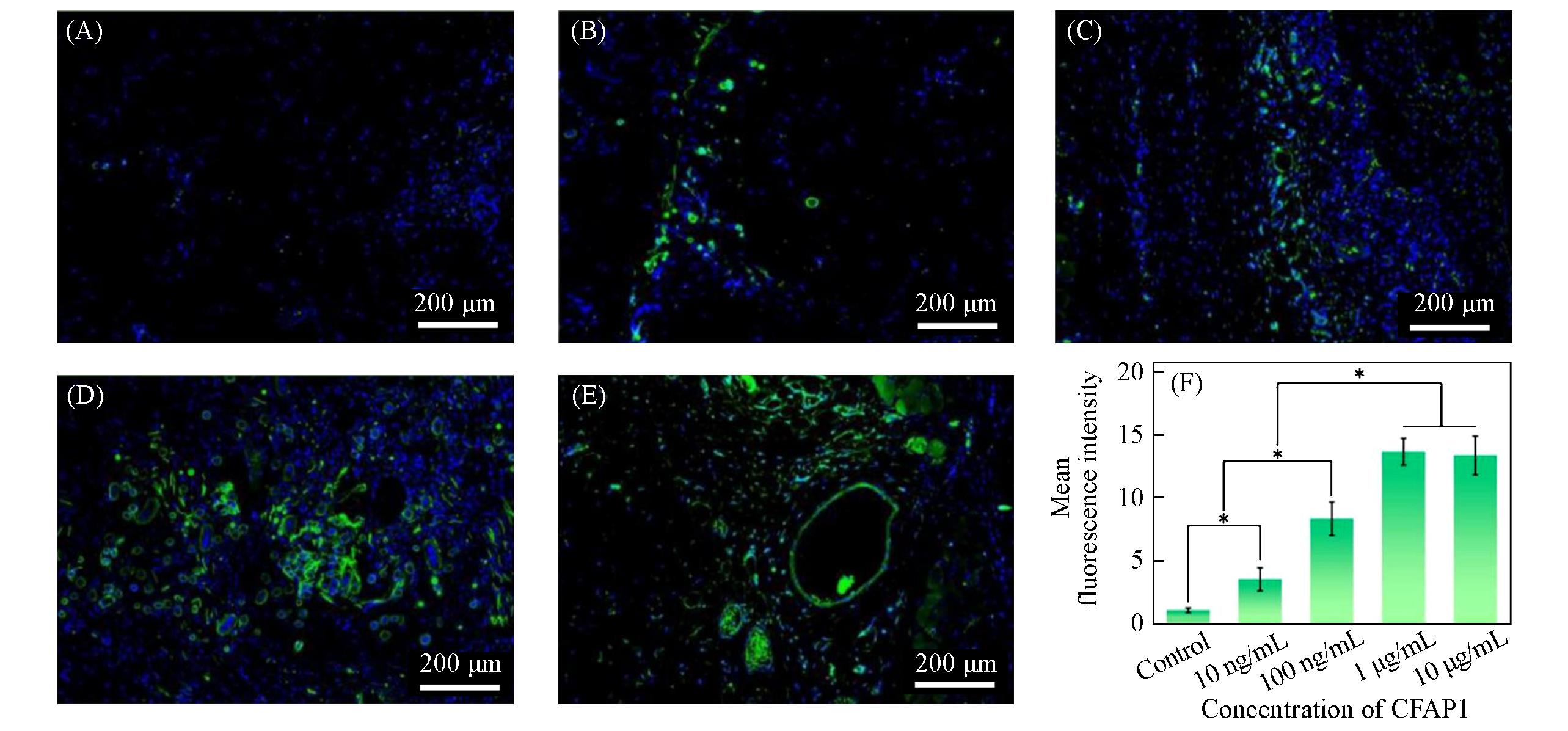
Fig.1 The invivo angiogenic promoting effect of CCSMA hydrogels with different CFAP1 contents(A—E) CD31 staining images of tissues surrounding hydrogels in the control group(without CFAP1, A) and groups with 10 ng/mL(B), 100 ng/mL(C), 1 μg/mL(D), and 10 μg/mL(E) CFAP1; (F) the intensity of green fluorescence in the images, n=3, * p<0.05.
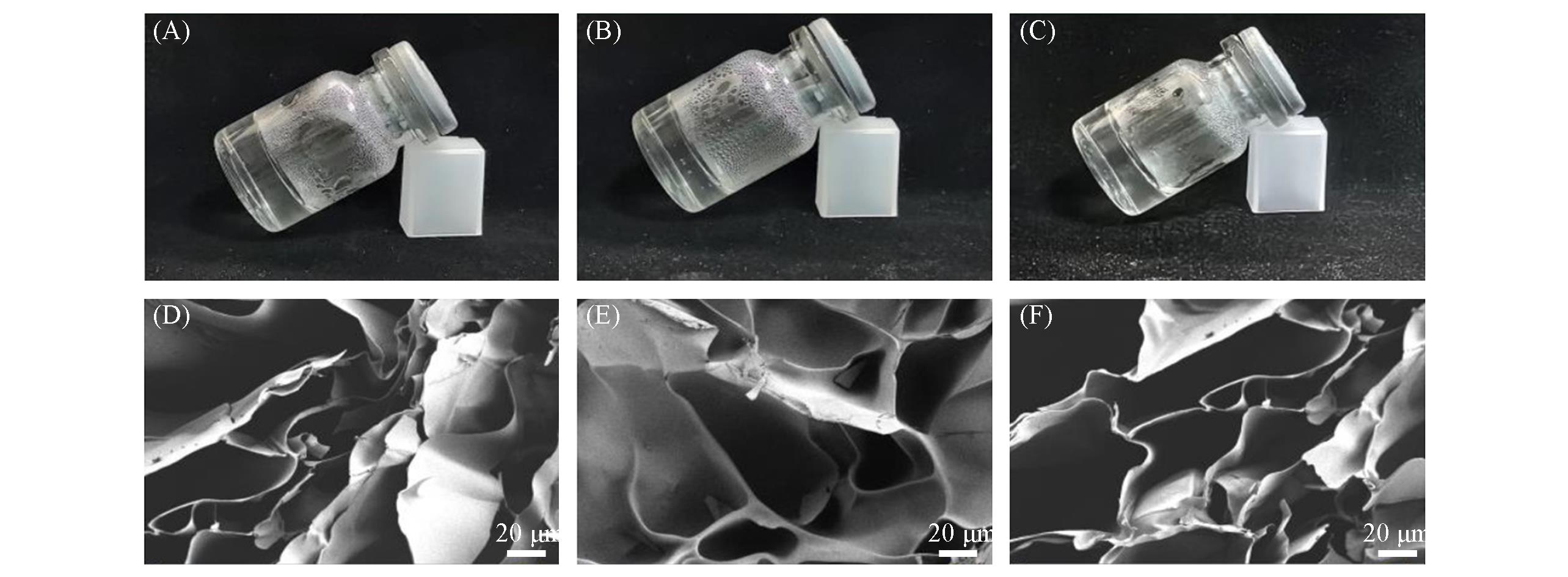
Fig.2 Optical images(A—C) and SEM images(D—F) of CCSMA(A, D), CCSMA@FAP1(B, E) and CCSMA@CFAP1(C, F) hydrogels
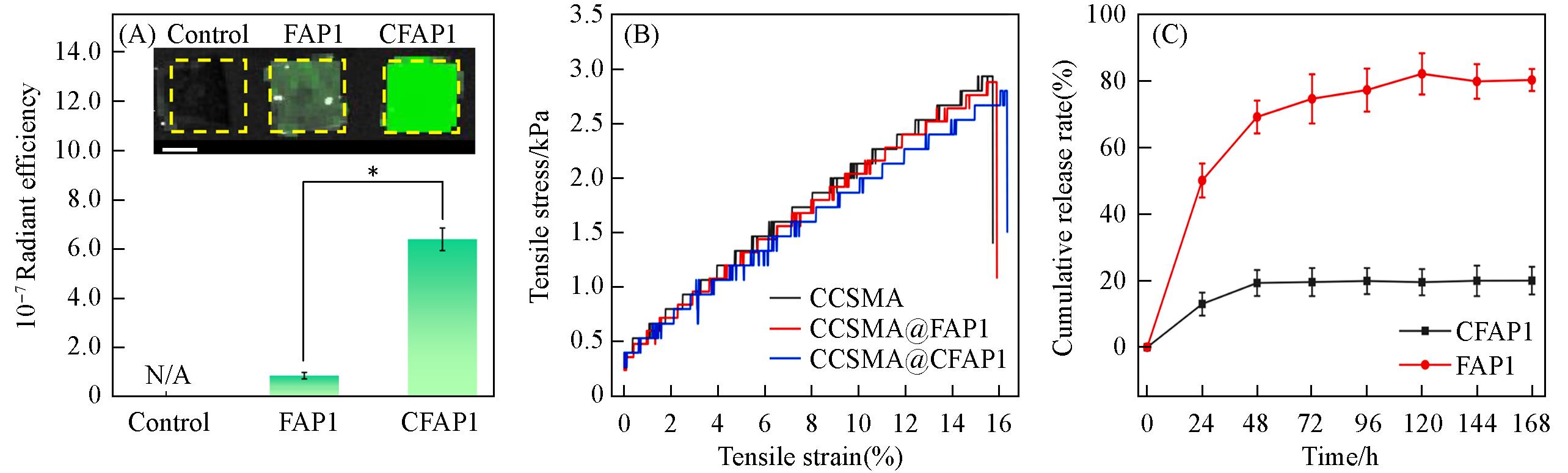
Fig.3 Fluorescence images and binding ability of FAP1 and CFAP1 to CCSMA hydrogel detected via fluorescence method(n=3, * p<0.05)(A), tensile stress⁃strain curves of hydrogels(B), and cumulative release rate of FAP1 and CFAP1 in the hydrogels over time(n=3)(C)
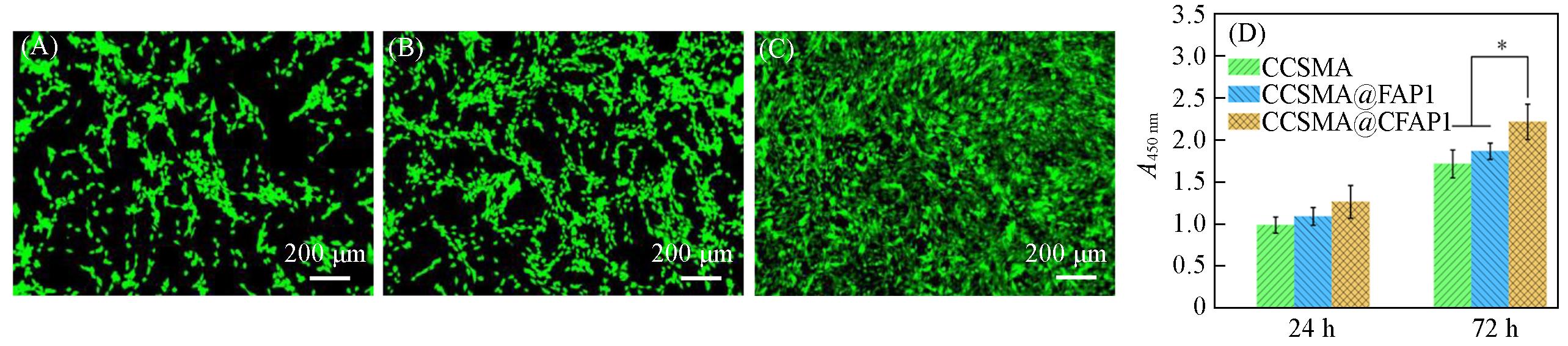
Fig.4 Calcein‑AM staining images of NIH‑3T3 cells cultured for 24 h on the surfaces of CCSMA(A), CCSMA@FAP1(B), and CCSMA@CFAP1(C) hydrogels, and the results of proliferation of NIH⁃3T3 cells on the surface of hydrogels detected via CCK⁃8(D)(D) n=3, * p<0.05.
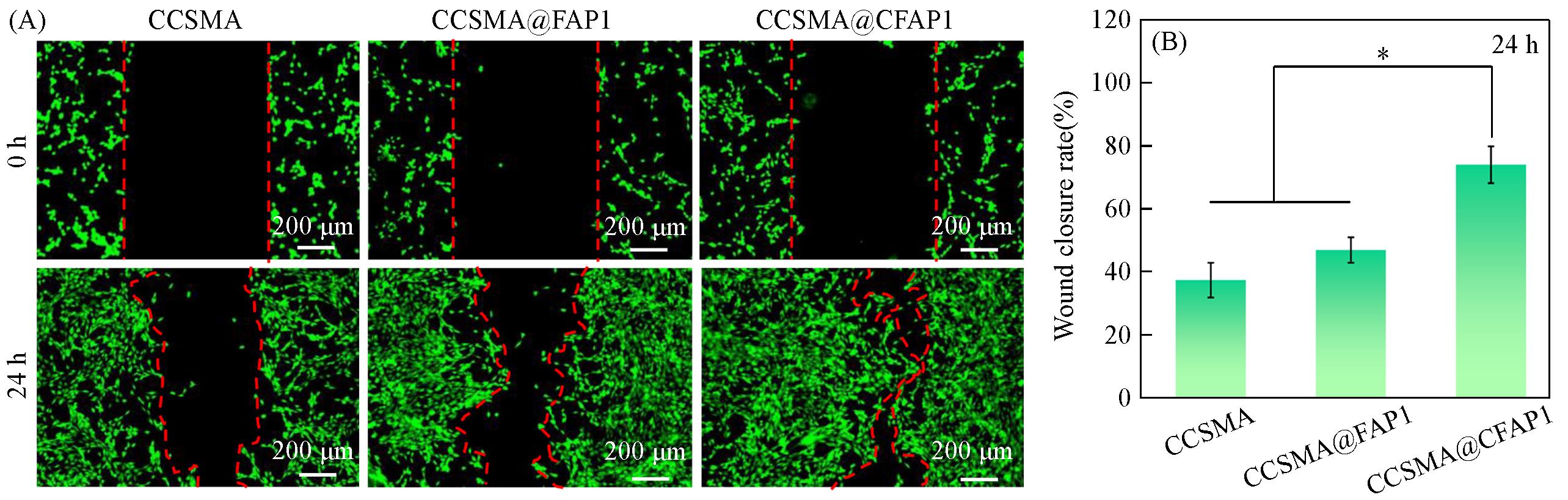
Fig.5 Images of cell staining showing the promotion of wound healing by CCSMA, CCSMA@FAP1 and CCSMA@CFAP1(A), and quantitative detection results of the cell scratch experiment(B)(B) n=3, * p<0.05.
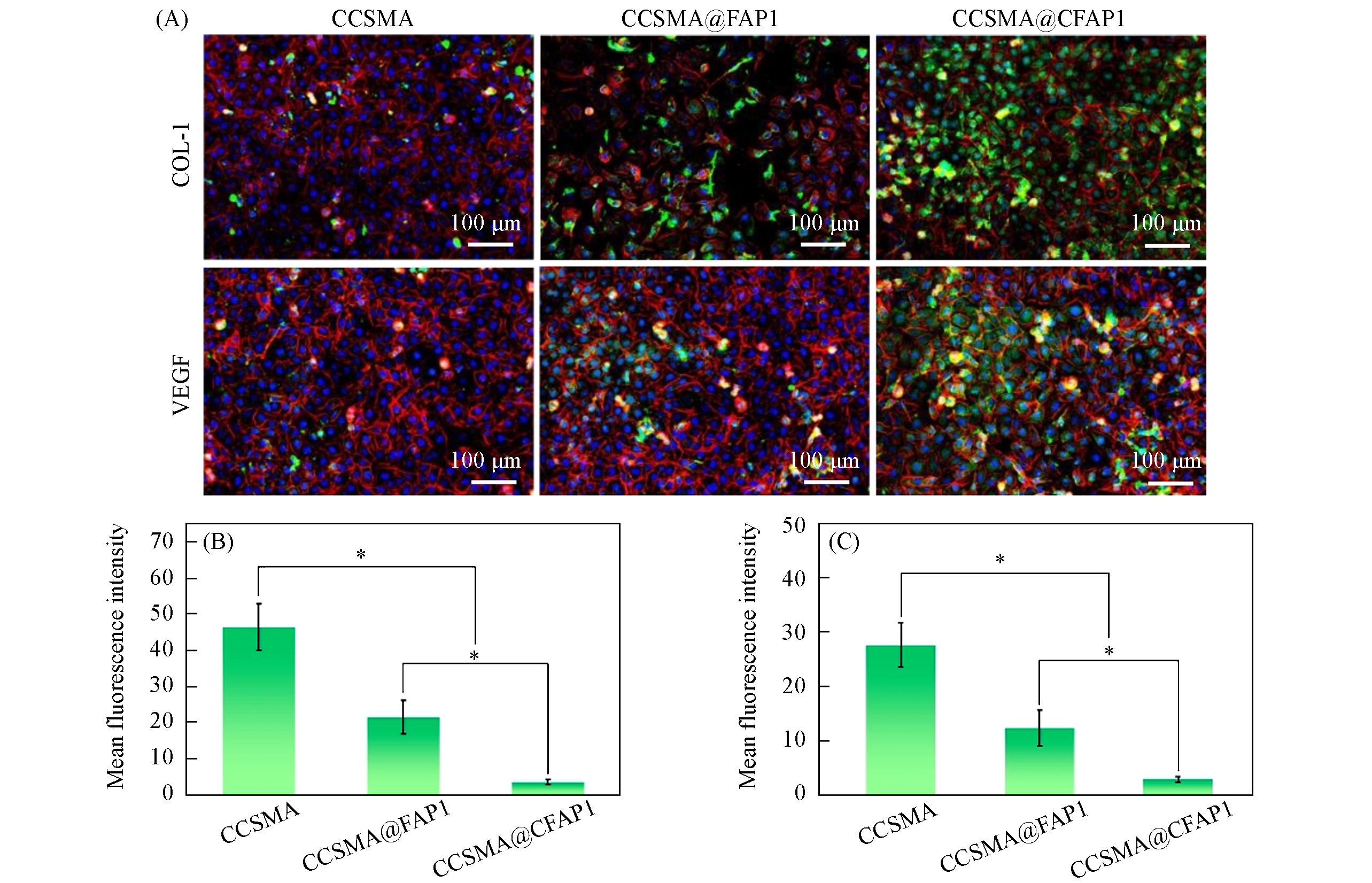
Fig.6 Images of immunofluorescence staining of COL⁃1 and VEGF in NIH⁃3T3 cells on the surface of CCSMA, CCSMA@FAP1 and CCSMA@CFAP1(A), and quantitative analysis of immunofluorescence staining of COL⁃1(B) and VEGF(C)n=3, * p<0.05.
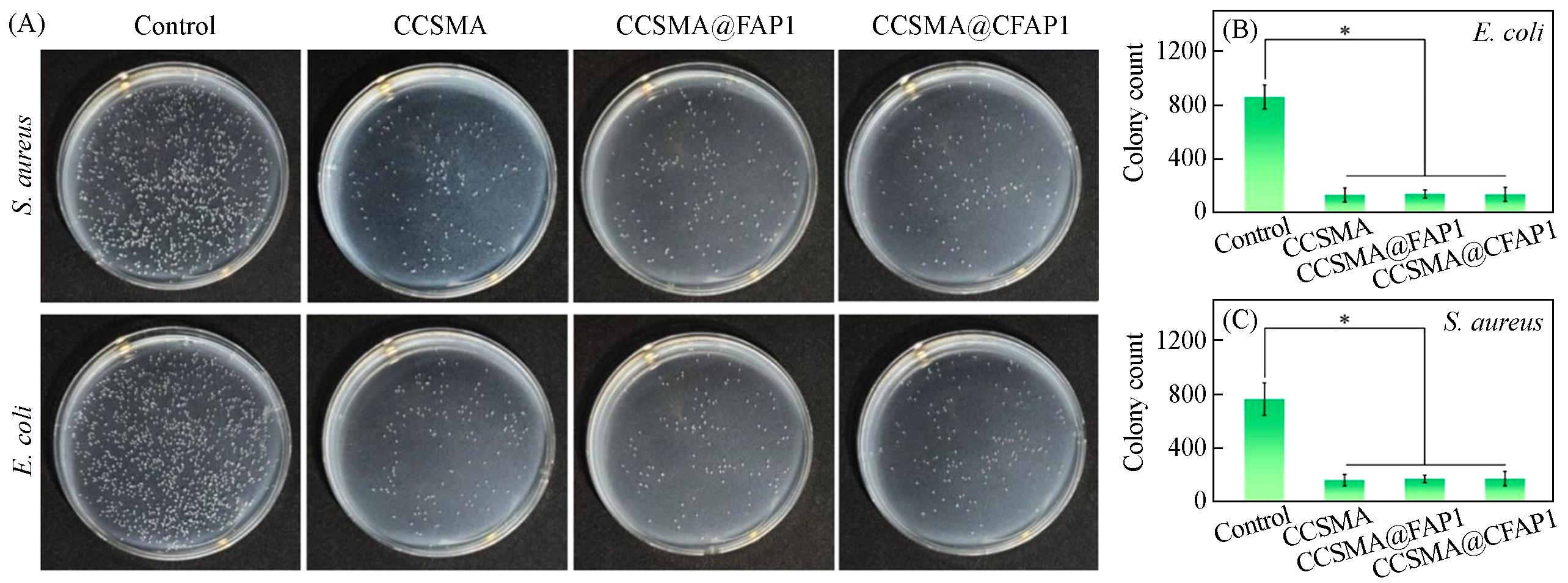
Fig.7 Typical photos of the colonies formed by E. coli and S. aureus growing on solid LB agar medium(A) and colony count statistics(B, C)(B, C) n=3, * p<0.05.

Fig.8 DCFH⁃DA staining images of intracellular reactive oxygen species(ROS)(A) and fluorescence quantitative statistics(B)(B) n=3, * p<0.05.
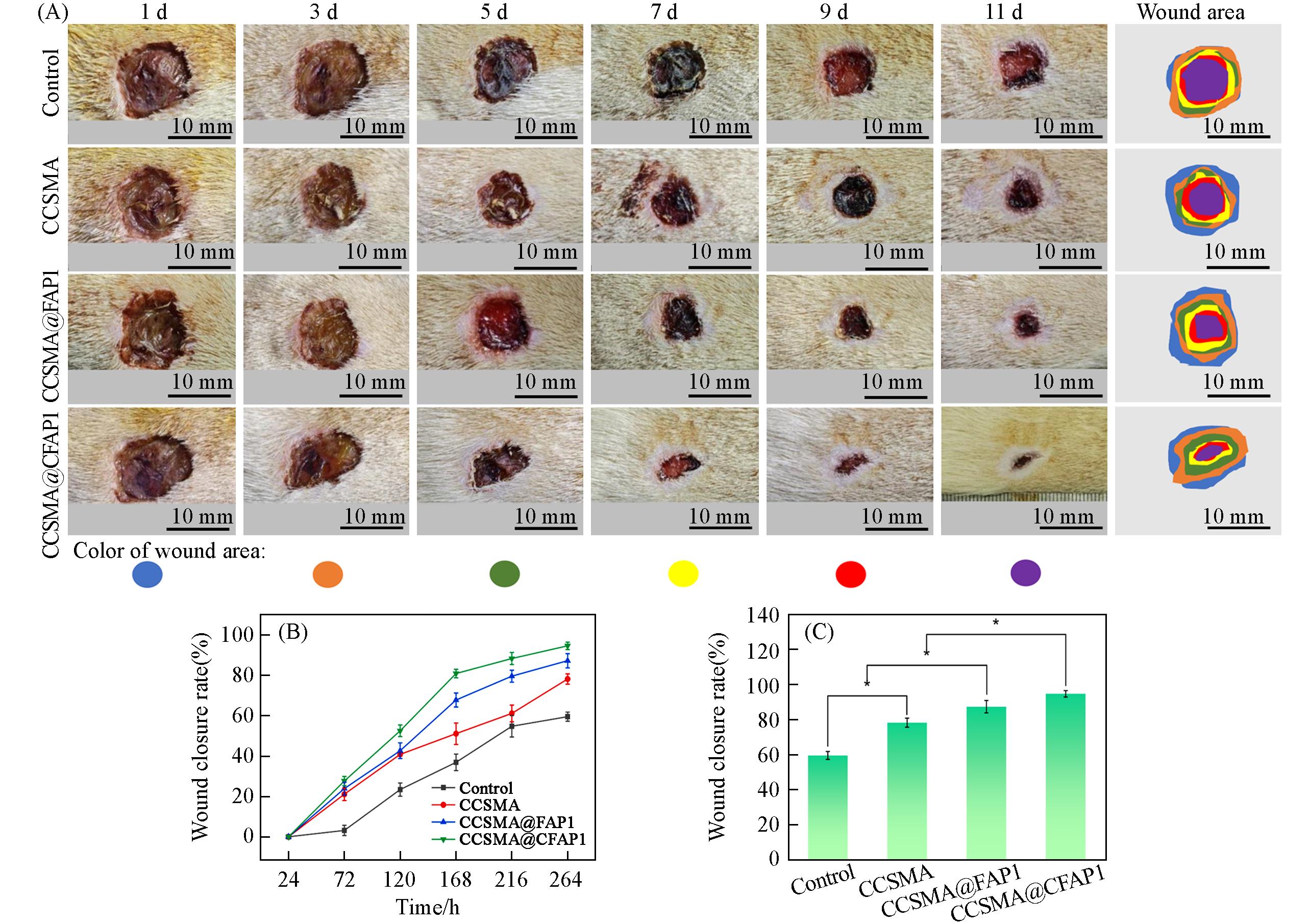
Fig.9 Repair effects of hydrogels on full⁃thickness wound in rats(A) Photographs of the wound at different time points; (B) closure rates of the wound at different time points, n=3; (C) closure rate of the wound at the final time point(11 d), n=3, * p<0.05.
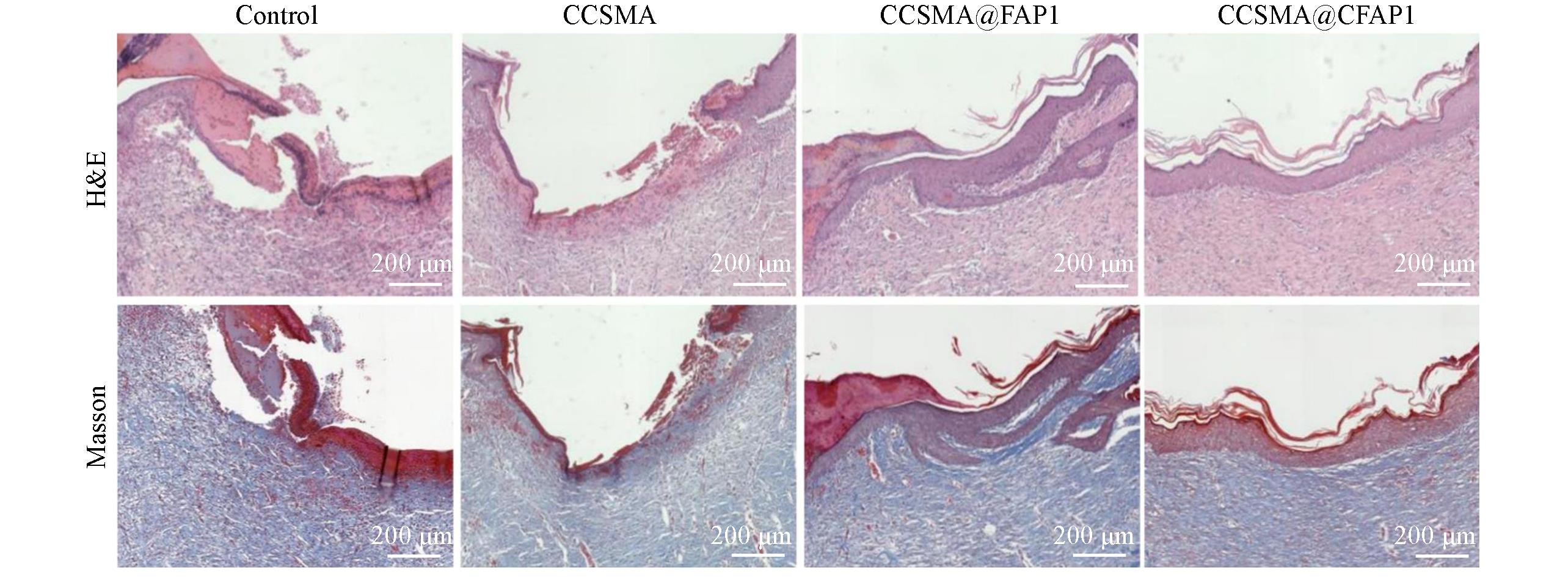
Fig.10 H&E and Masson staining images of tissues after wound repair in the Control group, CCSMA group, CCSMA@FAP1 group, and CCSMA@CFAP1 hydrogel dressing group
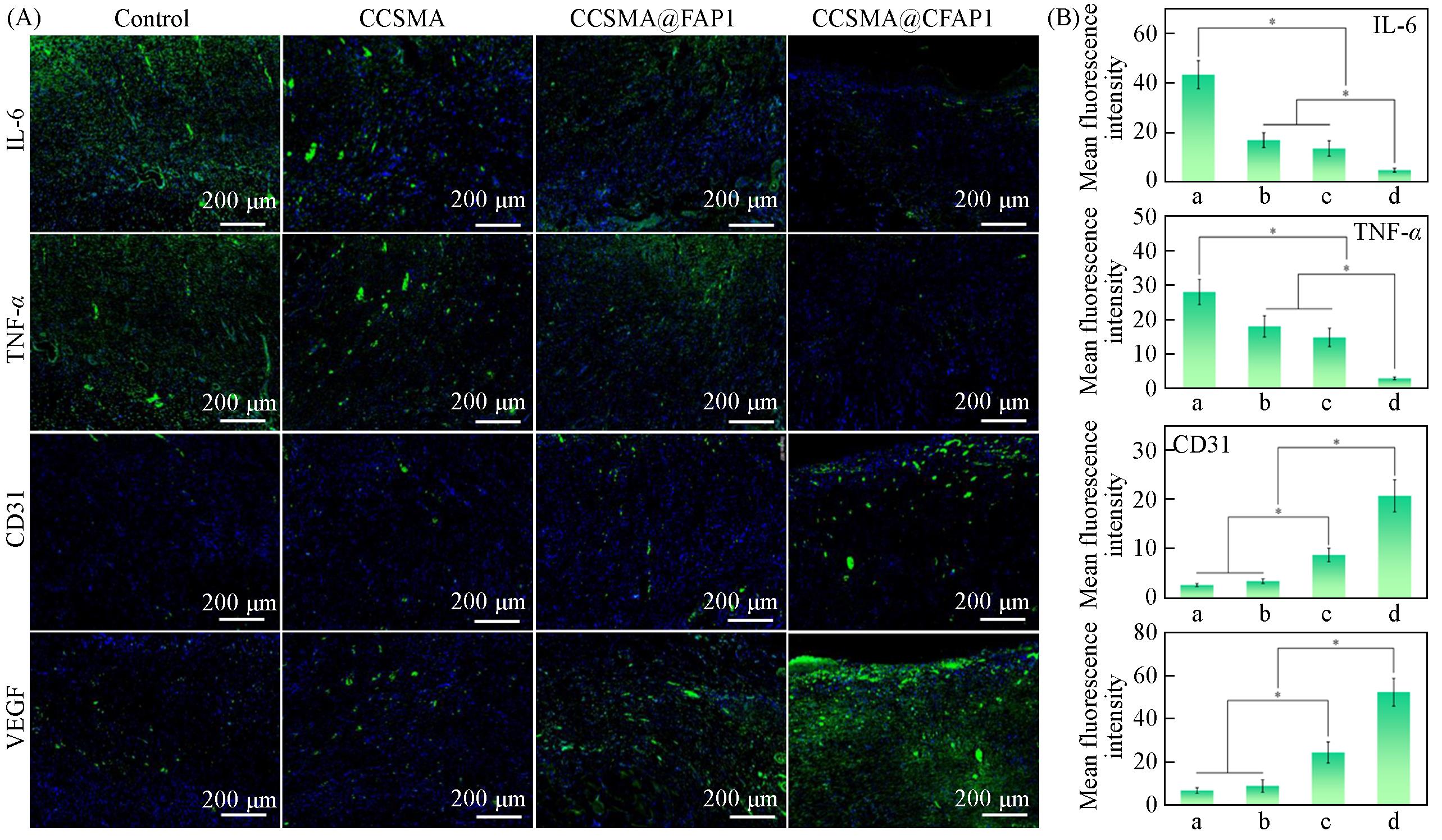
Fig.11 Immunofluorescence staining images of IL⁃6, TNF⁃α, CD31 and VEGF in wound repair tissues from the Control group, CCSMA group, CCSMA@FAP1 group and CCSMA@CFAP1 hydrogel dressing group(A) and statistical results of fluorescence intensity(B)(B) n=3, * p<0.05. a. Control; b. CCSMA; c. CCSMA@FAP1; d. CCSMA@CFAP1.
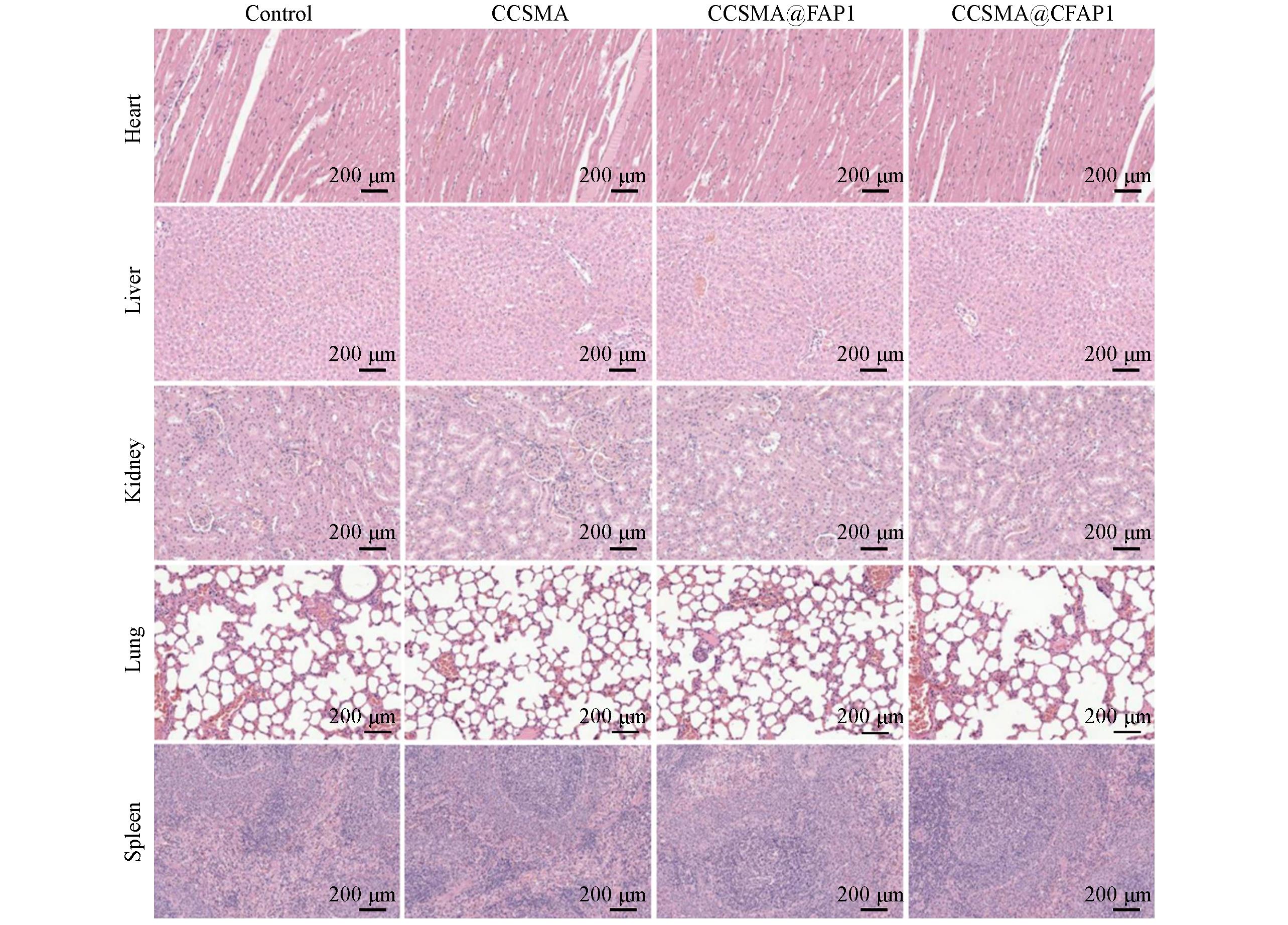
Fig.12 H&E staining images of heart, liver, spleen, lung and kidney in rats after wound repair in the Control group, CCSMA group, CCSMA@FAP1 group and CCSMA@CFAP1 hydrogel dressing group
| [1] | Gurtner G. C., Werner S., Barrandon Y., Longaker M. T., Nature, 2008, 453(7193), 314—321 |
| [2] | Sadeghi⁃Aghbash M., Rahimnejad M., Adeli H., Feizi F., Curr. Pharm. Biotechnol., 2023, 24(9), 1079—1093 |
| [3] | Lagoa T., Queiroga M. C., Martins L., Pharmaceuticals, 2024, 17(9), 1110 |
| [4] | Liang Y. P., He J. H., Guo B. L., ACS Nano, 2021, 15(8), 12687—12722 |
| [5] | Liu H., Wang C. Y., Li C., Qin Y. G., Wang Z. H., Yang F., Li Z. H., Wang J. C., RSC Adv., 2018, 8(14), 7533—7549 |
| [6] | Yao H., Wu M., Lin L. W., Wu Z. L., Bae M., Park S., Wang S. L., Zhang W., Gao J. F., Wang D. A., Piao Y. Z., Materials Today Bio., 2022, 16, 100429 |
| [7] | Raina N., Pahwa R., Thakur V. K., Gupta M., Int. J. Biol. Macromol., 2022, 223, 1586—1603 |
| [8] | Li H. Y., Wang Y. P., Guo L.P., Huang L. Q., Li X., Gao W. Y., Chem. Eng. J., 2024, 497, 154143 |
| [9] | Cao S. J., Ji P. H., Hao L. L., Sun C., Mao H. L., Gu Z. W., Carbohydr. Polym., 2025, 347, 122699 |
| [10] | Zhang X. Y., Liang Y. P., Huang S. F., Guo B. L., Adv. Colloid Interface Sci., 2024, 332, 103267 |
| [11] | Upadhyaya L., Singh J., Agarwal V., Tewari R. P., Carbohydr. Polym., 2013, 91(1), 452—466 |
| [12] | Vosoughi P., Naghib S. M., Mozafari M. R., Mini⁃Rev. Org. Chem., 2025, 22(5), 479—504 |
| [13] | Klosinski K. K., Wach R. A., Girek⁃Bak M. K., Rokita B., Kolat D., Kaluzinska⁃Kolat Z., Klosinska B., Duda L., Pasieka Z. W., Polymers, 2023, 15(1), 144 |
| [14] | Chen X. G., Wang Z., Liu W. S., Park H. J., Biomaterials, 2002, 23(23), 4609—4614 |
| [15] | Li J., Yang J. H., Wang S. G., Gels, 2025, 11(8), 651 |
| [16] | Syromiatnikova V. Y., Kvon A. I., Starostina I. G., Gomzikova M. O., Arch. Dermatol.l Res., 2024, 316(7), 405 |
| [17] | Kashimoto R., Kamei Y., Nonaka S., Kondo Y., Yamamoto S., Furukawa S., Ohashi A., Satoh A., Developmental Biology, 2023, 498, 14—25 |
| [18] | Farooq M., Hwang M., Khan A. W., Batool M., Ahmad B., Kim W., Kim M. S., Choi S., Life Sci., 2025, 364, 123432 |
| [19] | Roy A., Dodd⁃o J. B., Shadpoor B., Patel S. K., Gharati G., Hanna M., Lateef⁃Fnu A., Heffernan C., Kumar V. A., Advanced Biology, 2025, 9(11), e00327 |
| [20] | Wang Y., Fu C., Wu Z. X., Chen L., Chen X. S., Wei Y., Zhang P. B., Carbohydr. Polym., 2017, 174, 723—730 |
| [21] | Hao X. T., Miao S., Li Z. Q., Wang T. R., Xue B. B., Chen J. D., Xian C. X., Bi L., Materials & Design, 2023, 227, 111729 |
| [22] | Liu B., Jin M., Wang D. A., Acta Biomater., 2023, 161, 67—79 |
| [23] | Qu L. F., Chen Z. L., Chen J. H., Gan Y. B., Tan X., Wang Y., Zhang C., Chen B., Dai J. W., Chen J. X., Shi C. M., Biomater. Sci., 2023, 11(24), 7926—7937 |
| [24] | Heino J., Huhtala M., Käpylä J., Johnson M. S., Int. J. Biochem. Cell Biol., 2009, 41(2), 341—348 |
| [25] | Melincovici C. S., Bosca A. B., Susman S., Marginean M., Mihu C., Istrate M., Moldovan I. M., Roman A. L., Mihu C. M., Rom. J. Morpho. Embryo., 2018, 59(2), 455—467 |
| [26] | Anitha A., Rani V. V. D., Krishna R., Sreeja V., Selvamurugan N., Nair S. V., Tamura H., Jayakumar R., Carbohydr. Polym., 2009, 78(4), 672—677 |
| [27] | Sun X. Q., Zhang J. J., Mi Y. Q., Miao Q., Tan W. Q., Li Q., Guo Z. Y., J. Oceanol. Limnol., 2022, 40(1), 284—295 |
| [28] | Sato Y., Ohshima T., Int. J. Legal Med., 2000, 113(3), 140—145 |
| [29] | Moreira H. R., Marques A. P., Curr. Opin. Biotechnol., 2022, 73, 253—262 |
| [1] | 苗丹丹, 范学峰, 罗智莱, 刘灿, 包春燕. 动态酰腙键水凝胶的构建与黏弹性调控[J]. 高等学校化学学报, 2026, 47(6): 20260033. |
| [2] | 王圣杰, 朱子豪, 朱羽杰, 吴春晓, 阿力木·阿卜杜热合曼. 凝聚态发光稳定有机自由基的研究进展与挑战[J]. 高等学校化学学报, 2026, 47(5): 20250408. |
| [3] | 朱高桦, 舒菊, 耿江涛, 马夫龙, 熊玲红, 何学文. 原位激活型近红外二区聚集诱导发光探针应用于肿瘤中过氧化氢的高灵敏成像[J]. 高等学校化学学报, 2026, 47(5): 20260058. |
| [4] | 潘晶珂, 齐馨, 张露露, 王贝贝, 吕超. 主客体作用力构建的聚集诱导发光型超分子聚合物的合成与应用研究[J]. 高等学校化学学报, 2026, 47(5): 20260130. |
| [5] | 马德平 陈家兴 史志伟 张卫平 张雅珍 安虹静 武超 来华 成中军 刘宇艳. 丙烯酸酯-环氧二阶段树脂可充气展开管[J]. 高等学校化学学报, 0, (): 20250396. |
| [6] | 庞逸盈 韩建华 宗立率 王锦艳 蹇锡高. 生物基乙酰丁香酮衍生聚芳醚酮的分子设计、合成与表征[J]. 高等学校化学学报, 0, (): 20260030. |
| [7] | 孙妍, 朱东霞. 近红外激发有机发光材料的构筑及在疾病治疗中的应用[J]. 高等学校化学学报, 2026, 47(4): 20260002. |
| [8] | 刘苗苗, 傅梦然, 高蝶, 张万鹏, 梁莹, 何媛媛, 赵巧巧, 赵廷兴, 李鸿波, 丁自成, 韩艳春. 基于给/受体双重相似性“桥联”聚合物受体的侧链工程构筑高性能三元有机太阳能电池[J]. 高等学校化学学报, 2026, 47(4): 20250324. |
| [9] | 任奥成, 李青云, 吉晓帆. 荧光超分子聚合物网络[J]. 高等学校化学学报, 2026, 47(4): 20250390. |
| [10] | 张雨, 吴洋, 李佳琪, 徐超, 汪少振, 李欣雨, 王存民, 张生辉, 徐欢. MOF功能化自清洁聚乳酸多级孔纤维膜的辐射冷却性能[J]. 高等学校化学学报, 2026, 47(3): 20250239. |
| [11] | 张禹, 陈龙, 陈奥, 盛全康, 王传贵, 胡思泉, 陈韶云, 胡成龙. 花状聚苯胺微纳结构的制备与电化学性能[J]. 高等学校化学学报, 2026, 47(3): 20250241. |
| [12] | 徐千惠, 徐振, 马子奥, 乔娟, 李楠, 马磊, 靳海波, 张荣月. 接枝聚N,N-二甲胺基丙基丙烯酰胺制备大孔聚合物阴离子交换层析介质及其吸附性能[J]. 高等学校化学学报, 2026, 47(3): 20250238. |
| [13] | 刘莉莉, 杨佩, 田益嘉, 黄逸瑜, 张正东, 闫伟, 张原原, 史林兴. 高密度磷酸化纳米洋葱碳/磺化聚芳醚砜复合膜的制备与性能[J]. 高等学校化学学报, 2026, 47(2): 20250256. |
| [14] | 户书达, 董丽宁, 王存民, 李欣雨, 汪少振, 李世航, 张生辉, 徐欢. 融合PM滤除和CO2吸附功能的聚乳酸活性纳纤膜[J]. 高等学校化学学报, 2026, 47(2): 20250243. |
| [15] | 赵旭, 林子瑜, 赵哲, 任强, 丁思文, 赵建盛, 申璐, 庞金辉, 姜振华. 导电聚醚醚酮/聚苯胺薄膜的制备[J]. 高等学校化学学报, 2026, 47(1): 20250326. |
| 阅读次数 | ||||||
|
全文 |
|
|||||
|
摘要 |
|
|||||
