高等学校化学学报

• 研究论文 • 上一篇    下一篇

高密度磷酸化纳米洋葱碳/磺化聚芳醚砜复合膜的制备与性能

刘莉莉,杨佩,田益嘉,黄逸瑜,张正东,闫伟,张原原,史林兴   

  1. 江苏海洋大学理学院,江苏省先进材料功能调控技术重点实验室
  • 收稿日期:2025-09-10 修回日期:2025-11-27 网络首发:2025-12-10 发布日期:2025-12-10
  • 通讯作者: 刘莉莉 E-mail:liulili@jou.edu.cn
  • 基金资助:
    江苏省高等学校自然科学基金(批准号:23KJB430011)资助、江苏海洋大学江苏省先进材料功能调控技术重点实验室研究基金(批准号:jsklfctam202301)和江苏海洋大学研究生科研与实践创新计划项目(批准号:KYCX202503)资助

Preparation and Properties of High-Density Phosphorylated Carbon Nano-onions/Sulfonated Poly (Aryl Ether Sulfone) Composite Membranes

LIU Lili, YANG Pei, TIAN Yijia, HUANG Yiyu, ZHANG Zhengdong, YAN Wei, ZHANG Yuanyuan, SHI Linxing   

  1. Jiangsu Key Laboratory of Function Control Technology for Advanced Materials, School of Science, Jiangsu Ocean University
  • Received:2025-09-10 Revised:2025-11-27 Online First:2025-12-10 Published:2025-12-10
  • Contact: Li-li LIU E-mail:liulili@jou.edu.cn
  • Supported by:
    Supported by the Natural Science Foundation of the Jiangsu Higher Education Institutions of China(No.23KJB430011), the Open-end Funds of Jiangsu Key Laboratory of Function Control Technology for Advanced Materials, Jiangsu Ocean University, China(No.jsklfctam202301) and the Postgraduate Research & Practice Innovation Program of Jiangsu Ocean University, China(No.KYCX202503)

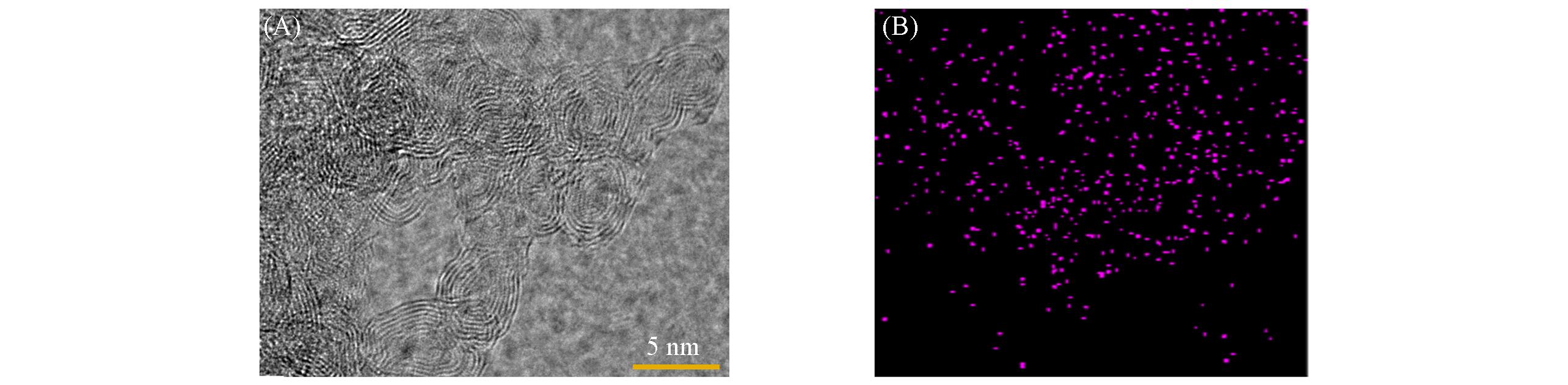
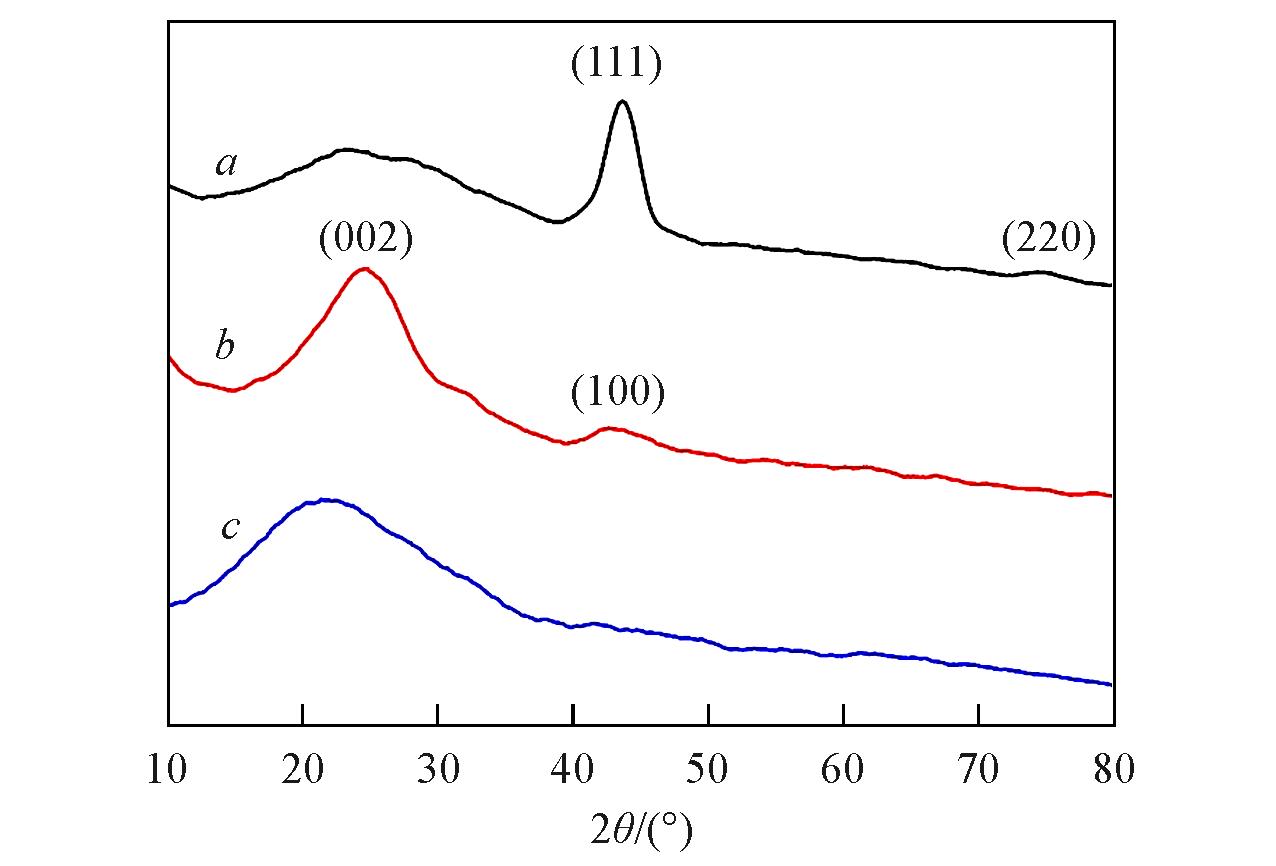
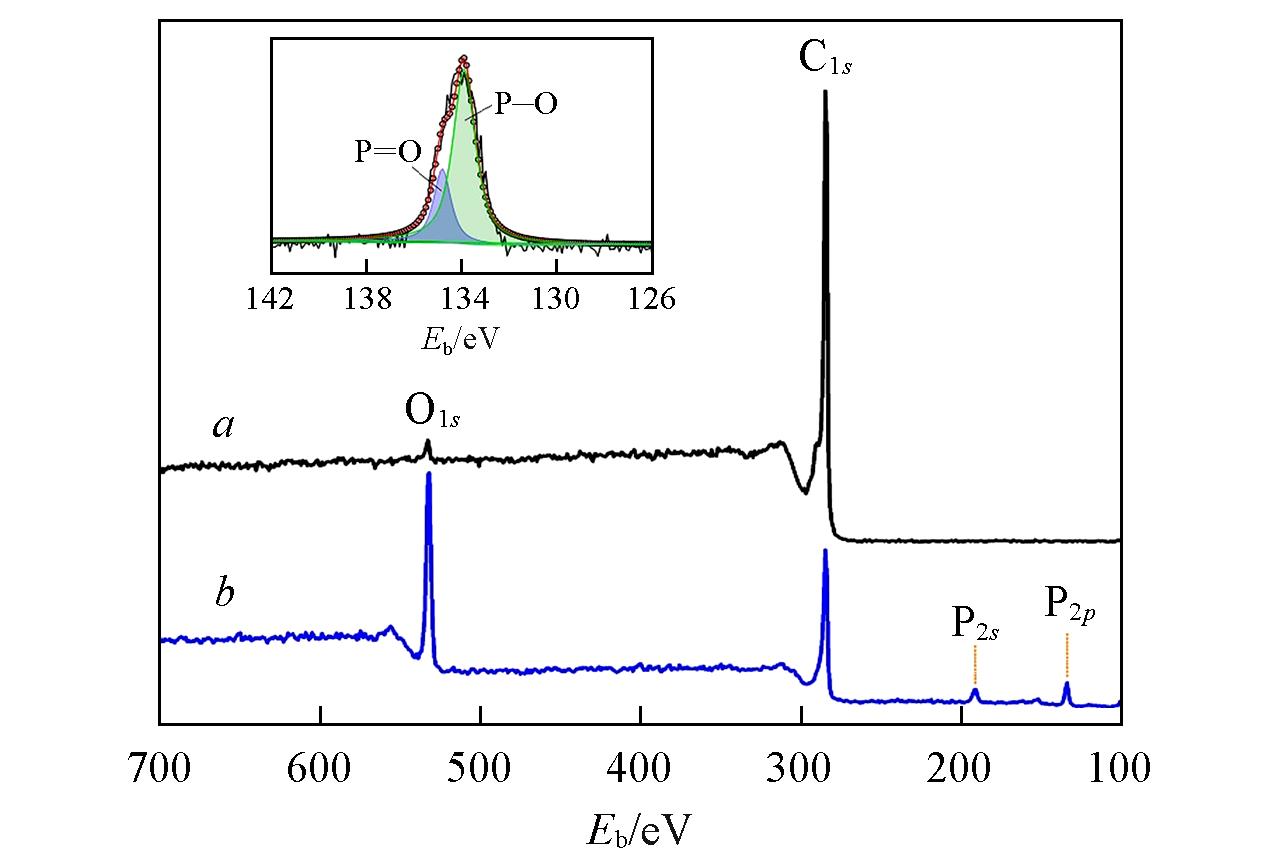
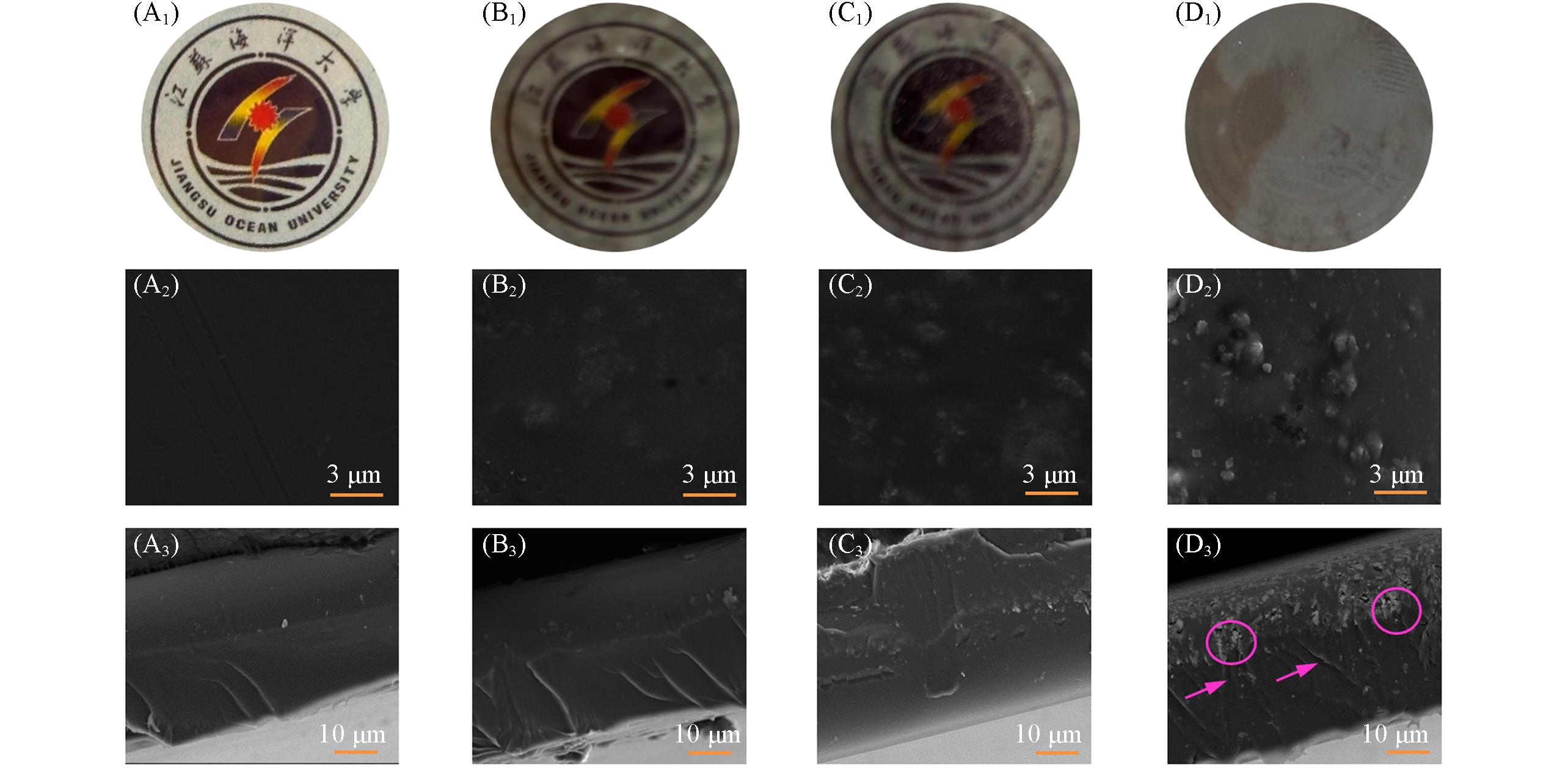
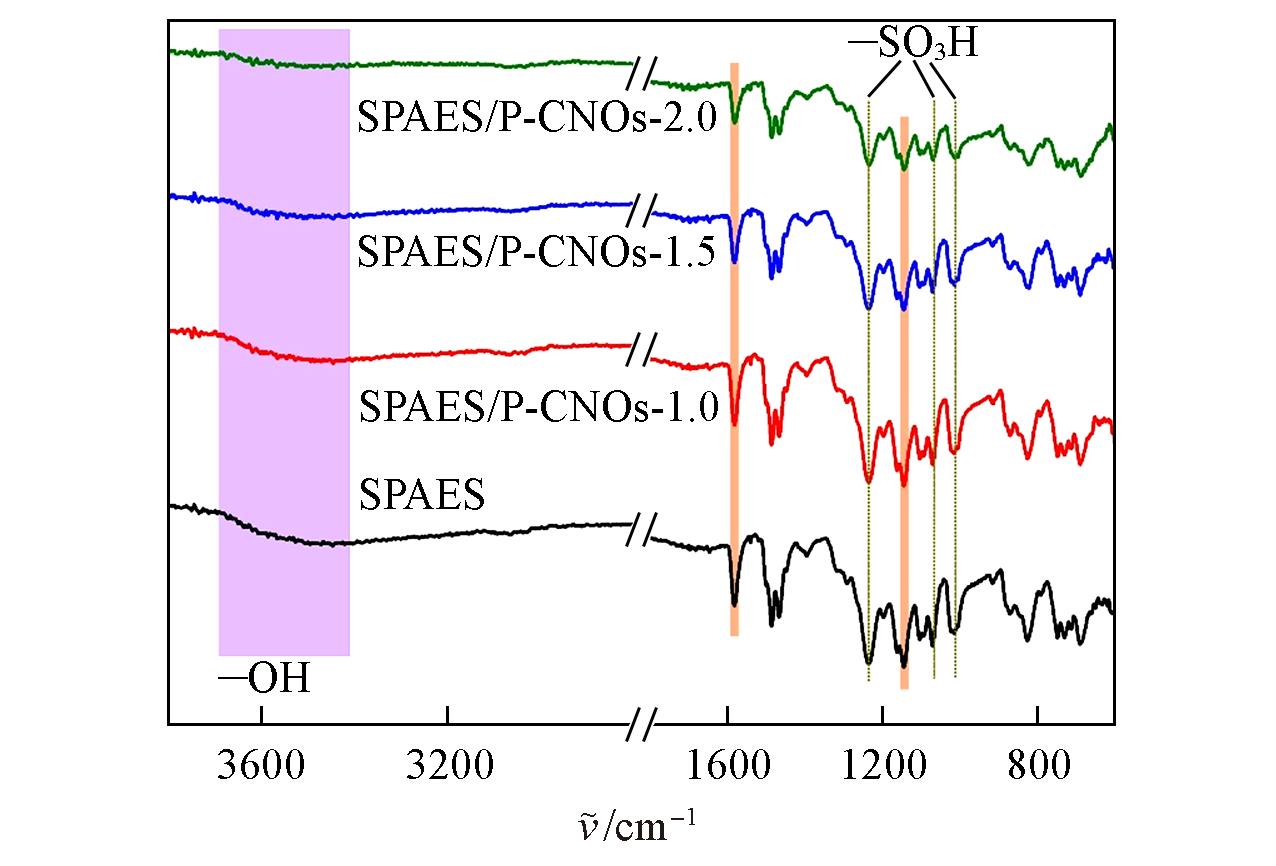
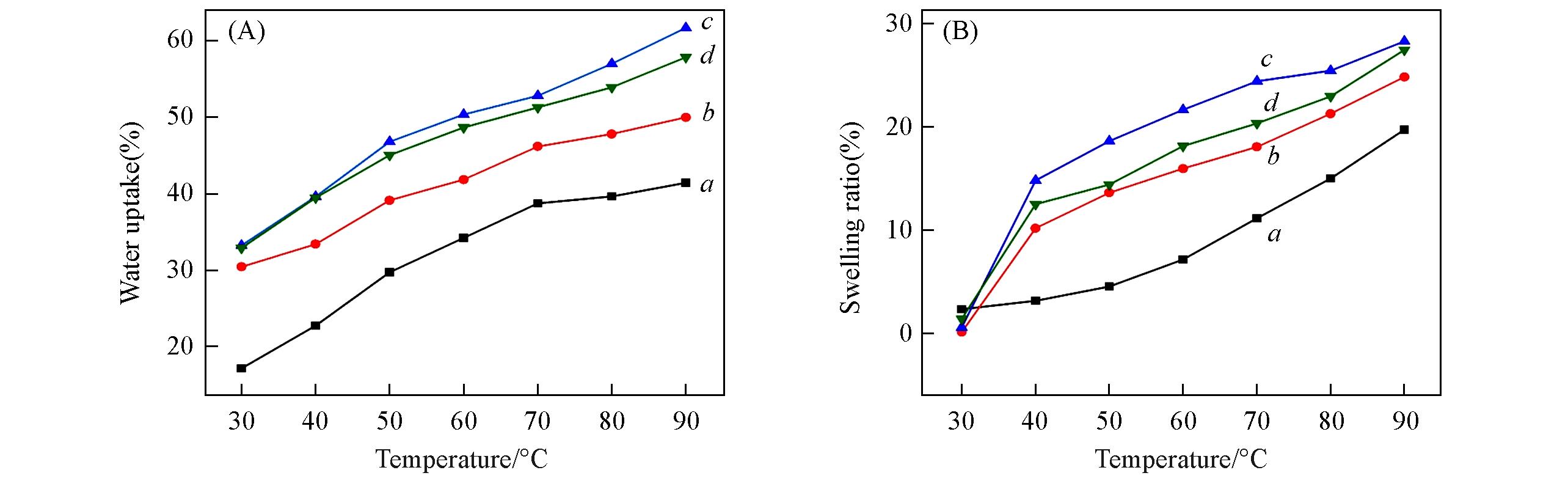
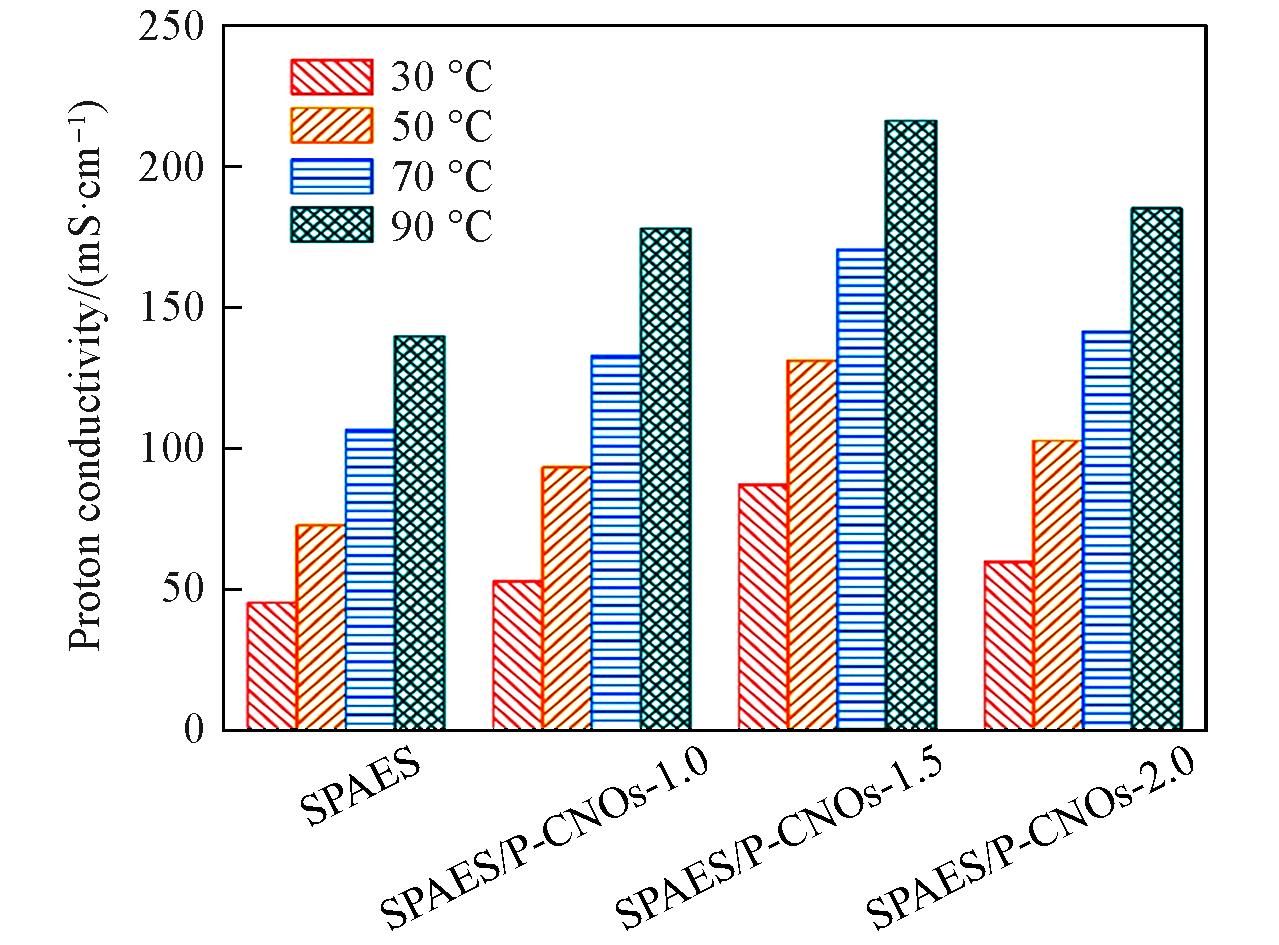
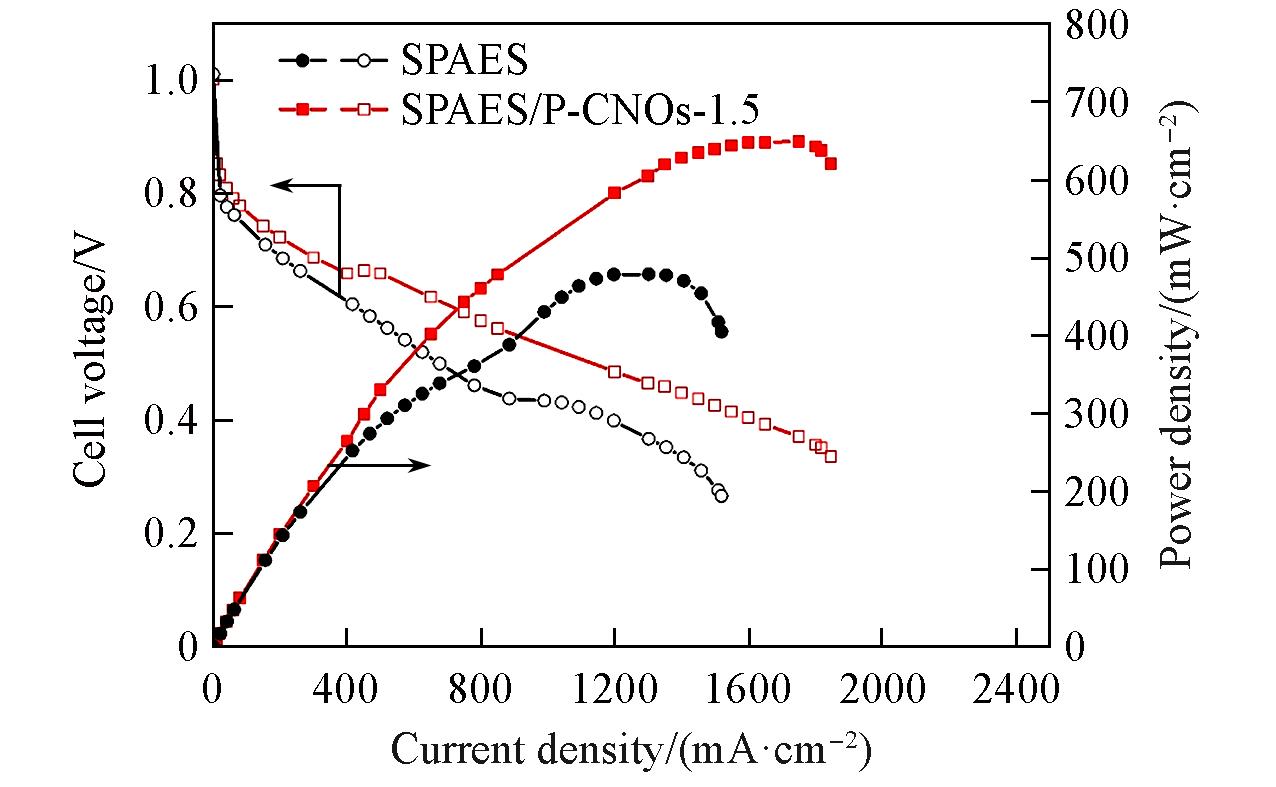
摘要: 将纳米金刚石进行热退火反应得到大小约5 nm的准球形纳米洋葱碳(CNOs),利用浓H2SO4/HNO3混合酸的强氧化性在CNOs表面引入羧酸基团,得到羧酸化CNOs(C-CNOs). 进一步对C-CNOs进行酰基化和亲核取代反应,制得出高度磷酸化CNOs(P-CNOs). 高分辨透射电子显微镜(HRTEM)、X射线衍射(XRD)、X射线光电子能谱(XPS)结果表明了-COOH、-PO3H2基团的成功引入,P-CNOs的离子交换量(IEC)达到1.85 mmol/g. P-CNOs与磺化聚芳醚砜共混后,通过溶液浇铸法制备出一系列均质、完整、致密的SPAES/P-CNOs复合膜. 对复合膜进行吸水溶胀、抗氧化稳定性、质子传导率和电池性能等测试,发现复合膜较纯SPAES膜的各种性能均有提升. 这是由于P-CNOs上的-COOH和-PO3H2基团与SPAES上的-SO3H基团通过氢键相互作用,不仅可以形成更加稳定的网状结构增强复合膜机械性能和化学稳定性,还可以促进H+在膜内的转移提升其传导率. 在90 ℃时,SPAES/P-CNOs-1.5的质子传导率高达220 mS/cm;在80 ℃/100% 相对湿度(RH)时,SPAES/P-CNOs-1.5复合膜的最大功率密度达到了650 mW/cm2,比纯SPAES膜高出了36%,且机械性能好,热-尺寸-化学稳定性高,具有很好的应用前景.

关键词: 磺化聚芳醚砜, 磷酸化纳米洋葱碳, 有机-无机复合, 质子交换膜, 燃料电池

Abstract: Quasi-spherical carbon nano-onions(CNOs) with a size of ca.5 nm were synthesized via thermal annealing of nanodiamonds. Subsequent oxidation using concentrated H2SO4/HNO3 introduced -COOH groups, yielding carboxylated CNOs(C-CNOs). Further functionalization through acylation and nucleophilic substitution produced highly phosphorylated CNOs (P-CNOs). High-resolution transmission electron microscopy (HR-TEM), X-ray diffraction (XRD), and X-ray photoelectron spectroscopy (XPS) confirmed the successful introduction of -COOH and -PO3H2 groups, with P-CNOs exhibiting an ion exchange capacity(IEC) of 1.85 mmol/g. Homogeneous, intact, and dense SPAES/P-CNOs composite membranes were prepared via solution casting by blending P-CNOs with sulfonated poly(arylene ether sulfone)(SPAES). Compared to pristine SPAES, the composite membranes show enhanced properties including water uptake/swelling, oxidative stability, and proton conductivity. This improvement stems from hydrogen-bonding networks between the -COOH/-PO3H2 groups in P-CNOs and the -SO3H groups in SPAES, forming a more stable network structure that bolsters mechanical properties and chemical stability while facilitating proton transfer. The SPAES/P-CNOs-1.5 membrane achieves a high proton conductivity of 220 mS/cm at 90 °C. At 80 °C and 100% RH, its maximum power density reaches 650 mW/cm2, 36% higher than that of SPAES. It also shows excellent mechanical property and high thermal-dimensional-chemical stability, indicating significant application potential.

Key words: Sulfonated poly(aryl ether sulfone), Phosphorylated carbon nano-onions, Organic-inorganic composite, Proton exchange membrane, Fuel cell

中图分类号: 

TrendMD: