高等学校化学学报

• 研究论文 • 上一篇    下一篇

MOF功能化聚乳酸多孔纤维辐射制冷膜研究

张雨1,3, 吴洋2, 李佳琪1, 徐超2, 汪少振1, 李欣雨1, 王存民1, 张生辉2, 徐欢2   

  1. 1. 中国矿业大学安全工程学院 

    2. 中国矿业大学材料与物理学院 3. 中国安全生产科学研究院

  • 收稿日期:2025-08-31 修回日期:2026-01-16 网络首发:2026-01-16 发布日期:2026-01-16
  • 通讯作者: 张生辉
  • 基金资助:
    国家自然科学基金(批准号:52404266),江苏省自然科学基金(批准号:BK20241645),中国博士后自然科学基金(2024M753532)及江苏省卓越博士后计划项目(批准号:2024ZB449)资助

Research on MOF-functionalized polylactic acid porous fiber radiative cooling film

ZHANG Yu1,3, WU Yang2, LI Jiaqi1, XU Chao2, WANG Shaozhen1, LI Xinyu1, WANG Cunmin1, ZHANG Shenghui2, Xu Huan2   

  1. 1. School of Safety Engineering China University of Mining and Technology

    2. School of Material Science and Physics, China University of Mining and Technology 3. China Academy of Safety Science & Technology

  • Received:2025-08-31 Revised:2026-01-16 Online First:2026-01-16 Published:2026-01-16
  • Supported by:
    Supported by the National Natural Science Foundation of China(No.52404266), the Jiangsu Provincial Research Foundation for Basic Research, China(No.BK20241645), the China Postdoctoral Science Foundation(No.2024M753532) and the Jiangsu Funding Program for Excellent Postdoctoral Talent, China(No.2024ZB449)

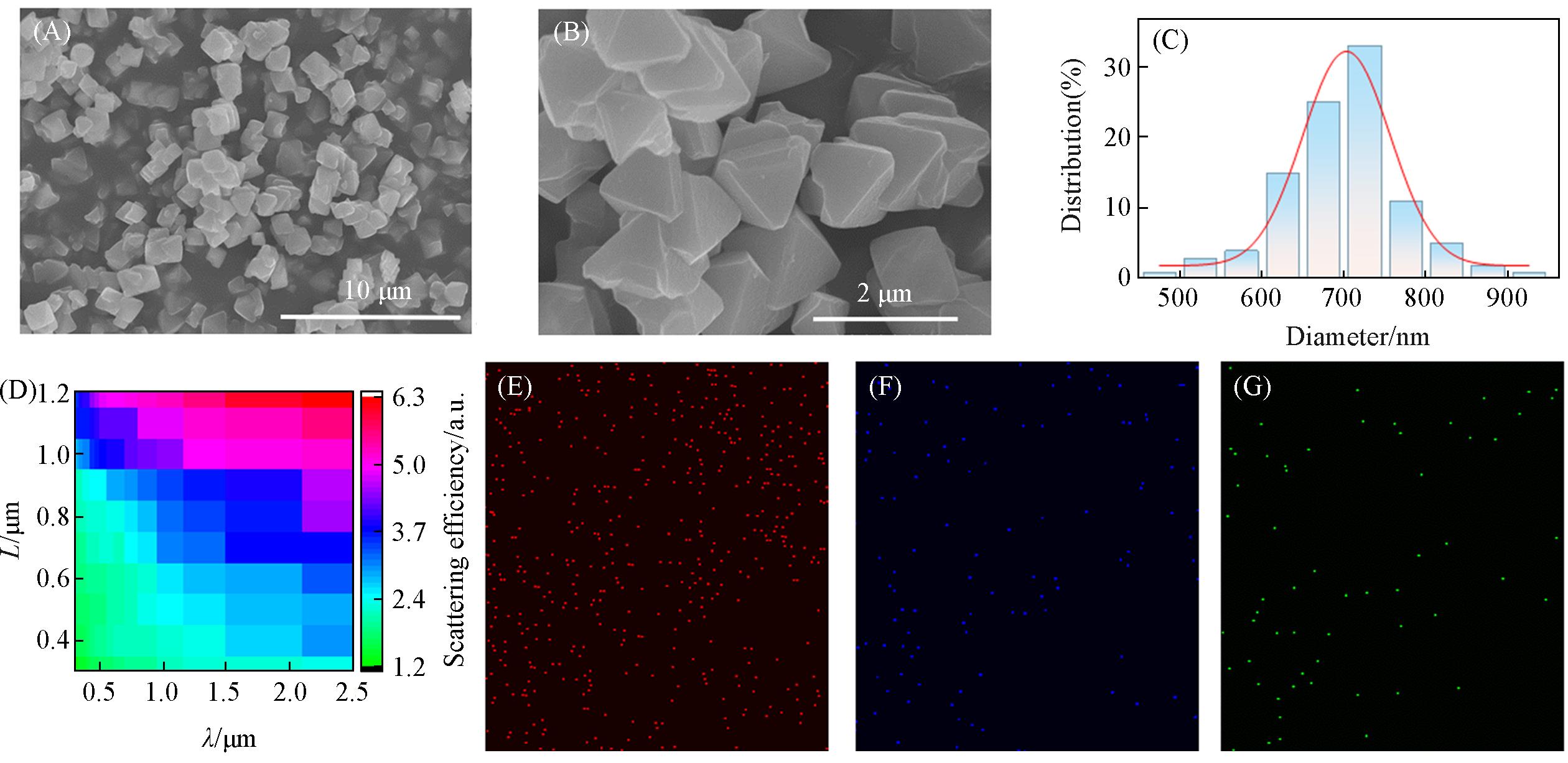
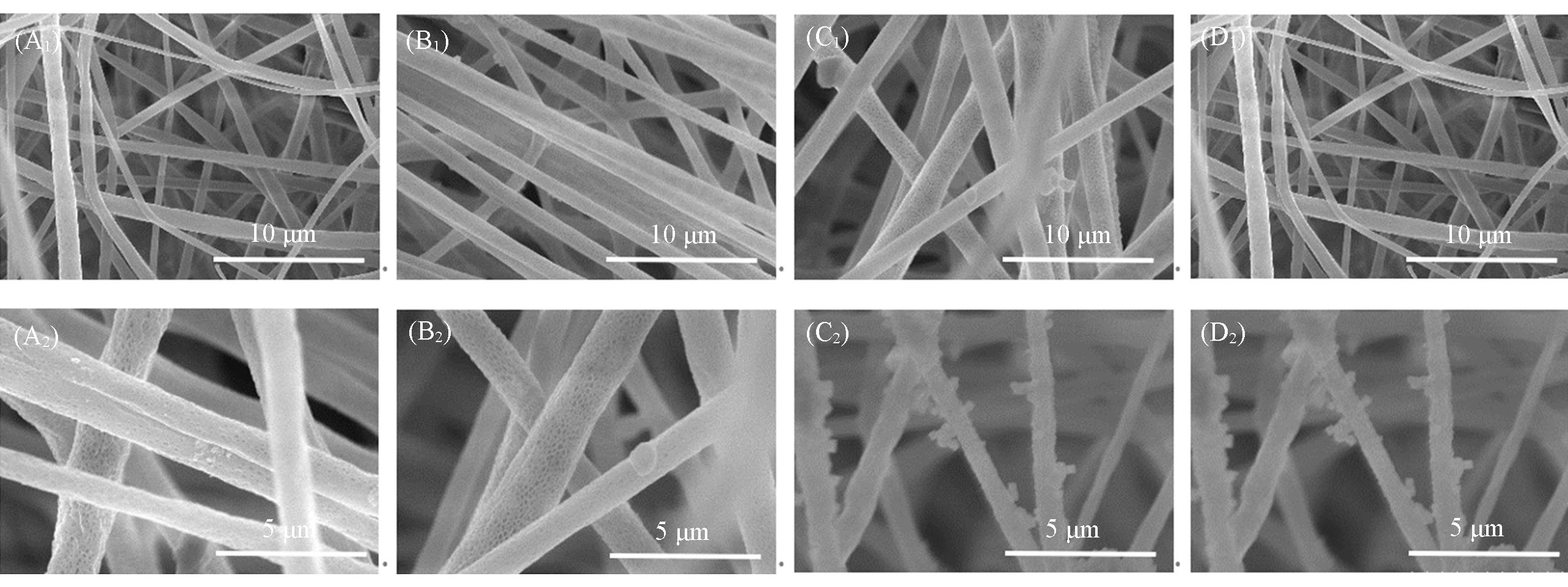
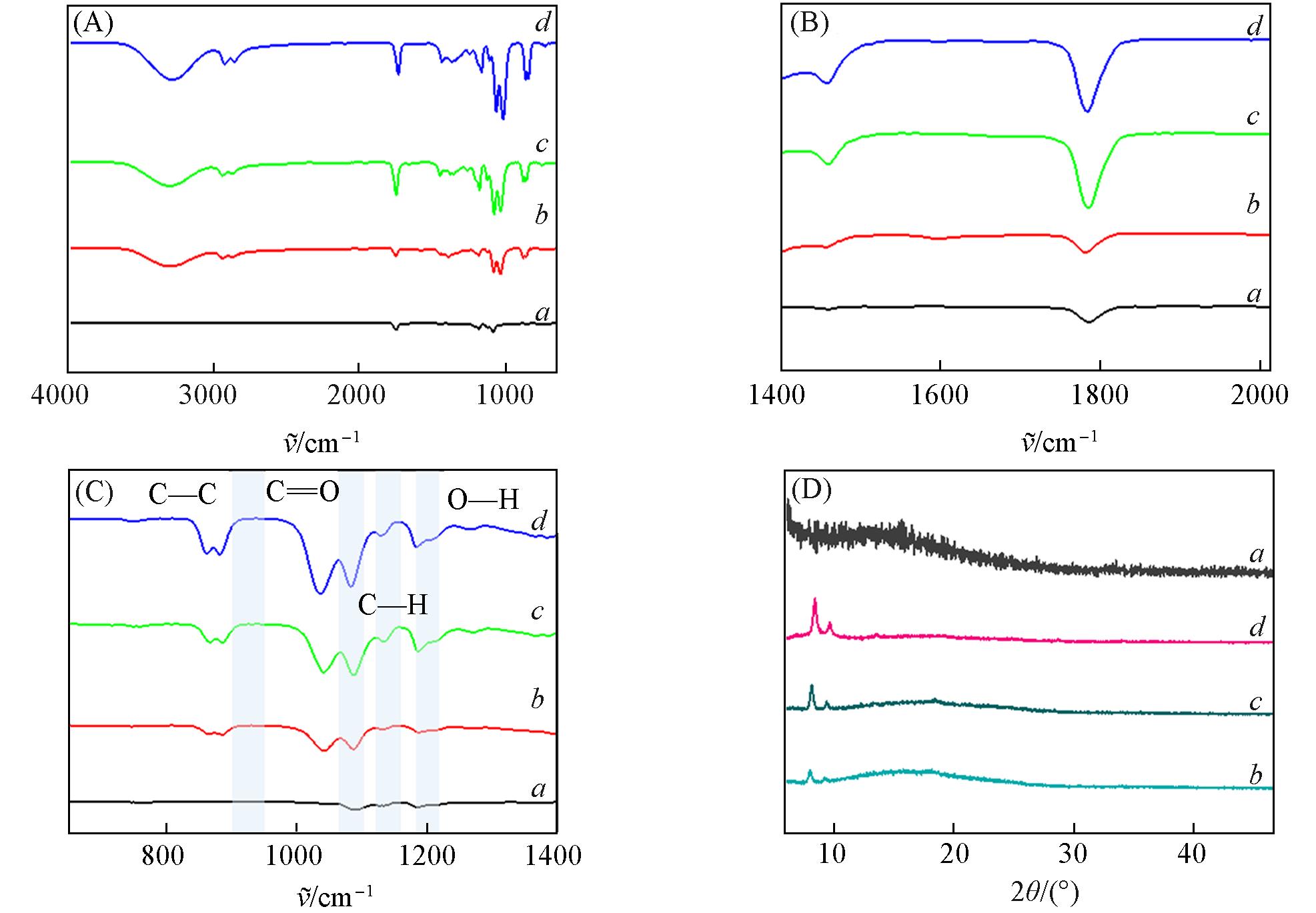
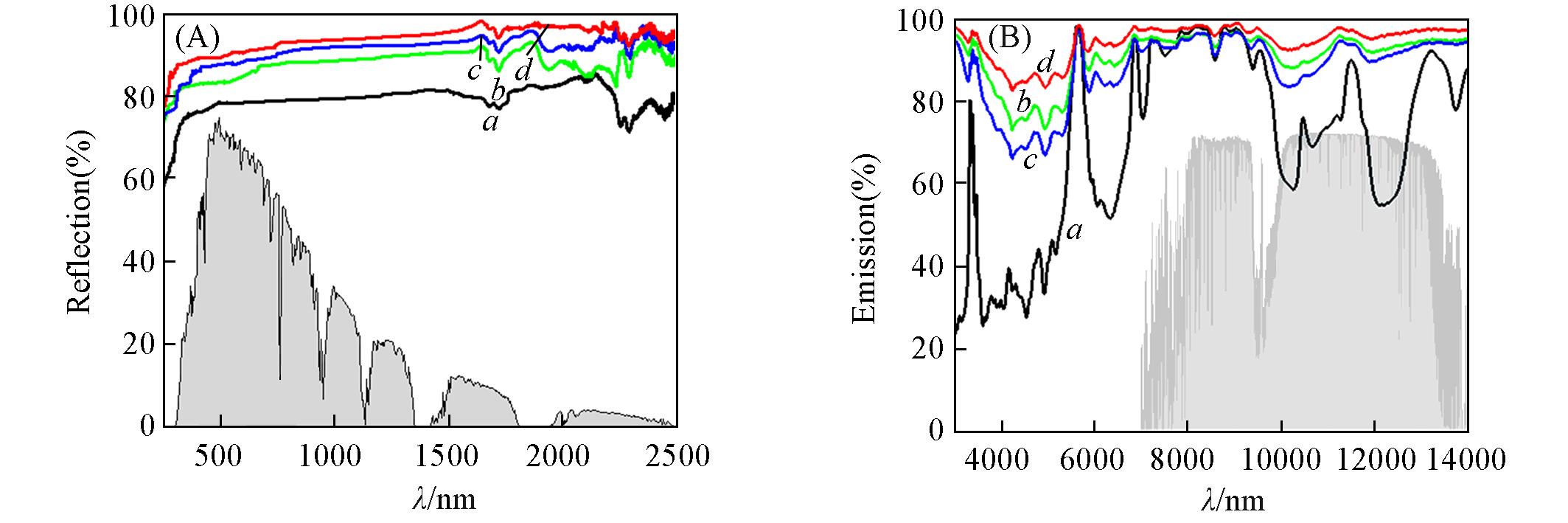
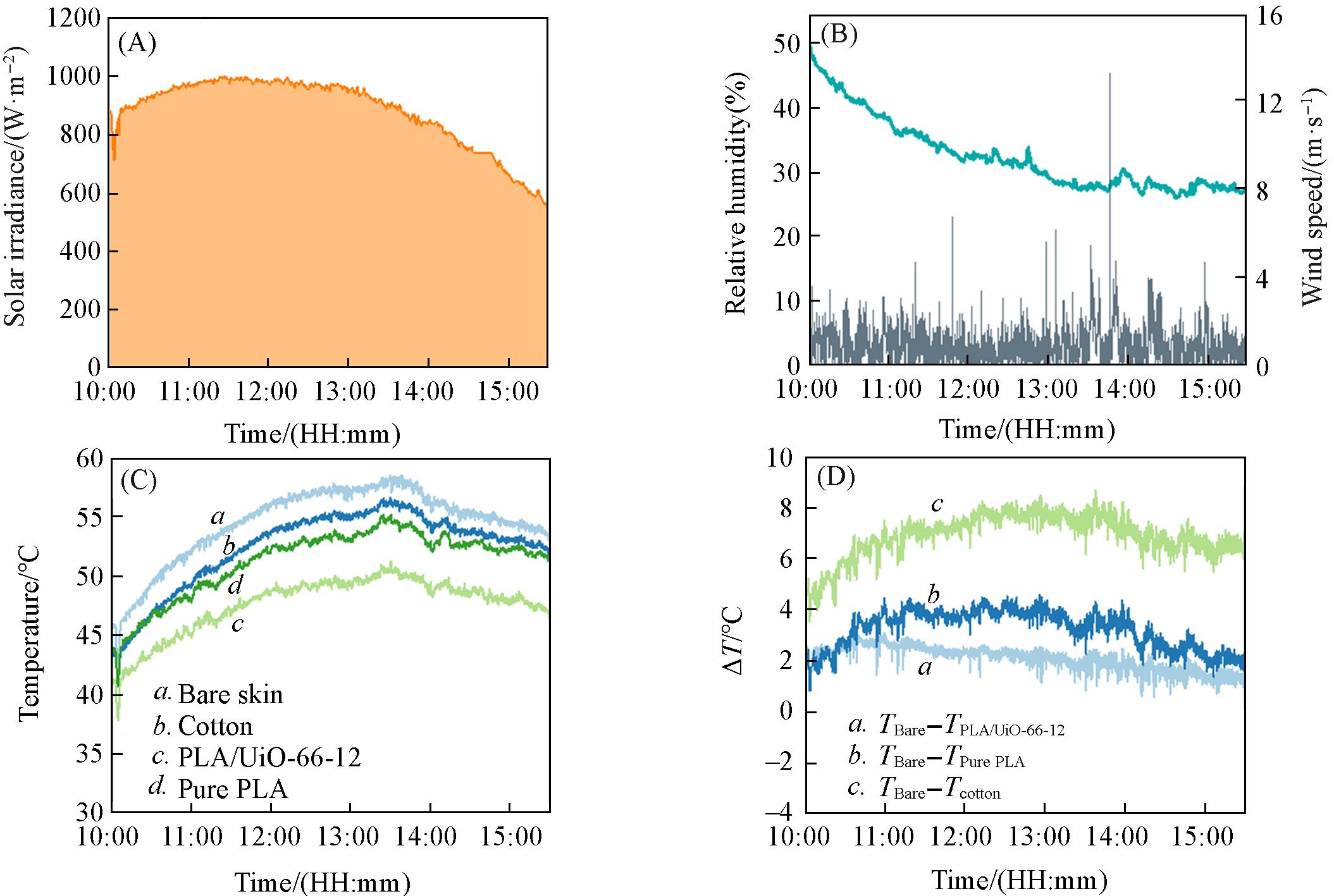
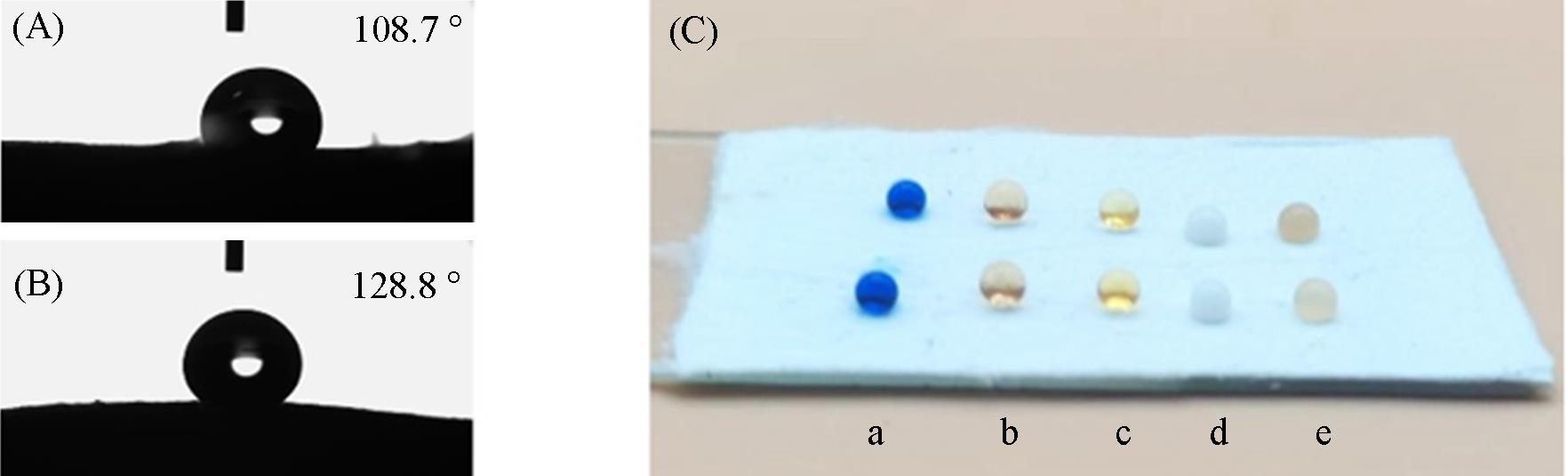
摘要: 摘要 利用微波辅助法精准控制锆基金属有机框架(UiO-66)的尺寸形貌,制备具有高散射效率的UiO-66纳米晶. 以其作为高红外辐射功能材料,结合静电纺丝-电喷技术和相分离策略,进一步构建了UiO-66功能化的聚乳酸(PLA)多孔纤维膜. 得益于微-纳米孔的设计和UiO-66引入丰富的红外活性基团,PLA/UiO-66多孔纤维膜展现出良好的太阳反射率和红外发射率,特别是UiO-66的添加量为12%时,所制备的PLA/UiO-66-12多孔纤维膜的光学性能更加突出,其平均太阳反射率和平均红外发射率分别高达93.9%和91.2%,远远高于Pure PLA纤维膜. 在户外测试中,PLA/UiO-66-12多孔纤维膜的降温幅度明显优于Pure PLA纤维膜,PLA/UiO-66-12的平均温度维持在47.6 ℃,而Pure PLA纤维膜的平均温度高则高于50 ℃. 在具备优异制冷性能的同时,UiO-66的引入有效降低了表面能,使PLA/UiO-66多孔纤维膜具有较高的疏水角(128.8°),确保纤维膜具有优异的疏水性和自清洁能力,从而为开发高效、可持续的热管理纺织品提供了新策略.

关键词: 聚乳酸, 辐射制冷, 多孔纤维, 金属有机框架材料, 自清洁性能

Abstract: Abstract By using the microwave-assisted method, the size and morphology of zirconium-based metal-organic frameworks(UiO-66) were precisely controlled to prepare UiO-66 nanocrystals with high scattering efficiency. Employing these as high-infrared-emissivity functional materials, a UiO-66-functionalized polylactic acid (PLA) porous fiber membrane was further constructed via electrospinning-spraying technology combined with a phase separation strategy. Benefiting from the micro-nano porous design and the introduction of abundant infrared-active groups from UiO-66, the PLA/UiO-66 porous fiber membrane exhibited excellent solar reflectivity and infrared emissivity. Particularly when the UiO-66 addition amount was 12%, the optical performance of the resulting PLA/UiO-66-12 porous fiber membrane was even more outstanding, achieving an average solar reflectivity of 93.9% and an average infrared emissivity of 91.2%, far exceeding those of the pure PLA fiber membrane. In outdoor tests, the cooling effect of the PLA/UiO-66-12 porous fiber membrane was significantly superior to that of the pure PLA fiber membrane. The average temperature of PLA/UiO-66-12 remained at 47.6 °C, whereas the average temperature of the pure PLA fiber membrane was above 50 °C. While demonstrating excellent cooling performance, the incorporation of UiO-66 effectively reduced the surface energy, endowing the PLA/UiO-66 porous fiber membrane with a high water contact angle(128.8°). This ensures the membrane possesses outstanding hydrophobicity and self-cleaning capability, thereby providing a new strategy for developing efficient and sustainable thermal management textiles.

Key words: Poly(lactic acid), Radiative cooling, Porous fiber, Metal-organic framework material; Self-cleaning property

中图分类号: 

TrendMD: