

高等学校化学学报 ›› 2026, Vol. 47 ›› Issue (7): 20250370.doi: 10.7503/cjcu20250370
杨振邈1, 吴延楠1, 陈京风1, 林雅薇1, 魏晨杰1,2( ), 刘立芬1,2()
收稿日期:2025-12-04
出版日期:2026-07-10
发布日期:2025-12-19
通讯作者:
魏晨杰,刘立芬
E-mail:cjwei@zjut.edu.cn;lifenliu@zjut.edu.cn
作者简介:第一联系人:共同第一作者.
基金资助:
YANG Zhenmiao1, WU Yannan1, CHEN Jingfeng1, LIN Yawei1, WEI Chenjie1,2(), LIU Lifen1,2()
Received:2025-12-04
Online:2026-07-10
Published:2025-12-19
Contact:
WEI Chenjie, LIU Lifen
E-mail:cjwei@zjut.edu.cn;lifenliu@zjut.edu.cn
Supported by:摘要:
我国是全球最大的不锈钢生产国, 不锈钢生产过程会产生大量的酸洗废水, 包含高浓度的强酸和重金属盐, 若直接排放会严重污染环境, 且造成资源浪费. 本文采用“扩散渗析+三步沉淀”组合法对不锈钢酸洗废水进行资源化处理. 首先, 采用扩散渗析过程将废水中的高浓度混酸(包括硝酸和氢氟酸)与废水中的重金属盐(包括铁、 铬、 镍重金属盐)进行分离以回收混酸; 之后采用三步沉淀过程对扩散渗析残液中的重金属(包括铁、 铬和镍)进行回收; 并考察了离子交换膜种类、 废水进料流量及扩散侧/渗析侧流量比对扩散渗析过程混酸回收率和重金属截留率的影响, 同时优化了三步沉淀工艺(沉淀剂组成、 沉淀温度和pH值等). 结果表明, 扩散渗析的最佳工艺为: 采用TWDDA3S型阴离子交换膜, 废水进料流量为6 mL/min, 扩散侧与渗析侧流量比为 1.5∶1. 在此条件下, 硝酸与氢氟酸的总回收率最高可达69.5%, 同时铁、 铬和镍3种重金属离子的截留率 分别达到97.0%, 98.0%和96.4%; 第一步沉淀的最佳工艺为: 复合沉淀剂组成为c(KOH)∶c(KF)=7∶1, 沉淀 温度为15 ℃, 在此条件下重金属铁和铬的回收率分别达到96.2%和90.7%; 第二步沉淀的最佳工艺为: 采 用0.02 mol/L HNO3和0.30 mol/L KF对第一步沉淀滤液进行深度处理, 在此条件下镍离子的保留率和纯度分 别达98.7%和89.6%; 第三步沉淀的最佳工艺为: 通过KOH将滤液pH值控制在11左右, 在此条件下可实现镍的全部回收.
中图分类号:
TrendMD:
杨振邈, 吴延楠, 陈京风, 林雅薇, 魏晨杰, 刘立芬. “扩散渗析+三步沉淀”组合法资源化处理不锈钢酸洗废水. 高等学校化学学报, 2026, 47(7): 20250370.
YANG Zhenmiao, WU Yannan, CHEN Jingfeng, LIN Yawei, WEI Chenjie, LIU Lifen. Recycling Treatment of Stainless Steel Pickling Wastewater by Combination of Diffusion Dialysis and Three-step Precipitation Processes. Chem. J. Chinese Universities, 2026, 47(7): 20250370.
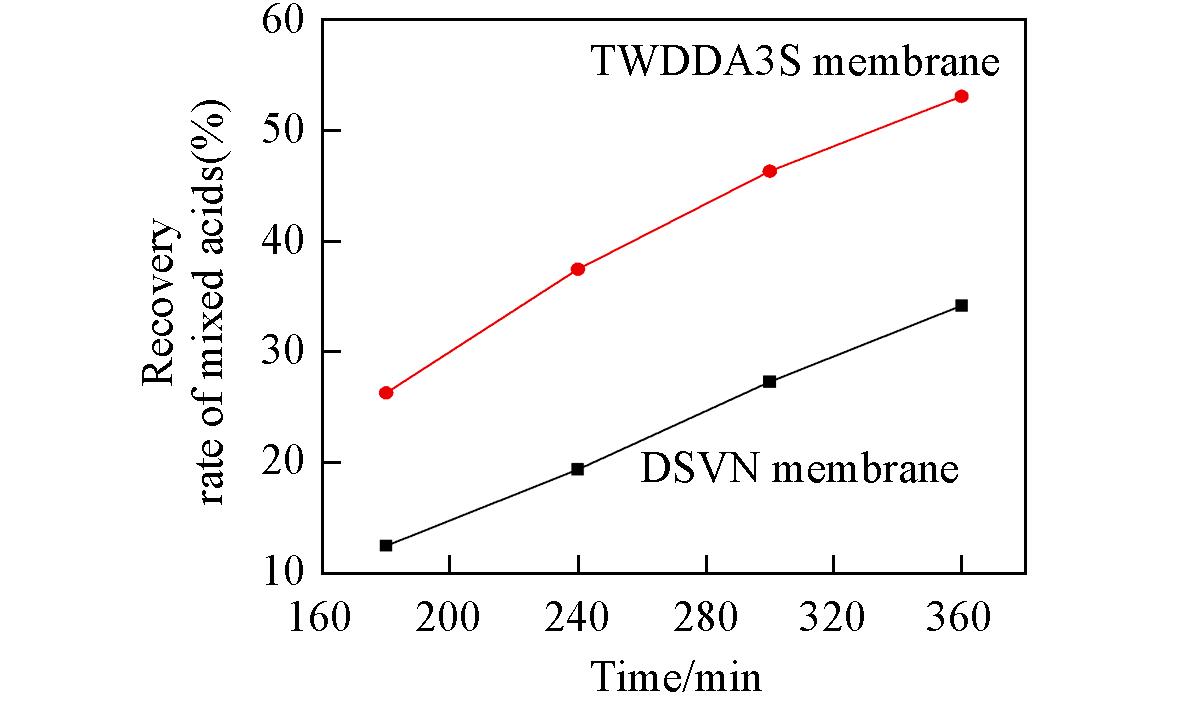
Fig.1 Effect of anion exchange membrane type on acid recovery
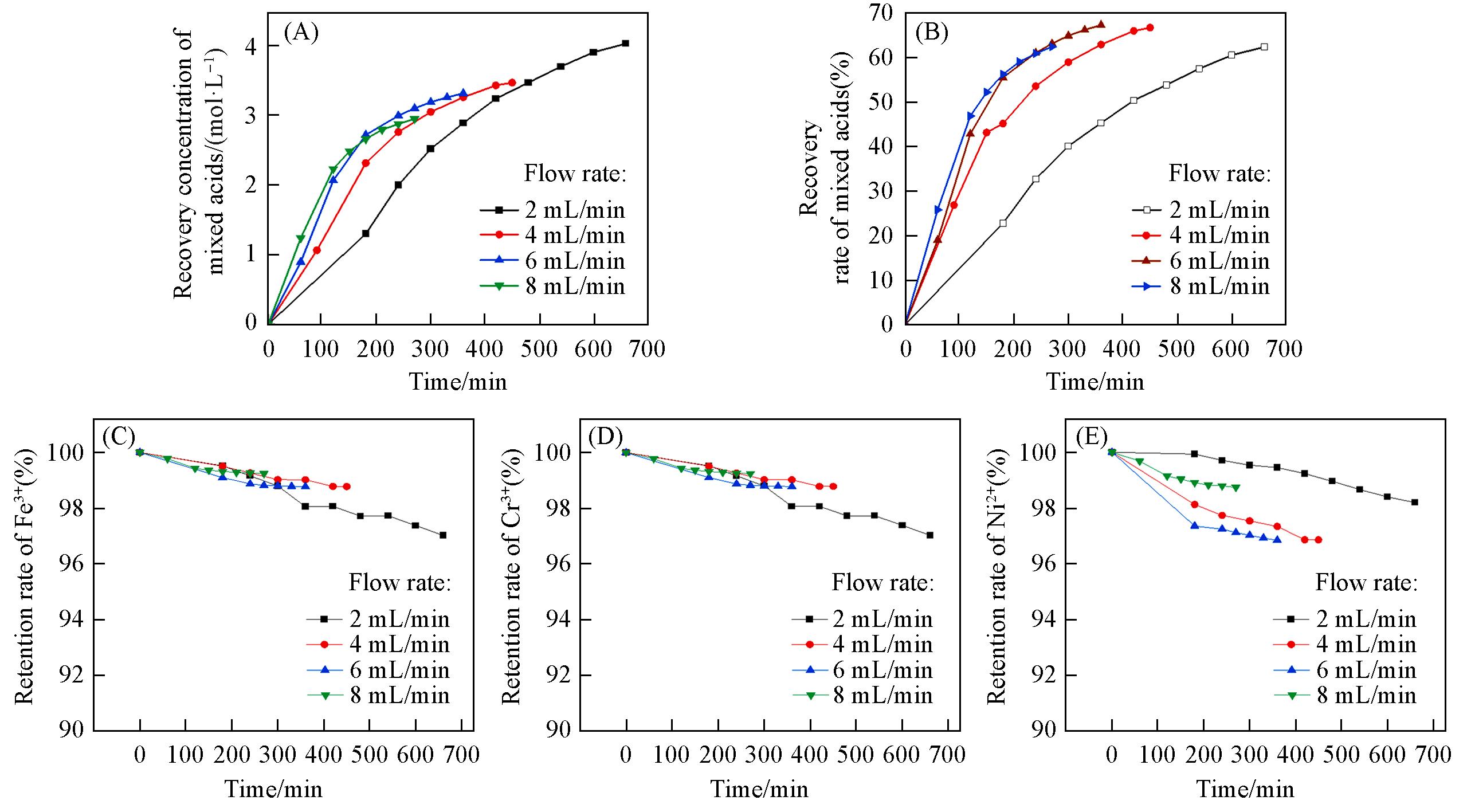
Fig.2 Effect of flow rate on mixed acid recovery and heavy metal retention during diffusion dialysis process(A) Recovery concentrations of mixed acids; (B) recovery rate of mixed acids; (C) retention rate of iron ion; (D) retention rate of chromium ion; (E) retention rate of nickel ion.
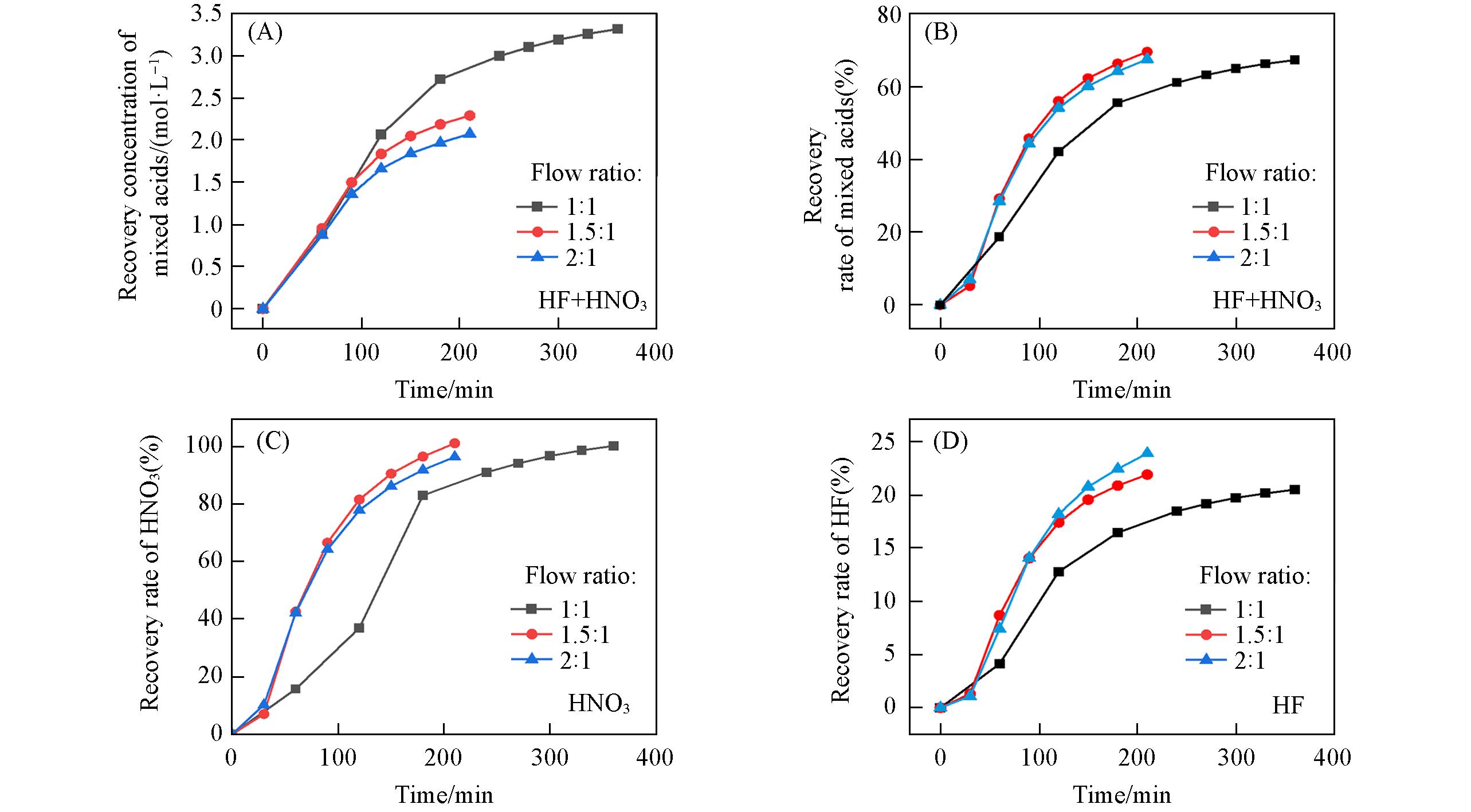
Fig.3 Effect of flow ratio on recovery concentration of mixed acids(A) and recovery rates of mixed acids(B), HNO3(C), and HF(D)
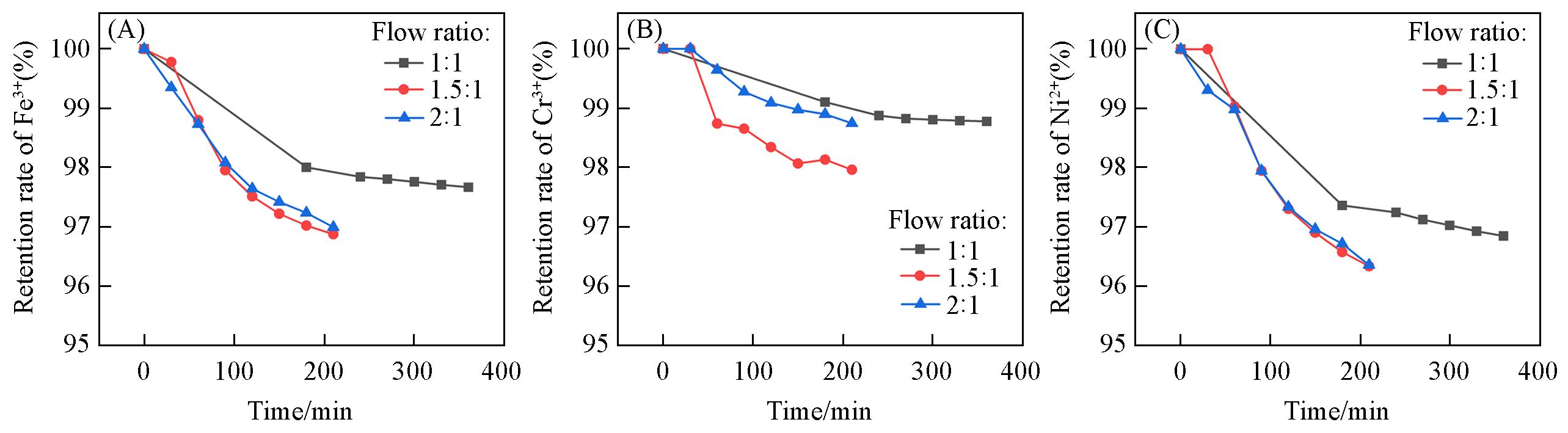
Fig.4 Effect of flow ratio on the retention rate of Fe3+(A), Cr3+(B) and Ni2+(C)
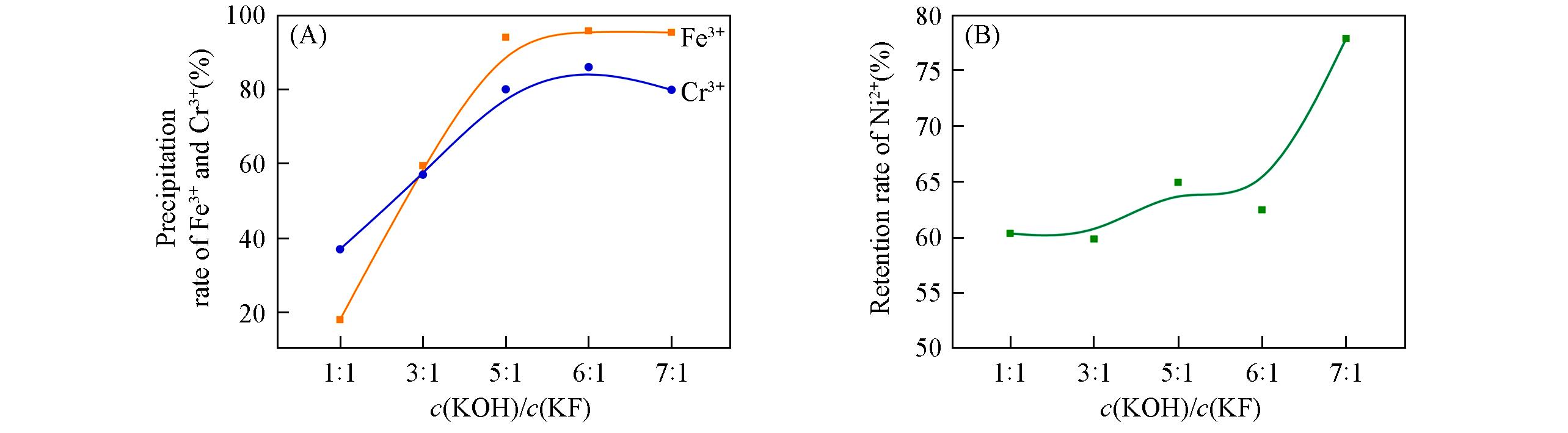
Fig.5 Effect of composite precipitant composition on precipitation rate of Fe3+, Cr3+(A) and retentation rate of Ni2+(B) during the first⁃step selective precipitation
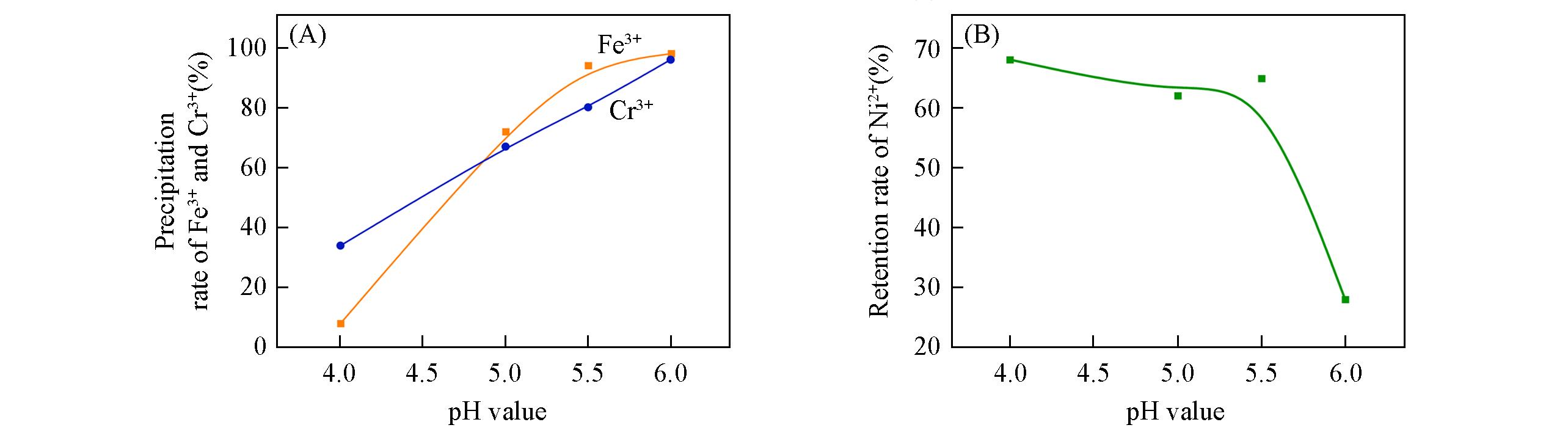
Fig.6 Effect of pH value on precipitation rate of Fe3+, Cr3+(A) and retention rate of Ni2+(B) during the first⁃step selective precipitation
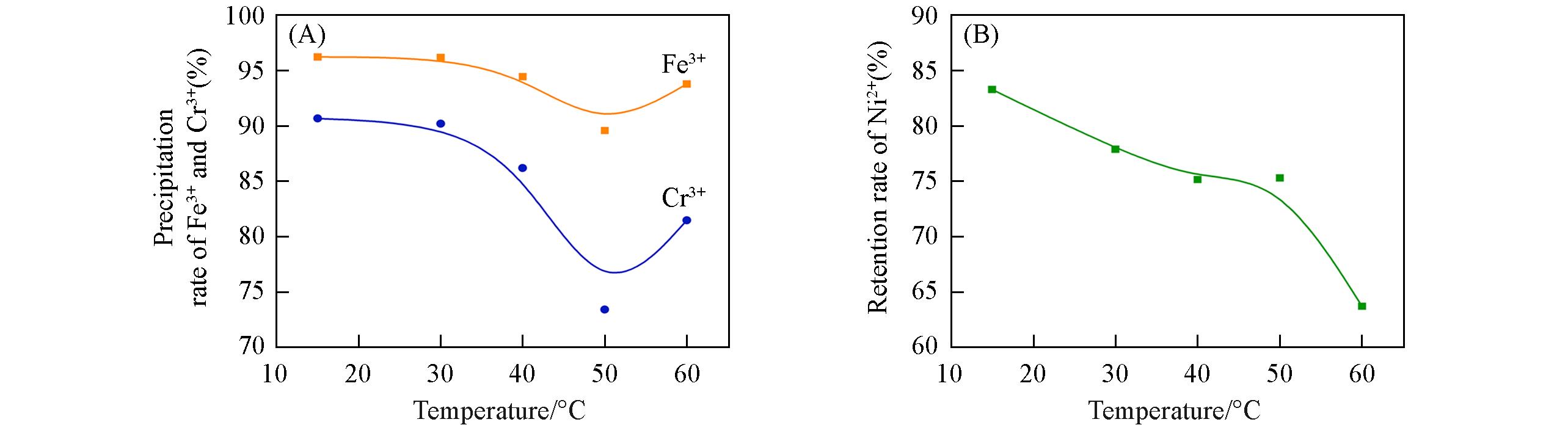
Fig.7 Effect of temperature on precipitation rate of Fe3+ and Cr3+(A) and retentation rate of Ni2+(B) during the first⁃step selective precipitation
| c(HNO3)/(mol∙L-1) | c(KF)/(mol∙L-1) | Fe3+ precipitation rate (%) | Cr3+ precipitation rate (%) | Ni2+ retention rate (%) |
|---|---|---|---|---|
| 0 | 0.2 | 69.4±4.3 | 3.5±3.5 | 99.6±3.5 |
| 0 | 0.3 | 91.3±3.3 | 8.8±1.6 | 98.2±2.1 |
| 0.02 | 0.3 | 93.9±0.9 | 9.2±1.1 | 98.7±1.8 |
| 0.02 | 0.4 | 96.9±1.1 | 19.2±9.4 | 97.0±2.9 |
| 0.02 | 0.6 | 98.1±0.7 | 13.5±4.0 | 91.5±1.7 |
Table 1 Effect of HNO3 and KF concentrations on the precipitation rate of residual Fe3+ and Cr3+, and retention rate of Ni2+ in the second-step precipitation filter solution
| c(HNO3)/(mol∙L-1) | c(KF)/(mol∙L-1) | Fe3+ precipitation rate (%) | Cr3+ precipitation rate (%) | Ni2+ retention rate (%) |
|---|---|---|---|---|
| 0 | 0.2 | 69.4±4.3 | 3.5±3.5 | 99.6±3.5 |
| 0 | 0.3 | 91.3±3.3 | 8.8±1.6 | 98.2±2.1 |
| 0.02 | 0.3 | 93.9±0.9 | 9.2±1.1 | 98.7±1.8 |
| 0.02 | 0.4 | 96.9±1.1 | 19.2±9.4 | 97.0±2.9 |
| 0.02 | 0.6 | 98.1±0.7 | 13.5±4.0 | 91.5±1.7 |
| Filter solution | Precipitation condition | c(Fe3+)/ (mg∙L-1) | c(Cr3+)/ (mg∙L-1) | c(Ni2+)/ (mg∙L-1) | Mass fraction of Ni2+(%) |
|---|---|---|---|---|---|
| The first⁃step precipitation | c(KOH)∶c(KF)=7∶1, 15 ℃ | 68.5±4.0 | 28.0±1.5 | 255.0±0.2 | 72.5±1.7 |
| The second⁃step precipitation | 0.20 mol/L KF | 21.0±3.0 | 27.5±1.0 | 261.3±1.3 | 84.2±0.4 |
| 0.30 mol/L KF | 5.9±2.3 | 26.0±0.5 | 250.5±5.3 | 88.7±1.6 | |
| 0.02 mol/L HNO3+0.30 mol/L KF | 4.2±0.6 | 25.9±0.3 | 251.6±4.1 | 89.6±1.4 | |
| 0.02 mol/L HNO3+0.40 mol/L KF | 2.1±0.8 | 23.0±2.7 | 247.4±7.4 | 90.8±2.7 | |
| 0.02 mol/L HNO3+0.60 mol/L KF | 1.3±0.4 | 24.7±1.2 | 233.3±4.2 | 89.9±1.6 |
Table 2 Precipitation effect comparison of the first-step selective precipitation with the second-step precipitation
| Filter solution | Precipitation condition | c(Fe3+)/ (mg∙L-1) | c(Cr3+)/ (mg∙L-1) | c(Ni2+)/ (mg∙L-1) | Mass fraction of Ni2+(%) |
|---|---|---|---|---|---|
| The first⁃step precipitation | c(KOH)∶c(KF)=7∶1, 15 ℃ | 68.5±4.0 | 28.0±1.5 | 255.0±0.2 | 72.5±1.7 |
| The second⁃step precipitation | 0.20 mol/L KF | 21.0±3.0 | 27.5±1.0 | 261.3±1.3 | 84.2±0.4 |
| 0.30 mol/L KF | 5.9±2.3 | 26.0±0.5 | 250.5±5.3 | 88.7±1.6 | |
| 0.02 mol/L HNO3+0.30 mol/L KF | 4.2±0.6 | 25.9±0.3 | 251.6±4.1 | 89.6±1.4 | |
| 0.02 mol/L HNO3+0.40 mol/L KF | 2.1±0.8 | 23.0±2.7 | 247.4±7.4 | 90.8±2.7 | |
| 0.02 mol/L HNO3+0.60 mol/L KF | 1.3±0.4 | 24.7±1.2 | 233.3±4.2 | 89.9±1.6 |
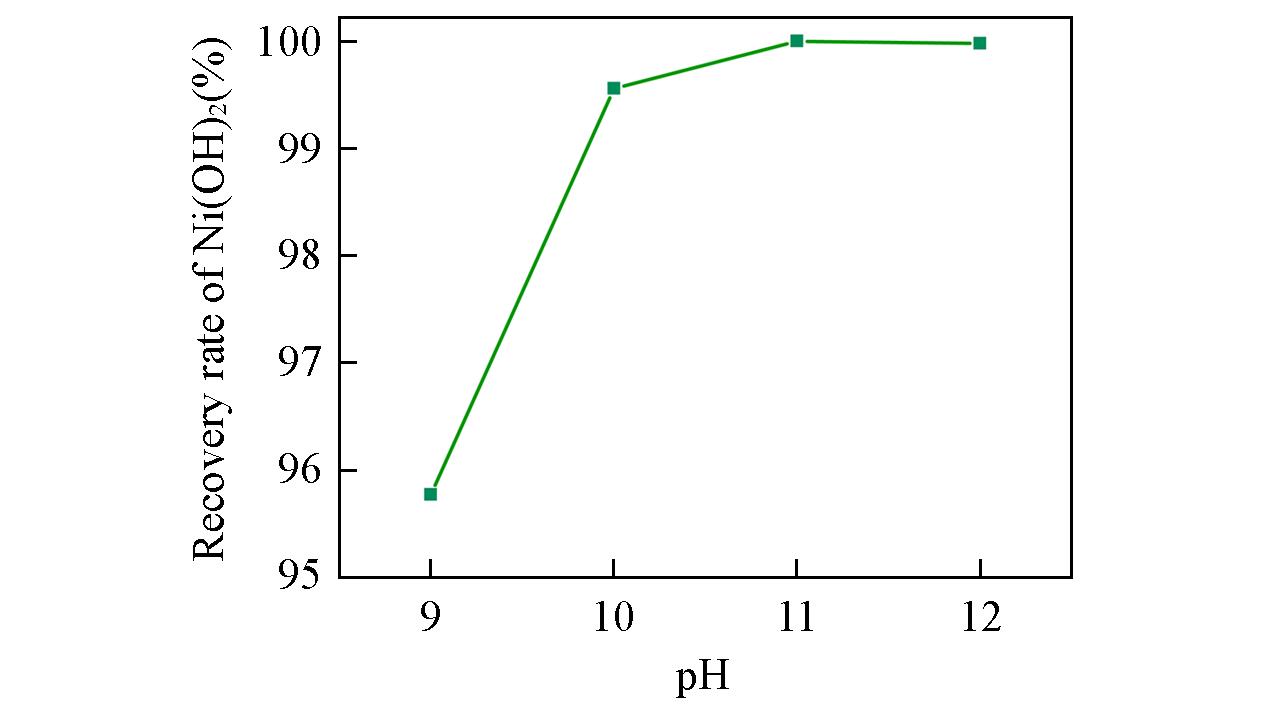
Fig.8 Effect of pH value of filter solution on the nickle recovery rate during the third⁃step precipitation
| [1] | Zhang P. L., Du Q. J., Zhang K. X., Tian W. T., Environ. Sci., 2024, 45(11), 6336—6343 |
| 张攀路, 都沁军, 张凯旋, 田文涛. 环境科学, 2024, 45(11), 6336—6343 | |
| [2] | Li L. F., Caenen P., Daerden M., Vaes D., MeersG., Dhondt C., Celis J.P., Corros. Sci. 2005, 47(5), 1307—1324 |
| [3] | Gálvez J. L., Dufour J., Negro C., Negro F.,Mateos L., Chem. Eng. J., 2008, 136(2/3), 116—125 |
| [4] | Yang C. J., Study on the Resource Recovery Treatment Technology of Stainless Steel Pickling Wastewater, Nanjing University, Nanjing, 2012 |
| 杨才杰. 不锈钢酸洗废水资源化处理技术研究, 南京: 南京大学, 2012 | |
| [5] | Nielsen L., Møller P. M., Advanced Surface Technology: A Holistic View on the Extensive and Intertwined World of Applied Surface Engineering, 2013 |
| [6] | Agrawal A., Sahu K. K., J. Hazard. Mater., 2009, 171(1—3), 61—75 |
| [7] | Regel⁃Rosocka M., J. Hazard. Mater., 2010, 177(1—3), 57—69 |
| [8] | Yang C. J., Liu F. Q., Hou P., Li A. M., Ind. Water Treat., 2011, 31(11), 1—5 |
| 杨才杰, 刘富强, 侯鹏, 李爱民. 工业水处理, 2011, 31(11), 1—5 | |
| [9] | Kobuchi Y., Motomura H., Noma Y., Hanada F. J., J. Membr. Sci., 1986, 27, 173—179 |
| [10] | Suk J. O., Seung⁃Hyeon M., Davis T., J. Membr. Sci., 2000, 169(1), 95—105 |
| [11] | Xu T., Yang W., J. Hazard. Mater., 2004, 109(1—3), 157—164 |
| [12] | Negro C., Blanco M. A., Lopez⁃Mateos F., De Jong A. M., Sep. Sci. Technol., 2001, 36(7), 1543—1556 |
| [13] | Xu T. W., Yang W. H., Zhang Y. P., Wang Z. Z., Liu Z. M., Membr. Sci. Technol., 2002, 22(5), 46—51 |
| 徐铜文, 杨伟华, 张玉平, 王志征, 刘兆明. 膜科学与技术, 2002, 22(5), 46—51 | |
| [14] | Fu W., Environ. Pollut., 2004, 26(3), 227—228 |
| 付伟. 环境污染与防治, 2004, 26(3), 227—228 | |
| [15] | Zhao J. X., He H., Ma H. Z., Li X. M., Iron Steel Vanadium Titanium, 2010, 31(1), 84—87 |
| 赵俊学, 贺慧, 马红周, 李小明. 钢铁钒钛, 2010, 31(1), 84—87 | |
| [16] | Gerhard F., Herbert K., Wilfried S., Franz S., Process for Obtaining or Recovering Nitric Acid and Hydrofluoric Acid from Stainless Steel Pickling Solutions. EP20110718235, 2011⁃04⁃18 |
| [17] | Gerhard F., Herbert K., Wilfried S., Fabian S., Method for Obtaining or Recovering Nitric Acid and Hydrofluoric Acid from Solutions of Stainless Steel Pickling Systems, EP20110718235, 2011⁃04⁃18 |
| [18] | Li X. M., Li W. F., Wang S. J., Cui Y. R., Zhao J. X., Zeng Y., Li. F., Advanced Materials Research, 2012, 518—523, 2956—2960 |
| [19] | Zeng Y., Xi’an University of Architecture and Technology, Xi’an, 2011, 58—62 |
| 曾媛. 活性炭吸附法处理不锈钢酸洗废水研究, 西安: 西安建筑科技大学, 2011, 58—62 | |
| [20] | RöGener F., Sartor M., BáN A., Buchloh D., Reichardt T., Resour. Conserv. Recy., 2012, 60, 72—77 |
| [21] | Dufour J., Negro C., Heras F., López⁃Mateos F., ISIJ Int., 2001, 41(7), 801—806 |
| [22] | Heras F., Dufour J., Lopez⁃Delgado A., Negro C., Lopez⁃Mateos F., Environ. Eng. Sci., 2004, 21(5), 583—590 |
| [23] | Hermoso J., Dufour J., Galvez J. L., Negro C., Lopez⁃Mateos F., Ind. Eng. Chem. Res., 2005, 44(15), 5750—5756 |
| [24] | Zhou G. S., Yu G. A., Baosteel Technology, 2003, (Suppl.), 1—2 |
| 周光升, 俞国安. 宝钢技术, 2003, (增刊), 1—2 | |
| [25] | Forsberg K. M., Rasmuson Å. C., Miner. Eng., 2007, 20(9), 950—955 |
| [26] | Tjus K., Bergstrom R., Fortkamp U., Forsberg K., Rasmuson Å. R., Development of a Recovery System for Metals and Acids from Pickling Baths Using Nanofiltration and Crystallization, IVL Swedish Environmental Research Institute Ltd., 2010, 10 |
| [27] | Deng M. C., Jin W. Q., Membrane Technology Handbook(2nd Edition), Chemical Industry Press, Beijing, 2021 |
| 邓麦村, 金万勤. 膜技术手册(第二版). 北京: 化学工业出版社, 2021 | |
| [28] | Zhang X., Theoretical and Applied Reserch on Diffusion Dialysis, University of Science and Technology of China, 2014 |
| 张旭. 扩散渗析的理论与应用研究, 合肥: 中国科学技术大学, 2014 | |
| [29] | GB/T 21057⁃2007, Inorganic Chemical for Industrial Use⁃General Method for Determination of Fluorine Content⁃Ion Selective Electrode Method, Standards Press of China, Beijing, 2007 |
| GB/T 21057⁃2007, 无机化工产品中氟含量测定的通用方法 —— 离子选择性电极法, 北京: 中国标准出版社, 2007 | |
| [30] | HJ/T 345⁃2007, Water Quality⁃Determination of Iron⁃Phenanthroline Spectrophotometry, Standards Press of China, Beijing, 2007 |
| HJ/T 345⁃2007, 水质铁的测定邻菲啰啉分光光度法(试行), 北京: 中国标准出版社, 2007 | |
| [31] | GB 7466⁃87, Water Quality⁃Determination of Total Chromiun, Standards Press of China, Beijing, 1987 |
| GB 7466⁃87, 水质总铬的测定, 北京: 中国标准出版社, 1987 | |
| [32] | GB 11910⁃89, Water Quality⁃Determination of Nickel⁃Dimethylglyoxime Spectrophotometric Method, Standards Press of China, Beijing, 1989, 12 |
| GB 11910⁃89, 钢铁及合金镍含量的测定丁二酮肟分光光度法, 北京: 中国标准出版社, 1989, 12 | |
| [33] | Nie Y. G., Journal of Chuanbei College of Education, 2002, (4), 92—93 |
| 聂耀光. 川北教育学院学报, 2002, (4), 92—93 | |
| [34] | Wu Y., Wang P., Zhang G., Li X., Sep. Purif. Technol., 2017, 179, 86—93 |
| [35] | Liu Y., Deng Y. Y., Zhang Q., Liu H., Sci. Total Environ.,, 2021, 757, 143901 |
| [36] | Xiao H., Chen Q., Cheng H. R., Li X. M., Qin W. M., Chen B. S., Xiao D., Zhang W. M., J. Membr. Sci., 2017, 537, 111—118 |
| [1] | 党宇鑫, 秦小茜, 张鹏, 麻天舒, 薛嘉仪, 王朝, 吴桐, 张莹莹, 庄全, 刘景海. 柔性TiO2-TiSe2/纳米碳纤维膜提升锂/硫电池倍率性能[J]. 高等学校化学学报, 2026, 47(7): 20250340. |
| [2] | 李欣, 吕泽, 钟毅, 徐红, 毛志平, 张琳萍. 配体功能化MIL-101(Fe)金属有机骨架的制备及光催化还原CO2性能[J]. 高等学校化学学报, 2026, 47(7): 20260039. |
| [3] | 刘旭, 黄玉铸, 刘奇, 曹鸿涛. 纳米空气柱阵列-SiO2复合超材料的制备和折射率调控[J]. 高等学校化学学报, 2026, 47(6): 20250338. |
| [4] | 于坤杰, 张智, 高其龙. 基于机器学习的负热膨胀研究进展[J]. 高等学校化学学报, 2026, 47(6): 20250375. |
| [5] | 王鑫, 张令, 张海军, 王军凯. 碳纳米管-碳酸钙共包覆超疏水镁钙砂的制备及抗水化性能[J]. 高等学校化学学报, 2026, 47(6): 20250216. |
| [6] | 陈君杰 许翰坤 李强 邓金侠 林鲲. [无机固体化学专栏]磁性金属氧化物的新视角:非晶化的挑战[J]. 高等学校化学学报, 0, (): 20260142. |
| [7] | 王策. 阴离子型MOFs的微波合成及有效的染料和碘捕获[J]. 高等学校化学学报, 0, (): 20260124. |
| [8] | 穆荣臻 王瑾 杨杰 TIANA ROY 汪杰 郭宝成 周春晖. Cl-介导Fe/MgO-CaO晶面工程与电子结构协同调控催化甘油氢解[J]. 高等学校化学学报, 0, (): 20250394. |
| [9] | 陈杨, 王芙香, 仇一朵, 黄宇桐, 赵晓君, 潘勤鹤. 不同形貌氧化锌微米晶体的水热法控制合成[J]. 高等学校化学学报, 2026, 47(2): 20250208. |
| [10] | 许海燕, 刘琦, 孟和, 刘风琦, 刘雨昕, 李嘉伟, 李常艳. Ce-Cur纳米酶对巨噬细胞极化的调控[J]. 高等学校化学学报, 2025, 46(12): 20250188. |
| [11] | 安静, 苗波, 赵桐依, 宋佳隆, 张文娱, 袁碧贞, 刘耀祖, 钟恬, 方千荣. 一种新型蒽基二维共价有机框架纳米片用于单线态氧的快速捕获和可控释放[J]. 高等学校化学学报, 2025, 46(12): 20250117. |
| [12] | 齐文甲, 赵开庆, 吴刚, 吾麦尔·亚森, 童刚生. 旋转包覆法构筑高反射低导热型HGM@TiO2@ZnO核-壳-壳材料[J]. 高等学校化学学报, 2025, 46(11): 20250185. |
| [13] | 梁家宁, 符开奇, 周瑞, 叶丽莉, 王丽, 刘兆敏, 孙琳, 董妍. 温敏型药物控释系统的构建及光热联合化学疗法协同抗肿瘤作用研究[J]. 高等学校化学学报, 2025, 46(9): 20250068. |
| [14] | 曾湘楚, 丁以宣, 武哲, 汪艳平, 刘牧. 原位Cu络合调控类芬顿氧化强化水体痕量喹诺酮的选择性净化[J]. 高等学校化学学报, 2025, 46(3): 20240358. |
| [15] | 乐鑫, 贾庭芳, 陈瑶, 周远柱, 曲佳菲, 李聪, 申静. 稀土上转换纳米粒子掺杂口腔复合树脂材料的近红外光固化[J]. 高等学校化学学报, 2025, 46(1): 20240167. |
| 阅读次数 | ||||||
|
全文 |
|
|||||
|
摘要 |
|
|||||
