高等学校化学学报 ›› 2026, Vol. 47 ›› Issue (1): 20250332.doi: 10.7503/cjcu20250332

• 研究论文 • 上一篇    下一篇

基于低分子量聚合物共混的改性聚双环戊二烯弹性体的制备与性能

张婷婷1, 刘东立2(), 汤钧1()   

  1. 1.吉林大学化学学院,长春 130012
    2.上海东杰高分子材料有限公司,上海 201108
  • 收稿日期:2025-11-04 出版日期:2026-01-10 发布日期:2025-12-17
  • 通讯作者: 汤钧 E-mail:shdongjie@163.com;chemjtang@jlu.edu.cn
  • 作者简介:刘东立, 男, 博士, 工程师, 主要从事热固性工程塑料及其增强复合材料的应用开发研究. E-mail: shdongjie@163.com
  • 基金资助:
    吉林省科技发展计划项目(20240302124GX)

Preparation and Properties of Modified Polydicyclopentadiene Elastomers Based on Blending with Low-molecular-weight Polymers

ZHANG Tingting1, LIU Dongli2(), TANG Jun1()   

  1. 1.College of Chemistry,Jilin University,Changchun 130012,China
    2.Shanghai Dongjie Polymer Materials Co. ,Ltd. ,Shanghai 201108,China
  • Received:2025-11-04 Online:2026-01-10 Published:2025-12-17
  • Contact: TANG Jun E-mail:shdongjie@163.com;chemjtang@jlu.edu.cn
  • Supported by:
    the Project of Science and Technology Development Plan of Jilin Province, China(20240302124GX)

摘要:

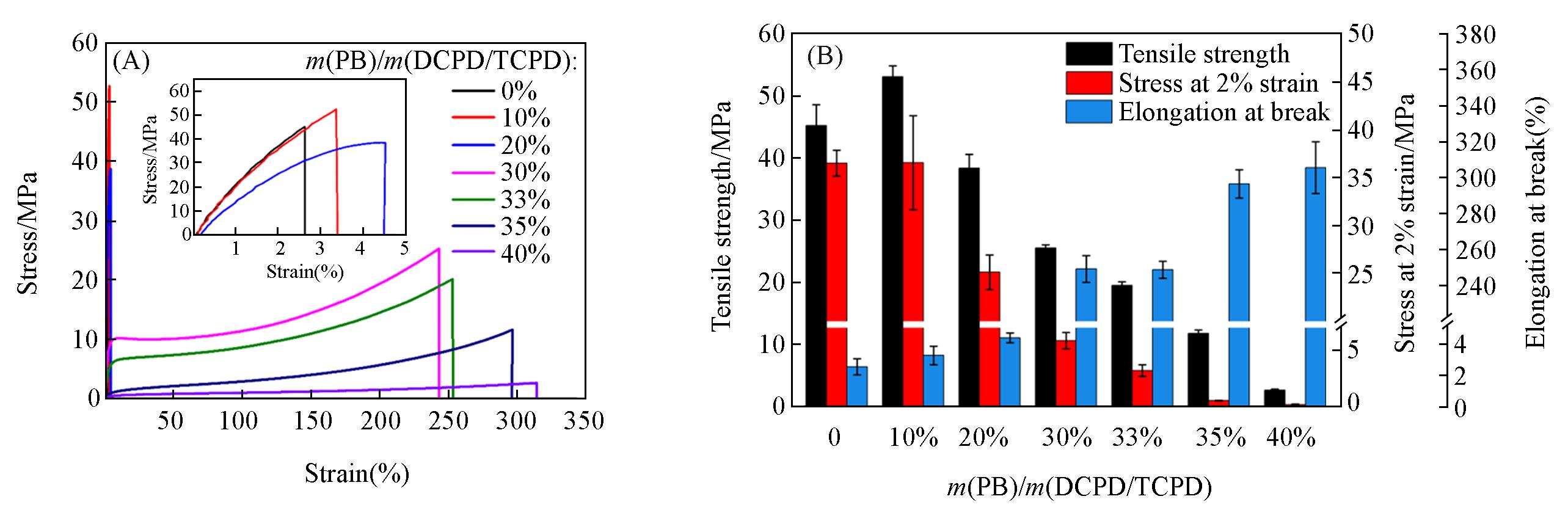
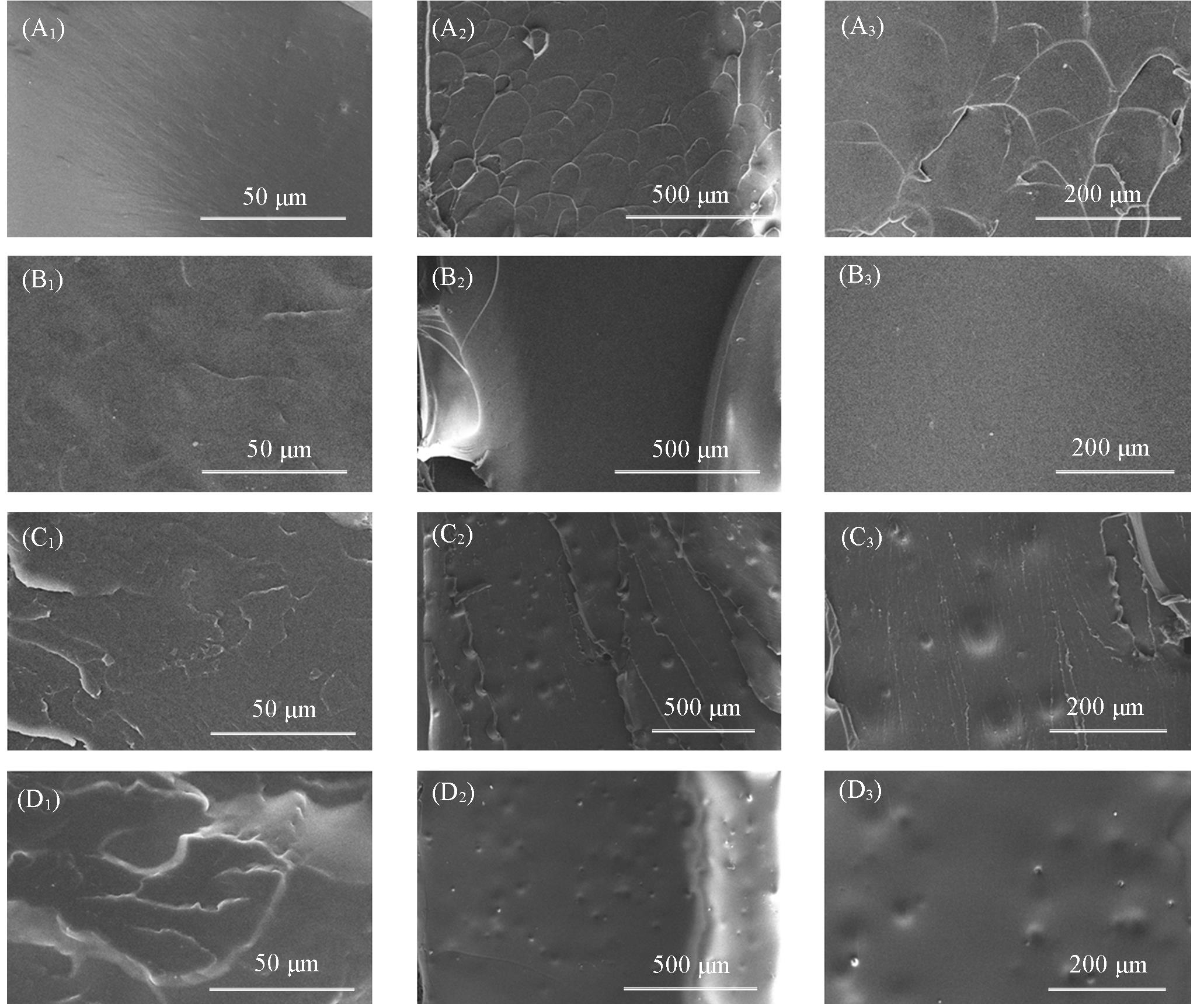
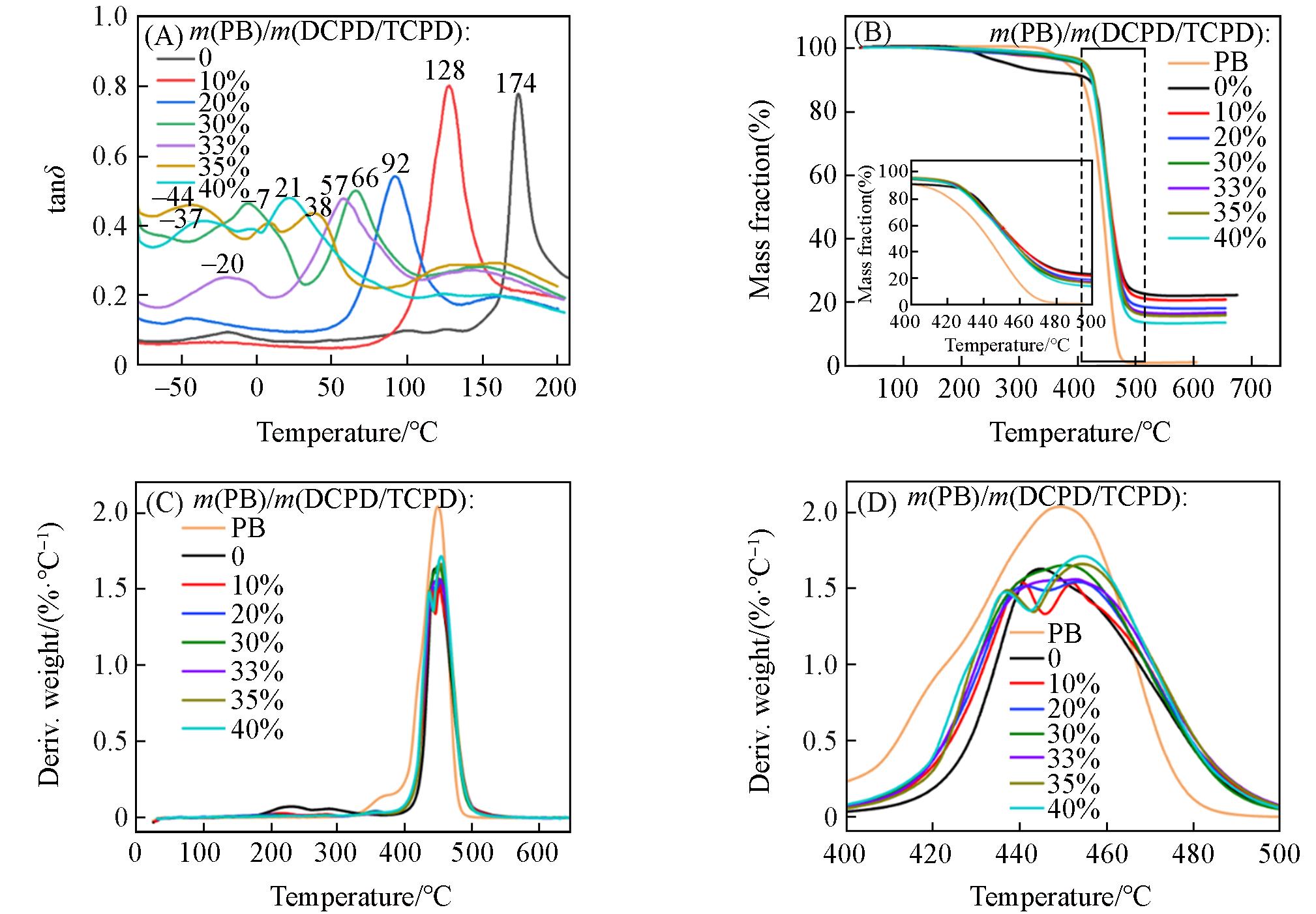
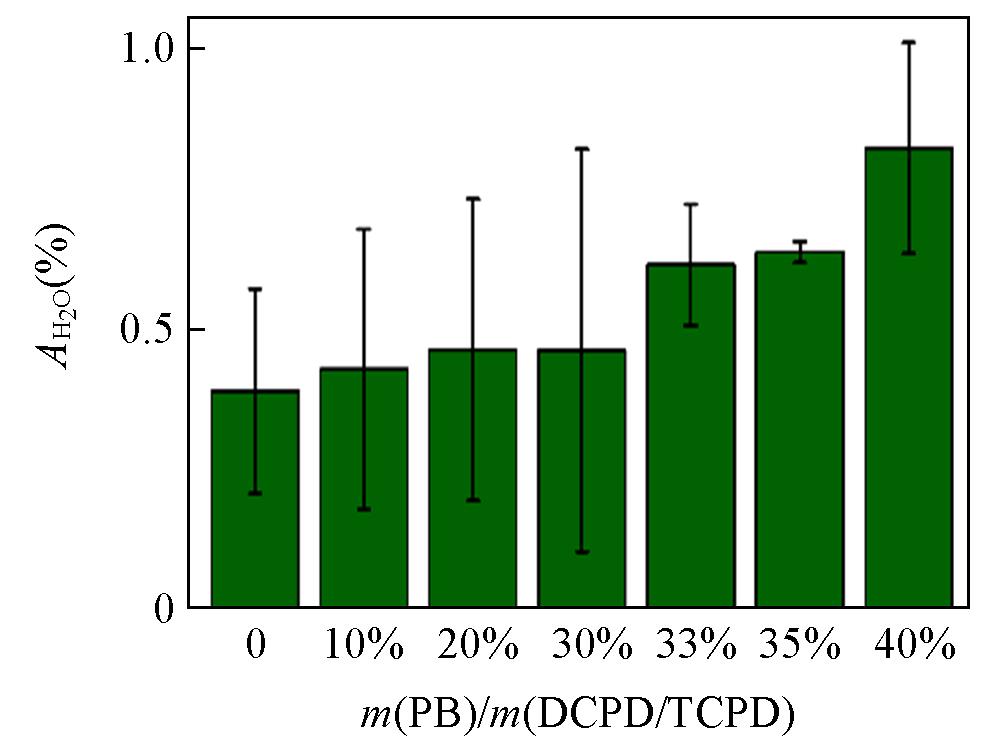
通过双环戊二烯(DCPD)与三环戊二烯(TCPD)共聚, 并与具有良好相容性的低分子量聚丁二烯(PB)进行共混改性, 制备了聚双环戊二烯(PDCPD)弹性体改性材料. DCPD与TCPD共聚可以调节材料刚性; PB的引入降低了体系交联度, 减少了刚性环状结构比例, 同时其增塑作用导致改性PDCPD由刚性热固性塑料向柔性弹性体转变. 当PB添加量为单体混合物质量的35%时, PDCPD弹性体改性材料为拉伸强度为12 MPa、 断裂伸长率为296%的热固性弹性体, 同时其热分解温度未显著降低. 拉伸断面扫描电镜图像、 动态热机械分析及热重分析结果表明, PB在体系中以物理共混形式存在. 尽管过多PB的引入会在一定程度上降低材料的耐水性, 但在60 ℃去离子水中浸泡48 h后, 其最大吸水率低于0.9%. 本文研究结果为低分子量聚合物共混改性PDCPD, 使其转变为弹性体提供了有效途径.

关键词: 聚双环戊二烯, 聚丁二烯, 弹性体

Abstract:

High-performance polydicyclopentadiene(PDCPD) elastomeric materials were prepared by copolymeri-zing dicyclopentadiene(DCPD) with tricyclopentadiene(TCPD) and introducing a low-molecular-weight polybuta- diene(PB) with good compatibility for blending modification. The copolymerization of DCPD and TCPD allowed for the tuning of material rigidity; the introduction of PB decreased the crosslinking density, reduced the proportion of rigid cyclic structures, and provided a plasticizing effect, collectively transforming PDCPD from a rigid thermoset into a flexible elastomer. When the PB content(mass ratio to DCPD/TCPD mixture) reached 35%, the modified PDCPD exhibited a tensile strength of 12 MPa and an elongation at break of 296%, demonstrating a thermoset elastomeric behavior. Scanning electron microscopy of the tensile fracture surface, dynamic mechanical analysis, and thermogravimetric analysis indicated that PB existed in the system as a physically blended phase. Although excessive PB addition slightly deteriorated the water resistance, the maximum water absorption of the material remained below 0.9% after immersion in deionized water at 60 ℃ for 48 h. This study provided an effective approach to transforming PDCPD into an elastomer through blending modification with low-molecular-weight polymers.

Key words: Polydicyclopentadiene, Polybutadiene, Elastomer

中图分类号: 

TrendMD: