

高等学校化学学报 ›› 2026, Vol. 47 ›› Issue (6): 20250307.doi: 10.7503/cjcu20250307
程耀扬1, 林伟志1, 乐宇1, 李松涛2, 李如金2, 康金灿1( )
)
收稿日期:2025-10-21
出版日期:2026-06-10
发布日期:2025-12-11
通讯作者:
康金灿
E-mail:kangjc@xmu.edu.cn
基金资助:
CHENG Yaoyang1, LIN Weizhi1, LE Yu1, LI Songtao2, LI Rujin2, KANG Jincan1()
Received:2025-10-21
Online:2026-06-10
Published:2025-12-11
Contact:
KANG Jincan
E-mail:kangjc@xmu.edu.cn
Supported by:摘要:
考察了不同钼源、 硫源和水热条件对二硫化钼催化剂性能的影响. 结果显示, 以四水合钼酸铵作钼源, 硫脲作硫源, 水热温度为190 ℃时其催化性能最优, CO2转化率为13.7%, CH3OH选择性为82.0%. 对二硫化钼催化剂进行改性发现, Zn的引入可提高CO2加氢性能, 1%Zn/MoS2催化剂具有最优催化性能, CO2转化率为14.8%, CH3OH选择性为90.5%. 该催化剂在150 h内CO2转化率相对稳定, CH3OH选择性随反应进行逐渐提升并趋于稳定. 催化剂表征结果表明, 水热法合成的二硫化钼催化剂平均层数为5.5层, 层数较少; 而Zn的引入既增强了催化剂活化H2的能力, 提高了CO2转化率, 又增加了硫空位数量, 有利于甲醇的选择性生成.
中图分类号:
TrendMD:
程耀扬, 林伟志, 乐宇, 李松涛, 李如金, 康金灿. 用于二氧化碳加氢制甲醇的改性二硫化钼催化剂. 高等学校化学学报, 2026, 47(6): 20250307.
CHENG Yaoyang, LIN Weizhi, LE Yu, LI Songtao, LI Rujin, KANG Jincan. Modified Molybdenum Disulfide Catalyst for Hydrogenation of Carbon Dioxide to Methanol. Chem. J. Chinese Universities, 2026, 47(6): 20250307.
| Catalyst | CO2 conv.(%) | Selectivity(%) | |||
|---|---|---|---|---|---|
| CO | CH3OH | CH4 | Other | ||
| MoS2⁃AT | 12.3 | 9.9 | 83.7 | 6.0 | 0.4 |
| MoS2⁃ST | 7.5 | 11.3 | 84.5 | 3.9 | 0.3 |
| MoS2⁃SMT | 8.5 | 14.8 | 82.3 | 2.2 | 0.7 |
| MoS2⁃MP | 8.7 | 9.8 | 87.5 | 2.5 | 0.2 |
Table 1 Catalytic performances of MoS2 catalysts synthesized by different molybdenum and sulfur sources for CO2 hydrogenation*
| Catalyst | CO2 conv.(%) | Selectivity(%) | |||
|---|---|---|---|---|---|
| CO | CH3OH | CH4 | Other | ||
| MoS2⁃AT | 12.3 | 9.9 | 83.7 | 6.0 | 0.4 |
| MoS2⁃ST | 7.5 | 11.3 | 84.5 | 3.9 | 0.3 |
| MoS2⁃SMT | 8.5 | 14.8 | 82.3 | 2.2 | 0.7 |
| MoS2⁃MP | 8.7 | 9.8 | 87.5 | 2.5 | 0.2 |
| Catalyst | CO2 conv.(%) | Selectivity(%) | |||
|---|---|---|---|---|---|
| CO | CH3OH | CH4 | Other | ||
| MoS2⁃180 | 12.3 | 9.9 | 83.7 | 6.0 | 0.4 |
| MoS2⁃190 | 13.7 | 8.5 | 82.0 | 9.0 | 0.5 |
| MoS2⁃200 | 13.0 | 9.7 | 83.3 | 6.6 | 0.4 |
| MoS2⁃210 | 11.4 | 6.9 | 79.9 | 12.8 | 0.4 |
| MoS2⁃220 | 11.5 | 7.3 | 82.1 | 10.1 | 0.5 |
Table 2 Catalytic performances of MoS2 catalysts synthesized under different hydrothermal temperatures for CO2 hydrogenation*
| Catalyst | CO2 conv.(%) | Selectivity(%) | |||
|---|---|---|---|---|---|
| CO | CH3OH | CH4 | Other | ||
| MoS2⁃180 | 12.3 | 9.9 | 83.7 | 6.0 | 0.4 |
| MoS2⁃190 | 13.7 | 8.5 | 82.0 | 9.0 | 0.5 |
| MoS2⁃200 | 13.0 | 9.7 | 83.3 | 6.6 | 0.4 |
| MoS2⁃210 | 11.4 | 6.9 | 79.9 | 12.8 | 0.4 |
| MoS2⁃220 | 11.5 | 7.3 | 82.1 | 10.1 | 0.5 |
| Catalyst | CO2 conv.(%) | Selectivity(%) | |||
|---|---|---|---|---|---|
| CO | CH3OH | CH4 | Other | ||
| MoS2 | 13.7 | 8.5 | 82.0 | 9.0 | 0.5 |
| 1%Cu/MoS2 | 12.2 | 12.9 | 81.2 | 5.0 | 0.9 |
| 1%In/MoS2 | 12.1 | 3.9 | 90.3 | 5.5 | 0.3 |
| 1%Zn/MoS2 | 14.8 | 5.0 | 90.5 | 4.0 | 0.5 |
| 1%K/MoS2 | 14.1 | 13.2 | 80.0 | 6.4 | 0.4 |
| 1%Pt/MoS2 | 17.8 | 35.6 | 57.2 | 6.9 | 0.3 |
| 1%Ga/MoS2 | 12.9 | 3.9 | 88.9 | 6.0 | 1.2 |
| 1%Cd/MoS2 | 13.6 | 4.1 | 87.9 | 7.4 | 0.6 |
Table 3 Catalytic performances of 1%X/MoS2 catalysts for CO2 hydrogenation*
| Catalyst | CO2 conv.(%) | Selectivity(%) | |||
|---|---|---|---|---|---|
| CO | CH3OH | CH4 | Other | ||
| MoS2 | 13.7 | 8.5 | 82.0 | 9.0 | 0.5 |
| 1%Cu/MoS2 | 12.2 | 12.9 | 81.2 | 5.0 | 0.9 |
| 1%In/MoS2 | 12.1 | 3.9 | 90.3 | 5.5 | 0.3 |
| 1%Zn/MoS2 | 14.8 | 5.0 | 90.5 | 4.0 | 0.5 |
| 1%K/MoS2 | 14.1 | 13.2 | 80.0 | 6.4 | 0.4 |
| 1%Pt/MoS2 | 17.8 | 35.6 | 57.2 | 6.9 | 0.3 |
| 1%Ga/MoS2 | 12.9 | 3.9 | 88.9 | 6.0 | 1.2 |
| 1%Cd/MoS2 | 13.6 | 4.1 | 87.9 | 7.4 | 0.6 |
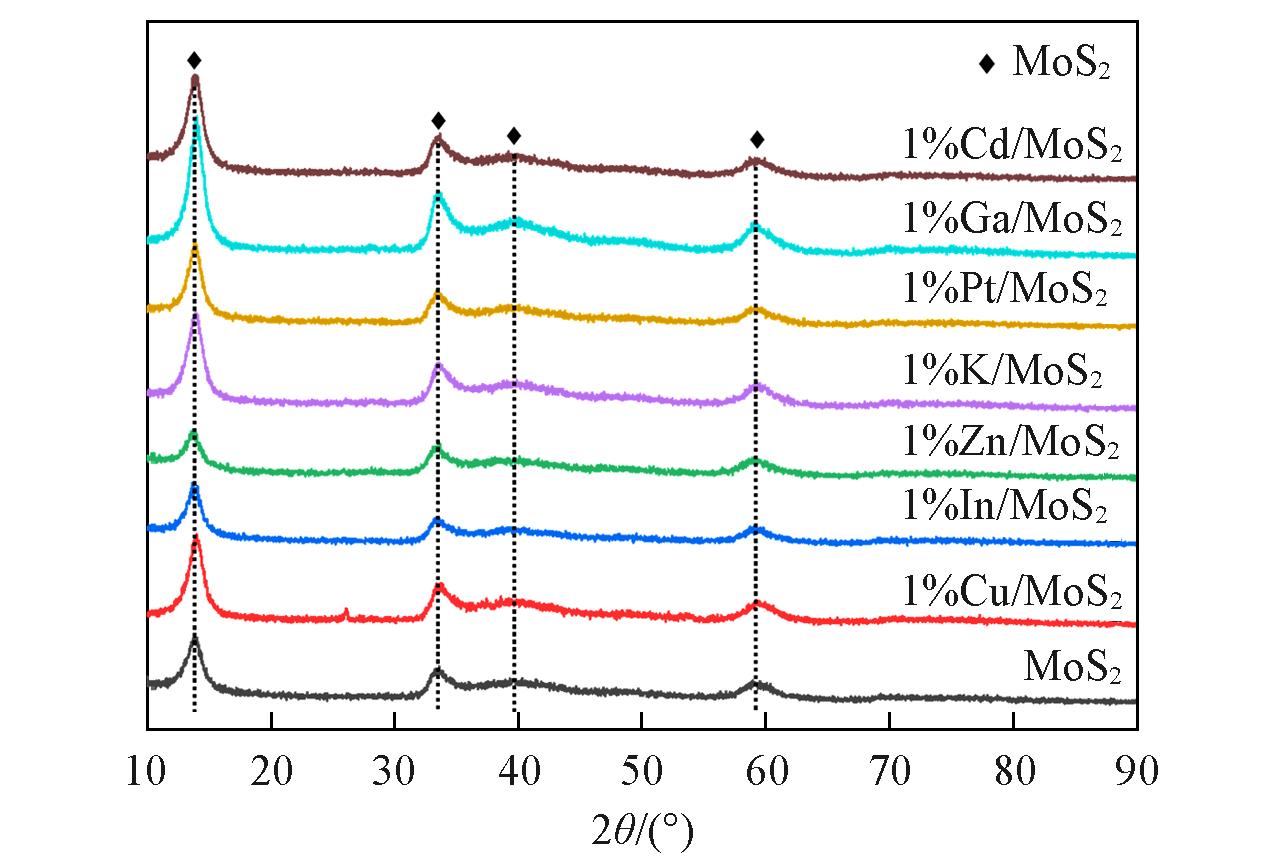
Fig.1 XRD patterns of MoS2 and modified MoS2
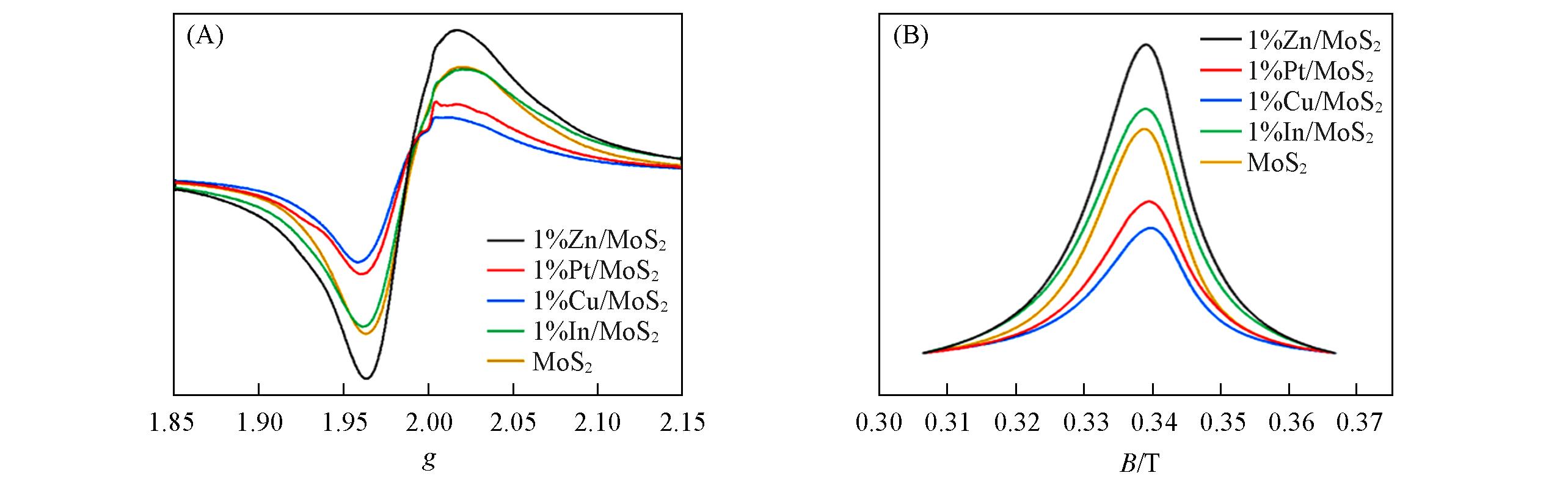
Fig.2 EPR spectra of MoS2 and modified MoS2(A) EPR spectra of MoS2 and modified MoS2. (B) The corresponding EPR absorption spectra derived from (A) through numerical integration and g-to-B axis conversion, where the peak areas were employed to semi-quantitatively evaluate the relative oxygen vacancy concentrations.
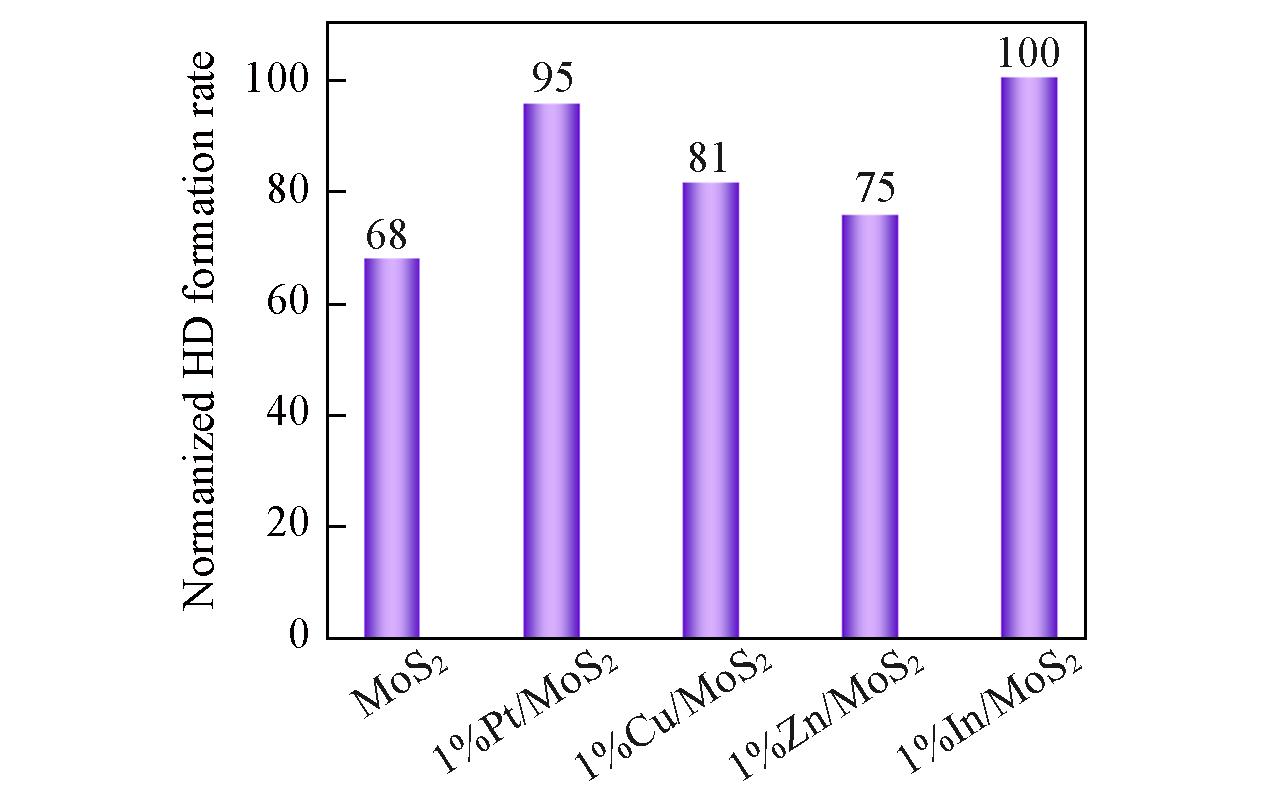
Fig.3 Normalized HD formation rate of MoS2 and modified MoS2
| Catalyst | CO2 conv.(%) | Selectivity(%) | |||
|---|---|---|---|---|---|
| CO | CH3OH | CH4 | Other | ||
| MoS2 | 13.7 | 8.5 | 82.0 | 9.0 | 0.5 |
| 0.5%Zn/MoS2 | 13.9 | 5.5 | 88.1 | 5.8 | 0.6 |
| 1%Zn/MoS2 | 14.8 | 5.0 | 90.5 | 4.0 | 0.5 |
| 2%Zn/MoS2 | 13.7 | 5.5 | 91.2 | 3.0 | 0.3 |
| 3%Zn/MoS2 | 12.8 | 5.1 | 89.7 | 4.8 | 0.4 |
| 4%Zn/MoS2 | 11.6 | 6.2 | 88.9 | 4.5 | 0.4 |
Table 4 Catalytic performances of xZn/MoS2 catalysts on CO2 hydrogenation*
| Catalyst | CO2 conv.(%) | Selectivity(%) | |||
|---|---|---|---|---|---|
| CO | CH3OH | CH4 | Other | ||
| MoS2 | 13.7 | 8.5 | 82.0 | 9.0 | 0.5 |
| 0.5%Zn/MoS2 | 13.9 | 5.5 | 88.1 | 5.8 | 0.6 |
| 1%Zn/MoS2 | 14.8 | 5.0 | 90.5 | 4.0 | 0.5 |
| 2%Zn/MoS2 | 13.7 | 5.5 | 91.2 | 3.0 | 0.3 |
| 3%Zn/MoS2 | 12.8 | 5.1 | 89.7 | 4.8 | 0.4 |
| 4%Zn/MoS2 | 11.6 | 6.2 | 88.9 | 4.5 | 0.4 |
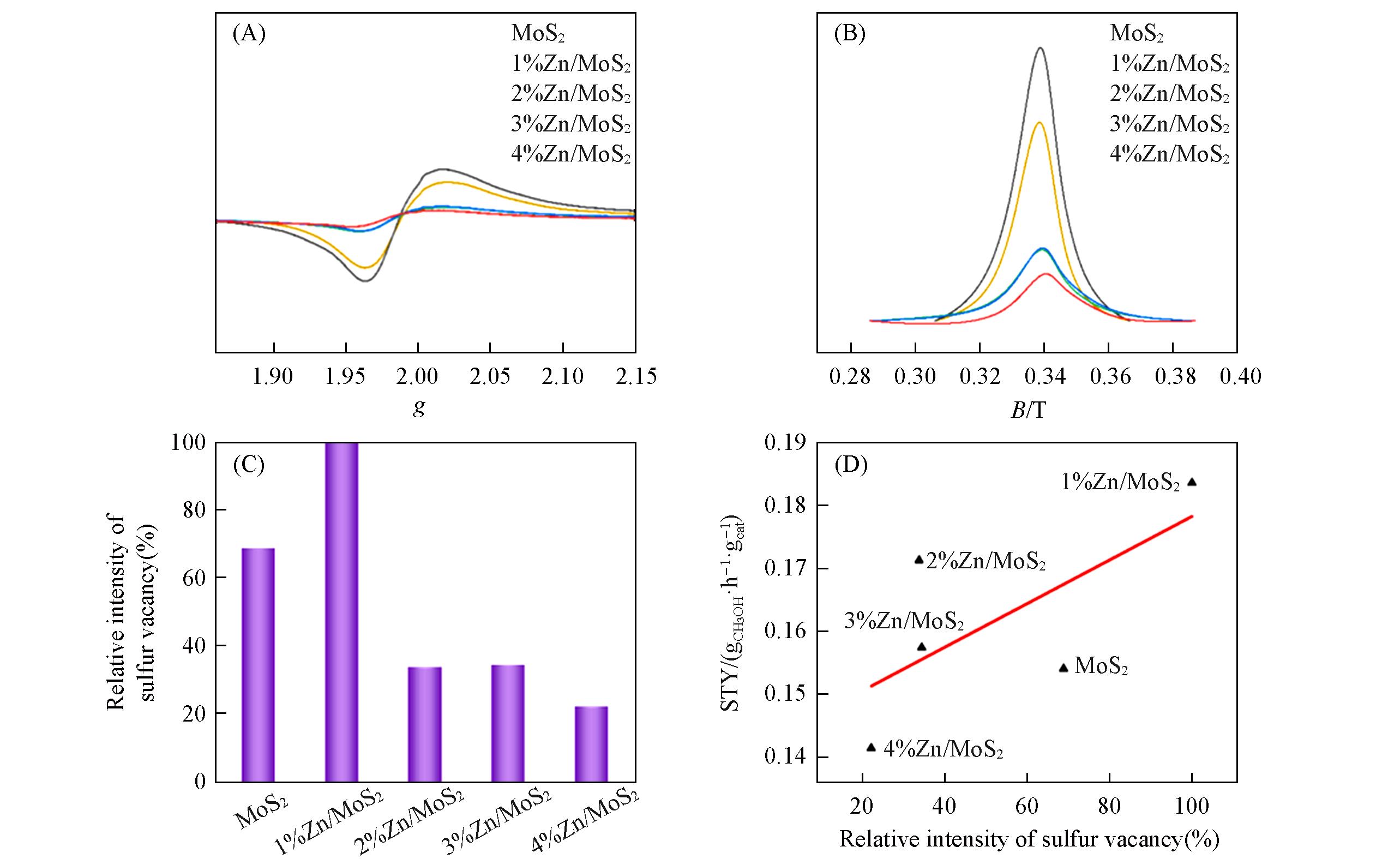
Fig.4 EPR spectra of MoS2 modified by Zn(A) EPR spectra of MoS2 modified with different Zn loadings. (B) Corresponding EPR absorption spectra derived from (A) through numerical integration and g-to-B axis conversion, where the peak areas were employed to semi-quantitatively evaluate the relative oxygen vacancy concentrations. (C) Semi-quantitative comparison of relative sulfur vacancy concentrations normalized to the sample with the highest vacancy density. (D) Linear correlation between STY of methanol and the relative sulfur vacancy concentration of catalyst.
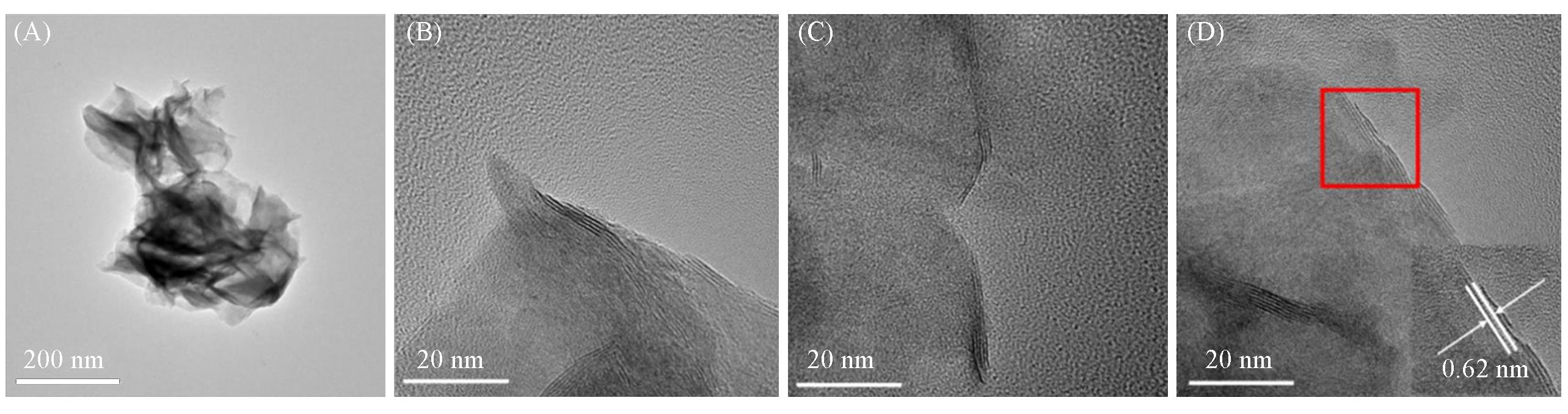
Fig.5 TEM images of the reduced MoS2 catalyst
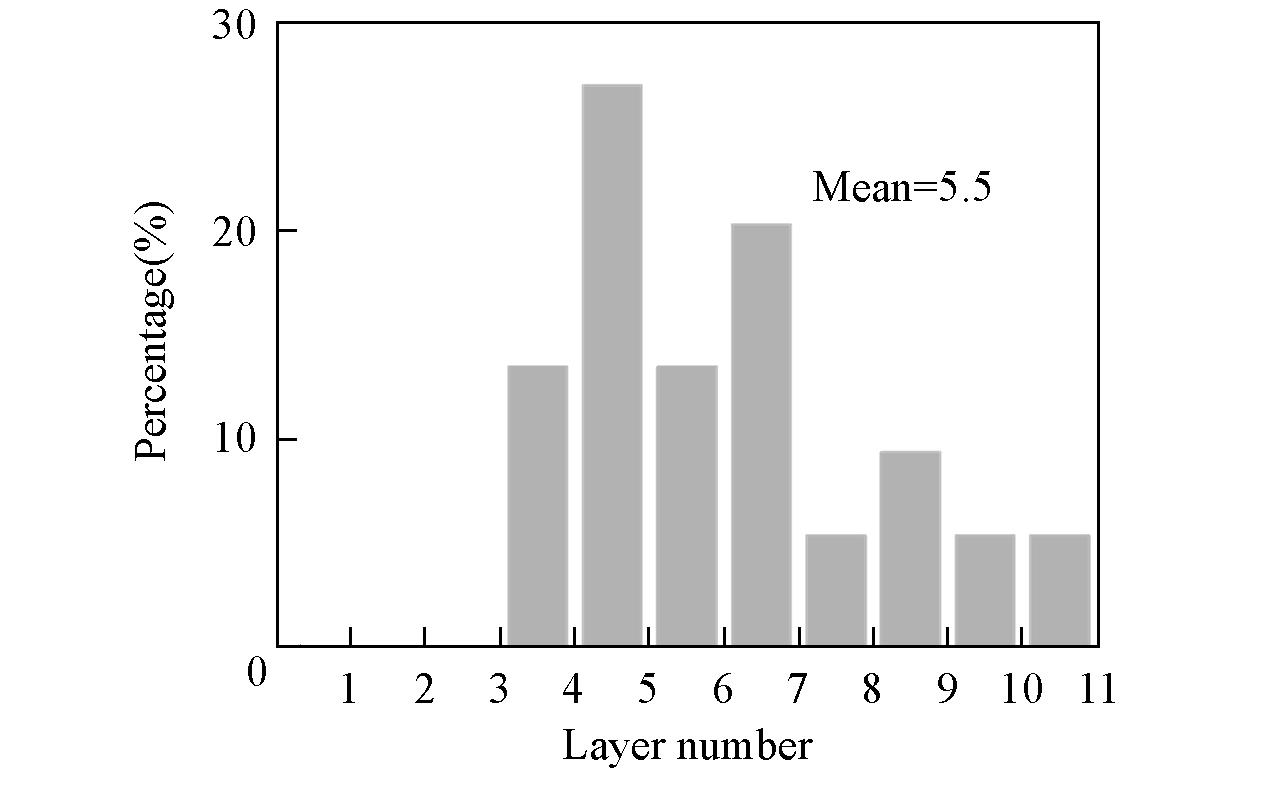
Fig.6 Layer number statistics of MoS2 from TEM images
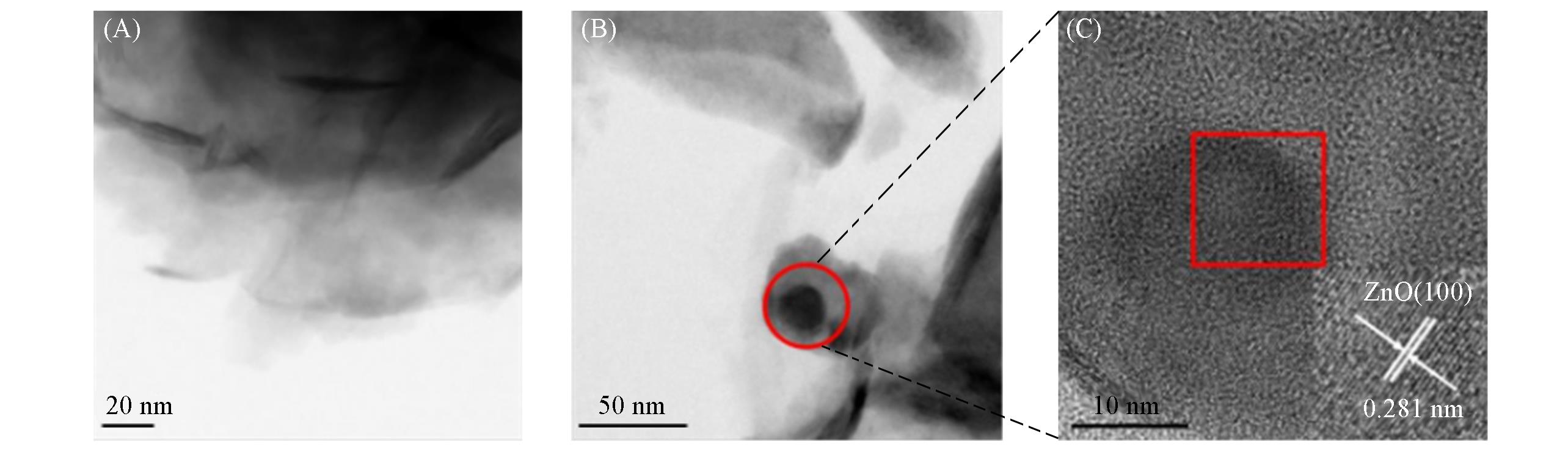
Fig.7 TEM images of the reduced 2%Zn/MoS2 catalyst
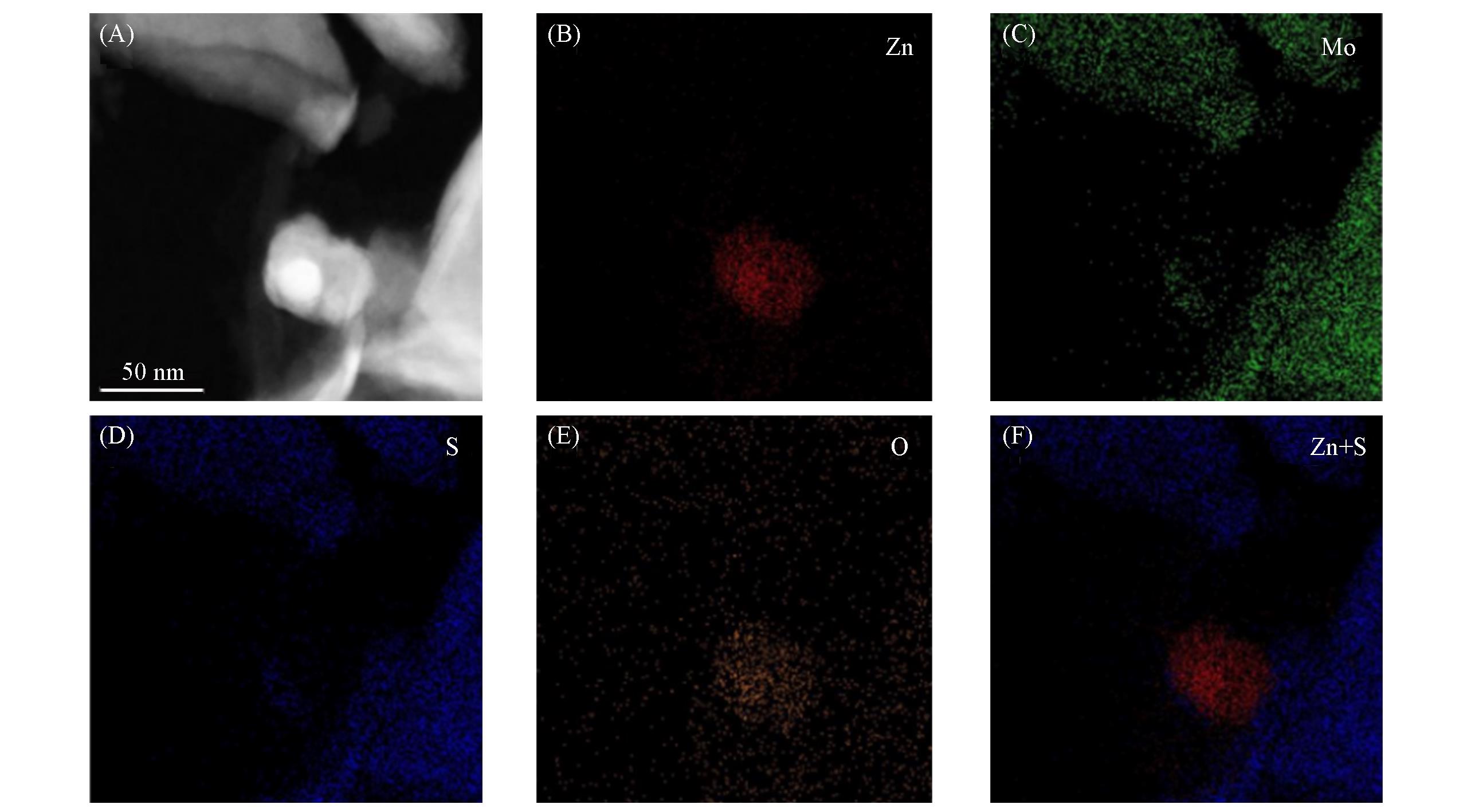
Fig.8 STEM image(A) and EDS elemental mapping images of Zn(B), Mo(C), S(D), O(E) and Zn+S(F) of reduced 2%Zn/MoS2 catalyst
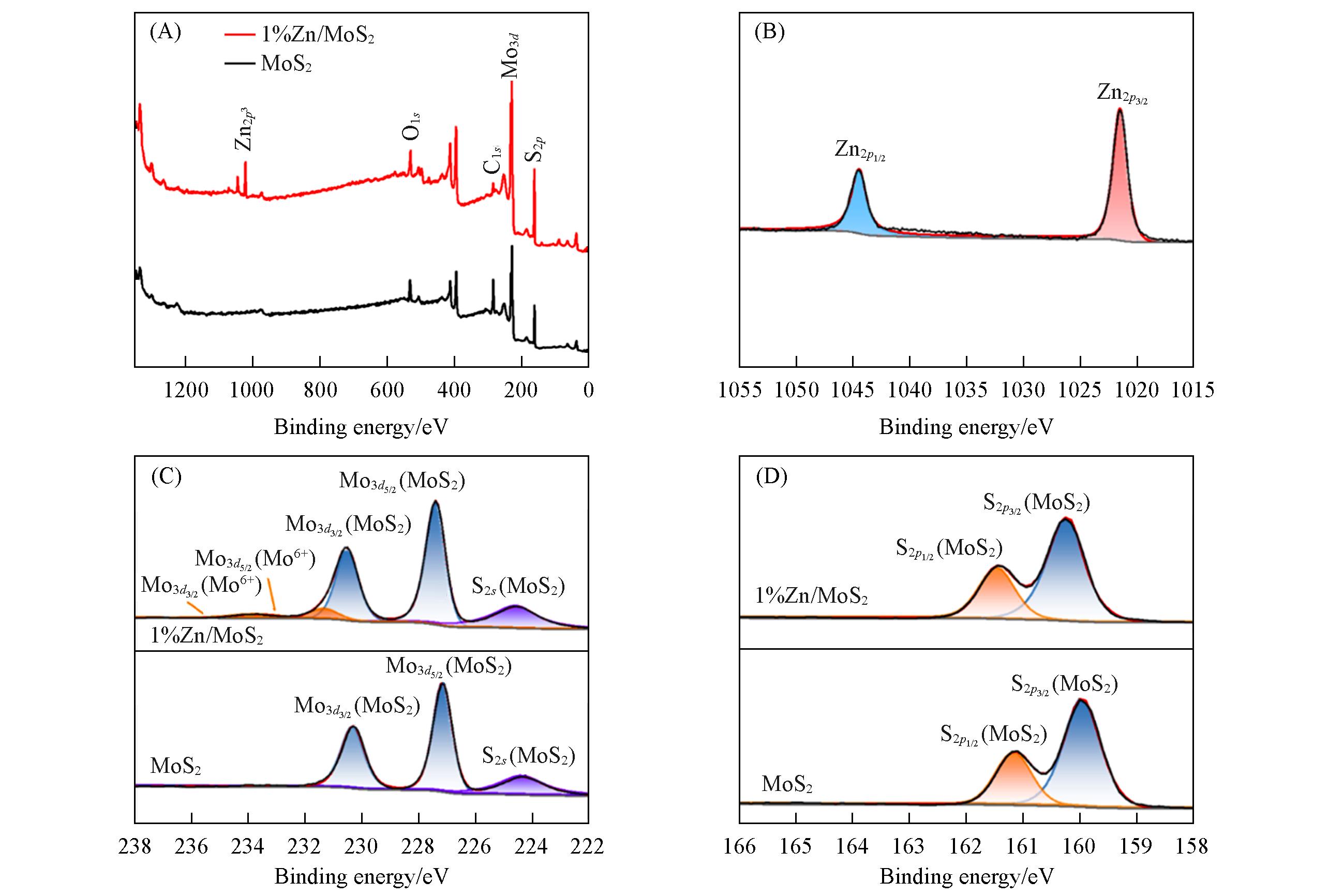
Fig.9 XPS spectra of MoS2 and 1%Zn/MoS2 catalysts(A) Survey; (B) Zn; (C) Mo; (D) S.
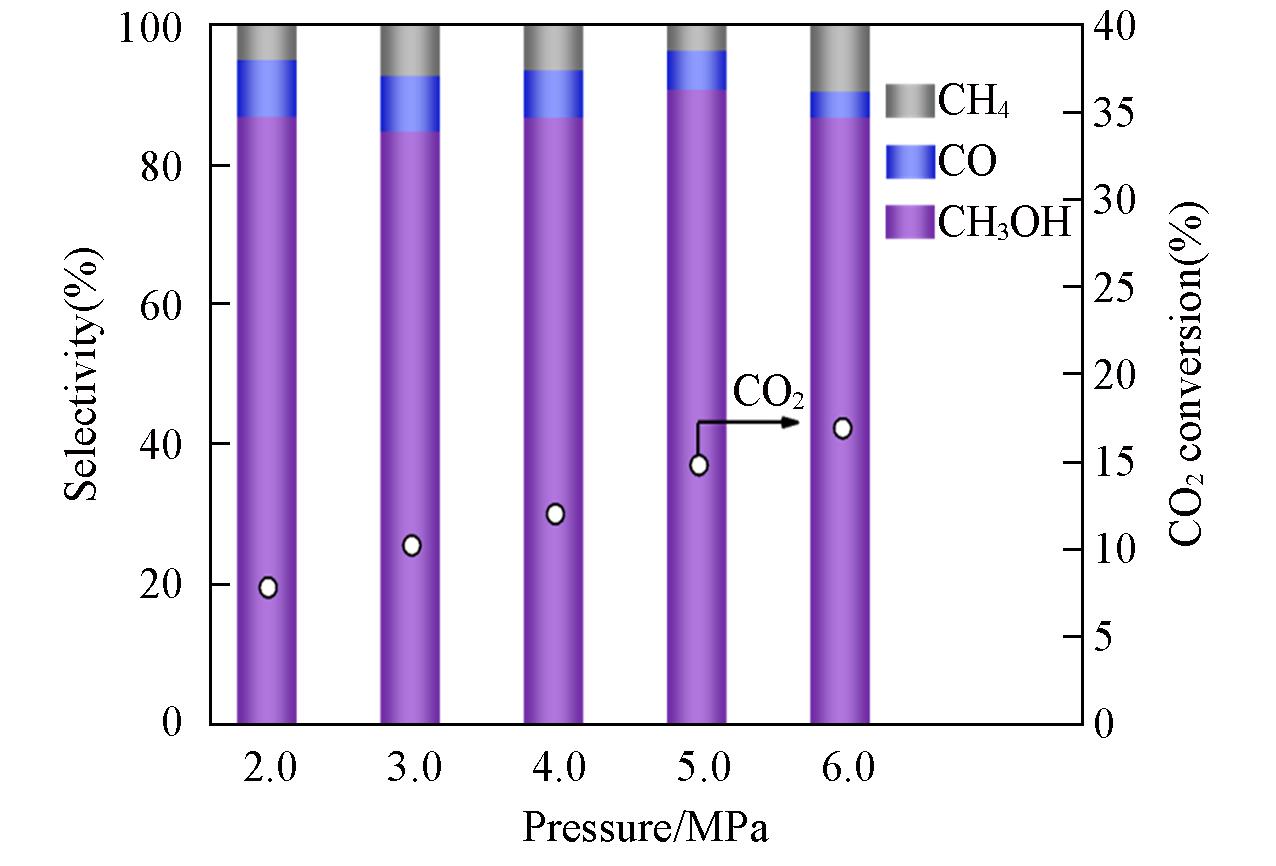
Fig.10 Catalytic performances of 1%Zn/MoS2 for CO2 hydrogenation under varied pressuresReaction conditions: 220 ℃; 3000 h-1; V(H2)/V(CO2)=3∶1; 6 h.
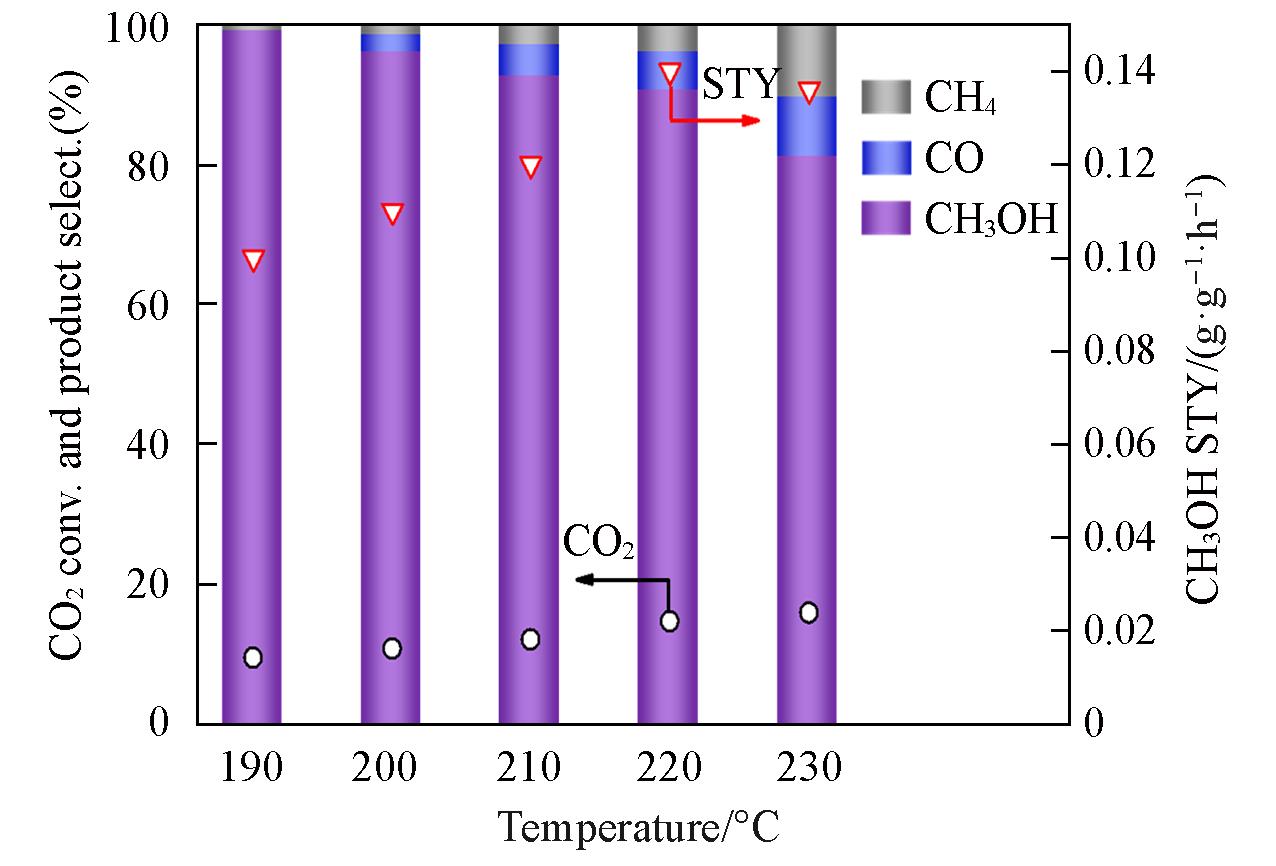
Fig.11 Catalytic performances of 1%Zn/MoS2 for CO2 hydrogenation under different temperaturesReaction conditions: 5.0 MPa; 3000 h-1; V(H2)/V(CO2)=3∶1; 6 h.
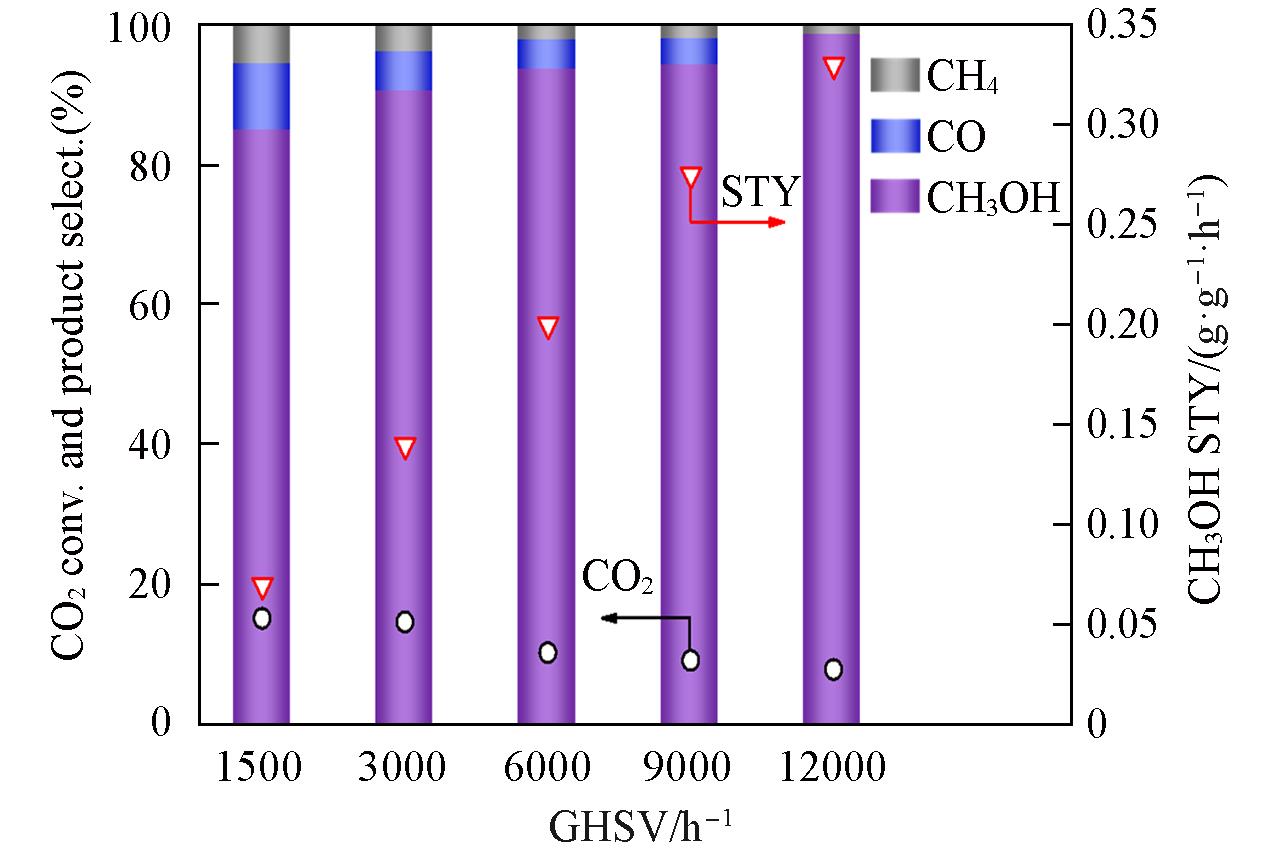
Fig.12 Catalytic performances of 1%Zn/MoS2 for CO2 hydrogenation under different GHSVReaction conditions: 220 ℃; 5.0 MPa; V(H2)/V(CO2)=3∶1; 6 h.
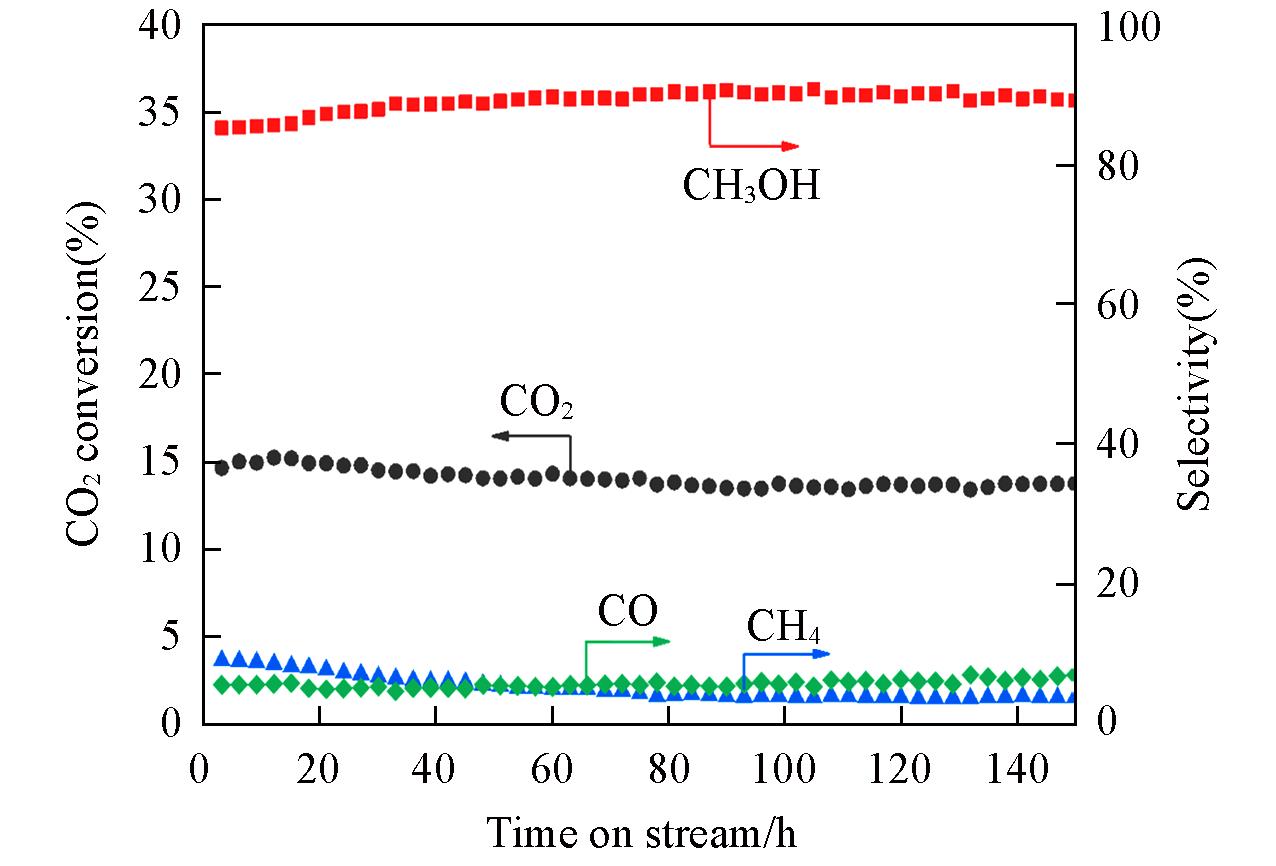
Fig.13 Stability test of 1%Zn/MoS2 for CO2 hydrogenationReaction conditions: 220 ℃; 5.0 MPa; GHSV=3000 h-1; V(H2)/V(CO2)=3∶1.
| [1] | McLaughlin H., Littlefield A. A., Menefee M., Austin K., Tobias H., Benjamin K., Morgan D., Jinsoo K., Steven G., Renew. Sustain. Energy Rev., 2023, 177, 113215 |
| [2] | Ye J., Dimitratos N., Rossi L., Thonemann N., Beale A., Wojcieszak R., Science, 2025, 387, eadn9388 |
| [3] | Behrens M., Studt F., Kasatkin I., Kühl S., Hävecker M., Abild P. F., Zander S., Girgsdies F., Kurr P., Kniep B., Tovar M., Richard W., Jens K., Robert S., Science, 2012, 336, 1219831 |
| [4] | Zhang B., Liu R., Li L., Guo W., Zhang B., Chen B., Yuan W., Li P., Zhang S., Wang J., Yang J., Luo Z., Guo Y., Nat. Commun., 2025, 16, 7847 |
| [5] | Jaroslav P., Jan B., Jirí V., Jan S., Tomas H., Jhonatan R., Milos S., React. Funct. Polym., 2025, 217, 106478 |
| [6] | Hu J., Cai Y., Xie J., Hou D., Yu L., Deng D., Chem, 2024, 10, 1084—1117 |
| [7] | Xu Z., Ying X., Lei W., Nano Res., 2024, 17, 960—981 |
| [8] | Ding S., Duan J., Chen S., EcoEnergy, 2024, 2, 45—82 |
| [9] | Wang Y., Wang L., Zhang J., Cai X., Diao J., Yang L., Liu H., EcoEnergy, 2023, 1, 207—214 |
| [10] | Shi Y., Zhang D., Miao H. F., Wu X. K., Wang Z. C., Zhan T. R., Lai J. P., Wang L., Sci. China Chem., 2022, 65, 1829—1837 |
| [11] | Xiong H., Kunwar D., Jiang D. E., García V. C., Li H., Du C., Canning G., Pereira H. X., Wan Q., Lin S. C., Purdy S. T., Miller J., Leung K. S., Chou S. H., Brongersma H., Veen R., Huang J., Guo H., Wang Y. K., Datye A., Nat. Catal., 2021, 4, 830—839 |
| [12] | Hu J., Yu L., Deng J., Wang Y., Cheng K., Ma C., Zhang Q., Wen W., Yu S., Pan Y., Yang J., Ma H., Qi F., Wang Y., Zheng Y., Chen M., Huang R., Zhang S., Zhao Z., Mao J., Meng X., Ji Q., Hou G., Han X., Bao X., Wang Y., Deng D., Nat. Catal., 2021, 4, 242—250 |
| [13] | Zhou S., Zeng H., ACS Catal., 2022, 12, 9872—9886 |
| [14] | Zhou S., Ma W., Anjum U., Kosari M., Xi S., Kozlov M. S., Zeng H., Nat. Commun., 2023, 14, 5872 |
| [15] | Li Y., Wang S., Hu Y., Zhou X., Zhang M., Jia X., Yang Y., Lin B., Chen G., J. Mater. Chem. A, 2022, 10, 5273—5279 |
| [16] | Li X., Huang J., Yuan M., Zhao Y., Li M., Du J., Li J., Wu F., You Z., Appl. Catal. B: Environ., 2026, 382, 125970 |
| [17] | Lei Y., Hou J., Wang F., Ma X., Jin Z., Xu J., Min S., Appl. Surf. Sci., 2017, 420, 456—464 |
| [18] | Yang F., Zhou W., Yang C., Zhang T., Huang Y., Acta Physico⁃Chim. Sin., 2024, 40, 2308017 |
| [19] | Jiang X., Li X., Xiong S., Liu W., Yan J., Duan X., Song S., Cheng Q., Tian Y., Li X., Carbon Capture Science Technology, 2025, 14, 100376 |
| [20] | Li H., Yin Z., He Q., Li H., Huang X., Lu G., Fam D., Tok A., Zhang Q., Zhang H., Small, 2012, 8, 63—67 |
| [21] | Halim U., Zheng C. R., Chen Y., Lin Z., Jiang S., Cheng R., Huang Y., Duan X., Nat. Commun., 2013, 4, 2213 |
| [22] | Zhu X., Su Z., Wu C., Cong H., Ai X., Yang H., Qian J., Nano Lett., 2022, 22, 2956—2963 |
| [23] | Amani M., Burke R. A., Ji X., Zhao P., Lien D., Taheri P., Ahn G., Kirya D., Ager W. J., Yablonovitch E., Kong J., Dubey M., Javey A., ACS Nano, 2016, 10, 6535—6541 |
| [24] | Garcia⁃Esparza A. T., Park S., Abroshan H., Paredes A. O., Vinson J., Abraham B., Kim R. T., Nordlund D., Gallo A., Alonso⁃Mori R., Zheng X., Sokaras D., ACS Nano, 2022, 16, 6725—6733 |
| [25] | Ye L., Xu H., Zhang D., Chen S., Mater. Res. Bull., 2014, 55, 221—228 |
| [26] | He F., Luo J., Liu S., Chem. Eng. J., 2016, 294, 362—370 |
| [27] | Marinov A. D., Bravo P. L., Shah A. R., Miller T. S., Howard C. A., Hinds G., Shearing P. R., Cullen P. L., Brett D., ACS Nano, 2023, 17, 5163—5186 |
| [28] | Niu Z., Gao X., Lou S., Wen N., Zhao J., Zhang Z., Ding Z., Yuan R., Dai W., Long J., ACS Catal., 2023, 13, 2998—3006 |
| [29] | Chen K., Wang F., Wang Y., Zhang F., Huang X., Kang J., Zhang Q., Wang Y., JACS Au, 2023, 3, 2894—2904 |
| [30] | MaY., Leng D., Zhang X., Fu J., Pi C., Zheng Y., Gao B., Li X., Li N., Chu P., Luo Y., Huo K., Small, 2022, 18, 2203173 |
| [31] | Yang S. D., Zheng Y. X., Yang L., Liu Z. H., Zhou W. J., Wang S. Y., Zhang R. J., Chen L. Y., Appl. Surf. Sci., 2017, 421, 891 |
| [32] | Hou S., Lian Y., Xu Z., Wang D., Ban C., Zhao J., Zhang H., Electrochimica Acta, 2020, 330, 135208 |
| [33] | Zhang Z., Zuo J., Luo L., Yang X., Ma Z., Jin H., Yuan Y., Qian Q., Chen Q., Luo Y., J. Catal., 2024, 436, 115621 |
| [34] | Fei H., Liu R., Wang J., Guo T., Wu Z., Wang D., Liu F., Adv. Funct. Mater., 2023, 33, 2302501 |
| [35] | Zhang S., Wang H., Joule, 2021, 5, 1038—1040 |
| [36] | Huang F., Wang S., Zhang L., Sep. Purif. Technol., 2025, 365, 132681 |
| [37] | Qin L., Gao Y., Han C., Zhu M., Wang S., J. Mater. Chem. A, 2024, 12, 20107 |
| [1] | 张明文, 周杰, 王兆宇. Pt/Cd-TiO2选择性催化CO2加氢反应的性能[J]. 高等学校化学学报, 2025, 46(9): 20250109. |
| [2] | 陈浩, 陈桂, 宋丹丹, 曾艳红, 刘文虎, 张明. 高活性Cu-ZnO@SiO2纳米催化剂催化CO2加氢制甲醇[J]. 高等学校化学学报, 2023, 44(11): 20230268. |
| [3] | 王兆宇, 陈益宾, 程锦添, 张明文. Ni-Co/TiO2增强CO2加氢反应性能的研究[J]. 高等学校化学学报, 2023, 44(11): 20230308. |
| [4] | 张昕昕, 许狄, 王艳秋, 洪昕林, 刘国亮, 杨恒权. CO2加氢制低碳醇CuFe基催化剂中的Mn助剂效应[J]. 高等学校化学学报, 2022, 43(7): 20220187. |
| [5] | 周紫璇, 杨海艳, 孙予罕, 高鹏. 二氧化碳加氢制甲醇多相催化剂研究进展[J]. 高等学校化学学报, 2022, 43(7): 20220235. |
| [6] | 刘瀚林, 尹琳琳, 陈西凤, 李国栋. 氧化铟基纳米催化剂用于二氧化碳选择性加氢的研究进展[J]. 高等学校化学学报, 2021, 42(5): 1430. |
| [7] | 张维中,温月丽,宋镕鹏,王斌,张倩,黄伟. 催化剂表面Cu0含量对二氧化碳加氢合成C2+醇性能的影响[J]. 高等学校化学学报, 2020, 41(6): 1297. |
| [8] | 李振华, 施润, 赵家琦, 张铁锐. 光驱动C1转换到高附加值化学品的研究进展[J]. 高等学校化学学报, 2020, 41(4): 604. |
| [9] | 李忠, 郭启海, 张小兵, 郑华艳, 范辉, 谢克昌. 前驱体物相转变对浆态床合成甲醇催化剂活性的影响[J]. 高等学校化学学报, 2009, 30(11): 2215. |
| [10] | 曹勇, 陈立芳, 戴维林, 范康年, 吴东, 孙予罕. 沉淀还原法制备高性能CO2加氢合成甲醇Cu/ZnO/Al2O3催化剂[J]. 高等学校化学学报, 2003, 24(7): 1296. |
| [11] | 傅钢, 吕鑫, 徐昕, 万惠霖. CO2在金属表面活化的UBI-QEP方法研究[J]. 高等学校化学学报, 2002, 23(8): 1570. |
| [12] | 洪中山, 邓景发, 范康年, 曹勇. 凝胶网格共沉淀法制备Cu/ZnO/Al2O3合成甲醇催化剂[J]. 高等学校化学学报, 2002, 23(4): 706. |
| [13] | 孙琦, 张玉龙, 马艳, 邓景发. CO2/H2和(CO/CO2)+H2低压合成甲醇催化过程的本质[J]. 高等学校化学学报, 1997, 18(7): 1131. |
| [14] | 汪海有, 夏文生, 万惠霖, 区泽棠. 清洁及氧修饰Cu(100)表面上CO2加氢制甲醇反应的能量学[J]. 高等学校化学学报, 1997, 18(7): 1120. |
| [15] | 李基涛, 高利珍, 张伟德, 林建毅, 陈华毅, TanKuang-Lee. 甲醇含成Cu-Mn/SiO2催化剂的研究[J]. 高等学校化学学报, 1997, 18(2): 285. |
| 阅读次数 | ||||||
|
全文 |
|
|||||
|
摘要 |
|
|||||
