

高等学校化学学报 ›› 2026, Vol. 47 ›› Issue (5): 20260042.doi: 10.7503/cjcu20260042
尹诗琪1, 郑志刚1, 何心桐1, 王世敏1, 顾星桂2( ), 王二静1()
收稿日期:2026-01-21
出版日期:2026-05-10
发布日期:2026-03-10
通讯作者:
顾星桂
E-mail:guxinggui@mail.buct.edu.cn;wangej@hubu.edu.cn
作者简介:王二静, 女, 博士, 教授, 主要从事有机光电功能材料方面的研究. E-mail: wangej@hubu.edu.cn基金资助:
YIN Shiqi1, ZHENG Zhigang1, HE Xintong1, WANG Shimin1, GU Xinggui2(), WANG Erjing1()
Received:2026-01-21
Online:2026-05-10
Published:2026-03-10
Contact:
GU Xinggui
E-mail:guxinggui@mail.buct.edu.cn;wangej@hubu.edu.cn
Supported by:摘要:
历经20多年的发展, 聚集诱导发光(Aggregation-induced emission, AIE) 已成为一个中国科学家引领的新兴科学领域. 随着全球化石能源的日益枯竭, 人类对源于天然的材料需求和高效利用正日益激增. 天然AIE发光材料具有原料易得、 成本低、 生物相容性好及种类丰富等优点, 近年来引起了更多的关注. 这些天然AIE材料已成功应用于化学传感、 生物成像、 食品检测及肿瘤诊疗等领域中. 尽管如此, 大多天然AIE发光材料面临结构不易修饰、 发光效率低、 功能化有限及开发不充分等诸多问题, 其应用受到限制, 对其功能化开发的研究有待深入. 基于此, 本文首先概述了AIE的发光机理, 随后按照生物碱、 黄酮、 香豆素和萜等分类, 重点对天然AIE发光材料的发光性质、 结构改性等进行了分析总结, 并对其发光机理及应用展开讨论, 最后对该领域的发展机遇和前景进行了展望.
中图分类号:
TrendMD:
尹诗琪, 郑志刚, 何心桐, 王世敏, 顾星桂, 王二静. 从原生到功能: AIE天然产物的发光、 改性及应用. 高等学校化学学报, 2026, 47(5): 20260042.
YIN Shiqi, ZHENG Zhigang, HE Xintong, WANG Shimin, GU Xinggui, WANG Erjing. From Protogenesis to Functionalization: Luminescence, Modification and Application of AIE⁃active Natural Products. Chem. J. Chinese Universities, 2026, 47(5): 20260042.
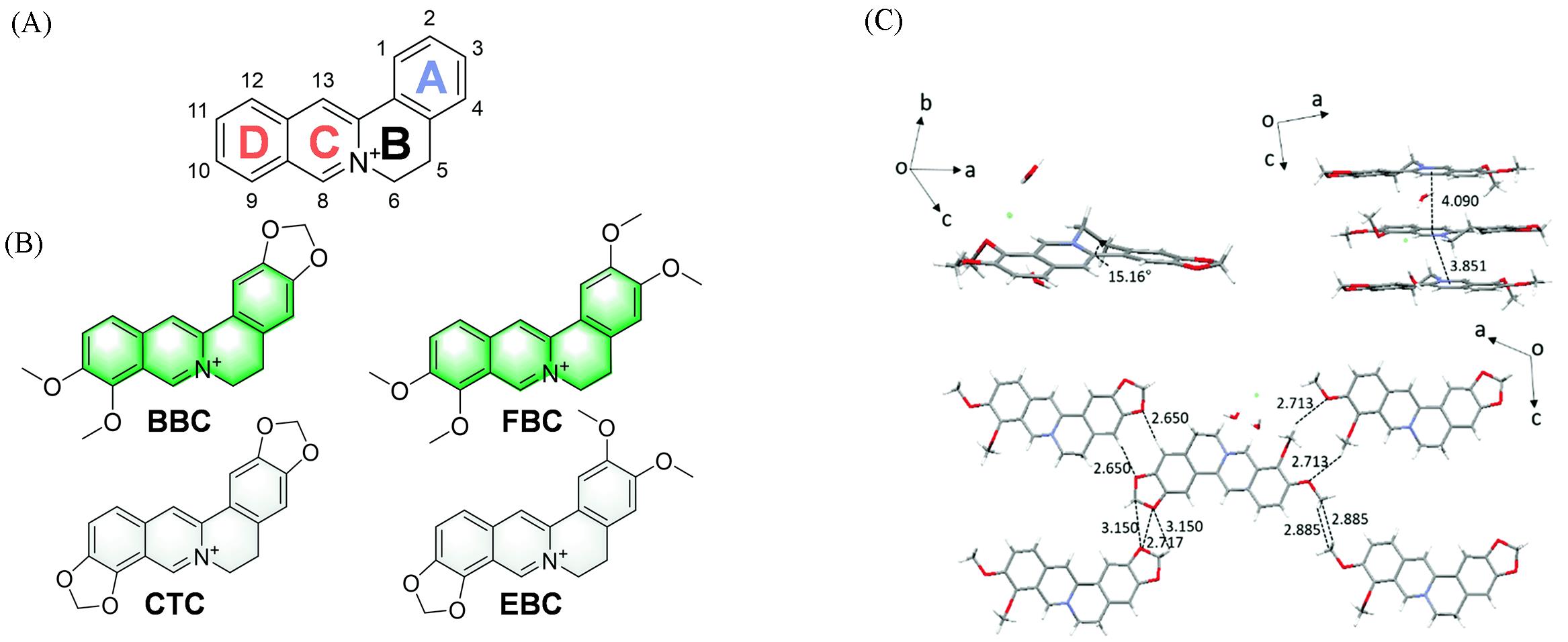
Fig.1 Chemical and single⁃crystal structures of isoquinoline alkaloids(A) The core structure of isoquinoline alkaloids; (B) chemical structures of quaternary protoberberine alkaloid(QPA) derivatives: Berberine chloride(BBC), Fibrauretine chloride(FBC), Coptisine chloride(CTC) and Epiberberine chloride(EBC); (C) the single-crystal structure of BBC[11].(C) Open access.
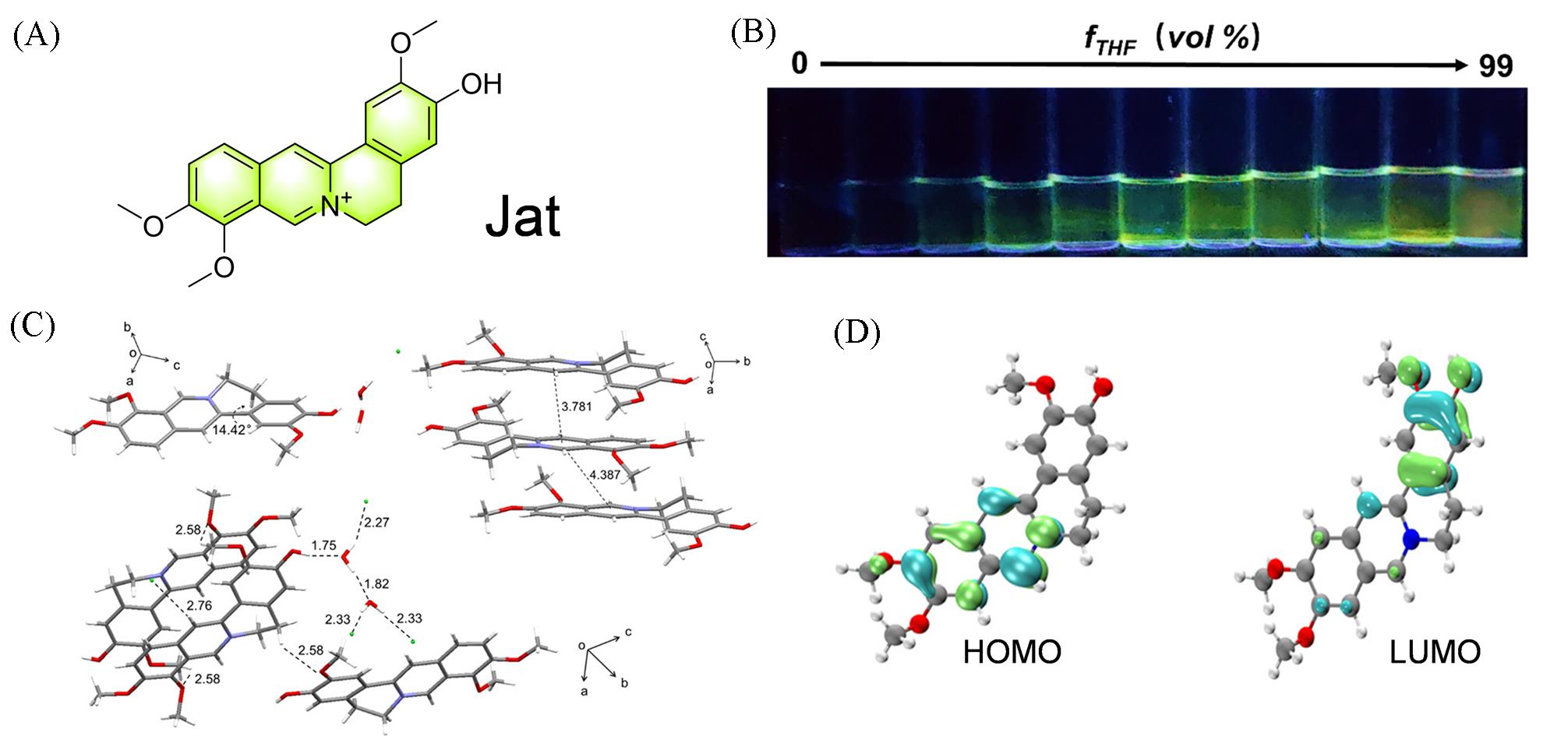
Fig.2 Chemical structure, spectra, single⁃crystal and electron distribution of Jatrorrhizine(A) Chemical structure of Jatrorrhizine(Jat); (B) photograph of Jat chloride in H2O and H2O/THF mixtures with different THF fractions; (C) single-crystal structure; (D) molecular orbital amplitude plots of the HOMO and LUMO energy levels of Jat chloride[32].(B—D) Copyright 2023, American Chemical Society.
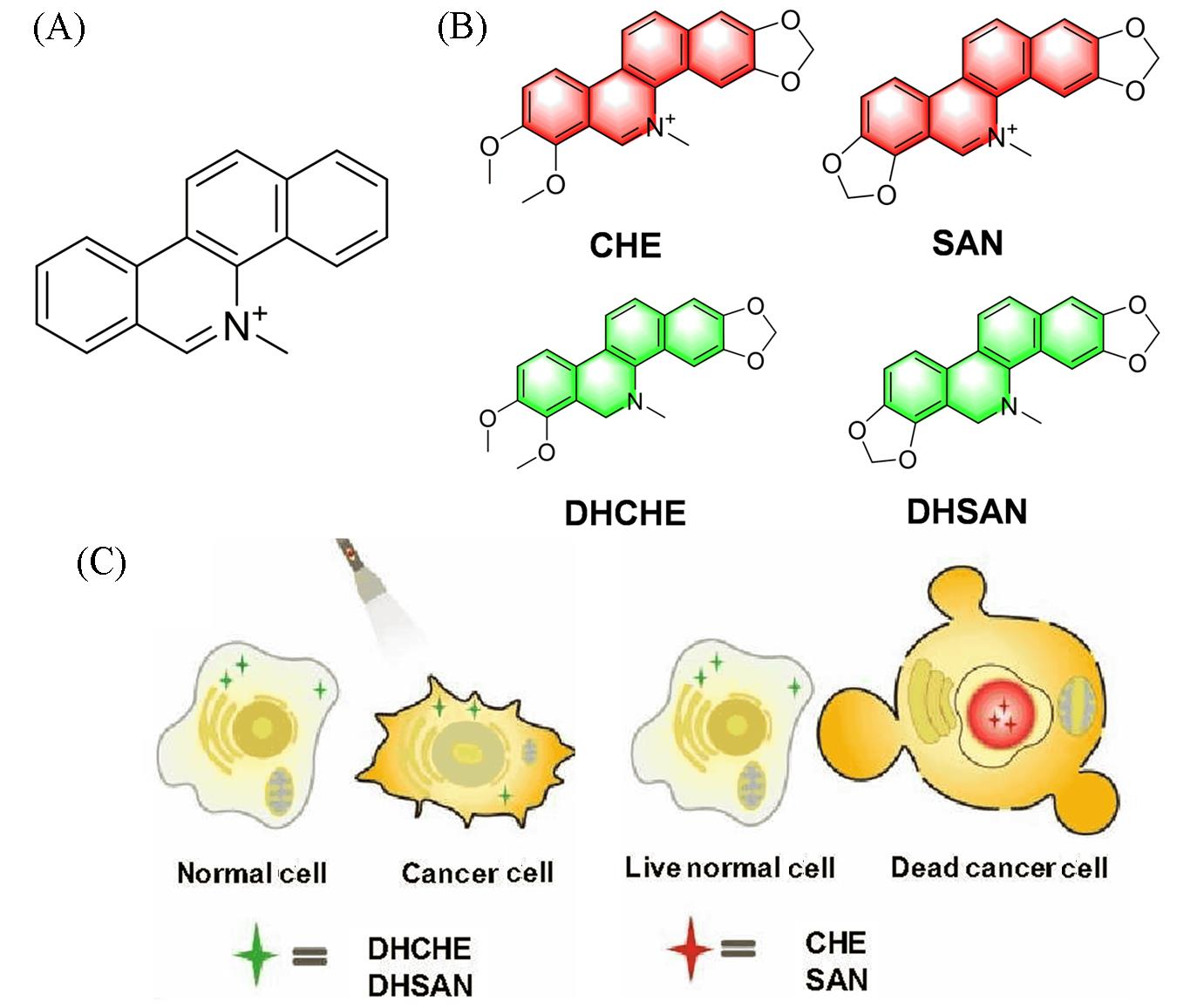
Fig.3 Chemical structures and photoactivated theranostic applications of benzo[c]phenanthridine alkaloids(A) The core structure of benzo[c]phenanthridine; (B) chemical structures of four benzo[c]phenanthridine alkaloids: CHE, SAN, DHCHE and DHSAN; (C) the photoactivatable cancer theranostics based on DHCHE and DHSAN for nucleus-targeted imaging and selective killing of cancer cells in a highly spatiotemporal resolution[35].(C) Copyright 2020, the Royal Society of Chemistry.
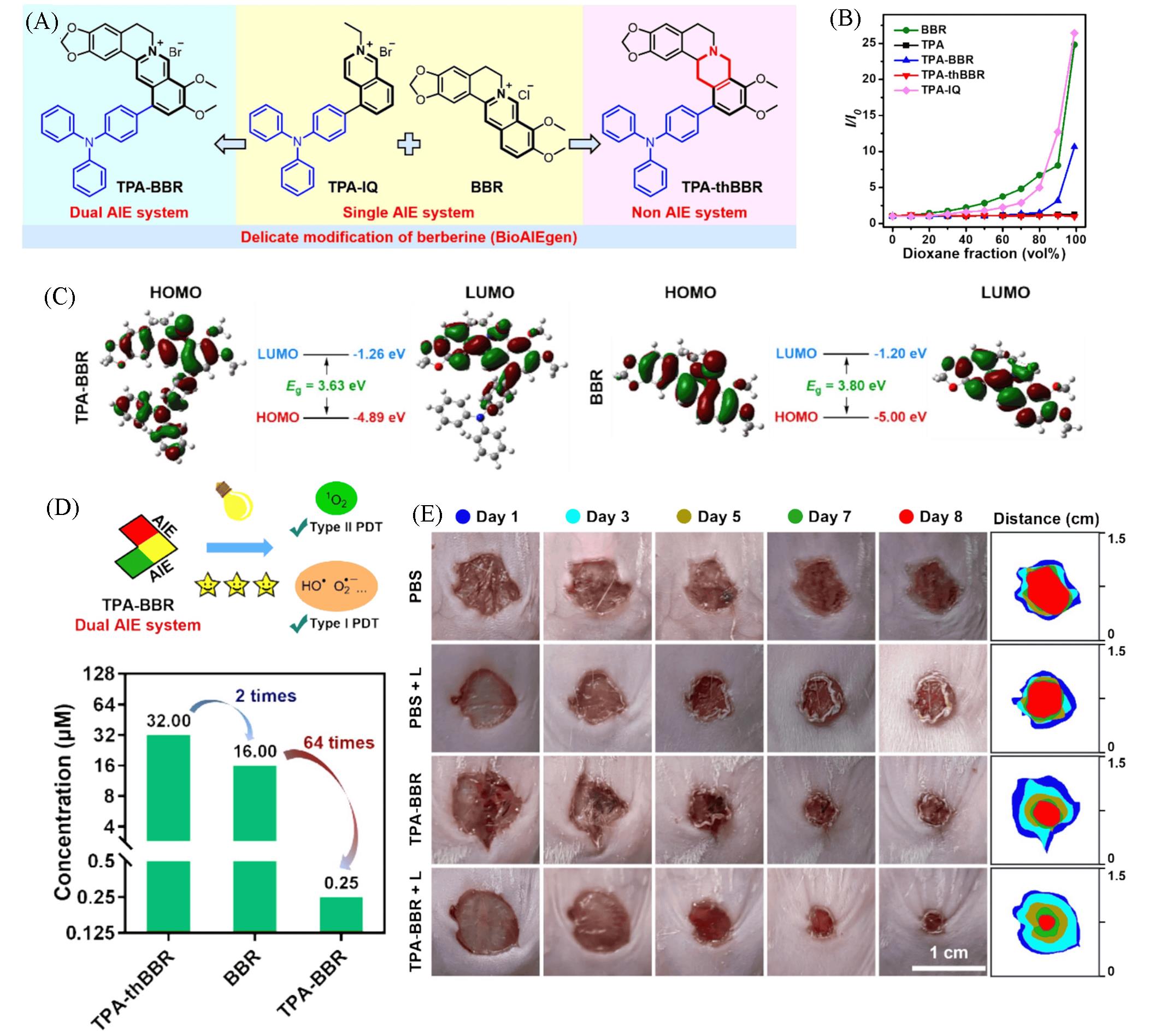
Fig.4 Photophysical properties, ROS generation capacity, and in vivo PDT antibacterial performance after modification via the dual AIE strategy(A) Chemical structures of TPA-IQ, BBR, TPA-BBR, TPA-thBBR; (B) the plot of the relative emission intensity(I/I0) versus dioxane fraction. I0and I are the peak values of PL intensities of designed compounds in MeOH and MeOH/dioxane mixtures, respectively; (C) molecular orbital amplitude plots of the HOMO and LUMO energy levels of TPA-BBR and BBR; (D) the concentrations of TPA-BBR, BBR, and TPA-thBBR required to achieve over 99.9% killing rate of S. aureus under white light irradiations; (E) photographs of MRSA-infected wounds treated with PBS or TPA-BBR in darkness or upon white light irradiation(50 mW/cm2) on days 1, 3, 5, 7, and 8 and the scale bars(on the right)[37].(A—E) Copyright 2025, Elsevier.
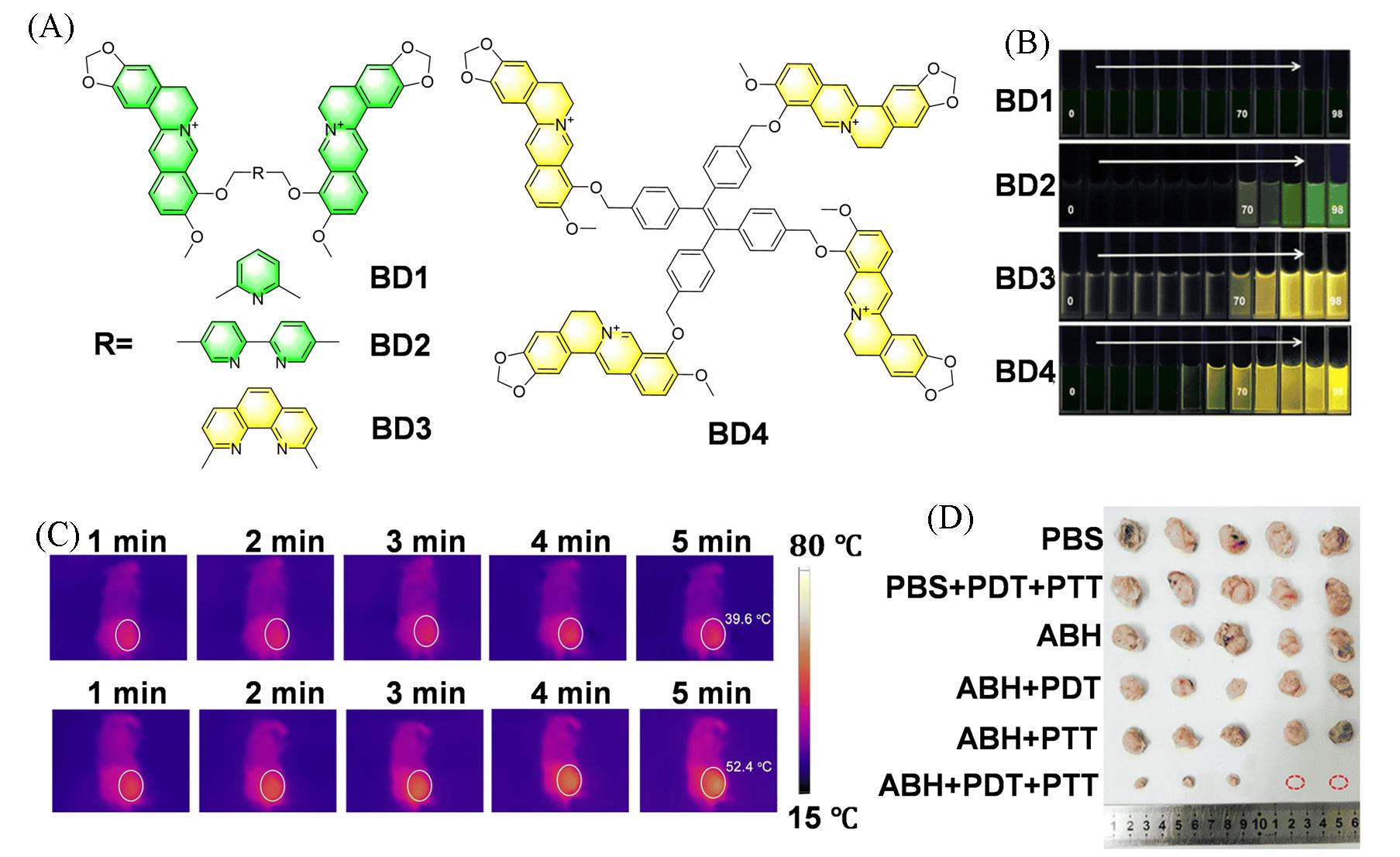
Fig.5 Photophysical properties, photothermal effect, and in vivo PDT/PTT antitumor performance of berberine dimers BD1—BD4(A) Chemical structures of berberine dimers BD1—BD3 and tetramer BD4; (B) fluorescence images of BD1—BD4 in different ratios of DMSO and Tris-HCl buffer; (C) infrared thermal images of tumor-bear mice from PBS+PTT group and ABH+PTT group; (D) the photographs of representative tumors resected from different groups[38].(A—D) Copyright 2022, the Royal Society of Chemistry.
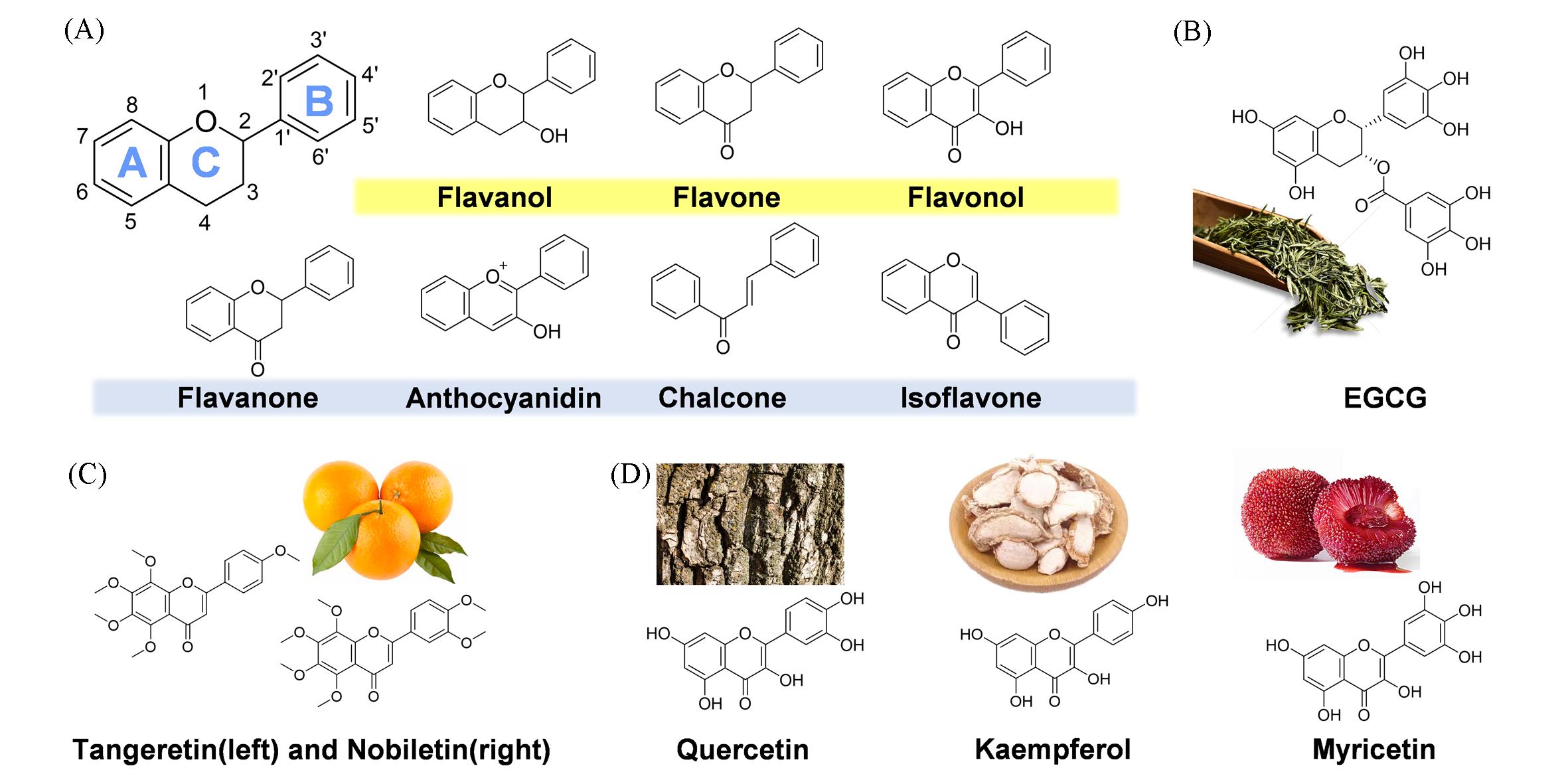
Fig.6 Classification of flavonoids, and structures of representative flavonoid compounds(A) The core structure and classification of flavonoids; (B—D) chemical structures of EGCG, Tangeretin, Nobiletin, Quercetin, Kaempferol, and Myricetin.
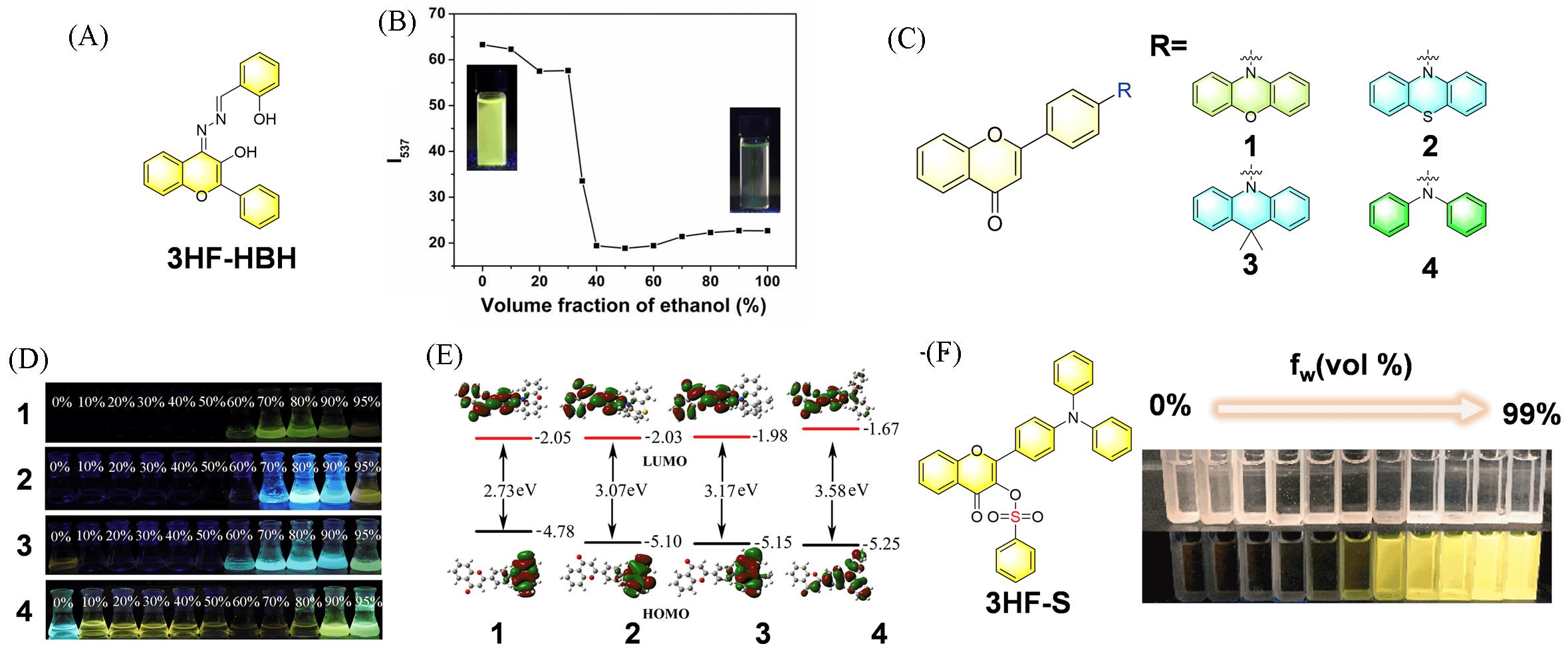
Fig.7 Chemical structures and AIE properties of 2⁃phenylchromone derivatives(A) Chemical structure of 3HF-HBH; (B) effects of ethanol volume fraction on the PL intensity of 3HF-HBH(100 μmol/L) at 537 nm. Insets: photographs of 3HF-HBH(100 μmol/L) in ethanol-water mixed solvents with 0(left) and 100%(right) ethanol under a UV lamp irradiation(365 nm)[50]; (C) the structures of compounds 1—4; (D) fluorescence photos of 1—4(100 μmol/L) in THF/H2O mixtures with different water fractions(fw) under UV light(365 nm); (E) the energy gaps and corresponding electron density distributions of HOMOs and LUMOs for 1—4[54]; (F) fluorescence photos of 3HF-S in MeOH/H2O mixtures(100 μmol/L) with different fw under UV light(365 nm)[59].(B) Copyright 2014, Elsevier; (D, E) Copyright 2020, Elsevier; (F) Copyright 2021, Elsevier.
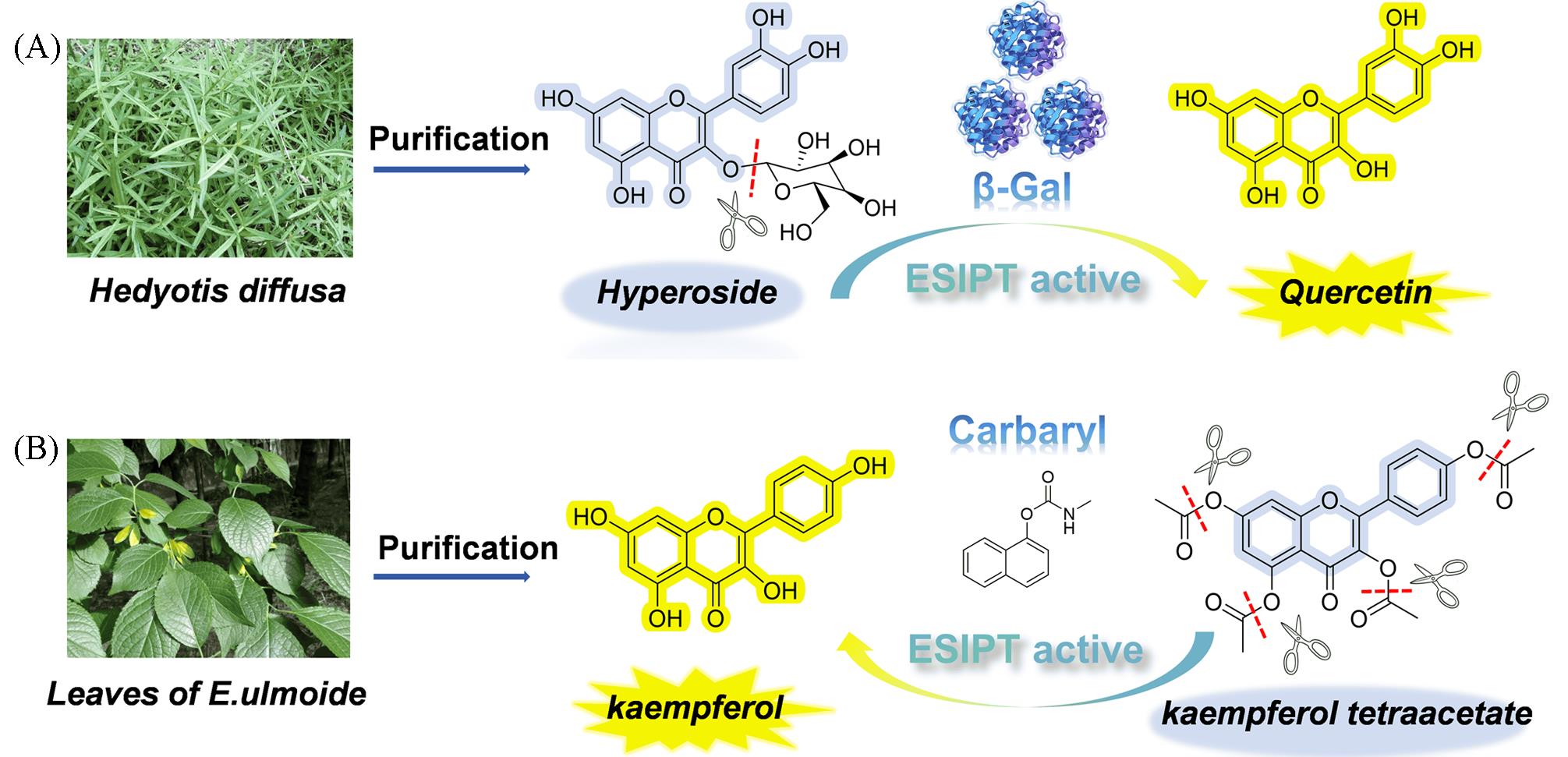
Fig.8 ESIPT activation induced AIE(A) Purification of hyperoside and the fluorescence mechanism after reaction with β-Gal; (B) purification of Kaempferol and the fluorescence mechanism after reaction with carbaryl.
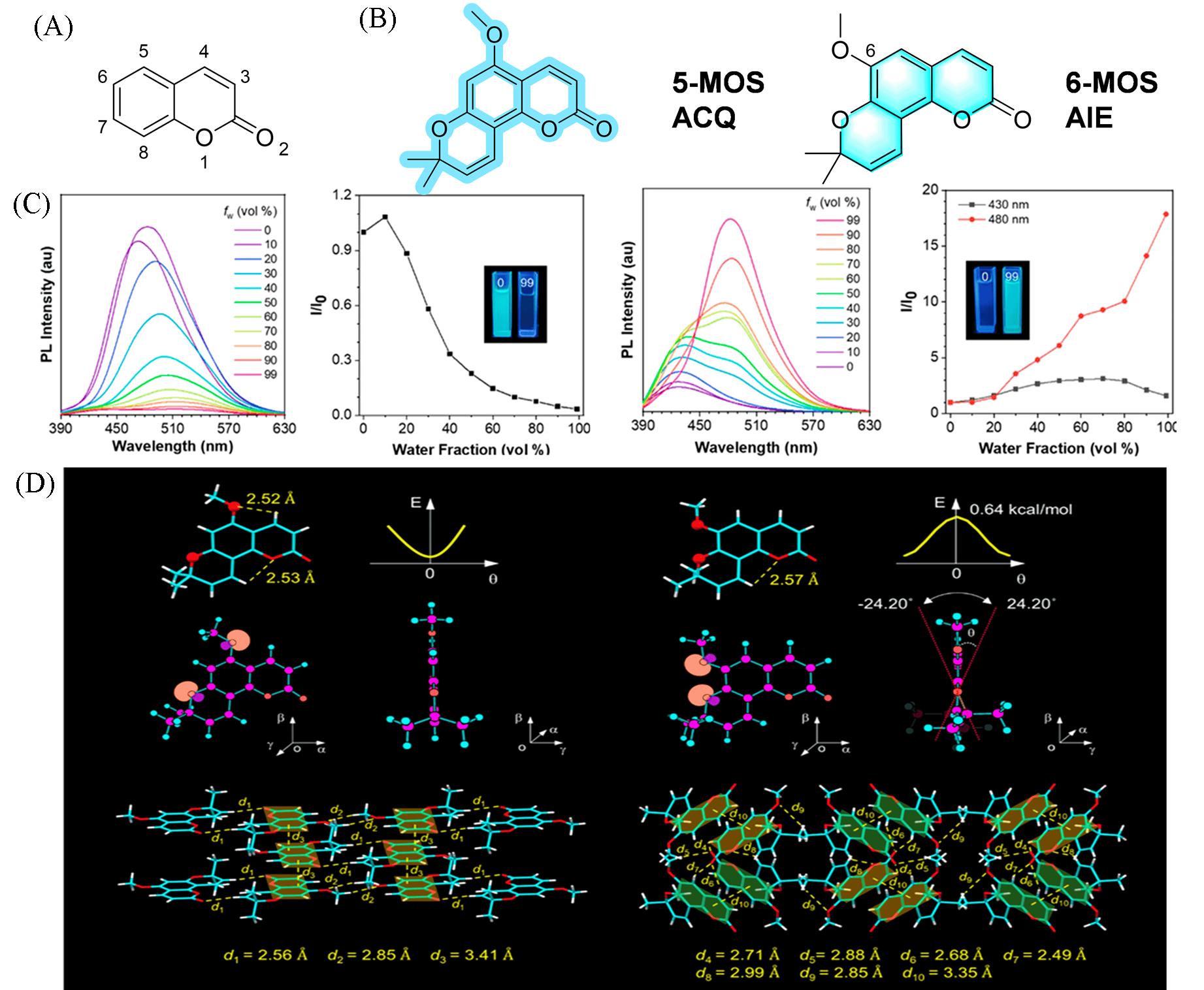
Fig.9 Effects of methoxy substitution at different positions and the alicyclic ring on the coumarin skeleton(A) The core structure of coumarin; (B) chemical structures of 5-MOS and 6-MOS; (C) PL spectra and AIE curves of 5-MOS and 6-MOS measured in DMSO/H2O mixtures with different fw(concentration: 10 μmol/L, excitation wavelength: 328 nm for 5-MOS and 352 nm for 6-MOS); (D) single-crystal structure analysis and theoretical calculation of 5-MOS and 6-MOS[67].(A—D) Open access.
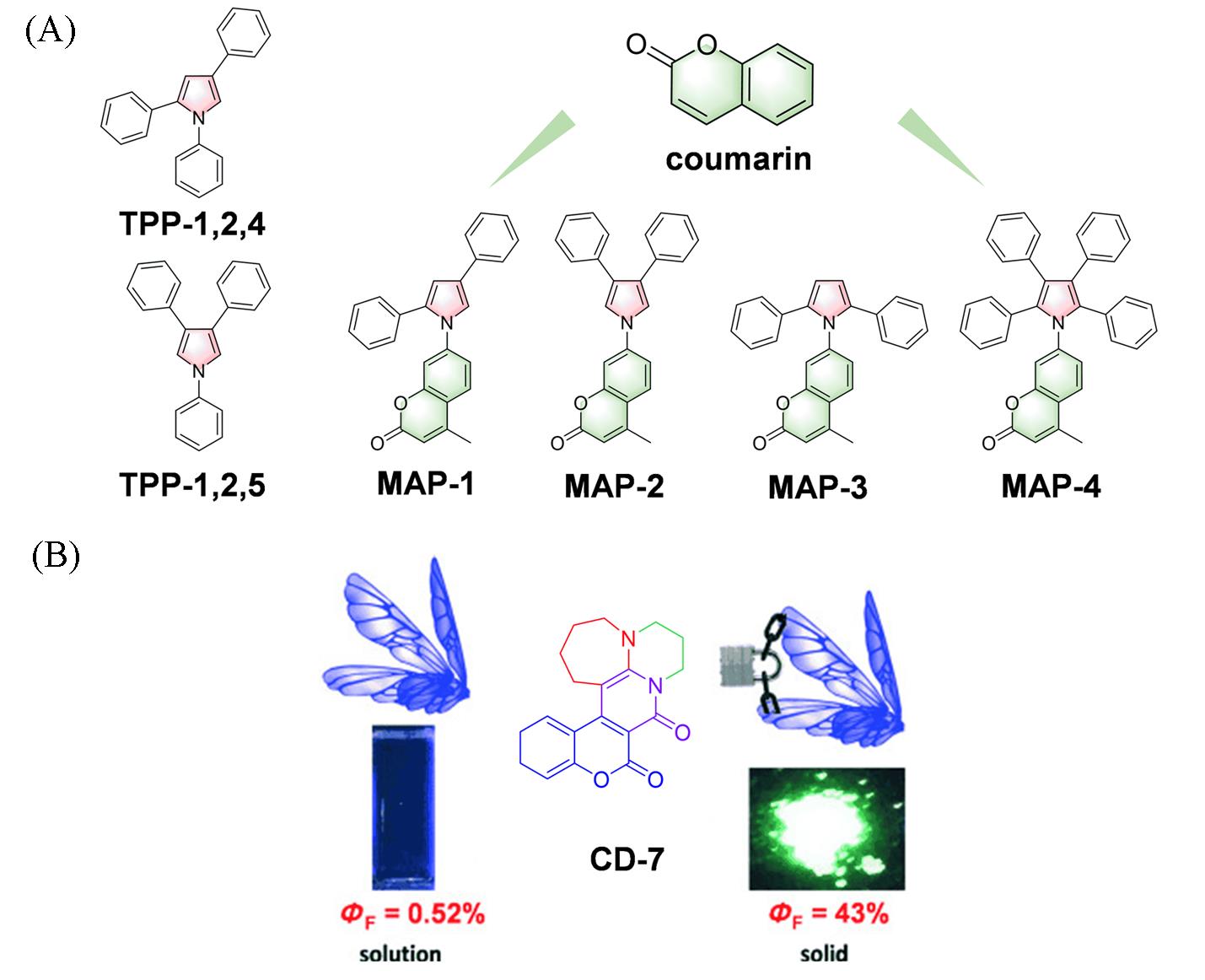
Fig.10 Chemical structures of RIV⁃based coumarin derivatives(A) Chemical structures of TPP-1,2,4, TPP-1,2,5 and Maps[70]; (B) the illustration for AIE effect of CD-7[73].(A) Copyright 2021, Elsevier; (B) Copyright 2015, Wiley⁃VCH.
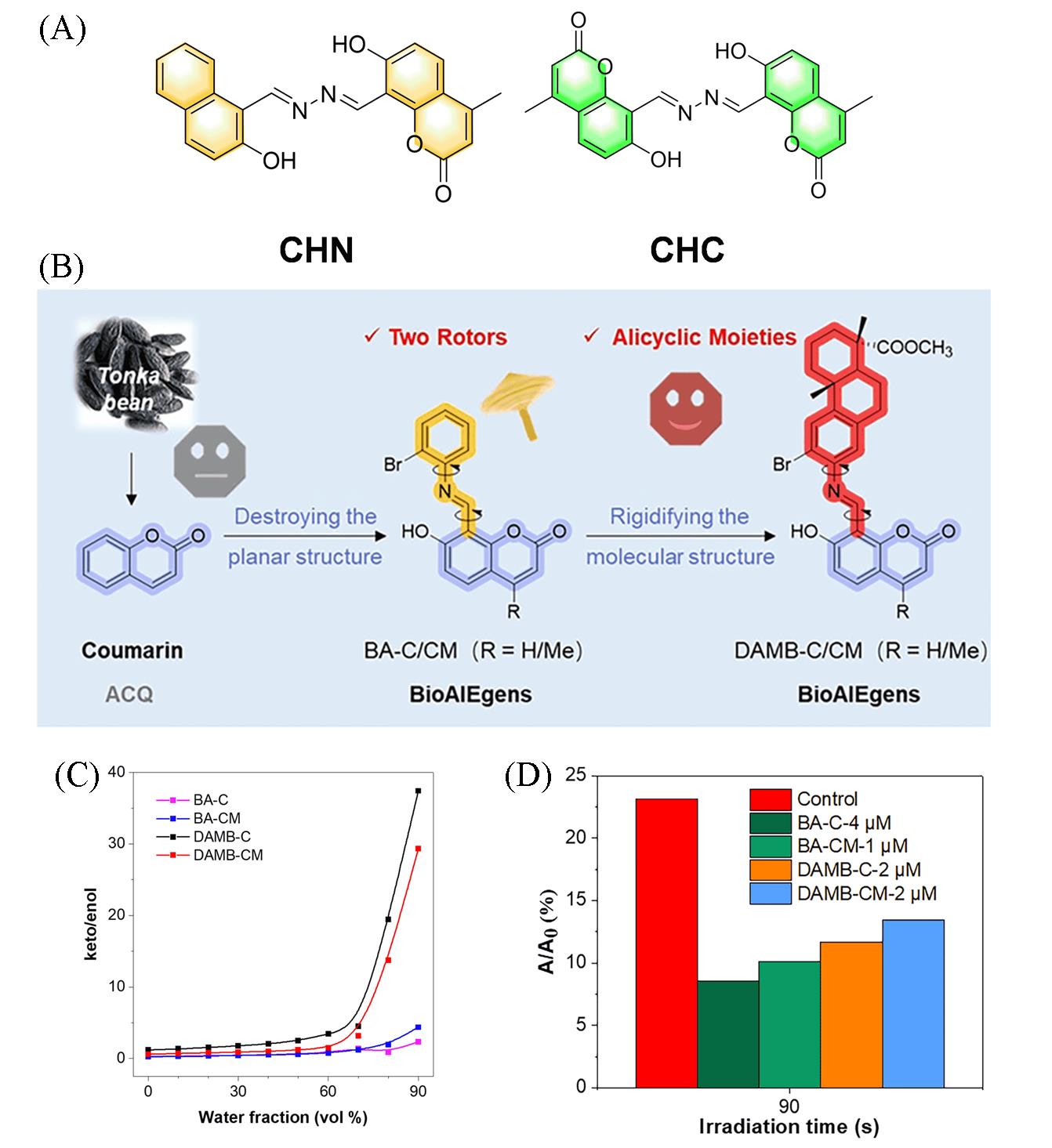
Fig.11 ESIPT⁃based design and properties of coumarin⁃derived BioAIEgens(A) Chemical structures of CHN and CHC[74]; (B) molecular design of coumarin-derived BioAIEgens using “rotor-alicyclic” strategy; (C) the keto/enol ratio(versusfw) of BA-C, BA-CM, DAMB-C, and DAMB-CM; (D) comparison of ROS generation of four BioAIEgens in solution state at their optimum concentration at irradiation time point 90 s[66].(B—D) Open access.
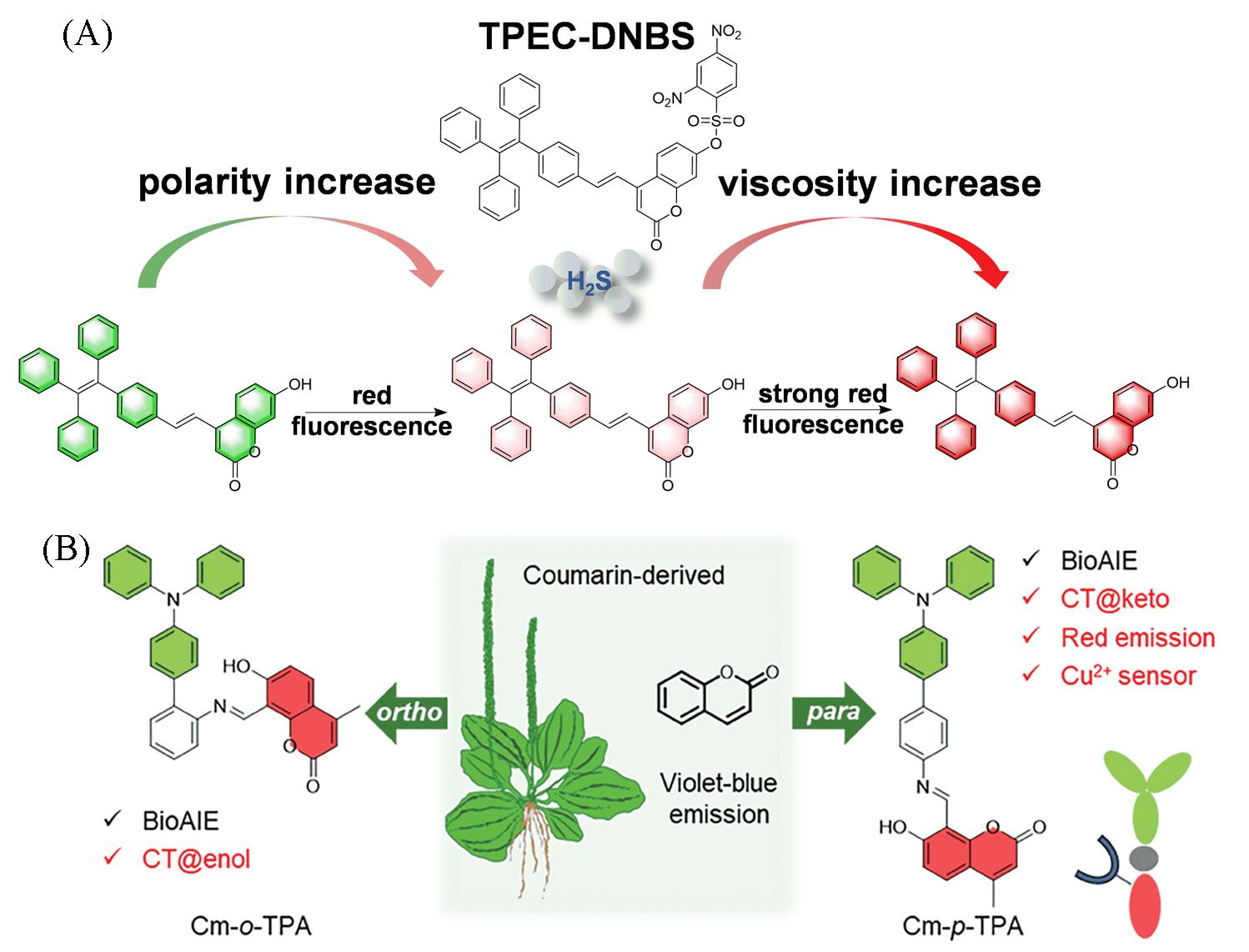
Fig.12 TICT⁃based design and properties of coumarin⁃derived BioAIEgens(A) Illustrative response of fluorescence probe TPEC-DNBS to H2S, polarity and viscosity[79]; (B) molecular design of Cm-o-TPA and Cm-p-TPA. CT@enol and CT@keto represent for CT in enol and keto forms, respectively[80].(A) Copyright 2025, Elsevier; (B) Open access.
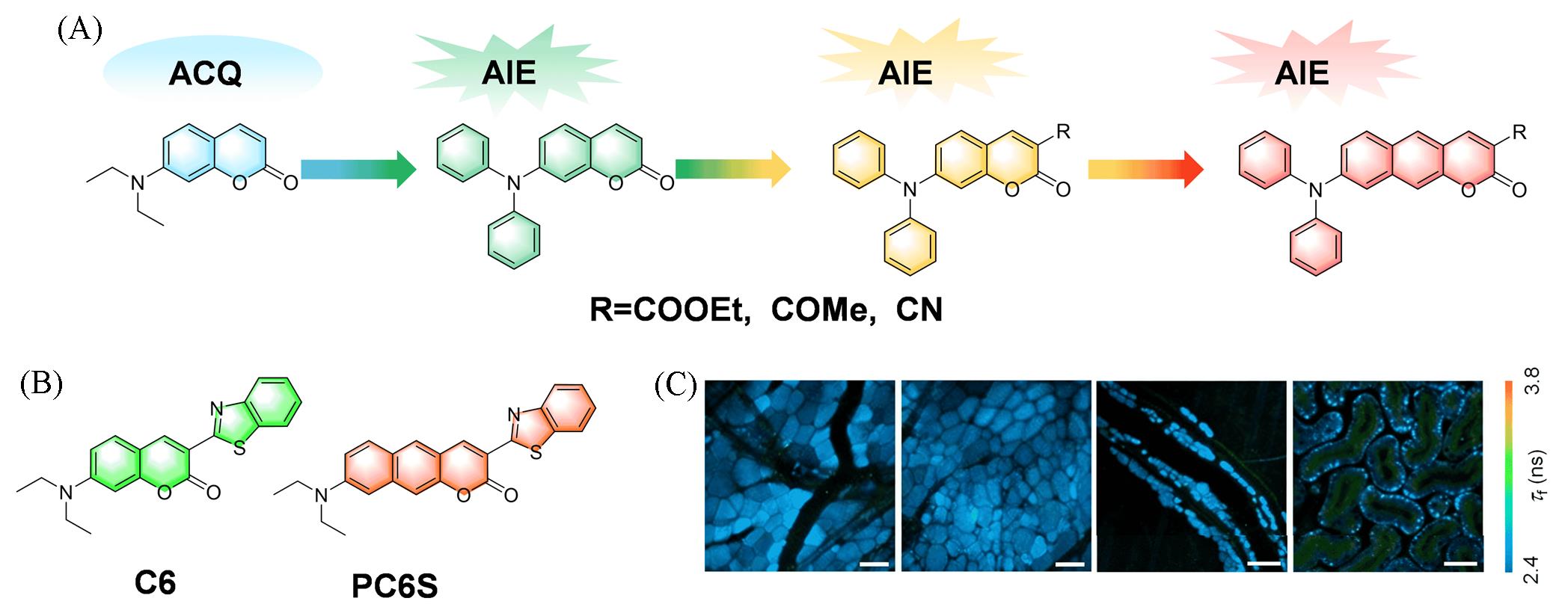
Fig.13 Design and properties of coumarin⁃derived BioAIEgens with extended conjugated skeleton
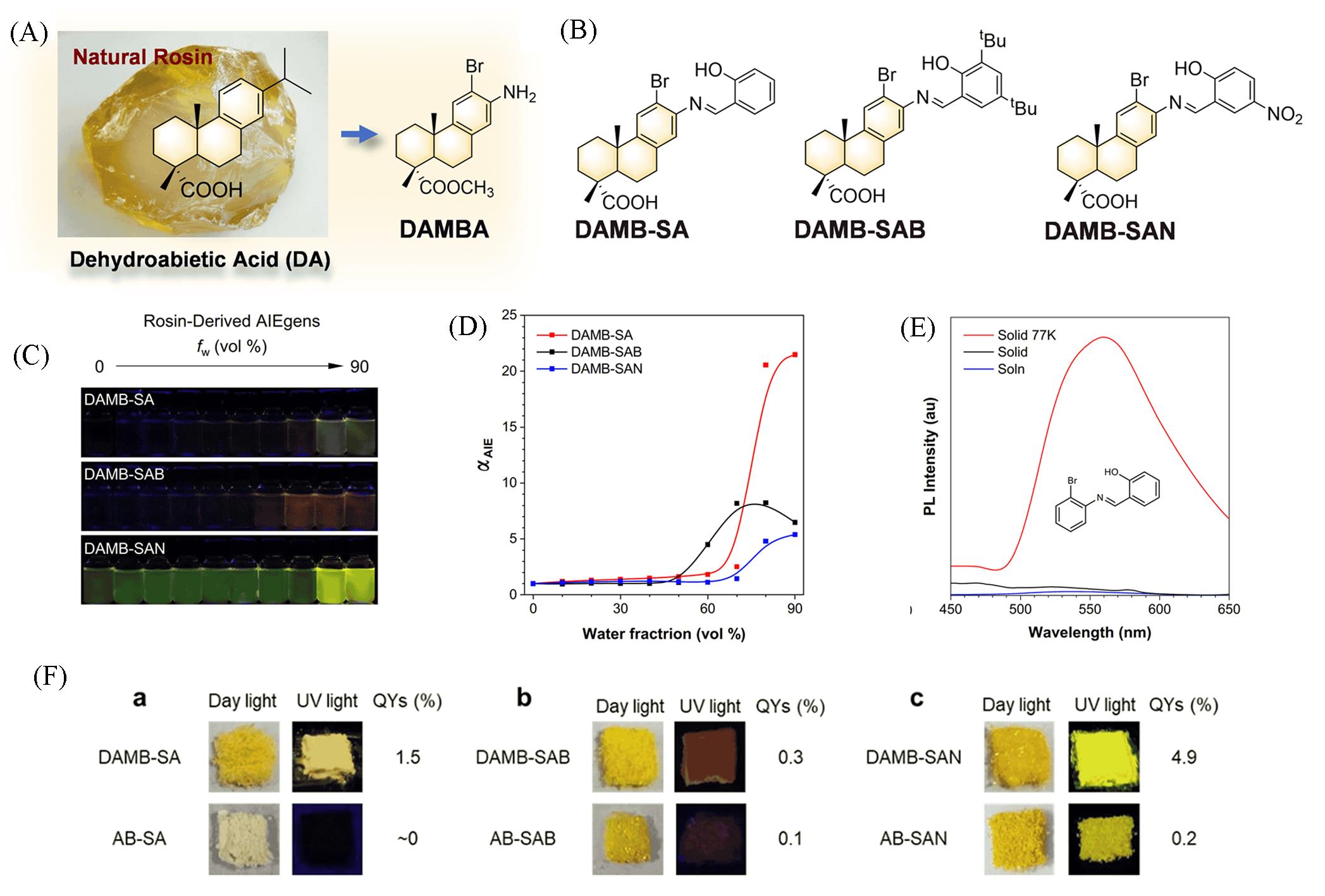
Fig.14 Photophysical properties of dehydroabietic acid derivatives based on the strategy of enhancing AIE by introducing aliphatic rings(A) Chemical structures of dehydroabietic acid(DA) and dehydroabietic acid derivatives(DAMBA); (B) chemical structures of DAMB-SA, DAMB-SAB and DAMB-SA; (C) fluorescence photographs of DAMB-SA, DAMB-SAB and DAMB-SAN(20 μmol/L) in ACN/H2O mixtures with different fw taken under 365 nm UV irradiation; (D) the plots of the αAIE of DAMB-SA, DAMB-SAB, and DAMN-SAN versus the composition of the solvents. αAIE=I/I0, I0=PL intensity in pure ACN; (E) PL spectra of AB-SA in ACN solution(20 μmol/L) and as solid at room temperature and 77 K, λex=350 nm; (F) photos and QYs of DAMB-SA and AB-SA, DAMB-SAB and AB-SAB, DAMB-SAN and AB-SAN under day light and UV light, respectively[94].(B—F) Open access.
| [1] | Luo J., Xie Z., Lam J. W. Y., Cheng L., Chen H., Qiu C., Kwok H. S., Zhan X., Liu Y., Zhu D., Tang B. Z., Chem. Commun., 2001, (18), 1740—1741 |
| [2] | Yu X., Zhang H., Yu J., Aggregate, 2021, 2, 20—34 |
| [3] | Wang B., Li W., Liu J., Gan T., Gao S., Li L., Zhang T., Zhou Y., Shi Z., Li J., Liu Y., Yu J., Adv. Mater., 2025, 37, 2407154 |
| [4] | Sun J., Li H., Gu X., Tang B. Z., Adv. Healthcare Mater., 2021, 10, 2101177 |
| [5] | Yang Z., Grinchuk V., Shea⁃Donohue T., Che C. T., Lao L., Wu J. C., Sung J. J., Berman B., Zhao A., Gastroenterology, 2011, 140, S515 |
| [6] | Hu J. D., Zheng H. Y., Zheng Z. H., Huang L. Y., Lv L. H., Chen Y. Y., Blood, 2007, 110, 4296 |
| [7] | Kumagai T., Muller C., Desmond J. C., Imai Y., Heber D., Koeffler H. P., Blood, 2004, 104, 4491 |
| [8] | Gu Y., Zhao Z., Su H., Zhang P., Liu J., Niu G., Li S., Wang Z., Kwok R. T. K., Ni X. L., Sun J., Qin A., Lam Jacky W. Y., Tang B. Z., Chem. Sci., 2018, 9, 6497—6502 |
| [9] | Kim H. S., Kim M. J., Kim E. J., Yang Y., Lee M. S., Lim J. S., Biochem. Pharmacol., 2012, 83, 385—394 |
| [10] | Zhu F., Qian C., BMC Neurosci., 2006, 7, 78 |
| [11] | Luiza Andreazza N., Vevert⁃Bizet C., Bourg⁃Heckly G., Sureau F., José Salvador M., Bonneau S., Int. J. Pharm., 2016, 510, 240—249 |
| [12] | Sun J., Lv C., Zhang T., Zang J., Zhao G., Food Chem., 2025, 467, 142260 |
| [13] | Gu W., Hu J., Li L., Hong M., Yang C., Ren G., Ye J., Zhou S., Environ. Sci. Technol., 2024, 58, 20434—20443 |
| [14] | Lee M. M. S., Yu E. Y., Chau J. H. C., Lam J. W. Y., Kwok R. T. K., Wang D., Tang B. Z., Biomaterials, 2022, 288, 121712 |
| [15] | Xu L., Coord. Chem. Rev., 2024, 506, 215701 |
| [16] | Fan W., Li Z., Chen K., Wang Z., Yang L., Coord. Chem. Rev., 2025, 542, 216843 |
| [17] | Zhong W., Lin Y., Zhao Z., Cai X. M., Zhang B., ChemCatChem, 2025, 17, e202401510 |
| [18] | Cai X. M., Chen X., Zhao Z. C., Lin Z. M., Ding C., Tang P. Y., Tang B. Z., Chemistry and Industry of Forest Products, 2026⁃02⁃09 |
| 蔡旭敏, 陈晓, 赵智辰, 林子淼, 丁灿, 唐平玉, 唐本忠. 林产化学与工业, 2026⁃02⁃09 | |
| [19] | Liu Y. Y., Zhang X., Li K., Peng Q. C., Qin Y. J., Hou H. W., Zang S. Q., Tang B. Z., Angew. Chem. Int. Ed., 2021, 60, 22417—22423 |
| [20] | Weller A., Naturwissenschaften, 1955, 42, 175—176 |
| [21] | Zhou P., Han K., Aggregate, 2022, 3, e160 |
| [22] | Rotkiewicz K., Grellmann K. H., Grabowski Z. R., Chem. Phys. Lett., 1973, 19, 315—318 |
| [23] | Wang C., Chi W., Qiao Q., Tan D., Xu Z., Liu X., Chem. Soc. Rev., 2021, 50, 12656—12678 |
| [24] | He Z. K., Zhao E. G., Mechanism of Aggregation⁃Induced⁃Emission, Science Press, Beijing, 2024, 8—13 |
| 何自开, 赵恩贵. 聚集诱导发光机理, 北京: 科学出版社, 2024, 8—13 | |
| [25] | Li Q., Wang B., Peng S., Wei H., Li P., Leng Y., Huang X., LWT, 2024, 193, 115762 |
| [26] | Chen L., Zhang H., Li S., Li Y., Zhao Y., Zeng Q., Liu H., Wang J. J., Food Packag. Shelf Life, 2024, 46, 101354 |
| [27] | Ma K., Zhe T., Li F., Zhang Y., Yu M., Li R., Wang L., Food Hydrocoll., 2022, 123, 107147 |
| [28] | Li Q., Liu Y., Liu S., Zhang S., Yu X., Wan Z., Yuan Y., Der Meeren P. V., Yang X., Chem. Eng. J., 2025, 512, 162677 |
| [29] | Lee M. M. S., Zheng L., Yu B., Xu W., Kwok R. T. K., Lam J. W. Y., Xu F., Wang D., Tang B. Z., Mat. Chem. Front., 2019, 3, 1454—1461 |
| [30] | Ni J. S., Lu G. H., Spectrochim. Acta, Part A, 2023, 300, 122908 |
| [31] | Zhu W., Ma K., Yan Z. C., Wu Q., Wang D., Tang B. Z., Mat. Chem. Front., 2021, 5, 5410—5417 |
| [32] | Wang X., Wang Z., Dong F., Yang D., Yin L., Han L., Anal. Chem., 2023, 95, 13864—13871 |
| [33] | Liu Z. H., Wang W. M., Zhang Z., Sun L., Wu S. C., Front. Pharmacol., 2022, 13, 813172 |
| [34] | Lian X., Zeng Y., Wei H., Niu Y., Zheng X., Surf. Interfaces, 2025, 64, 106311 |
| [35] | Ling X., Huang L., Li Y., Wan Q., Wang Z., Qin A., Gao M., Tang B. Z., Mater. Horizons, 2020, 7, 2696—2701 |
| [36] | Meng Q., Tan Y., Sang E. E., Teng Q., Chen P., Wang Y., Org. Biomol. Chem., 2024, 22, 4739—4747 |
| [37] | Li Z. H., Li D., Li Y., Li R., Kong H., Qu Y., Wu Y., Liu J., Qin S., Zhang E., Tu Y. Q., Chem. Eng. J., 2025, 519, 165603 |
| [38] | Li R. T., Chen M., Yang Z. C., Chen Y. J., Huang N. H., Chen W. H., Chen J., Chen J. X., Nanoscale, 2022, 14, 98189831 |
| [39] | Shen N., Wang T., Gan Q., Liu S., Wang L., Jin B., Food Chem., 2022, 383, 132531 |
| [40] | Sengupta P. K., Kasha M., Chem. Phys. Lett., 1979, 68, 382—385 |
| [41] | Lu L., Yang M., Kim Y., Zhang T., Kwon N., Li H., Park S., Yoon J., Cell Rep. Phys. Sci., 2022, 3, 100745 |
| [42] | Qi C., Li Q., Chen P., Wei K., Hong J., Tang L., Feng H. T., Tang B. Z., Dyes Pigm., 2023, 216, 111367 |
| [43] | He T., Niu N., Chen Z., Li S., Liu S., Li J., Adv. Funct. Mater., 2018, 28, 1706196. |
| [44] | Sun L., Wang X., Shi J., Yang S., Xu L., Spectrochim. Acta, Part A, 2021, 249, 119303. |
| [45] | Long R., Tang C., Xu J., Li T., Tong C., Guo Y., Shi S., Wang D., Chem. Commun., 2019, 55, 10912—10915 |
| [46] | Tong C., Shi F., Tong X., Shi S., Ali I., Guo Y., TrAC, Trends Anal. Chem., 2021, 137, 116222. |
| [47] | Wang G., Wang Y., Yao L., Gu W., Zhao S., Shen Z., Lin Z., Liu W., Yan T., Evid.⁃Based Complement Altern. Med., 2022, 2022, 3997190 |
| [48] | Wang K., Lv P., Liu M., Mei Y., Zhang Y., Zheng Y., Guan J., Appl. Organomet. Chem., 2025, 39, e70368 |
| [49] | Long R., Tang C., Yang Z., Fu Q., Xu J., Tong C., Shi S., Guo Y., Wang D., J. Mater. Chem. C, 2020, 8, 11860—11865 |
| [50] | Peng L., Zhou Z., Wang X., Wei R., Li K., Xiang Y., Tong A., Anal. Chim. Acta, 2014, 829, 54—59 |
| [51] | Khairnar P. V., Lung T. H., Lin Y. J., Wu C. Y., Koppolu S. R., Edukondalu A., Karanam P., Lin W., Org. Lett., 2019, 21, 4219—4223 |
| [52] | Wang K., Song L. H., Liang Q. L., Zhang Y., Ma X. L., Wang Q., Zhang H. Y., Jiang C. N., Wei J. H., Huang R. Z., Eur. J. Med. Chem., 2023, 254, 115349 |
| [53] | Qamar M., Shafiullah, Sultanat, Lal H., Rizvi A., Farhan M., Spectrochim. Acta, Part A, 2024, 321, 124757 |
| [54] | Lin Y., Song Y., Jin Y., Wang B., Fan C., Dyes Pigm., 2020, 183, 108711 |
| [55] | Yamauchi M., Yokoyama K., Aratani N., Yamada H., Masuo S., Angew. Chem. Int. Ed., 2019, 58, 14173—14178 |
| [56] | Shen H., Shi P., Liu E., Fang Y., Xu S., Gong J., Huang Y., Sci. China Mater., 2024, 67, 3561—3569 |
| [57] | Liang G., Weng L. T., Lam J. W. Y., Qin W., Tang B. Z., ACS Macro Lett., 2014, 3, 21—25 |
| [58] | Yoshii R., Hirose A., Tanaka K., Chujo Y., J. Am. Chem. Soc., 2014, 136, 18131—18139 |
| [59] | You J., Cao D., Hu T., Ye Y., Jia X., Li H., Hu X., Dong Y., Ma Y., Wang T., Dyes Pigm., 2021, 184, 108865 |
| [60] | Simkovitch R., Huppert D., J. Phys. Chem. B, 2015, 119, 10244—10251 |
| [61] | Fan L., Tong C., Cao Y., Long R., Wei Q., Wang F., Tong X., Shi S., Guo Y., Talanta, 2022, 246, 123517 |
| [62] | Huang X. C., Tang H., Wei X., He Y., Hu S., Wu J. Y., Xu D., Qiao F., Xue J. Y., Zhao Y., Nat. Commun., 2024, 15, 6864 |
| [63] | He B. T., Liu Z. H., Li B. Z., Yuan Y. J., Microb. Cell. Fact., 2022, 21, 152 |
| [64] | Shaterian H. R., Aghakhanizadeh M., Chin. J. Catal., 2013, 34, 1690—1696 |
| [65] | Yin Z., Wang N., Li Q., Arabian J. Chem., 2024, 17, 105542 |
| [66] | Li S., Li X., Liu J., Lin Y., Zhang X., Zhong W., Li J., You C., Wang D., Zhang J., Xu X., Cai X. M., Zhang C. Y., iScience, 2025, 28, 112520 |
| [67] | Chen S. S., Wang H., Wu B., Li Q., Gong J., Zhao Y. L., Zhao Y., Xiao X., Lam J. W. Y., Zhao Z., Luo X. D., Tang B. Z., ACS Central Sci., 2023, 9, 883—891 |
| [68] | Zhang H., Xia Y., Li D., Hou R., Aggregate, 2025, 6, e70192. |
| [69] | Su L. J., Bao Q. L., Yanf Y. H., Luo J. P., Yang J., Zhang J. T., Tao X., Chuan Y. M., Yang L. J., Chem. J. Chinese Universities, 2023, 44(4), 20220549 |
| 苏丽娇, 保秋连, 杨云汉, 罗建萍, 杨 举, 张郡童, 陶 欣, 钏永明, 杨丽娟. 高等学校化学学报, 2023, 44(4), 20220549 | |
| [70] | Ren F., Liu Z., Lei Y., Dai W., Shi J., Cai Z., Tong B., Dong Y., Dyes Pigm., 2021, 188, 109222 |
| [71] | Cao D., Liu Y., Yan W., Wang C., Bai P., Wang T., Tang M., Wang X., Yang Z., Ma B., Ma L., Lei L., Wang F., Xu B., Zhou Y., Yang T., Chen L., J. Med. Chem., 2016, 59, 5721—5739 |
| [72] | Li Y., Lei Y., Dong L., Zhang L., Zhi J., Shi J., Tong B., Dong Y., Chem. Eur. J., 2019, 25, 573—581 |
| [73] | Bu F., Duan R., Xie Y., Yi Y., Peng Q., Hu R., Qin A., Zhao Z., Tang B. Z., Angew. Chem. Int. Ed., 2015, 54, 14492—14497 |
| [74] | Xiao H., Chen K., Cui D., Jiang N., Yin G., Wang J., Wang R., New J. Chem., 2014, 38, 2386—2393 |
| [75] | Zhang K., Shu J., Chu W., Liu X., Xu B., Jiang W., Dyes Pigm., 2021, 185, 108898 |
| [76] | Zhang L., Chai F., Dong H., Bao Y., Yan K., Min S., Yao Y., Li S., Liu Y., Gao T., Wang J., Liu Y., J. Phys. Chem. Let., 2024, 15, 10866—10872 |
| [77] | Li Y., Liu J., Liu D., Li X., Xu Y., Comput. Mater. Sci., 2019, 161, 163—176 |
| [78] | Gundogdu Hizliates C., J. Heterocycl. Chem., 2019, 56, 2017—2026 |
| [79] | Ji L., Fu A., Zhang Y., Xu Y., Xi Y., Cui S., Gao N., Yang L., Shang W., Yang Z., He G., Anal. Chim. Acta, 2025, 1334, 343425 |
| [80] | Cai X. M., Li S., Wang W. J., Lin Y., Zhong W., Yang Y., Kühn F. E., Li Y., Zhao Z., Tang B. Z., Adv. Sci., 2024, 11, 2307078 |
| [81] | Wu Y., Zhu W., Chem. Soc. Rev., 2013, 42, 2039—2058 |
| [82] | Shreykar M. R., Sekar N., J. Fluoresc., 2017, 27, 1687—1707 |
| [83] | Yang Y., Zhong H., Wang B., Ren X., Song X., Chin. Chem. Lett., 2023, 34, 107674 |
| [84] | Kim D., Sambasivan S., Nam H., Hean Kim K., Yong Kim J., Joo T., Lee K. H., Kim K. T., Han Ahn K., Chem. Commun., 2012, 48, 6833—6835 |
| [85] | Yoshihara T., Maruyama R., Shiozaki S., Yamamoto K., Kato S. I., Nakamura Y., Tobita S., Anal. Chem., 2020, 92, 4996—5003 |
| [86] | Lee S., Sivakumar K., Shin W. S., Xie F., Wang Q., Bioorg. Med. Chem. Lett., 2006, 16, 4596—4599 |
| [87] | Zhang X., Wang X., Zhang Y., Wang F., Zhang C., Li X., Biotechnol. Adv., 2023, 64, 108124 |
| [88] | Schneider F., Pan L., Ottenbruch M., List T., Gaich T., Acc. Chem. Res., 2021, 54, 2347—2360 |
| [89] | Li R., Morris⁃Natschke S. L., Lee K. H., Nat. Prod. Rep., 2016, 33, 1166—1226 |
| [90] | González M. A., Pérez⁃Guaita D., Correa⁃Royero J., Zapata B., Agudelo L., Mesa⁃Arango A., Betancur⁃Galvis L., Eur. J. Med. Chem., 2010, 45, 811—816 |
| [91] | González M. A., Nat. Prod. Rep., 2015, 32, 684—704 |
| [92] | Tagat J. R., Nazareno D. V., Puar M. S., Mccombie S. W., Ganguly A. K., Bioorg. Med. Chem. Lett., 1994, 4, 1101—1104 |
| [93] | Duan W. G., Li X. R., Mo Q. J., Huang J. X., Cen B., Xu X. T., Lei F. H., Holzforschung, 2011, 65, 191—197 |
| [94] | Cai X. M., Lin Y., Li Y., Chen X., Wang Z., Zhao X., Huang S., Zhao Z., Tang B. Z., Nat. Commun., 2021, 12, 1773 |
| [95] | Xiong Y., Zhong W., Zhang X., Lin Y., Tang Z., Li S., Cai X. M., Dyes Pigm., 2023, 218, 111475 |
| [1] | 焦海丽, 郑小燕. 限域环境诱导有机发光增强的理论研究进展[J]. 高等学校化学学报, 2026, 47(5): 20260060. |
| [2] | 曾宪平, 秦毅, 王东. 聚集诱导发光探针用于手术导航[J]. 高等学校化学学报, 2026, 47(5): 20260066. |
| [3] | 翟哲, 刘雷静, 田文晶. 聚集诱导发光分子探针的设计及在细胞器成像中的应用[J]. 高等学校化学学报, 2026, 47(5): 20260078. |
| [4] | 李伟健, 徐小琴, 王威, 杨海波. 聚集诱导发光树枝状分子的研究进展[J]. 高等学校化学学报, 2026, 47(5): 20260003. |
| [5] | 张凯为, 秦安军. 聚集诱导发光镧系配合物[J]. 高等学校化学学报, 2026, 47(5): 20260013. |
| [6] | 吴锐, 李政, 李琪, 石佳俊, 赵艳, 冯维旭, 颜红侠. 含Si, P, B的非传统超支化发光聚合物研究进展[J]. 高等学校化学学报, 2026, 47(5): 20250411. |
| [7] | 朱高桦, 舒菊, 耿江涛, 马夫龙, 熊玲红, 何学文. 原位激活型近红外二区聚集诱导发光探针应用于肿瘤中过氧化氢的高灵敏成像[J]. 高等学校化学学报, 2026, 47(5): 20260058. |
| [8] | 潘晶珂, 齐馨, 张露露, 王贝贝, 吕超. 主客体作用力构建的聚集诱导发光型超分子聚合物的合成与应用研究[J]. 高等学校化学学报, 2026, 47(5): 20260130. |
| [9] | 吴泽怡, 司文妮, 齐春轩, 李朔, 冯海涛. 基于三苯胺的红光手性荧光探针的构筑及手性识别性能[J]. 高等学校化学学报, 2026, 47(4): 20250258. |
| [10] | 孙妍, 朱东霞. 近红外激发有机发光材料的构筑及在疾病治疗中的应用[J]. 高等学校化学学报, 2026, 47(4): 20260002. |
| [11] | 李雨婷, 罗亮. 拉曼成像技术的前沿进展及与聚集体科学的交叉研究[J]. 高等学校化学学报, 2026, 47(4): 20260008. |
| [12] | 方瑾钰, 黄瀚玮, 宋航, 吴谦, 赵征, 唐本忠. 智能响应, 精准点亮: 酶响应的聚集诱导发光材料在生物医学中的诊疗新策略[J]. 高等学校化学学报, 2026, 47(4): 20260009. |
| [13] | 杨湛, 邓皇俊, 池振国. 具有聚集诱导发光性质的氢键有机框架的研究进展[J]. 高等学校化学学报, 2026, 47(4): 20260012. |
| [14] | 李银, 汤睿霖, 瞿超, 程亮慧, 胡玉玺, 吴钰祥, 王志明. 离子化策略实现马来酸酐水溶性光敏探针的制备及其在高效抗菌中的应用[J]. 高等学校化学学报, 2026, 47(4): 20250413. |
| [15] | 任奥成, 李青云, 吉晓帆. 荧光超分子聚合物网络[J]. 高等学校化学学报, 2026, 47(4): 20250390. |
| 阅读次数 | ||||||
|
全文 |
|
|||||
|
摘要 |
|
|||||
