

高等学校化学学报 ›› 2026, Vol. 47 ›› Issue (4): 20260009.doi: 10.7503/cjcu20260009
• 综合评述 • 上一篇
方瑾钰1,2, 黄瀚玮1,2, 宋航3( ), 吴谦1(), 赵征2(), 唐本忠2
收稿日期:2026-01-01
出版日期:2026-04-10
发布日期:2026-03-05
通讯作者:
宋航,吴谦,赵征
E-mail:songhang@pumch.cn;wuqian@smbu.edu.cn;zhaozheng@cuhk.edu.cn
作者简介:第一联系人:共同第一作者.
基金资助:
FANG Jinyu1,2, HUANG Hanwei1,2, SONG Hang3(), WU Qian1(), ZHAO Zheng2(), TANG Ben Zhong2
Received:2026-01-01
Online:2026-04-10
Published:2026-03-05
Contact:
SONG Hang, WU Qian, ZHAO Zheng
E-mail:songhang@pumch.cn;wuqian@smbu.edu.cn;zhaozheng@cuhk.edu.cn
Supported by:摘要:
随着精准医学的发展, 对疾病实现高特异性、 高灵敏度的原位成像与靶向治疗提出了迫切需求. 传统荧光探针易受聚集诱导发光猝灭效应限制, 且常存在背景信号高、 光稳定性差、 特异性不足等问题. 聚集诱导发光材料因其单分子发光“熄灭”, 聚集体发光“点亮”的独特优势, 为构建性质优异的生物荧光探针提供了新思路. 酶作为疾病过程的关键生物标志物, 生物酶促反应具有底物专一、 高效等特性, 是聚集诱导发光材料在病灶部位实现可控响应、 荧光精准点亮与信号放大的理想触发机制. 本文综合评述了酶响应的聚集诱导发光材料在生物医学中的诊疗新策略这一前沿交叉领域的最新研究进展. 根据酶响应后聚集体形成的物理化学本质与结构特征, 系统梳理了三类分子设计策略, 重点阐述了其设计原理、 响应机制及其在各类重大疾病诊疗, 包括肿瘤成像与术中导航、 细菌与病毒感染诊疗、 神经退行性疾病诊断以及诊疗一体化等方面取得的显著成果. 酶响应的聚集诱导发光材料通过实现信号的可控“关-开”转换与靶向放大, 在提升成像信噪比、 治疗精准性和实现诊疗协同方面展现出巨大潜力. 最后, 对该领域当前面临的挑战进行了剖析, 并对未来发展趋势, 特别是与人工智能相结合的设计新范式进行了展望.
中图分类号:
TrendMD:
方瑾钰, 黄瀚玮, 宋航, 吴谦, 赵征, 唐本忠. 智能响应, 精准点亮: 酶响应的聚集诱导发光材料在生物医学中的诊疗新策略. 高等学校化学学报, 2026, 47(4): 20260009.
FANG Jinyu, HUANG Hanwei, SONG Hang, WU Qian, ZHAO Zheng, TANG Ben Zhong. Intelligent Response, Precision Activation: Novel Theranostic Strategies of Enzyme-responsive Aggregation-induced Emission Materials in Biomedicine. Chem. J. Chinese Universities, 2026, 47(4): 20260009.
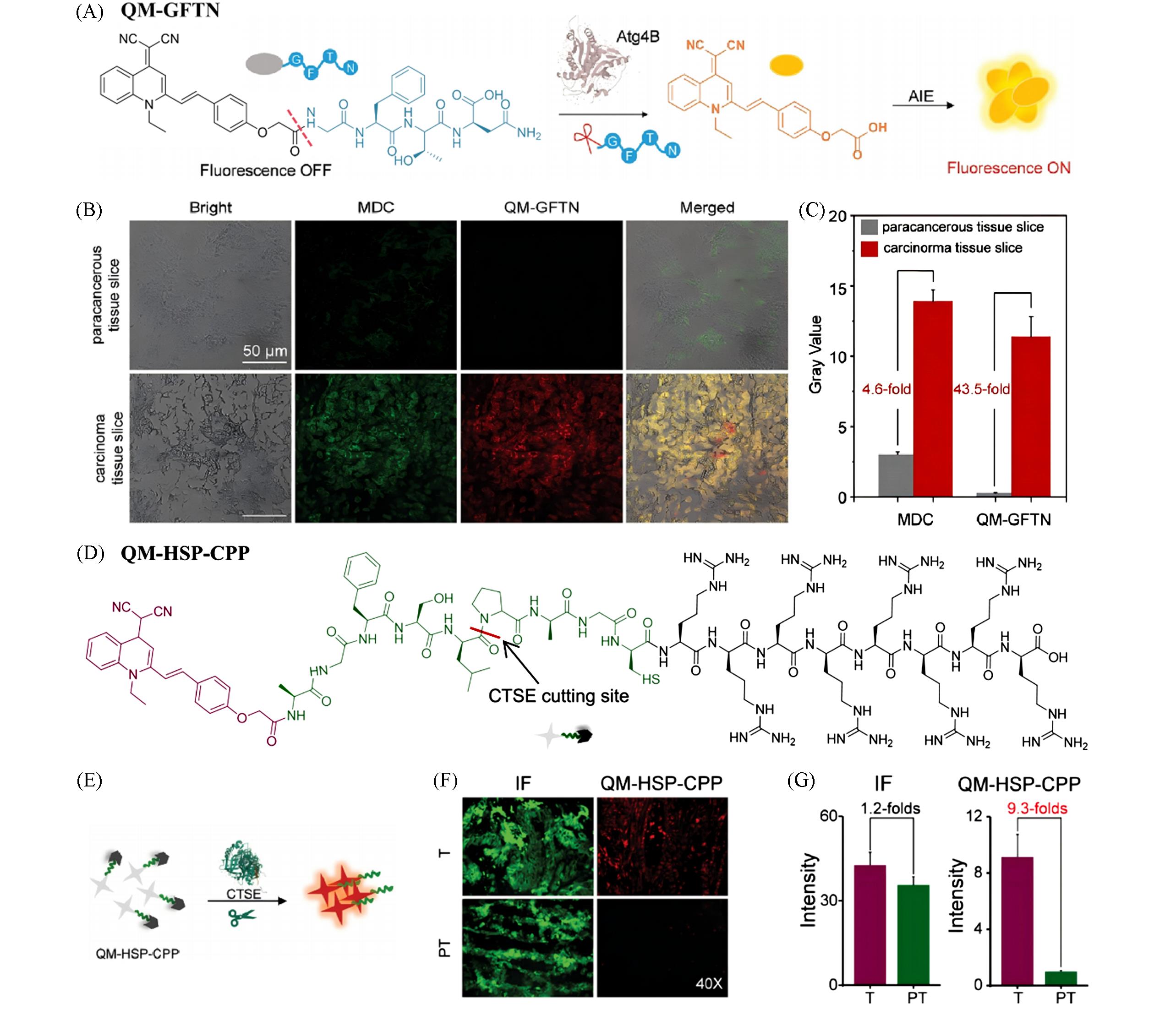
Fig.1 Hydrolase⁃activated AIE materials enable high⁃contrast tissue discrimination by enzyme⁃triggered aggregation(A—C) Monitoring autophagy and diagnosing human pathological tissues of pancreatic cancer with Atg4B protease-activated AIE probe QM-GFTN[26], (D—G) an enzyme-activatable AIE probe QM-HSP-CPP for intraoperative pathological fluorescent diagnosis of pancreatic cancer via specific cathepsin E[27].(A—C) Copyright 2021, John Wiley & Sons; (D—G) Copyright 2022, John Wiley & Sons.
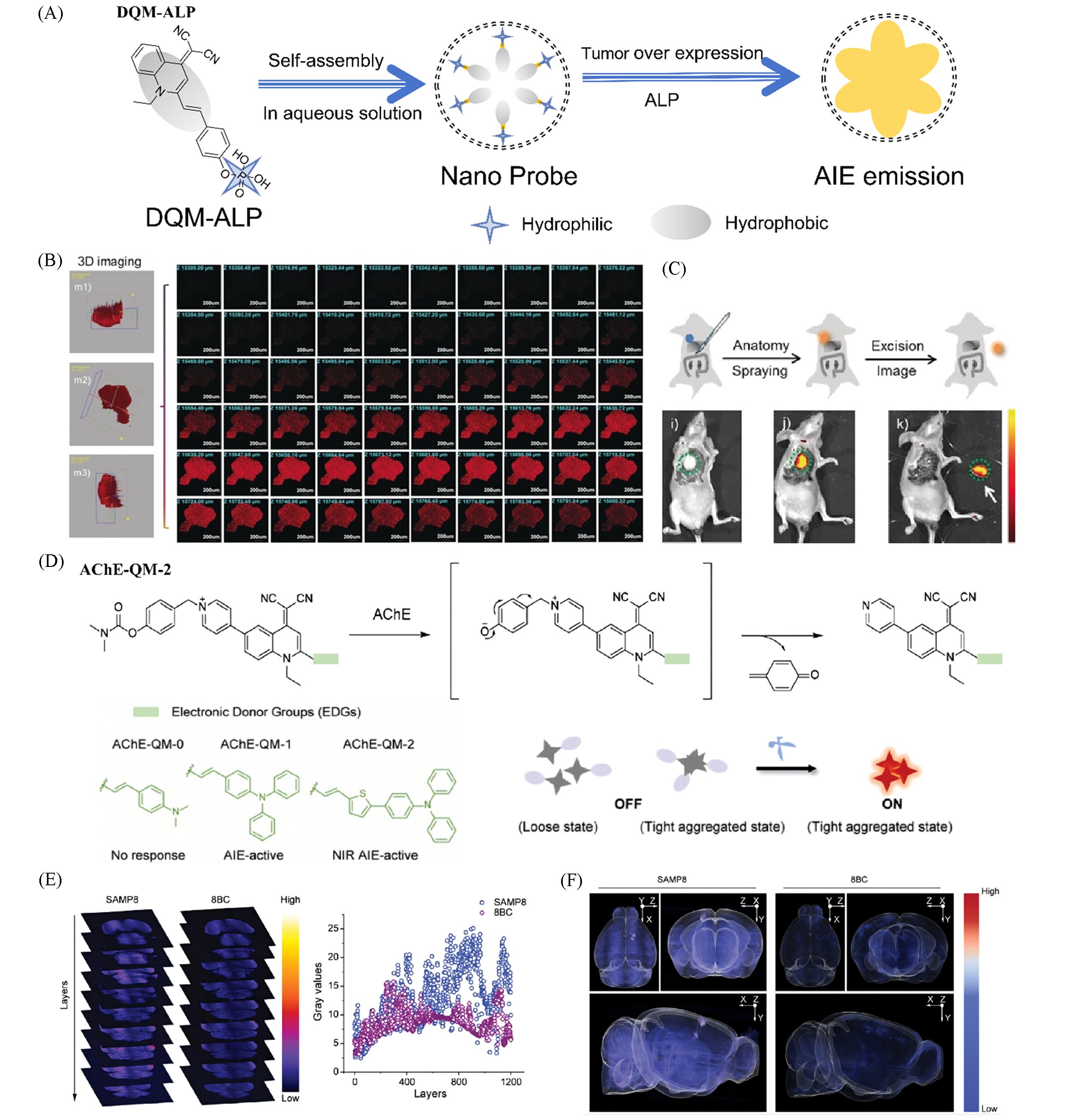
Fig.2 Hydrolase⁃responsive AIE platforms for disease imaging via enzyme⁃triggered aggregation and signal amplification(A—C) An ALP-activatable AIE nanoprobe for tumor diagnosis and intraoperative fluorescence-guided imaging[28], (D—F) enzyme- mediated in situ self-assembly AIE probe for mapping the distribution of acetylcholinesterase in aging mice brain[31].(A—C) Copyright 2020, John Wiley & Sons; (D—F) Copyright 2025, John Wiley & Sons.
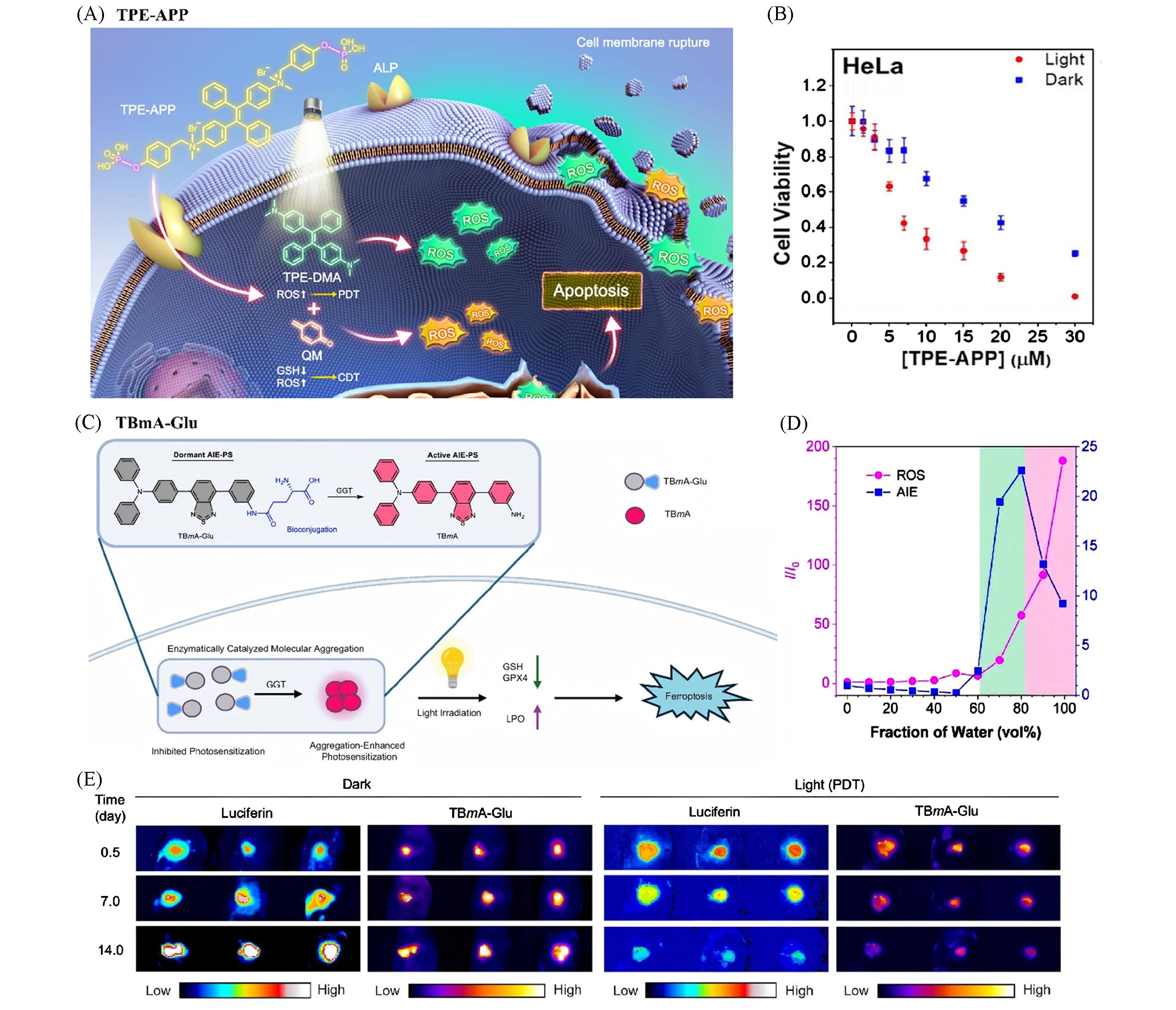
Fig.3 Hydrolase⁃responsive AIE theranostic platforms for integrated cancer diagnosis and therapy(A, B) ALP-responsive AIE probe TPE-APP for synergistic photodynamic and chemodynamic therapy[39], (C—E) GGT-activatable AIE photosensitizer TBmA-Glu for selective tumor imaging and ferroptosis[40].(A, B) Copyright 2024, American Chemical Society; (C—E) Open access.
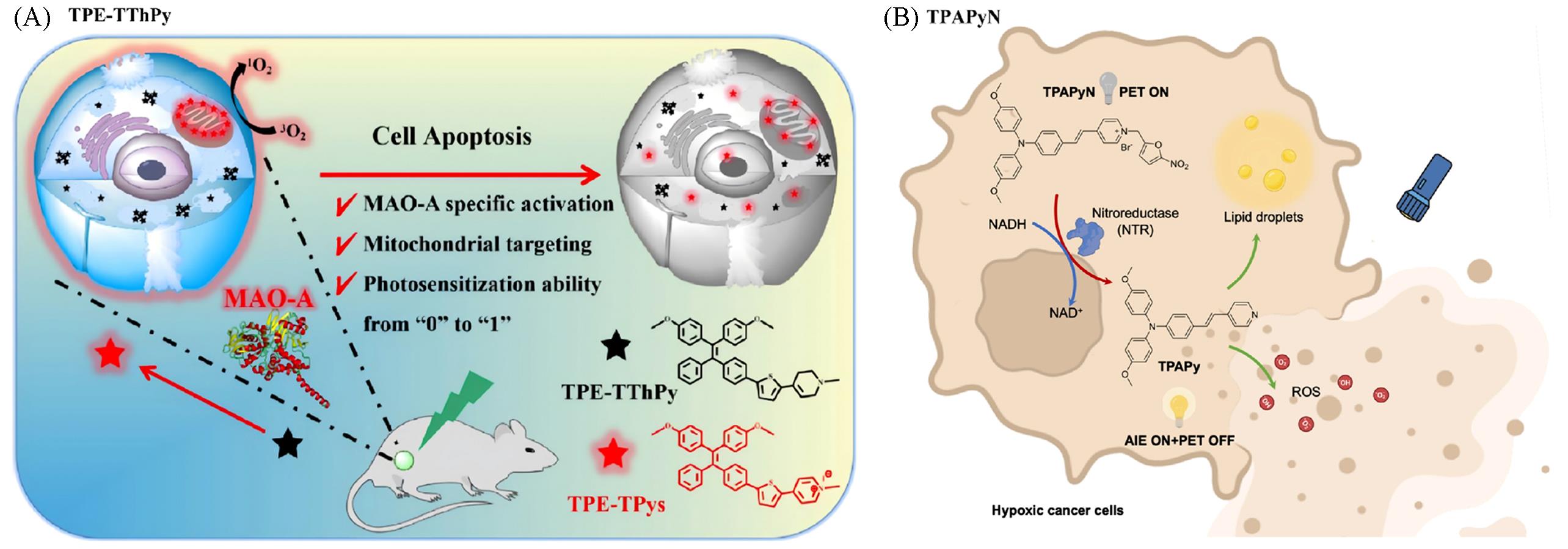
Fig.4 Oxidoreductase⁃responsive AIE theranostic platforms for integrated cancer diagnosis and therapy(A)MAO-A activatable AIE photosensitizer TPE-TThPy for mitochondria-targeted theranostics[41]; (B) NTR-responsive AIE photosensitizer TPAPyN for hypoxia-activated imaging and therapy[42].(A) Open access; (B) Copyright 2025, John Wiley & Sons.
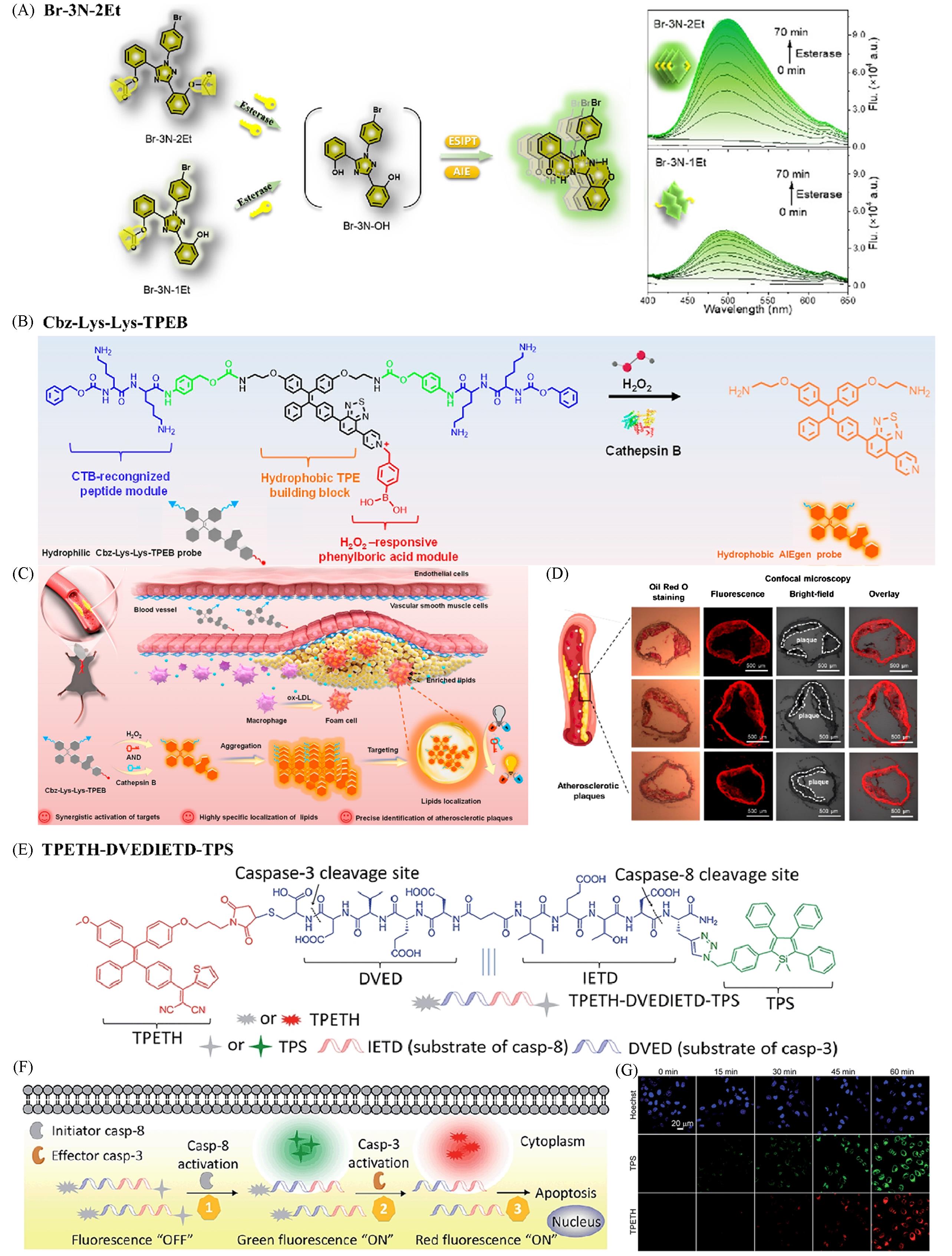
Fig.5 Double⁃locked enzyme⁃responsive AIE platforms for integrated disease theranostics(A) Esterase-responsive dual-lock ESIPT-AIE probe Br-3N-2Et for high-contrast imaging[48], (B—D) H2O2 and cathepsin B dual-responsive probe Cbz-Lys-Lys-TPEB for atherosclerosis imaging[49]; (E—G) dual-enzyme cascade-responsive probe TPETH-DVEDIETD-TPS for visualizing apoptosis[50].(A) Copyright 2025, American Chemical Society; (B—D) Copyright 2024, American Chemical Society; (E—G) Open access.
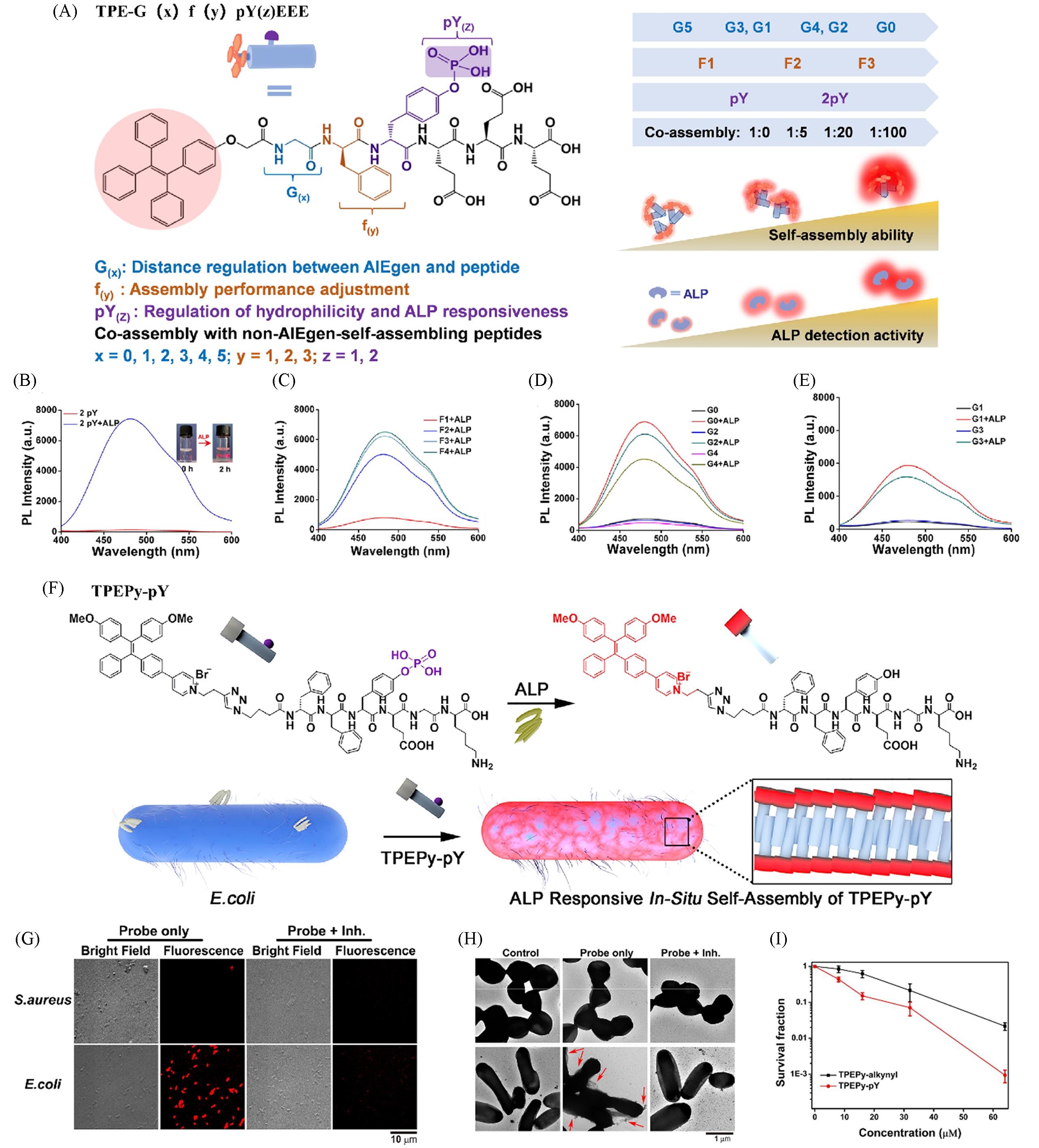
Fig.6 Molecular design and bacterial theranostics based on enzyme⁃triggered self⁃assembling AIE probes(A—E) Structure-property relationships of peptide-conjugated enzyme-responsive AIE probe[53]; (F—I) bacterial ALP-responsive AIE probe TPEPy-pY for imaging and killing E. colivia in situ self-assembly[54].(A—E) Copyright 2022, American Chemical Society; (F—I) Copyright 2020, American Chemical Society.
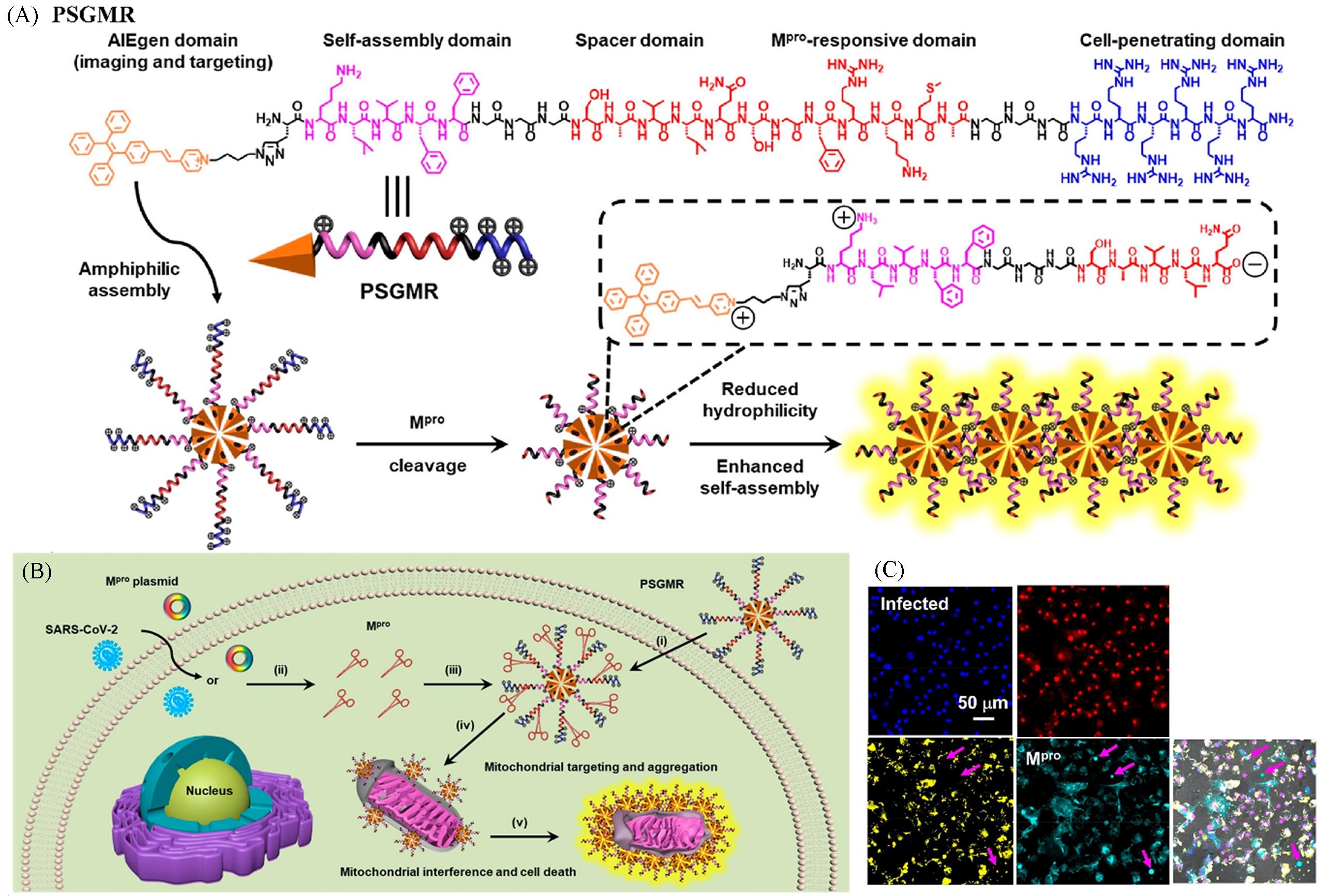
Fig.7 Virus⁃targeted and phase⁃transition enzyme⁃responsive AIE probes
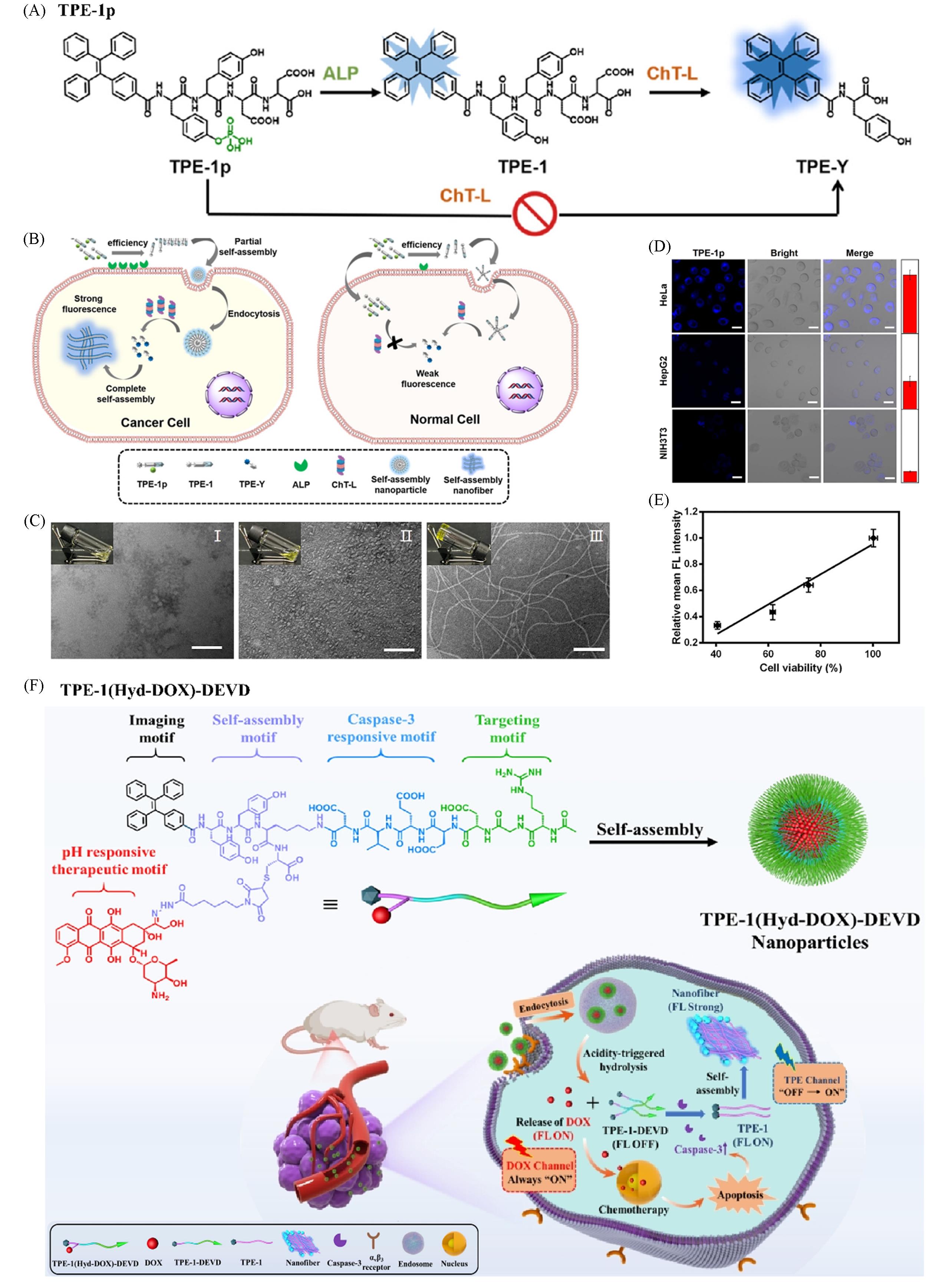
Fig.8 Cascade⁃activated and self⁃reporting enzyme⁃responsive AIE probes(A—E) ALP and proteasome cascade-responsive AIE probe TPE-1p for cancer cell imaging[61]; (F) self-reporting enzyme-responsive AIE probe TPE-1(Hyd-DOX)-DEVD for monitoring chemotherapy[62].(A—E) Copyright 2023, American Chemical Society; (F) Copyright 2025, American Chemical Society.
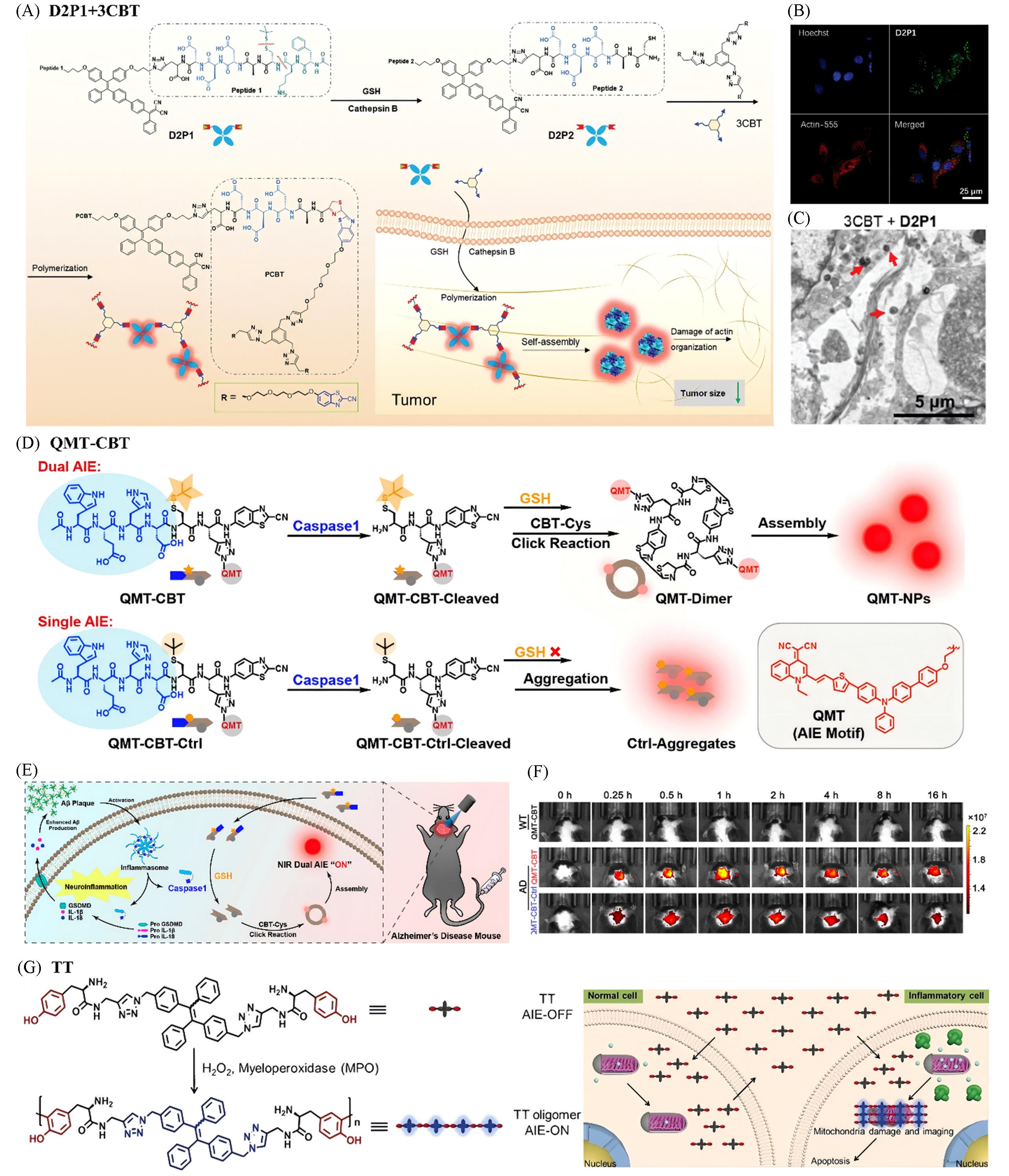
Fig.9 Covalent assembly strategies using enzyme⁃responsive AIE probes(A—C) Cathepsin B-responsive AIE probe D2P1/3CBT for in situ polymerization and theranostics[66]; (D—F) caspase-1 responsive AIE probe QMT-CBT for Alzheimer’s diagnosis via dual aggregation[69]; (G) MPO-responsive AIE probe TT for inflammation imaging via oxidative coupling[70].(A—C) Copyright 2021, John Wiley and Sons; (D—F) Copyright 2023, American Chemical Society; (G) Copyright 2018, John Wiley and Sons.
| [1] | Abhisheka B., Biswas S. K., Purkayastha B., Das D., Escargueil A., Multimed. Tools Appl., 2024, 83(14), 43035—43070 |
| [2] | Rostami S., Stutterheim H. W., Maxouri O., Willemse J. R. J., Rodríguez Sánchez D. I., Schats W., van Golen L. W., Vollebergh M. A., Cheung Z., Vogel W.V., Marchetti S., Snaebjornsson P., Lahaye M. J., Lambregts D. M. J., Bodalal Z., Beets⁃Tan R. G. H., Br. J. Radiol., 2025, 98(1172), 1209—1226 |
| [3] | Verkhovskii R. A., Ivanov A. N., Lengert E. V., Tulyakova K. A., Shilyagina N. Y., Ermakov A. V., Pharmaceutics, 2023, 15, 1566 |
| [4] | Guo Y., He X., Williams G. R., Zhou Y., Liao X., Xiao Z., Yu C., Liu Y., J. Pharm. Anal., 2024, 14(12), 101003 |
| [5] | Liu J., Cheng P., Xu C., Pu K., Nat. Biomed. Eng., 2025, 9(5), 618—637 |
| [6] | Qin Y., Niu N., Li X., Yan X., Lu S., Li Z., Gui Y., Zhu J. L., Xu L., Li X., Wang D., Tang B. Z., Aggregate, 2025, 6(3), e708 |
| [7] | Li H., Kim H., Han J., Nguyen V. N., Peng X., Yoon J., Aggregate, 2021, 2(4), e51 |
| [8] | Ji X., Chen X., Li K., Zhang Z., Tang L., Li T., Han F., Hong H., Zhang T., Chem. Biomed. Imaging, 2024, 2(3), 168—184 |
| [9] | Cen P., Huang J., Jin C., Wang J., Wei Y., Zhang H., Tian M., Aggregate, 2023, 4(5), e352 |
| [10] | Luo J., Xie Z., Lam J. W. Y., Cheng L., Chen H., Qiu C., Kwok H. S., Zhan X., Liu Y., Zhu D., Tang B. Z., Chem. Commun., 2001, (18), 1740—1741 |
| [11] | Tavakoli J., Hu Q., Tipper J. L., Tang Y., Aggregate, 2024, 5(6), e645 |
| [12] | Zhang Z., Deng Z., Zhu L., Zeng J., Cai X. M., Qiu Z., Zhao Z., Tang B. Z., Regener. Biomater., 2023, 10, rbad044 |
| [13] | Chen L., Chen S. L., Yuan Y., Leng X., Xu X., Chen J., Shi J., Qian K., Xie Y., Ding Q., Cheng Z., Gu M., Aggregate, 2024, 5(6), e657 |
| [14] | Zhang Y., Liang L., Li H., Cao Y., Meng D., Li X., Wang M., Wang J., Yao Y., Zhang S., Chen C., Hou P., Yang Q., Aggregate, 2024, 5(4), e545 |
| [15] | Wang F., Ho P. Y., Kam C., Yang Q., Liu J., Wang W., Zhao E., Chen S., Aggregate, 2023, 4(4), e312 |
| [16] | Peng C., Sun W., Zhou C., Qiang S., Jiang M., Lam J. W. Y., Zhao Z., Kwok R. T. K., Cai W., Tang B. Z., Biomaterials, 2021, 279, 121227 |
| [17] | Wang W. J., Xin Z. Y., Liu D., Liu Q., Liu Y., Qiu Z., Zhang J., Alam P., Cai X. M., Zhao Z., Tang B. Z., Biosens. Bioelectron., 2025, 267, 116800 |
| [18] | Li Y. X., Xie D. T., Yang Y. X., Chen Z., Guo W. Y., Yang W. C., Molecules, 2022, 27, 4501 |
| [19] | Zhou J., Geng Y., Wang Z., Methods, 2023, 210, 20—35 |
| [20] | Iqbal H., Ilyas K., Akash M. S. H., Rehman K., Hussain A., Iqbal J., RSC Adv., 2024, 14(13), 8837—8870 |
| [21] | Svobodová G., Horní M., Velecká E., Boušová I., Arch. Toxicol., 2025, 99(1), 1—22 |
| [22] | Yu F., Shang X., Zhu Y., Lou H., Liu Y., Meng T., Hong Y., Yuan H., Hu F., Biomaterials, 2021, 275, 120927 |
| [23] | Yang Z., Zhong T., Cao B., Liao D., Hu X., Zhao S., Qin J., Mater. Today Chem., 2024, 35, 101890 |
| [24] | Behl T., Kaur D., Sehgal A., Singh S., Sharma N., Zengin G., Andronie⁃Cioara F. L., Toma M. M., Bungau S., Bumbu A. G., Molecules, 2021, 26, 3724 |
| [25] | Shi J., Li Y., Li Q., Li Z., ACS Appl. Mater. Interfaces, 2018, 10(15), 12278—12294 |
| [26] | Lyu Y., Chen X., Wang Q., Li Q., Wang Q., Li X., Zhu Z., Yan C., Zhao X., Zhu W. H., Adv. Funct. Mater., 2021, 32(6), 2108571 |
| [27] | Zhu Z., Wang Q., Chen X., Wang Q., Yan C., Zhao X., Zhao W., Zhu W. H., Adv. Mater., 2022, 34(3), e2107444 |
| [28] | Li H., Yao Q., Xu F., Li Y., Kim D., Chung J., Baek G., Wu X., Hillman P. F., Lee E. Y., Ge H., Fan J., Wang J., Nam S. J., Peng X., Yoon J., Angew. Chem. Int. Ed., 2020, 59(25), 10186—10195 |
| [29] | Xu Y., Cui M., Zhang W., Liu T., Ren X., Gu Y., Ran C., Yang J., Wang P., Chem. Eng. J., 2022, 428, 132514 |
| [30] | Zhang Y., Qian C., Chen Y., He W., Guo Z., Aggregate, 2025, 6(5), e70020 |
| [31] | Zhu Z., Hu S., Zhang Y., Liu S., Cai C., Wang Y., Yu Q., Liang J., Shi Y., Yang H., Zhao X., Cao L., Wang Q., Zhu W. H., Adv. Funct. Mater., 2025, 35, 2425074 |
| [32] | Gu K., Qiu W., Guo Z., Yan C., Zhu S., Yao D., Shi P., Tian H., Zhu W. H., Chem. Sci., 2019, 10(2), 398—405 |
| [33] | Gao T., Li H., Wu Y., Deng C., Xie Y., Wang J., Yang Y., Lv Q., Jin Q., Chen Y., Yi L., Zhong Y., Li X., Zhao Q., Zhang L., Xie M., Talanta, 2021, 235, 122659 |
| [34] | Dong L., Zhang M. Y., Han H. H., Zang Y., Chen G. R., Li J., He X. P., Vidal S., Chem. Sci., 2021, 13(1), 247—256 |
| [35] | Xu L., Gao H., Deng Y., Liu X., Zhan W., Sun X., Xu J. J., Liang G., Biosens. Bioelectron., 2024, 255, 116207 |
| [36] | Cen P., Cui C., Huang J., Chen H., Wu F., Niu J., Zhong Y., Jin C., Zhu W. H., Zhang H., Tian M., Acta Biomater., 2024, 179, 340—353 |
| [37] | Kang M., Zhang Z., Song N., Li M., Sun P., Chen X., Wang D., Tang B. Z., Aggregate, 2020, 1(1), 80—106 |
| [38] | Lam K. W. K., Chau J. H. C., Yu E. Y., Sun F., Lam J. W. Y., Ding D., Kwok R. T. K., Sun J., He X., Tang B. Z., ACS Nano, 2023, 17(8), 7145—7156 |
| [39] | Xiong L. H., Yang L., Geng J., Tang B. Z., He X., ACS Nano, 2024, 18(27), 17837—17851 |
| [40] | Wang W. J., Zhang R., Zhang L., Hao L., Cai X. M., Wu Q., Qiu Z., Han R., Feng J., Wang S., Alam P., Zhang G., Zhao Z., Tang B. Z., Nat. Commun., 2024, 15(1), 9999 |
| [41] | Hu Y., Yin S. Y., Liu W., Li Z., Chen Y., Li J., Aggregate, 2023, 4(2), e256 |
| [42] | Lam K. W. K., Zhang Y., Du W., Sun J., Sun F., Chen Y., Ma C. C. H., Lam J. W. Y., Kwok R. T. K., Sun J., He X., Tang B. Z., ACS Nano, 2025, 19(27), 24701—24712 |
| [43] | Chen C., Chen L., Yang Y., He R., Deng Y., Hu J., Sens. Actuators B: Chem., 2024, 401, 134961 |
| [44] | Liu Y., Yao Y., Sha J., Liang G., Sun X., ACS Biomater. Sci. Eng., 2025, 11(2), 730—741 |
| [45] | Gao T., Xiang C., Ding X., Xie M., Heliyon, 2024, 10(18), e38174 |
| [46] | Liu J., Wu L., Zhu Z., Yan C., Zhang Y., Yang T., Xu S., Yang H., Liu S., Tang W., Ma X., Lewis S. E., Wang Q., James T. D., Zhu W. H., Adv. Funct. Mater., 2026, 36(5), e15602 |
| [47] | Cheng P., Pu K., Chem. Soc. Rev., 2024, 53(20), 10171—10188 |
| [48] | Ye Z., Yang Y., Wang Y., Wang G., Liu X., Wang Y., Wang K., Zhang H., Anal. Chem., 2025, 97(9), 5156—5163 |
| [49] | Li J., Miao Y., Wang K., Pan W., Li N., Tang B., Anal. Chem., 2024, 96(44), 17868—17878 |
| [50] | Yuan Y., Zhang C. J., Kwok R. T. K., Mao D., Tang B. Z., Liu B., Chem. Sci., 2017, 8(4), 2723—2728 |
| [51] | Wang M., Yi H., Zhan Z., Feng Z., Yang G. G., Zheng Y., Zhang D. Y., Aggregate, 2024, 5(6), e622 |
| [52] | Jia M., Liu Y., Wei P., Yi T., Aggregate, 2024, 5(4), e533 |
| [53] | Zhang L., Li Y., Mu G., Yang L., Ren C., Wang Z., Guo Q., Liu J., Yang C., Anal. Chem., 2022, 94(4), 2236—2243 |
| [54] | Zhang X., Ren C., Hu F., Gao Y., Wang Z., Li H., Liu J., Liu B., Yang C., Anal. Chem., 2020, 92(7), 5185—5190 |
| [55] | Cheng Y., Clark A. E., Zhou J., He T., Li Y., Borum R. M., Creyer M. N., Xu M., Jin Z., Zhou J., Yim W., Wu Z., Fajtová P., O’Donoghue A. J., Carlin A. F., Jokerst J. V., ACS Nano, 2022, 16(8), 12305—12317 |
| [56] | Sain S., Ramesh M., Bhagavath K. K., Govindaraju T., Mater. Horiz., 2025, 12(9), 3017—3023 |
| [57] | Ran X., Wang Z., Pu F., Ju E., Ren J., Qu X., Mater. Horiz., 2021, 8(6), 1769—1775 |
| [58] | Qi G., Hu F., Kenry, Shi L., Wu M., Liu B., Angew. Chem. Int. Ed., 2019, 58(45), 16229—16235 |
| [59] | Hao Q., Kang Y., Xu J. F., Zhang X., Langmuir, 2021, 37(19), 6062—6068 |
| [60] | Kaur J., Mirgane H. A., Patil V. S., Ahlawat G. M., Bhosale S. V., Singh P. K., J. Mater. Chem. B, 2024, 12(15), 3786—3796 |
| [61] | Jiao Q., Zheng Y., Pei S., Luo X., Wu X., Xu K., Zhong W., Anal. Chem., 2023, 95(23), 9097—9106 |
| [62] | Pei S., Liu Z., Jiao Q., Jin Q., Luo X., Liu Y., Zhou S., Pang S., Wu X., Xu K., Zhong W., J. Med. Chem., 2025, 68(7), 7767—7779 |
| [63] | Wu C., Wei Z., Li C., Yang S., Liu G., Yang R., J. Am. Chem. Soc., 2025, 147(39), 35604—35615 |
| [64] | Liang G., Ren H., Rao J., Nat. Chem., 2010, 2(1), 54—60 |
| [65] | Liu X., Liang G., Chem. Commun., 2017, 53(6), 1037—1040 |
| [66] | Qi G., Liu X., Shi L., Wu M., Liu J., Liu B., Adv. Mater., 2022, 34(5), 2106885 |
| [67] | Deng Y., Xu L., Liu X., Jiang Q., Sun X., Zhan W., Liang G., J. Am. Chem. Soc., 2024, 146(37), 25462—25466 |
| [68] | Li M., Tang J., Lin C., Shen A., Ma X., Wu J., Gao X., Wang P., Adv. Healthcare Mater., 2023, 12(24), 2300602 |
| [69] | Xu L., Gao H., Zhan W., Deng Y., Liu X., Jiang Q., Sun X., Xu J. J., Liang G., J. Am. Chem. Soc., 2023, 145(50), 27748—27756 |
| [70] | Cheng Y., Dai J., Sun C., Liu R., Zhai T., Lou X., Xia F., Angew. Chem. Int. Ed., 2018, 57(12), 3123—3127 |
| [71] | Li X., Wang Z., He J., Al⁃Mashriqi H., Chen J., Qiu H., Chem. Sci., 2025, 16(1), 29—42 |
| [72] | Han L., Zhang Y., Huang B., Bian X., Tang B. Z., Aggregate, 2023, 4(5), e360 |
| [1] | 杨湛, 邓皇俊, 池振国. 具有聚集诱导发光性质的氢键有机框架的研究进展[J]. 高等学校化学学报, 2026, 47(4): 21. |
| [2] | 李银, 汤睿霖, 瞿超, 程亮慧, 胡玉玺, 吴钰祥, 王志明. 离子化策略实现马来酸酐水溶性光敏探针的制备及其在高效抗菌中的应用[J]. 高等学校化学学报, 2026, 47(4): 161. |
| [3] | 任奥成, 李青云, 吉晓帆. 荧光超分子聚合物网络[J]. 高等学校化学学报, 2026, 47(4): 85. |
| [4] | 孙妍, 朱东霞. 近红外激发有机发光材料的构筑及在疾病治疗中的应用[J]. 高等学校化学学报, 2026, 47(4): 72. |
| [5] | 李雨婷, 罗亮. 拉曼成像技术的前沿进展及与聚集体科学的交叉研究[J]. 高等学校化学学报, 2026, 47(4): 54. |
| [6] | 吴泽怡, 司文妮, 齐春轩, 李朔, 冯海涛. 基于三苯胺的红光手性荧光探针的构筑及手性识别性能[J]. 高等学校化学学报, 2026, 47(4): 208. |
| [7] | 张阳戴翼, 邵研, 姜世梅. 基于动态氢键网络协同调控AIE与力学性能的多响应水凝胶[J]. 高等学校化学学报, 2026, 47(4): 141. |
| [8] | 马欢, 董世龙, 杨均成, 祝海涛, 冯海涛. 基于杯[4]芳烃的手性AIEgen用于酸及氨基酸的对映选择性识别[J]. 高等学校化学学报, 2026, 47(4): 195. |
| [9] | 程建硕, 叶文彦, 周璐璐, 刘谋为, 李忠宇, 唐子然, 俞婉婷, 朱亮亮. 光激发诱导的生物大分子自组装[J]. 高等学校化学学报, 2026, 47(4): 171. |
| [10] | 高鑫, 卿佳, 胡祎辰, 上官之春, 梁同玲, 周永胜, 张关心, 张德清. 具有聚集诱导发光性质的高灵敏度和高光稳定性的脂滴荧光探针[J]. 高等学校化学学报, 2026, 47(4): 102. |
| [11] | 胡浩渊, 胡广泽, 刘雄, 陈曼玉, 张浩可, 孙景志, 唐本忠. 苯甘氨酸修饰的聚(二苯基乙炔): 条件依赖的手性传递与聚集诱导发光增强效应[J]. 高等学校化学学报, 2026, 47(1): 20250292. |
| [12] | 叶伟卿, 逯慧, 陈婉京, 李宁静, 张瑜, 王丽华, 李江, 诸颖, 李明强, 樊春海, 贾思思, 陈静. 配体工程增强金纳米团簇的聚集诱导发光[J]. 高等学校化学学报, 2025, 46(8): 20250100. |
| [13] | 刘珂君, 魏瑞琪, 周睿远, 沈日佩, 韩杰. 萘并吡喃-四苯乙烯稠合化合物的合成、 光致变色与荧光性质[J]. 高等学校化学学报, 2024, 45(9): 20240201. |
| [14] | 董一然, 李凤姣, 苗金玲, 聂永, 李天瑞, 许春月, 刘威, 刘广宁, 蒋绪川. 桥联氟代四苯基乙烯化合物的合成、发光和刺激响应性质[J]. 高等学校化学学报, 2024, 45(7): 20240051. |
| [15] | 段小丽, 韩慧敏, 赵明坤, 任丽霞. PNDC-b-PNTPE自组装制备兼具结构色和荧光色的薄膜[J]. 高等学校化学学报, 2023, 44(11): 20230291. |
| 阅读次数 | ||||||
|
全文 |
|
|||||
|
摘要 |
|
|||||
