

高等学校化学学报 ›› 2026, Vol. 47 ›› Issue (8): 20250391.doi: 10.7503/cjcu20250391
燕霞1,2, 赵嘉仪1,2, 文浩1,2, 齐延歌1,2, 刘博洋1,2, 杜江锋3( ), 宋建波4()
收稿日期:2025-12-22
出版日期:2026-08-10
发布日期:2026-05-31
通讯作者:
杜江锋,宋建波
E-mail:dujf@sxmu.edu.cn;jianbo2611@sxmu.edu.cn
作者简介:第一联系人:共同第一作者.
基金资助:
YAN Xia1,2, ZHAO Jiayi1,2, WEN Hao1,2, QI Yange1,2, LIU Boyang1,2, DU Jiangfeng3(), SONG Jianbo4()
Received:2025-12-22
Online:2026-08-10
Published:2026-05-31
Contact:
DU Jiangfeng, SONG Jianbo
E-mail:dujf@sxmu.edu.cn;jianbo2611@sxmu.edu.cn
Supported by:摘要:
高原子序数纳米材料因能够在放射线照射下增强局部能量沉积、 放大辐射诱导的物理和化学损伤, 在肿瘤放疗增敏领域受到广泛关注. 为构建适用于肝癌放疗的高效增敏体系, 本研究通过水热法制备了粒径主要分布于50~100 nm且分散性良好的单斜晶相HfO2纳米颗粒, 并在兔原位肝癌模型中系统评估了其经肝动脉介入灌注后的体内行为、 放疗增敏效果及初步安全性. TEM, XRD与EDS表征结果表明, 所得HfO2纳米颗粒形貌规则、纯度高且晶相稳定. ICP-MS, CT及TEM结果显示, 经肝动脉给药后, HfO2纳米颗粒在肿瘤组织中实现了较高的富集与一定时间的滞留, 而在心、 肺及肾等主要脏器中的蓄积较低, 仅脾脏因富含吞噬细胞而表现出一定的聚集. 与单纯放疗相比, HfO2与放疗联合处理显著降低了肿瘤体积和重量, 并在组织学和分子水平上表现为更广泛的坏死区域、 更明显的Ki67阳性率下降以及更高水平的γ-H2AX表达和细胞内活性氧积累, 表明HfO2纳米颗粒可放大辐射诱导的DNA损伤和氧化应激, 从而增强放疗抑瘤作用. 血清细胞因子检测结果显示, 联合治疗组炎症相关因子水平升高, 同时肺部转移负荷相对减轻, 提示联合治疗除直接放大局部辐射损伤外, 还可能伴随一定程度的系统性免疫应答. 血常规、 血生化及主要脏器病理结果未见明显急性毒性, 说明在实验剂量和给药条件下HfO2纳米颗粒具有较好的耐受性. 本研究从材料制备、 体内分布、 放疗增敏效应及初步安全性等方面, 为HfO2基纳米放疗增敏剂在肝癌治疗中的进一步研究和转化应用提供了依据.
中图分类号:
TrendMD:
燕霞, 赵嘉仪, 文浩, 齐延歌, 刘博洋, 杜江锋, 宋建波. 氧化铪增强兔原位肝癌放疗疗效并减轻肺部转移负荷. 高等学校化学学报, 2026, 47(8): 20250391.
YAN Xia, ZHAO Jiayi, WEN Hao, QI Yange, LIU Boyang, DU Jiangfeng, SONG Jianbo. Hafnium Oxide Nanoparticles Enhancing Radiotherapy Efficacy and Reducing Pulmonary Metastatic Burden in Rabbit Orthotopic Hepatocellular Carcinoma. Chem. J. Chinese Universities, 2026, 47(8): 20250391.
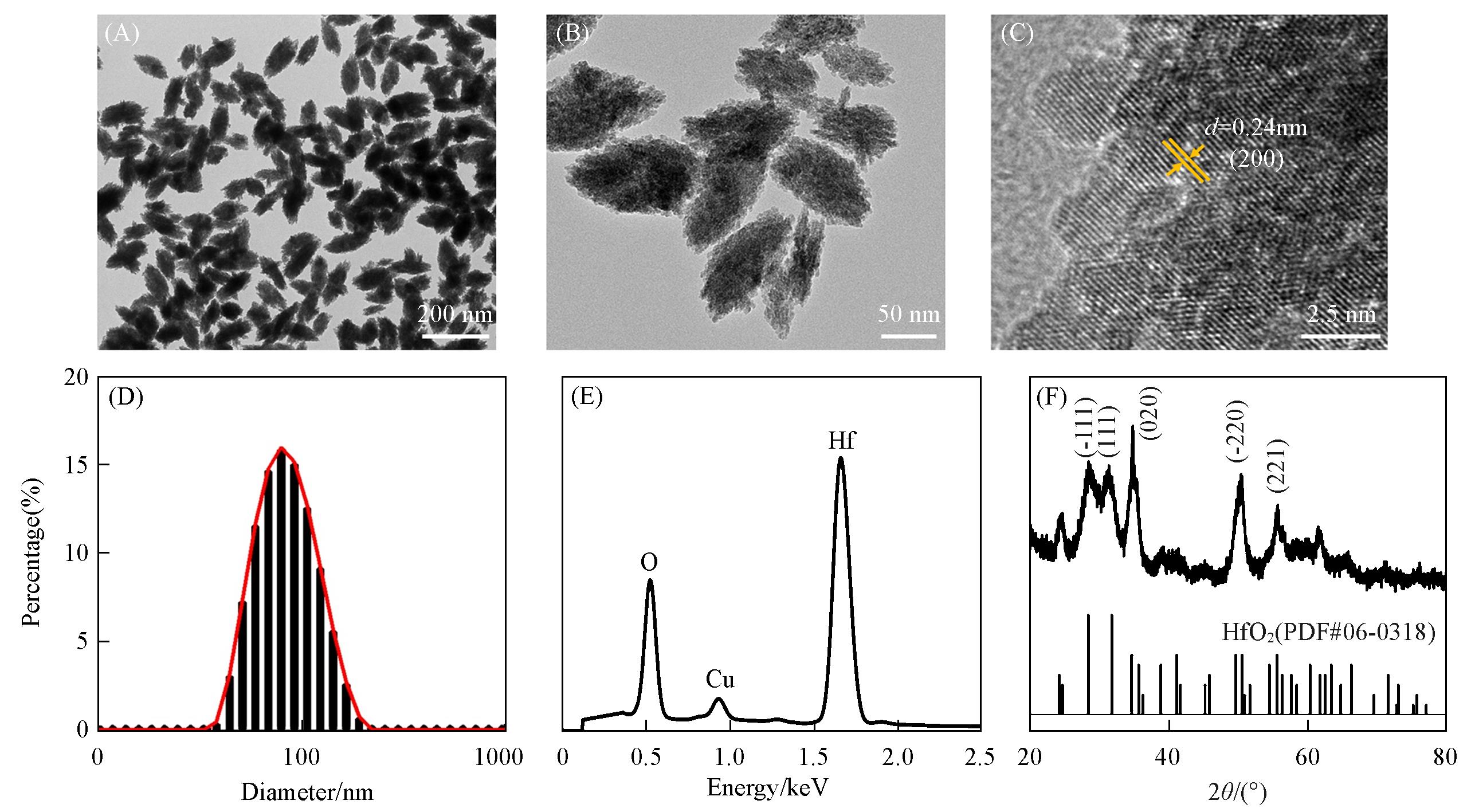
Fig.1 TEM images(A, B), HRTEM image(C), size distribution(D), EDS spectrum(E) and XRD pattern(F) of HfO2
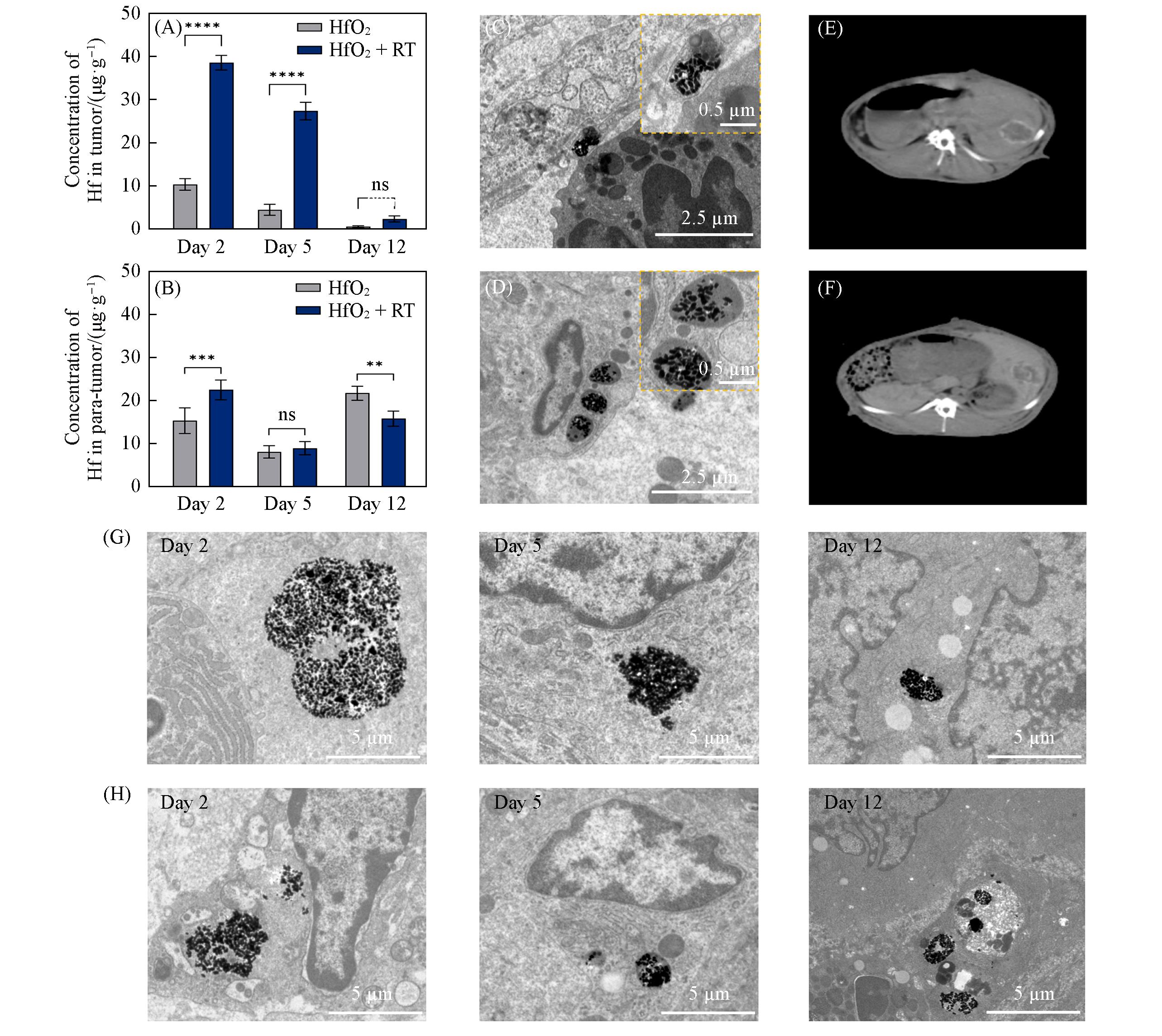
Fig.2 In vivo distribution of HfO2 nanoparticles(A, B) ICP-MS analysis of Hf in tumor tissues(A) and para-tumor tissues(B); (C, D) TEM images of HfO2 inside vascular endothelial cells(C) and cytoplasmic vesicles of tumor cells(D); (E, F) CT images of the rabbit abdomen showing HfO2 nanoparticles at the tumor margin(E) and within the tumor(F); (G, H) TEM images of tumor tissues(G) and para-tumor tissues(H) at Day 2, 5, and 12. * P<0.05; ** P<0.01; *** P<0.001.
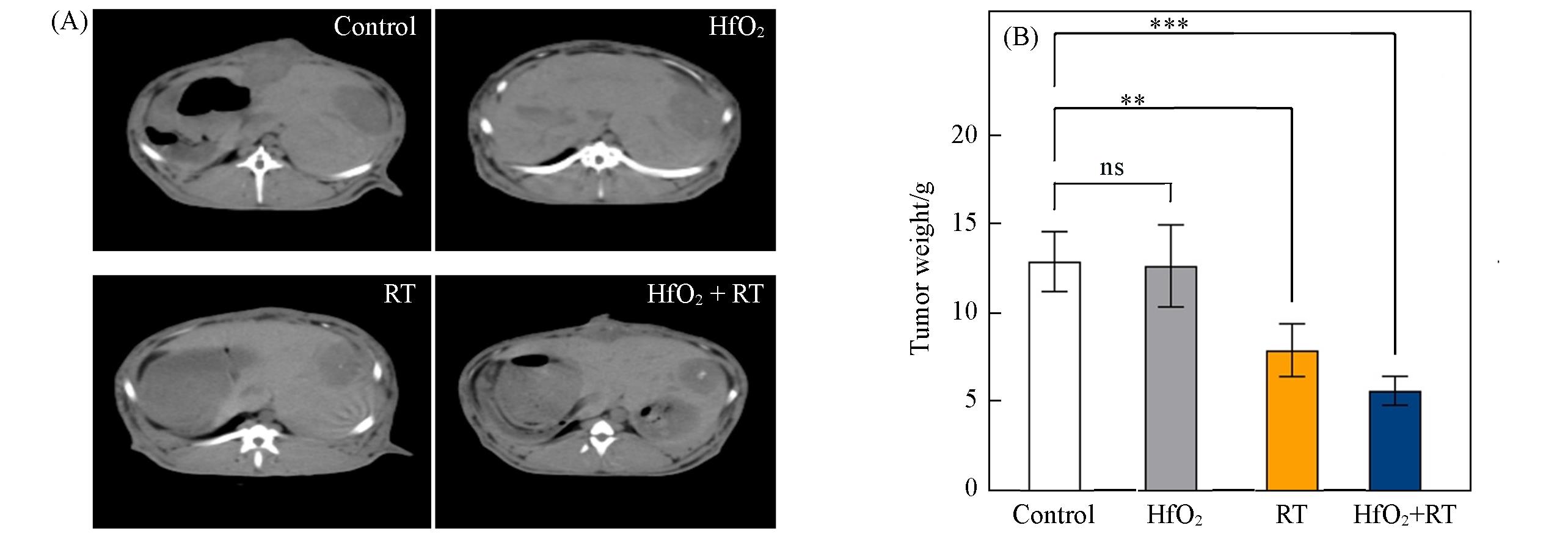
Fig.3 Representative abdominal CT images of orthotopic liver tumors in rabbits(A) and comparison of tumor weight(B)* P<0.05; ** P<0.01; *** P<0.001.
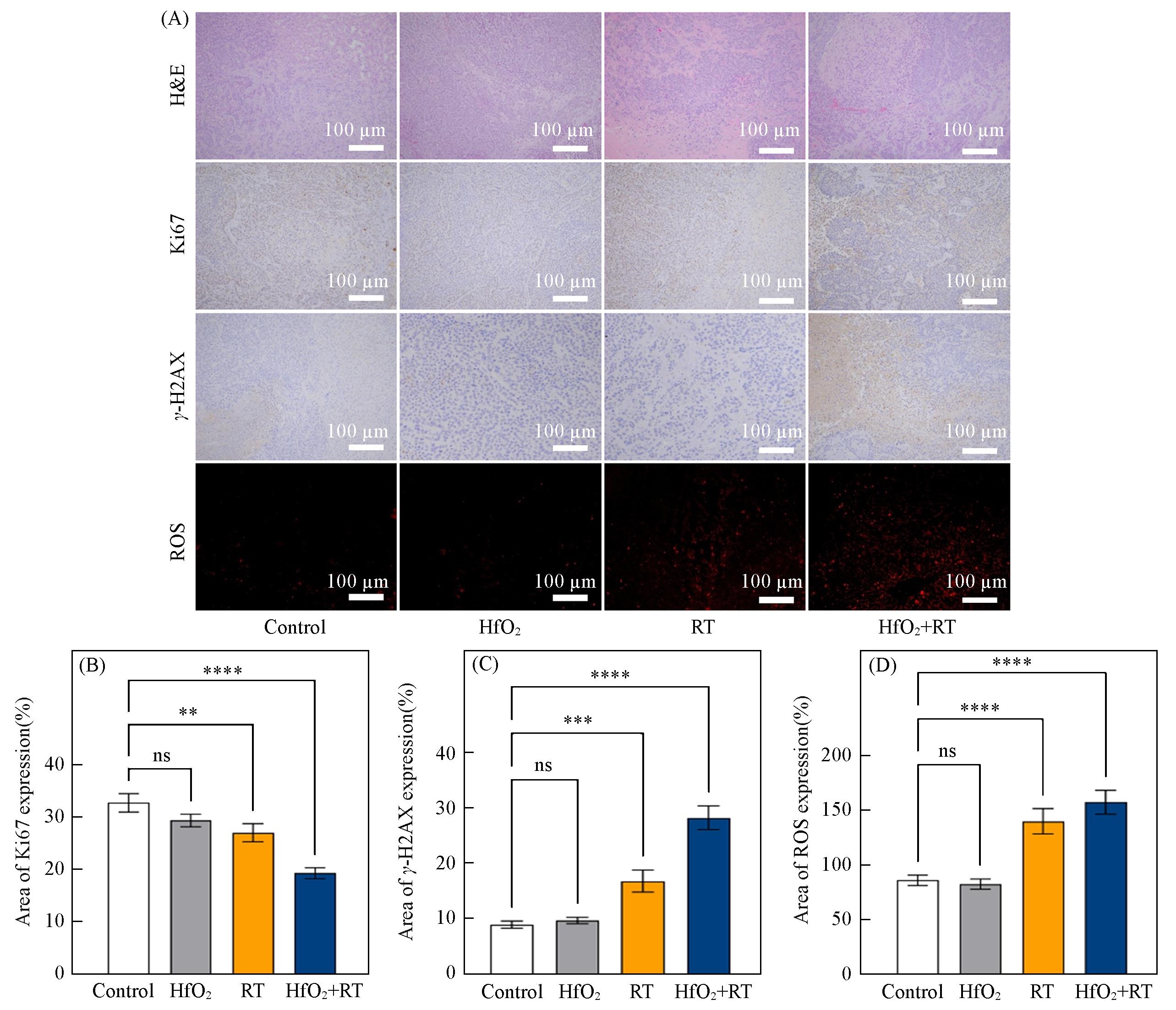
Fig.4 Evaluation of the antitumor efficacy of HfO2 nanoparticles in vivo(A) Representative H&E and fluorescent staining images(ROS, γ-H2AX and Ki67) of tumor tissues; (B—D) Quantitative analysis of Ki67(B), γ-H2AX(C), and ROS(D) fluorescence in(A). * P<0.05; ** P<0.01; *** P<0.001.
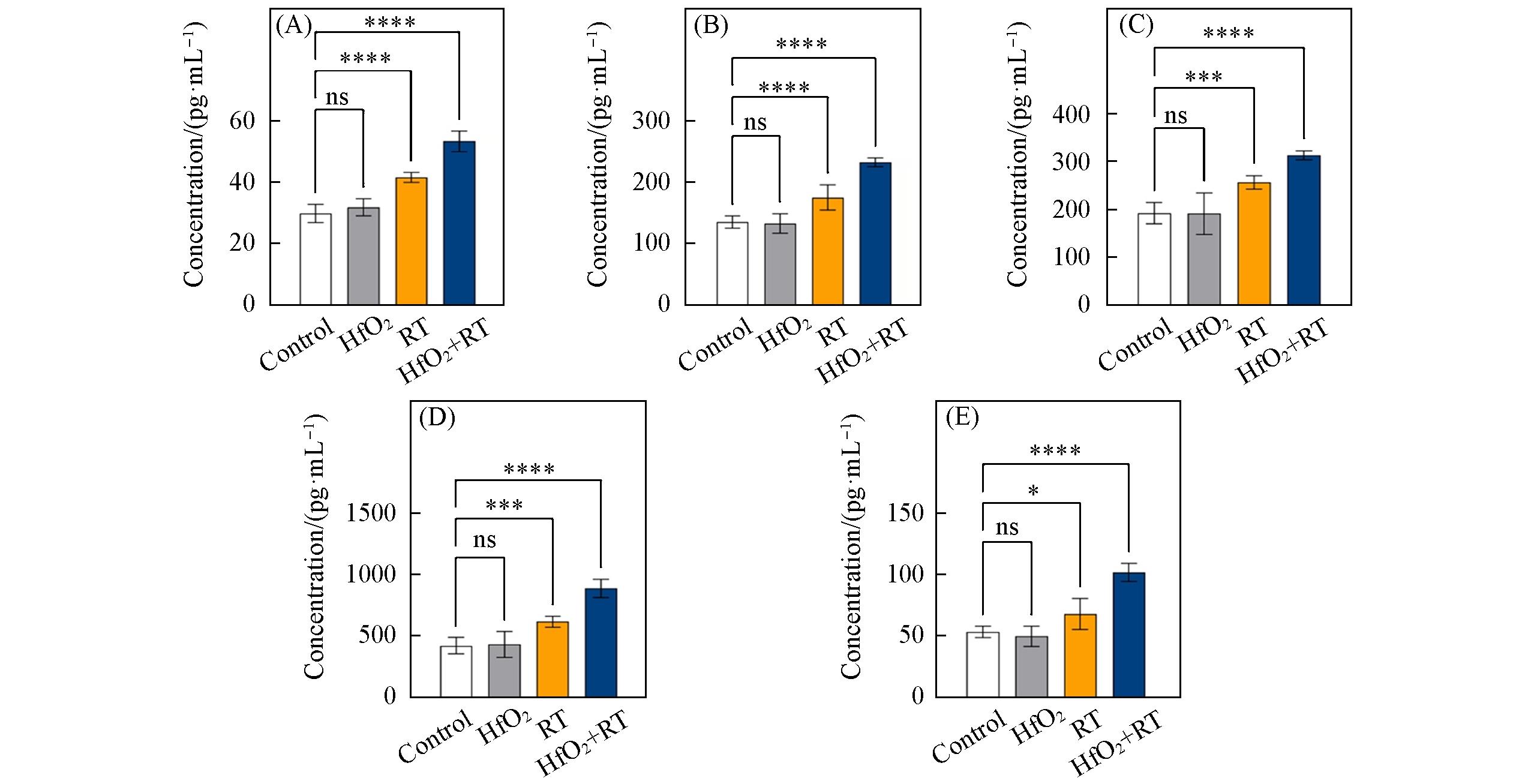
Fig.5 Expression of IL⁃6(A), IL⁃12(B), TNF⁃α(C), IFN⁃γ(D)and IL⁃1β(E) in rabbit serum* P<0.05; ** P<0.01; *** P<0.001.
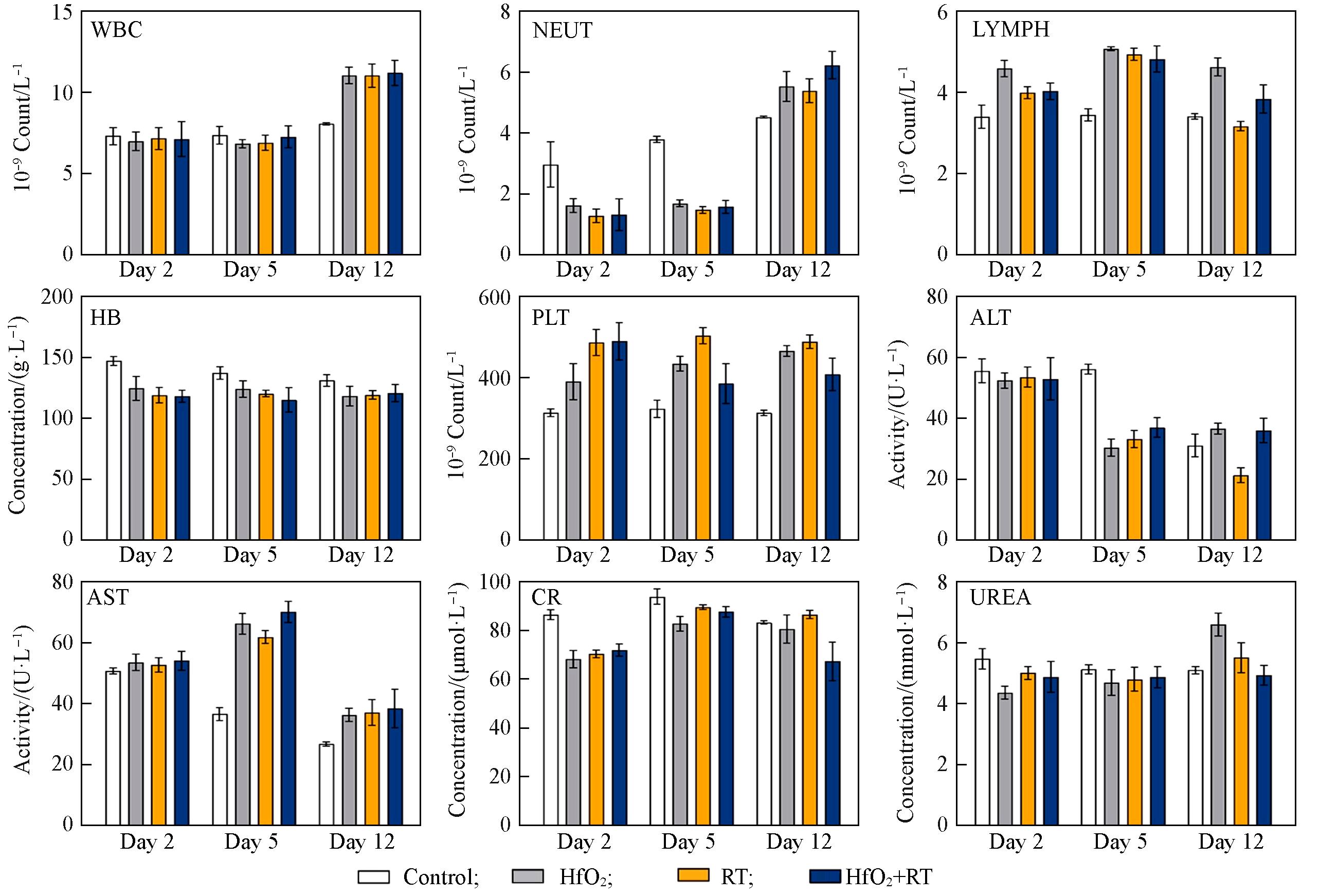
Fig.6 Results of hematological blood chemistry parameters from rabbit after different treatments
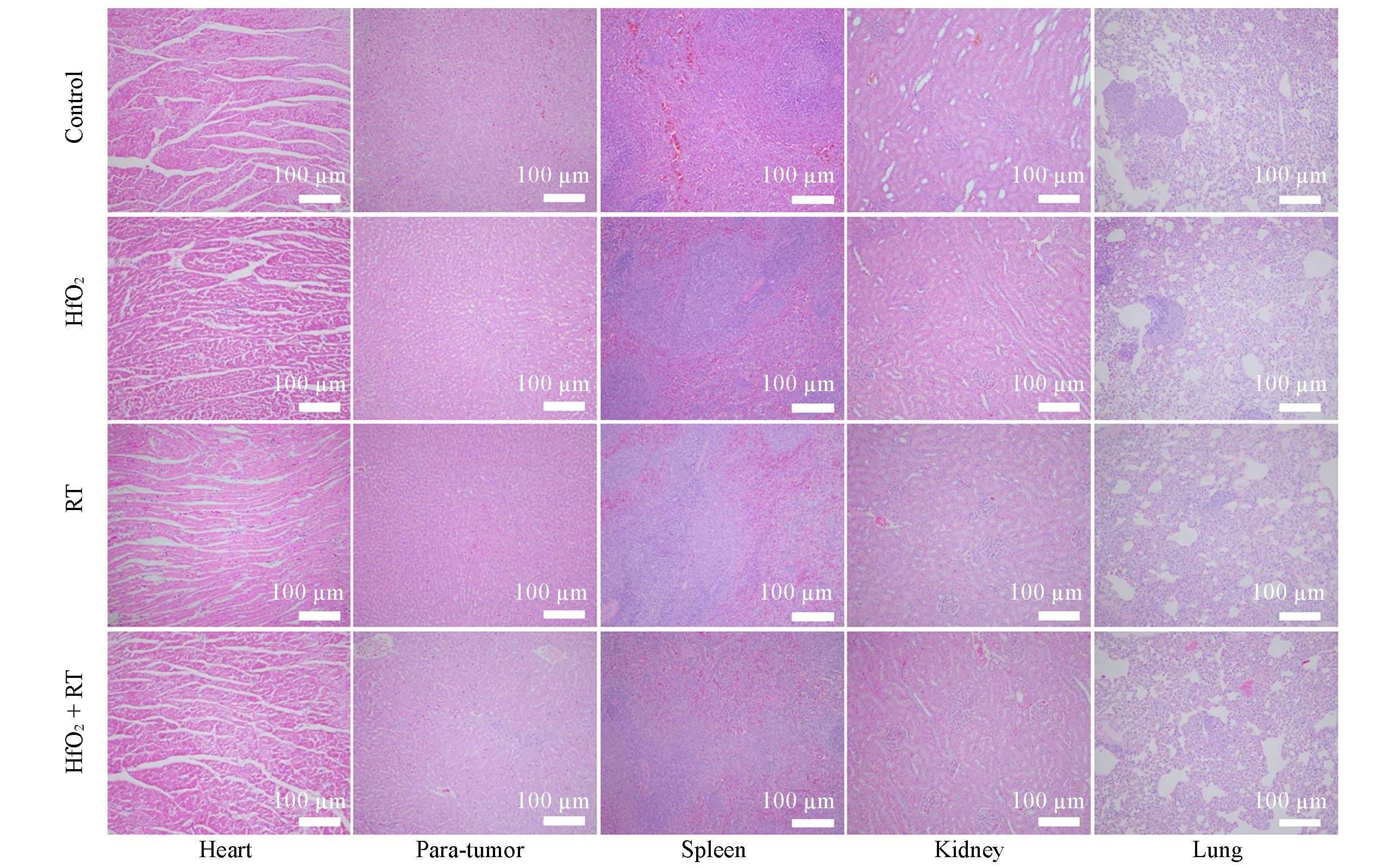
Fig.7 Representative H&E⁃stained images from major organ tissue section
| [1] | Bray F., Laversanne M., Sung H., Ferlay J., Siegel R. L., Soerjomataram I., Jemal A., CA Cancer J. Clin., 2024, 74(3), 229—263 |
| [2] | Tan E. Y., Danpanichkul P., Yong J. N., Yu Z., Tan D. J. H., Lim W. H., Koh B., Lim R. Y. Z., Tham E. K. J., Mitra K., Morishita A., Hsu Y. C., Yang J. D., Takahashi H., Zheng M. H., Nakajima A., Ng C. H., Wijarnpreecha K., Muthiah M. D., Singal A. G., Huang D. Q., J. Hepatol., 2025, 82(5), 851—860 |
| [3] | Chen T., Zhang Y., Liu J., Rao Z., Wang M., Shen H., Zeng S., BMJ Open, 2023, 13(12), e074348 |
| [4] | Niu Z. S., Wang W. H., Niu X. J., World J. Gastroenterol., 2022, 28(46), 6433—6477 |
| [5] | Chen R., Hou B. N., Zhou Y. Z., Zhang T., Wang Z. Z., Chen X., Zhang Y. W., Chen M., Front. Oncol., 2023, 13, 1018715 |
| [6] | Apisarnthanarax S., Barry A., Cao M., Czito B., DeMatteo R., Drinane M., Hallemeier C. L., Koay E. J., Lasley F., Meyer J., Owen D., Pursley J., Schaub S. K., Smith G., Venepalli N. K., Zibari G., Cardenes H., Pract. Radiat. Oncol., 2022, 12(1), 28—51 |
| [7] | Durand-Labrunie J., Baumann A. S., Ayav A., Laurent V., Boleslawski E., Cattan S., Bogart E., Le Deley M. C., Steen V., Lacornerie T., Peiffert D., Mirabel X., Int. J. Radiat. Oncol. Biol. Phys., 2020, 107(1), 116—125 |
| [8] | Choi S. H., Seong J., Clin. Mol. Hepatol., 2018, 24(2), 114—134 |
| [9] | Ameixa J., Bald I., Acc. Chem. Res., 2024, 57(11), 1608—1619 |
| [10] | Ebel K., Bald I., J. Phys. Chem. Lett., 2022, 13(22), 4871—4876 |
| [11] | Wang K., Tepper J. E., CA Cancer J. Clin., 2021, 71(5), 437—454 |
| [12] | Wu J., Zhao X., Ren B., Duan X., Sun J., Int. J. Mol. Sci., 2025, 26(5), 1839 |
| [13] | Liu J., Wu J., Chen T., Yang B., Liu X., Xi J., Zhang Z., Gao Y., Li Z., Small, 2024, 20(35), e2400954 |
| [14] | Fang J. Y., Huang H. W., Song H., Wu Q., Zhao Z., Tang B. Z., Chem. J. Chinese Universities, 2026, 47(4), 20260009 |
| 方瑾钰, 黄瀚玮, 宋航, 吴谦, 赵征, 唐本忠, 高等学校化学学报, 2026, 47(4), 20260009 | |
| [15] | Zhang Y., Han X., Liu Y., Wang S., Han X. L., Cheng C., Mater. Adv., 2022, 3(9), 3709—3725 |
| [16] | Song X., Sun Z., Li L., Zhou L., Yuan S., Front. Oncol., 2023, 13, 1088878 |
| [17] | Ning J. Y., Hao P. F., Wang F., Ye J. Q., Chong Y., Chem. J. Chinese Universities, 2025, 46(1), 20240226 |
| 宁佳雨, 郝鹏飞, 王峰, 叶家全, 崇羽, 高等学校化学学报, 2025, 46(1), 20240226 | |
| [18] | Jackson N., Cecchi D., Beckham W., Chithrani D. B., Molecules, 2024, 29(11), 2438 |
| [19] | Jin J., Zhao Q., J. Nanobiotechnol., 2020, 18(1), 75 |
| [20] | Choi J., Kim G., Cho S. B., Im H. J., J. Nanobiotechnol., 2020, 18(1), 122 |
| [21] | Chan H. W., Sheung P. W., Tsao S. T. M., Wu C. Y., Chuang H. Y., Mater. Today Bio., 2025, 33, 102029 |
| [22] | Zhang Y. M., Huang F., Ren C. H., Liu J. J., Yang L. J., Chen S. Z., Chang J. L., Yang C. H., Wang W. W., Zhang C. N., Liu Q., Liang X. J., Liu J. F., Adv. Sci., 2019, 6(8), 1801806 |
| [23] | Wu C. H., Qiao M. L., Ning H. Y., Gao T. T., Xu H. J., Xue D. F., Li X. Z., Int. J. Mol. Sci., 2026, 27(8), 3454 |
| [24] | Wen S., Ovais M., Li X., Ren J., Liu T., Wang Z., Cai R., Chen C., Nanoscale, 2022, 14(23), 8245—8254 |
| [25] | Du F., Lou J., Jiang R., Fang Z., Zhao X., Niu Y., Zou S., Zhang M., Gong A., Wu C., Int. J. Nanomed., 2017, 12, 5973—5992 |
| [26] | Huang J., Huang Q., Liu M., Chen Q. H., Ai K. L., Front. Pharmacol., 2022, 13, 844037 |
| [27] | Wang J., Pan J., Tang Y., Chen J., Fei X., Xue W., Liu X., Front. Chem., 2023, 11, 1283924 |
| [28] | McGinnity T. L., Sokolova V., Prymak O., Nallathamby P. D., Epple M., Roeder R. K., J. Biomed. Mater. Res. B: Appl. Biomater., 2021, 109(10), 1407—1417 |
| [29] | Sebti Y., Chauveau T., Chalal M., Lalatonne Y., Lefebvre C., Motte L., Inorg. Chem., 2022, 61(17), 6508—6518 |
| [30] | Zhang P., Darmon A., Marill J., Mohamed Anesary N., Paris S., Int. J. Nanomed., 2020, 15, 3843—3850 |
| [31] | Bonvalot S., Rutkowski P. L., Thariat J., Carrère S., Ducassou A., Sunyach M. P., Agoston P., Hong A., Mervoyer A., Rastrelli M., Moreno V., Li R. K., Tiangco B., Herraez A. C., Gronchi A., Mangel L., Sy-Ortin T., Hohenberger P., de Baère T., Le Cesne A., Helfre S., Saada-Bouzid E., Borkowska A., Anghel R., Co A., Gebhart M., Kantor G., Montero A., Loong H. H., Vergés R., Lapeire L., Dema S., Kacso G., Austen L., Moureau-Zabotto L., Servois V., Wardelmann E., Terrier P., Lazar A. J., Bovée J. V. M. G., Le Péchoux C., Papai Z., Lancet Oncol., 2019, 20(8), 1148—1159 |
| [32] | Sherstiuk A. A., Tsymbal S. A., Fakhardo A. F., Morozov V. N., Krivoshapkina E. F., Hey-Hawkins E., Krivoshapkin P. V., ACS Biomater. Sci. Eng., 2021, 7(12), 5633—5641 |
| [33] | Zhang P., Marill J., Darmon A., Mohamed Anesary N., Lu B., Paris S., Int. J. Nanomed., 2021, 16, 2761—2773 |
| [34] | Li Y., Qi Y., Zhang H., Xia Z., Xie T., Li W., Zhong D., Zhu H., Zhou M., Biomaterials, 2020, 226, 119538 |
| [35] | Wan Y., Zhou X., RSC Adv., 2017, 7(13), 7763—7773 |
| [36] | Wang J., Zhang T., Liao Y., Chen W., Liang S., Xu S., Fang H., Wang M., Zheng L., Gu Z., Zhang Z., Wang B., Bi Y., Feng W., Anal. Chim. Acta, 2023, 1266, 341352 |
| [37] | Liu D., Cao F., Xu Z., Zhao C., Liu Z., Pang J., Liu Z. X., Moghiseh M., Butler A., Liang S., Fan W., Yang J., Adv. Mater., 2024, 36(19), e2308098 |
| [38] | Zhang S., Lai Y., Pan J., Saeed M., Li S., Zhou H., Jiang X., Gao J., Zhu Y., Yu H., Zhang W., Xu Z., Adv. Mater., 2024, 36(23), e2314132 |
| [39] | Liu Y., Zhang P., Li F., Jin X., Li J., Chen W., Li Q., Theranostics, 2018, 8(7), 1824—1849 |
| [40] | Marill J., Mohamed Anesary N., Paris S., Radiother. Oncol.: J. Eur. Soc. Ther. Radiol. Oncol., 2019, 141, 262—266 |
| [41] | Hoffmann C., Calugaru V., Borcoman E., Moreno V., Calvo E., Liem X., Salas S., Doger B., Jouffroy T., Mirabel X., Rodriguez J., Chilles A., Bernois K., Dimitriu M., Fakhry N., Hee Kam S. W., Le Tourneau C., Eur. J. Cancer, 2021, 159, 135—144 |
| [42] | Huang C. W., Hu H. M., Hsu W. H., Chen C. Y., Huang M. Y., Chen C. P., Wei P. L., Shen B. N., Chang T. K., Wang J. Y., Nanomedicine, 2025, 20(9), 929—941 |
| [43] | Cao Y., Ding S., Hu Y., Zeng L., Zhou J., Lin L., Zhang X., Ma Q., Cai R., Zhang Y., Duan G., Bian X. W., Tian G., ACS Nano, 2024, 18(5), 4189—4204 |
| [44] | Gerken L. R. H., Keevend K., Zhang Y., Starsich F. H. L., Eberhardt C., Panzarasa G., Matter M. T., Wichser A., Boss A., Neels A., Herrmann I. K., ACS Appl. Mater. Interfaces, 2019, 11(1), 437—448 |
| [45] | Darmon A., Zhang P., Marill J., Mohamed Anesary N., Da Silva J., Paris S., Cancer Cell Int., 2022, 22(1), 208 |
| [1] | 林明穗, 王启龙, 梁晴晴, 陈乔, 赖惠文, 陈雪莹, 郭新颖, 马战文, 赖安群, 潘中华, 肖旺钏. 过渡金属多核配合物Cu4的合成及电催化水氧化性能[J]. 高等学校化学学报, 2026, 47(8): 20250361. |
| [2] | 宋志国, 王鑫, 朱志慧, 徐一铭, 王敏. 含萘二磺酸类配体单核Cd(II)配合物传感器对Fe3+的高选择性检测[J]. 高等学校化学学报, 2026, 47(8): 20260062. |
| [3] | 师凯, 刘子荐, 张潇, 赵立彦, 姚同杰. 基于偶氮苯衍生物构筑的Y-MOF的合成、 表征及对硝基化合物的荧光检测性能[J]. 高等学校化学学报, 2026, 47(7): 20250365. |
| [4] | 周海刚, 程孟, 张月, 魏徐兵, 李晓伟, 胡松青. 面向污染物识别的荧光噻吩基MOFs的构筑与性能[J]. 高等学校化学学报, 2026, 47(6): 20250274. |
| [5] | 魏颖真, 冯婧怡, 王若瑜, 宋海涛, 闫文付. 同轴3D打印核壳结构复合催化剂研究进展[J]. 高等学校化学学报, 2026, 47(6): 20260082. |
| [6] | 翟晓璐 吕云 李会 黄科科 王艳红 卢红成. 甲酸-草酸共配体低维磁性镱配合物的构筑及磁性研究[J]. 高等学校化学学报, 0, (): 20260193. |
| [7] | 张应鹏 刘娟娟 秦凡凡 杨云裳 胡赜太. 铁/锰比例调控的双金属纳米酶用于有机磷农药比色传感[J]. 高等学校化学学报, 0, (): 20260095. |
| [8] | 刘少芳 谢奎. 宏观尺寸单晶多孔材料[J]. 高等学校化学学报, 0, (): 20260187. |
| [9] | 李宜霏 线尚兰 蒋洲洋 唐怀军 夏溶蔓 王威贤 吴一冰 方秀英 李香 姜艾晶. 一种阳离子型铱(III)配合物与硅胶复合纳米发光材料的制备及其在潜指纹检测中的应用[J]. 高等学校化学学报, 0, (): 20260137. |
| [10] | 张凯为, 秦安军. 聚集诱导发光镧系配合物[J]. 高等学校化学学报, 2026, 47(5): 20260013. |
| [11] | 韩雨宸, 张蒙, 杨琪, 彭秋晨, 李恺. 一种金铜簇配位聚合物的制备与力致变色性能[J]. 高等学校化学学报, 2026, 47(4): 20260007. |
| [12] | 张捷, 霍志鹏, 钟国强. 亚微米球Eu2O3/B4C/HDPE复合材料的制备及中子/伽马辐射屏蔽性能[J]. 高等学校化学学报, 2026, 47(3): 20250298. |
| [13] | 黄馨怡, 阙茂梅, 李瑶, 雷珊, 林思琪, 王力. Dawson型多金属氧酸盐-VC复合物对 α-葡萄糖苷酶的抑制作用及机制研究[J]. 高等学校化学学报, 2026, 47(3): 20250236. |
| [14] | 程文婷, 李智婷, 翟颖. 三水合碳酸镁在限域旋混反应器中的结晶优化[J]. 高等学校化学学报, 2026, 47(3): 20250217. |
| [15] | 徐一铭, 史燚威, 王鑫, 朱志慧, 宋志国, 王敏. 新型三维单核Zn(II)配合物多位点协同催化单和双取代喹唑啉酮的绿色合成[J]. 高等学校化学学报, 2026, 47(2): 20250225. |
| 阅读次数 | ||||||
|
全文 |
|
|||||
|
摘要 |
|
|||||
