高等学校化学学报

• 研究论文 • 上一篇    下一篇

面向污染物识别的荧光噻吩基MOFs构筑与性能研究

周海刚1,程孟2,张月3,魏徐兵2,李晓伟2,胡松青3   

  1. 1. 中国石油化工股份有限公司胜利油田分公司技术检测中心 2. 中国矿业大学 材料与物理学院 3. 中国石油大学(华东) 材料科学与工程学院
  • 收稿日期:2025-09-25 修回日期:2025-11-27 网络首发:2025-12-01 发布日期:2025-12-01
  • 通讯作者: 李晓伟 E-mail:chco@cumt.edu.cn
  • 基金资助:
    国家自然科学基金(批准号:52304072)资助

Construction and Performance of Fluorescent Thiophene-Based MOFs for Pollutant Recognition

ZHOU Haigang1, CHENG Meng2, ZHANG Yue3, WEI Xubing2, LI Xiaowei2, HU Songqing3   

  1. 1. Technology Inspection Center, Shengli Oilfield Branch Company, Sinopec 2. School of Materials Science and Physics, China University of Mining and Technolog 3. School of Materials Science and Engineering, China University of Petroleum (East China)
  • Received:2025-09-25 Revised:2025-11-27 Online First:2025-12-01 Published:2025-12-01
  • Supported by:
    Supported by the National Natural Science Foundation of China (No. 52304072)

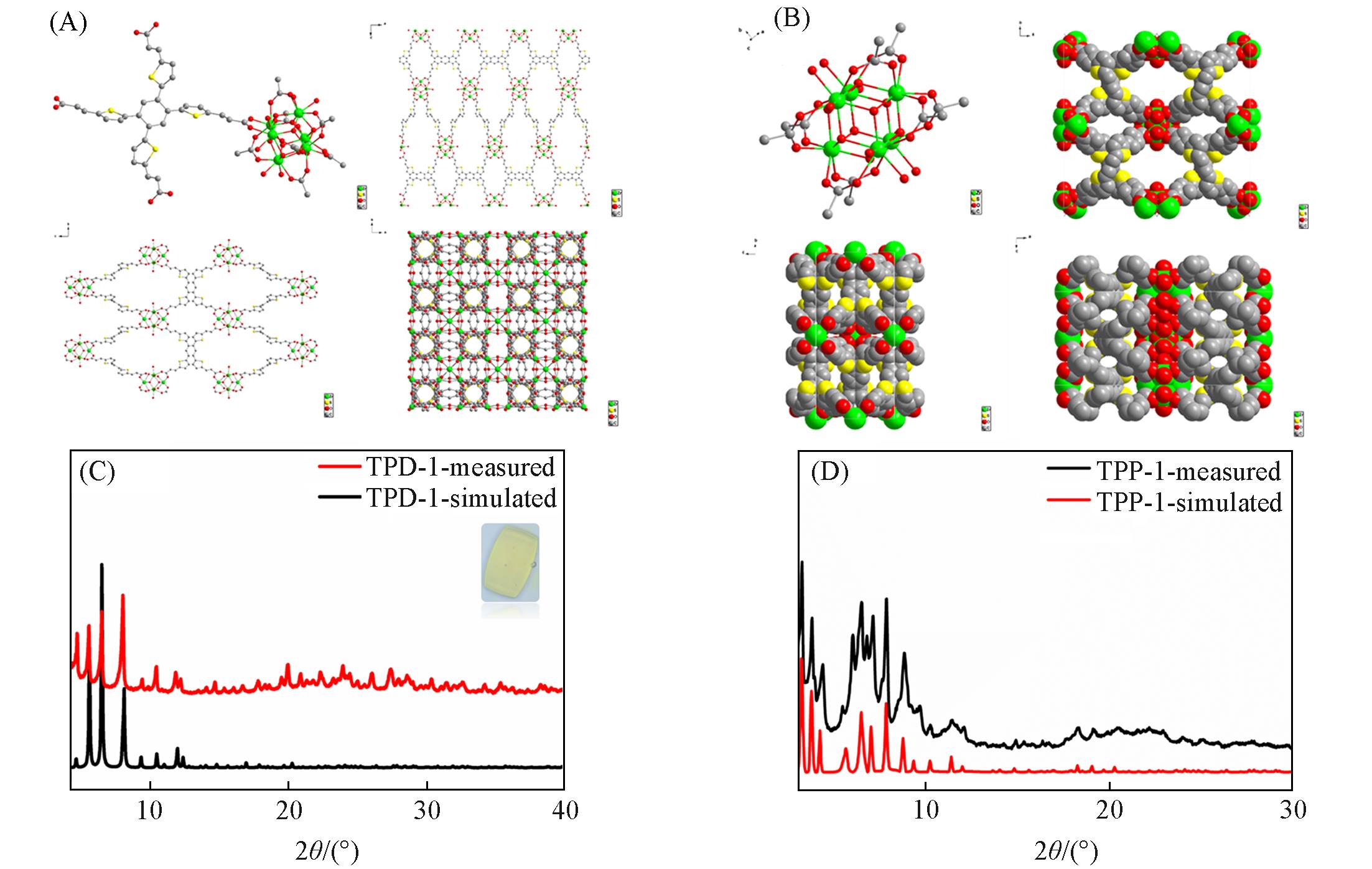
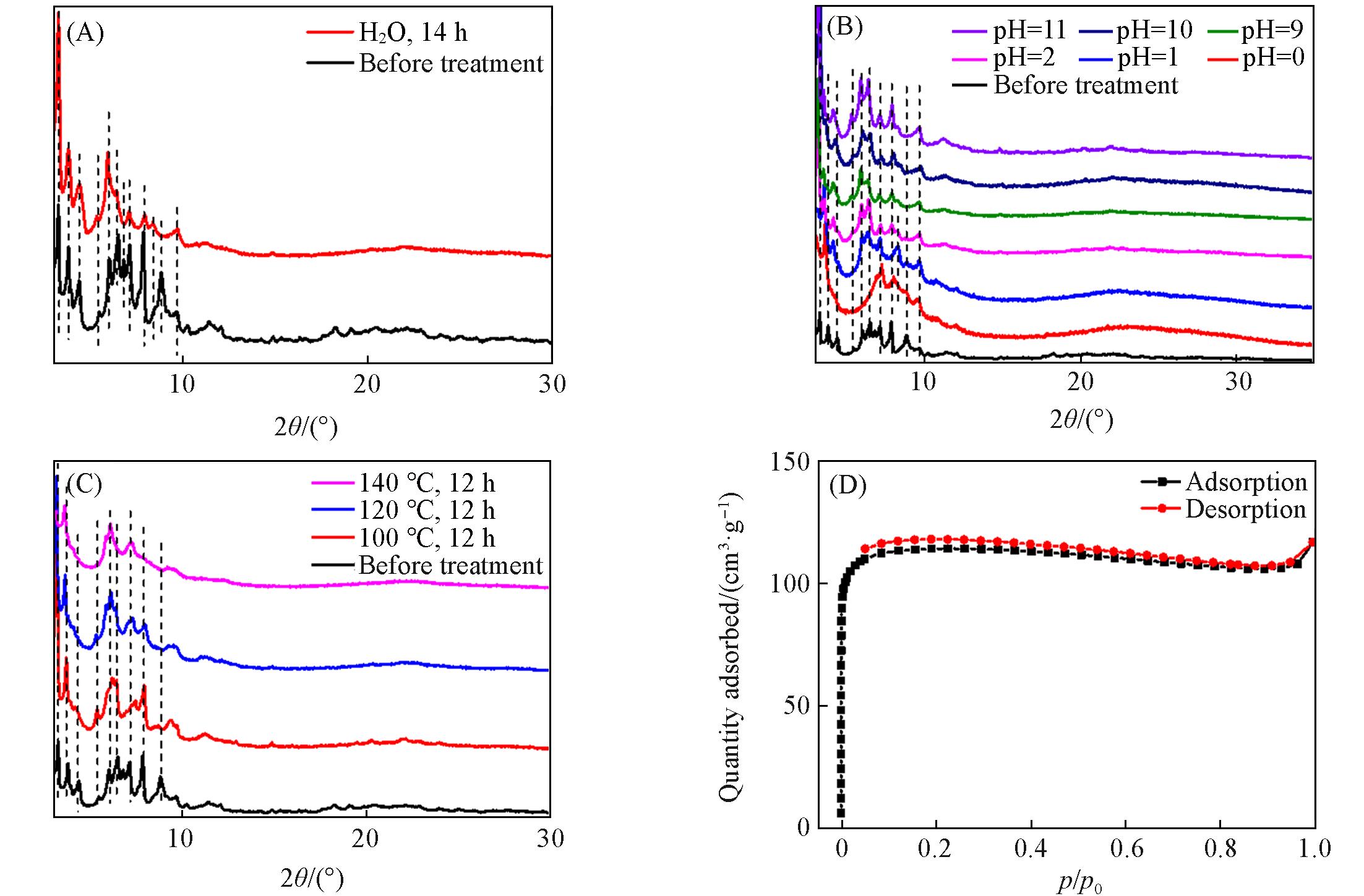
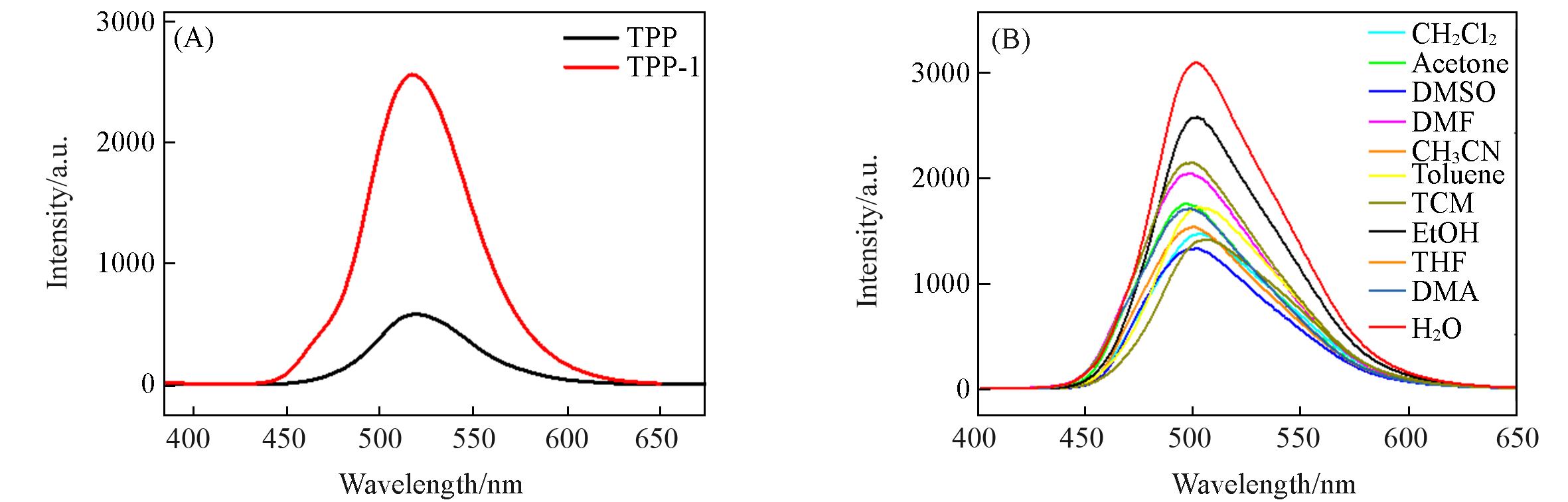
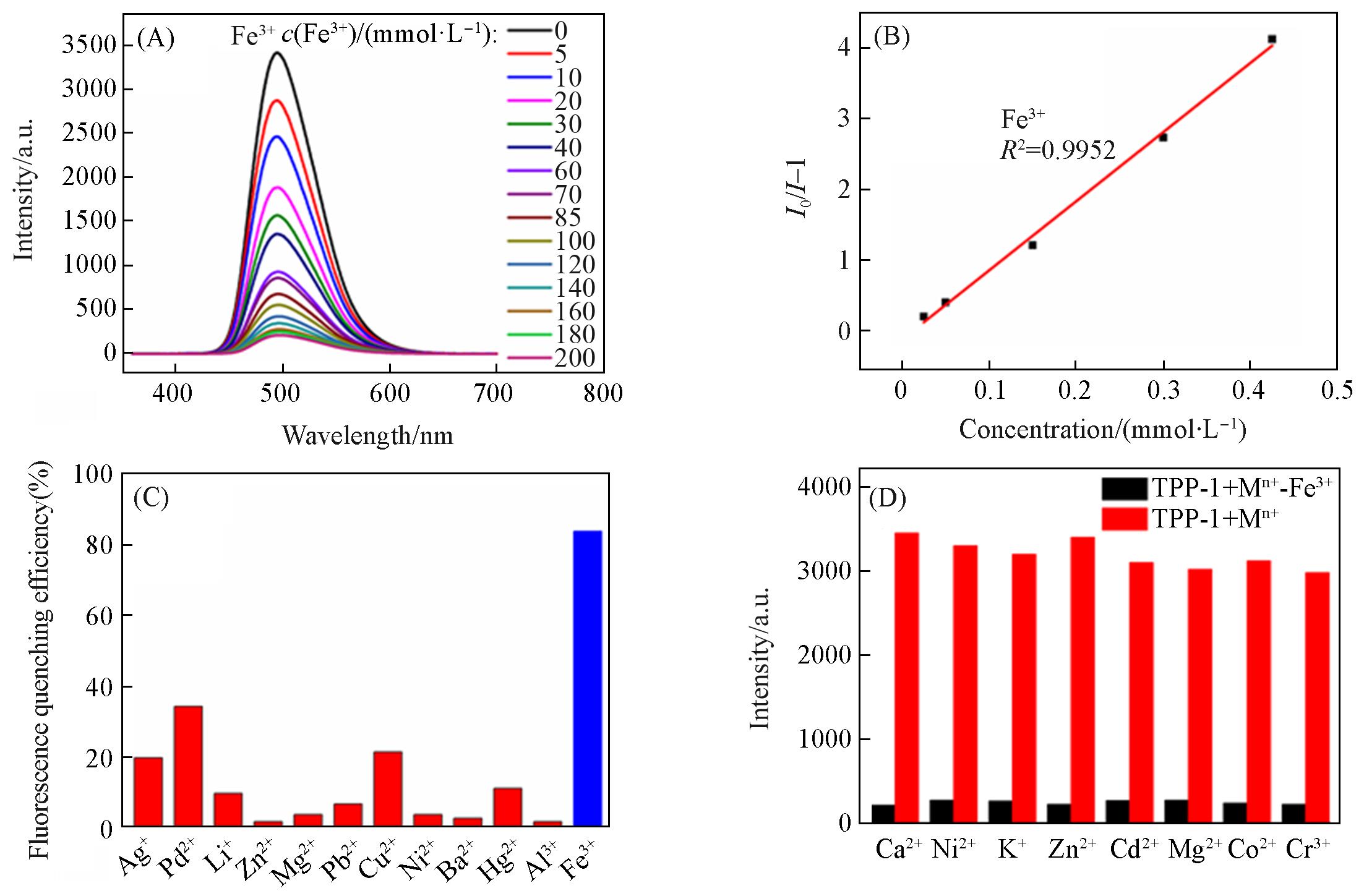
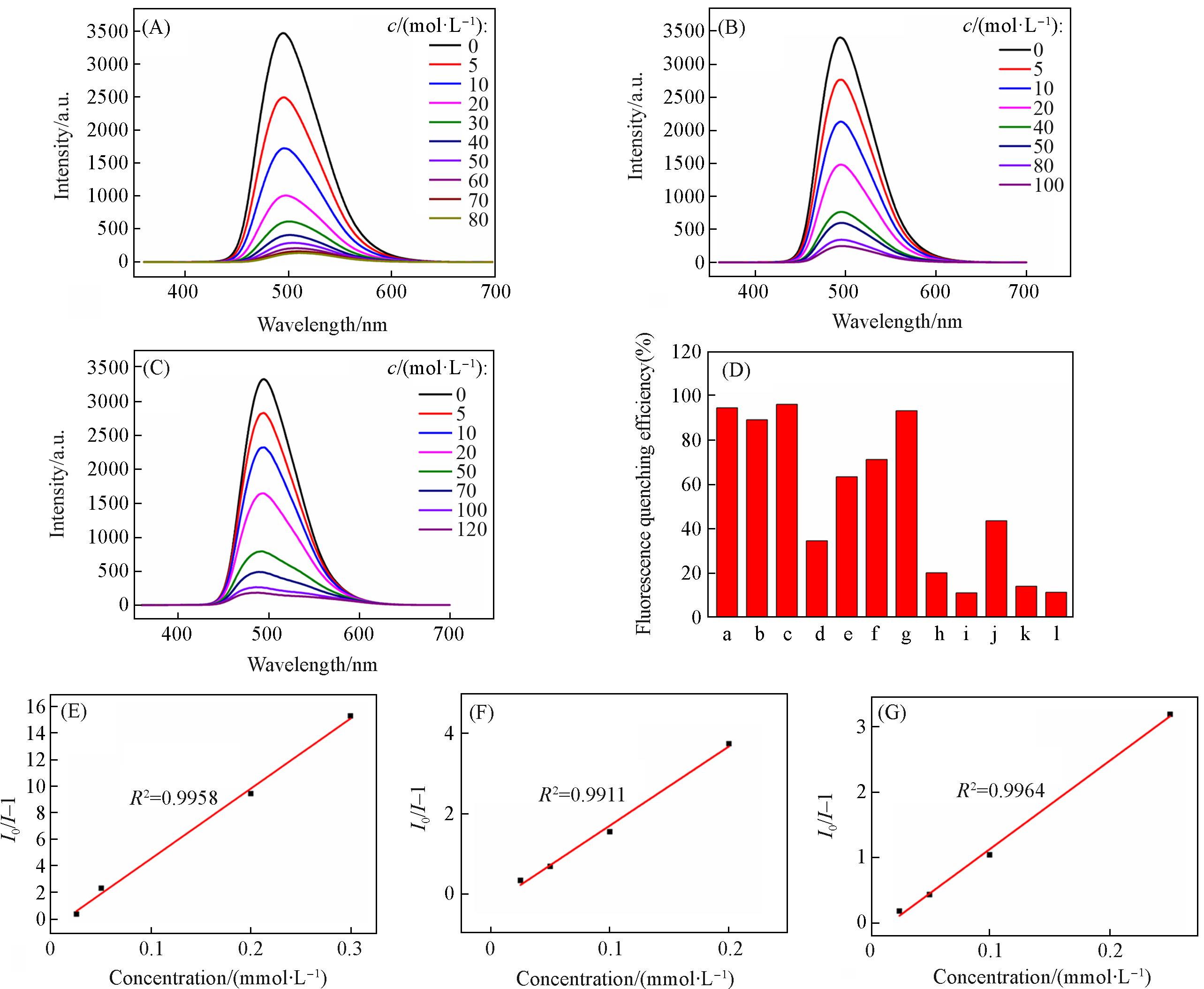
摘要: 金属有机框架材料(MOFs)在污染物的识别和检测中应用广泛,尤其在重金属离子与硝基化合物的荧光识别方面显示出巨大潜力,但其稳定性和荧光性能常因配位键特性而受限。本研究通过Stille偶联与NBS选择性溴化策略合成平面共轭扩展与链长可控的新型噻吩桥联配体,成功构建了结构稳定且荧光增强的高价噻吩基MOFs材料(TPD-1和TPP-1),系统研究了其在金属离子与硝基化合物荧光识别中的应用。结果表明,两种晶体均通过六核八连接次级单元(Zr6(μ3-O)8(COO)8(H2O)8)与有机配体连接形成,TPD-1属四方晶系I41/amd空间群,TPP-1属立方晶系Fmmm空间群。其中,TPP-1的扩展共轭芳香骨架有效增强了水溶液及酸碱稳定性,并促进了其与目标分析物的相互作用,使其对Fe3+和芳香硝基化合物均表现出优异的荧光传感性能,猝灭率超过93%,Ksv常数达到104 M-1量级。

关键词: 噻吩桥联配体, 金属有机框架物, 荧光识别, 铁离子, 芳香硝基化合物

Abstract: Metal-organic frameworks (MOFs) are widely used in the identification and detection of pollutants, showing great potential particularly in the fluorescent detection of heavy metal ions and nitro compounds. However, their stability and fluorescence performance are often limited by the nature of the coordination bonds. In this study, novel thiophene-bridged ligands with planar conjugated extension and controllable chain length were synthesized via Stille coupling and NBS selective bromination strategies. These ligands were successfully used to construct highly stable and fluorescence-enhanced thiophene-based MOFs (TPD-1 and TPP-1). The application of these materials in the fluorescent recognition of metal ions and nitro compounds was systematically investigated. The results indicate that both crystals are formed by connecting hexanuclear eight-connected secondary building units (Zr6(μ3-O)8(COO)8(H2O)8) with organic ligands. TPD-1 belongs to the tetragonal crystal system with the I41/amd space group, while TPP-1 belongs to the cubic crystal system with the Fmmm space group. Among them, the extended conjugated aromatic framework of TPP-1 effectively enhances its stability in aqueous solutions and under acidic or basic conditions, while promoting interactions with target analytes. This enables TPP-1 to exhibit excellent fluorescence sensing performance for both Fe3+ and aromatic nitro compounds, with a quenching efficiency exceeding 93% and a Ksv constant reaching the order of 104 M-1.

Key words: Thiophene-bridged ligand; metal-organic frameworks, fluorescence recognition, Fe3+, aromatic nitro compounds

中图分类号: 

TrendMD: