

高等学校化学学报 ›› 2026, Vol. 47 ›› Issue (7): 20250380.doi: 10.7503/cjcu20250380
熊新( ), 刘馥楠, 骈童岩, 范文哲, 张子怡, 李明鉴, 刘嘉煜, 曹霄琴, 舒朋华()
收稿日期:2025-12-15
出版日期:2026-07-10
发布日期:2026-04-01
通讯作者:
熊新,舒朋华
E-mail:xiongxion2022@yeah.net;shupenghua@yeah.net
基金资助:
XIONG Xin(), LIU Funan, PIAN Tongyan, FAN Wenzhe, ZHANG Ziyi, LI Mingjian, LIU Jiayu, CAO Xiaoqin, SHU Penghua()
Received:2025-12-15
Online:2026-07-10
Published:2026-04-01
Contact:
XIONG Xin, SHU Penghua
E-mail:xiongxion2022@yeah.net;shupenghua@yeah.net
Supported by:摘要:
设计合成了一种新型苯并噻唑类荧光探针DHB, 并利用核磁共振波谱(NMR)、 傅里叶变换红外光谱(FTIR)、 质谱(MS)和高分辨质谱(HRMS)对DHB进行了结构表征. 研究结果表明, 探针DHB与Zn2+形成了1∶1配合物, 表现出较强的荧光发射, 可实现对Zn2+的专一识别, 且不受其它共存金属离子和阴离子的干扰, 检出限为4.01×10⁻⁸ mol/L. 当继续向配合物DHB-Zn2+中加入草甘膦后, 体系表现出显著的荧光猝灭效应, 响应时间为18 s, 且不受其它有机磷农药和常见阴离子的干扰, 检出限低至3.81×10⁻⁸ mol/L. FTIR和HRMS测试结果揭示了探针DHB连续识别Zn2+和草甘膦的反应机理, 即探针DHB结构中的C=O发生了烯醇式互变, 形成的烯醇式羟基、 探针结构中的O—H及C=N的氮杂原子共同参与和Zn2+的配位, 而草甘膦分子中氨基、 羧基和磷酸基的协同配位使其能与Zn2+发生更强的络合作用, 导致Zn2+从配合物DHB-Zn2+中被置换出来. 此外, 探针DHB及配合物DHB-Zn2+可分别应用于环境中Zn2+和草甘膦的分析检测, 具有一定的实用价值.
中图分类号:
TrendMD:
熊新, 刘馥楠, 骈童岩, 范文哲, 张子怡, 李明鉴, 刘嘉煜, 曹霄琴, 舒朋华. 锌离子介导的草甘膦荧光探针的合成及应用. 高等学校化学学报, 2026, 47(7): 20250380.
XIONG Xin, LIU Funan, PIAN Tongyan, FAN Wenzhe, ZHANG Ziyi, LI Mingjian, LIU Jiayu, CAO Xiaoqin, SHU Penghua. Synthesis and Application of Fluorescent Probe for Detection of Glyphosate Based on Zinc Ion. Chem. J. Chinese Universities, 2026, 47(7): 20250380.
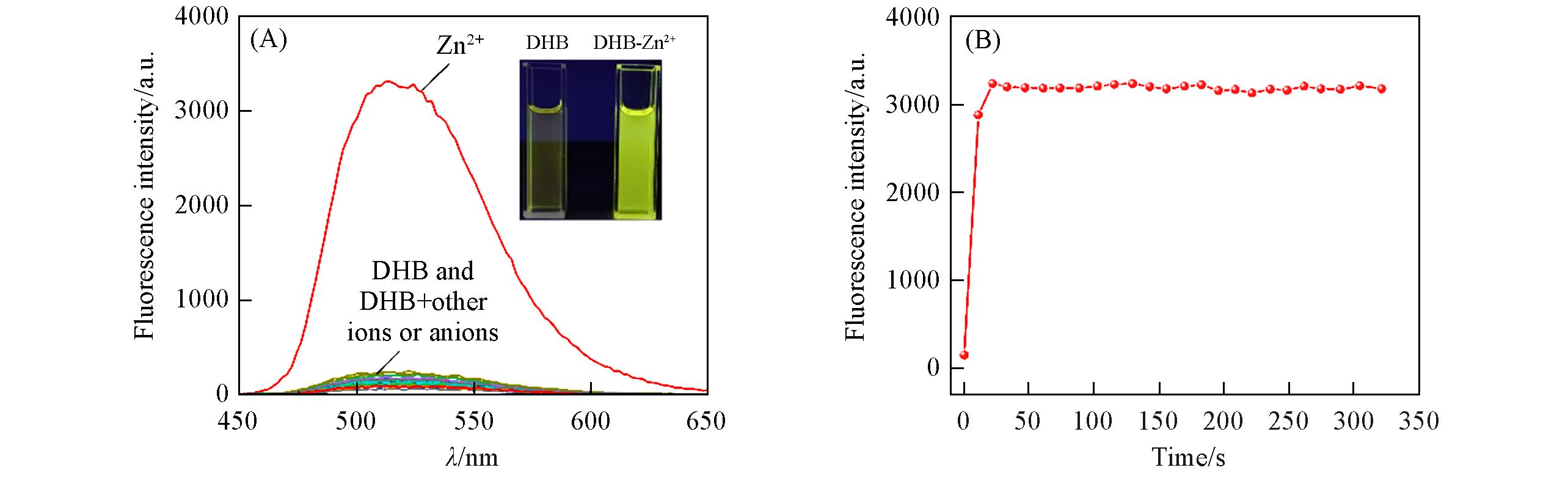
Fig.1 Fluorescence spectra of probe DHB solution after the addition of various metal ions and anions(A) and the effect of time on the fluorescence intensity of DHB⁃Zn2+ system(B)(A) Inset: photos of the solution of probe DHB and DHB-Zn2+ under a 365 nm UV lamp.
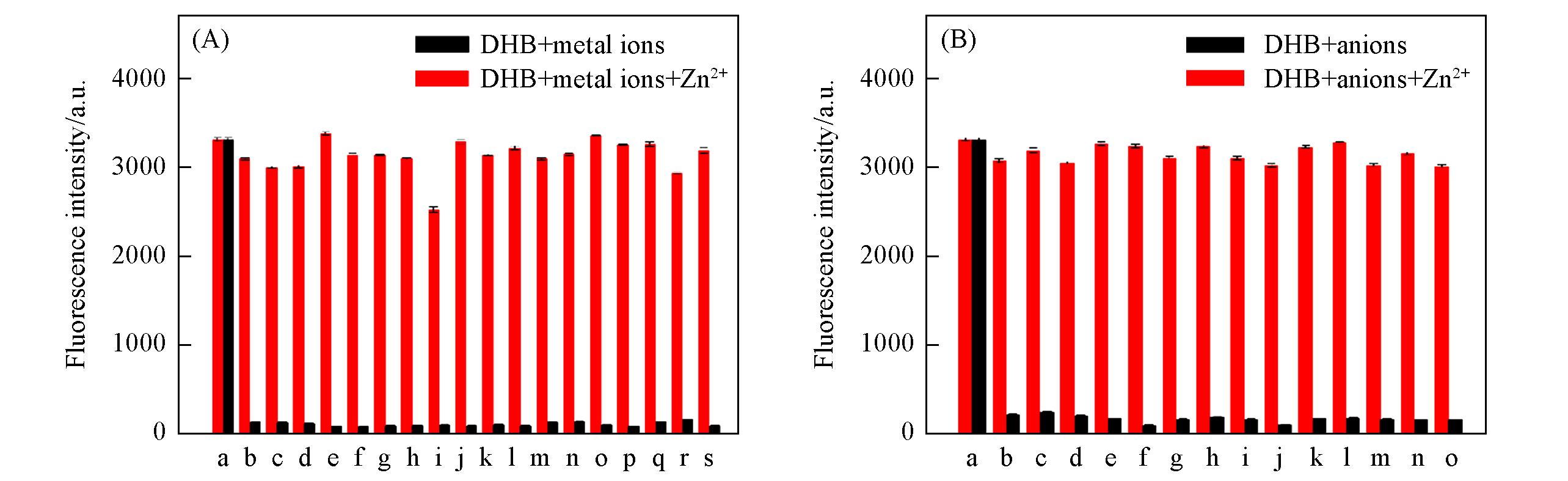
Fig.2 Fluorescence intensities of complex DHB⁃Zn2+ solution after adding various metal ions(A) and anions(B)(A) a. Zn2+; b. Cu2+; c. Pb2+; d. Hg2+; e. K+; f. Ni2+; g. Al3+; h. Cr3+; i. Fe2+; j. Co2+; k. Mn2+; l. Na+; m. Ca2+; n. Ba2+; o. Ag+; p. Mg2+; q. Cs+; r. Li+; s. Cd2+; (B) a. Zn2+; b. CH3COO-; c. SCN-; d. I-; e. H2PO4-; f. P2O74-; g. CO32-; h. NO3-; i. Cl-; j. S2O32-; k. SO42-; l. HSO3-; m. HPO42-; n. HCO3-; o. PO43-.
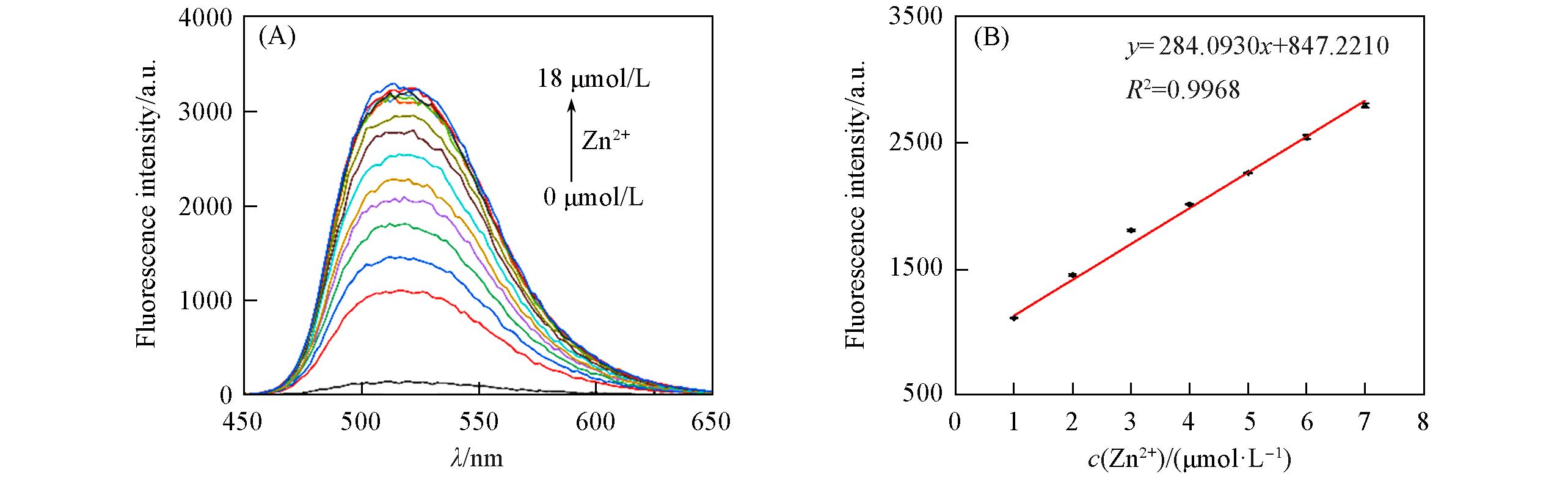
Fig.3 Fluorescence spectra of probe DHB solution after dropping different concentrations of Zn2+(0─18 µmol/L)(A) and the relationship between fluorescence intensity of probe DHB and Zn2+ concentration(1.0─7.0 µmol/L)(B)
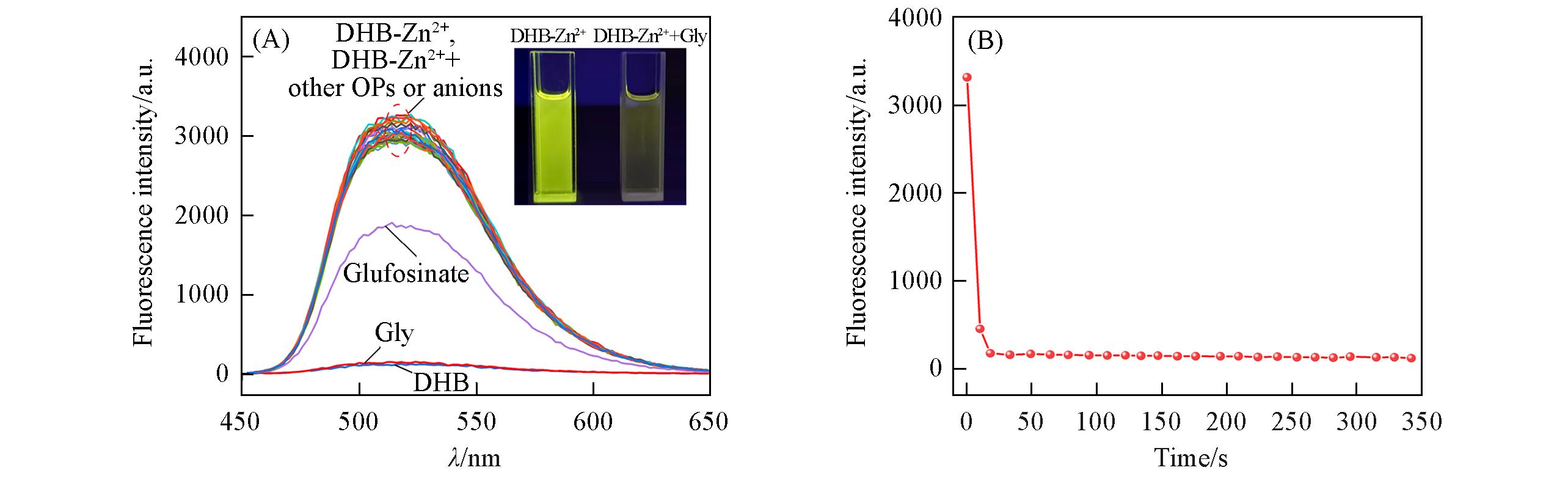
Fig.4 Fluorescence spectra of complex DHB⁃Zn2+ solution after adding various organophosphorus pesticides and anions(A) and effect of time on the fluorescence intensity of DHB⁃Zn2++glyphosate system(B)(A) Inset: photos of the solution color of complex DHB-Zn2+ and DHB-Zn2++glyphosate under a 365 nm UV lamp.
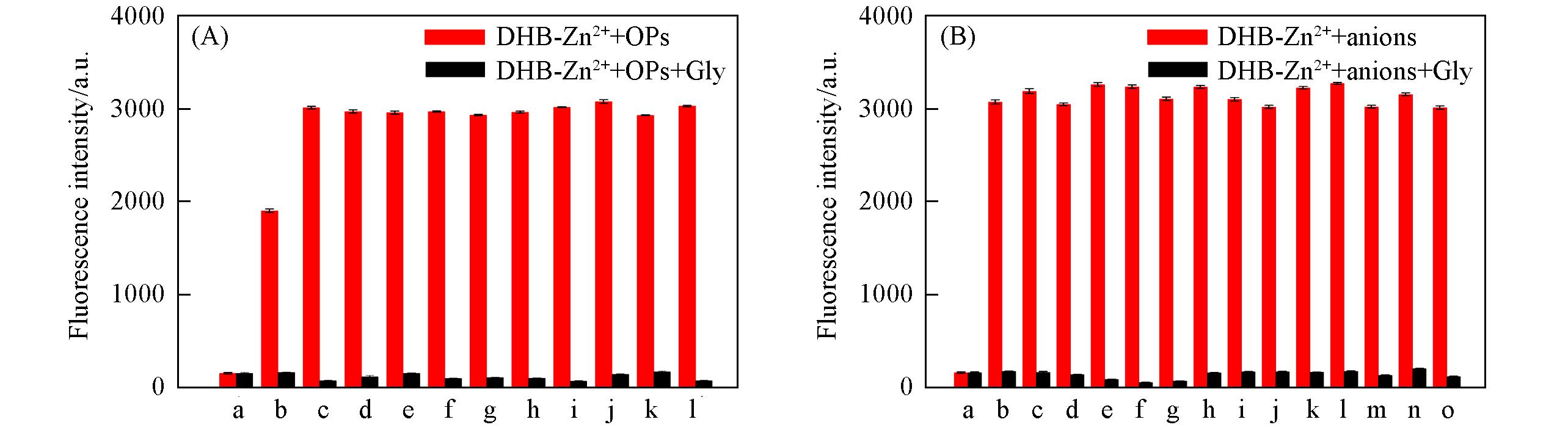
Fig.5 Fluorescence intensities of the DHB⁃Zn2++glyphosate solution after adding various organophosphorus pesticides(A) and anions(B)(A) a. Gly; b. glufosinate; c. trichlorfon; d. parathion; e. methyl parathion; f. dimethoate; g. malathion; h. fenitrothion; i. dichlorvos; j. omethoate; k. ethoparophos; l. phosmet; (B) a. Gly; b. CH3COO-; c. SCN-; d. I-; e. H2PO4-; f. P2O74-; g. CO32-; h. NO3-; i. Cl-; j. S2O32-; k. SO42-; l. HSO3-; m. HPO42-; n. HCO3-; o. PO43-.
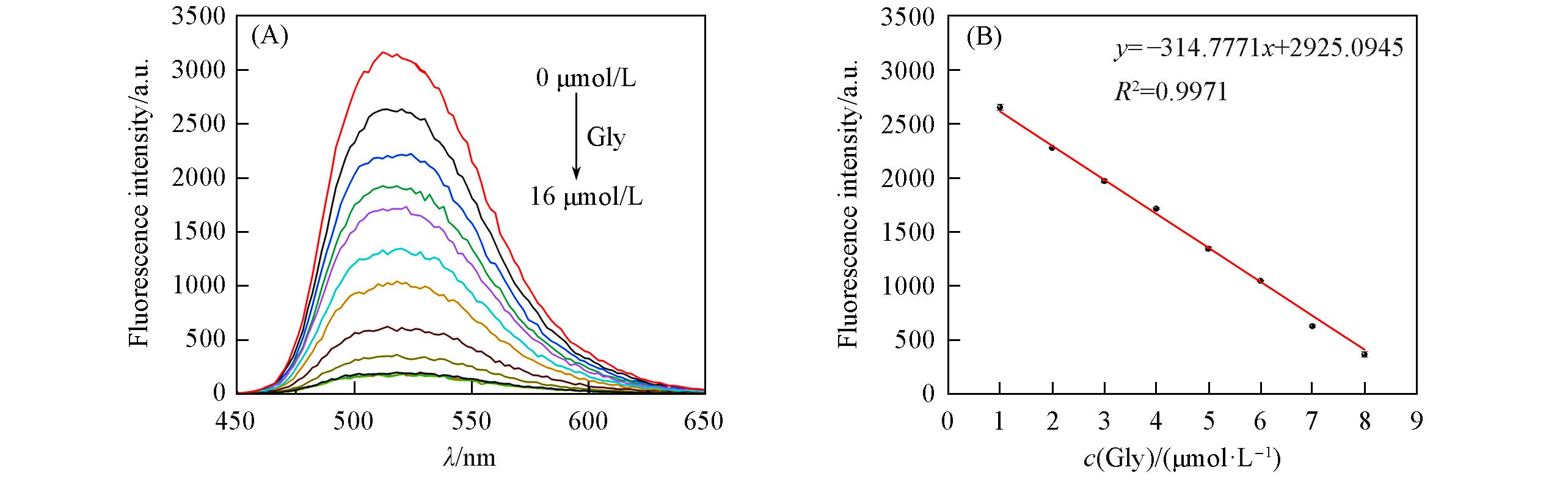
Fig.6 Fluorescence spectra of complex DHB⁃Zn2+ solution after adding different concentrations of glyphosate(0─16 µmol/L)(A) and relationship between glyphosate concentration(1.0─8.0 µmol/L) and fluorescence intensity of complex DHB⁃Zn2+ at 520 nm(B)
| Sensor | Response time/s | Detecting range/(µmol∙L-1) | LOD/(µmol∙L-1) | Reference |
|---|---|---|---|---|
| DCB⁃Cu2+ | 30 | 0─11 | 0.2800 | [ |
| BMDH⁃Cu2+ | 1500 | 0─10 | 0.0106 | [ |
| CCU⁃Cu2+ | 50 | 0─100 | 0.0502 | [ |
| FASRH⁃Cu2+ | 300 | 0─8 | 1.870 | [ |
| DT⁃Cu2+ | 20 | 0─20 | 0.071 | [ |
| DHB⁃Zn2+ | 18 | 1─8 | 0.0381 | This work |
Table 1 Comparison of complex DHB-Zn2+ with other fluorescent probes for detecting glyphosate
| Sensor | Response time/s | Detecting range/(µmol∙L-1) | LOD/(µmol∙L-1) | Reference |
|---|---|---|---|---|
| DCB⁃Cu2+ | 30 | 0─11 | 0.2800 | [ |
| BMDH⁃Cu2+ | 1500 | 0─10 | 0.0106 | [ |
| CCU⁃Cu2+ | 50 | 0─100 | 0.0502 | [ |
| FASRH⁃Cu2+ | 300 | 0─8 | 1.870 | [ |
| DT⁃Cu2+ | 20 | 0─20 | 0.071 | [ |
| DHB⁃Zn2+ | 18 | 1─8 | 0.0381 | This work |
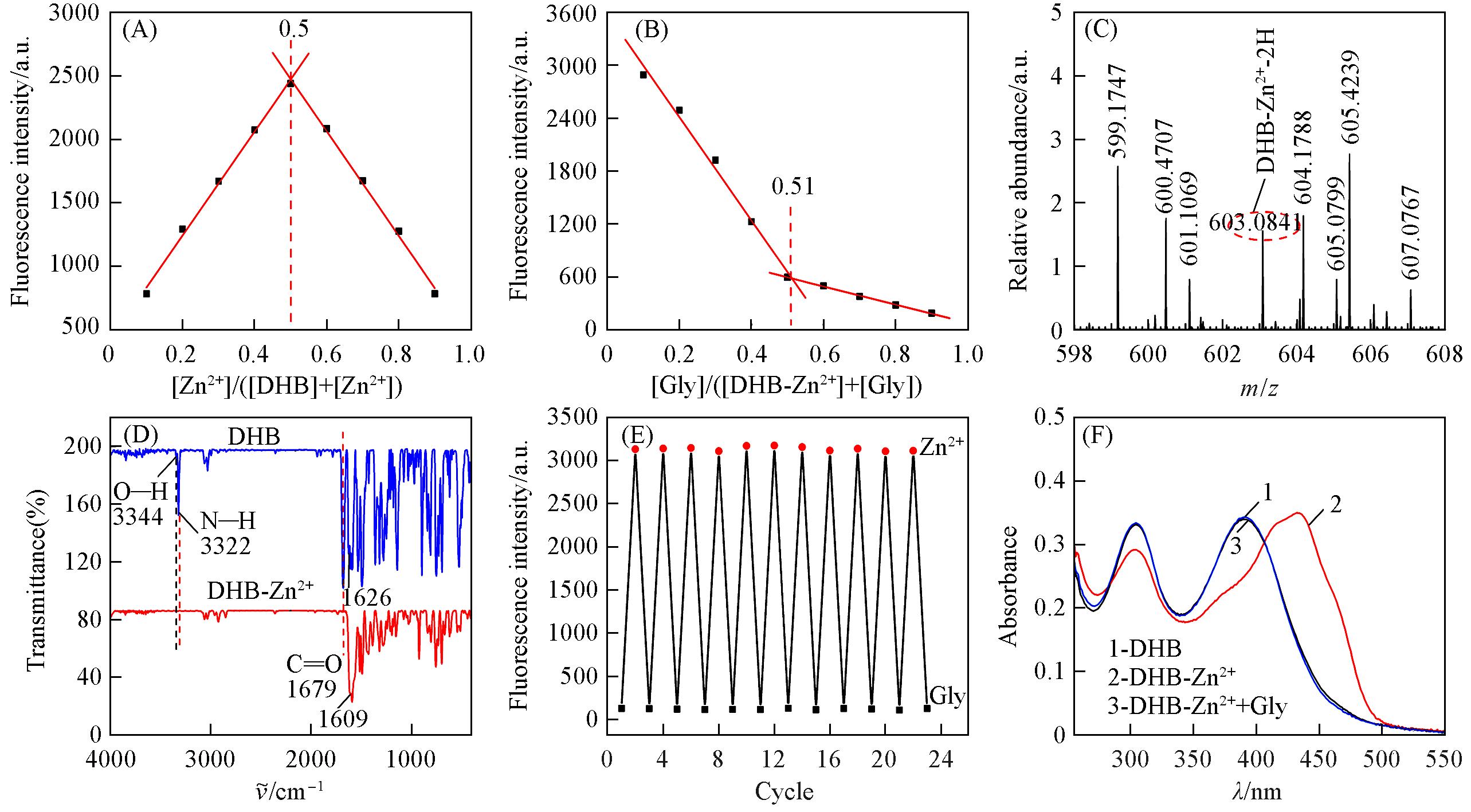
Fig.7 Job’s plot for probe DHB and Zn2+(A), and for DHB⁃Zn2+ and glyphosate(B), HRMS spectra of complex DHB⁃Zn2+(C), FTIR spectra of probe DHB and DHB⁃Zn2+(D), cyclic experiment of alternately adding glyphosate and Zn2+ to the complex DHB⁃Zn2+ solution(E) and UV⁃Vis absorption spectra of probe DHB, DHB⁃Zn2+ and DHB⁃Zn2++glyphosate(F)
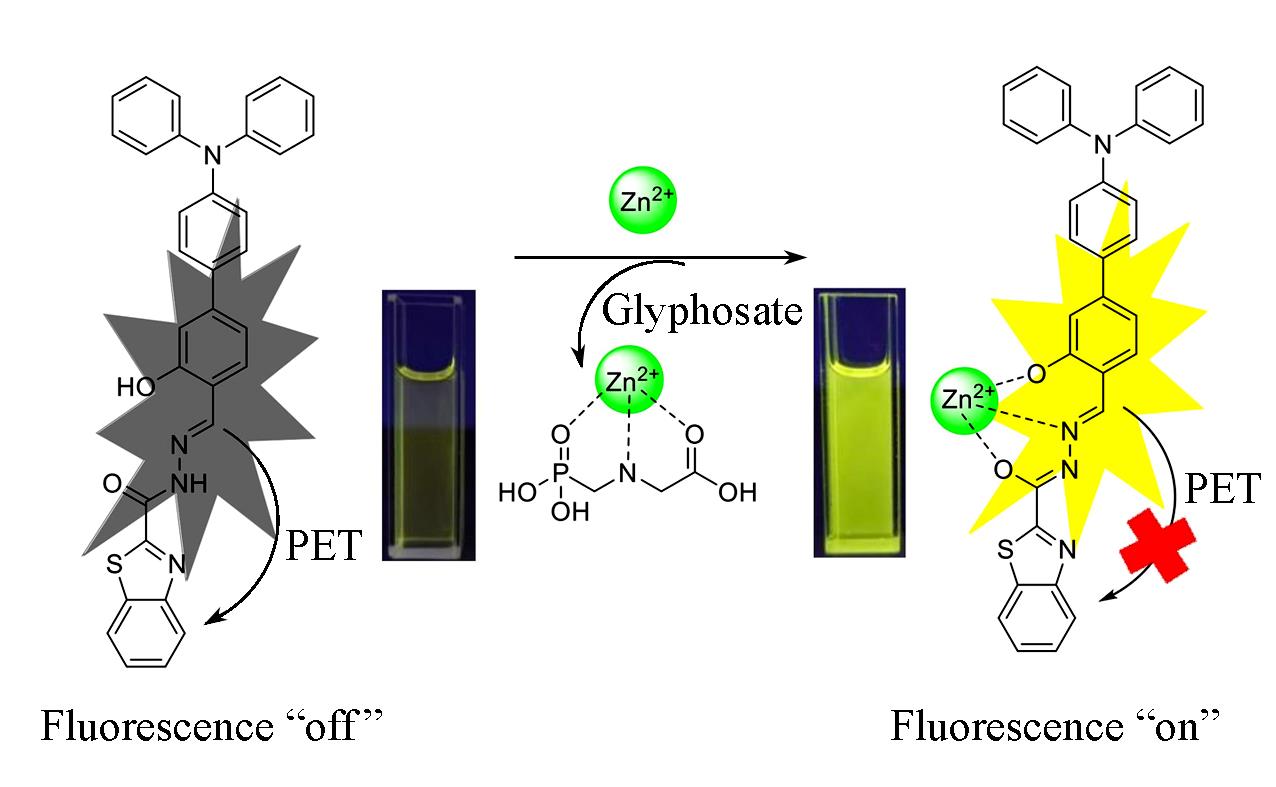
Fig.8 Response mechanism of Zn2+ mediated probe DHB for recognizing glyphosate
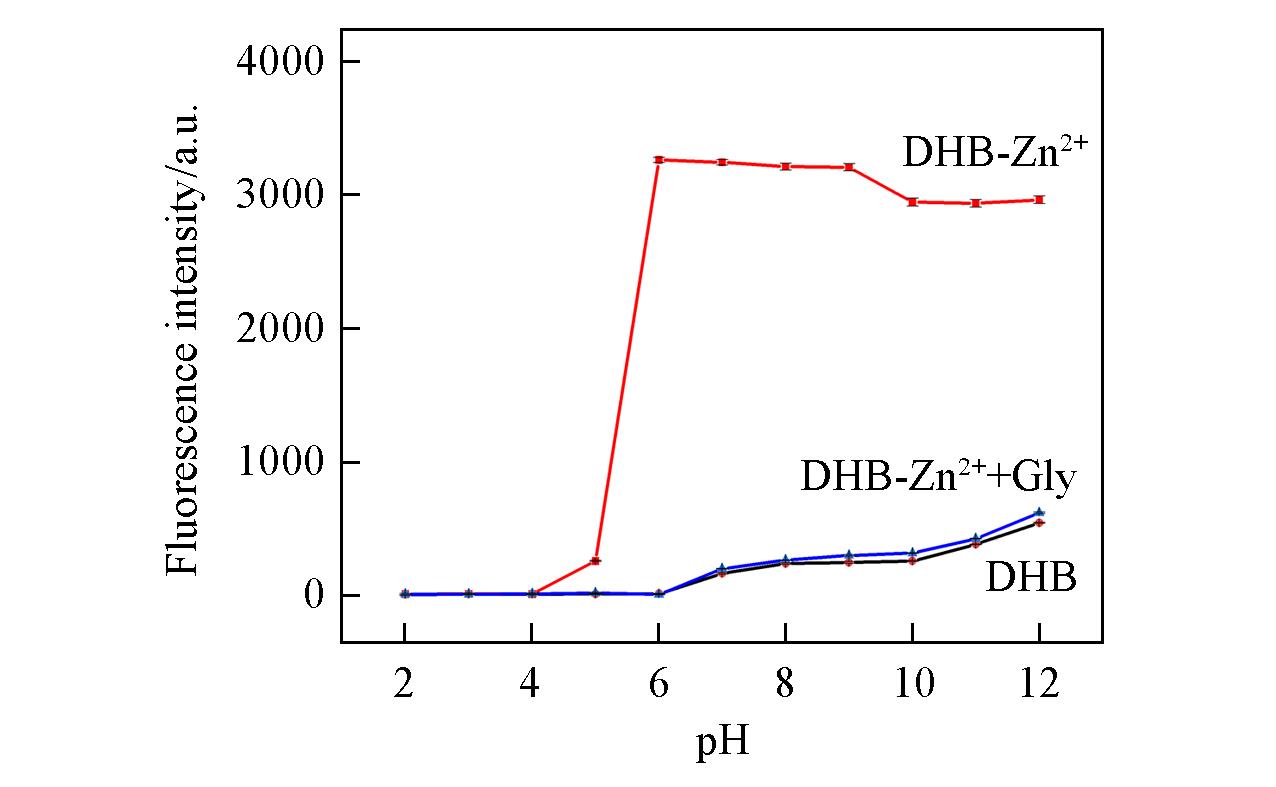
Fig.9 Effect of pH on the fluorescence intensities of probes DHB, DHB⁃Zn2+ and DHB⁃Zn2++glyphosate
| Sample | Added/(μmol∙L-1) | Detected/(μmol∙L-1) | Recovery(%) | RSD(%, n=3) |
|---|---|---|---|---|
| River water | 1.00 | 0.95 | 95.0 | 1.9 |
| 3.00 | 3.05 | 101.7 | 2.3 | |
| 5.00 | 4.96 | 99.2 | 3.5 | |
| 7.00 | 7.02 | 100.3 | 1.1 | |
| Tap water | 1.00 | 0.99 | 99.0 | 2.0 |
| 3.00 | 3.01 | 100.3 | 2.8 | |
| 5.00 | 4.98 | 99.6 | 1.8 | |
| 7.00 | 7.01 | 100.1 | 3.0 |
Table 2 Detection of Zn2+ in actual water samples by probe DHB
| Sample | Added/(μmol∙L-1) | Detected/(μmol∙L-1) | Recovery(%) | RSD(%, n=3) |
|---|---|---|---|---|
| River water | 1.00 | 0.95 | 95.0 | 1.9 |
| 3.00 | 3.05 | 101.7 | 2.3 | |
| 5.00 | 4.96 | 99.2 | 3.5 | |
| 7.00 | 7.02 | 100.3 | 1.1 | |
| Tap water | 1.00 | 0.99 | 99.0 | 2.0 |
| 3.00 | 3.01 | 100.3 | 2.8 | |
| 5.00 | 4.98 | 99.6 | 1.8 | |
| 7.00 | 7.01 | 100.1 | 3.0 |
| Sample | Added/(μmol∙L-1) | Detected/(μmol∙L-1) | Recovery(%) | RSD(%, n=3) |
|---|---|---|---|---|
| River water | 2.00 | 2.03 | 101.5 | 2.5 |
| 4.00 | 4.02 | 100.5 | 2.1 | |
| 6.00 | 6.01 | 100.2 | 3.1 | |
| 8.00 | 7.99 | 99.9 | 2.9 | |
| Tap water | 2.00 | 2.02 | 101.0 | 1.1 |
| 4.00 | 4.05 | 101.3 | 1.6 | |
| 6.00 | 5.98 | 99.7 | 3.3 | |
| 8.00 | 7.96 | 99.5 | 1.7 |
Table 3 Detection of glyphosate in actual water samples by complex DHB-Zn2+
| Sample | Added/(μmol∙L-1) | Detected/(μmol∙L-1) | Recovery(%) | RSD(%, n=3) |
|---|---|---|---|---|
| River water | 2.00 | 2.03 | 101.5 | 2.5 |
| 4.00 | 4.02 | 100.5 | 2.1 | |
| 6.00 | 6.01 | 100.2 | 3.1 | |
| 8.00 | 7.99 | 99.9 | 2.9 | |
| Tap water | 2.00 | 2.02 | 101.0 | 1.1 |
| 4.00 | 4.05 | 101.3 | 1.6 | |
| 6.00 | 5.98 | 99.7 | 3.3 | |
| 8.00 | 7.96 | 99.5 | 1.7 |
| [1] | Lu G. R., Jia Z. Z., Yu M. D., Zhang M. Z., Xu C. L., Molecules, 2023, 28(23), 7818 |
| [2] | Gao Y., Chang D. Z., Luo Y. Y., Yu H. J., Li J. H., Liu K. M., Minerals, 2024, 14(7), 649 |
| [3] | Chen D. A., Li J., Li Z. H., Deng T., Li J. S., Talanta, 2025, 295, 128332 |
| [4] | Cao Y., Wang L. N., Shen C., Wang C. Y., Hu X. Y., Wang G. X., Sensor. Actuat. B: Chem., 2019, 283, 487—494 |
| [5] | Peng X. T., Xu Y. Q., Zhou W. Y., Tao Y. T., Fu H. Y., Che S. Y., She Y. B., Microchem. J., 2025, 216, 114692 |
| [6] | Tao X. Z., Alam S., Zeng Z. H., Mao Y. X., Yao W. J., Zheng S. J., Jiang C. H., Chen S. Y., Lu H. F., Talanta, 2025, 292, 127996 |
| [7] | Liu Y. T., Zhang Q. Q., Yao S. Y., Zhao K. Y., Cui H. W., Zhao H. Y., Li J. Y., Zou Y. L., Zhao L. X., J. Hazard. Mater., 2025, 486, 137017 |
| [8] | Wang Y., Yu S. H., Li R., Wan J., Wang Y. H., Huo Z. L., Wu C. Y., Mi L., Liu S. Q., J. Chromatogr. A, 2023, 1709, 464407 |
| [9] | Junque E., Fernandez P., Filippi I., Grimalt J. O., J. Chromatogr. Open., 2023, 4, 100087 |
| [10] | Zhang W., Yan J., Zhao B., Zhang X. Z., Zhang J., Chen T., Chinese J. Anal. Lab., 2025, 44(4), 573—578 |
| 张文, 闫君, 赵波, 张新中, 张婕, 陈婷. 分析试验室, 2025, 44(4), 573—578 | |
| [11] | Graf H. G., Biebl S. M., Müller L., Breitenstein C., Huhn C., J. Sep. Sci., 2022, 45(5), 1128—1139 |
| [12] | Wang L. W., Wu G., Wang T. F., Tian D. T., J. Environ. Chem. Eng., 2024, 12(5), 113578 |
| [13] | Lei D. D., Li L. L., Song P. Y., Xu Q. B., Huang L. H., Ma X., Zhou L. D., Kong W. J., Food Chem. X, 2024, 24, 101983 |
| [14] | Li H. X., Zhang Y. Y., Huang J., Zhang Z. X., Li X. J., Su J., Cai W., Ind. Crop. Prod., 2025, 235, 121761 |
| [15] | Qin Z. Y., Xu J. J., Cao Y. X., Liao C. H., Lan T., Shi S. Y., Food Chem., 2025, 473, 143070 |
| [16] | Zhang K. F., Ding X. Y., Zhang X., Luan J. H., Guo Q. Y., Zheng J. Y., Wang N., Anal. Methods, 2025, 17(21), 4424—4431 |
| [17] | Pu C. M., Li S. Y., Cao X. L., Zhou M., Deng W. L., Wang P., Spectrochim. Acta A, 2024, 317, 124424 |
| [18] | Lin X. P., Chen T. Y., Hu J. Y., Mao X. Q., Liu M. Q., Zeng R. Y., Zhong Q. M., Chen W., Anal. Methods, 2024, 16(21), 3364—3371 |
| [19] | Wang P., Zheng M. Y., Zhou M., Wang Y. W., Shang S. Y., He Q., An Y., J. Mol. Struct., 2025, 1328, 141405 |
| [20] | Wang J. J., Qi S. L., Du J. S., Yang Q. B., Song Y., Li Y. X., Chem. J. Chinese Universities, 2019, 40(7), 1397—1404 |
| 王金金, 戚少龙, 杜建时, 杨清彪, 宋岩, 李耀先. 高等学校化学学报, 2019, 40(7), 1397—1404 | |
| [21] | Jung S. M., Choi B., Park S., Kim K. T., Kim C., J. Mol. Liq., 2024, 410, 125633 |
| [22] | Li Y. X., Zhang Z. Y., Li S. Y., Gong X. Y., Yang W. C., ACS Agric. Sci. Technol., 2024, 4(3), 337—344 |
| [23] | Mokhtar A. M., El-Messery S. M., Ghaly M. A., Hassan G. S., Bioorg. Chem., 2020, 104, 104259 |
| [24] | Wu M. Y., Yu Y.C., Liu Q. Y., You J., Wu W. J., Sensor. Mater., 2023, 35(7), 2281—2292 |
| [25] | Pu C. M., Li S. Y., Cao X. L., Zhou M., Deng W. L., Wang P., Spectrochim. Acta A, 2024, 317, 124424 |
| [26] | Lin X. P., Chen T. Y., Hu J. Y., Mao X. Q., Liu M. Q., Zeng R. Y., Zhong Q. M., Chen W., Anal. Methods, 2024, 16(21), 3364—3371 |
| [27] | Zheng M. Y., Zhou M., Deng W. L., Wang P., An Y., Spectrochim. Acta A, 2024, 316, 124327 |
| [28] | Rong X. D., Liu C. Y., Hou F. L., Zhao X., Wang Z. P., Zhu B. C., Food Chem., 2025, 474, 143045 |
| [29] | Liu Q. Y., Yu Y. C., Wu M. Y., Yan X. X., Wu W. J., You. J., Spectrochim. Acta A, 2023, 303, 123221 |
| [30] | Chen J. Y., Deng S. W., Li Z. Y., Yuan L., Chinese J. Anal. Chem., 2025, 53(11), 1879—1888 |
| 陈觉远, 邓邵文, 李中燕, 袁霖. 分析化学, 2025, 53(11), 1879—1888 |
| [1] | 师凯, 刘子荐, 张潇, 赵立彦, 姚同杰. 基于偶氮苯衍生物构筑的Y-MOF的合成、 表征及对硝基化合物的荧光检测性能[J]. 高等学校化学学报, 2026, 47(7): 20250365. |
| [2] | 曾宪平, 秦毅, 王东. 聚集诱导发光探针用于手术导航[J]. 高等学校化学学报, 2026, 47(5): 20260066. |
| [3] | 朱高桦, 舒菊, 耿江涛, 马夫龙, 熊玲红, 何学文. 原位激活型近红外二区聚集诱导发光探针应用于肿瘤中过氧化氢的高灵敏成像[J]. 高等学校化学学报, 2026, 47(5): 20260058. |
| [4] | 方瑾钰, 黄瀚玮, 宋航, 吴谦, 赵征, 唐本忠. 智能响应, 精准点亮: 酶响应的聚集诱导发光材料在生物医学中的诊疗新策略[J]. 高等学校化学学报, 2026, 47(4): 20260009. |
| [5] | 吴泽怡, 司文妮, 齐春轩, 李朔, 冯海涛. 基于三苯胺的红光手性荧光探针的构筑及手性识别性能[J]. 高等学校化学学报, 2026, 47(4): 20250258. |
| [6] | 苏彦刚, 金文东, 于晓强. 高光稳定性NIR荧光探针用于线粒体嵴动态追踪[J]. 高等学校化学学报, 2026, 47(1): 20250302. |
| [7] | 李达, 郭鹍鹏, 张芳, 周姝宇. 苯并噻唑偶氮苯化合物的双模式光致变色性能及其在光信息存储中的应用[J]. 高等学校化学学报, 2025, 46(9): 20250116. |
| [8] | 江霆杰, 曹珏然, 姚胜峰, 宋健, 李娜, 陈永颖, 李唯, 张浩然, 雷炳富. 菠菜基水溶红色荧光碳点的微波合成及Pb2+荧光检测性能[J]. 高等学校化学学报, 2025, 46(6): 20250082. |
| [9] | 蒙化, 阿华英, 罗平馨, 张艳丽, 高连训, 王红斌, 杨文荣, 庞鹏飞. 聚胸腺嘧啶-铜纳米簇/适体-金纳米粒子荧光探针用于微囊藻毒素-LR传感分析[J]. 高等学校化学学报, 2025, 46(5): 20250008. |
| [10] | 杨倩, 屠鹏, 郝振芳, 崔彦君, 边红霞. 荧光探针对植物组织乙烯释放的监测及在白熟期番茄中的应用[J]. 高等学校化学学报, 2025, 46(5): 20240517. |
| [11] | 陈壹刘, 宗洪凤, 段兆龙, 张一鹏, 高妍, 李超, 刘洋, 高云. 基于锌配合物的一氧化氮荧光探针的构建及其细胞成像[J]. 高等学校化学学报, 2025, 46(2): 20240370. |
| [12] | 周意超, 田贺, 韩海浩, 王辰瀚, 胡习乐, 贺晓鹏. 基于构象自适荧光团构建的比率型荧光探针及脂滴原位可视化研究[J]. 高等学校化学学报, 2025, 46(12): 20250204. |
| [13] | 姜维娜, 姜海建, 周惠, 成伟唯. 基于多面体低聚倍半硅氧烷的有机-无机杂化纳米复合材料用于锌离子荧光传感器[J]. 高等学校化学学报, 2025, 46(12): 20250237. |
| [14] | 张慧莲, 杨新杰, 李军, 李泉, 张福娟, 张艳丽, 王红斌, 杨文荣, 庞鹏飞. 基于N掺杂Ti3C2 MXene量子点的荧光探针用于Hg2+和S2-的传感检测[J]. 高等学校化学学报, 2024, 45(5): 20230504. |
| [15] | 李红雨, 张洪新. 新型稀土近红外荧光探针用于活体多重成像[J]. 高等学校化学学报, 2024, 45(12): 20240181. |
| 阅读次数 | ||||||
|
全文 |
|
|||||
|
摘要 |
|
|||||
