

高等学校化学学报 ›› 2026, Vol. 47 ›› Issue (7): 20260032.doi: 10.7503/cjcu20260032
梁育恺, 庄毅, 常爱, 马伊蕊, 李宇轩, 朱波源, 汤家豪, 张文耀( ), 朱俊武()
收稿日期:2026-01-16
出版日期:2026-07-10
发布日期:2026-03-25
通讯作者:
张文耀,朱俊武
E-mail:wenyao.zhang@njust.edu.cn;zhujw@njust.edu.cn
基金资助:
LIANG Yukai, ZHUANG Yi, CHANG Ai, MA Yirui, LI Yuxuan, ZHU Boyuan, TANG Jiahao, ZHANG Wenyao(), ZHU Junwu()
Received:2026-01-16
Online:2026-07-10
Published:2026-03-25
Contact:
ZHANG Wenyao, ZHU Junwu
E-mail:wenyao.zhang@njust.edu.cn;zhujw@njust.edu.cn
Supported by:摘要:
水系锌离子电池采用环境友好、 本质安全的水基电解液, 契合大规模可持续能源存储的需求, 近年来受到广泛关注, 然而, 其商业化应用仍然面临多重关键挑战. 其中, 金属锌负极在充放电过程中易发生枝晶生长、 析氢反应及腐蚀等一系列副反应, 严重制约了电池的循环寿命和库仑效率. 针对上述问题, 研究者围绕锌负极的性能优化提出了多种改性策略, 主要集中在结构设计、 界面修饰、 电解液调控和功能化隔膜4个方面. 本文综合评述了近年来锌负极的最新研究进展: 在结构设计方面, 重点总结了三维结构电极、 合金电极和外延生长锌负极在提升比表面积和成核位点的作用机制; 在界面修饰方面, 探讨了碳基材料、 金属有机骨架和有机聚合物等功能材料对锌沉积/溶解行为的调控机制; 在电解液改性方面, 分析了锌盐结构优化、 电解液添加剂开发与新型电解液设计对改善锌离子溶剂化结构及其输运行为的关键作用. 进一步地, 结合静电屏蔽、 吸附作用、 去溶剂化效应、 原位界面膜及晶面调控等作用机制, 系统总结了水系锌离子电池金属锌负极性能优化的主要策略. 最后, 拓展至隔膜功能化改性维度, 重点阐述了功能化隔膜通过均化离子通量、 构筑离子筛分通道及调控界面化学环境等机制对锌沉积行为的间接调控作用, 并对未来高性能水系锌离子电池的研究方向进行了展望.
中图分类号:
TrendMD:
梁育恺, 庄毅, 常爱, 马伊蕊, 李宇轩, 朱波源, 汤家豪, 张文耀, 朱俊武. 水系锌离子电池金属锌负极的改性策略与作用机制研究进展. 高等学校化学学报, 2026, 47(7): 20260032.
LIANG Yukai, ZHUANG Yi, CHANG Ai, MA Yirui, LI Yuxuan, ZHU Boyuan, TANG Jiahao, ZHANG Wenyao, ZHU Junwu. Research Advances in Modification Strategies and Mechanisms for the Metallic Zinc Anode in Aqueous Zinc-ion Batteries. Chem. J. Chinese Universities, 2026, 47(7): 20260032.
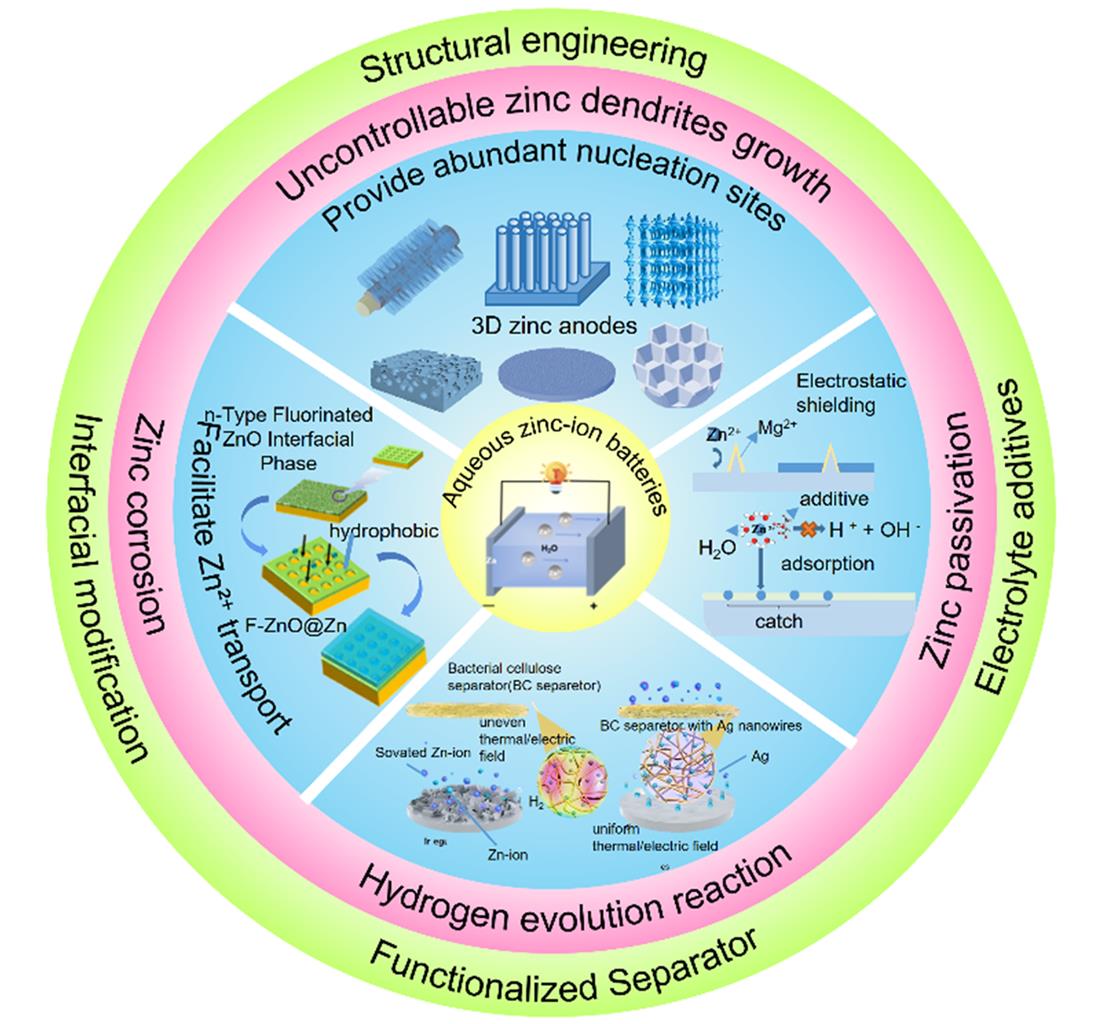
Fig.1 Main challenges and modification strategies for metallic zinc anodes in aqueous zinc⁃ion batteries[20,21]Picture about functionalized separators, Copyright 2023, John Wiley and Sons; picture about interfacial modification, Copyright 2024, American Chemical Society.
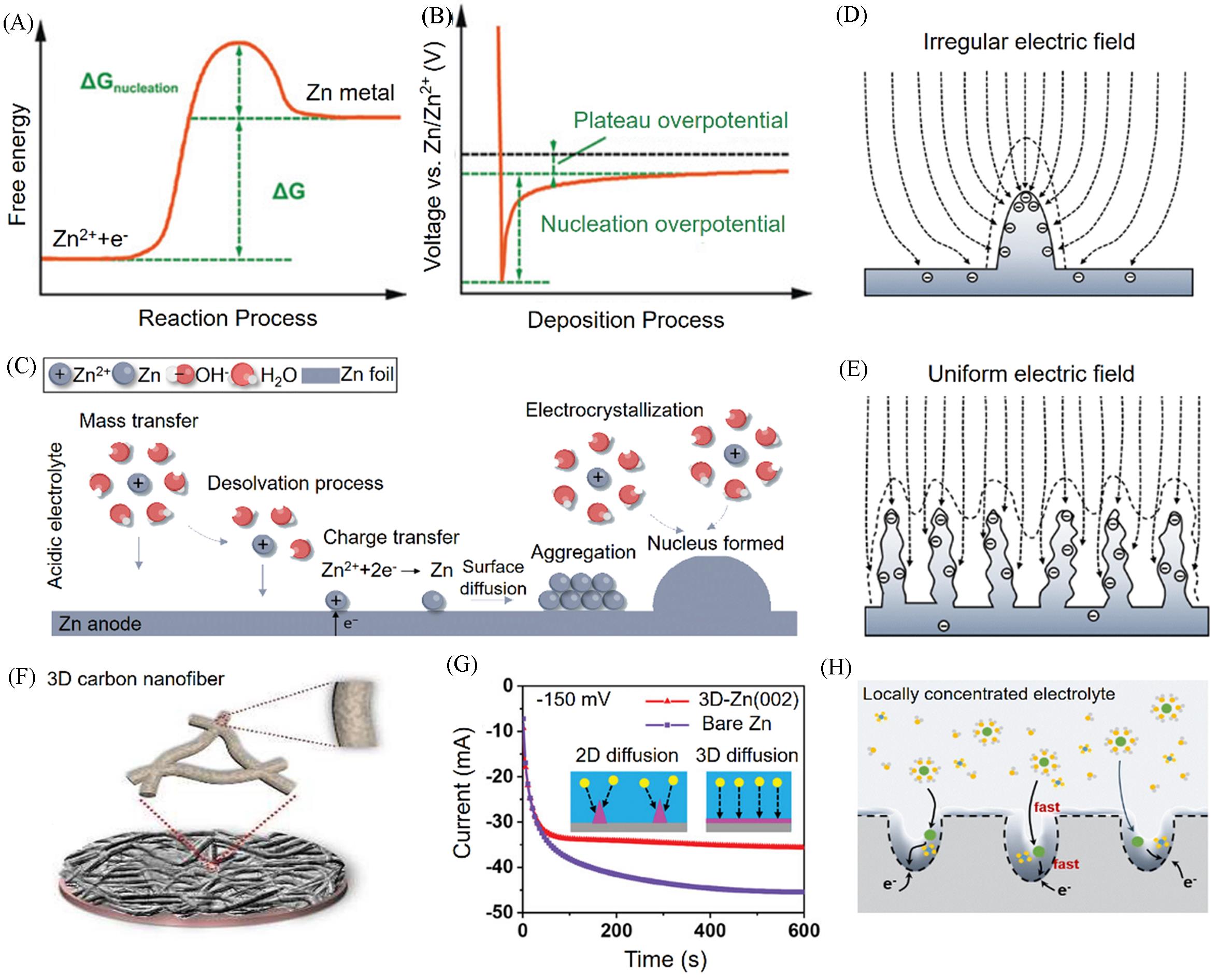
Fig.2 Schematic diagram of the energy barrier in the zinc nucleation process(A), typical voltage curve during the zinc nucleation process(B)[26], the process of zinc ion deposition in acidic solutions(C)[28], schematic diagram of electric field simulation under different anode morphologies of planar substrate(D) and three⁃dimensional structure(E)[30], schematic diagram of 3D porous zinc structure(F)[32], chronoamperometry curves of bare Zn and 3D Zn anodes(G)[31], nanoporous Zn electrode achieve the interface⁃ localized concentrated electrolyte(H)[30](A, B) Copyright 2020, John Wiley and Sons; (C) Copyright 2024, the Royal Society of Chemistry; (D, E, H) Copyright 2024, the Royal Society of Chemistry; (F) Copyright 2023, American Chemical Society; (G) Copyright 2024, John Wiley and Sons.
| Anode material | Cycling performance | Coulombic efficiency | Ref. |
|---|---|---|---|
| 3D porous Zn | >900 h(1 mA/cm2) | 99% | [ |
| Zn@CEG | 820 h(0.5 mA/cm2) | — | [ |
| Zn@3D⁃ZGC | 1200 h(5 mA/cm2) | 99.4%(20 mA/cm2) | [ |
| Zn@N⁃VG@CC | >300 cycles(2 A/g) | >95%(5 mA/cm2) | [ |
| DCP⁃Zn | 1400 h(0.5 mA/cm2) | 99.5%(1 A/g) | [ |
| Zn⁃Al | 2000 h(0.5 mA/cm2) | — | [ |
| Zn⁃3D@600 | 199 mA·h/g(1000 cycles) | — | [ |
| CuZIF⁃L@TM/Zn | 1100 h(1 mA/cm2) | 99%(1 mA/cm2) | [ |
| 3D Graphene Arrays | 1100 h(2 mA/cm2) | 92%(40 mA/cm2) | [ |
| 3D Zn⁃W | 2400 h(1 mA/cm2) | 99.23% | [ |
| 3D@101⁃Zn | 5000 h(5 mA/cm2) | 99.7%(4 mA/cm2) | [ |
| BMC@Zn@In | 5000 h(1 mA/cm2) | 99.7%(5 mAcm2) | [ |
| Zn⁃Sn⁃Bi@Zn | 7000 h(0.5 mA/cm2) | Nearly 100%(5 mA/cm2) | [ |
| 3D Zn | 3000 h(2 mA/cm2) | 99.6%(1 mA/cm2) | [ |
Table 1 Test conditions and performance of different forms of negative electrode
| Anode material | Cycling performance | Coulombic efficiency | Ref. |
|---|---|---|---|
| 3D porous Zn | >900 h(1 mA/cm2) | 99% | [ |
| Zn@CEG | 820 h(0.5 mA/cm2) | — | [ |
| Zn@3D⁃ZGC | 1200 h(5 mA/cm2) | 99.4%(20 mA/cm2) | [ |
| Zn@N⁃VG@CC | >300 cycles(2 A/g) | >95%(5 mA/cm2) | [ |
| DCP⁃Zn | 1400 h(0.5 mA/cm2) | 99.5%(1 A/g) | [ |
| Zn⁃Al | 2000 h(0.5 mA/cm2) | — | [ |
| Zn⁃3D@600 | 199 mA·h/g(1000 cycles) | — | [ |
| CuZIF⁃L@TM/Zn | 1100 h(1 mA/cm2) | 99%(1 mA/cm2) | [ |
| 3D Graphene Arrays | 1100 h(2 mA/cm2) | 92%(40 mA/cm2) | [ |
| 3D Zn⁃W | 2400 h(1 mA/cm2) | 99.23% | [ |
| 3D@101⁃Zn | 5000 h(5 mA/cm2) | 99.7%(4 mA/cm2) | [ |
| BMC@Zn@In | 5000 h(1 mA/cm2) | 99.7%(5 mAcm2) | [ |
| Zn⁃Sn⁃Bi@Zn | 7000 h(0.5 mA/cm2) | Nearly 100%(5 mA/cm2) | [ |
| 3D Zn | 3000 h(2 mA/cm2) | 99.6%(1 mA/cm2) | [ |
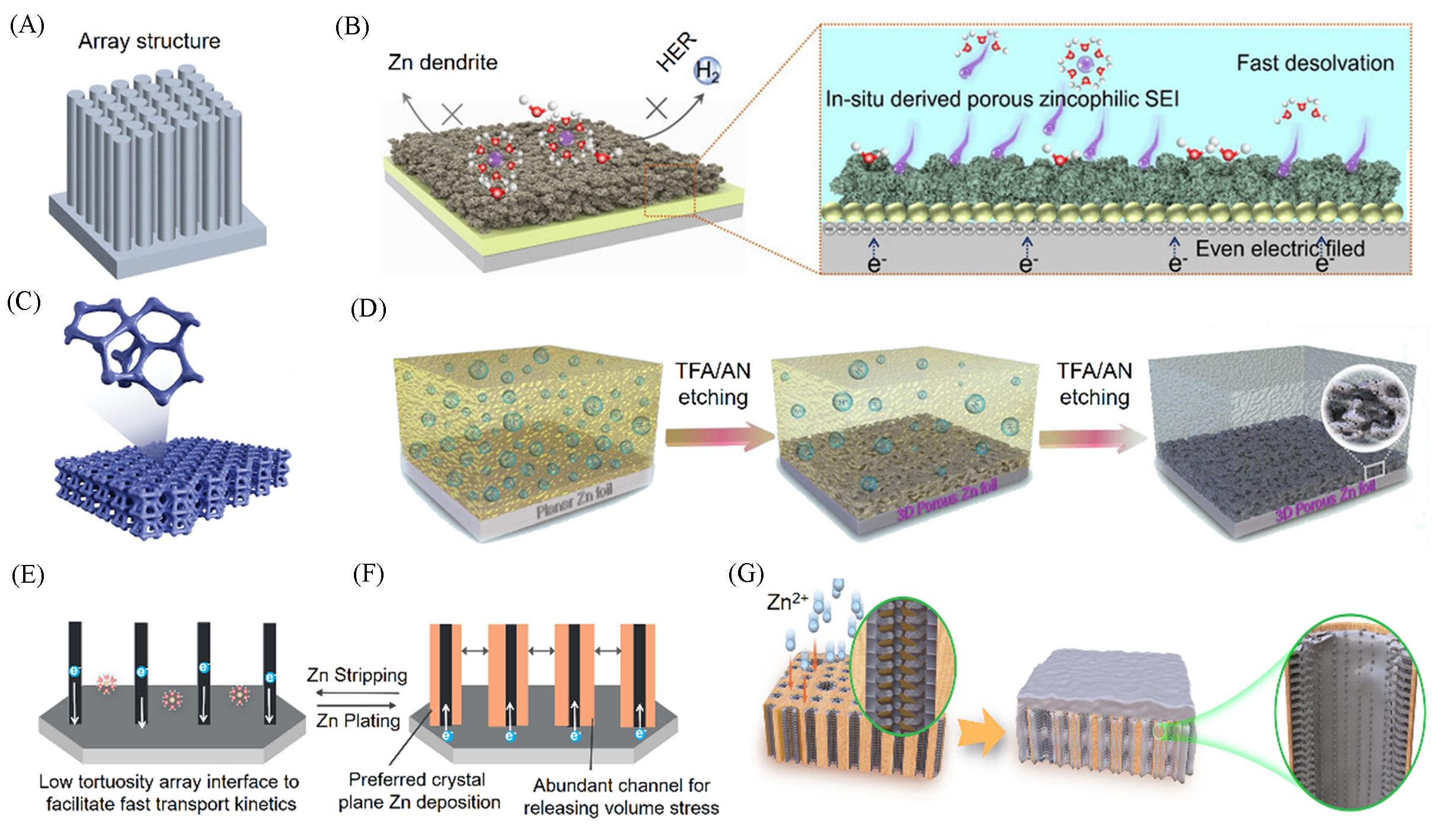
Fig.3 Zn substrate with a 3D array structure(A)[30], schematic diagram of zinc⁃ion deposition on 3D zinc anode(B)[42], schematic diagram of zinc foam structure(C)[47], schematic diagram of the fabrication process for 3D porous zinc foil in a non⁃aqueous organic acid(TFA⁃AN)(D)[48], schematic illustration of Zn2⁺ stripping(E) and deposition(F) regulated by a 3D MXene⁃based array[53], schematic diagram of zinc ion deposition along the longitudinal direction on 3D graphene matrices(G)[54](A) Copyright 2024, the Royal Society of Chemistry; (B) Copyright 2025, John Wiley and Sons; (C) Copyright 2025, John Wiley and Sons; (D) Copyright 2022, John Wiley and Sons; (E, F) Copyright 2023, Springer Nature; (G) Copyright 2023, Springer Nature.
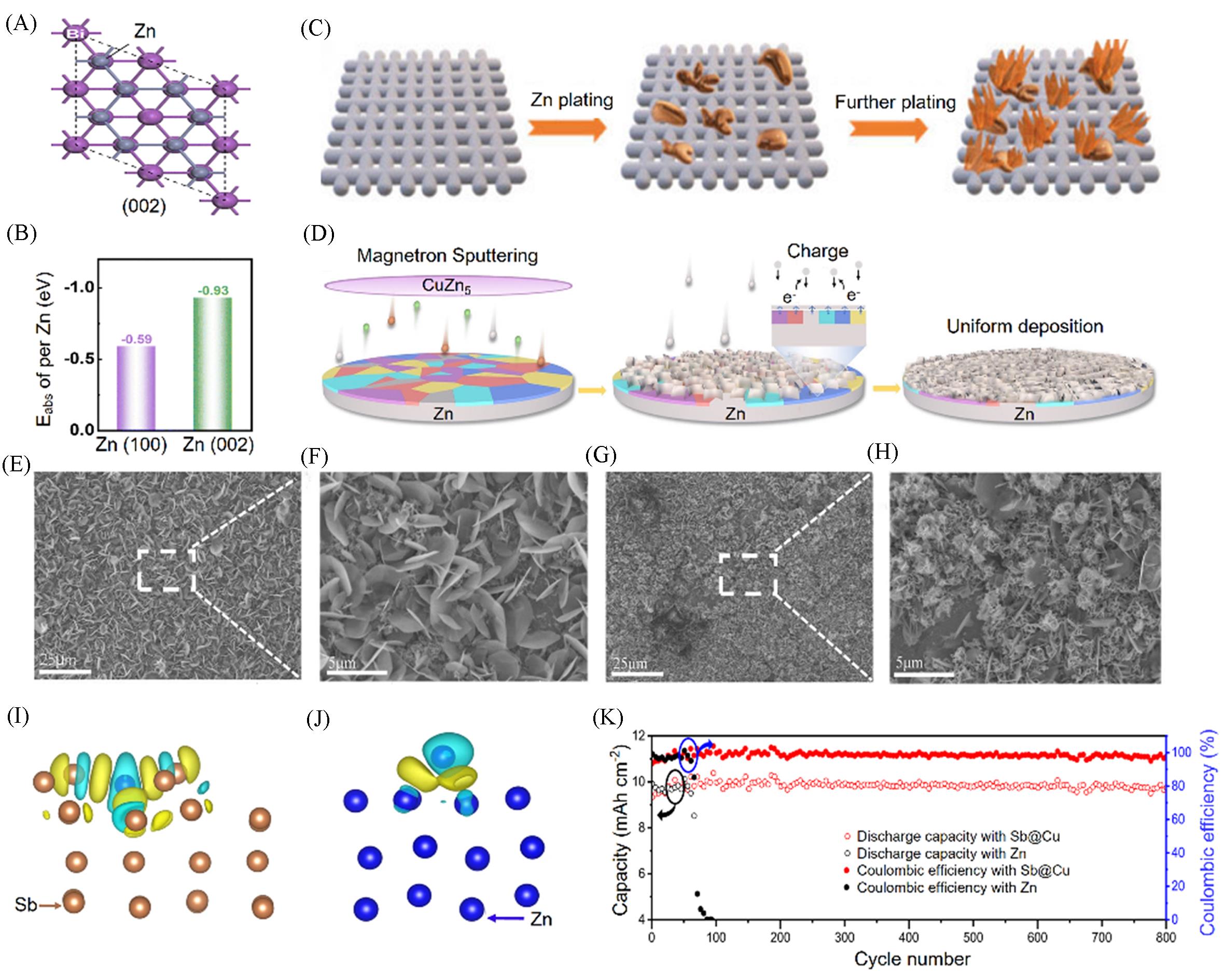
Fig.4 Atomic structure of zinc atoms adsorbed on the bismuth material via the (002) plane(A), calculated adsorption energy per zinc atom on the (002) and (100) planes of the bismuth material(B)[56], schematic diagram of Zn deposition process at AgNPs@CC(C)[59], preparation process of Cu⁃Zn@Zn electrode(D), SEM image(E) and higher magnification image(F) of Cu⁃Zn@Zn electrode at 1 mA·h/cm2, SEM image(G) and higher magnification image(H) of bare Zn electrode at 1 mA·h/cm2[57], theoretical calculation model of differential charge density of Sb(104)(I), theoretical calculation model of differential charge density of Zn(100)(J), long⁃term cycling performance of the battery at 10 mA·h/cm2 and 10 mA/cm2(K)[65](A, B) Copyright 2024, the Royal Society of Chemistry; (C) Copyright 2021, John Wiley and Sons; (D—H) Copyright 2022, John Wiley and Sons; (I—K) Copyright 2023, Springer Nature.
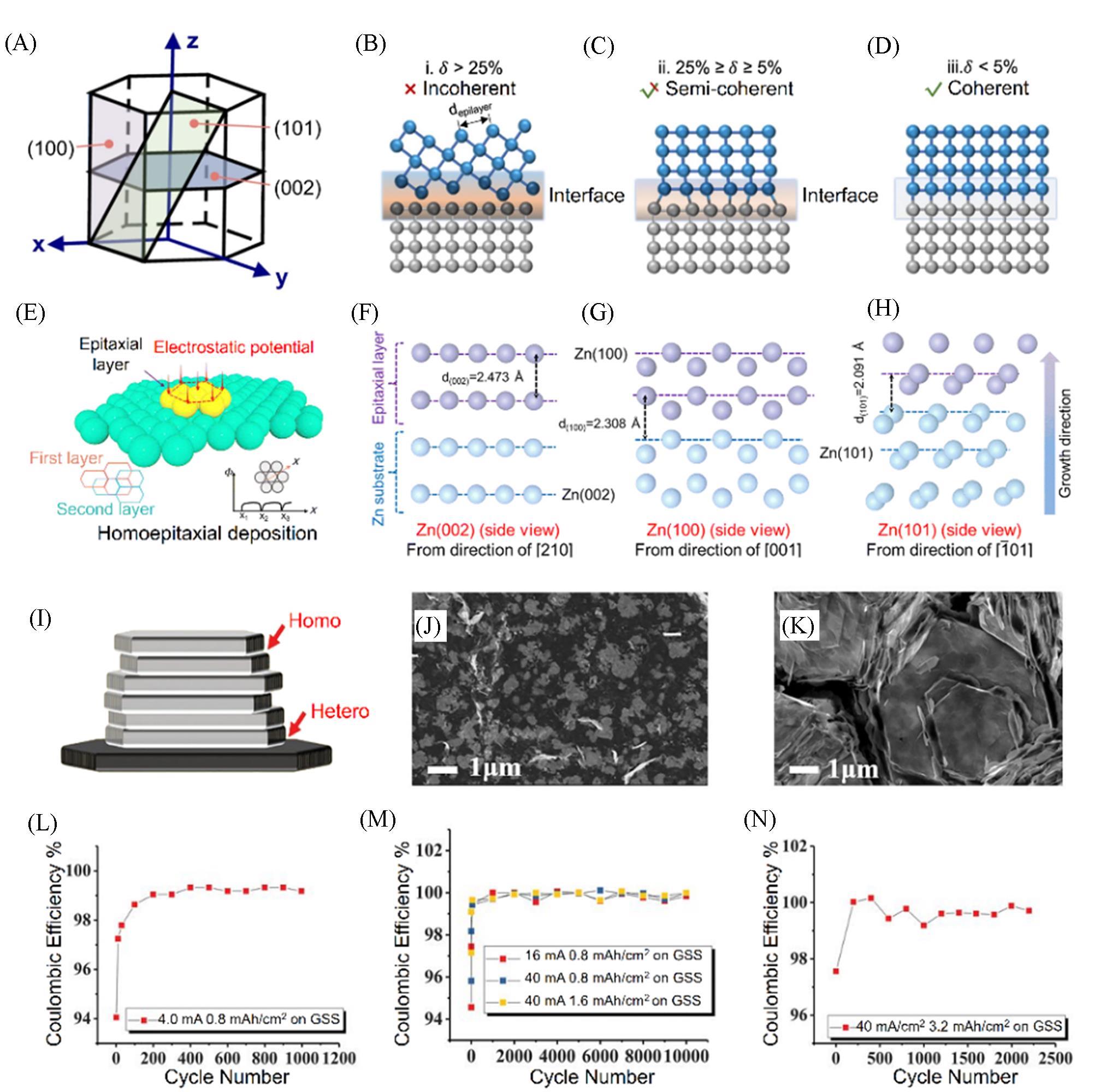
Fig.5 Crystalline structure of Zn metal(A)[68], the relationship between deposition patterns and the degree of lattice mismatch(δ) between Zn and substrates: |δ|>25%(B), 25%≥|δ|≥5%(C), |δ|<5%(D)[68], schematic diagram showing epitaxial deposition dominated by lattice electrostatic potential(E), schematic diagram of homoepitaxy on typical zinc crystal facets: Zn(002)(F), Zn(100)(G) and Zn(101)(H)[71], schematic diagram illustrating the design principle of epitaxial metal electrodeposition(I), morphology of Zn deposits formed on graphene observed under SEM at different deposition times: 2 min(J), 12 min(K), CE of GSS under different conditions of medium current density(L), high current density(M) and large current and high area capacity(N)[72](A—D) Copyright 2024, Springer Nature; (E—H) Copyright 2024, the Royal Society of Chemistry; (I—N) Copyright 2019, Science.
| Interface modification method | Advantage | Disadvantage | Ref. |
|---|---|---|---|
| Solvent casting | Highly scalable low cost | Insufficient interfacial contact uneven coating | [ |
| Wet chemical method | Simple operation scalable | Difficult to control the reaction process | [ |
| Chemical vapor deposition | Adjustable coating composition uniform deposition | Expensive and time⁃consuming high substrate temperature | [ |
| Atomic layer deposition | Precise control of film thickness uniform deposition | Time⁃consuming strict reaction environment | [ |
| Ion beam sputtering | Precise control of film thickness deposition of dense films | Complex equipment maintenance low deposition rate | [ |
Table 2 Methods of interface modification and their advantages and disadvantages
| Interface modification method | Advantage | Disadvantage | Ref. |
|---|---|---|---|
| Solvent casting | Highly scalable low cost | Insufficient interfacial contact uneven coating | [ |
| Wet chemical method | Simple operation scalable | Difficult to control the reaction process | [ |
| Chemical vapor deposition | Adjustable coating composition uniform deposition | Expensive and time⁃consuming high substrate temperature | [ |
| Atomic layer deposition | Precise control of film thickness uniform deposition | Time⁃consuming strict reaction environment | [ |
| Ion beam sputtering | Precise control of film thickness deposition of dense films | Complex equipment maintenance low deposition rate | [ |
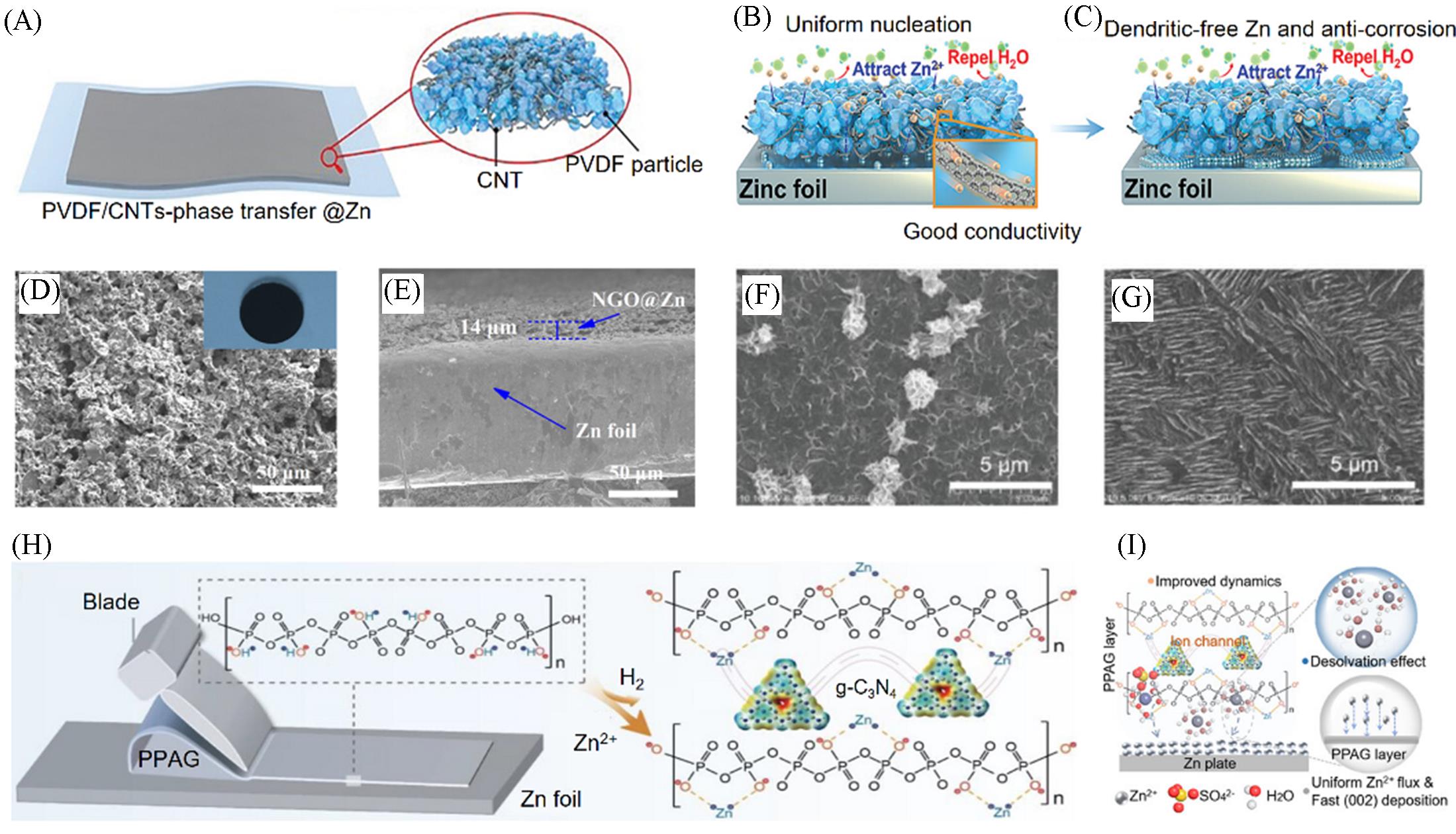
Fig.6 Schematic illustration of the PVDF/CNTs⁃PT@Zn electrode(A), schematic diagram of the protection mechanism for PVDF/CNTs⁃PT@Zn during cycling(B, C)[92], top⁃view SEM image of NGO@Zn (inset: optical image of NGO@Zn)(D), side⁃view SEM image of NGO@Zn(E)[93], SEM images of bare Zn(F) and Zn@PPAG electrode after 5 d of immersion(G), schematic illustration of PPAG formation and structure(H), schematic diagram of the PPAG mechanism(I)[94](A—C) Copyright 2024, John Wiley and Sons; (D, E) Copyright 2021, American Chemical Society; (F—I) Copyright 2025, John Wiley and Sons.
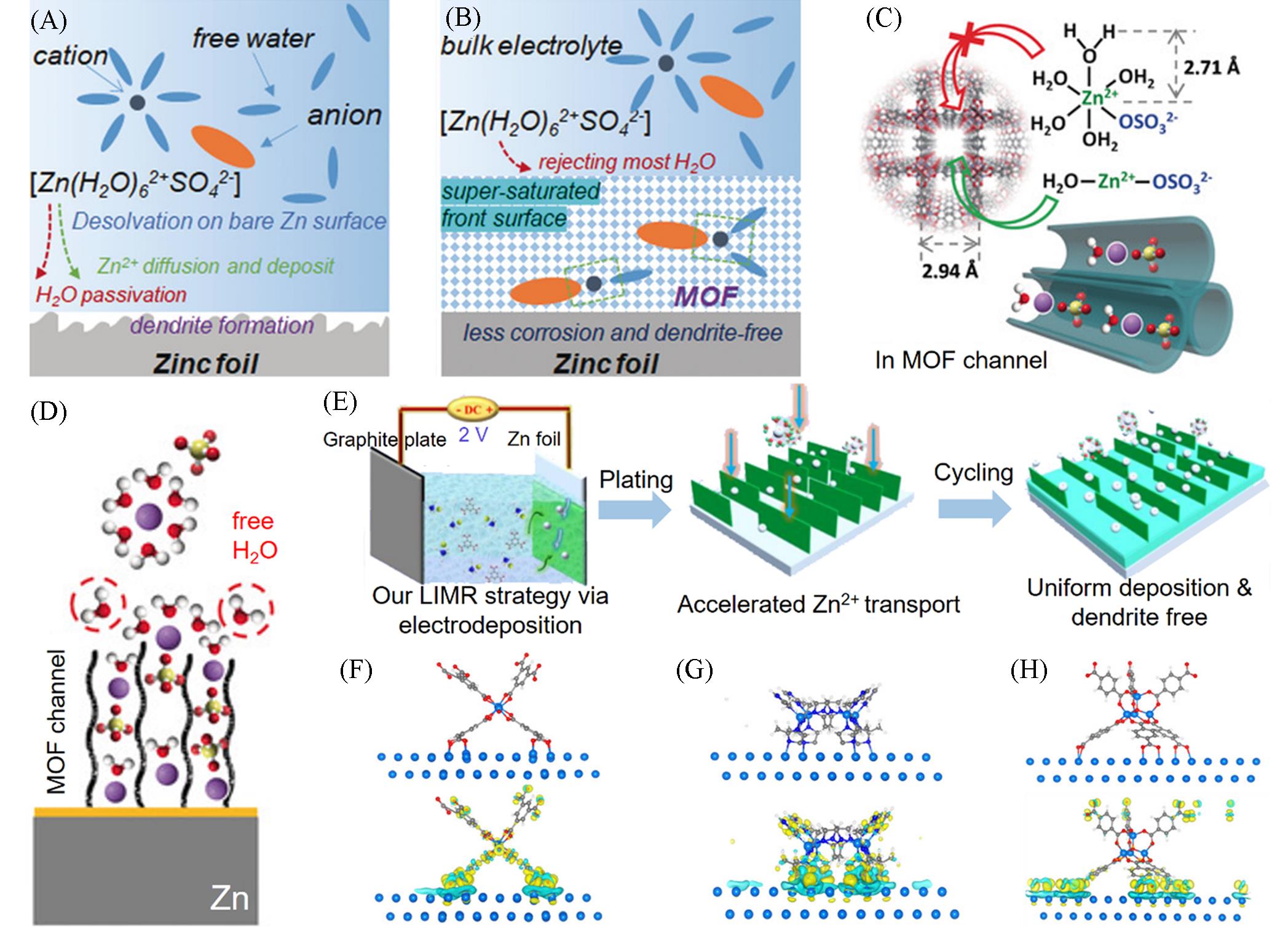
Fig.7 Schematic illustration of severe water passivation and dendrite growth on bare Zn surface(A), schematic illustration of the MOF coating rejecting water molecules and constructing a super⁃saturated interfacial layer(B), schematic illustration of the migration of highly coordinated H2O⁃Zn2+⁃OSO32- ionic complexes through MOF channels(C), schematic illustration of the super⁃saturated interfacial layer enabled by the MOF coating(D)[95], schematic illustration of the in situ assembly of MOF protective layers via the electrodeposition method based on the LIMR strategy(E), optimized structural models and corresponding differential charge density maps of the MOF layers constructed with trimesic acid(F), 2⁃methylimidazole(G) and terephthalic acid as ligands(H)[96](A—D) Copyright 2020, John Wiley and Sons; (E—H) Copyright 2025, John Wiley and Sons.
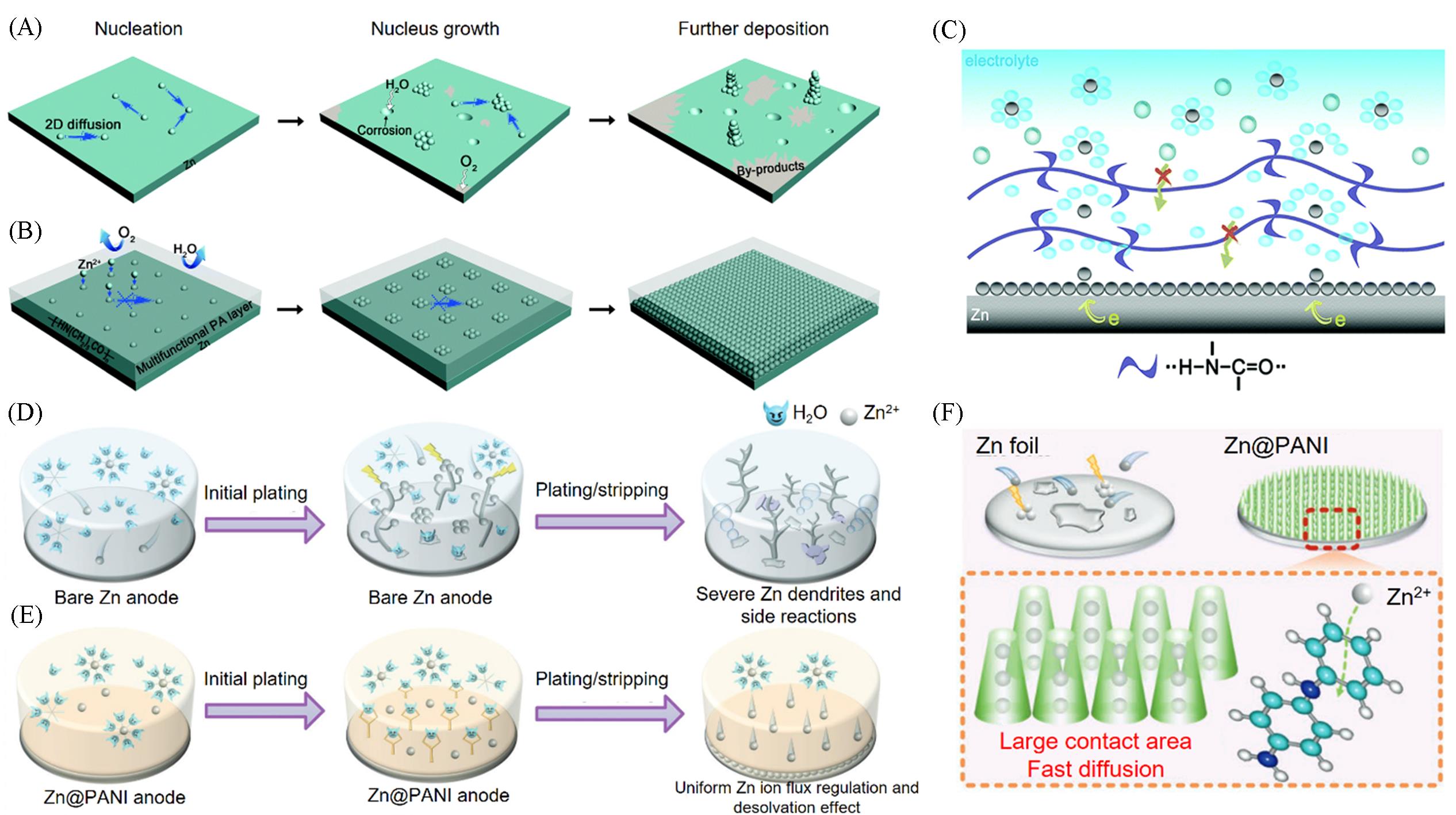
Fig.8 Schematic diagrams for Zn deposition: in the presence of conventional aqueous electrolyte, zinc dendrites grow on the bare zinc electrode(A), the PA layer coating refines the nucleus size, increases the nucleus density by limiting 2D mass diffusion, and inhibits the permeation of O2 and H2O(B), schematic illustration of Zn deposition on the zinc coating, illustrating the role of the PA layer in suppressing side reactions(C)[98], schematic illustration of the mechanism for the bare Zn anode(D) and the Zn@PANI anode(E), schematic illustration of the mechanism of bare Zn anode and Zn@PANI anode(F)[99](A—C) Copyright 2019, the Royal Society of Chemistry; (D—F) Copyright 2023, John Wiley and Sons.
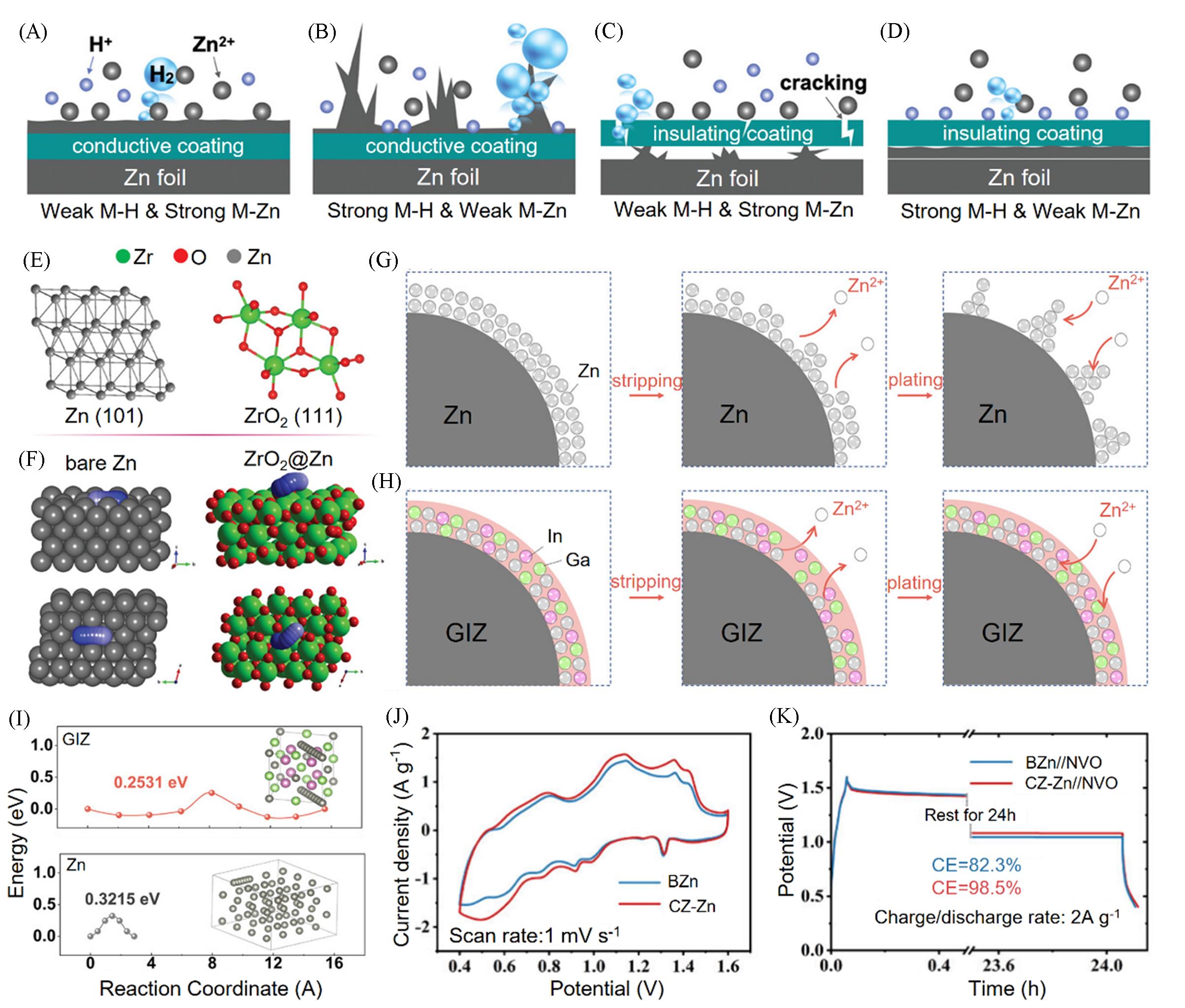
Fig.9 Hydrogen evolution reaction and zinc dendrite growth behavior of zinc anodes protected by conductive and insulating coatings with different H⁺/Zn2+ binding characteristics(A—D), crystal structures of Zn(101) and ZrO2(111)(E), simulation of zinc diffusion paths on bare Zn and ZrO2@Zn(F)[102], schematic illustration of ion deposition on Zn anode(G) and GIZ anode(H), phase migration energy of Zn atoms in the GIZ phase and Zn phase(I)[104], CV tests of the CZ⁃Zn//NH4V4O10 full cell(J), self⁃discharge test of the CZ⁃Zn//NH4V4O10 full cell(K)[105](A—F) Copyright 2024, John Wiley and Sons; (G—I) Copyright 2025, John Wiley and Sons; (J, K) Copyright 2025, American Chemical Society.
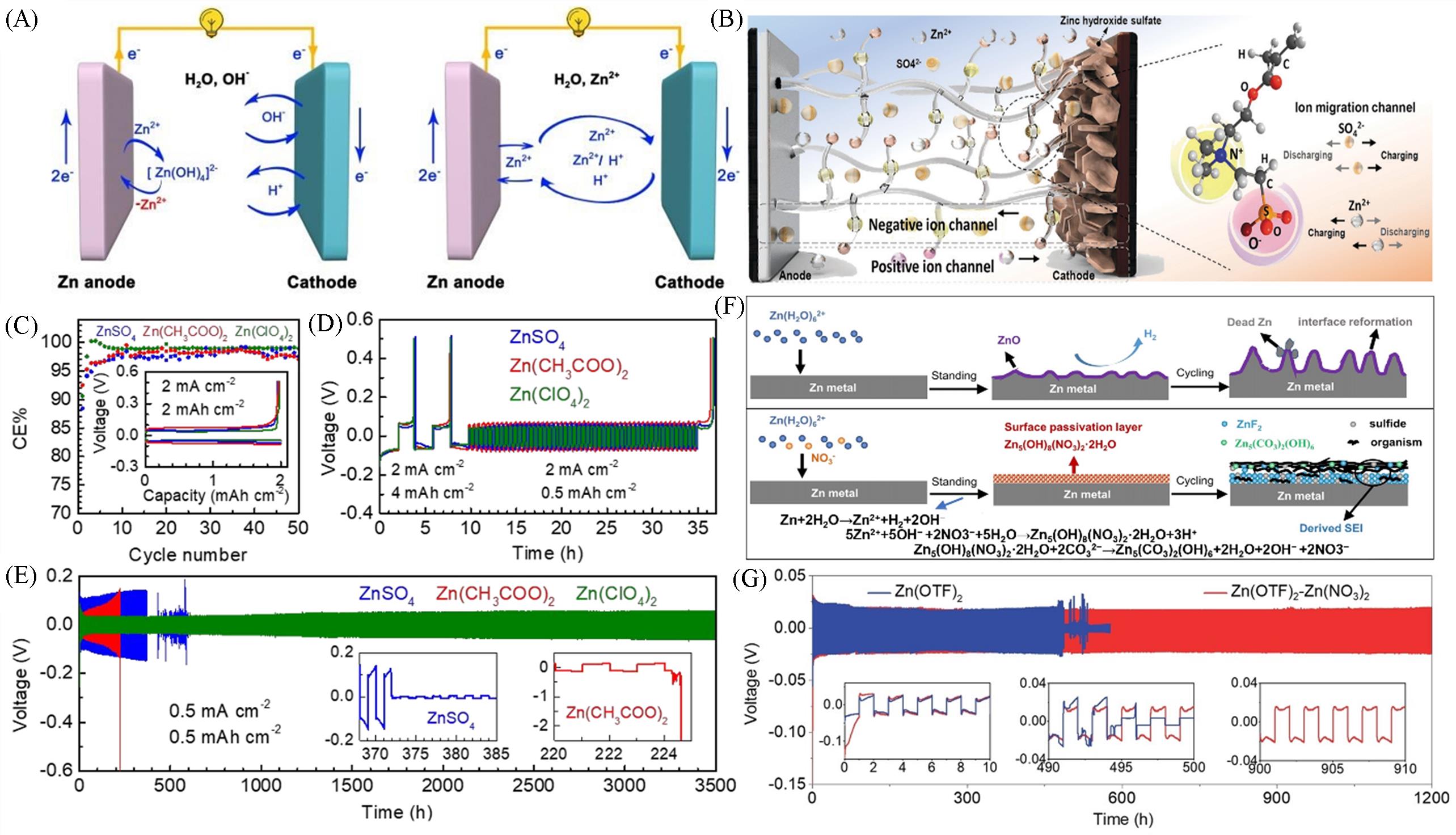
Fig.10 Working principle of aqueous zinc⁃ion batteries(A, B)[109,110], Coulomb efficiency of complete zinc plating/stripping on copper collector for batteries with different zinc salts(C), partial zinc plating/stripping conditions(D) and zinc plating/stripping conditions in symmetric batteries at 0.5 mA/cm2(E)[116], schematic diagram of formation mechanism of passivation layer promoted by NO3- (F), effect of Zn(NO3)2 additive on the reversibility of zinc plating/stripping in Zn(OTF)2 electrolyte(G)[118](A) Copyright 2019, John Wiley and Sons; (B) Copyright 2020, the Royal Society of Chemistry; (C—E) Copyright 2019, American Chemical Society; (F, G) Copyright 2021, John Wiley and Sons.
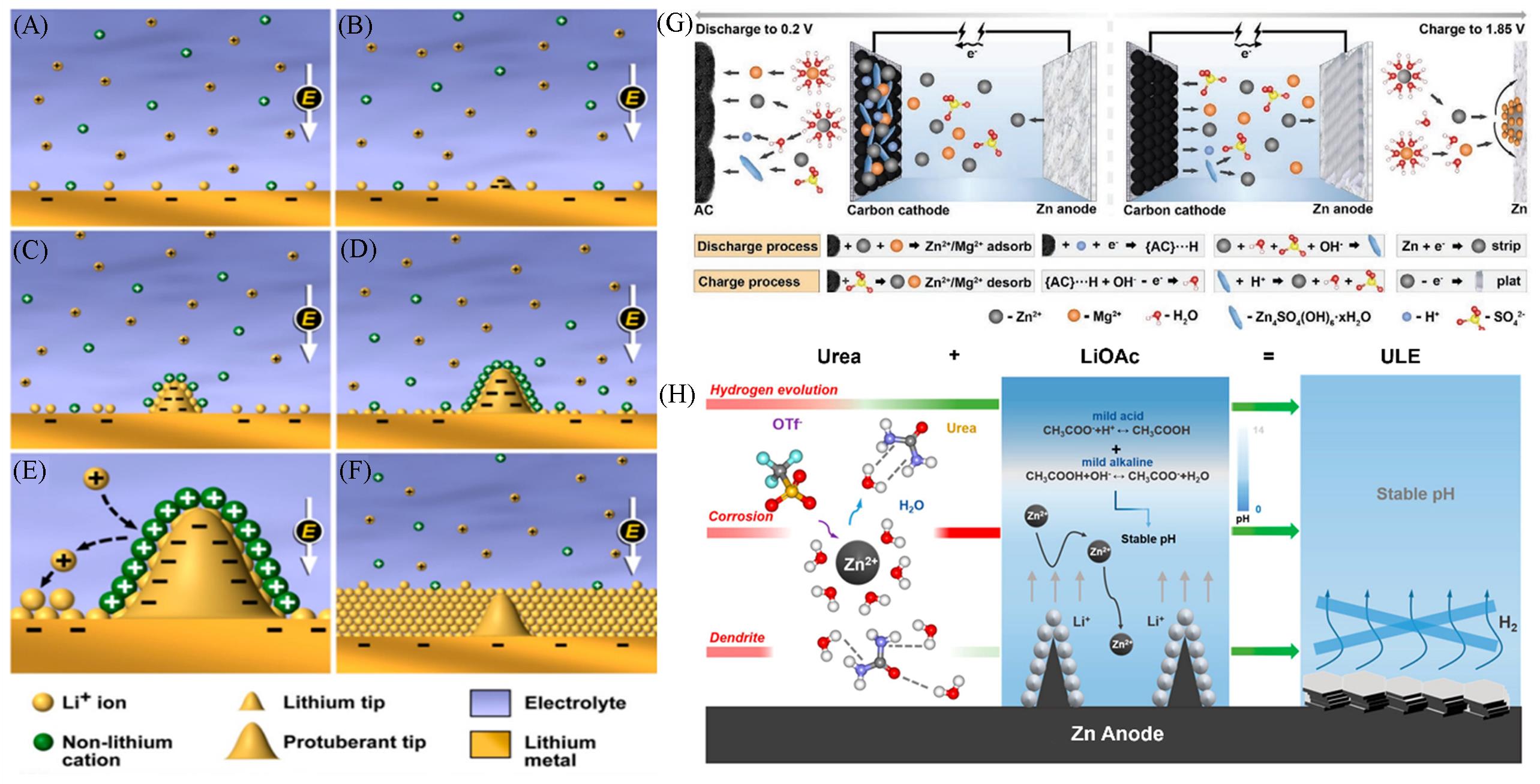
Fig.11 Self⁃ h e aling electrostatic shield mechanism(A—F)[122], protective mechanism of magnesium ion(G)[125], Li⁃ion additives participate in the synergistic optimization of battery performance through electrostatic shielding(H)[126](A—F) Copyright 2013, American Chemical Society; (G) Copyright 2021, John Wiley and Sons; (H) Copyright 2023, American Chemical Society.
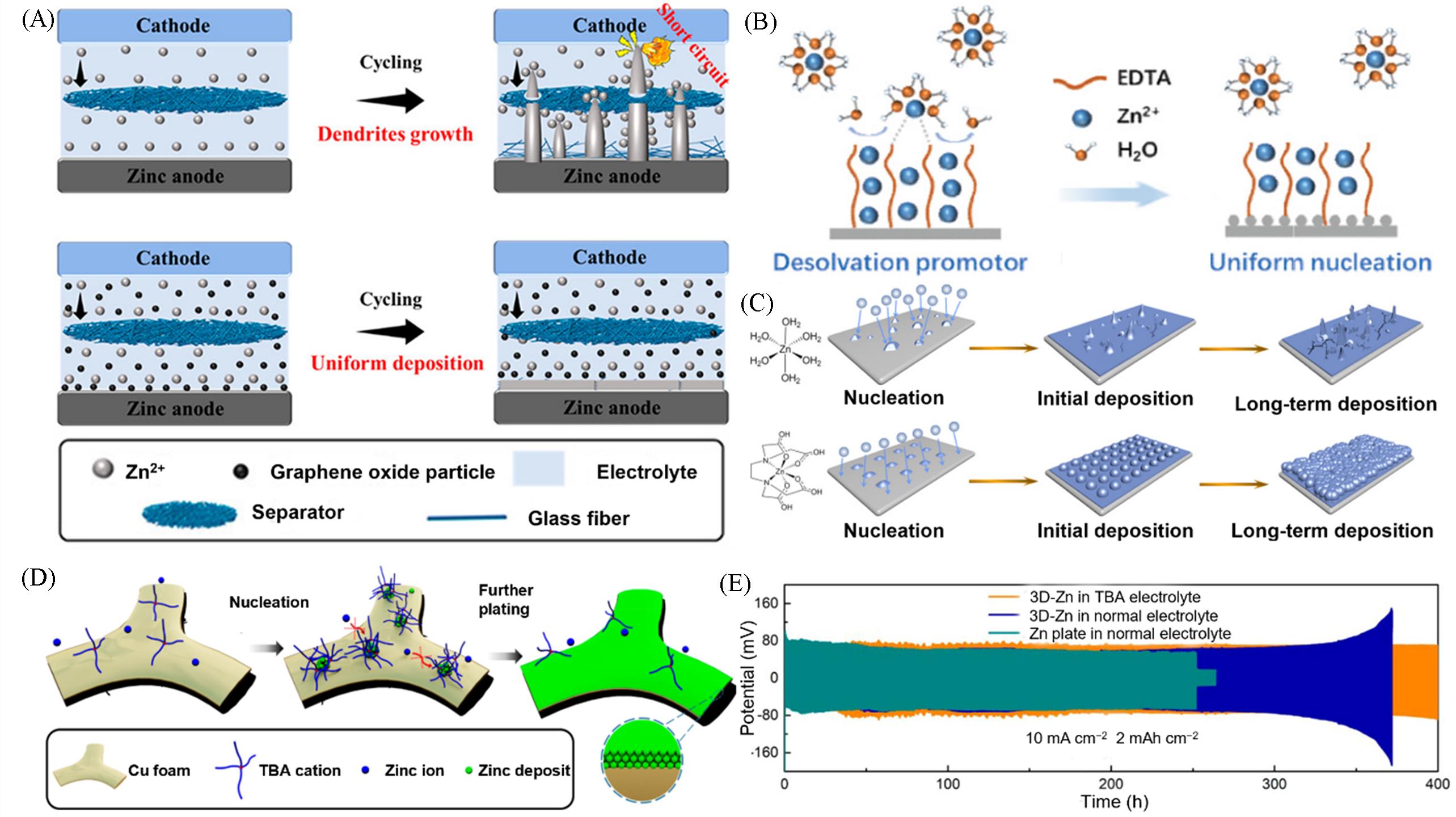
Fig.12 Schematic diagram of graphene oxide inhibiting dendrite growth(A)[129], adsorption of EDTA(B)[130], schematic illustration of zinc deposition patterns in electrolytes with/without EDTA(C)[131], schematic illustrations of Zn deposition on Cu foam with TBA2SO4 as an electrolyte additive(D), cycling performance comparisons of Zn//Zn and 3D⁃Zn//3D⁃Zn symmetric cells in different electrolytes at current densities of 10 mA/cm2 with a fixed capacity of 2 mA·h/cm2(E)[132](A) Copyright 2021, American Chemical Society; (B) Copyright 2021, John Wiley and Sons; (C) Copyright 2022, American Chemical Society; (D, E) Copyright 2020, American Chemical Society.
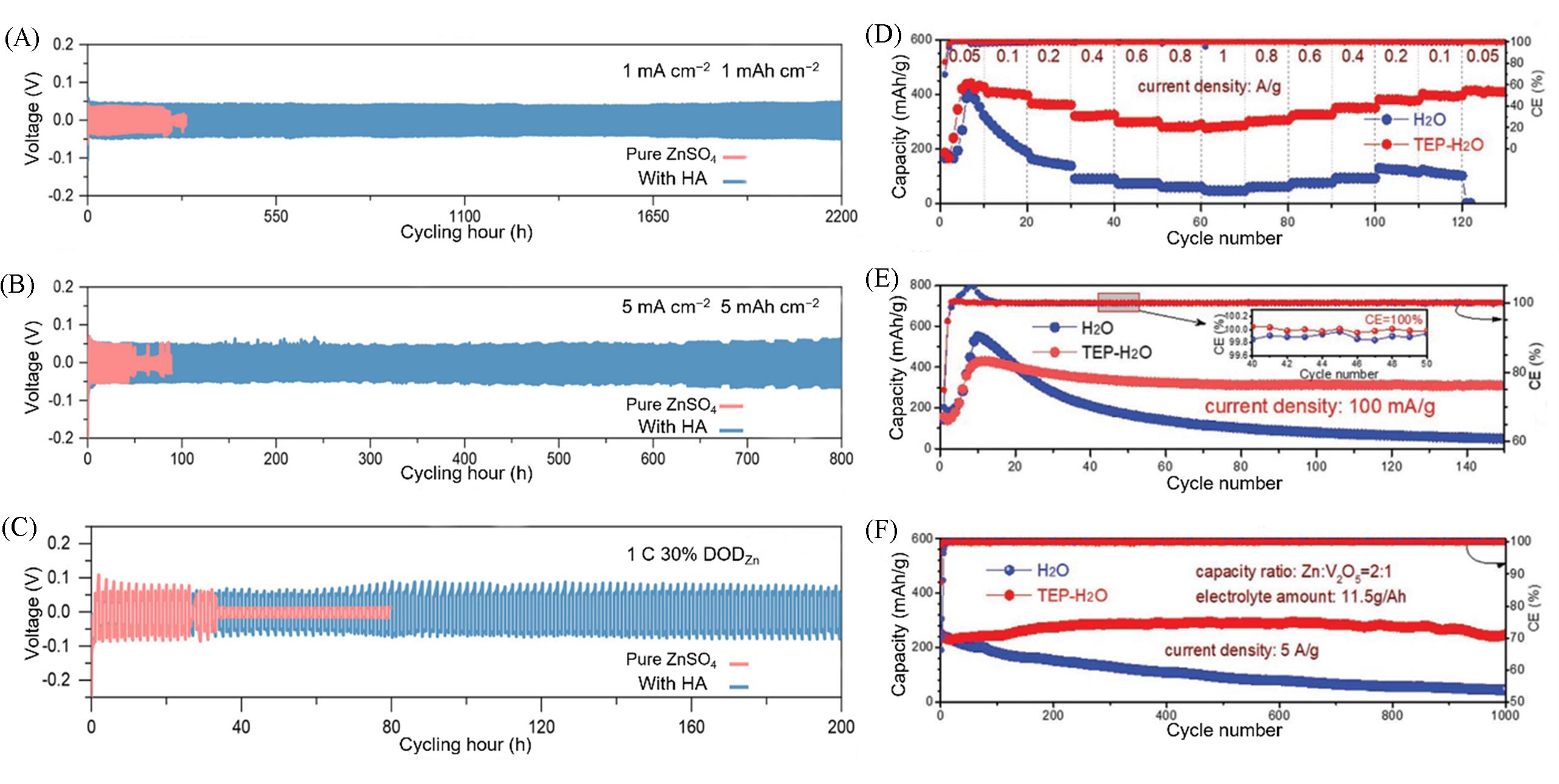
Fig.13 Comparison of long⁃term cyclic stability of pure ZnSO4 and ZnSO4⁃HA electrolyte systems of 1 mA·cm-2/1 mA·h·cm-2(A), 5 mA·cm-2/5 mA·h·cm-2(B), 30% DOD Zn with a 1C rate(C)[134], the rate performance(d) and the cycling performance(E) of V2O5 electrodes in Zn(OTf)2⁃H2O and Zn(OTf)2⁃TEP⁃H2O electrolytes at low current rates, cycling performance of V2O5 electrodes at 5 A/g current density(F)[135](A—C) Copyright 2022, American Chemical Society; (D—F) Copyright 2021, John Wiley and Sons.
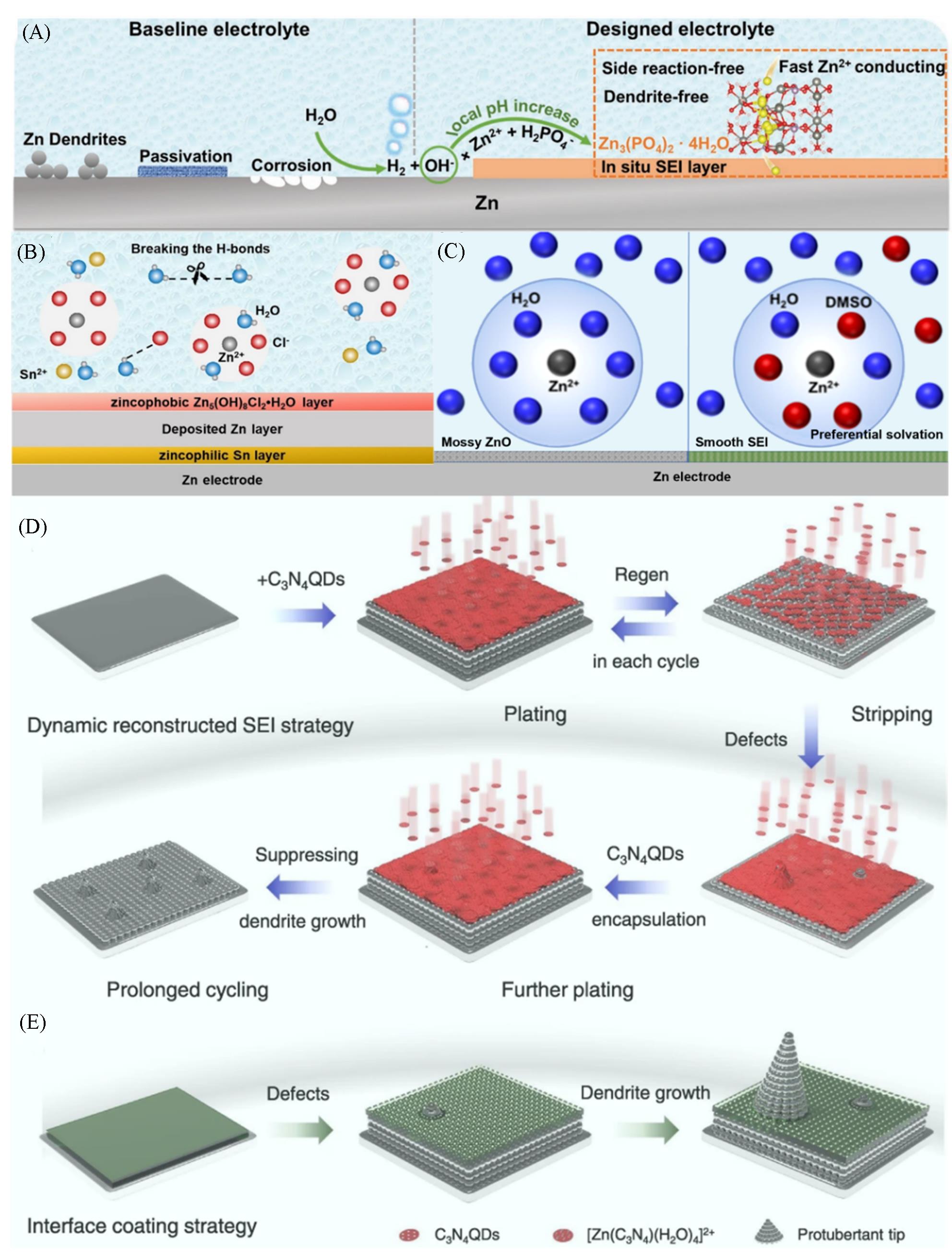
Fig.14 Schematic diagram of SEI in situ(A)[117], SEI formed by SnCl2(B)[136], SEI formed by DMSO(C)[137], real⁃time interfacial dynamic regulation mechanism of C3N4QDs(D), interface coating strategy mechanism(E)[138](A) Copyright 2021, John Wiley and Sons; (B) Copyright 2021, John Wiley and Sons; (C) Copyright 2020, American Chemical Society; (D, E) Copyright 2022, Springer Nature.
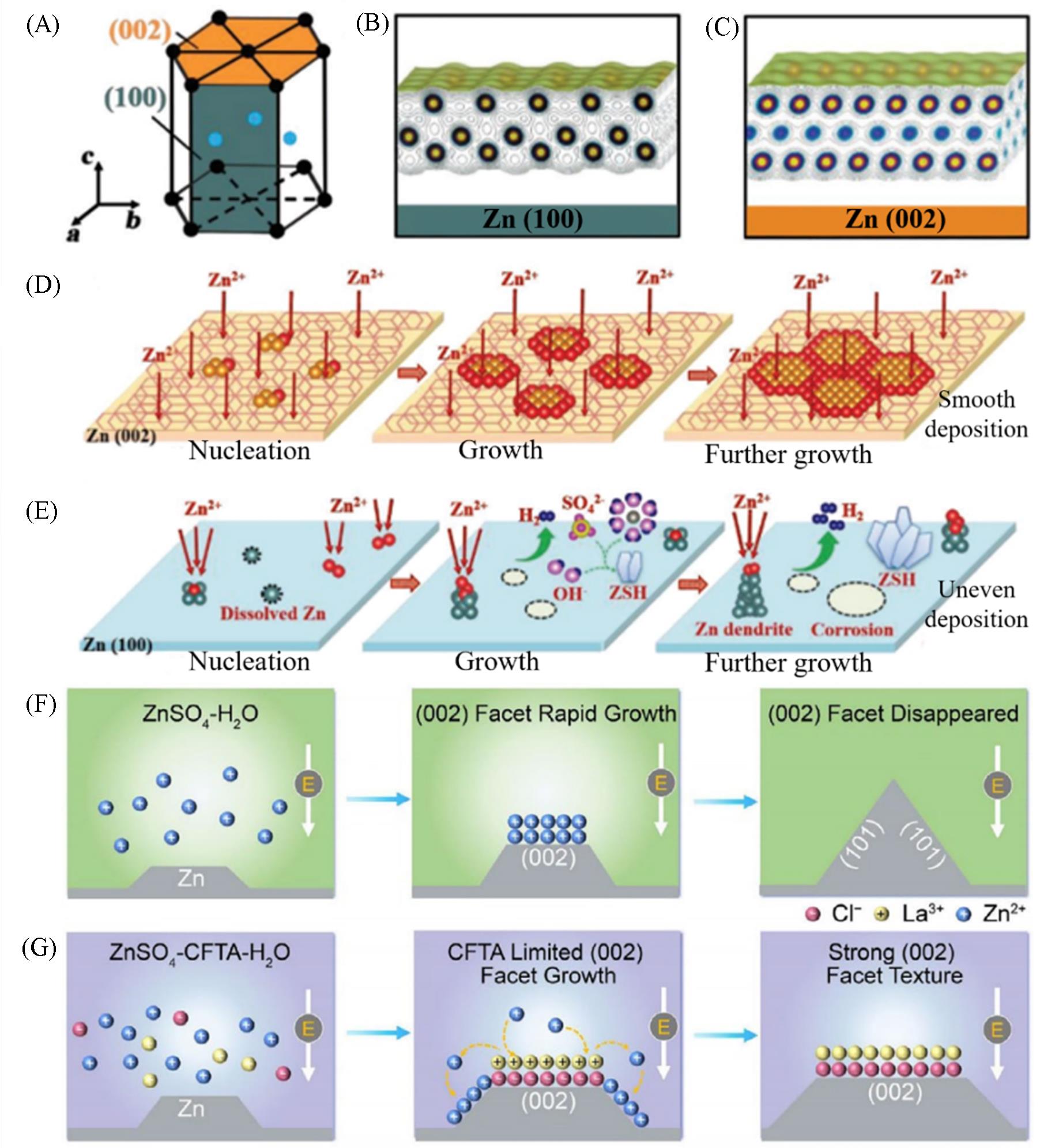
Fig.15 (002) and (100) crystal planes of zinc metal(A), surface atomic arrangement and electron equipotential plane of Zn(100)(B) and Zn(002)(C), the deposition processes on the (002)(D) and (100)(E) crystal planes of zinc metal[139], the process of zinc crystal formation in the ZnSO4⁃H2O system(F) and the ZnSO4⁃CFTA⁃H2O system(G)[146](A—E) Copyright 2021, John Wiley and Sons; (F, G) Copyright 2024, American Chemical Society.
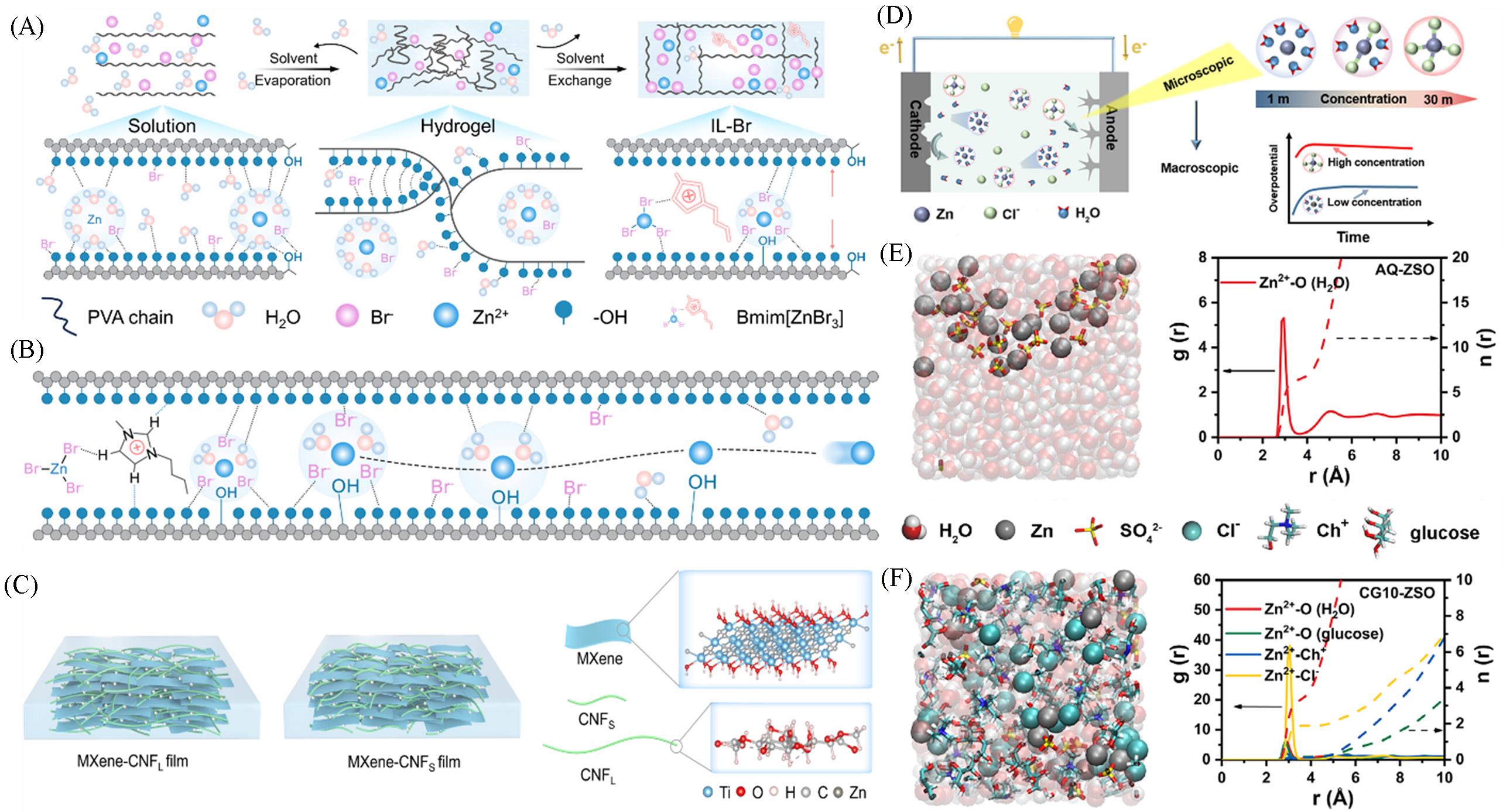
Fig.16 Preparation process demonstration of IL⁃Br gel(A), Zn2+ solvation structure and corresponding transportation mechanism of ILg(B)[150], schematic illustration of the microstructures of MXene⁃CNF hydrogel films(C)[151], regulation of the macroscopic electrochemical performance through electrolyte concentration⁃dependent solvation structure evolution(D)[152], MD simulation snapshots and RDFs in the AQ⁃ZSO electrolyte(E) and CG10⁃ZSO electrolyte(F)[153](A, B) Copyright 2025, American Chemical Society; (C) Copyright 2025, American Chemical Society; (D) Copyright 2025, John Wiley and Sons; (E, F) Copyright 2025, John Wiley and Sons.
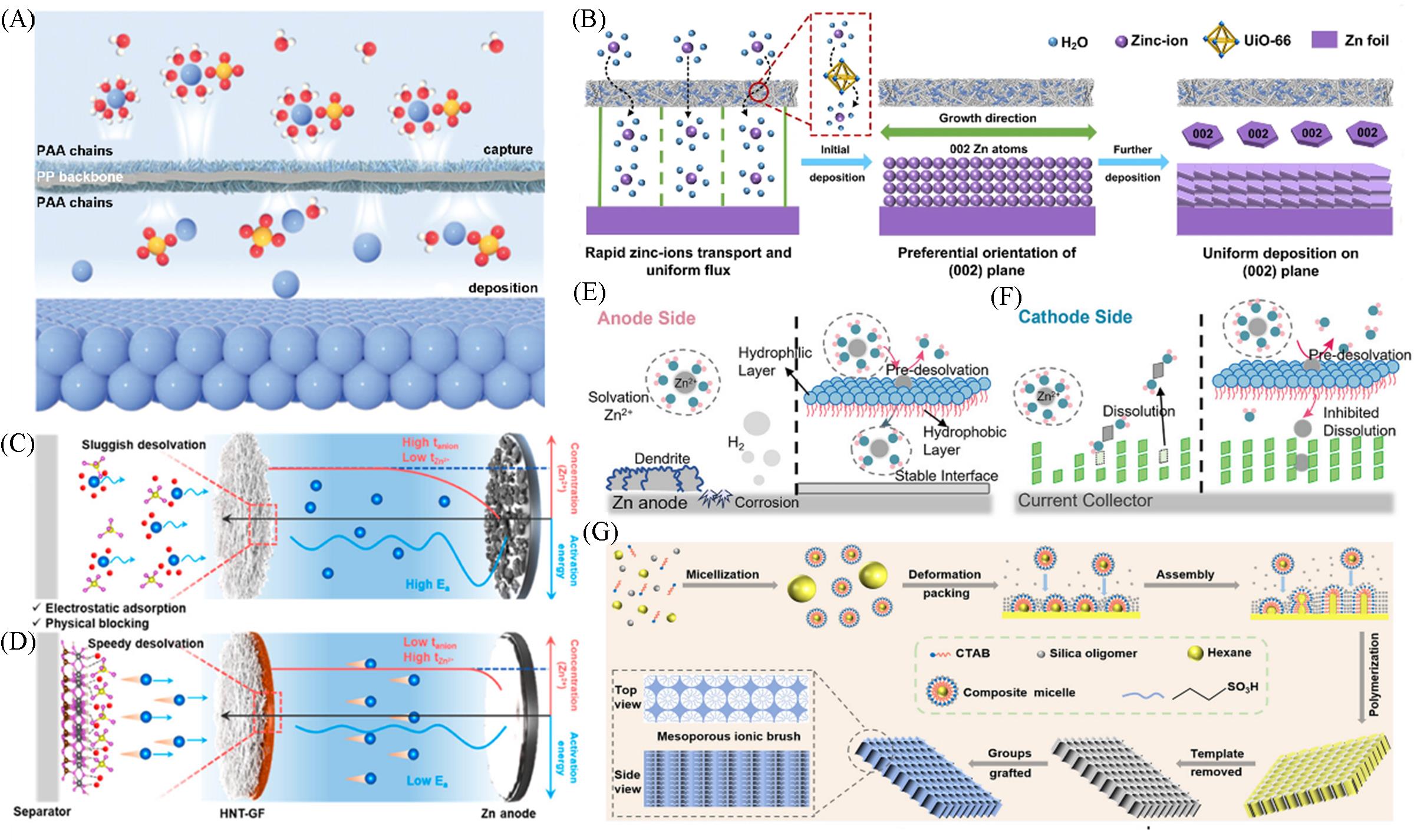
Fig.17 Schematic illustration of selective Zn2⁺ ion transport mechanism at the electrolyte/separator interface(A)[156], schematic illustration of the deposition process mechanism for zinc anode using UiO⁃66⁃GF(B)[157], schematic illustration of the modification mechanism of HNT coating on the ion transport and deposition processes(C, D)[158], schematic diagram of the effect of the tandem chemistry design on the zinc anode side(E) and cathode side(F)[160], schematic illustration of the formation of vertically mesoporous silica nanosheets via shear⁃induced monomicelle deformation assembly(G)[161](A) Copyright 2024, John Wiley and Sons; (B) Copyright 2022, Springer Nature; (C, D) Copyright 2024, American Chemical Society; (E, F) Copyright 2025, John Wiley and Sons; (G) Copyright 2026, John Wiley and Sons.
| [1] | Li W., Zhao C., Yu C., Yu Y., Huang J. Q., Lu Y., Jiang H., Gu S., Lu Z., Yang X., Yu L., Ren Y., Shi S., Chen W., Green Energy Environ., 2025, 10(11), 2201—2258 |
| [2] | Hossain M. H., Chowdhury M. A., Hossain N., Islam M. A., Mobarak M. H., Chem. Eng. J. Adv., 2023, 16, 100569 |
| [3] | Zhang D., Yuan T., Zhang H., Shi S., Wang X., Ding R., He Y., Carbon Lett., 2024, 34(8), 2055—2079 |
| [4] | Patnaik S., Ionics, 2024, 30(6), 3069—3090 |
| [5] | Li S., Chen B., Shi Z., Tong Q., Weng J., J. Energy Storage, 2024, 102, 114210 |
| [6] | Mathew V., Sambandam B., Kim S., Kim S., Park S., Lee S., Alfaruqi M. H., Soundharrajan V., Islam S., Putro D. Y., Hwang J. Y., Sun Y. K., Kim J., ACS Energy Lett., 2020, 5(7), 2376—2400 |
| [7] | Song A., Zhao J., Qiao C., Ding Y., Tian G., Fan Y., Ma Z., Dai L., Shao G., Liu Z., J. Colloid Interface Sci., 2024, 674, 336—344 |
| [8] | Chao D., Zhou W., Xie F., Ye C., Li H., Jaroniec M., Qiao S. Z., Sci. Adv., 2020, 6(21), eaba4098 |
| [9] | Wang F., Borodin O., Gao T., Fan X., Sun W., Han F., Faraone A., Dura J. A., Xu K., Wang C., Nat. Mater., 2018, 17(6), 543—549 |
| [10] | Wei J., Zhang P., Sun J., Liu Y., Li F., Xu H., Ye R., Tie Z., Sun L., Jin Z., Chem. Soc. Rev., 2024, 53(20), 10335—10369 |
| [11] | Zhang X., Shen Q., Lin X., Luo C., Shen Y., Huang X., J. Energy Storage, 2023, 73, 109085 |
| [12] | Yue J., Chen S., Yang J., Li S., Tan G., Zhao R., Wu C., Bai Y., Adv. Mater., 2024, 36(2), 2304040 |
| [13] | Du F., Wu F., Ma L., Feng J., Yin X., Wang Y., Dai X., Liu W., Shi W., Cao X., Funct. Mater. Lett., 2023, 16(8), 2340017 |
| [14] | Jian Q., Sun J., Li H., Guo Z., Zhao T., Int. J. Heat Mass Transfer, 2024, 223, 125252 |
| [15] | Zhang M., Xu W., Han X., Fan H., Chen T., Yang Y., Gao Y., Zheng C., Yang Y., Xiong T., Zhang Y. W., Lee W. S. V., Wang W., Pan H., Yu Z. G., Xue J., Adv. Energy Mater., 2024, 14(9), 2303737 |
| [16] | Yan H., Zhang X., Yang Z., Xia M., Xu C., Liu Y., Yu H., Zhang L., Shu J., Coord. Chem. Rev., 2022, 452, 214297 |
| [17] | Cai Z., Wang J., Sun Y., eScience, 2023, 3(1), 100093 |
| [18] | Lee Y. H., Park E., Sung Y. E., Yu S. H., Adv. Funct. Mater., 2026, 36(7), e12884 |
| [19] | Moses J., Rajendran A. R., J. Energy Storage, 2026, 141, 119377 |
| [20] | Cui Y., Ju Z., Yu R., Du H., Zhang B., Wang Y., Yu G., ACS Mater. Lett., 2024, 6(2), 611—626 |
| [21] | Nie C., Wang G., Wang D., Wang M., Gao X., Bai Z., Wang N., Yang J., Xing Z., Dou S., Adv. Energy Mater., 2023, 13(28), 2300606 |
| [22] | Hao S., Zhang X., Pei Y., Xiong H., Ye Q., Xu F., Zhou F., ACS Sustainable Chem. Eng., 2023, 11(48), 17006—17014 |
| [23] | Chen K., Chen Y., Xu Y., Xu M., Li Y., Yang S., Wu Q., Xu Q., Xie H., Huang J., Energy Storage Mater., 2024, 71, 103597 |
| [24] | Zheng W., Xie H., Zhu L., Zhou H., Zhang K., J. Energy Storage, 2024, 76, 109808 |
| [25] | Zhao W., Perera I. P., Khanna H. S., Dang Y., Li M., Posada L. F., Tan H., Suib S. L., ACS Appl. Energy Mater., 2024, 7(3), 1172—1181 |
| [26] | Zhang Q., Luan J., Tang Y., Ji X., Wang H., Angew. Chem. Int. Ed., 2020, 59(32), 13180—13191 |
| [27] | Wang M., Meng Y., Li X., Qi J., Li A., Huang S., Chem. Eng. J., 2025, 507, 160615 |
| [28] | Miao L., Jia W., Jiao L., Chem. Sci., 2024, 15(44), 18227—18238 |
| [29] | Zhang P., Wang T., Ding P., Hu F., Zou Z., He W., Borra V., Gao Q., Zhang H., Tang J., Zheng W., Sun Z., J. Energy Storage, 2026, 143, 119578 |
| [30] | Zhu Y., Liang G., Cui X., Liu X., Zhong H., Zhi C., Yang Y., Energy Environ. Sci., 2024, 17(2), 369—385 |
| [31] | Chen X., Zhai Z., Yu T., Liang X., Huang R., Wang F., Yin S., Small, 2024, 20(35), 2401386 |
| [32] | Wang J. H., Chen L. F., Dong W. X., Zhang K., Qu Y. F., Qian J. W., Yu S. H., ACS Nano, 2023, 17(19), 19087—19097 |
| [33] | Li Q., Liu G., Zhou S., Tang S., Luo R., Wei P., Fang C., Yan C., Chem. Eng. J., 2025, 506, 159895 |
| [34] | Meng Y., Wang L., Zeng J., Hu B., Kang J., Zhang Y., Zhang J., Zhao Z., Zhang L., Lu H., Chem. Eng. J., 2023, 474, 145987 |
| [35] | Xue P., Guo C., Li L., Li H., Luo D., Tan L., Chen Z., Adv. Mater., 2022, 34(14), 2110047 |
| [36] | Cao Q., Gao H., Gao Y., Yang J., Li C., Pu J., Du J., Yang J., Cai D., Pan Z., Guan C., Huang W., Adv. Funct. Mater., 2021, 31(37), 2103922 |
| [37] | Guo W., Cong Z., Guo Z., Chang C., Liang X., Liu Y., Hu W., Pu X., Energy Storage Mater., 2020, 30, 104—112 |
| [38] | Wang S. B., Ran Q., Yao R. Q., Shi H., Wen Z., Zhao M., Lang X. Y., Jiang Q., Nat. Commun., 2020, 11(1), 1634 |
| [39] | Chen K., Guo H., Li W., Wang Y., ACS Appl. Mater. Interfaces, 2021, 13(46), 54990—54996 |
| [40] | Tao Y., Zuo S. W., Xiao S. H., Sun P. X., Li N. W., Chen J. S., Zhang H. B., Yu L., Small, 2022, 18(30), 2203231 |
| [41] | Wu B., Guo B., Chen Y., Mu Y., Qu H., Lin M., Bai J., Zhao T., Zeng L., Energy Storage Mater., 2023, 54, 75—84 |
| [42] | Lu M., Xiao B. H., Lu Y. X., Xiao K., Liu Z. Q., Adv. Energy Mater., 2025, 15(30), 2500785 |
| [43] | Li X., Chen H., Lu N., Lin X., Zhang S., Wang H., Luo H., Pan L., Wang Y., Song R., Zhang C., Energy Storage Mater., 2025, 80, 104350 |
| [44] | Wang Z., Dong J., Zhang K., Zhao Z., Gao Y., Bai X., Zou T., Zhao B., Wang Y., Adv. Funct. Mater., 2025, 35(37), 2505058 |
| [45] | Xin Y., Qi J., Xie H., Ge Y., Wang Z., Zhang F., He B., Wang S., Tian H., Adv. Funct. Mater., 2024, 34(39), 2403222 |
| [46] | Liu C., Zeng J., Di S., Wang S., Li L., Acta Mater., 2024, 281, 120433 |
| [47] | Lin Y., Lin F., Zhang M., Jiao X., Dong P., Yang W., Small Methods, 2025, 9(7), 2401817 |
| [48] | Wang W., Huang G., Wang Y., Cao Z., Cavallo L., Hedhili M. N., Alshareef H. N., Adv. Energy Mater., 2022, 12(6), 2102797 |
| [49] | Zeng Y., Wang H., Rauf M., Mi H., Sun L., Wu Q., Zhang Q., Ren X., Li Y., Electrochim. Acta, 2023, 447, 142085 |
| [50] | Li C., Shi X., Liang S., Ma X., Han M., Wu X., Zhou J., Chem. Eng. J., 2020, 379, 122248 |
| [51] | Liang H., Su Q., Xu J., Yang Z., Li S., Wang J., J. Alloys Compd., 2023, 949, 169870 |
| [52] | Bashir T., Zhou S., Yang S., Ismail S. A., Ali T., Wang H., Zhao J., Gao L., Electrochem. Energy Rev., 2023, 6(1), 5 |
| [53] | Ruan J., Ma D., Ouyang K., Shen S., Yang M., Wang Y., Zhao J., Mi H., Zhang P., Nano Micro Lett., 2023, 15(1), 37 |
| [54] | Mu Y., Li Z., Wu B. K., Huang H., Wu F., Chu Y., Zou L., Yang M., He J., Ye L., Han M., Zhao T., Zeng L., Nat. Commun., 2023, 14(1), 4205 |
| [55] | Yang J., Yin B., Sun Y., Pan H., Sun W., Jia B., Zhang S., Ma T., Nano Micro Lett., 2022, 14(1), 42 |
| [56] | Chen H., Zhang W., Yi S., Su Z., Zhao Z., Zhang Y., Niu B., Long D., Energy Environ. Sci., 2024, 17(9), 3146—3156 |
| [57] | Li B., Yang K., Ma J., Shi P., Chen L., Chen C., Hong X., Cheng X., Tang M. C., He Y. B., Kang F., Angew. Chem. Int. Ed., 2022, 61(47), e202212587 |
| [58] | Xv C., Jiang T., Zhu C., Gou W., Zang K., Jia J., Zhang R., Wang X., Li G., Fan Q., ACS Appl. Mater. Interfaces, 2025, 17(29), 41379—41402 |
| [59] | Chen T., Wang Y., Yang Y., Huang F., Zhu M., Ang B. T. W., Xue J. M., Adv. Funct. Mater., 2021, 31(24), 2101607 |
| [60] | Fan X., Yang H., Wang X., Han J., Wu Y., Gou L., Li D. L., Ding Y. L., Adv. Mater. Interfaces, 2021, 8(7), 2002184 |
| [61] | Huang Y., Chang Z., Liu W., Huang W., Dong L., Kang F., Xu C., Chem. Eng. J., 2022, 431, 133902 |
| [62] | Fayette M., Chang H. J., Rodrı́guez⁃Pérez I. A., Li X., Reed D., ACS Appl. Mater. Interfaces, 2020, 12(38), 42763—42772 |
| [63] | Xie C., Ji H., Zhang Q., Yang Z., Hu C., Ji X., Tang Y., Wang H., Adv. Energy Mater., 2023, 13(3), 2203203 |
| [64] | Meng H., Ran Q., Dai T. Y., Shi H., Zeng S. P., Zhu Y. F., Wen Z., Zhang W., Lang X. Y., Zheng W. T., Jiang Q., Nano Micro Lett., 2022, 14(1), 128 |
| [65] | Zheng X., Liu Z., Sun J., Luo R., Xu K., Si M., Kang J., Yuan Y., Liu S., Ahmad T., Jiang T., Chen N., Wang M., Xu Y., Chuai M., Zhu Z., Peng Q., Meng Y., Zhang K., Wang W., Chen W., Nat. Commun., 2023, 14(1), 76 |
| [66] | Zou P., Sui Y., Zhan H., Wang C., Xin H. L., Cheng H. M., Kang F., Yang C., Chem. Rev., 2021, 121(10), 5986—6056 |
| [67] | Zhang X., Li J., Wang T., Gong Y., Zhou J., Nat. Commun., 2025, 16(1), 5781 |
| [68] | Zheng Z., Zhong X., Zhang Q., Zhang M., Dai L., Xiao X., Xu J., Jiao M., Wang B., Li H., Jia Y., Mao R., Zhou G., Nat. Commun., 2024, 15(1), 753 |
| [69] | Ji J., Zhu Z., Du H., Qi X., Yao J., Wan H., Wang H., Qie L., Huang Y., Adv. Mater., 2023, 35(20), 2211961 |
| [70] | Lu Y., Wang T., Li Z., Cheng H., Peng K., Tian Z., Chem. Eng. J., 2023, 458, 141509 |
| [71] | Yang X., Lu Y., Liu Z., Ji H., Chen Z., Peng J., Su Y., Zou Y., Wu C., Dou S., Gao P., Guo Z., Sun J., Energy Environ. Sci., 2024, 17(15), 5563—5575 |
| [72] | Zheng J., Zhao Q., Tang T., Yin J., Quilty C. D., Renderos G. D., Liu X., Deng Y., Wang L., Bock D. C., Jaye C., Zhang D., Takeuchi E. S., Takeuchi K. J., Marschilok A. C., Archer L. A., Science, 2019, 366(6465), 645—648 |
| [73] | Zhu M., Li X., Shi C., Cai C., Zhang J., J. Energy Storage, 2024, 101, 113686 |
| [74] | Dong N., Zhang F., Pan H., Chem. Sci., 2022, 13(28), 8243—8252 |
| [75] | Zhu C., Li P., Xu G., Cheng H., Gao G., Coord. Chem. Rev., 2023, 485, 215142 |
| [76] | Zheng X., Ahmad T., Chen W., Energy Storage Mater., 2021, 39, 365—394 |
| [77] | Du W. C., Ang E. H. X., Yang Y., Zhang Y. F., Ye M. H., Li C. C., Energy Environ. Sci., 2020, 13(10), 3330—3360 |
| [78] | Li Q., Zhao Y. W., Mo F. N. A., Wang D. H., Yang Q., Huang Z. D., Liang G. J., Chen A., Zhi C. Y., Ecomat, 2020, 2(3), e12035 |
| [79] | Ma X., Sun B., Liu X., Yu H., Sun N., Gong Z., Zhou M., Sun Y., Polyhedron, 2026, 285, 117915 |
| [80] | Ji D., Han J., Liu H., Ding J., J. Power Sources, 2026, 663, 238942 |
| [81] | Pan X., Song K., Wang L., Zhu H., Ren M., Yang M., Liu W., Liu Q., Yao J., Mater. Sci. Engin.: B, 2026, 324, 119059 |
| [82] | Liang P., Yi J., Liu X., Wu K., Wang Z., Cui J., Liu Y., Wang Y., Xia Y., Zhang J., Adv. Funct. Mater., 2020, 30(13), 1908528 |
| [83] | Zhou M., Guo S., Fang G., Sun H., Cao X., Zhou J., Pan A., Liang S., J. Energy Chem., 2021, 55, 549—556 |
| [84] | Xiao P., Xue L., Guo Y., Hu L., Cui C., Li H., Zhai T., Sci. Bull., 2021, 66(6), 545—552 |
| [85] | Yang Q., Guo Y., Yan B., Wang C., Liu Z., Huang Z., Wang Y., Li Y., Li H., Song L., Fan J., Zhi C., Adv. Mater., 2020, 32(25), 2001755 |
| [86] | Guo W., Zhang Y., Tong X., Wang X., Zhang L., Xia X., Tu J., Mater. Today Energy, 2021, 20, 100675 |
| [87] | He H., Tong H., Song X., Song X., Liu J., J. Mater. Chem. A, 2020, 8(16), 7836—7846 |
| [88] | Zhao F., Feng J., Dong H., Chen R., Munshi T., Scowen I., Guan S., Miao Y. E., Liu T., Parkin I. P., He G., Adv. Funct. Mater., 2024, 34(51), 2409400 |
| [89] | Kim S., Baek J., Choi J. I., Jo Y. R., Jang S. S., An G. H., Nano Energy, 2025, 142, 111203 |
| [90] | Wang J., Innocenti A., Wei H., Zhang Y., Peng J., Qiao Y., Huang W., Liu J., Nano Micro Lett., 2025, 17(1), 326 |
| [91] | Su T. C., Gull S., Lin W. H., Huang Y. S., Ni C. S., Wang C. C., Chen H. Y., Carbon, 2024, 229, 119467 |
| [92] | Wang J., Peng J., Huang W., Liang H., Hao Y., Li J., Chu H., Wei H., Zhang Y., Liu J., Adv. Funct. Mater., 2024, 34(26), 2316083 |
| [93] | Hao Y., Zhou J., Wei G., Liu A., Zhang Y., Mei Y., Lu B., Luo M., Xie M., ACS Appl. Energy Mater., 2021, 4(6), 6364—6373 |
| [94] | Li J., Wei C., Zhao M., Wu W., Li H., Hu R., Bai G., Zhuo K., Bai Z., Lu J., Angew. Chem. Int. Ed., 2025, 64(49), e202514671 |
| [95] | Yang H., Chang Z., Qiao Y., Deng H., Mu X., He P., Zhou H., Angew. Chem. Int. Ed., 2020, 59(24), 9377—9381 |
| [96] | Li Z., Zhao G., Chu X., Sun L., Jiang T., Luo R., Zhang Z., Cheng Z., Qiu Y., Chen M., Chen W., Angew. Chem. Int. Ed., 2026, 65(2), e19208 |
| [97] | Abbasi A. R., Xie Q., Wang Z., Wang L., Xie W., Xu J., Xiong W., J. Energy Storage, 2026, 142, 119647 |
| [98] | Zhao Z., Zhao J., Hu Z., Li J., Li J., Zhang Y., Wang C., Cui G., Energy Environ. Sci., 2019, 12(6), 1938—1949 |
| [99] | Li B., Liu S., Geng Y., Mao C., Dai L., Wang L., Jun S. C., Lu B., He Z., Zhou J., Adv. Funct. Mater., 2024, 34(5), 2214033 |
| [100] | Li F., Li Q., Kimura H., Xie X., Zhang X., Wu N., Sun X., Xu B. B., Algadi H., Pashameah R. A., Alanazi A. K., Alzahrani E., Li H., Du W., Guo Z., Hou C., J. Mater. Sci. Technol., 2023, 148, 250—259 |
| [101] | Deng C., Xie X., Han J., Tang Y., Gao J., Liu C., Shi X., Zhou J., Liang S., Adv. Funct. Mater., 2020, 30(21), 2000599 |
| [102] | Wei B., Zheng J., Abhishek, Liu X., Wu J., Qi Z., Hou Z., Wang R., Ma J., Gandi A. N., Wang Z., Liang H., Adv. Energy Mater., 2024, 14(24), 2401018 |
| [103] | Li H., Zhao R., Zhou W., Wang L., Li W., Zhao D., Chao D., JACS Au, 2023, 3(8), 2107—2116 |
| [104] | Li Q., Fang C., Yan C., Adv. Funct. Mater., 2025, 35(47), 2509192 |
| [105] | Jia S., Bian H., Zhou Q., Xue G., Li F., Hu Z., Ma Y., Gu J., Tang S., Meng X., Nano Lett., 2025, 25(43), 15651—15658 |
| [106] | Ji Q., Han X., Zhao J., Gao S., J. Energy Storage, 2026, 141, 119427 |
| [107] | Zhao R., Dong X., Liang P., Li H., Zhang T., Zhou W., Wang B., Yang Z., Wang X., Wang L., Sun Z., Bu F., Zhao Z., Li W., Zhao D., Chao D., Adv. Mater., 2023, 35(17), 2209288 |
| [108] | Lee J. H., Kim R., Kim S., Heo J., Kwon H., Yang J. H., Kim H. T., Energy Environ. Sci., 2020, 13(9), 2839—2848 |
| [109] | Huang S., Zhu J., Tian J., Niu Z., Chemistry, 2019, 25(64), 14480—14494 |
| [110] | Zhang T., Tang Y., Guo S., Cao X., Pan A., Fang G., Zhou J., Liang S., Energy Environ. Sci., 2020, 13(12), 4625—4665 |
| [111] | Zhang F., Liao T., Zhou Q., Bai J., Li X., Sun Z., Mater. Sci. Eng.: R: Rep., 2025, 165, 101012 |
| [112] | Wang Y., Yan W., Zhu X., Li J., Li Z., Zhang H., Ren Y., Mo L., Huang Y., Zhang L., Hu L., Angew. Chem. Int. Ed., 2025, 64(35), e202508556 |
| [113] | Ma C., Wang X., Lu W., Yang K., Chen N., Jiang H., Wang C., Yue H., Zhang D., Du F., Nano Lett., 2024, 24(13), 4020—4028 |
| [114] | Shi X., Zeng J., Yi A., Wang F., Liu X., Lu X., J. Am. Chem. Soc., 2024, 146(29), 20508—20517 |
| [115] | Li D., Sun T., Ma T., Zhang W., Sun Q., Cheng M., Zha Z., Xie W., Tao Z., Adv. Funct. Mater., 2024, 34(44), 2405145 |
| [116] | Wang L., Zhang Y., Hu H., Shi H. Y., Song Y., Guo D., Liu X. X., Sun X., ACS Appl. Mater. Interfaces, 2019, 11(45), 42000—42005 |
| [117] | Zeng X., Mao J., Hao J., Liu J., Liu S., Wang Z., Wang Y., Zhang S., Zheng T., Liu J., Rao P., Guo Z., Adv. Mater., 2021, 33(11), 2007416 |
| [118] | Li D., Cao L., Deng T., Liu S., Wang C., Angew. Chem. Int. Ed., 2021, 60(23), 13035—13041 |
| [119] | Yuan D., Zhao J., Ren H., Chen Y., Chua R., Jie E. T. J., Cai Y., Edison E., Manalastas Jr W., Wong M. W., Srinivasan M., Angew. Chem. Int. Ed., 2021, 60(13), 7213—7219 |
| [120] | Li T. C., Fang D., Zhang J., Pam M. E., Leong Z. Y., Yu J., Li X. L., Yan D., Yang H. Y., J. Mater. Chem. A, 2021, 9(10), 6013—6028 |
| [121] | Meng Q., Yan T., Wang Y., Lu X., Zhou H., Dong S., Chem. Eng. J., 2024, 497, 154541 |
| [122] | Ding F., Xu W., Graff G. L., Zhang J., Sushko M. L., Chen X., Shao Y., Engelhard M. H., Nie Z., Xiao J., Liu X., Sushko P. V., Liu J., Zhang J. G., J. Am. Chem. Soc., 2013, 135(11), 4450—4456 |
| [123] | Xu Y., Zhu J., Feng J., Wang Y., Wu X., Ma P., Zhang X., Wang G., Yan X., Energy Storage Mater., 2021, 38, 299—308 |
| [124] | Wan F., Zhang L., Dai X., Wang X., Niu Z., Chen J., Nat. Commun., 2018, 9(1), 1656 |
| [125] | Wang P., Xie X., Xing Z., Chen X., Fang G., Lu B., Zhou J., Liang S., Fan H. J., Adv. Energy Mater., 2021, 11(30), 2101158 |
| [126] | Feng X., Li P., Yin J., Gan Z., Gao Y., Li M., Cheng Y., Xu X., Su Y., Ding S., ACS Energy Lett., 2023, 8(2), 1192—1200 |
| [127] | Xu W., Zhao K., Huo W., Wang Y., Yao G., Gu X., Cheng H., Mai L., Hu C., Wang X., Nano Energy, 2019, 62, 275—281 |
| [128] | Li X., Chen X. J., Zhang S., Song Y. X., Mater. Lett., 2026, 405, 139780 |
| [129] | Abdulla J., Cao J., Zhang D., Zhang X., Sriprachuabwong C., Kheawhom S., Wangyao P., Qin J., ACS Appl. Energy Mater., 2021, 4(5), 4602—4609 |
| [130] | Zhang S. J., Hao J., Luo D., Zhang P. F., Zhang B., Davey K., Lin Z., Qiao S. Z., Adv. Energy Mater., 2021, 11(37), 2102010 |
| [131] | Xie K., Ren K., Sun C., Yang S., Tong M., Yang S., Liu Z., Wang Q., ACS Appl. Energy Mater., 2022, 5(4), 4170—4178 |
| [132] | Bayaguud A., Luo X., Fu Y., Zhu C., ACS Energy Lett., 2020, 5(9), 3012—3020 |
| [133] | Cao X., Li S., Cui M., Wang N., Zheng X., Yang R., J. Energy Storage, 2026, 141, 119487 |
| [134] | Qiu M., Sun P., Cui G., Mai W., ACS Appl. Mater. Interfaces, 2022, 14(36), 40951—40958 |
| [135] | Liu S., Mao J., Pang W. K., Vongsvivut J., Zeng X., Thomsen L., Wang Y., Liu J., Li D., Guo Z., Adv. Funct. Mater., 2021, 31(38), 2104281 |
| [136] | Cao L., Li D., Soto F. A., Ponce V., Zhang B., Ma L., Deng T., Seminario J. M., Hu E., Yang X. Q., Balbuena P. B., Wang C., Angew. Chem. Int. Ed., 2021, 60(34), 18845—18851 |
| [137] | Cao L., Li D., Hu E., Xu J., Deng T., Ma L., Wang Y., Yang X. Q., Wang C., J. Am. Chem. Soc., 2020, 142(51), 21404—21409 |
| [138] | Zhang W., Dong M., Jiang K., Yang D., Tan X., Zhai S., Feng R., Chen N., King G., Zhang H., Zeng H., Li H., Antonietti M., Li Z., Nat. Commun., 2022, 13(1), 5348 |
| [139] | Zhou M., Guo S., Li J., Luo X., Liu Z., Zhang T., Cao X., Long M., Lu B., Pan A., Fang G., Zhou J., Liang S., Adv. Mater., 2021, 33(21), 2100187 |
| [140] | Liu X., Guo Y., Ning F., Liu Y., Shi S., Li Q., Zhang J., Lu S., Yi J., Nano Micro Lett., 2024, 16(1), 111 |
| [141] | Zhang J., Zhou C., Xie Y., Nan Q., Gao Y., Li F., Rao P., Li J., Tian X., Shi X., Small, 2024, 20(45), 2404237 |
| [142] | Deng R., He Z., Chu F., Lei J., Cheng Y., Zhou Y., Wu F., Nat. Commun., 2023, 14(1), 4981 |
| [143] | Wang L., Shao Y., Fu Z., Zhang X., Kang J., Yang X., Zhai Z., Ge Y., Zhang L., Hou Y., Lu H., Energy Environ. Sci., 2025, 18(10), 4859—4871 |
| [144] | Yang J., Ji Z., Deng M., Weng C., Wang X., Xu M., Pan L., Li J., Mater. Horiz., 2025, 12(16), 6383—6394 |
| [145] | Chen X., He J., Li B., Gu L., Hu Y., Mao C., Gao J., Wang X., J. Colloid Interface Sci., 2026, 705, 139499 |
| [146] | Liu Q., Liu X., Liu Y., Huang M., Wang W., Cheng Y., Zhang H., Xu L., ACS Nano, 2024, 18(6), 4932—4943 |
| [147] | Li C., Xie X., Liang S., Zhou J., Energy Environ. Mater., 2020, 3(2), 146—159 |
| [148] | Zhu Y., You Z., Zhang Y., Liu Z., Duan Y., Wang X., Wang J., Xie J., Zhang Y., Mater. Lett., 2026, 406, 139861 |
| [149] | García⁃Castrillo M., Dutta S., Beitia J., Goikolea E., Ravi S. K., Wuttke S., de Larramendi I. R., Lizundia E., Carbohydr. Polym., 2026, 373, 124624 |
| [150] | Hu Z., Han Z., Liu H., Jiang X., Bai K., Huang S., Yang Z., Ye M., Tang Y., Zhang Y., Liu X., Wen Z., Park H. S., Li C. C., J. Am. Chem. Soc., 2025, 147(50), 46632—46641 |
| [151] | Liu M., Zhang L., Rostami J., Zhang T., Matthews K., Chen S., Fan W., Zhu Y., Chen J., Huang M., Wu J., Wang H., Hamedi M. M., Xu F., Tian W., Wågberg L., Gogotsi Y., ACS Nano, 2025, 19(13), 13399—13413 |
| [152] | Huang J., Zhao Z., Yu J., Ding J., Lian J., Tan P., Adv. Funct. Mater., 2026, 36(81), e16806 |
| [153] | Tang J., Dai Z., Yang C., Chanajaree R., Okhawilai M., Pattananuwat P., Rajendran S., Zhang X., Qin J., Adv. Funct. Mater., 2026,36(7), e15911 |
| [154] | Li B., Zeng Y., Zhang W., Lu B., Yang Q., Zhou J., He Z., Sci. Bull., 2024, 69(5), 688—703 |
| [155] | Wang C., Wei S., Xie X., Du K., Su S., Geng J., Cao W., Yao Y., Hu Y., Zou Z., Adv. Energy Mater., 2026, 16(6), e04270 |
| [156] | Zhu X., Xu Z., Zhang T., Zhang J., Guo Y., Shan M., Wang K., Shi T., Cui G., Wang F., Xu G., Zhu M., Adv. Funct. Mater., 2024, 34(44), 2407262 |
| [157] | Song Y., Ruan P., Mao C., Chang Y., Wang L., Dai L., Zhou P., Lu B., Zhou J., He Z., Nano Micro Lett., 2022, 14(1), 218 |
| [158] | Liu S., Han Q., He C., Xu Z., Huang P., Cai L., Chen H., Zheng H., Zhou Y., Wang M., Tian H., Han W. Q., Ying H., ACS Nano, 2024, 18(37), 25880—25892 |
| [159] | Tan H., Wang C., Li X., Sakai N., Zhang Z., Yao H., Han Y., Lin Z., Zhou J., Xu J., Mei T., Wang X., Ma R., Sasaki T., Wang G., Chen Y., Small, 2025, 21(51), e10596 |
| [160] | Miao C., Chen D., Shen W., Zhang Y., Yao T., Shen L., Han W., Adv. Funct. Mater., 2026, 36(18), e19971 |
| [161] | Wu Y., Zhou W., Jin H., Li G., Wang X., Wang L., Du H., Sun Z., Ding S., Zhang T., Zhang J., Bu F., Zhao Z., Ye C., Li W., Chao D., Zhao D., Adv. Mater., 2026, 38(16), e23619 |
| [162] | Mao G., Xu P., Liu X., Zhao X., Shen Z., Chao D., Chen M., Nano Micro Lett., 2025, 18(1), 47 |
| [163] | Qin L., Zhou J., Sun M., Yang X., Shen X., Yan C., Qian T., Energy Storage Mater., 2025, 74, 103917 |
| [164] | Wu Z., Wang Y., Zhi C., Joule, 2024, 8(9), 2442—2448 |
| [165] | Xu G., Li Y., Li J., Li J., Liu X., Wang C., Mai W., Yang G., Pan L., Angew. Chem. Int. Ed., 2025, 64(39), e202511389 |
| [166] | Lv W., Liu J., Shen Z., Li X., Xu C., eScience, 2025, 5(6), 100410 |
| [1] | 吕海军, 王胜港, 马嘉茁, 郝彦忠. 含吡啶基团的小分子三苯胺改善CsPbI3钙钛矿太阳电池性能的研究[J]. 高等学校化学学报, 2025, 46(8): 20250018. |
| [2] | 霍雨, 孙骞, 马成, 王际童, 乔文明, 余子舰, 张寅旭. 负载无定型Fe纳米颗粒的掺氮碳笼修饰隔膜对锂硫电池电化学性能的影响[J]. 高等学校化学学报, 2024, 45(12): 20240342. |
| [3] | 陈辉, 吕双坤, 王春芳, 吕海明, 张玉琦, 李然. 一种吡嗪基共价有机聚合物的制备及在水系锌离子电池正极中的应用[J]. 高等学校化学学报, 2024, 45(10): 20240333. |
| [4] | 董帮达, 翟云云, 刘海清, 黄振鹏, 李祖光, 李蕾. MoS2纳米片功能化PAN锂金属电池隔膜的制备及锂枝晶抑制作用[J]. 高等学校化学学报, 2024, 45(1): 20230325. |
| [5] | 王前, 魏祎, 贾洪声. Mo2C/PE隔膜对锂硫电池性能的影响[J]. 高等学校化学学报, 2023, 44(11): 20230223. |
| [6] | 韩付超, 李福进, 陈良, 贺磊义, 姜玉南, 徐守冬, 张鼎, 其鲁. CoSe2/C复合电催化材料修饰隔膜对高载量锂硫电池性能的影响[J]. 高等学校化学学报, 2022, 43(8): 20220163. |
| [7] | 邹俊彦, 张焱焱, 陈石, 邵怀宇, 汤育欣. 全固态锂金属电池表界面化学的研究进展[J]. 高等学校化学学报, 2021, 42(4): 1005. |
| [8] | 吴桐, 丛丽娜, 孙立群, 谢海明. 氧缺位结构介孔二氧化钛/聚乙烯复合隔膜在锂硫电池中的应用[J]. 高等学校化学学报, 2020, 41(7): 1661. |
| [9] | 刘建,杜海会,孙田将,年庆舜,李海霞,陶占良. 钙钒青铜/碳纳米管复合材料的制备及电化学性能[J]. 高等学校化学学报, 2019, 40(12): 2526. |
| [10] | 吴为, 刘玉春, 朱冠存, 安佳钰, 窦广鹏, 王雨雁, 刘靖, 孙冬兰, 郭也平. 甲基丙烯酸类聚合物修饰的聚乙烯隔膜在锂离子电池中的应用[J]. 高等学校化学学报, 2019, 40(11): 2332. |
| [11] | 王杰, 孙晓刚, 陈玮, 李旭, 黄雅盼, 魏成成, 胡浩, 梁国东. 羟基化多壁碳纳米管三明治隔膜对锂硫电池电化学性能的改善[J]. 高等学校化学学报, 2018, 39(8): 1782. |
| [12] | 王智慧, 薛歆, 邢玥, 李淑梅, 刘斌, 韩冬雪, 牛利. 疏水疏油纳米银修饰不锈钢材料的制备及生物相容性[J]. 高等学校化学学报, 2015, 36(8): 1542. |
| 阅读次数 | ||||||
|
全文 |
|
|||||
|
摘要 |
|
|||||
