高等学校化学学报

• 研究论文 • 上一篇    

赤藓糖醇与共价交联网络复合材料的制备与可控相变性质研究

董乐1#,许一杰2#,方海东2,李华1,陈紫钰1,张施慧2,史全2   

  1. 1. 国网陕西省电力有限公司电力科学研究院 2. 中国科学院大连化学物理研究所,热化学实验室

  • 收稿日期:2026-04-01 修回日期:2026-05-07 网络首发:2026-05-14 发布日期:2026-05-14
  • 通讯作者: 史全 E-mail:shiquan@dicp.ac.cn
  • 基金资助:
    国网陕西省电力有限公司科技项目(批准号:5226KY250018)资助

Study on Preparation and Controllable Phase Change Properties of Composites Between Erythritol and Covalent Cross-Linking Networks

Dong Le1#, Xu Yijie2#, FANG Haidong2, Li Hua1, CHEN Ziyu1, ZHANG Shihui2*, SHI Quan2*   

  1. 1. State Grid Shaanxi Electric Power Company Electric Power Science Research Institute 2. Thermochemistry Laboratory, Dalian Institute of Chemical Physics, Chinese Academy of Sciences
  • Received:2026-04-01 Revised:2026-05-07 Online First:2026-05-14 Published:2026-05-14
  • Supported by:
    Supported by the Technology Project of State Grid Shaanxi Electric Power Co., Ltd., China(No. 5226KY250018)

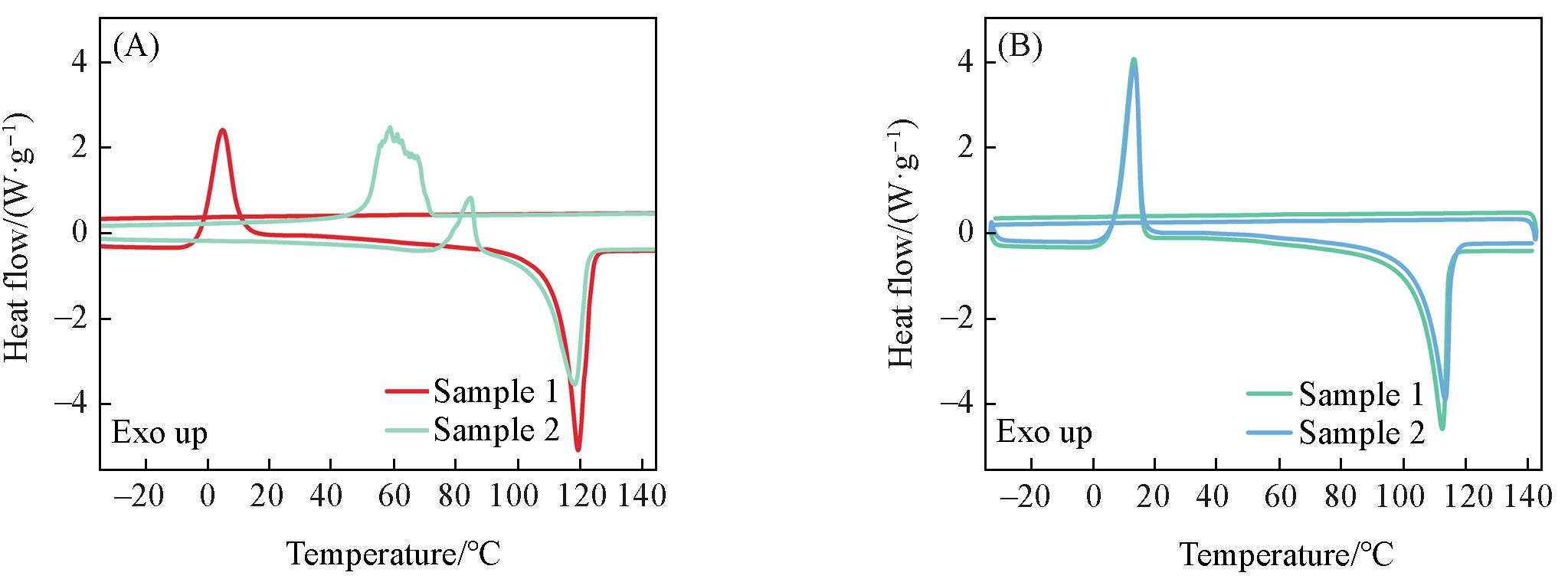
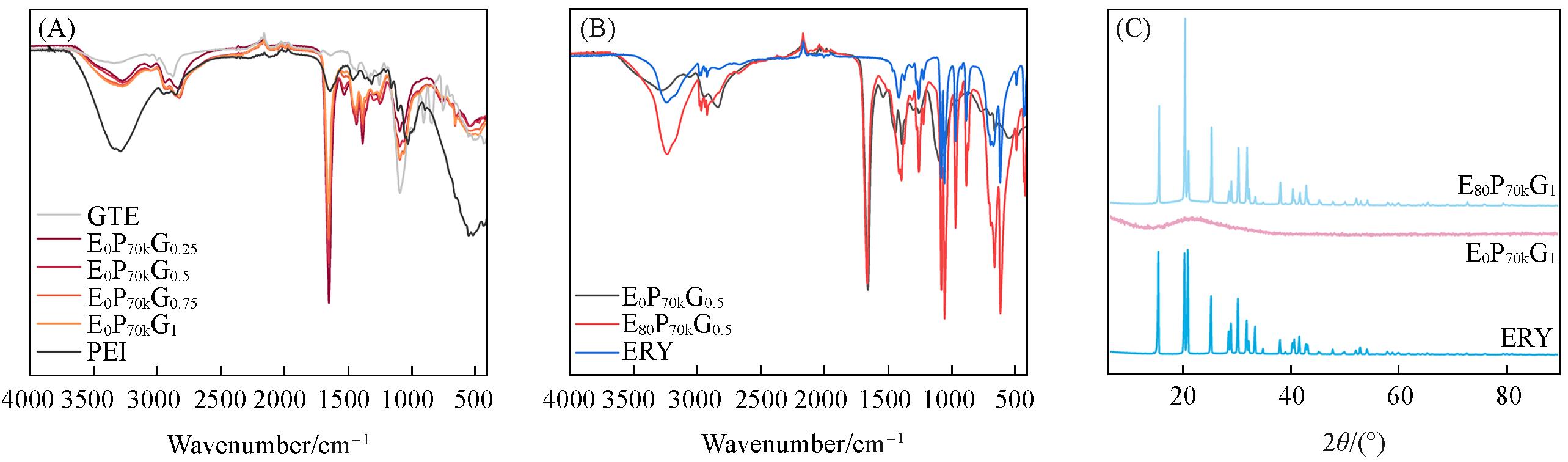
摘要: 本研究构建了一种基于聚乙烯亚胺(PEI)与丙三醇三缩水甘油醚(GTE)的化学交联聚合物网络体系,并以此为载体制备了释热过程可控的赤藓糖醇(ERY)相变复合材料,系统探究了该聚合物网络对ERY过冷稳定性及结晶行为的调控机制。结果表明,聚合物网络通过物理相互作用与ERY结合,ERY能够在网络中保持原有晶体结构。值得注意的是,聚合物网络交联度的增加导致冷结晶温度降低,这一现象与传统理论预期相悖,因为交联度增加意味着网络中-OH基团增多,本应增强与ERY的相互作用,从而提高冷结晶温度。进一步分析发现,聚合物网络中-OH基团之间形成的分子内氢键竞争性地削弱了网络与ERY分子的有效相互作用,从而促进了其本征结晶行为。本研究为深入理解ERY基复合相变材料中分子间相互作用对相变热力学行为的调控规律提供了新的视角和实验依据。

关键词: 赤藓糖醇, 相变材料, 可控相变材料, 分子间相互作用, 聚合物网络

Abstract: In this study, a chemically cross-linked polymer network system based on polyethyleneimine (PEI) and glycerol triglycidyl ether (GTE) was constructed. Using this system as a matrix, erythritol (ERY) phase change composites with controllable heat release behavior were prepared, and the regulatory mechanism of the polymer network on the supercooling stability and crystallization behavior of ERY was systematically investigated. The results show that the polymer network interacts with ERY through physical interactions, and ERY maintains its original crystal structure within the network. Notably, the increase in cross-linking density of the polymer network leads to a decrease in the cold crystallization temperature, which contradicts conventional theoretical expectations, as a higher cross-linking density implies an increase in -OH groups within the network that should enhance interactions with ERY and thereby increase the cold crystallization temperature. Further analysis reveals that intramolecular hydrogen bonds formed among the -OH groups within the polymer network competitively weaken the effective interactions between the network and ERY molecules, thereby promoting its intrinsic crystallization behavior. This study provides a new perspective and experimental basis for in-depth understanding of the regulation of intermolecular interactions on the phase change thermodynamic behavior in ERY-based composite phase change materials.

Key words: Erythritol, Phase change materials, Controllable phase change materials; Molecular interactions, Polymer networks

中图分类号: 

TrendMD: