高等学校化学学报

• 研究论文 • 上一篇    下一篇

Pt/a-C纳米材料电催化2,5-呋喃二甲醇(BHMF)选择性氧化合成2,5-呋喃二甲酸(FDCA)

杨洋1,钱俊2,邓佩锋1,徐晨晖1,刘佳伦1,李亚太1,杨真真1,付明臣1,张根磊1   

  1. 1. 合肥工业大学化学与化工学院 2. 东华工程科技股份有限公司
  • 收稿日期:2026-02-04 修回日期:2026-05-07 网络首发:2026-05-14 发布日期:2026-05-14
  • 通讯作者: 杨真真 E-mail:zzyang@hfut.edu.cn
  • 基金资助:
    东华工程科技股份有限公司研发项目(批准号:W2023JSKF0971)和安徽省自然科学基金(批准号:JZ2024AKZR0546)资助

Electrocatalytic Selective Oxidation of 2,5-Bis(hydroxymethyl)furan (BHMF) to 2,5-Furandicarboxylic Acid (FDCA) over Pt/a-C Nanomaterials

YANG Yang1, QIAN Jun2, DENG Peifeng1, XU Chenhui1, LIU Jialun1, LI Yatai1, YANG Zhenzhen1*, FU Mingchen1*, ZHANG Genlei1*   

  1. 1. School of Chemistry and Chemical Engineering, Hefei University of Technology 2.‌ East China Engineering Science and Technology Co., Ltd.
  • Received:2026-02-04 Revised:2026-05-07 Online First:2026-05-14 Published:2026-05-14
  • Supported by:
    Supported by the Research Fund ofEast China Engineering Science and Technology Co., Ltd.China(No. W2023JSKF0971) and the Natural Science Foundation ofAnhui Province, China(No. JZ2024AKZR0546)

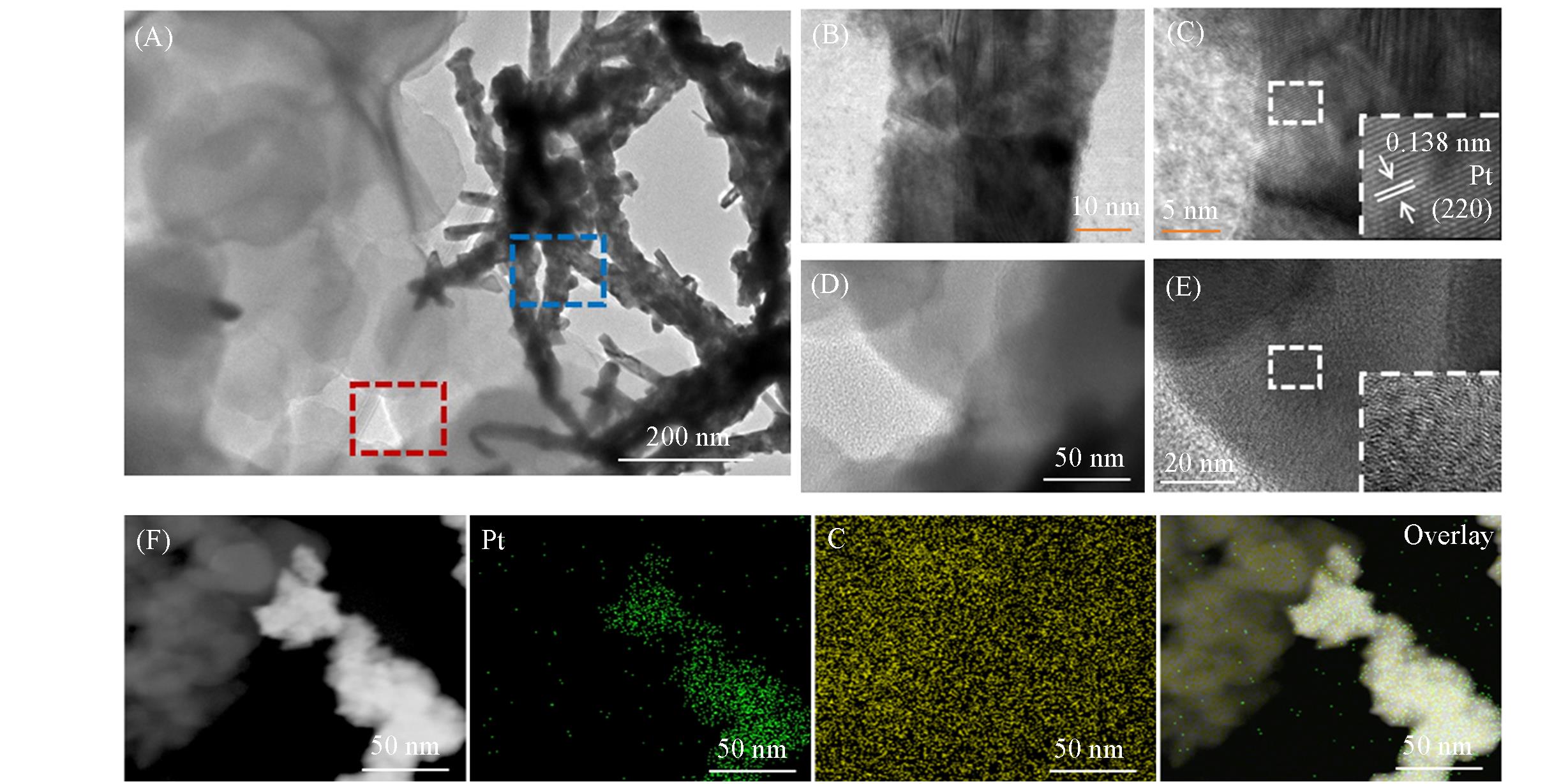
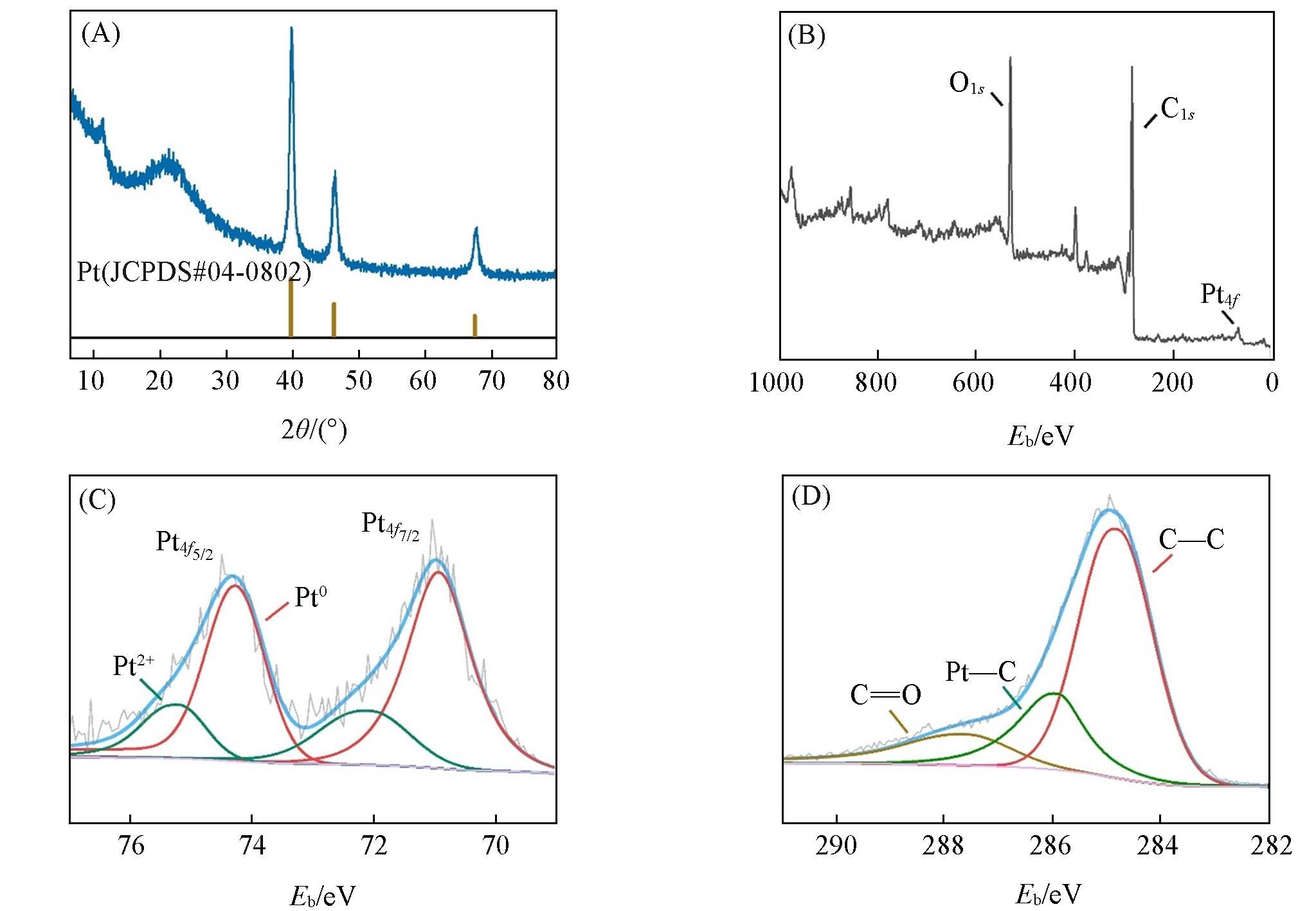
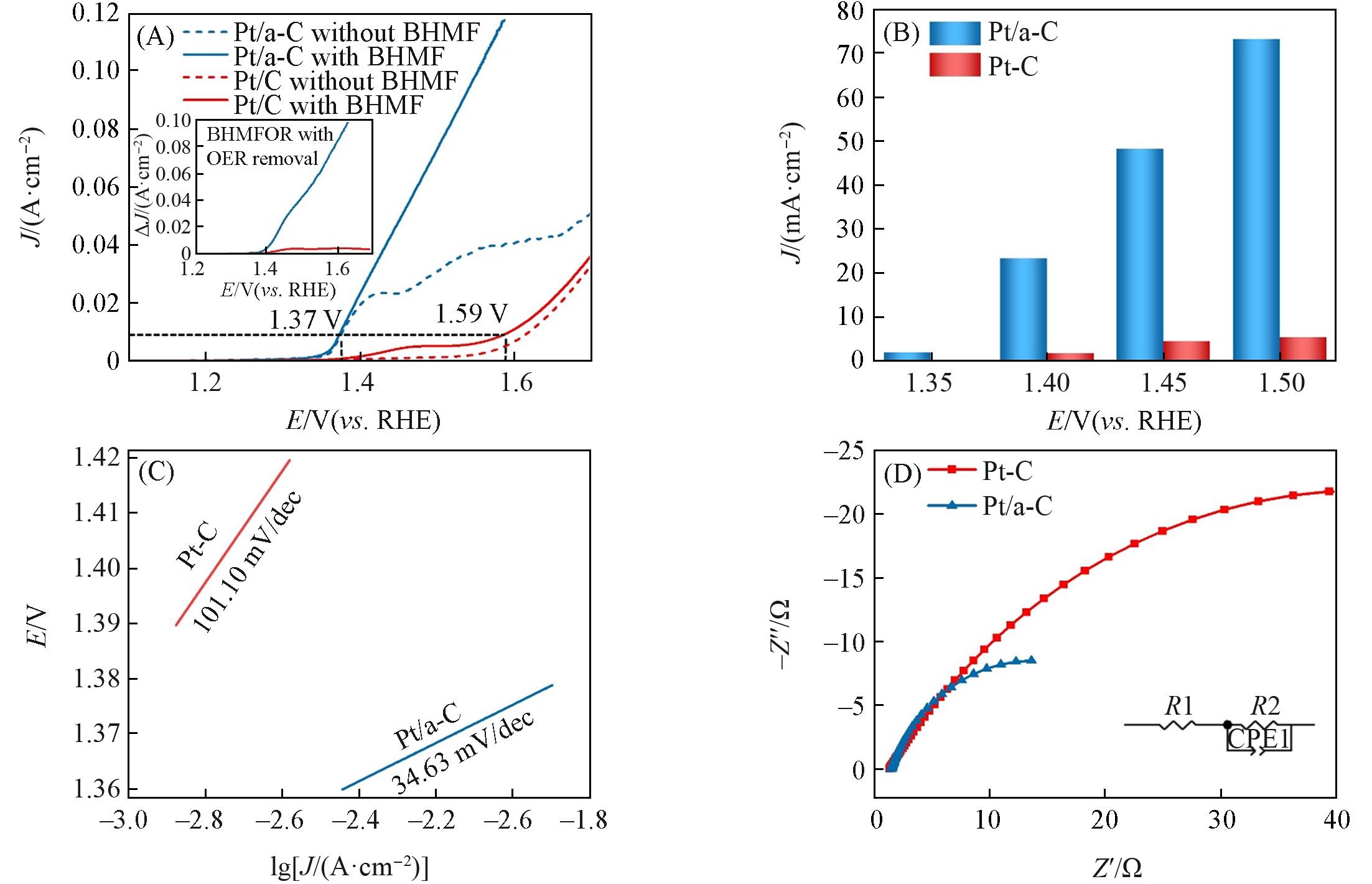
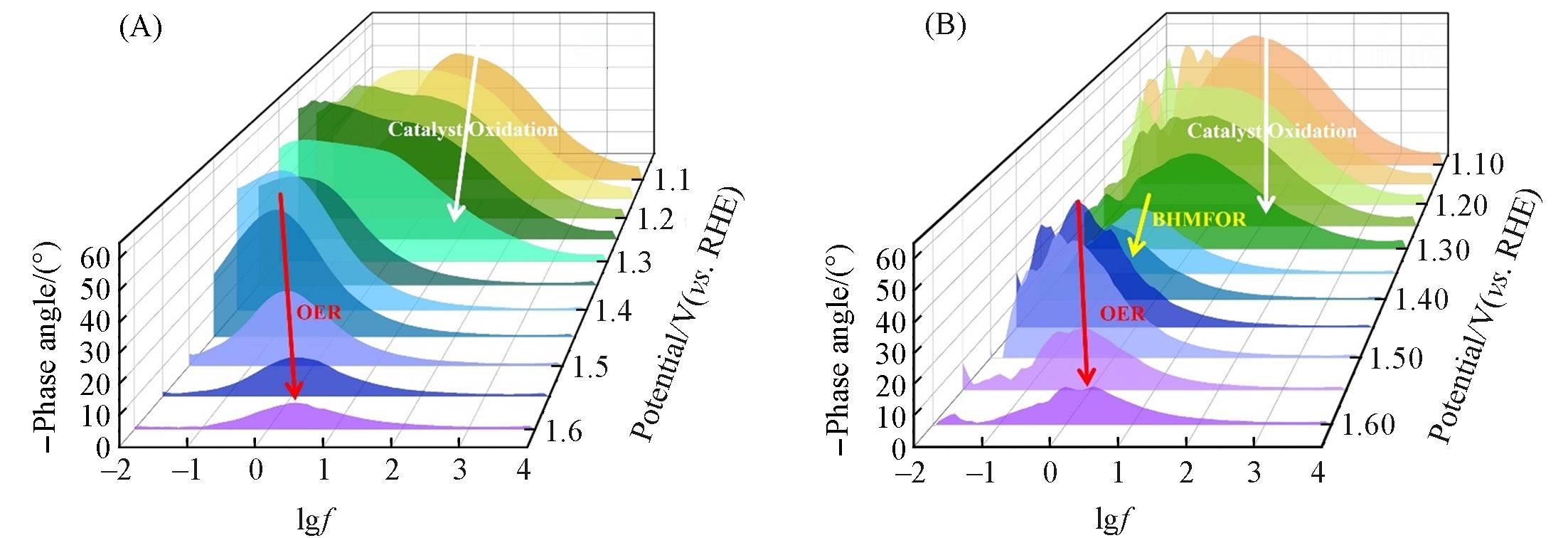
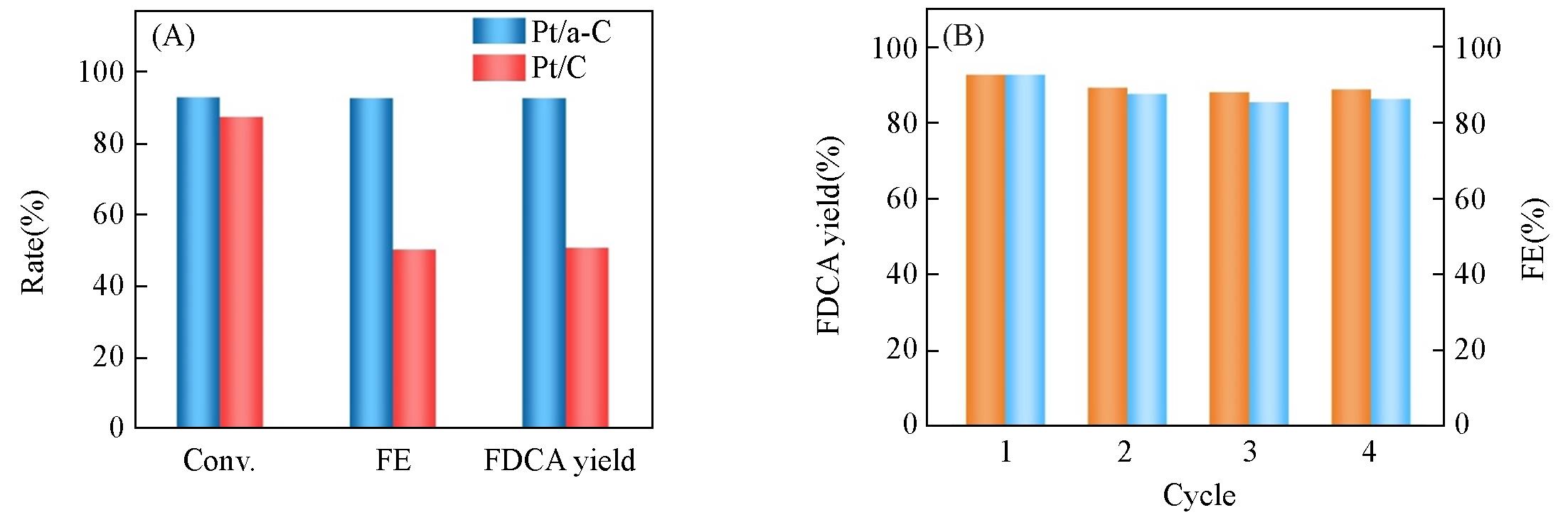
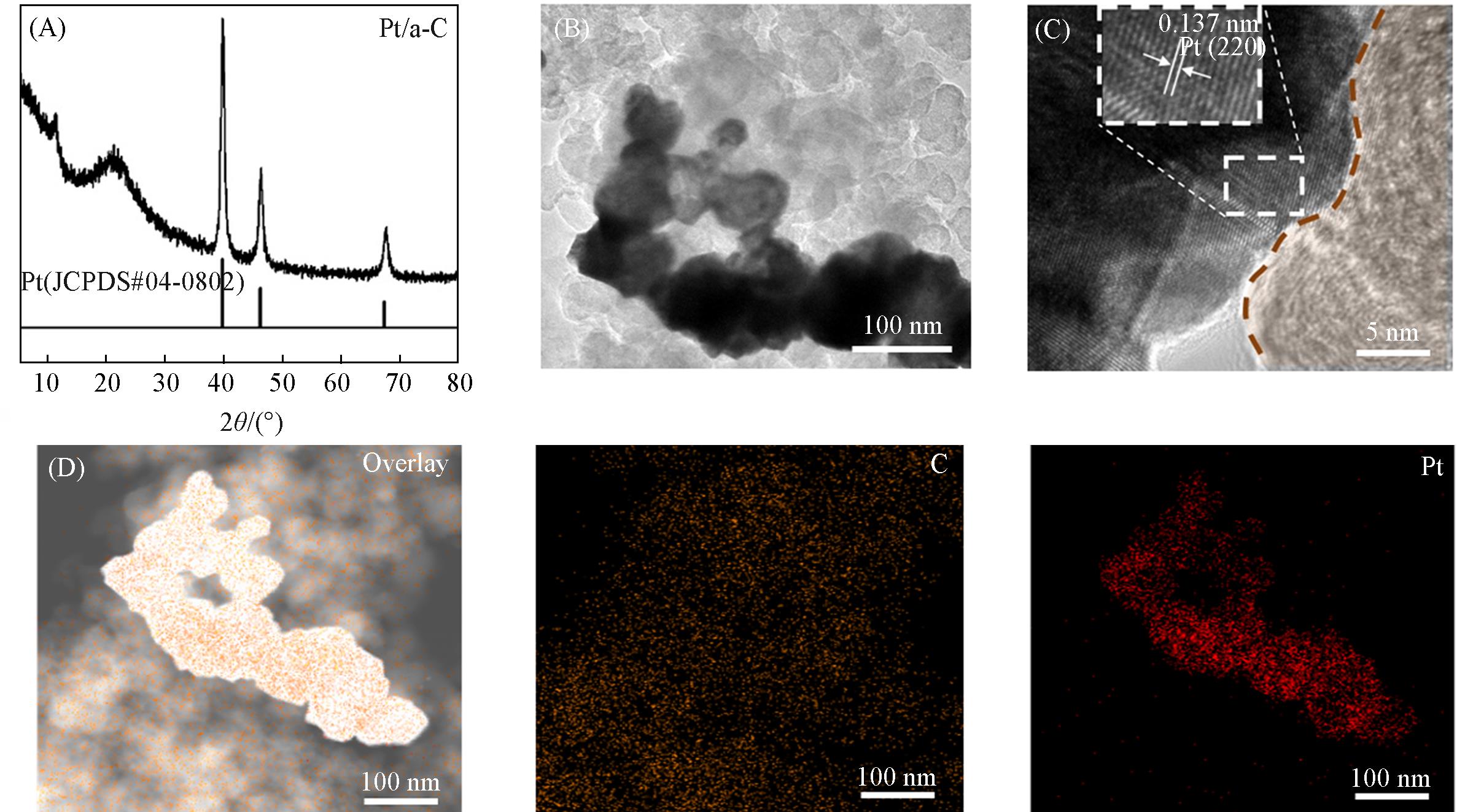
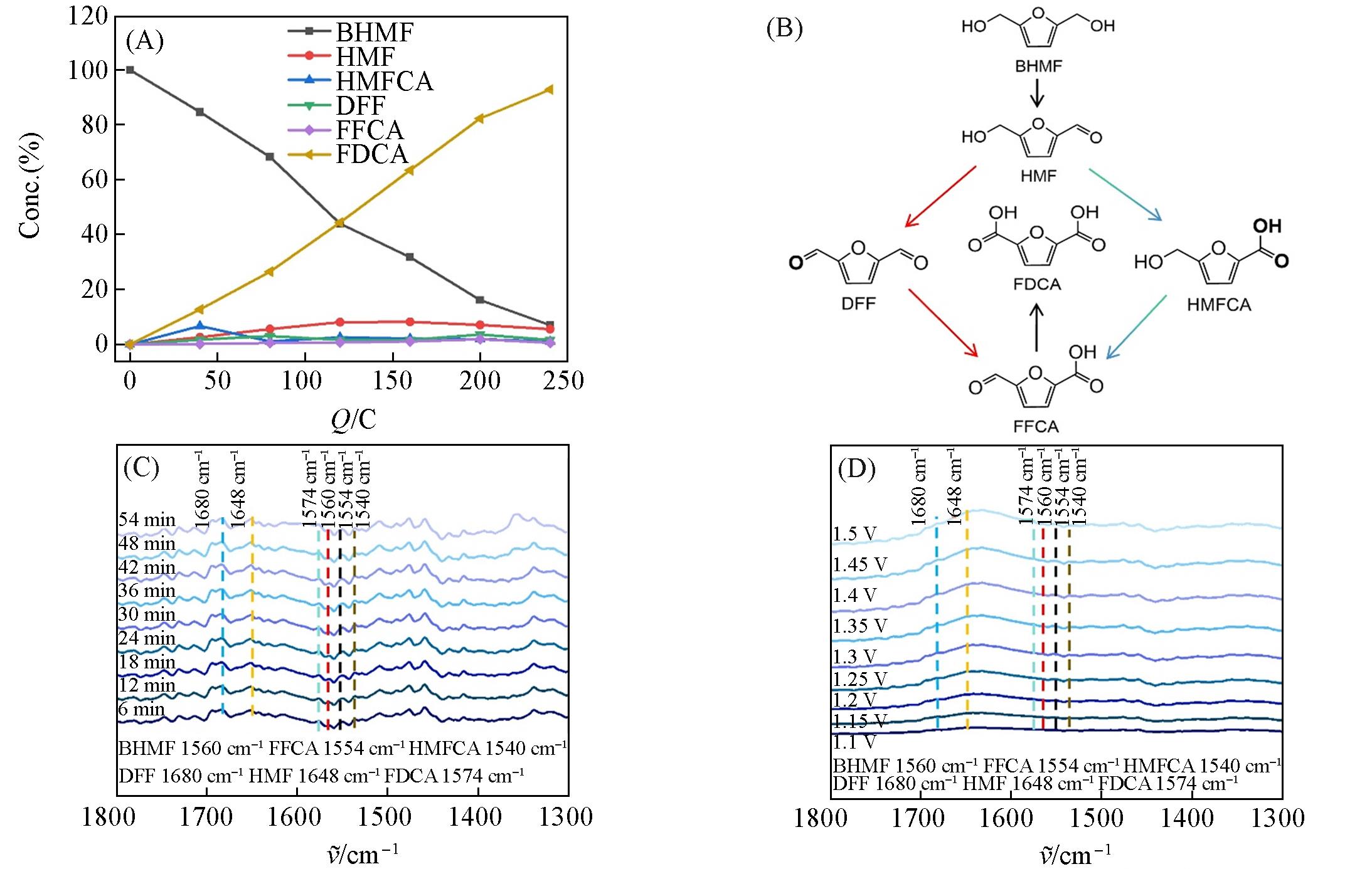
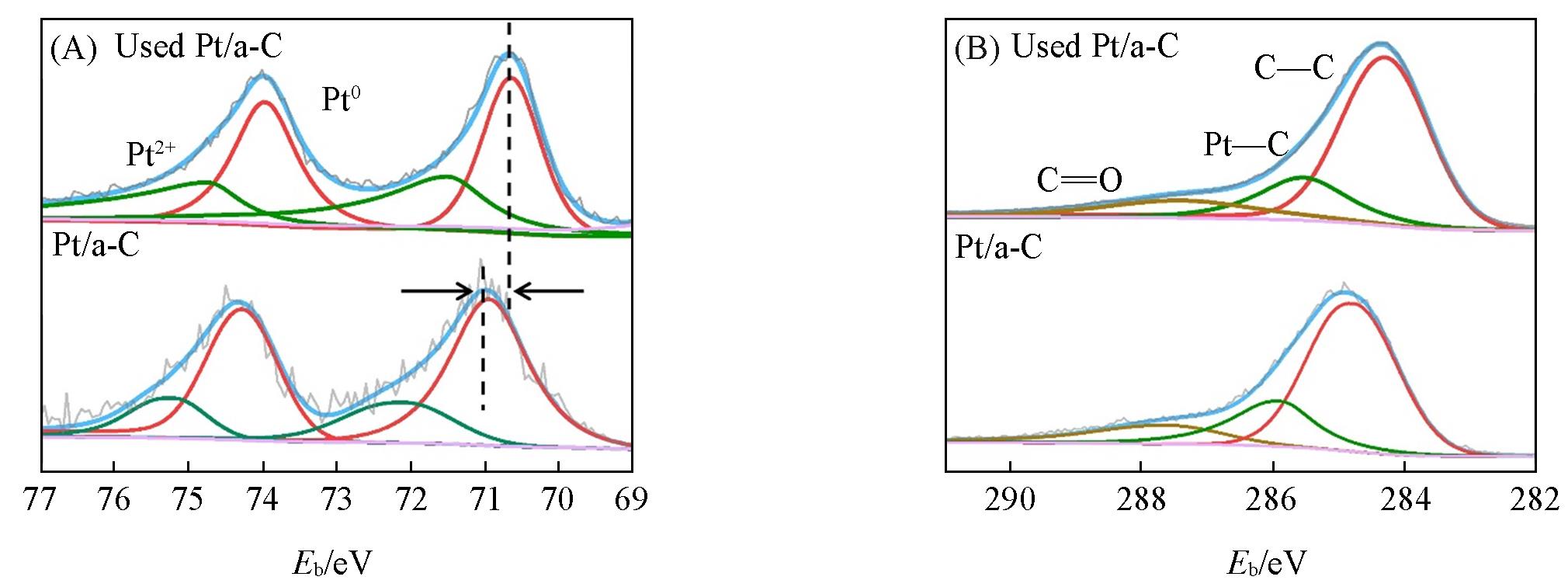
摘要: 2,5-呋喃二甲酸(FDCA)是重要的生物质基平台化合物,其高效合成对生物质高值化利用具有重要意义。本文以稳定性优于5-羟甲基糠醛(HMF)的2,5-呋喃二甲醇(BHMF)为原料,以Pt/无定形碳(Pt/a-C)纳米材料为催化剂,在温和条件下(1.45 V vs. RHE,常温常压)实现了BHMF高效电催化氧化制备FDCA。表征结果表明,Pt以纳米线形式均匀负载于无定形碳载体,并通过Pt-C键形成强界面相互作用。电化学测试显示,Pt/a-C的起始电位较商业Pt/C负移218 mV,Tafel斜率为34.63 mV?dec?1,电荷转移电阻显著降低。在1.45 V电位下,FDCA产率达92.80%,法拉第效率为91.45%,且循环5次后性能保持稳定。机理研究表明,反应遵循"BHMF→羟醛中间体→FDCA"路径,Pt活性中心与载体的协同作用促进了反应动力学。该研究为生物质基FDCA的绿色合成提供了新策略。

关键词: 2,5-呋喃二甲醇, 2,5-呋喃二甲酸, 电催化氧化, Pt/非晶碳, 生物质高值化

Abstract: 2,5-Furandicarboxylic acid (FDCA) is a significant biomass-based platform compound, and its efficient synthesis holds great importance for the high-value utilization of biomass. In this study, 2,5-bis(hydroxymethyl)furan (BHMF), which exhibits superior stability compared to 5-hydroxymethylfurfural (HMF), was used as the feedstock. Employing Pt/amorphous carbon (Pt/a-C) nanomaterials as the catalyst, highly efficient electrocatalytic oxidation of BHMF to FDCA was achieved under mild conditions (1.45 V vs. RHE, room temperature and ambient pressure). Characterization results revealed that Pt was uniformly loaded onto the amorphous carbon support in the form of nanowires, forming a strong electron interaction interface via Pt–C bonds. Electrochemical tests demonstrated that the onset potential of Pt/a-C was negatively shifted by 218 mV compared to commercial Pt/C, with a Tafel slope of 34.63 mV?dec?1 and a significantly reduced charge transfer resistance. At a potential of 1.45 V, the FDCA yield reached 92.80% with a Faradaic efficiency of 91.45%, and the performance remained stable after five cycles. Mechanistic studies indicated that the reaction follows a pathway of "BHMF → aldol intermediate → FDCA," with the synergistic effect between the Pt active sites and the support promoting the reaction kinetics. This research provides a novel strategy for the green synthesis of biomass-based FDCA.

Key words: 5-Hydroxymethylfurfural, 2,5-Furandicarboxylic acid, Electrocatalytic oxidation, Pt/amorphous carbon, High-value utilization of biomass

中图分类号: 

TrendMD: