

高等学校化学学报 ›› 2026, Vol. 47 ›› Issue (6): 20260052.doi: 10.7503/cjcu20260052
李维鑫1,4, 曾玉岚2, 彭志鸿1,4, 陈展飞3,4, 李金秋1,4, 陈仲辉1,4( ), 林振宇2()
收稿日期:2026-01-28
出版日期:2026-06-10
发布日期:2026-03-25
通讯作者:
林振宇
E-mail:zhchen@ptu.edu.cn;zylin@fzu.edu.cn
作者简介:陈仲辉, 男, 博士, 副教授, 主要从事疾病标志物检测技术新方法构建方面的研究. E-mail: zhchen@ptu.edu.cn
基金资助:
LI Weixin1,4, ZENG Yulan2, PENG Zhihong1,4, CHEN Zhanfei3,4, LI Jinqiu1,4, CHEN Zhonghui1,4(), LIN Zhenyu2()
Received:2026-01-28
Online:2026-06-10
Published:2026-03-25
Contact:
LIN Zhenyu
E-mail:zhchen@ptu.edu.cn;zylin@fzu.edu.cn
Supported by:摘要:
电致化学发光(ECL)生物传感因具有高灵敏度、 低背景信号和优良的可控性等特点, 在生物医学分析和临床诊断中展现出巨大的应用潜力. 然而, 传统界面材料组装时普遍存在信号分子易泄漏、 抗生物污染能力不足和痕量目标物信号放大能力有限等问题. 垂直有序介孔二氧化硅薄膜(VMSF)作为一种新型纳米结构材料, 凭借其高度有序、 垂直排列的纳米通道结构, 以及独特的尺寸筛分效应、 电荷选择性、 高比表面积和易修饰性, 为构建新一代高性能ECL生物传感提供了理想界面. 本文探讨了VMSF的结构特性、 主要制备方法及在ECL生物传感中的界面功能化组装策略, 总结了VMSF在小分子、 肿瘤标志物、 核酸、 药物及细胞检测等领域的最新应用进展. 最后, 结合当前研究面临的挑战, 展望了基于VMSF的ECL生物传感未来研究方向.
中图分类号:
TrendMD:
李维鑫, 曾玉岚, 彭志鸿, 陈展飞, 李金秋, 陈仲辉, 林振宇. 垂直有序介孔二氧化硅薄膜用于电致化学发光生物传感的研究进展. 高等学校化学学报, 2026, 47(6): 20260052.
LI Weixin, ZENG Yulan, PENG Zhihong, CHEN Zhanfei, LI Jinqiu, CHEN Zhonghui, LIN Zhenyu. Research Advances in Vertically-ordered Mesoporous Silica Films for Electrochemiluminescence Biosensing. Chem. J. Chinese Universities, 2026, 47(6): 20260052.
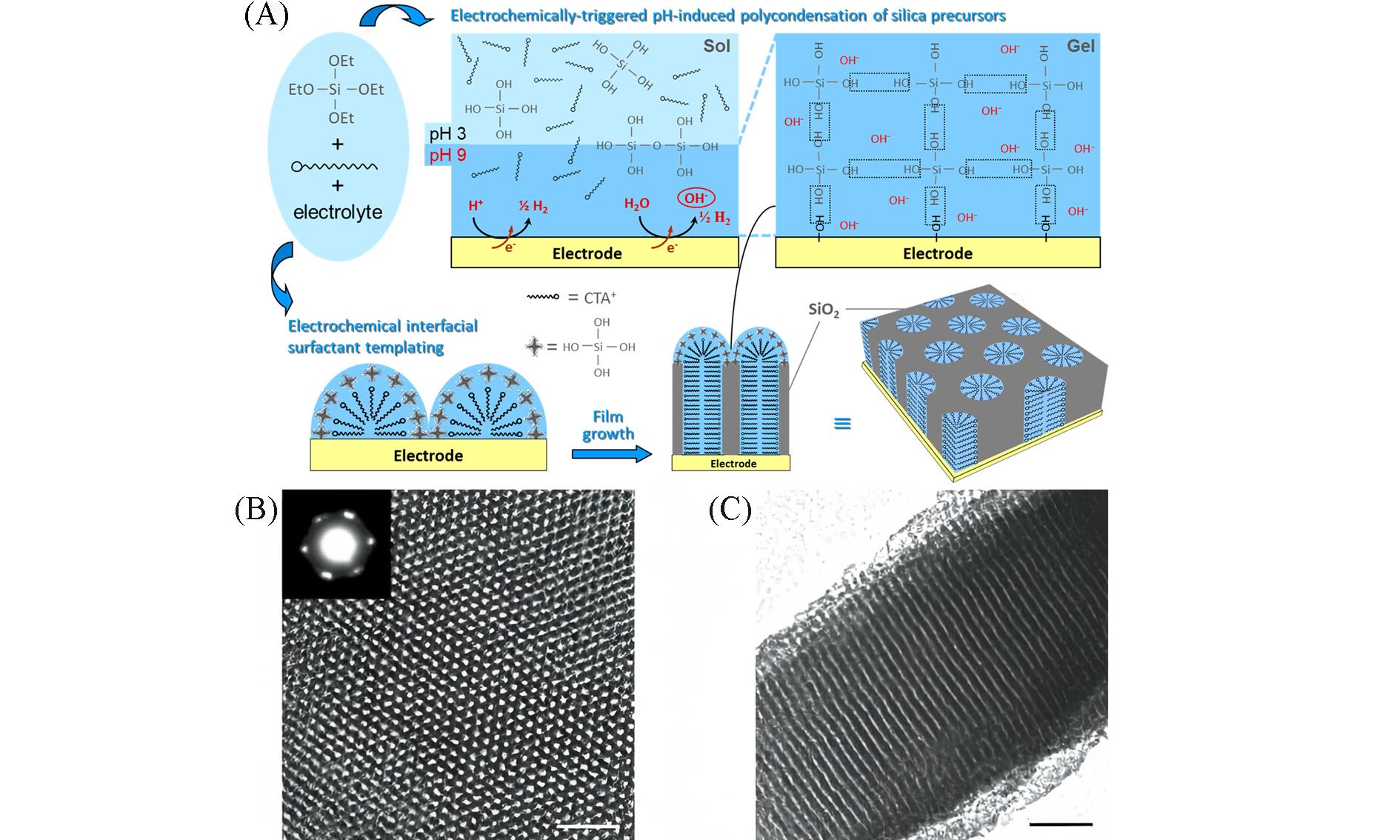
Fig.1 Schematic illustration of the VMSF growth process by the EASA method(A) High⁃magnification top-view[24]; (B) high-magnification cross-sectional view[25]; (C) TEM images of VMSF grown by EASA[25].(A) Copyright 2021, American Chemical Society. (B, C) Copyright 2007, Springer Nature Limited.
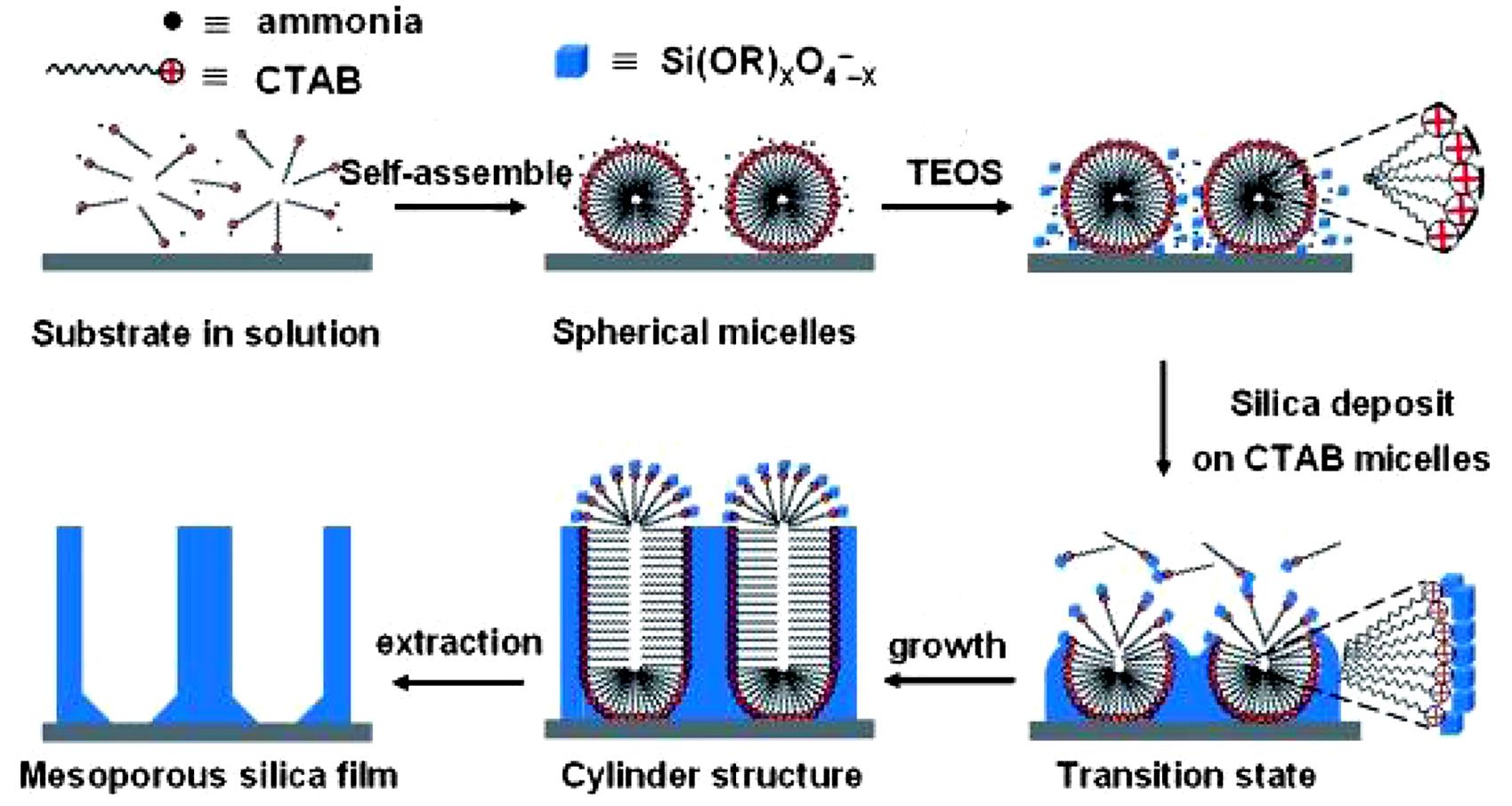
Fig.2 Schematic illustration of the VMSF formation process using the Stöber solution growth method[27]Copyright 2012, WILEY‐VCH Verlag GmbH & Co. KGaA, Weinheim.
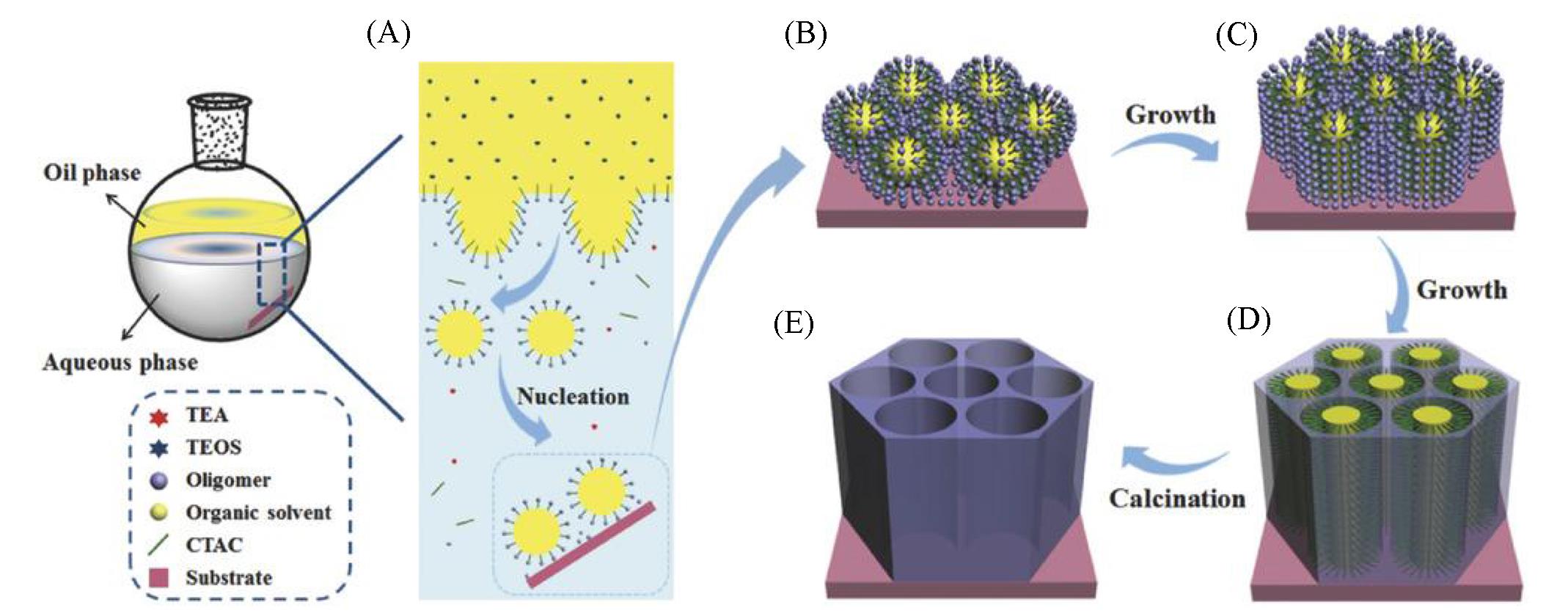
Fig.3 Schematic illustration of the VMSF formation process using the biphasic stratification method[28](A) Formation of the oligomer/surfactant/oil molecule micelles; (B) self⁃assembly of the micelles on the surface of the substrate; (C) structure transition from spherical micelles to cylindrical ones; (D) mesostructured membranes; (E) ordered mesoporous silica thin membranes with perpendicular channels.Copyright 2017, WILEY‐VCH Verlag GmbH & Co. KGaA, Weinheim.
| Item | EASA Method | Stöber Solution Growth Method | Two⁃Phase Stratification Method |
|---|---|---|---|
| Core principle | Through electrochemical reactions, the interface has been rapid condensation and self⁃assembly. | Slow growth directed by template molecules in solution. | Utilizing the interface between the two phases to guide self⁃assembly. |
| Advantages | 1. Fast synthesis rate(from seconds to minutes); 2. High degree of orderliness, and with a regular and neat structure; 3. Easy process control(via potential or current); 4. Suitable for conductive substrates with complex shapes. | 1. Suitable for scalable batch production; 2. Relatively good reproducibility; 3. Applicable to non⁃conductive substrates and conductive substrates. | 1. Wide tunable pore⁃size range; 2. Capable of preparing ultrathin (ca. 50 nm) and uniform films; 3. Great potential for size⁃selective separation. |
| Disadvantages | 1. Limited to conductive substrates; 2. The control range of the film thickness is relatively narrow. | 1. Long growth period; 2. The degree of orderliness of the pore channels is relatively low. | 1. Complex process; 2. The process for large⁃scale production is not yet mature. |
| Synthesis rate | Fast | Slow | Moderate |
| Applicable scenarios | Rapid preparation in the laboratory; construction of high⁃performance electrochemical or ECL sensors. | Large⁃scale, and uniform production | Applications that require precise control of the pore size, such as large molecule separation and advanced separation membranes. |
Table 1 Comparison and summary of the three main preparation methods for VMSF
| Item | EASA Method | Stöber Solution Growth Method | Two⁃Phase Stratification Method |
|---|---|---|---|
| Core principle | Through electrochemical reactions, the interface has been rapid condensation and self⁃assembly. | Slow growth directed by template molecules in solution. | Utilizing the interface between the two phases to guide self⁃assembly. |
| Advantages | 1. Fast synthesis rate(from seconds to minutes); 2. High degree of orderliness, and with a regular and neat structure; 3. Easy process control(via potential or current); 4. Suitable for conductive substrates with complex shapes. | 1. Suitable for scalable batch production; 2. Relatively good reproducibility; 3. Applicable to non⁃conductive substrates and conductive substrates. | 1. Wide tunable pore⁃size range; 2. Capable of preparing ultrathin (ca. 50 nm) and uniform films; 3. Great potential for size⁃selective separation. |
| Disadvantages | 1. Limited to conductive substrates; 2. The control range of the film thickness is relatively narrow. | 1. Long growth period; 2. The degree of orderliness of the pore channels is relatively low. | 1. Complex process; 2. The process for large⁃scale production is not yet mature. |
| Synthesis rate | Fast | Slow | Moderate |
| Applicable scenarios | Rapid preparation in the laboratory; construction of high⁃performance electrochemical or ECL sensors. | Large⁃scale, and uniform production | Applications that require precise control of the pore size, such as large molecule separation and advanced separation membranes. |
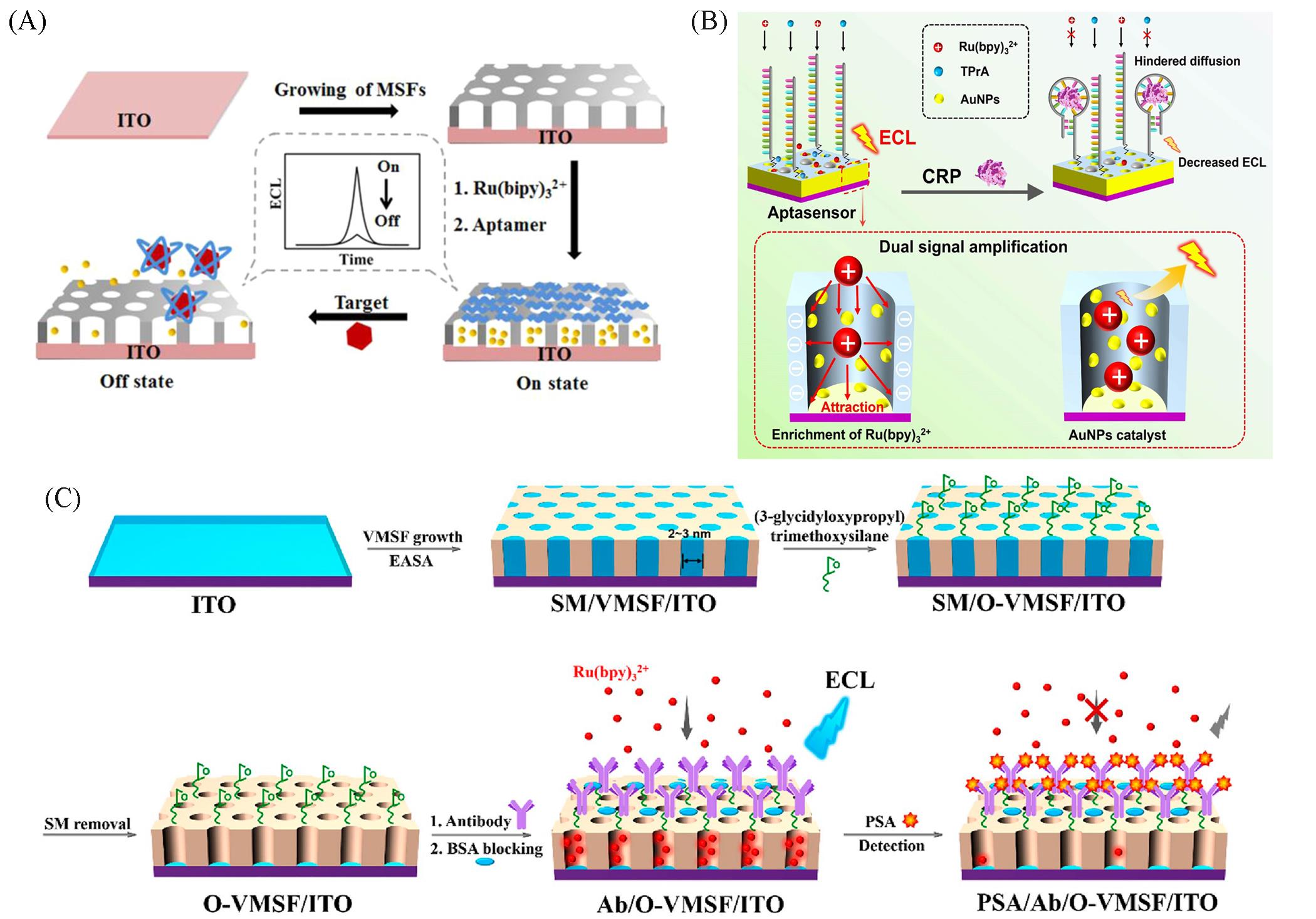
Fig.4 Sensing functionalization strategies based on a single⁃layer VMSF(A) Aptamer⁃gated system based on electrostatic physical adsorption[35]; Copyright 2016, American Chemical Society. (B) Dual signal amplification system based on nanoconfined electrodeposition of Au NPs[36]; Copyright 2023, the authors, Licensee MDPI. (C) Steric hindrance system formed by antibodies covalently immobilized via epoxy groups[37]. Copyright 2022, the authors, Licensee MDPI
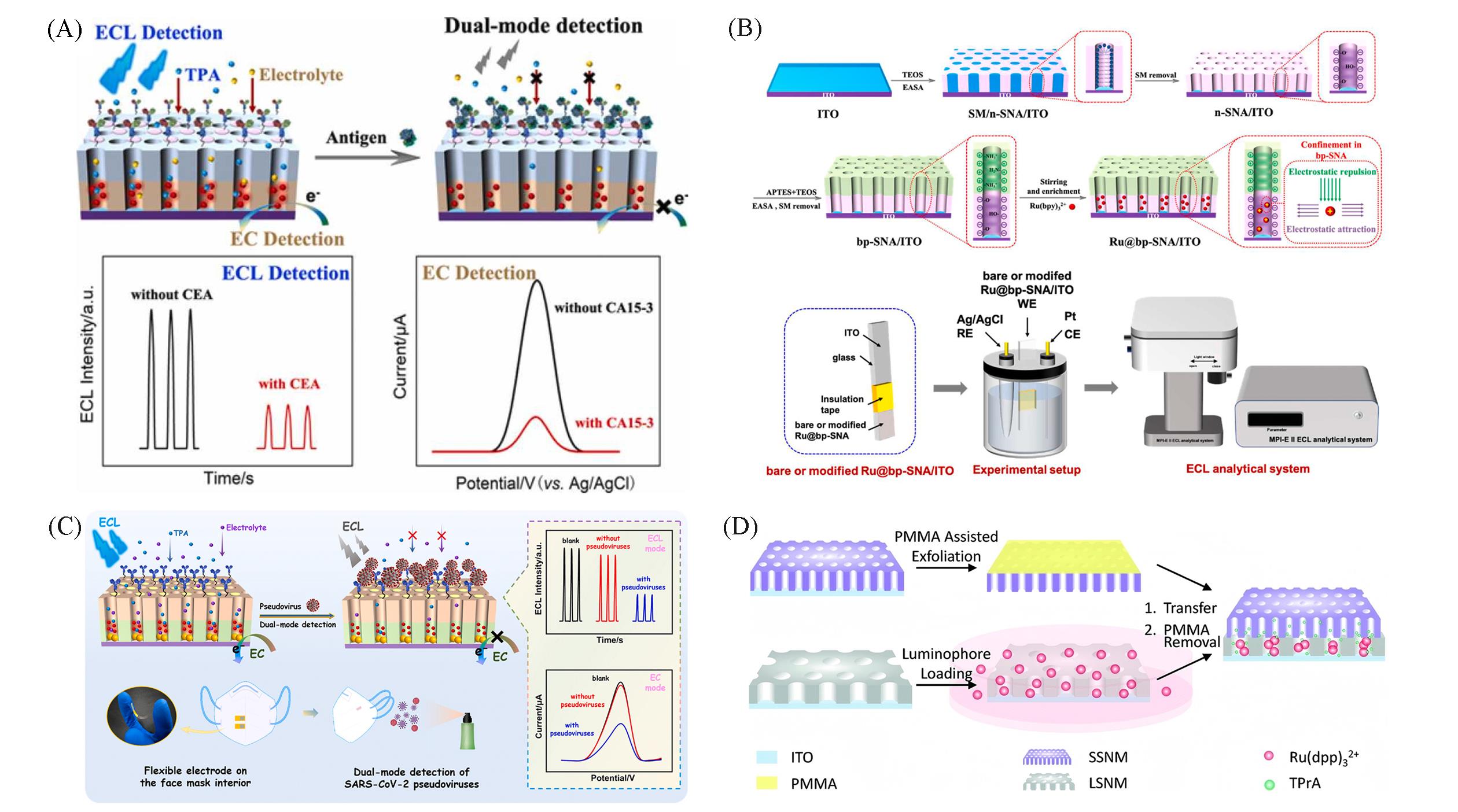
Fig.5 Design of biosensors based on double⁃layer VMSF(A) Construction of a dual-mode sensing platform based on asymmetrically charged double-layer VMSF for the detection of CEA and CA15-3[38]. Copyright 2022, Elsevier B.V.; (B) Solid-state ECL platform based on bp-VMSF for SARS-CoV-2 antibody detection[39]. Copyright 2022, Elsevier B.V.; (C) High-sensitivity ECL/EC detection platform for SARS-CoV-2 virus based on Ru(bpy)₃²⁺ and Au NPs confined in bp-VMSF[40]. Copyright 2024, Elsevier B.V.; (D) Specific detection of live-cell DA using a double-layer VMSF nanocage based on pore-size differentiation[41], Copyright 2020, the Royal Society of Chemistry.
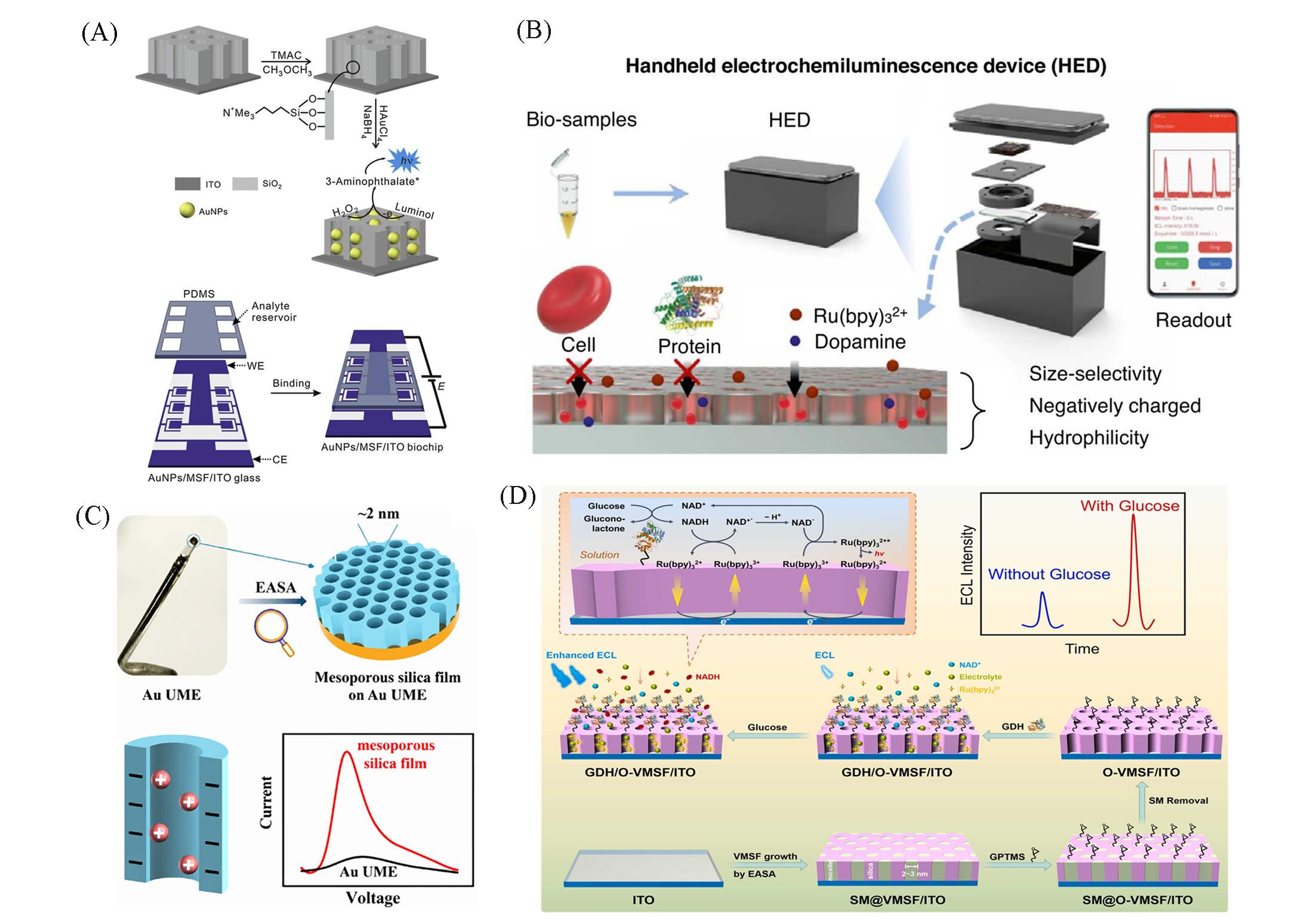
Fig.6 Schematic diagram of small⁃molecule biosensor designs based on VMSF(A) VMSF-confined Au NPs catalyze H₂O₂ to enhance luminol ECL for the visual detection of H₂O₂ in live cells[42]. Copyright 2019, Elsevier B.V.; (B) VMSF-modified electrode combined with the Ru(bpy)₃²⁺-TPrA system utilizes the DA quenching effect for its sensitive detection[43]. Copyright 2024, Elsevier B.V.; (C) high-sensitivity and anti-interference detection of DA in complex serum based on VMSF nanoconfinement and charge selectivity[44]. Copyright 2022, Elsevier B. V. (D) immobilization of GDH within VMSF to catalyze NADH generation, enhancing Ru(bpy)₃²⁺ ECL signal for ultrasensitive glucose detection[45]. Copyright 2024, Elsevier B.V.
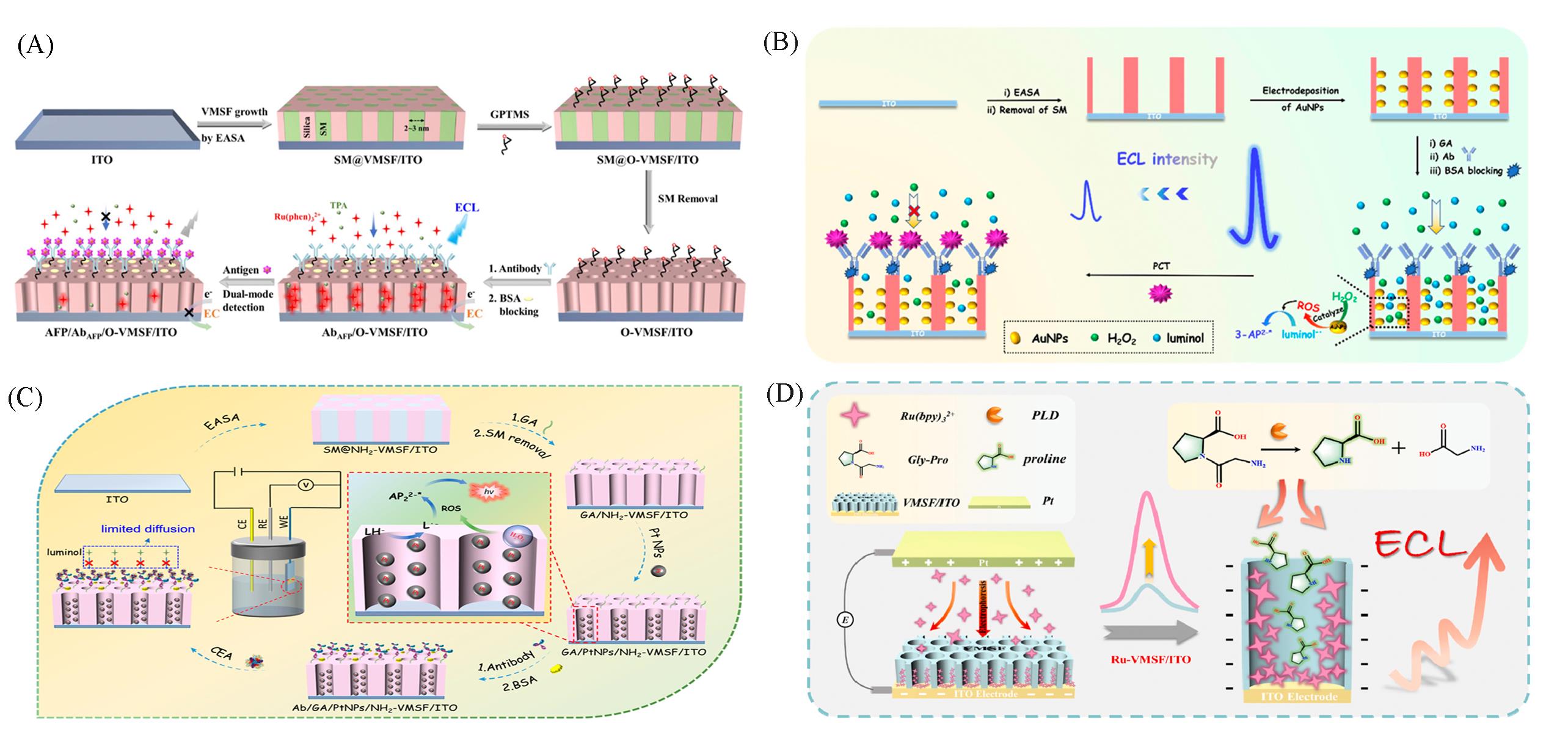
Fig.7 Schematic diagrams of ECL biosensors based on VMSF for tumor biomarker detection(A) Dual-mode ECL/EC sensor based on Ru(phen)₃²⁺ enrichment and antibody covalent immobilization for ultrasensitive detection of AFP[47]. Copyright 2022, Creative Commons Attribution License. (B) ECL sensor based on Au NPs confined within the nanochannels for detection of PCT[48]. Copyright 2023, Creative Commons Attribution License. (C) ECL sensor based on Pt NPs confined within the nanochannels for detection of CEA[49]; Copyright 2023, the authors, Licensee MDPI. (D) Solid-state ECL sensor based on Ru(bpy)32⁺ confined in VMSF combined with a prolidase-catalyzed reaction for detection of prolidase activity[50]. Copyright 2024, Elsevier B.V.
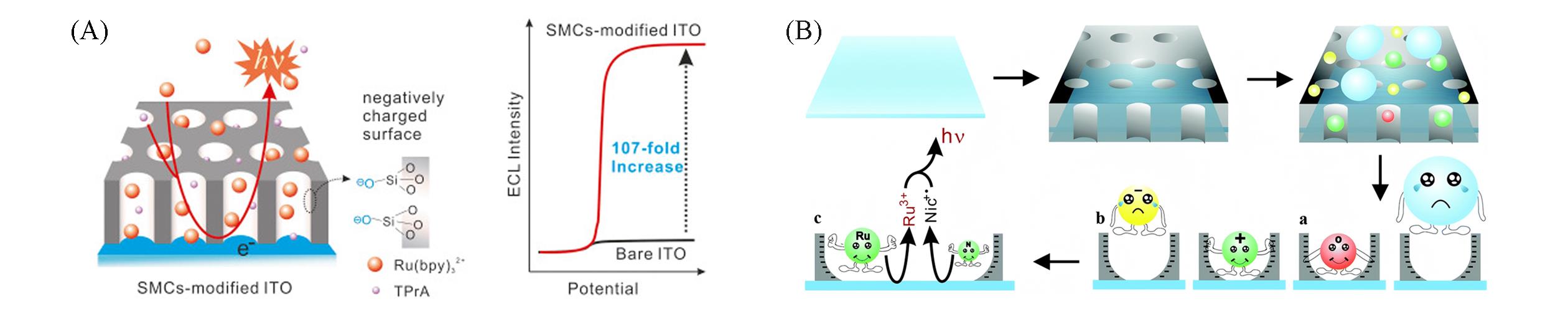
Fig.8 Schematic diagrams of the application of VMSF⁃based ECL sensors in drug detection(A) Schematic illustrating the significant enhancement of ECL analytical sensitivity based on the mass transport enhancement of the co-reactant TPrA by VMSF[52]. Copyright 2015, Elsevier B.V.; (B) EC/ECL sensor based on a VMSF-modified electrode for the detection of nicotine[53]. Copyright 2020, Elsevier B. V.
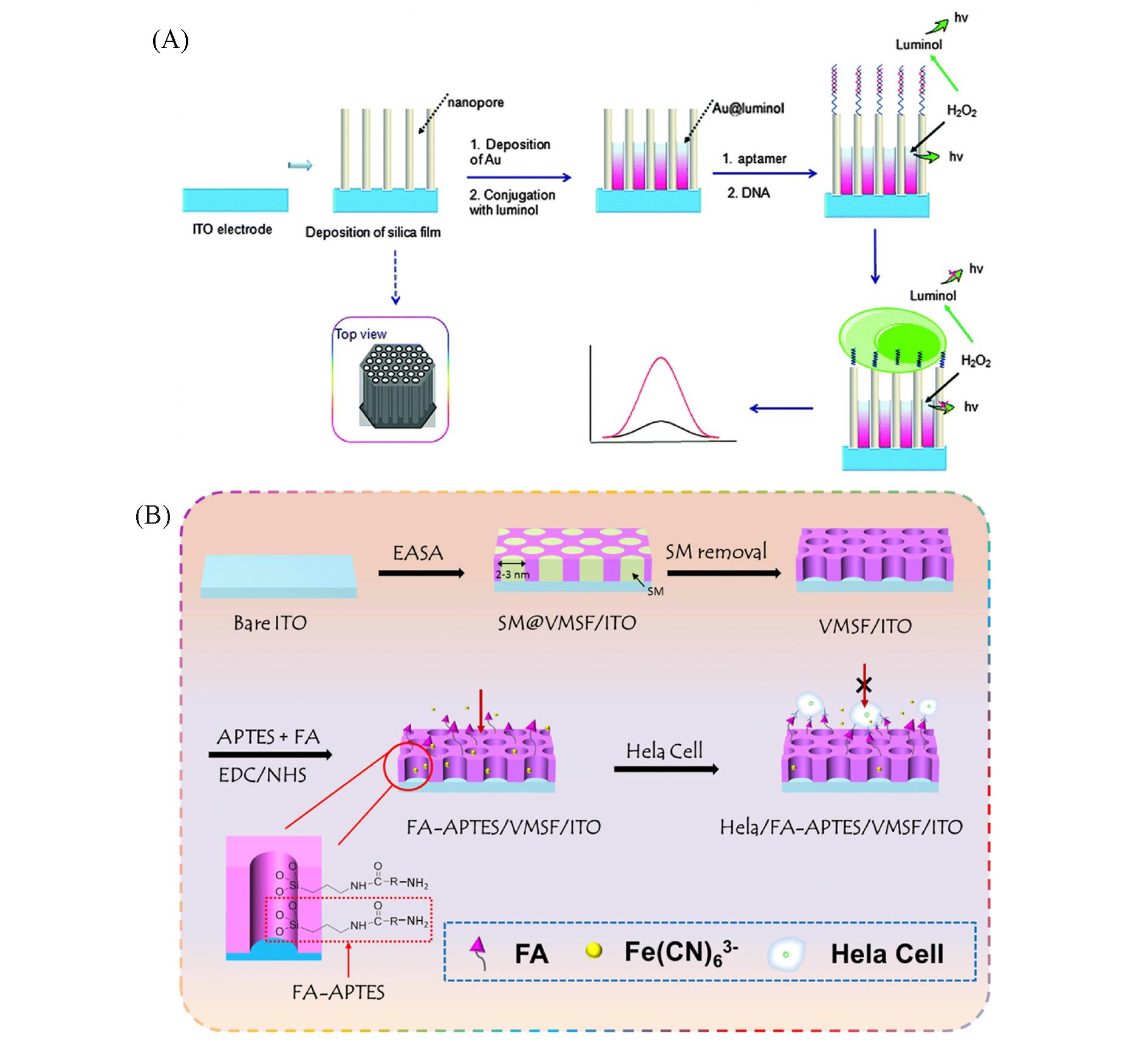
Fig.9 Schematic diagrams of VMSF⁃based ECL biosensors for cancer cell detection(A) Detection of HeLa cells based on the specific recognition of cell surface receptors by folate-functionalized[58]; Copyright 2023, Creative Commons Attribution License. (B) cancer cell detection achieved by using VMSF as a template to confine Au NPs and immobilize an aptamer for binding HL-60 cells[59]. Copyright 2015, the Royal Society of Chemistry.
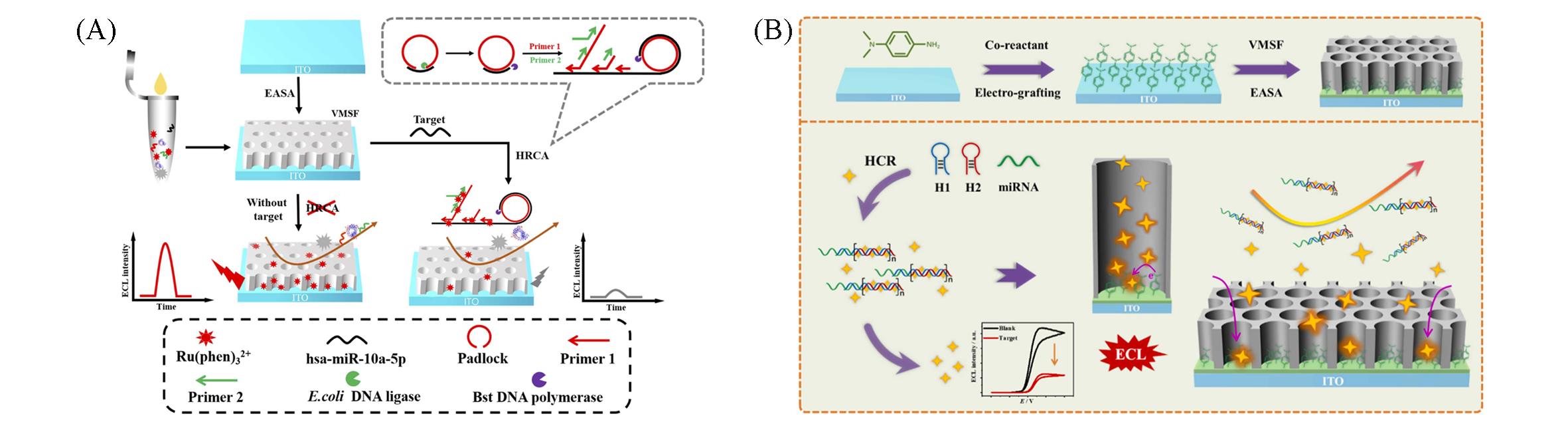
Fig.10 Schematic diagrams of two types of signal⁃quenching ECL biosensors based on VMSF(A) ECL biosensor utilizing synergistic HRCA for the detection of hsa-miR-10a-5p[62]. Copyright 2025, Elsevier B.V.; (B) ultrasensitive ECL biosensor coupled with HCR for the detection of miRNA-21[63]. Copyright 2023, Elsevier B.V.
| [1] | Hercules D. M., Science, 1964, 145(3634), 808—809 |
| [2] | Santhanam K. S. V., Bard A. J., J. Am. Chem. Soc., 1965, 87(1), 139—140 |
| [3] | Zhang R., Hu S., Ma C., Zhang T., Li H., TrAC, Trends Anal. Chem., 2024, 181, 117992 |
| [4] | Kotova A. A., Thiebaut D., Vial J., Tissot A., Serre C., Coord., Chem. Rev., 2022, 455, 214364 |
| [5] | Venga M. T., Figueiredo E. C., Anal. Chem., 2024, 96(14), 5519—5526 |
| [6] | Chen X., Zhang D., Liu Q., Liu S., Li H., Li Z., Anal. Chem., 2023, 95(18), 7354—7362 |
| [7] | Zhao M., Wang M., Zhang X., Zhu Y., Cao J., She Y., Cao Z., Li G., Wang J., Abd El⁃Aty A. M., Crit. Rev. Food Sci. Nutr., 2023, 63(21), 4942—4965 |
| [8] | Muzyka K., Saqib M., Liu Z., Zhang W., Xu G., Biosens. Bioelectron., 2017, 92, 241—258 |
| [9] | Yu J., Stankovic D., Vidic J., Sojic N., Sens. Diagn., 2024, 3, 1887—1898 |
| [10] | Meng X., Pang X., Yang J., Zhang X., Dong H., Small, 2024, 20(22), 2307701 |
| [11] | Xu X., Lu S., Zhang Z., Langmuir, 2024, 40(20), 10718—10725 |
| [12] | Liu R., Wang X., Wang S., Xie L., Zhao P., Li L., Ge S., Yu J., Anal. Chim. Acta, 2024, 1287, 342125 |
| [13] | Li H., Yang S., Wang D., Chen B., Chang Y., Li Z. X., Guo C., Coord. Chem. Rev., 2026, 546, 217080 |
| [14] | Song Y., Tao X., Liang W., Zhong X., Yuan R., Zhuo Y., Chin. Chem. Lett., 2023, 34(6), 107957 |
| [15] | Chen Q. L., Zhou X. M., Zhao M. L., Chai Y. Q., Yuan R., Zhong X., Zhuo Y., Anal. Chem., 2024, 96(28), 11383—11389 |
| [16] | Tao X. L., Pan M. C., Yang X., Yuan R., Zhuo Y., Chin. Chem. Lett., 2022, 33(11), 4803—4807 |
| [17] | He Y. T., Li H. X., Fan X. Y., Yu M. H., Zhang J. J., Chem. J. Chinese Universities, 2026, 47(3), 20250333 |
| 何雨桐, 李涵希, 范晓燕, 于美慧, 张冀杰. 高等学校化学学报, 2026, 47(3), 20250333 | |
| [18] | Zhang T., Yang L., Yan F., Wang K., Biosensors, 2023, 13(6), 628 |
| [19] | Yan F., Lin X., Su B., Analyst, 2016, 141(12), 3482—3495 |
| [20] | Fan X., Wu J., Zhang T., Liu J., ChemBioChem, 2024, 25(21), e202400320 |
| [21] | Cho J., Ishida Y., Adv. Mater., 2017, 29(25), 1605974 |
| [22] | Zheng Y., Yang J., Liu, Z., Qiao Z. A., Adv. Mater., 2025, 37(43), e10911 |
| [23] | Sabaté del Río J., Henry O. Y. F., Jolly P., Ingber D. E., Nat. Nanotechnol., 2019, 14(12), 1143—1149 |
| [24] | Walcarius A., Acc. Chem. Res., 2021, 54(18), 3563—3575 |
| [25] | Walcarius A., Sibottier E., Etienne M., Ghanbaja J., Nat. Mater., 2007, 6(8), 602—608 |
| [26] | Goux A., Etienne M., Aubert E., Lecomte C., Ghanbaja J., Walcarius A., Chem. Mater., 2009, 21(4), 731—741 |
| [27] | Teng Z., Zheng G., Dou Y., Li W., Mou C. Y., Zhang X., Asiri A. M., Zhao D., Angew. Chem. Int. Ed., 2012, 51(9), 2173—2177 |
| [28] | Liu Y., Shen D., Chen G., Elzatahry A. A., Pal M., Zhu H., Wu L., Lin J., Al Dahyan D., Li W., Zhao D. Y., Adv. Mater., 2017, 29(35), 1702274 |
| [29] | Huang J., Zhang T., Dong G., Zhu S., Yan F., Liu J., Front. Chem., 2022, 10, 900282 |
| [30] | Giordano G., Vilà N., Aubert E., Ghanbaja J., Walcarius A., Electrochim. Acta, 2017, 237, 227—236 |
| [31] | Tian X., Tang L., Zeng Y., Chen Z., Qiu B., Lin Z., Chen H., Anal. Chem., 2025, 97(46), 25888—25898 |
| [32] | He K., Wang H., Luo T., Yan F., Guo J., Front. Chem., 2024, 12, 1490940 |
| [33] | An J., Zhang C., Yan F., Ma P., Microchem. J., 2024, 206, 111413 |
| [34] | Huang J., Zhang T., Zheng Y., Liu J., Biosensors, 2023, 13(3), 317 |
| [35] | Liu J., He D., Liu Q., He X., Wang K., Yang X., Shangguan J., Tang J., Mao Y., Anal. Chem., 2016, 88(23), 11707—11713 |
| [36] | Ma N., Xu S., Wu W., Liu J., Molecules, 2023, 28(22), 7664 |
| [37] | Ma K., Zheng Y., An L., Liu J., Front. Chem., 2022, 10, 851178 |
| [38] | Gong J., Zhang T., Chen P., Yan F., Liu J., Sens. Actuators. Chem., 2022, 368, 132086 |
| [39] | Gong J., Zhang T., Luo T., Luo X., Yan F., Tang W., Liu J., Biosens. Bioelectron., 2022, 215, 114563 |
| [40] | Zhang T., Gong J., Han Q., Hu W., Yan F., Liu J., Talanta, 2024, 277, 126319 |
| [41] | Ding H., Guo W., Zhou P., Su B., Chem. Commun., 2020, 56(59), 8249—8252 |
| [42] | Lyu Z. M., Zhou X. L., Wang X. N., Li P., Xu L., Liu E. H., Sens. Actuators. Chem., 2019, 284, 437—443 |
| [43] | Zhu L., Fu W., Chen J., Li S., Xie X., Zhang Z., Liu J., Zhou L., Su B., Chen X., Sens. Actuators. Chem., 2022, 366, 131972 |
| [44] | Huang J., Zhou H., Zou Y., Liu H., Chen Q., Analyst, 2024, 149(16), 4208—4212 |
| [45] | Huang J., Xu S., Yan F., Liu J., Sens. Actuators. Chem., 2024, 402, 135119 |
| [46] | Gao J., Zhang S., Xi F., Molecules, 2025, 30(3), 746 |
| [47] | Chen H., Huang J., Zhang R., Yan F., Front. Chem., 2022, 10, 23998 |
| [48] | Chang Q., Gu X., He L., Xi F., Front. Chem., 2023, 11, 1274424 |
| [49] | Zhang H., Zhang C., Qu H., Xi F., Molecules, 2023, 28(18), 6559 |
| [50] | Yang W., Xu J., Yao Q., Xu X., Chen X., Ni J., Wang Q., Lin Z., Biosens. Bioelectron., 2024, 247, 115967 |
| [51] | Li J., Yao X., Ma J., Liu C., Hong W., Wu H., Li M., Guo L. H., Analyst, 2025, 150(6), 1048—1065 |
| [52] | Zhou Z., Guo W., Xu L., Yang Q., Su B., Anal. Chim. Acta, 2015, 886, 48—55 |
| [53] | Xiao Y., Chen S., Zhang G., Li Z., Xiao H., Chen C., He C., Zhang R., Yang X., Analyst, 2020, 145(14), 4806—4814 |
| [54] | Guo W., Lin X., Yan F., Su B., ChemElectroChem, 2016, 3(3), 480—486 |
| [55] | Rahmati S., Emili A., Cancers, 2025, 17(2), 179 |
| [56] | Ahn J. C., Teng P. C., Chen P. J., Posadas E., Tseng H. R., Lu S. C., Yang J. D., Hepatology, 2021, 73(1), 422—436 |
| [57] | Nasrollahpour H., Mahdipour M., Isildak I., Rashidi M. R., Naseri A., Khalilzadeh B., Biosens. Bioelectron., 2021, 178, 113023 |
| [58] | Zeng Z., Zhao Y., Yang L., Xi F., Su D., Front. Chem., 2023, 11(12), 22067 |
| [59] | Wu M. S., Sun X. T., Zhu M. J., Chen H. Y., Xu J. J., Chem. Commun., 2015, 51(74), 14072—14075 |
| [60] | Jafari A., Karimabadi K., Rahimi A., Rostaminasab G., Khazaei M., Rezakhani L., Jouybari T. A., Technol. Cancer Res. Treat., 2023, 22, 1—18 |
| [61] | Guo X., Yang S., Cao C., Li D., Mol. Clin. Oncol., 2025, 23(2), 71 |
| [62] | Zeng R., Tian S. H., Wang J., Chen B., Pu Y., Tan Y., Yuan Y., Lin Z. Y., Wang W., Sens. Actuators Chem., 2025, 425, 137006 |
| [63] | Xu J., Yang W. Q., Ni J., Wang Q., Lin Z., Sens. Actuators Chem., 2023, 397, 134694 |
| [1] | 代志江, 单腾腾, 李益和, 杨建梅, 赵焱. 基于多足DNA步行器和主客体技术的可再生电化学生物传感器用于心梗microRNA的高灵敏检测[J]. 高等学校化学学报, 2026, 47(3): 20250255. |
| [2] | 王丹丹, 陈礼平, 封心建. 基于三维枝状TiO2纳米阵列的三相酶催化反应界面及高效光电化学传感[J]. 高等学校化学学报, 2026, 47(1): 20250330. |
| [3] | 杨延梅, 冉雨晴, 王存. 氧化石墨烯铽配合物电致化学发光体合成及四环素的灵敏检测[J]. 高等学校化学学报, 2025, 46(3): 20240361. |
| [4] | 江博文, 陈敬轩, 成永华, 桑微, 寇宗魁. 单原子材料在电化学生物传感中的研究进展[J]. 高等学校化学学报, 2022, 43(9): 20220334. |
| [5] | 王君旸, 刘争, 张茜, 孙春燕, 李红霞. DNA银纳米簇在功能核酸荧光生物传感器中的应用[J]. 高等学校化学学报, 2022, 43(6): 20220010. |
| [6] | 赵恒智, 余方志, 李翔菲, 李乐乐. 基于DNA与上转换纳米颗粒相结合的生物传感与成像研究进展[J]. 高等学校化学学报, 2022, 43(12): 20220626. |
| [7] | 卢美如, 张宏宇, 石百媚, 孙茂忠, 徐丽广, 胥传来, 匡华. 手性纳米材料: 生物成像、 生物传感与治疗[J]. 高等学校化学学报, 2022, 43(12): 20220683. |
| [8] | 徐梦祎, 黄雪雯, 李小杰, 魏玮, 刘晓亚. “串珠状”复合纳米组装体修饰丝网印刷电极构建的生物传感器[J]. 高等学校化学学报, 2021, 42(6): 1768. |
| [9] | 汪灿, 王殿宇, 苗伟宁, 田野. 基于超亲水纳米通道的智能可控微反应器[J]. 高等学校化学学报, 2021, 42(4): 1276. |
| [10] | 辛伟闻, 闻利平. 二维材料用于渗透能转换的研究进展[J]. 高等学校化学学报, 2021, 42(2): 445. |
| [11] | 王博东, 潘美辰, 卓颖. 二氧化硅纳米颗粒表面原位还原银纳米簇电化学发光传感界面的构建与分子识别[J]. 高等学校化学学报, 2021, 42(11): 3519. |
| [12] | 王庆, 何雨秋, 王富安. 多功能脱氧核酶用于生物医学分析的研究进展[J]. 高等学校化学学报, 2021, 42(11): 3334. |
| [13] | 席京, 陈娜, 杨雁冰, 袁荃. 长余辉纳米材料的控制合成及在疾病诊断中的应用[J]. 高等学校化学学报, 2021, 42(11): 3247. |
| [14] | 张嘉懿, 丁臻尧, 王丹丹, 陈礼平, 封心建. 基于多孔金结构的三相界面酶电极的制备及高效电化学酶传感性能[J]. 高等学校化学学报, 2021, 42(10): 3167. |
| [15] | 袁中文, 贺利贞, 陈填烽. 单原子催化剂的生物医学应用[J]. 高等学校化学学报, 2020, 41(12): 2690. |
| 阅读次数 | ||||||
|
全文 |
|
|||||
|
摘要 |
|
|||||
