高等学校化学学报

• 研究论文 • 上一篇    下一篇

机器学习驱动的中药银杏叶SERS多维度鉴定

马其林1,5#, 吴叶2#, 汤丹旸3, 杨茂生1,5, 徐国富1, 杨帆5, 石嘉5, 姚建铨4   

  1. 1. 皖西学院电气与光电工程学院

    2. 合肥联科微纳科技有限公司

    3. 杭州先导医药科技有限公司

    4. 天津大学精密仪器与光电子工程学院 5. 天津市光电检测技术与系统重点实验室

  • 收稿日期:2026-01-26 修回日期:2026-03-08 网络首发:2026-03-10 发布日期:2026-03-10
  • 通讯作者: 马其林 E-mail:qilinma@wxc.edu.cn
  • 基金资助:
    安徽省高等学校科学研究项目 (批准号:2024AH051986)和天津市光电检测技术与系统重点实验室开放课题(批准号:2025LODTS112, 2025LODTS106)资助

Machine-Learning-Driven Multidimensional Identification of Traditional Chinese Medicine Ginkgo Folium Using SERS

MA Qilin1, 5#, Wu Ye2#, Tang Danyang3, Yang Maosheng1, 5, Xu Guofu1, YANG Fan5, SHI Jia5, Yao Jianquan4   

  1. 1. School of Electrical and Optoelectronic Engineering, West Anhui University

    2. Hefei Linke Micro-Nano Technology Co., Ltd.

    3. Hangzhou Leading Pharmatech Co., Ltd.

    4. School of Precision Instrument and Opto-Electronics Engineering, Tianjin University 5. Tianjin Key Laboratory of Optoelectronic Detection Technology and System

  • Received:2026-01-26 Revised:2026-03-08 Online First:2026-03-10 Published:2026-03-10
  • Contact: Qi-Lin MA E-mail:qilinma@wxc.edu.cn
  • Supported by:
    Supported by the Scientific Research Project of Universities in Anhui Province (No. 2024AH051986) and the Open Project of Tianjin Key Laboratory of Optoelectronic Detection Technology and System(No. 2025LODTS112, 2025LODTS106)

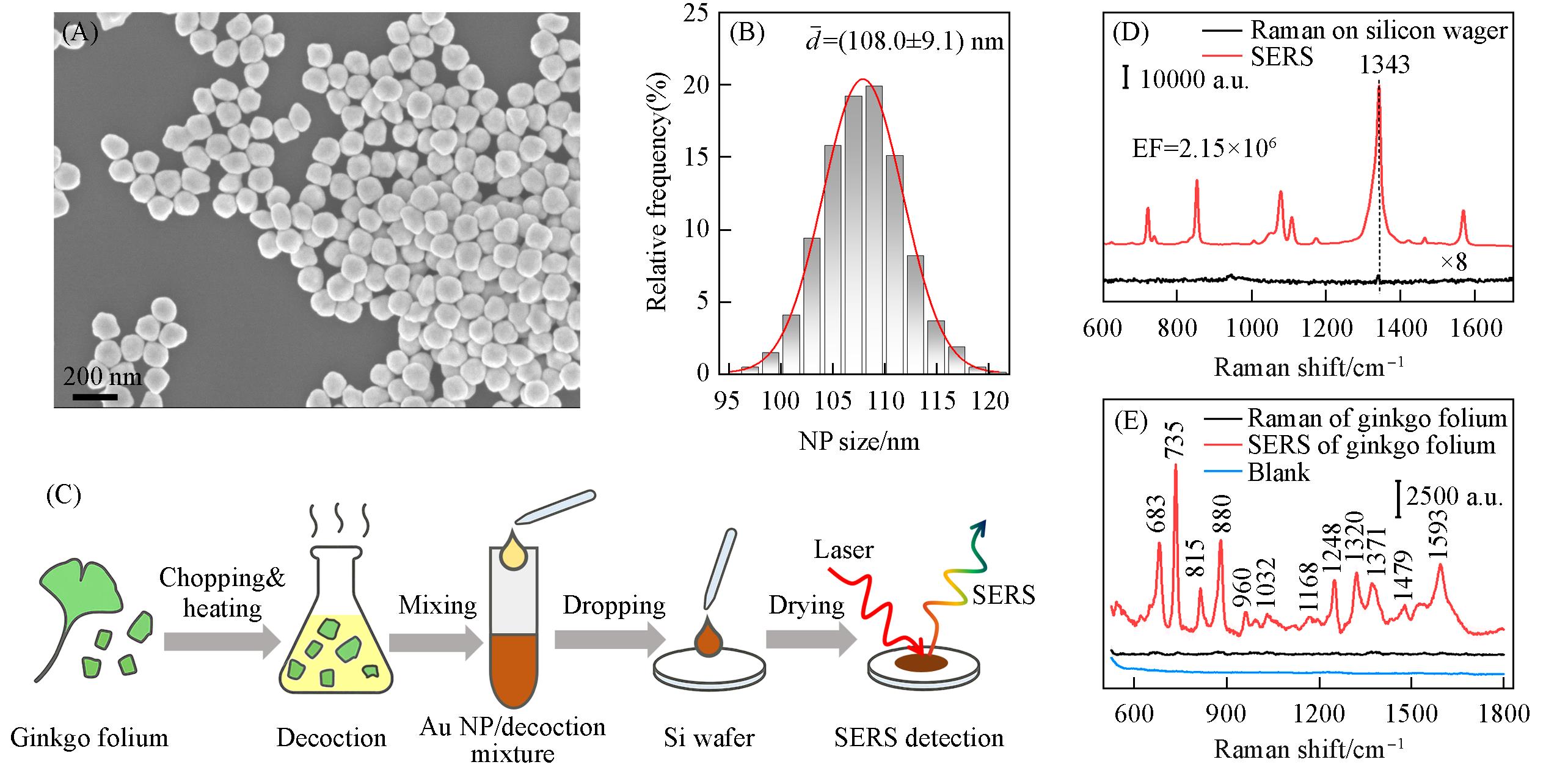
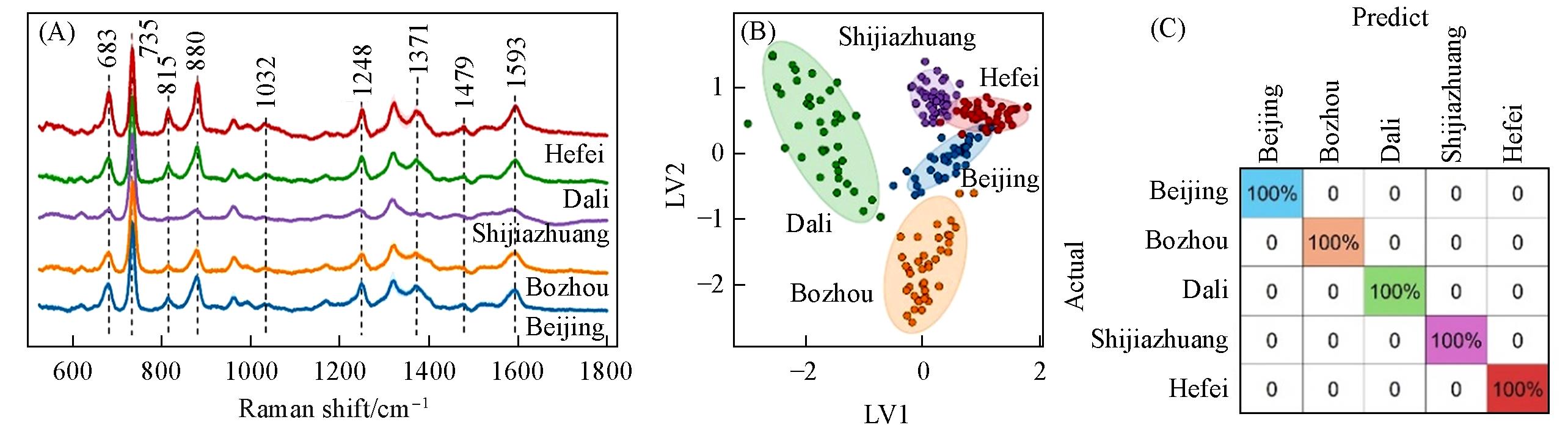
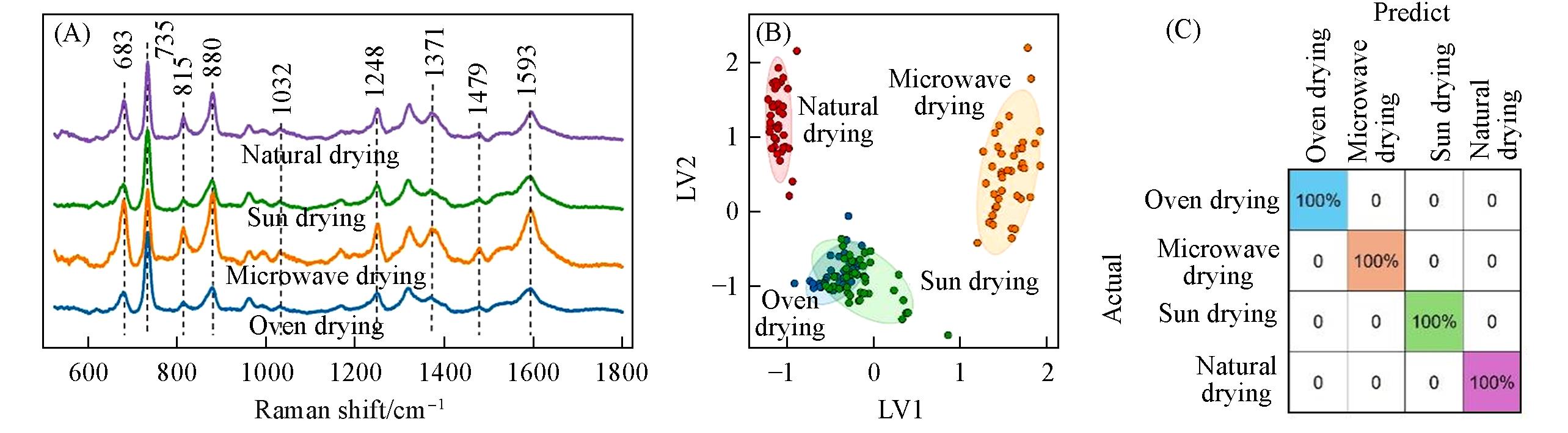
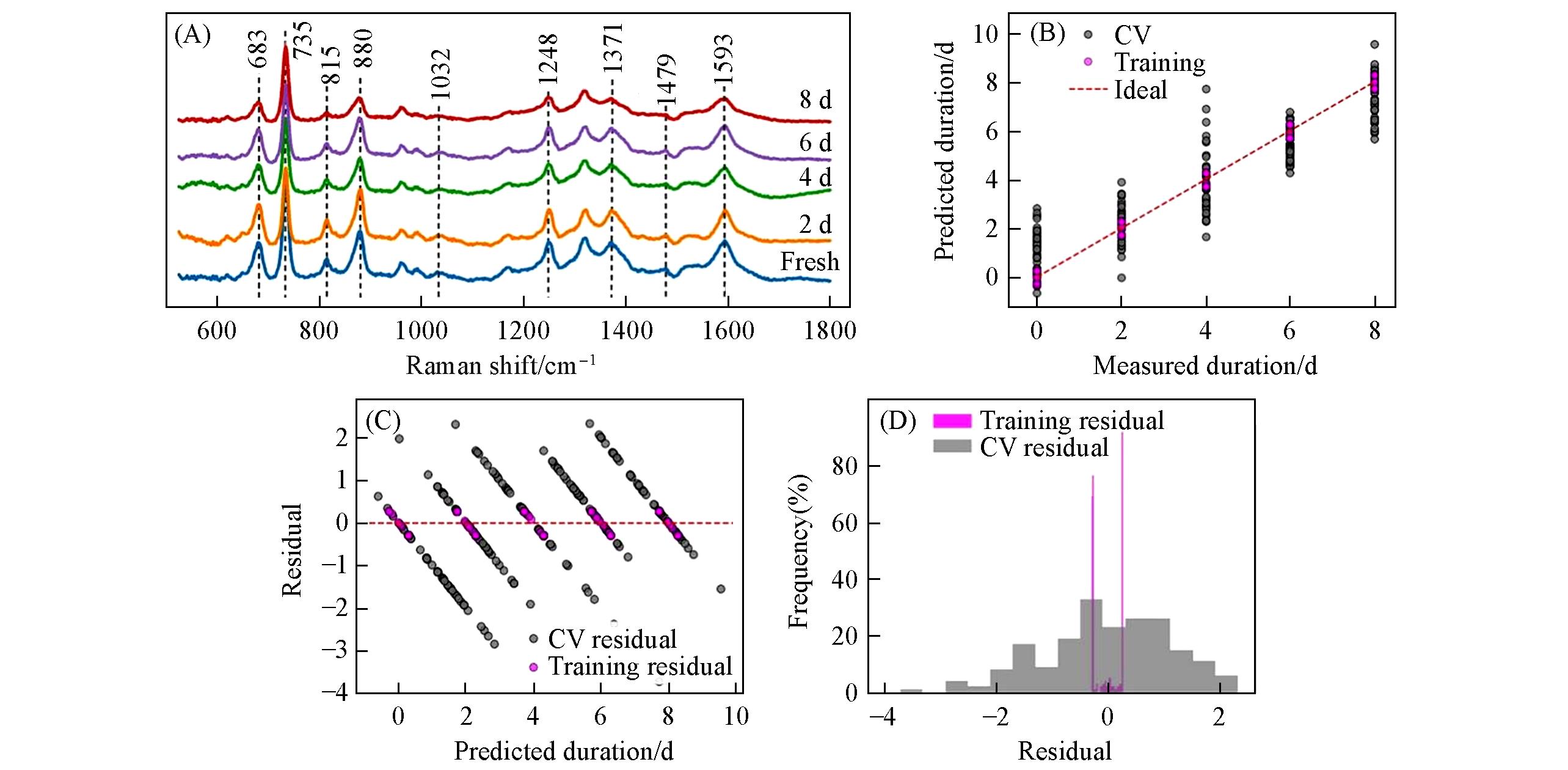
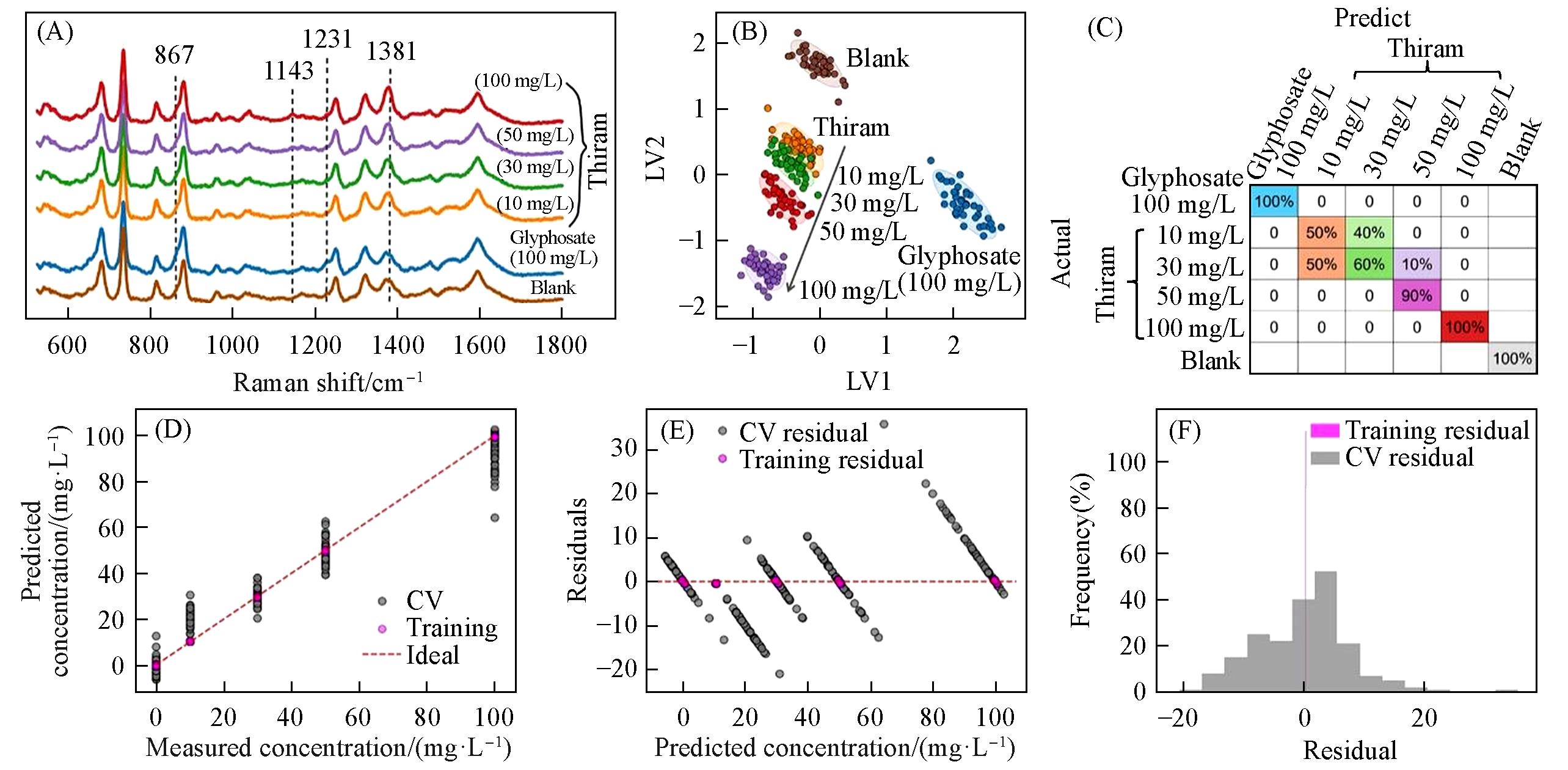
摘要: 本文建立了一种基于表面增强拉曼光谱(SERS)结合机器学习的银杏叶(Ginkgo Folium)多维鉴别策略, 从产地、干燥工艺、贮藏品质及农药残留四个维度开展系统研究, 实现了银杏叶的智能分类与质量判别. 结果显示, 银杏叶提取液的SERS光谱具有典型的黄酮类(槲皮素、山奈酚、异鼠李素)和银杏内酯特征峰. 基于SERS结合偏最小二乘判别分析(PLS-DA)模型, 对来自五个产地及四种干燥方式的银杏叶样品均实现了100%的分类准确率, 表明产地差异与干燥工艺均对其化学组成产生显著影响. 进一步地, SERS结合偏最小二乘回归(PLS)可准确预测贮藏时间(训练集, R2=0.991交叉验证集R2=0.841), 并实现对草甘膦和福美双农药残留的高灵敏定量检测. 综上, SERS结合机器学习为银杏叶及其他中药材的产地溯源、工艺监控、贮藏评估与农残检测提供了一种快速、高灵敏度的分析新策略, 为中药材质量控制与安全监管开辟了新的技术路径.

关键词: 银杏叶, SERS, 机器学习, 多维度鉴定, 中药质量鉴定

Abstract: This study establishes a multidimensional discrimination strategy for Ginkgo Folium based on surface-enhanced Raman spectroscopy (SERS) combined with machine learning. A systematic investigation was conducted across four dimensions—geographical origin, drying process, storage quality, and pesticide residues—enabling intelligent classification and quality assessment of Ginkgo Folium. The results showed that the SERS spectra of Ginkgo Folium extracts exhibited characteristic peaks of flavonoids (quercetin, kaempferol, isorhamnetin) and ginkgolides. Based on SERS combined with partial least squares discriminant analysis (PLS-DA), 100% classification accuracy was achieved for Ginkgo Folium samples from five origins and processed by four drying methods, indicating that both origin differences and drying processes significantly affect their chemical composition. Furthermore, SERS combined with partial least squares regression (PLS) accurately predicted storage time (training set, R2 = 0.991; cross-validation set, R2 = 0.841) and enabled highly sensitive quantitative detection of pesticide residues, including glyphosate and thiram. In summary, SERS combined with machine learning provides a rapid, highly sensitive, and reliable analytical strategy for origin tracing, process monitoring, storage evaluation, and pesticide residue detection of Ginkgo Folium and other traditional Chinese medicinal materials. This approach opens a novel technical pathway for quality control and safety supervision in traditional Chinese medicines field.

Key words: Ginkgo folium, SERS, Machine learning, Multidimensional identification, Quality assessment of traditional Chinese medicine

中图分类号: 

TrendMD: