

高等学校化学学报 ›› 2026, Vol. 47 ›› Issue (5): 20260006.doi: 10.7503/cjcu20260006
武宇乾, 夏阳, 李琬卉( ), 王小野()
收稿日期:2026-01-01
出版日期:2026-05-10
发布日期:2026-02-13
通讯作者:
王小野
E-mail:liwanhui@mail.nankai.edu.cn;xiaoye.wang@nankai.edu.cn
作者简介:李琬卉, 女, 博士, 助理研究员, 主要从事有机光电器件方面的研究. E-mail: liwanhui@mail.nankai.edu.cn
基金资助:
WU Yuqian, XIA Yang, LI Wanhui(), WANG Xiaoye()
Received:2026-01-01
Online:2026-05-10
Published:2026-02-13
Contact:
WANG Xiaoye
E-mail:liwanhui@mail.nankai.edu.cn;xiaoye.wang@nankai.edu.cn
Supported by:摘要:
圆偏振发光(Circularly polarized Luminescence, CPL)材料在三维显示、 信息加密以及生物成像等领域展现出广阔的应用前景, 近年来备受关注. 其中, 发光不对称因子(glum)是衡量CPL材料的关键参数. 如何有效地提升glum, 不仅是当前研究的核心问题之一, 也是推动CPL技术走向实际应用的重要前提. 研究表明, 基于非手性聚合物与手性掺杂剂的共组装策略能够诱导形成有序的螺旋超分子结构, 从而显著放大CPL响应, 并在不改变聚合物主体结构前提下实现对CPL性质的精准调控. 本文综合评述了非手性聚合物共组装CPL材料的最新研究进展, 并根据手性来源不同, 将体系划分为手性小分子共组装、 手性高分子共组装以及手性对称性破缺共组装3类, 重点围绕其共组装机理与构效关系研究展开了评述. 此外, 进一步概述了该类材料在光电器件中的应用与探索, 并讨论了当前面临的主要挑战与未来的发展方向. 本文旨在为新型高性能CPL材料的设计与开发提供有价值的参考与思路.
中图分类号:
TrendMD:
武宇乾, 夏阳, 李琬卉, 王小野. 基于非手性聚合物的共组装圆偏振发光材料. 高等学校化学学报, 2026, 47(5): 20260006.
WU Yuqian, XIA Yang, LI Wanhui, WANG Xiaoye. Achiral-polymer-based Co-assembled Circularly Polarized Luminescent Materials. Chem. J. Chinese Universities, 2026, 47(5): 20260006.
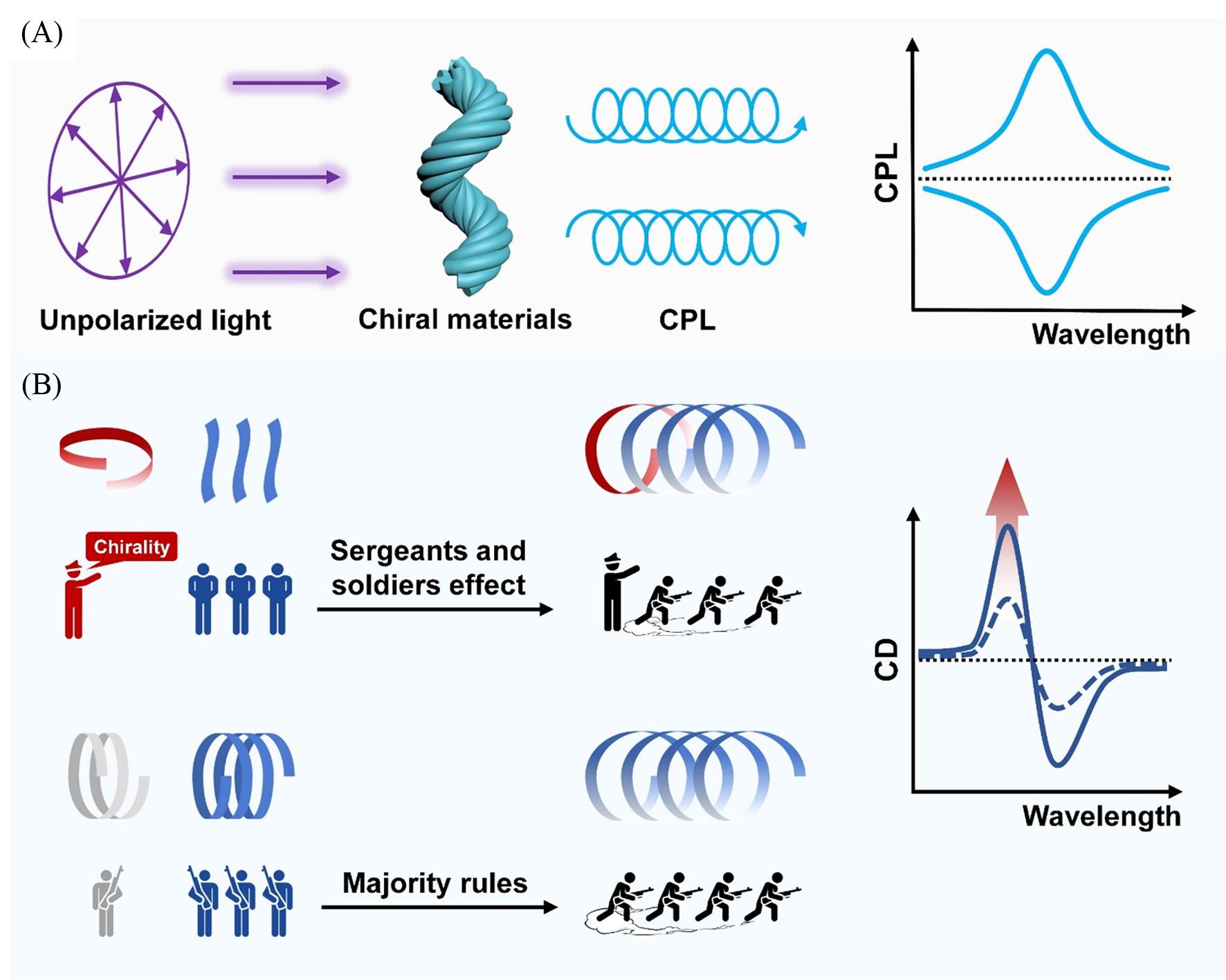
Fig.1 Schematic diagram of CPL(A) and mechanism of chiral co⁃assembly(B)
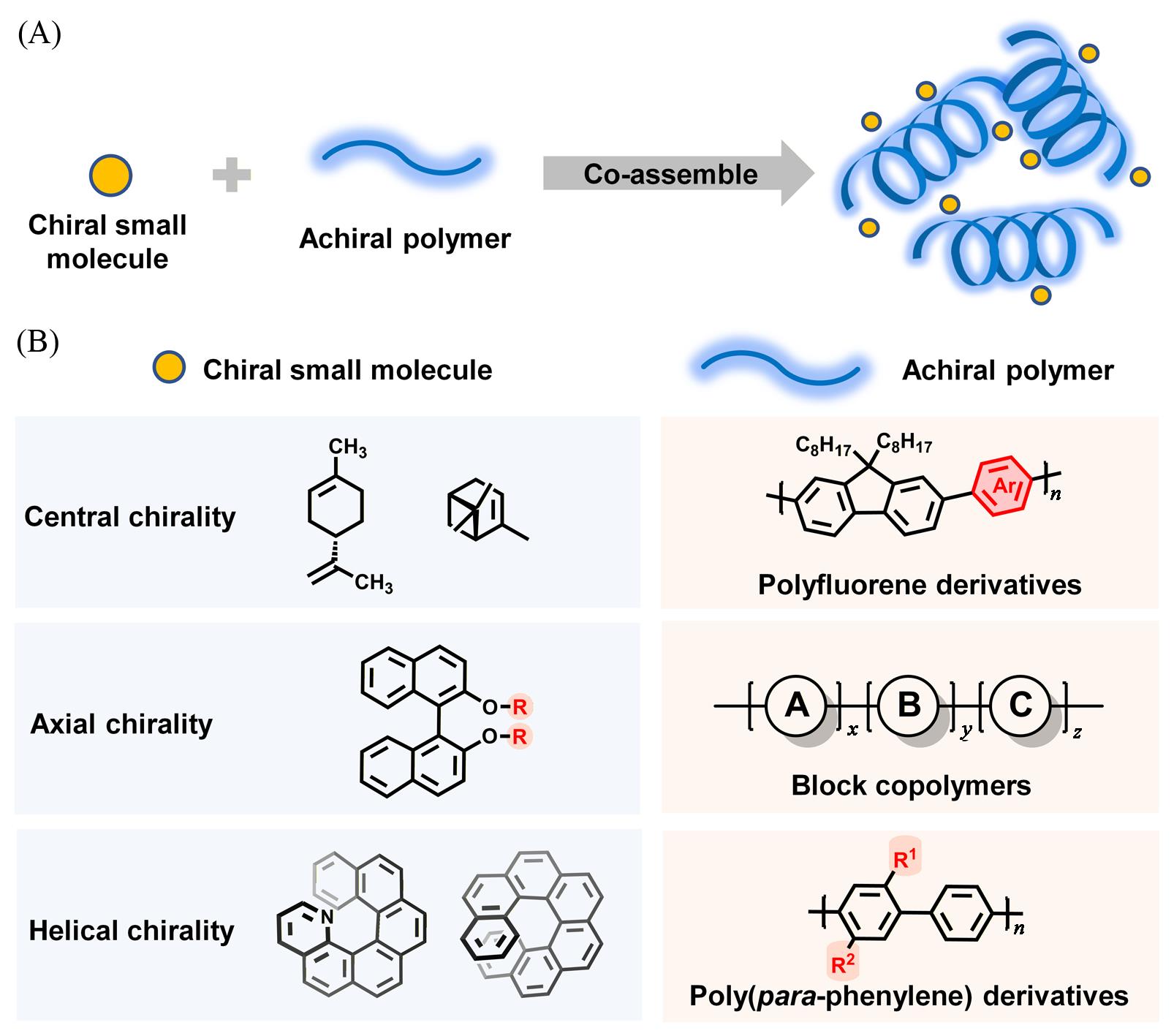
Fig.2 Co⁃assembly systems of chiral small molecules and achiral polymers(A) and structure of chiral small molecules and achiral polymers(B)
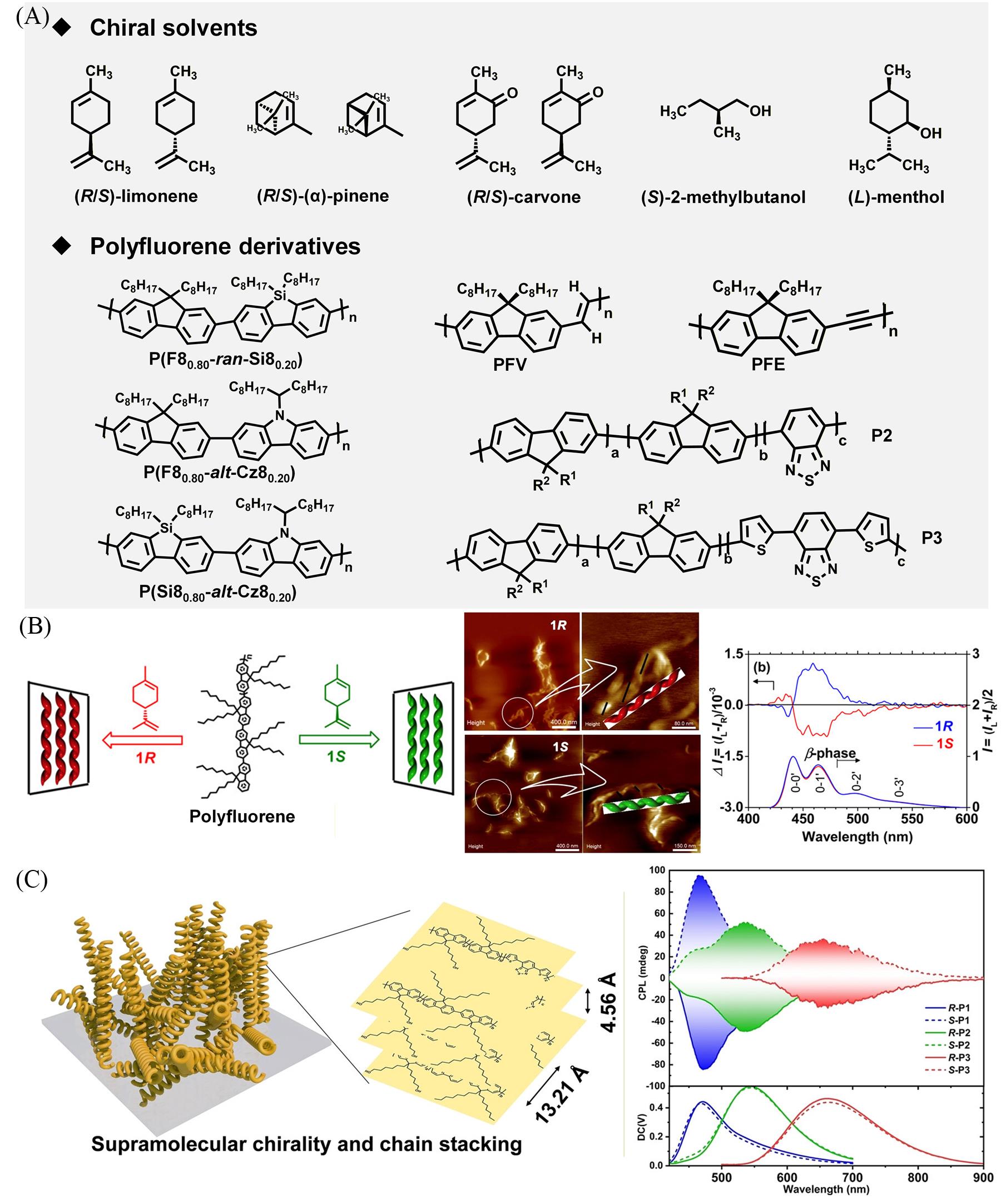
Fig.3 Polyfluorene derivatives co⁃assembled with central⁃chiral dopants(A), polyfluorene co⁃assembled with central⁃chiral dopants(B)[45], and structural characterization and CPL spectra of P2 and P3(C)[40](B) Copyright 2016, American Chemical Society; (C) Copyright 2024, John Wiley and Sons.
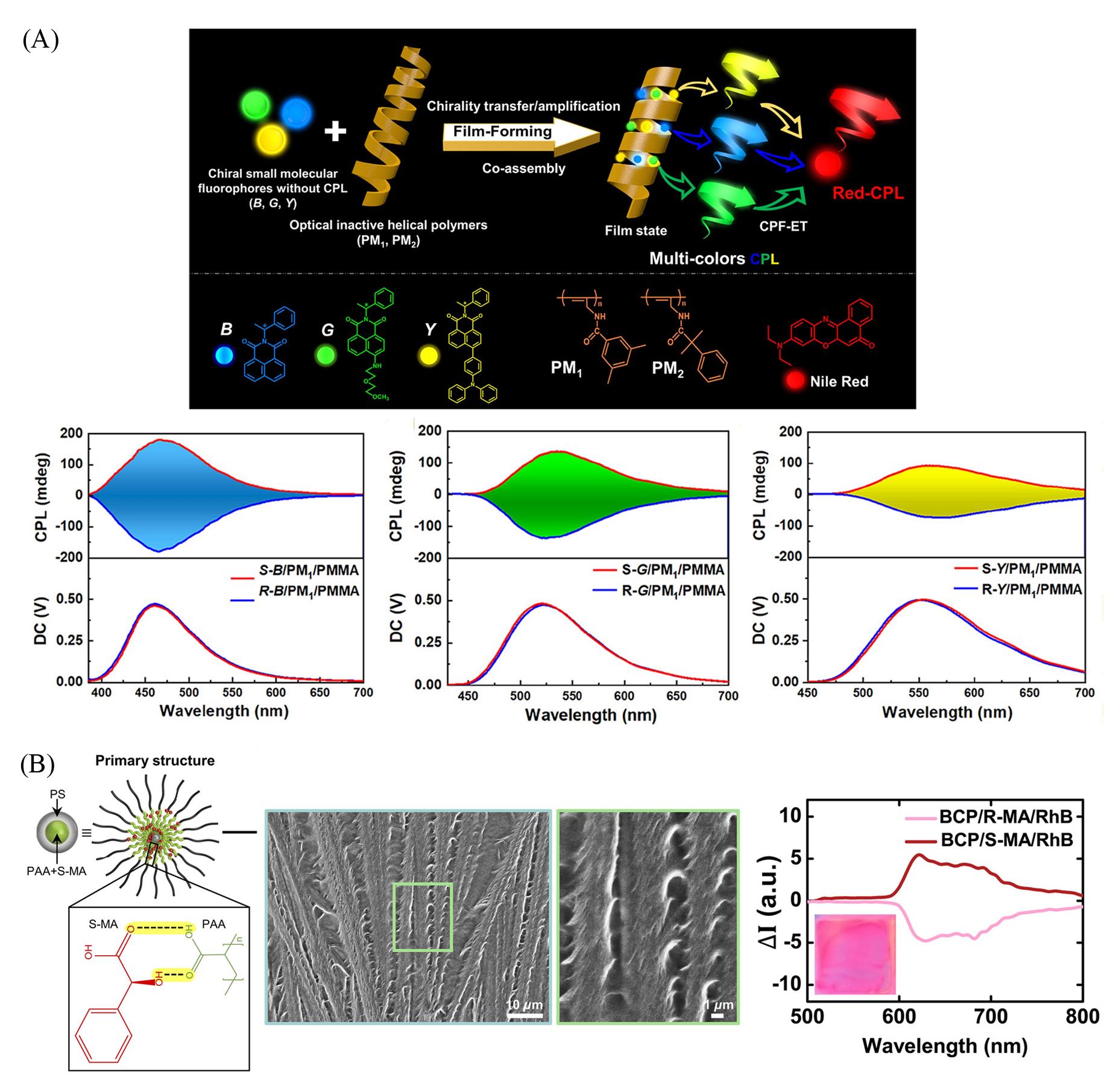
Fig.4 Synthesis route of polyacetylene derivatives co⁃assembled with central⁃chiral dopants(A)[46], structural characterization and CPL spectra of block copolymers co⁃assembled with central⁃chiral dopants(B)[47](A) Copyright 2023, American Chemical Society; (B) Copyright 2025, American Association for the Advancement of Science.
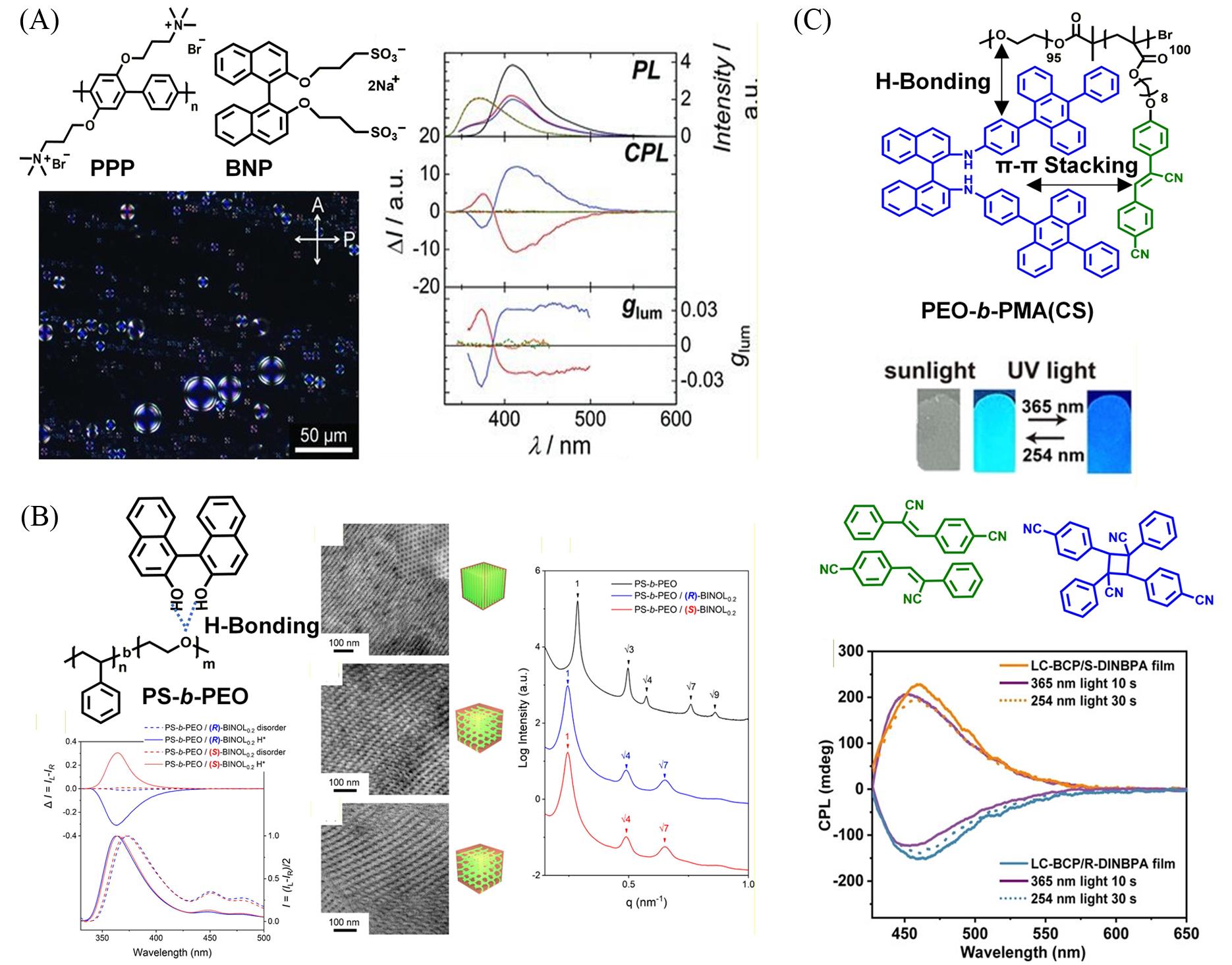
Fig.5 Poly(para⁃phenylene) derivatives co⁃assembled with axial⁃chiral dopants(A)[48], PS⁃b⁃PEO co⁃assembled with axial⁃chiral dopants along with their corresponding CPL spectra(B)[51], PEO⁃b⁃PMA co⁃assembled with axial⁃chiral dopants along with their corresponding CPL spectra(C)[52](A) Copyright 2012, John Wiley & Sons; (B) Copyright 2024, American Chemical Society; (C) Copyright 2025, John Wiley & Sons.
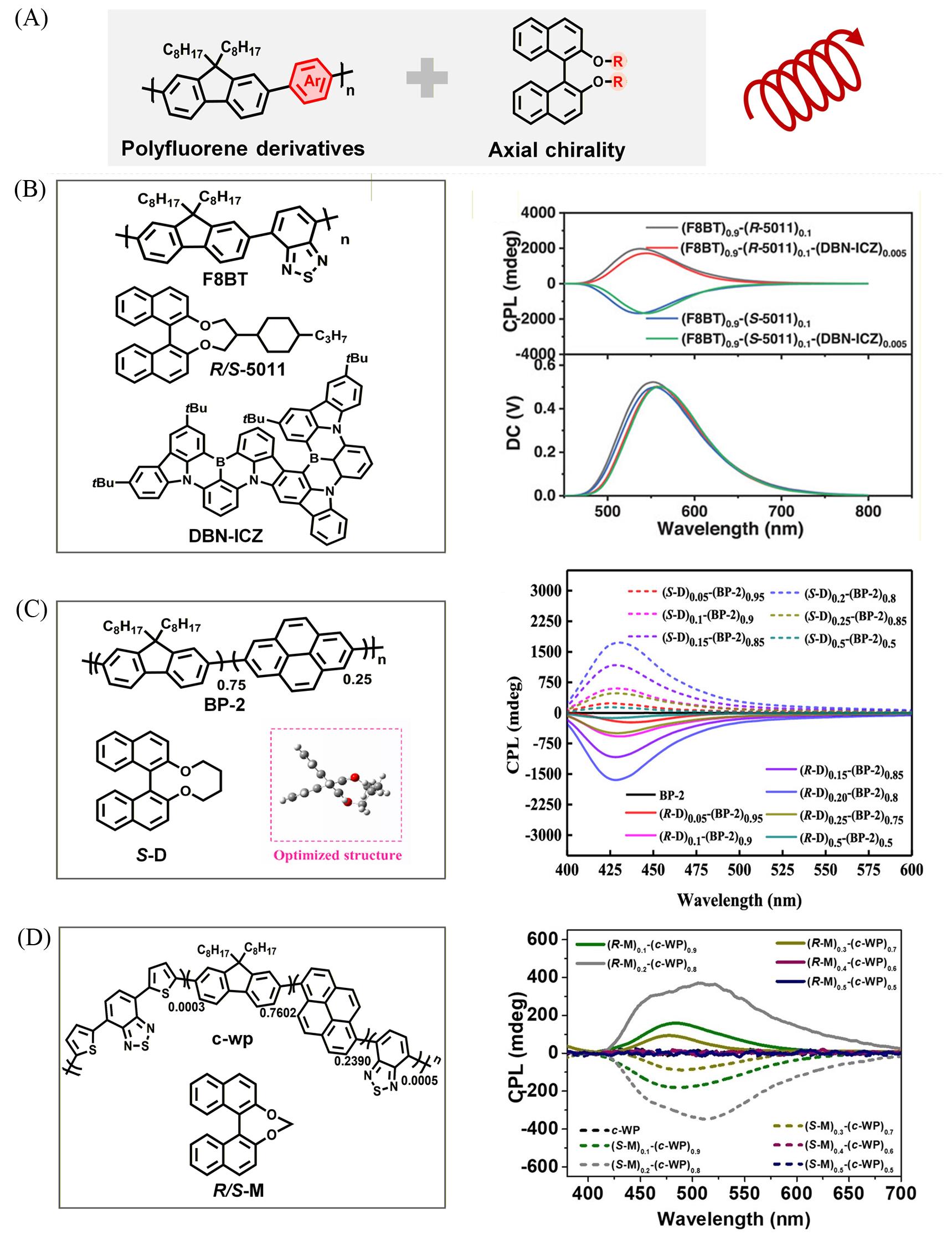
Fig.6 Schematic diagram of polyfluorene derivatives co⁃assembled with axial⁃chiral dopants(A), F8BT co⁃assembled with R/S⁃5011 and the CPL spectra(B)[57], BP⁃2 co⁃assembled with S⁃D and the CPL spectra(C)[64], and c⁃WP co⁃assembled with R/S⁃M and the CPL spectra(D)[61](B) Copyright 2024, John Wiley & Sons; (C) Copyright 2024, American Chemical Society; (D) Copyright 2023, John Wiley & Sons.
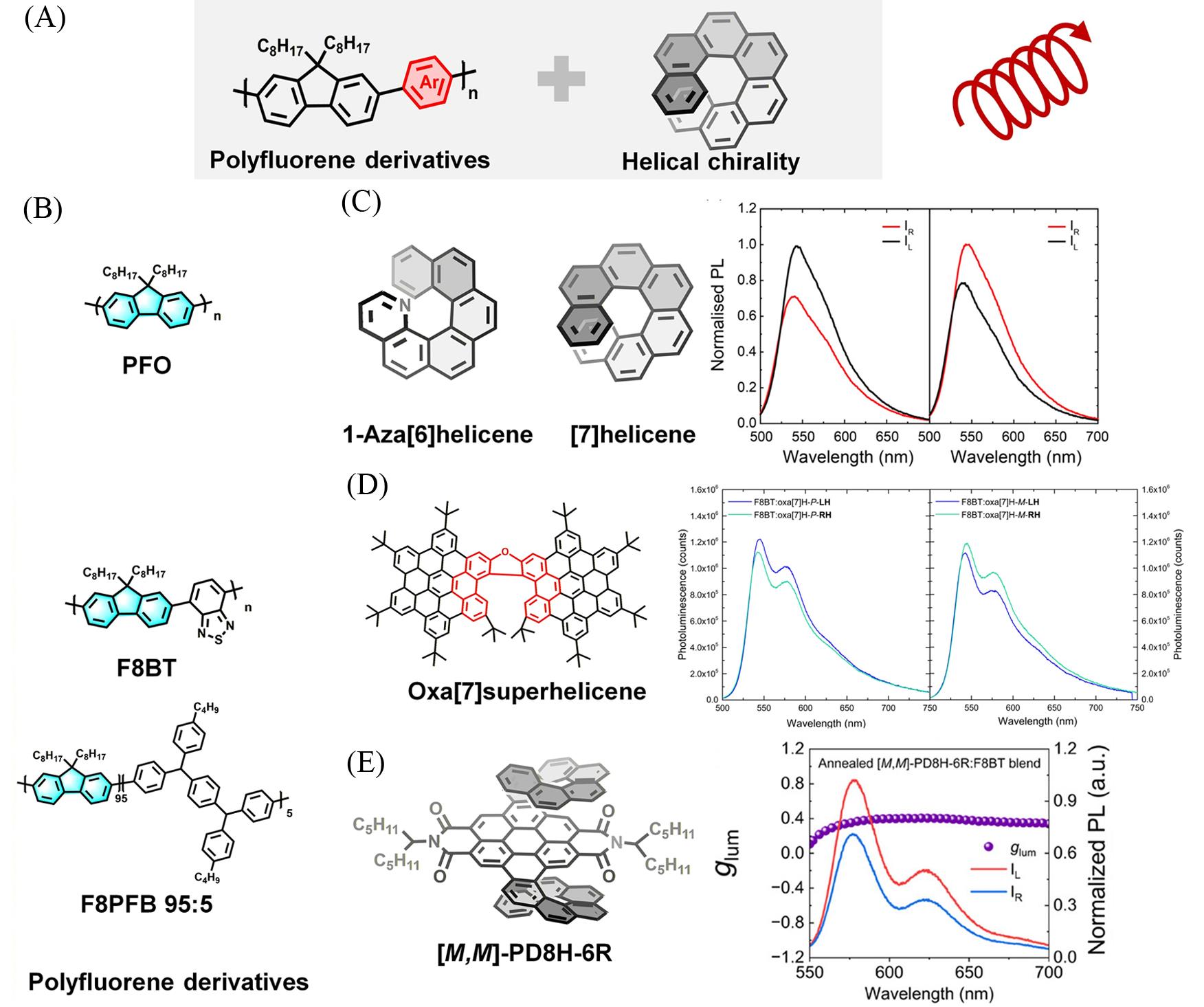
Fig.7 Schematic diagram of polyfluorene derivatives co⁃assembled with helical⁃chiral dopants(A), structure of polyfluorene derivatives(B), CPL spectra of the achiral polymers co⁃assembled with 1⁃aza[6]helicene and [7]helicene(C)[66], CPL spectra of the achiral polymers co⁃assembled with oxa[7]superhelicene(D)[72], and CPL spectra of the achiral polymers co⁃assembled with PD8H⁃6R(E)[73](C) Copyright 2013, John Wiley & Sons; (D) Copyright 2021, John Wiley & Sons; (E) Copyright 2025, John Wiley & Sons.
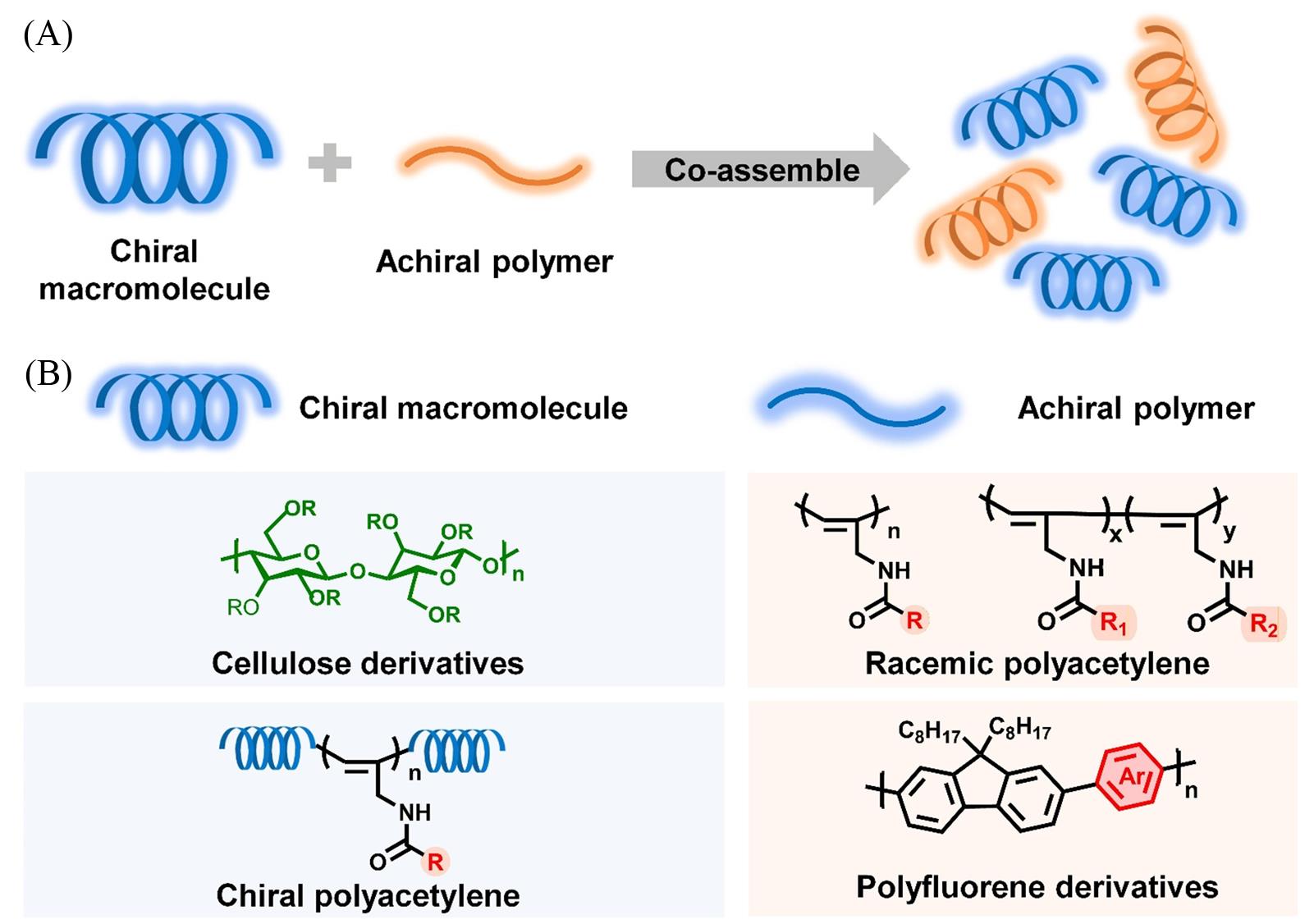
Fig.8 Co⁃assembly systems of chiral macromolecules and achiral polymers(A), and structure of chiral macromolecules and achiral polymers(B)
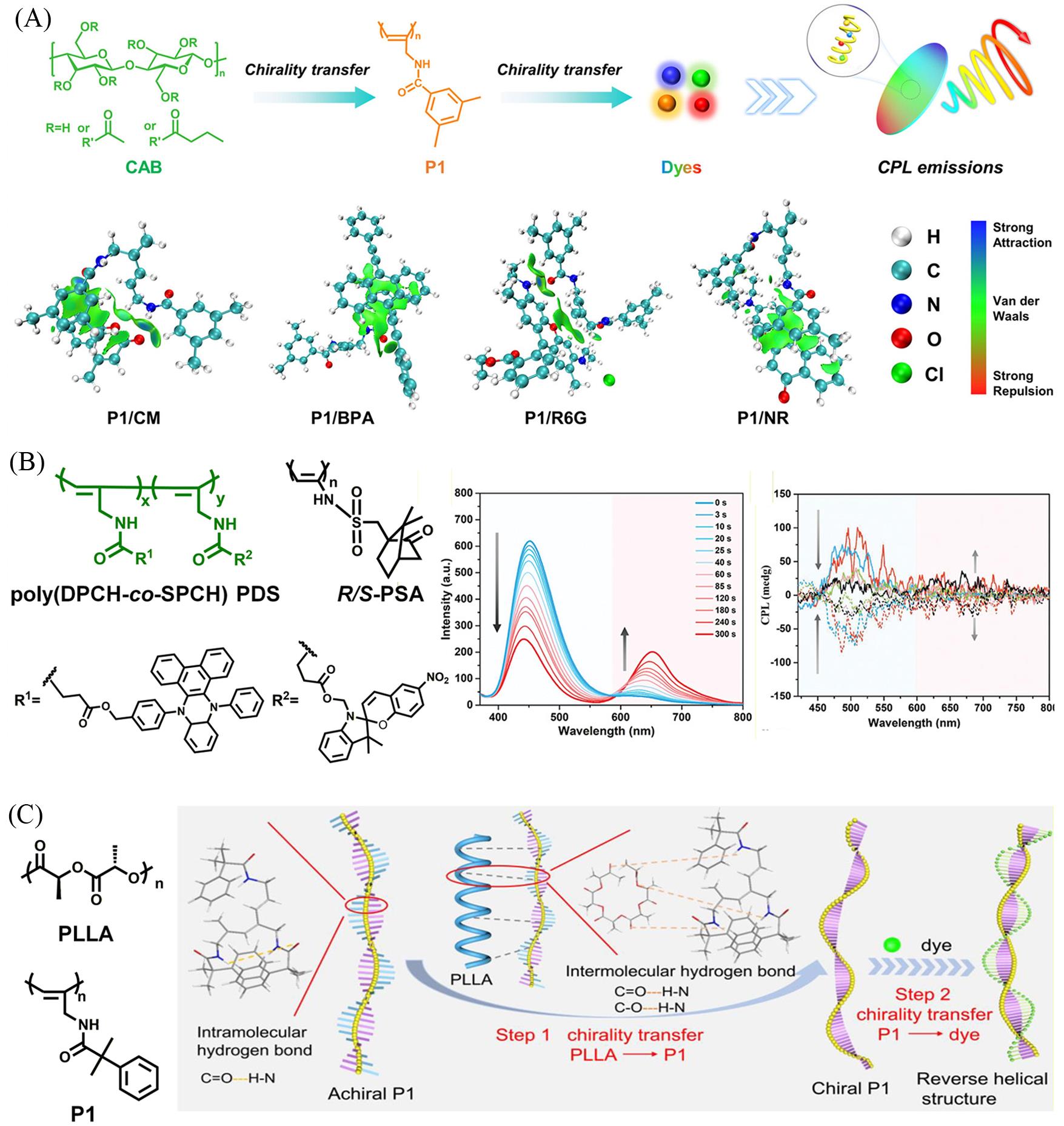
Fig.9 Process of chirality transfer in composite films to generate full⁃color CPL emissions and IGMH analysis of the intermolecular interactions between P1 and emitters in the ground state(A)[75], PL and CPL spectra of PDS/(R/S)⁃PSA mixtures(B)[76], and schematic diagram of the chirality transfer process of PLLA/P1(C)[77](A) Copyright 2025, John Wiley & Sons; (B) Copyright 2021, John Wiley & Sons; (C) Copyright 2022, American Chemical Society.
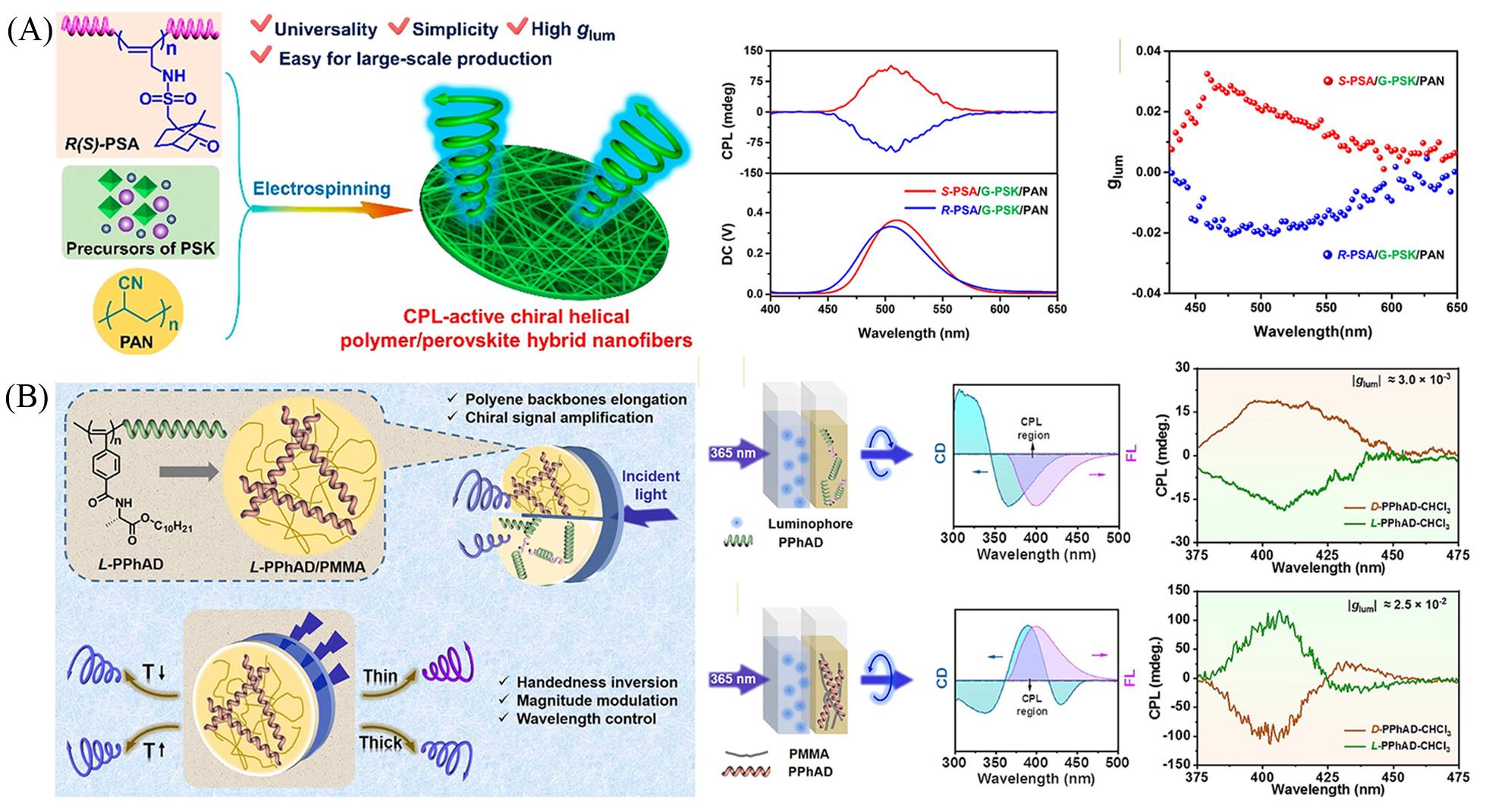
Fig.10 Schematic illustration of the preparation of chiral helical polymer/perovskite hybrid/PAN nanofibers and the CPL spectra of the corresponding films(A)[79], and the preparation of PPhAD/PMMA films and corresponding chiroptical properties(B)[81](A) Copyright 2021, American Chemical Society; (B) Copyright 2022, American Chemical Society.
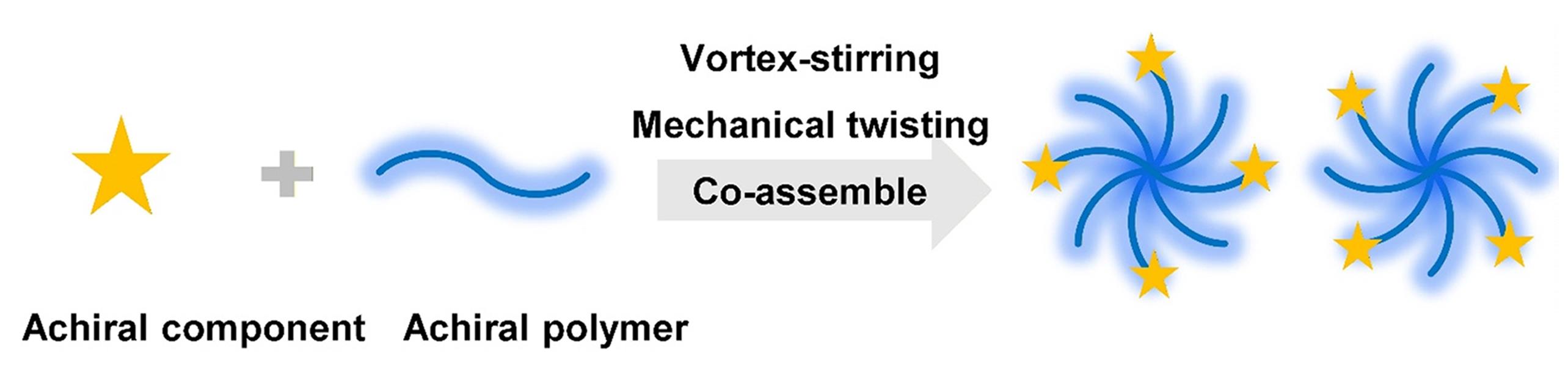
Fig.11 Co⁃assembly systems of achiral polymers with symmetry breaking
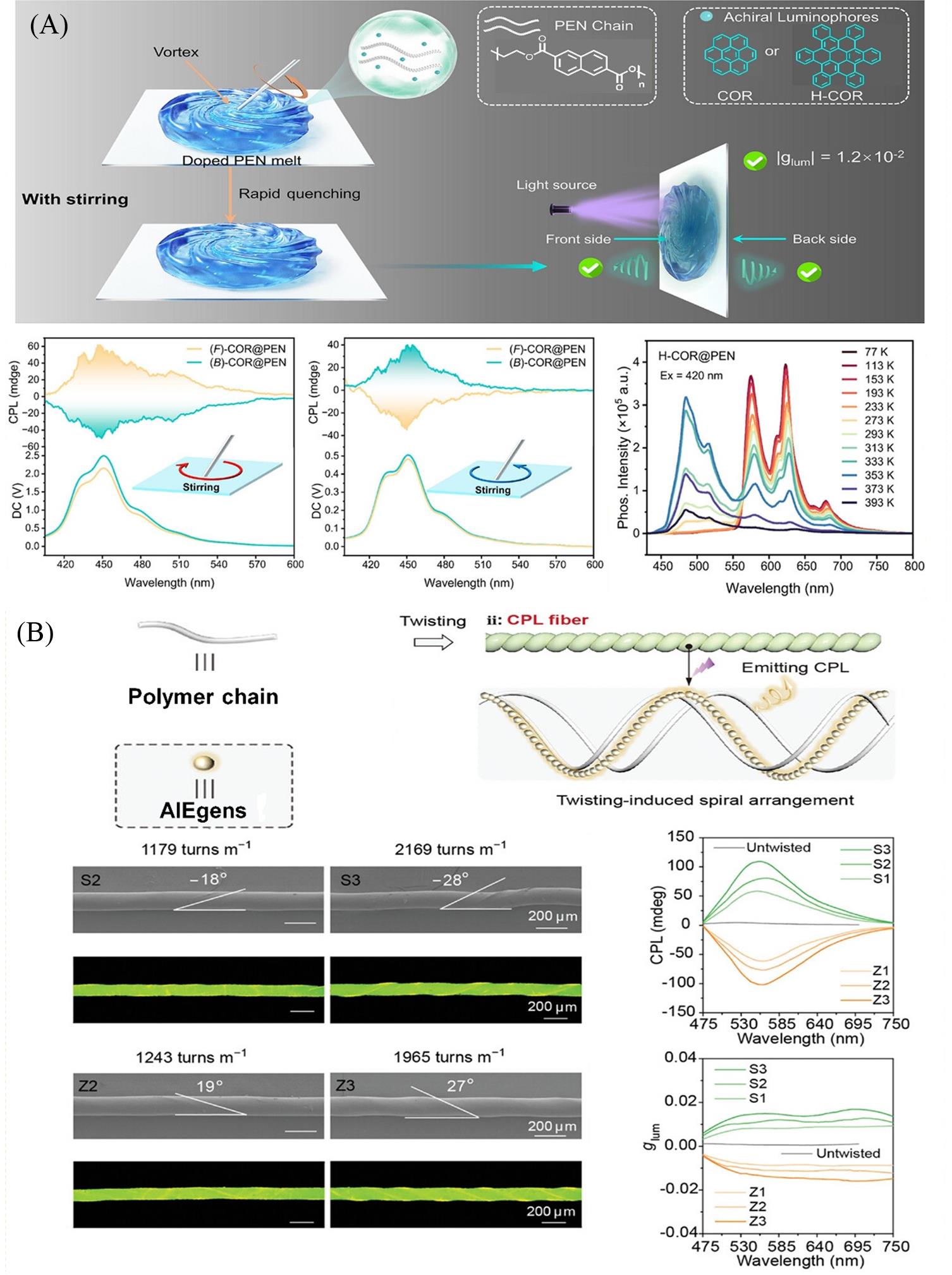
Fig.12 CPL and delayed PL spectra of vortex⁃enabled CPL polymers(A)[84], SEM, fluorescence microscopy images and CPL spectra of polymer chain co⁃assembled with AIEgens(B)[88](A) Copyright 2026, John Wiley & Sons; (B) Copyright 2025, John Wiley & Sons.
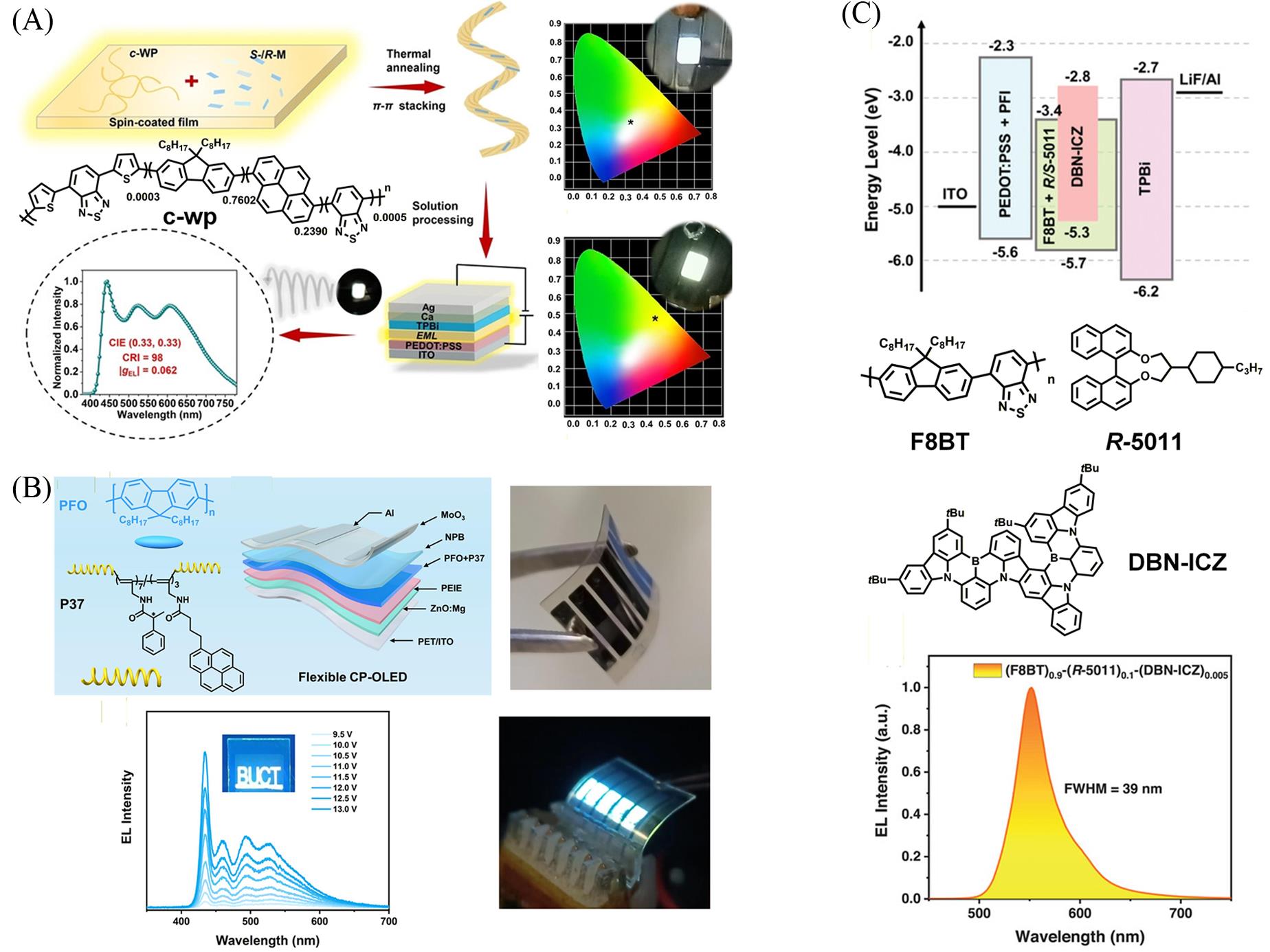
Fig.13 Schematic diagram and electroluminescence spectra of the white OLED structure(A)[61], schematic diagram and electroluminescence spectra of the flexible OLED structure(B)[78], and energy diagram, molecular structures of emitting⁃layers and narrowband electroluminescence spectra(C)[57](A) Copyright 2023, John Wiley & Sons; (B) Copyright 2025, American Chemical Society; (C) Copyright 2024, John Wiley & Sons.
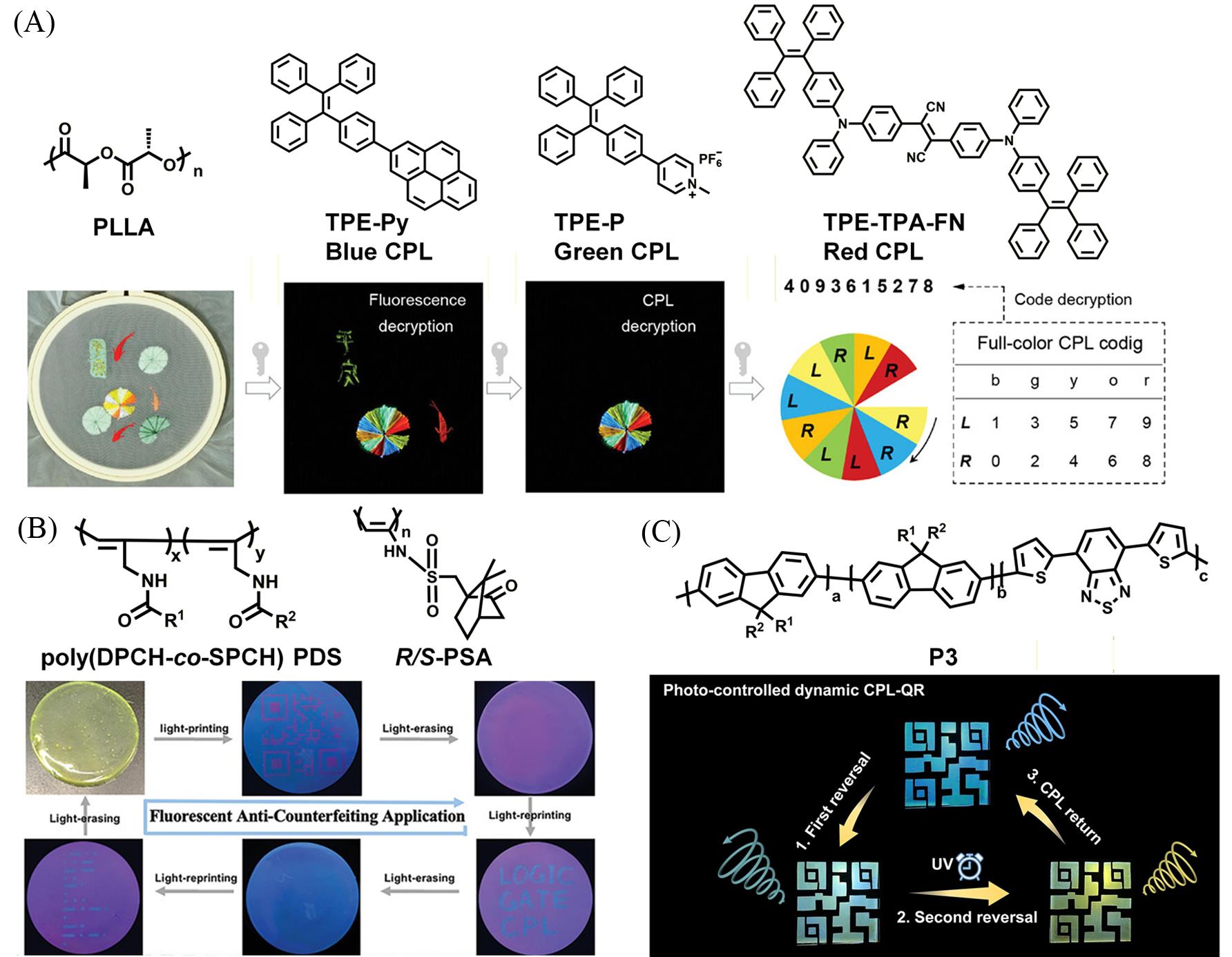
Fig.14 Information encryption using fluorescence, CPL, and emission color codes of CPL fiber bundles(A)[88], photochromic photographs of the PMMA composite film with light⁃printing, light⁃erasing and light⁃reprinting functions(B)[76], and the switchable CPL and fluorescence color change of QR code(C)[40](A) Copyright 2025, John Wiley & Sons; (B) Copyright 2021, John Wiley & Sons; (C) Copyright 2024, John Wiley & Sons.
| [1] | Zheng M. Y., Jin Z. B., Ma Z. Z., Gu Z. G., Zhang J., Adv. Mater., 2024, 36(25), 2313749 |
| [2] | Zhang T., Wu W., Sun S. H., Phys. Eng., 2024, 34(2), 19—24 |
| 张婷, 吴伟, 孙仕海. 物理与工程, 2024, 34(2), 19—24 | |
| [3] | Hu Y., Huang Z., Willner I., Ma X., CCS Chem., 2024, 6(2), 518—527 |
| [4] | Li D., Jiang Z., Liu X., Cheng Y., Chem. Biomed. Imaging, 2026, 4(2), 144—166 |
| [5] | Zinna F., Pasini M., Galeotti F., Botta C., Di Bari L., Giovanella U., Adv. Funct. Mater., 2017, 27(1), 1603719 |
| [6] | Guo Q., Zhang M., Tong Z., Zhao S., Zhou Y., Wang Y., Jin S., Zhang J., Yao H. B., Zhu M., Zhuang T., J. Am. Chem. Soc., 2023, 145(7), 4246—4253 |
| [7] | Shen P., Jiao S., Zhuang Z., Dong X., Song S., Li J., Tang B. Z., Zhao Z., Angew. Chem. Int. Ed., 2024, 63(32), e202407605 |
| [8] | Mun S. E., Hong J., Yun J. G., Lee B., Sci. Rep., 2019, 9(1), 2543 |
| [9] | Yao W., Lan R., Li K., Zhang L., ACS Appl. Mater. Interfaces, 2021, 13(1), 1424—1430 |
| [10] | Li W. S., Shen Y., Chen Z. J., Cui Q., Li S. S., Chen L. J., Appl. Opt., 2017, 56(3), 601—606 |
| [11] | Takaishi K., Matsumoto T., Kawataka M., Ema T., Angew. Chem. Int. Ed., 2021, 60(18), 9968—9972 |
| [12] | Jia S., Yang B., Du J., Zhang J., Xie Y., Tao T., Tang J., Tang W., Gong J., Small, 2025, 21(6), 2408219 |
| [13] | Wei S. Q., Li Z. H., Sun C. L., Li Y., Wang X. Y., Ding T. M., Zhu X., Tu Y. Q., Zhang S. Y., Angew. Chem. Int. Ed., 2026, 65(3), e23152 |
| [14] | Wang H. X., Zhu X., Liu M., Chem. Soc. Rev., 2025, 54(11), 5516—5550 |
| [15] | Li X., Xie Y., Li Z., Adv. Photonics Res., 2021, 2(4), 2000136 |
| [16] | Hamada H., Itabashi Y., Shang R., Nakamura E., J. Am. Chem. Soc., 2020, 142(4), 2059—2067 |
| [17] | Ji M. J., Li M., Chen C. F., Chem. Sci., 2025, 16(27), 12277—12292 |
| [18] | Nayani K., Kim Y. K., Abbott N. L., Nat. Mater., 2018, 17(1), 14—15 |
| [19] | Chen N., Yan B., Molecules, 2018, 23(12), 3376 |
| [20] | Li J. K., Chen X. Y., Guo Y. L., Wang X. C., Sue A. C. H., Cao X. Y., Wang X. Y., J. Am. Chem. Soc., 2021, 143(43), 17958—17963 |
| [21] | Li J. K., Chen X. Y., Zhao W. L., Guo Y. L., Zhang Y., Wang X. C., Sue A. C. H., Cao X. Y., Li M., Chen C. F., Wang X. Y., Angew. Chem. Int. Ed., 2023, 62(4), e202215367 |
| [22] | Willis O. G., Zinna F., Bari L. D., Angew. Chem. Int. Ed., 2023, 62(25), e202302358 |
| [23] | Zhang G., Cheng X., Wang Y., Zhang W., Aggregate, 2023, 4(1), e262 |
| [24] | Wang F., Ji W., Yang P., Feng C. L., ACS Nano, 2019, 13(6), 7281—7290 |
| [25] | Zhao T., Duan P., Angew. Chem. Int. Ed., 2024, 63(27), e202406524 |
| [26] | Yuan W., Lu S., Li X., Li Z., Gu X., Liu X., Ren Z., Wang F., Chen X., Aggregate, 2025, 6(7), e70042 |
| [27] | Michaeli K., Kantor⁃Uriel N., Naaman R., Waldeck D. H., Chem. Soc. Rev., 2016, 45(23), 6478—6487 |
| [28] | Wang Z., Gao M., Ren S., Hao X., Qin W., Adv. Mater., 2019, 31(48), 1904857 |
| [29] | Harris J., Grillo V., Mafakheri E., Gazzadi G. C., Frabboni S., Boyd R. W., Karimi E., Nat. Phys., 2015, 11(8), 629—634 |
| [30] | Wang M., Yang K., Wang X., Tan Z., Pan K., Deng J., Zhao B., Adv. Opt. Mater., 2024, 12(3), 2301513 |
| [31] | Ryan K. R., Down M. P., Hurst N. J., Keefe E. M., Banks C. E., eScience, 2022, 2(4), 365—381 |
| [32] | Shi C. Y., Zhang Q., Tian H., Qu D. H., SmartMat, 2020, 1(1), e1012 |
| [33] | Lifson S., Green M. M., Andreola C., Peterson N. C., J. Am. Chem. Soc., 1989, 111(24), 8850—8858 |
| [34] | Green M. M., Garetz B. A., Munoz B., Chang H., Hoke S., Cooks R. G., J. Am. Chem. Soc., 1995, 117(14), 4181—4182 |
| [35] | Suzuki N., Taura D., Furuta Y., J. Am. Chem. Soc., 2025, 147(23), 19751—19761 |
| [36] | van Gestel J., Macromolecules, 2004, 37(10), 3894—3898 |
| [37] | Yang H., Ma S., Zhao B., Deng J., ACS Appl. Mater. Interfaces, 2023, 15(10), 13668—13677 |
| [38] | Nakano Y., Liu Y., Fujiki M., Polym. Chem., 2010, 1(4), 460—469 |
| [39] | Yang K., Ma S., Zhang Y., Zhao B., Deng J., Macromol. Rapid Commun., 2022, 43(11), 2200111 |
| [40] | Zhang G., Bao Y., Ma H., Wang N., Cheng X., He Z., Wang X., Miao T., Zhang W., Angew. Chem. Int. Ed., 2024, 63(17), e202401077 |
| [41] | Kawagoe Y., Fujiki M., Nakano Y., New J. Chem., 2010, 34(4), 637—647 |
| [42] | Wang L., Suzuki N., Liu J., Matsuda T., Rahim N. A. A., Zhang W., Fujiki M., Zhang Z., Zhou N., Zhu X., Polym. Chem., 2014, 5(20), 5920—5927 |
| [43] | Fujiki M., Kawagoe Y., Nakano Y., Nakao A., Molecules, 2013, 18(6), 7035—7057 |
| [44] | Fujiki M., Jalilah A. J., Suzuki N., Taguchi M., Zhang W., Abdellatif M. M., Nomura K., RSC Adv., 2012, 2(16), 6663—6671 |
| [45] | Zhao Y., Abdul Rahim N. A., Xia Y., Fujiki M., Song B., Zhang Z., Zhang W., Zhu X., Macromolecules, 2016, 49(9), 3214—3221 |
| [46] | Ma S., Zhao B., Deng J., ACS Cent. Sci., 2023, 9(7), 1409—1418 |
| [47] | Kim M., Zhang M., Zhu Y. L., Yan Y., Pu X., Choi W., Chung S., Cho K., Kim J., Tsukruk V., Yang Z., Kotov N. A., Lu Z. Y., Kim D. H., Lin Z., Science, 2025, 389(6761), eadu0296 |
| [48] | Watanabe K., Iida H., Akagi K., Adv. Mater., 2012, 24(48), 6451—6456 |
| [49] | Zhang Y., Li H., Geng Z., Zheng W. H., Quan Y., Cheng Y., ACS Nano, 2022, 16(2), 3173—3181 |
| [50] | Liu C., Li H., Chen Y., Xu D., Cheng Y., Chem. Eng. J., 2024, 486150442 |
| [51] | Shao S. W., Puneet P., Li M. C., Ikai T., Yashima E., Ho R. M., ACS Macro Lett., 2024, 13(6), 734—740 |
| [52] | Yuan J., He X., Chen L., Lu X., Lu Q., Angew. Chem. Int. Ed., 2025, 64(5), e202419924 |
| [53] | Zhang X., Xu Z., Zhang Y., Quan Y., Cheng Y., J. Mater. Chem. C, 2020, 8(44), 15669—15676 |
| [54] | Yuan C., Eguchi K., Murata H., Jpn. J. Appl. Phys., 2024, 63(2), 02SP10 |
| [55] | Lee D. M., Song J. W., Lee Y. J., Yu C. J., Kim J. H., Adv. Mater., 2017, 29(29), 1700907 |
| [56] | Sun H., Yuan C., Nishimura T., Ikai T., Murata H., Jpn. J. Appl. Phys. 2025, 64(10), 10SP30 |
| [57] | Guo C. H., Zhang Y., Zhao W. L., Tan K. K., Feng L., Duan L., Chen C. F., Li M., Adv. Mater., 2024, 36(38), 2406550 |
| [58] | Zhang Y., Li D., Li Q., Quan Y., Cheng Y., Adv. Funct. Mater., 2023, 33(44), 2309133 |
| [59] | Zou H., Zhao S., Han C., Hu M., Zhou L., Chu B., ACS Appl. Mater. Interfaces, 2025, 17(18), 27289—27298 |
| [60] | Zhao W. L., Guo W. C., Tan K. K., Yu Z. X., Li M., Chen C. F., Angew. Chem. Int. Ed., 2025, 64(4), e202416863 |
| [61] | Zhang Y., Li Y., Quan Y., Ye S., Cheng Y., Angew. Chem. Int. Ed., 2023, 62(1), e202214424 |
| [62] | Zhang Y., Tian G., Li D., Jiang Z., Quan Y., Cheng Y., Laser Photonics Rev., 2024, 18(11), 2400223 |
| [63] | Chu B., Song F., Wang P., Cheng Y., Geng Z., ACS Appl. Mater. Interface, 2024, 16(20), 26604—26612 |
| [64] | Geng Z., Wang Z., Zhu S. E., Hu K., Yao K., Chu B., Macromolecules, 2024, 57(9), 4567—4575 |
| [65] | Wan L., Wade J., Wang X., Campbell A. J., Fuchter M. J., J. Mater. Chem. C, 2022, 10(13), 5168—5172 |
| [66] | Yang Y., da Costa R. C., Smilgies D. M., Campbell A. J., Fuchter M. J., Adv. Mater., 2013, 25(18), 2624—2628 |
| [67] | Wan L., Wade J., Shi X., Xu S., Fuchter M. J., Campbell A. J., ACS Appl. Mater. Interfaces, 2020, 12(35), 39471—39478 |
| [68] | Wan L., Liu Y., Fuchter M. J., Yan B., Nat. Photonics, 2023, 17(2), 193—199 |
| [69] | Brandt J. R., Salerno F., Fuchter M. J., Nat. Rev. Chem., 2017, 1(6), 0045 |
| [70] | Wan L., Wade J., Salerno F., Arteaga O., Laidlaw B., Wang X., Penfold T., Fuchter M. J., Campbell A. J., ACS Nano, 2019, 13(7), 8099—8105 |
| [71] | Yan H., Wade J., Wan L., Kwon S., Fuchter M. J., Campbell A. J., Kim J. S., J. Mater. Chem. C, 2022, 10(25), 9512—9520 |
| [72] | Wade J., Brandt J. R., Reger D., Zinna F., Amsharov K. Y., Jux N., Andrews D. L., Fuchter M. J., Angew. Chem. Int. Ed., 2021, 60(1), 222—227 |
| [73] | Wan L., Cho E., Zhang R., Brock⁃Nannestad T., Wang Z., Brédas J. L., Coropceanu V., Gao F., Adv. Mater., 2025, 37(40), 2506941 |
| [74] | Duan H., Li S., Zhao J., Li J., Chem. Eng. J., 2024, 483149130 |
| [75] | Zhong H., Zhao B., Deng J., Angew. Chem. Int. Ed., 2025, 64(17), e202418463 |
| [76] | Huang Z., Hu Y., Jin X., Zhao Y., Su J., Ma X., Adv. Opt. Mater., 2021, 9(12), 2100135 |
| [77] | Gao X., Wang J., Yang K., Zhao B., Deng J., Chem. Mater., 2022, 34(13), 6116—6128 |
| [78] | Wang N., Zhong H., Duan M., Gao X., Tan Z., Deng J., Zhao B., ACS Appl. Mater. Interfaces, 2025, 17(15), 23025—23035 |
| [79] | Zhao B., Gao X., Pan K., Deng J., ACS Nano, 2021, 15(4), 7463—7471 |
| [80] | Zhong H., Gao X., Zhao B., Deng J., Acc. Chem. Res., 2024, 57(8), 1188—1201 |
| [81] | Zhang H., Yang C., Shan S., Wen L., Chen D., Zou G., ACS Appl. Mater. Interfaces, 2022, 14(31), 36157—36165 |
| [82] | Huang Z., He Z., Ding B., Tian H., Ma X., Nat. Commun., 2022, 13(1), 7841 |
| [83] | Li J., Xie Y., Feng Z., Zhang C., Zhang H., Chen X., Zou G., J. Mater. Chem. C, 2022, 10(43), 16556—16563 |
| [84] | Jin L., Mo W., Wang Z., Hong W., Adv. Funct. Mater., 2026, 36(15), e21524 |
| [85] | Sun Z., Yin P., He S., Zhang K., Pan X., Wang J., Hao P., Zhou Z., Yang X., Ma L., Tan C., Chem. Res. Chinese Universities, 2025, 41(3), 519—524 |
| [86] | Xiong J., Wu M., Yao L. Y., Chem. Res. Chinese Universities, 2024, 40(5), 887—893 |
| [87] | Chen P., Zhang G., Li J., Ma L., Zhou J., Zhu M., Li S., Wang Z., Chem. Res. Chinese Universities, 2024, 40(2), 293—304 |
| [88] | Yu X., Chen L., Liu Q., Liu X., Qiu Z., Zhang X., Zhu M., Cheng Y., Adv. Sci., 2025, 12(4), 2412778 |
| [89] | Li P., Gao H., Zhao B., Deng J., Chem. Mater., 2022, 34(16), 7503—7515 |
| [1] | 张哲浩, 宛新华, 张洁. 螺旋聚苯乙炔衍生物圆偏振发光材料的构象调控、 自组装与功能化[J]. 高等学校化学学报, 2026, 47(5): 20260064. |
| [2] | 李伟健, 徐小琴, 王威, 杨海波. 聚集诱导发光树枝状分子的研究进展[J]. 高等学校化学学报, 2026, 47(5): 20260003. |
| [3] | 孙恒, 张鹏宇, 张英楠, 詹传郎. 非稠环小分子受体材料的研究进展[J]. 高等学校化学学报, 2023, 44(7): 20230076. |
| [4] | 孟妍, 王秀凤, 张莉, 刘鸣华. 不同取代位置的萘衍生两亲分子在气/液界面组装膜中的螺旋结构与圆偏振发光[J]. 高等学校化学学报, 2021, 42(4): 1253. |
| [5] | 庞秀江, 刘源, 陈利, 全贞兰. 羟基喜树碱-类水滑石纳米杂化的共组装制备及表征[J]. 高等学校化学学报, 2016, 37(3): 567. |
| [6] | 曹绪龙, 胡岳, 宋新旺, 祝仰文, 韩玉贵, 王鲲鹏, 陈湧, 刘育. 三乙烯四胺对磺化聚丙烯酰胺性能的影响[J]. 高等学校化学学报, 2015, 36(7): 1437. |
| [7] | 庞秀江, 刘源, 陈利, 全贞兰. (羟基喜树碱@胆酸钠)-层状双金属氢氧化物纳米杂化物的组装及表征[J]. 高等学校化学学报, 2015, 36(10): 1933. |
| [8] | 王爽, 兀晓文, 李海平, 张人杰, 侯万国. 剥离-共组装法制备葫芦素插层类水滑石纳米杂化物[J]. 高等学校化学学报, 2014, 35(9): 1982. |
| [9] | 寇莹莹, 孟庆斌, 刘克良. 棕榈酸修饰的α-螺旋两亲性多肽的共组装[J]. 高等学校化学学报, 2012, 33(11): 2476. |
| [10] | 刘振爽, 高尚, 赵外欧, 秦玉娇, 汪兵, 国新华. 类黄酮化合物对G-四链体及双链DNA选择性的电喷雾质谱研究[J]. 高等学校化学学报, 2012, 33(08): 1681. |
| [11] | 武现丽, 韩国胜, 王珍, 曹书霞, 廖新成. N-磷酰化多巴胺与溶菌酶相互作用的ESI-MS研究[J]. 高等学校化学学报, 2012, 33(03): 516. |
| [12] | 秦玉娇, 魏士刚, 王晓录, 杨帆, 汪兵, 国新华. d(C4)相关序列形成四分子i-Motif结构的电喷雾质谱研究[J]. 高等学校化学学报, 2011, 32(12): 2748. |
| [13] | 渠琛玲, 张寒琦, 张华蓉, 白雨萍, 温慧. 电喷雾质谱法研究氨基酸的质谱碎裂及其与人参皂苷Rb3的相互作用[J]. 高等学校化学学报, 2008, 29(9): 1721. |
| [14] | 佘益民, 季怡萍, 何毓璠, 刘淑莹. MALDI质谱检测蛋白质与富勒醇的非共价复合物[J]. 高等学校化学学报, 1998, 19(11): 1735. |
| 阅读次数 | ||||||
|
全文 |
|
|||||
|
摘要 |
|
|||||
