

高等学校化学学报 ›› 2026, Vol. 47 ›› Issue (6): 20250375.doi: 10.7503/cjcu20250375
于坤杰1, 张智1, 高其龙2( )
)
收稿日期:2025-12-12
出版日期:2026-06-10
发布日期:2026-01-17
通讯作者:
高其龙
E-mail:qilonggao@zzu.edu.cn
基金资助:
YU Kunjie1, ZHANG Zhi1, GAO Qilong2()
Received:2025-12-12
Online:2026-06-10
Published:2026-01-17
Contact:
GAO Qilong
E-mail:qilonggao@zzu.edu.cn
Supported by:摘要:
在材料基因工程的背景下, 基于数据驱动的机器学习技术作为一种强大的新型工具, 在材料热膨胀性能研究领域受到了广泛关注. 机器学习能够绕过复杂的实验过程与理论计算, 通过建立描述符与热膨胀性能间的关联, 以较低成本快捷地实现材料热膨胀性能的预测, 有效弥补了传统实验试错法和基于密度泛函理论的方法存在的时间成本高、 效率低等不足. 本文简述了机器学习的基本流程与方法, 并重点阐述其在材料热膨胀性能研究中的应用进展. 传统机器学习领域已实现从热膨胀系数单目标预测到引入特征重要性分析解析机制、 结合特征选择优化模型, 再到多性能关联多目标预测的逐步深入. 在机器学习原子间势方面, 研究了通过构建原子尺度势能函数驱动分子动力学模拟, 进而揭示热膨胀行为的微观机制. 这些应用加速了负热膨胀材料的设计筛选, 深化了机理理解. 最后, 分析了机器学习在材料热膨胀性能研究中亟待解决的问题, 并据此展望了未来的研究方向与发展趋势.
中图分类号:
TrendMD:
于坤杰, 张智, 高其龙. 基于机器学习的负热膨胀研究进展. 高等学校化学学报, 2026, 47(6): 20250375.
YU Kunjie, ZHANG Zhi, GAO Qilong. Research Progress on Negative Thermal Expansion Based on Machine Learning. Chem. J. Chinese Universities, 2026, 47(6): 20250375.
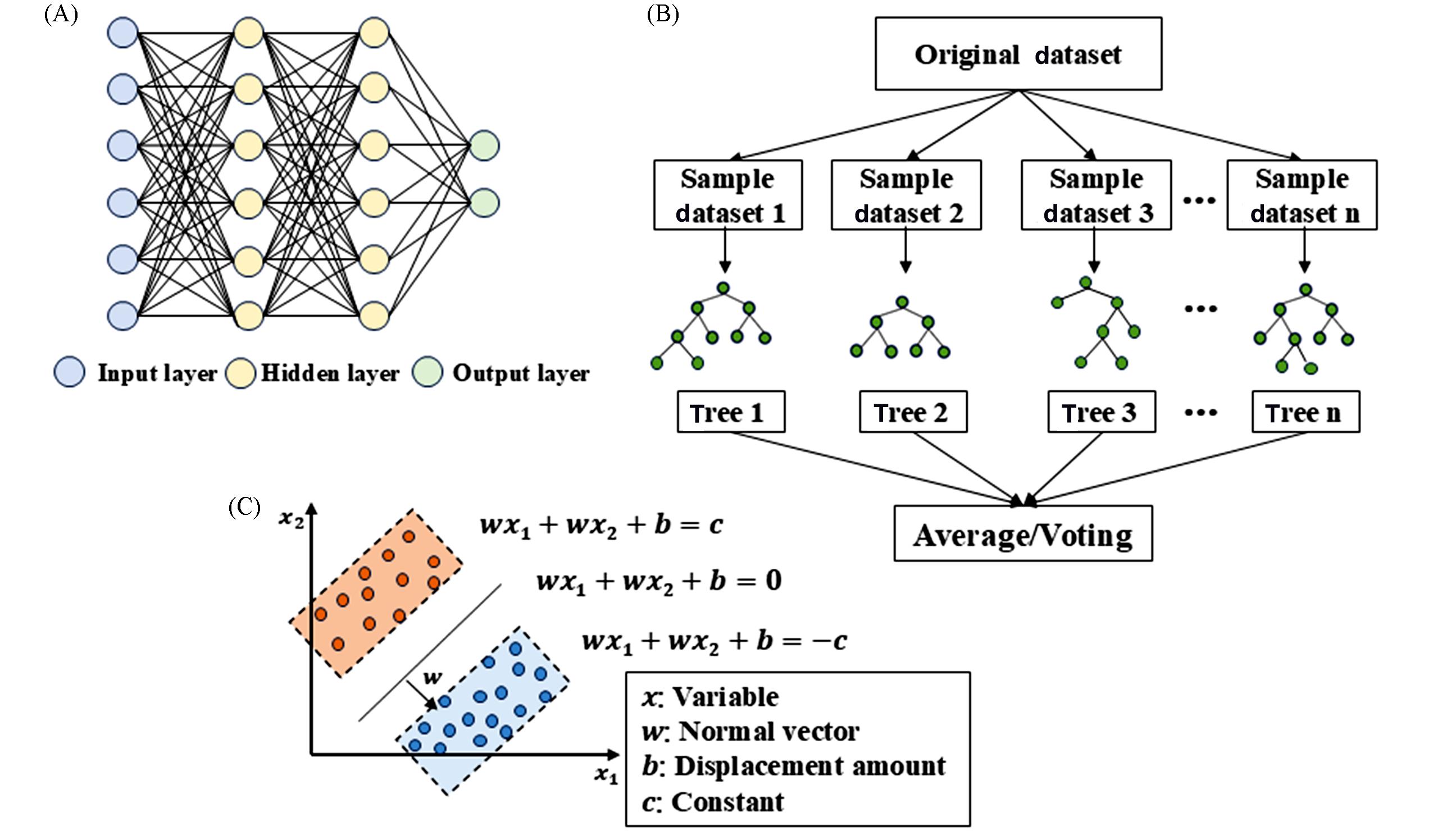
Fig.1 Common machine learning algorithms of neural network model(A), random forest model(B) and support vector machine model(C)
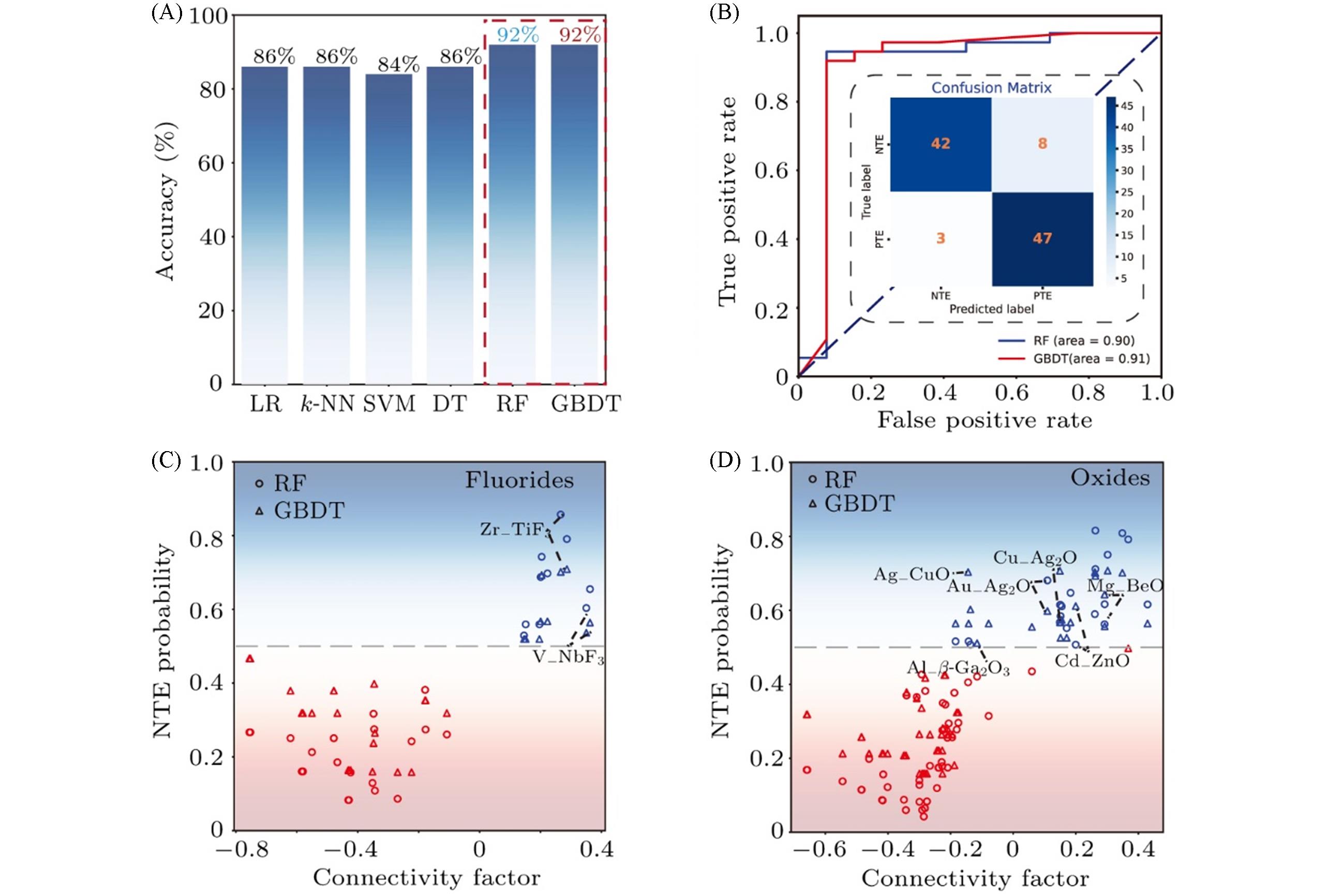
Fig.2 Accuracy of six trained binary classification models(A), ROC curves and confusion matrices for the high⁃accuracy RF and GBDT models(B), new NTE candidates predicted for fluorides(C) and oxides(D), and ranked by connectivity factor using the trained RF and GBDT models[58]Copyright 2023, Chinese Physical Society and IOP Publishing Ltd.
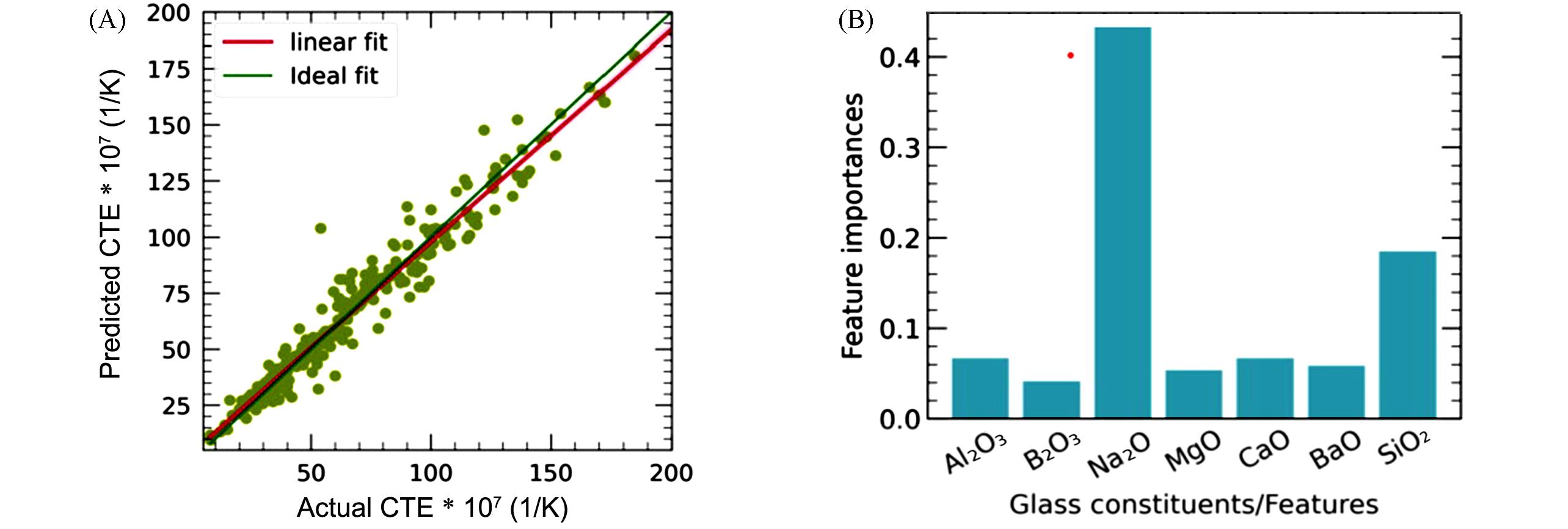
Fig.3 Relationship between predicted CTE and actual CTE(A) and relative importance of input features in predicting CTE(B)[61]Copyright 2022, Elsevier.
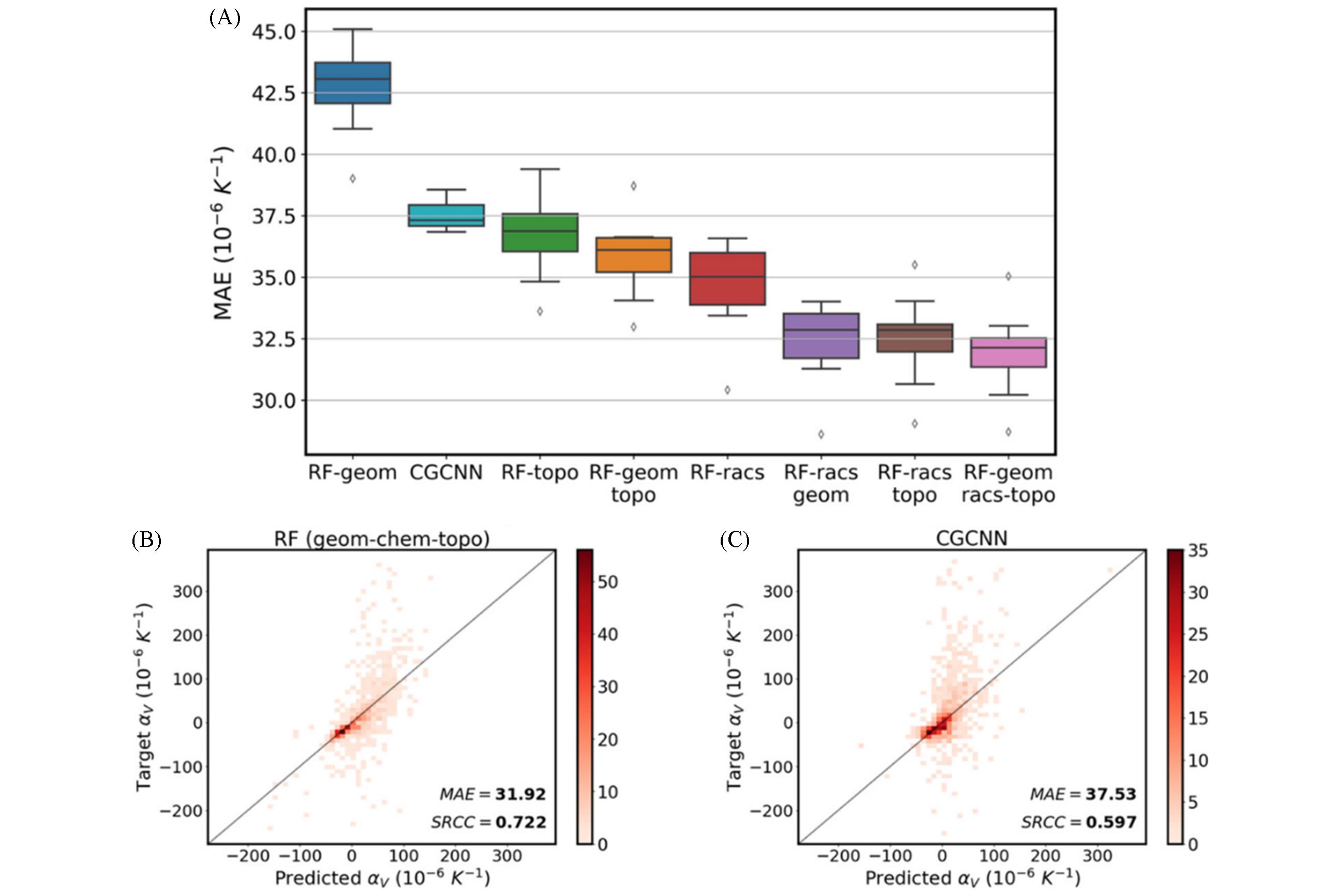
Fig.4 MAE of models predicting CTE using three different feature combinations(A), parity plot of the best⁃performing RF model predicting CTE(B) and parity plot of the CGCNN model predicting CTE(C)[62]Copyright 2024, American Chemical Society.
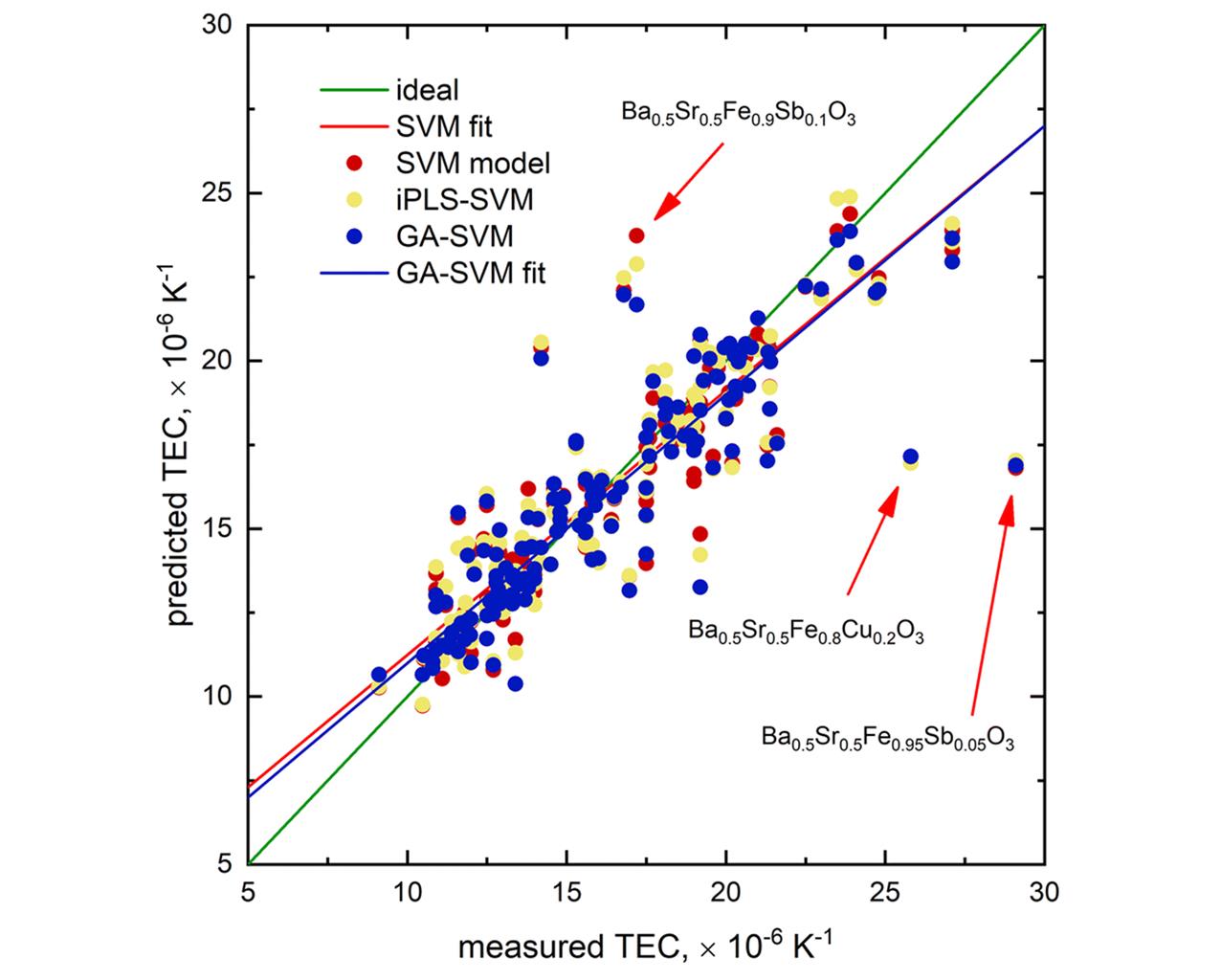
Fig.5 Comparison of SVM models generated using different feature selection methods[64]Copyright 2023, the Royal Society of Chemistry.
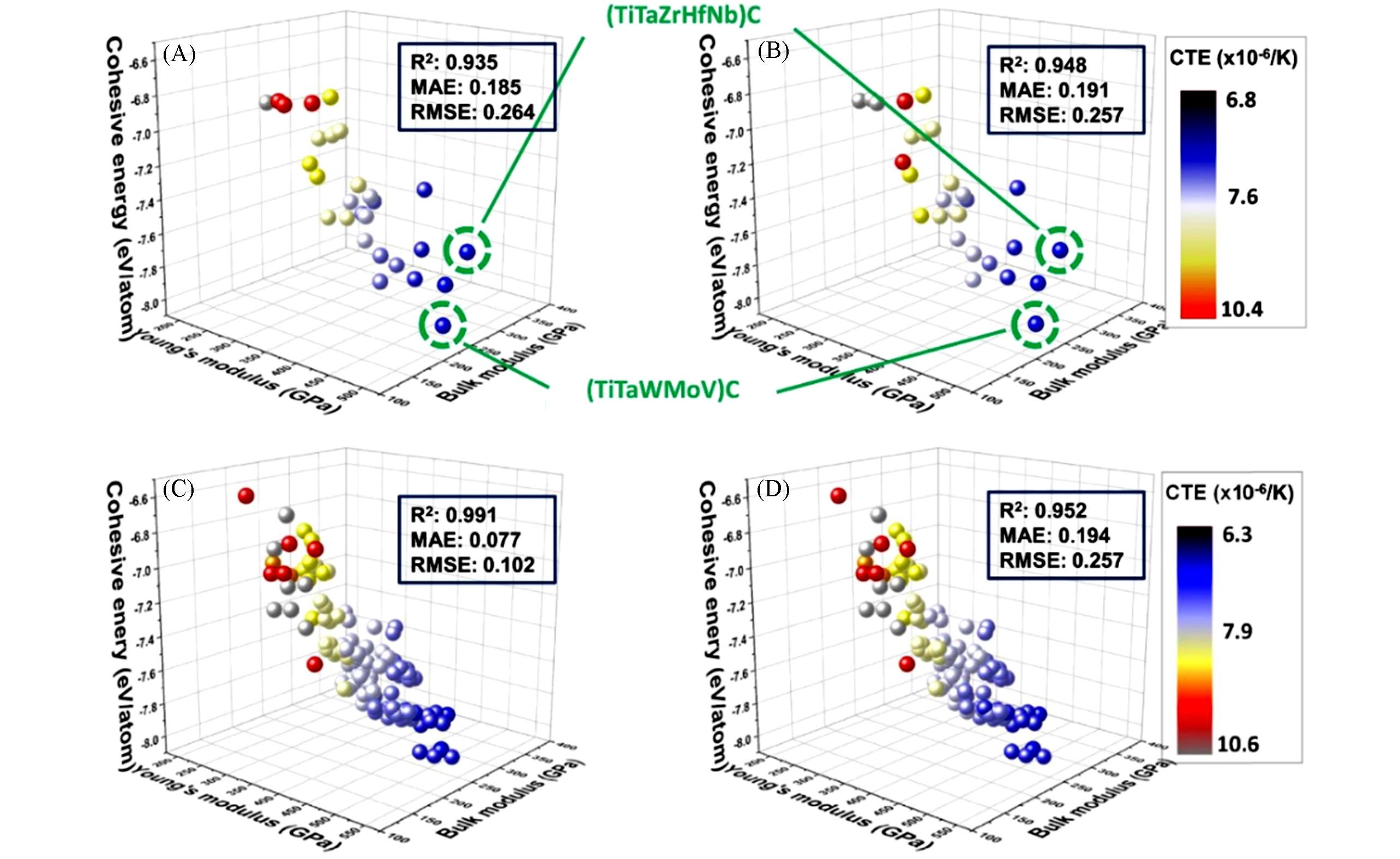
Fig.6 3D plots of the RF test set(A), the NN test set(B), the RF training set(C), and the NN training set generated using three parameters(bulk modulus, Young’s modulus, and cohesive energy)(D)[66]The CTE magnitude in the 3D plots is indicated by the color scale shown on the right. Copyright 2024, Elsevier.
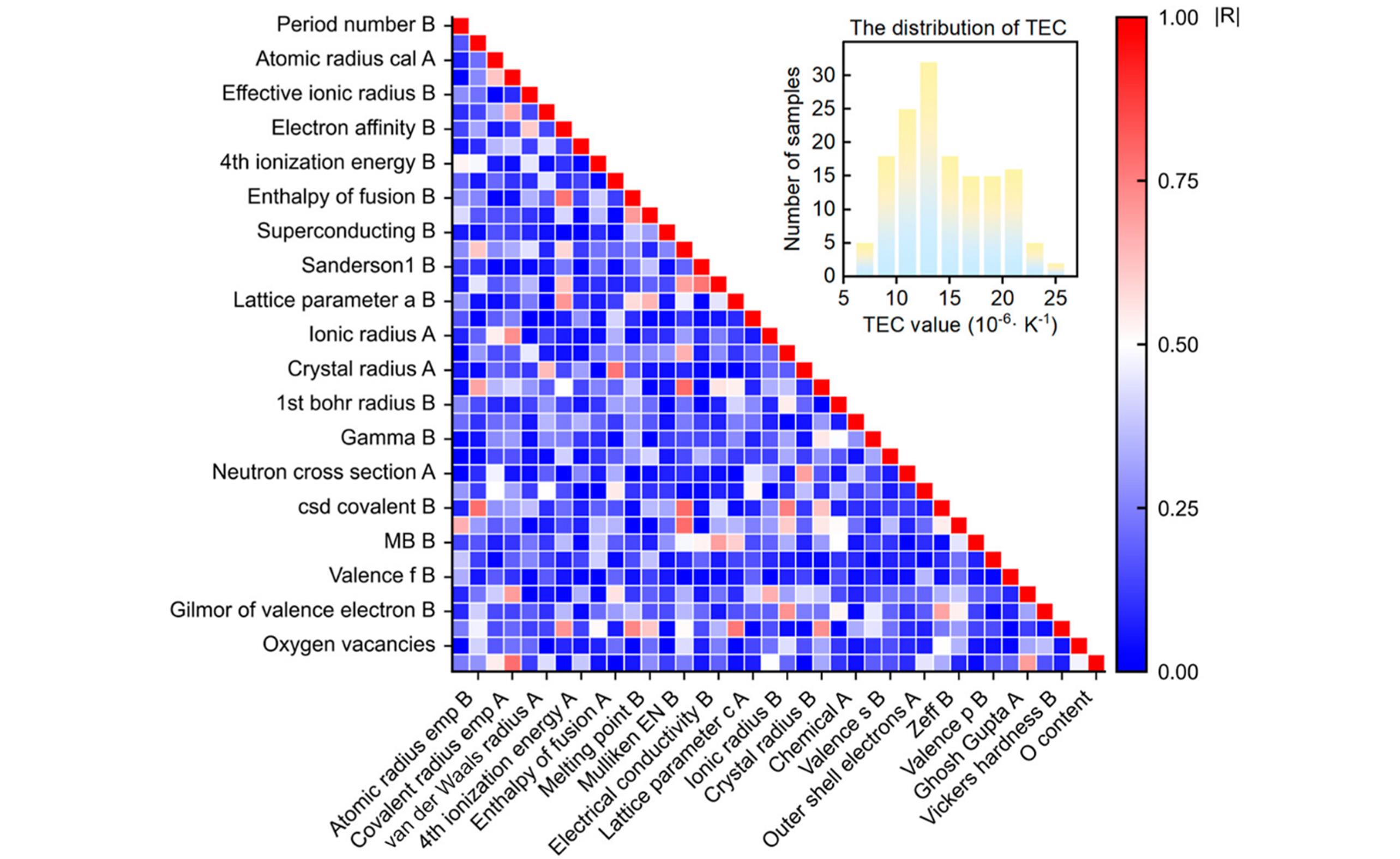
Fig.7 CTE distribution in the dataset and Pearson correlation heatmap of the selected 38 feature variables[67]Copyright 2025, American Chemical Society.
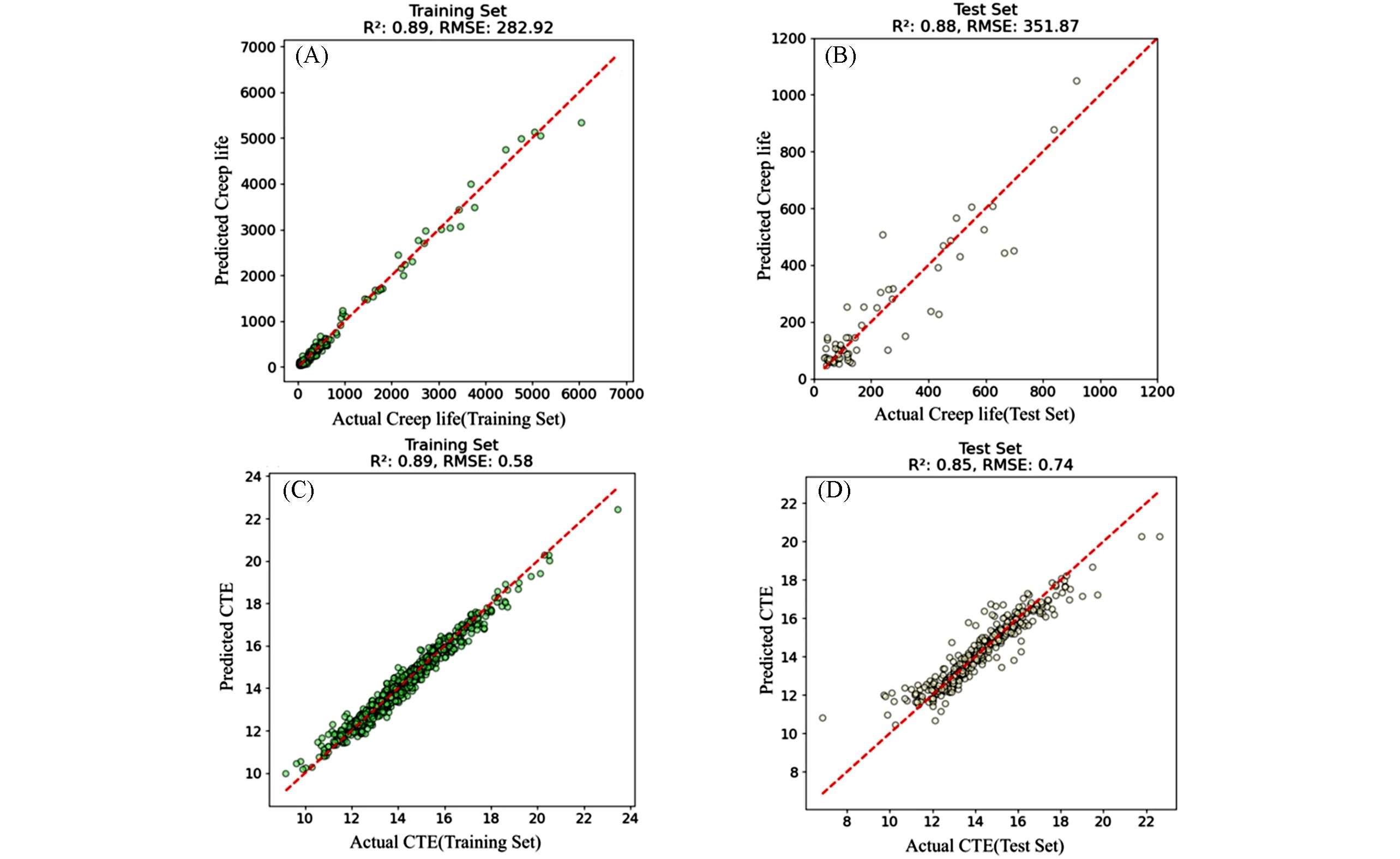
Fig.8 Relationships between predicted values and experimental calculated values of creep life training set(A), creep life test set(B), CTE training set(C) and CTE test set(D)[69]Copyright 2025, Springer Nature.
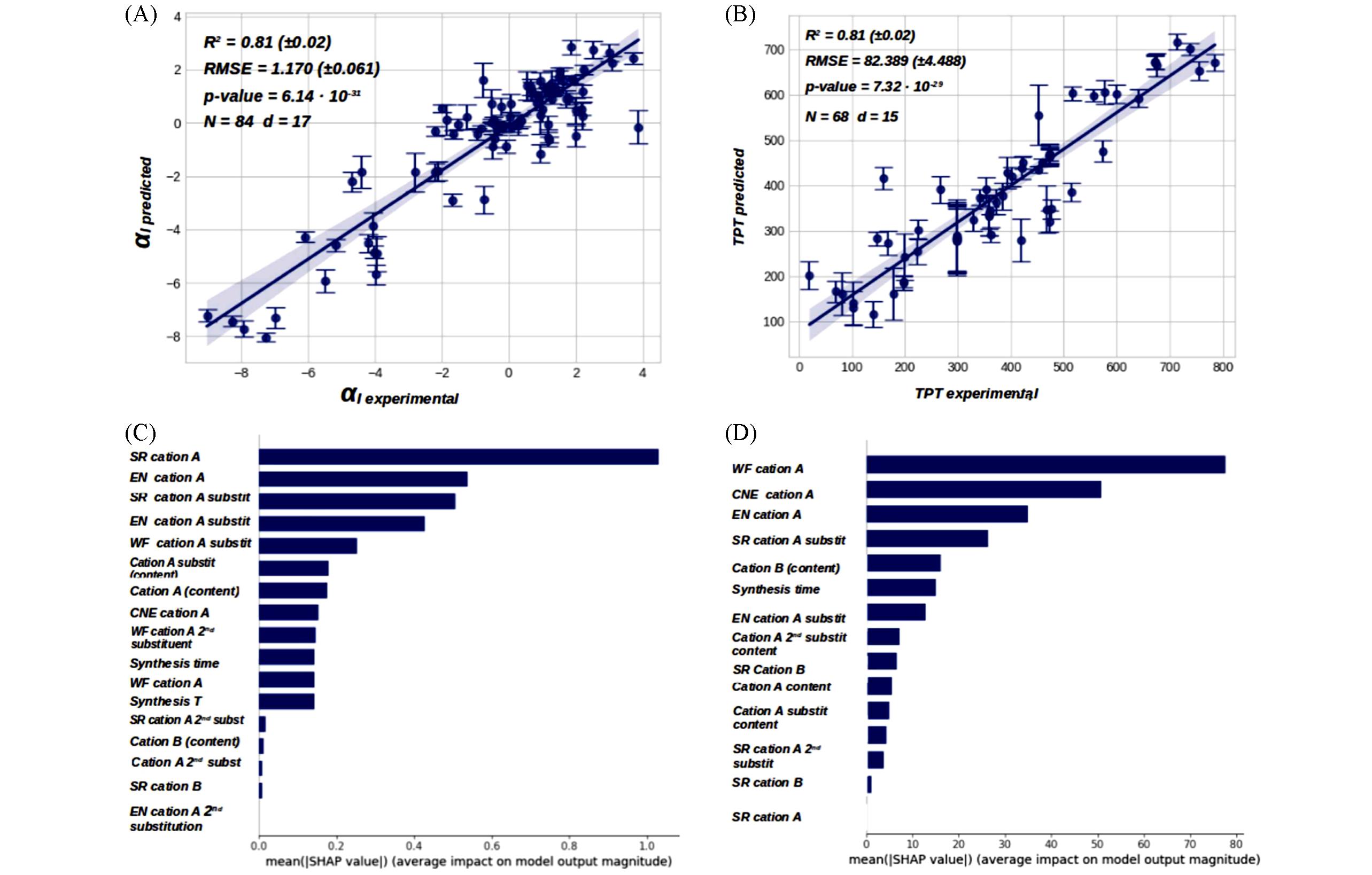
Fig.9 Relationships between experimental and predicted CTE values(A) and phase transition temperature(B), and SHAP value explanation of the importance of features in predicting CTE(C) and phase transition temperature(D)[71]Copyright 2024, Elsevier.
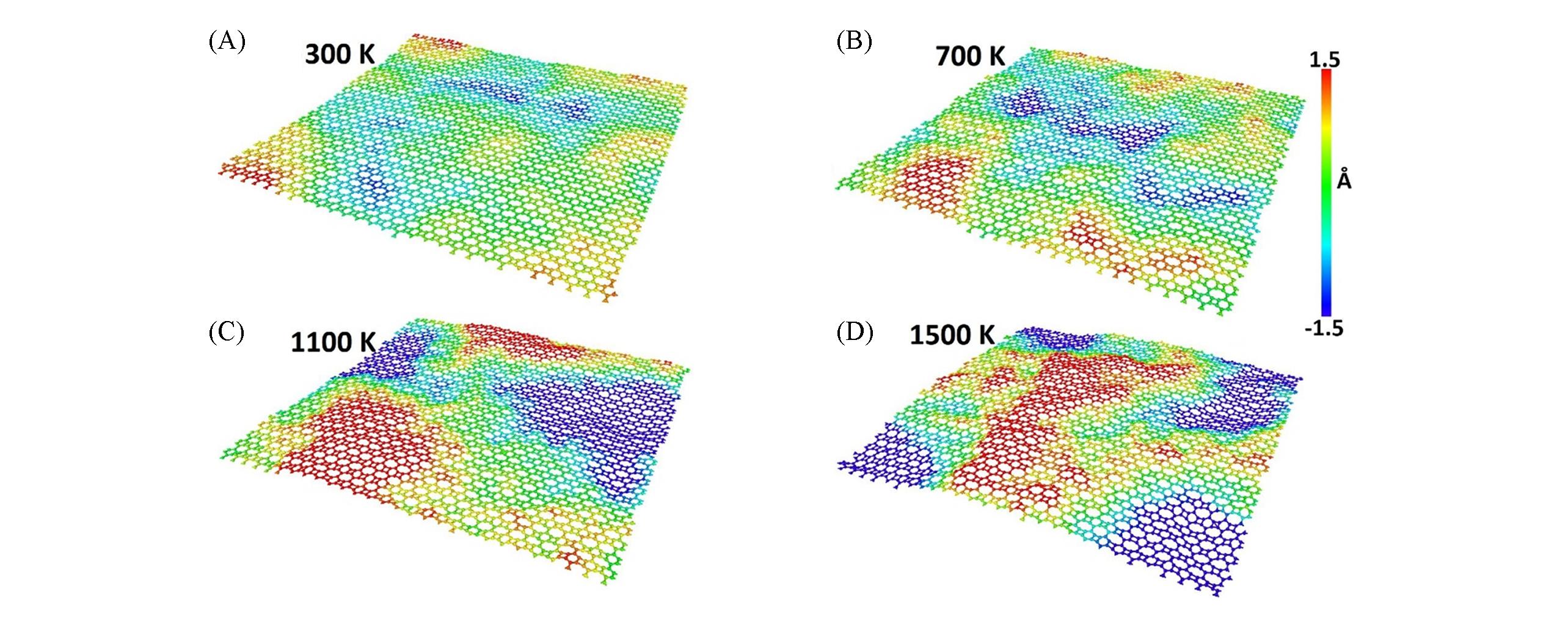
Fig.10 Atomic configurations of a biphenyl monolayer at different temperatures[77]The color coding indicates the displacement of atoms relative to the center of mass of the system along the out-of-plane direction.Copyright 2022, Elsevier.
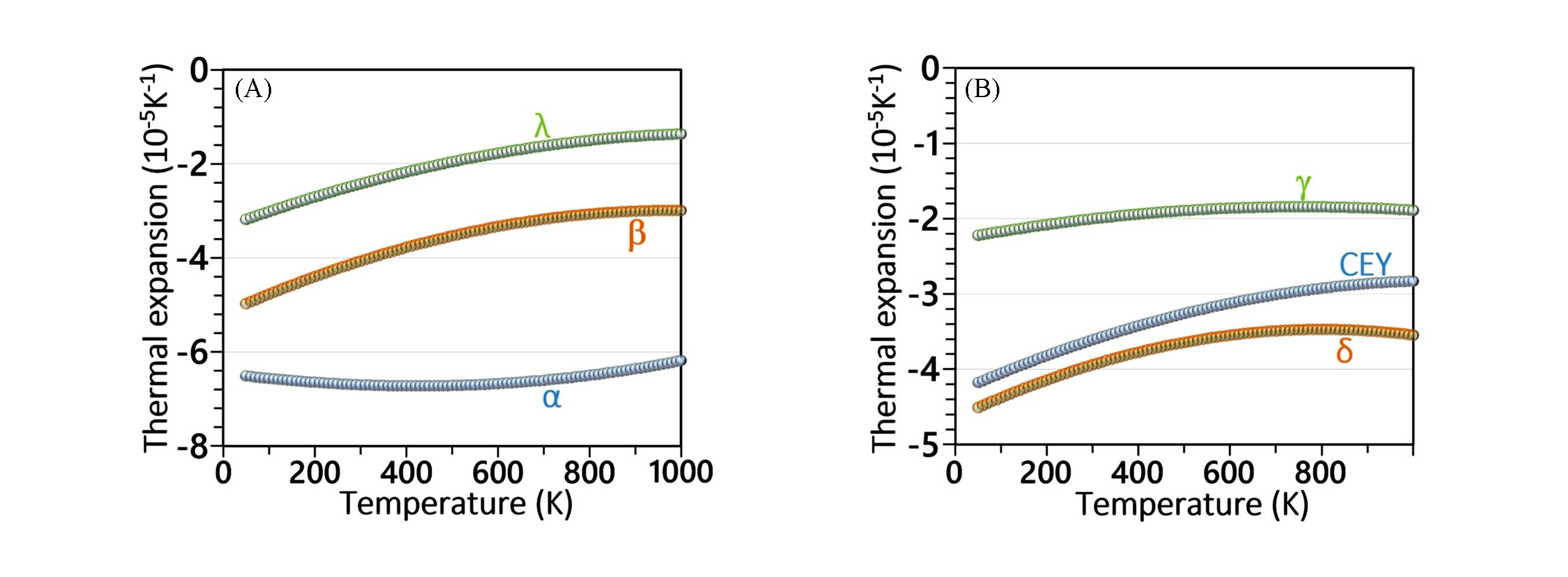
Fig.11 Changes in CTE of six types of graphyne with temperature[78]Copyright 2022, Elsevier.
| Descriptor type | Examples of specific features | Research object | Ref. |
|---|---|---|---|
Chemical/Compositional Features | Elemental molar fraction, atomic/ionic radius, electronegativity, effective nuclear charge, work function, atomic mass, etc. | Glass composition; Perovskite electronegativity/radius; A⁃site cation properties | [ [ [ |
Geometric/Structural Features | Lattice constants, bond lengths, bond angles, unit cell volume, number of cation polyhedra, porosity, coordination number, etc. | Unit cell parameters; Polyhedral features; Porosity | [ [ [ |
Mechanical/Physical Features | Bulk modulus, Young's modulus, cohesive energy, in⁃plane stiffness, out⁃of⁃plane bending stiffness, Debye temperature, etc. | High⁃entropy ceramic moduli/energy; 2D material stiffness; Elastic constants | [ [ [ |
Topological/Graph Features | Connectivity factor, persistent homology features, SMILES codes, structural unit connection modes | Connection modes; MOF topological features; SMILES | [ [ [ |
Table 1 Classification of commonly used descriptors for the thermal expansion properties of materials in machine learning research
| Descriptor type | Examples of specific features | Research object | Ref. |
|---|---|---|---|
Chemical/Compositional Features | Elemental molar fraction, atomic/ionic radius, electronegativity, effective nuclear charge, work function, atomic mass, etc. | Glass composition; Perovskite electronegativity/radius; A⁃site cation properties | [ [ [ |
Geometric/Structural Features | Lattice constants, bond lengths, bond angles, unit cell volume, number of cation polyhedra, porosity, coordination number, etc. | Unit cell parameters; Polyhedral features; Porosity | [ [ [ |
Mechanical/Physical Features | Bulk modulus, Young's modulus, cohesive energy, in⁃plane stiffness, out⁃of⁃plane bending stiffness, Debye temperature, etc. | High⁃entropy ceramic moduli/energy; 2D material stiffness; Elastic constants | [ [ [ |
Topological/Graph Features | Connectivity factor, persistent homology features, SMILES codes, structural unit connection modes | Connection modes; MOF topological features; SMILES | [ [ [ |
| Material systems | Typical representatives | Research focus |
|---|---|---|
| Framework oxides | RE2Si2O7, ZrW2O8, PbTiO3, cubic oxides, perovskites(ABO3) | Single⁃objective CTE prediction; correlation of polyhedral features; feature selection optimization. |
| Fluorides | ScF3, REO3⁃type fluorides | Structural flexibility and NTE classification prediction; screening for new materials. |
| Metals/Alloys | Ni⁃based superalloys, high⁃entropy alloys(HEAs), FeZr2 | Balancing mechanical properties(creep) and thermal expansion; prediction of phase transition temperatures. |
| 2D Materials | Graphene, Graphyne, biphenylene monolayer, C3N | Simulating atomic rippling mechanisms using MLIPs; analysis of substrate effects. |
| Porous Framework Materials | HKUST⁃1, UiO⁃66, prussian blue analogues(PBAs) | Analysis of complex topological structures; effect of porosity on thermal expansion. |
| Amorphous/Others | Silicate glasses, concrete, high⁃entropy ceramics | Composition⁃property regression prediction; analysis of aggregate influence. |
Table 2 Main material systems where machine learning has been applied to negative thermal expansion research
| Material systems | Typical representatives | Research focus |
|---|---|---|
| Framework oxides | RE2Si2O7, ZrW2O8, PbTiO3, cubic oxides, perovskites(ABO3) | Single⁃objective CTE prediction; correlation of polyhedral features; feature selection optimization. |
| Fluorides | ScF3, REO3⁃type fluorides | Structural flexibility and NTE classification prediction; screening for new materials. |
| Metals/Alloys | Ni⁃based superalloys, high⁃entropy alloys(HEAs), FeZr2 | Balancing mechanical properties(creep) and thermal expansion; prediction of phase transition temperatures. |
| 2D Materials | Graphene, Graphyne, biphenylene monolayer, C3N | Simulating atomic rippling mechanisms using MLIPs; analysis of substrate effects. |
| Porous Framework Materials | HKUST⁃1, UiO⁃66, prussian blue analogues(PBAs) | Analysis of complex topological structures; effect of porosity on thermal expansion. |
| Amorphous/Others | Silicate glasses, concrete, high⁃entropy ceramics | Composition⁃property regression prediction; analysis of aggregate influence. |
| [1] | Liang E., Sun Q., Yuan H., Wang J., Zeng G., Gao Q., Front. Phys., 2021, 16(5), 53302 |
| [2] | Takenaka K., Mater. Trans., 2024, 65(3), 243—252 |
| [3] | Dubey D., Mirhakimi A. S., Elbestawi M. A., J. Manuf. Mater. Process., 2024, 8(1), 40 |
| [4] | Crisan V., Entel P., Ebert H., Akai H., Johnson D. D., Staunton J., Phys. Rev. B, 2002, 66(1), 014416 |
| [5] | Takenaka K., Takagi H., Appl. Phys. Lett., 2005, 87(26), 261902 |
| [6] | Huang R., Liu Y., Fan W., Tan J., Xiao F., Qian L., Li L., J. Am. Chem. Soc., 2013, 135(31), 11469—11472 |
| [7] | Azuma M., Chen W. T., Seki H., Czapski M., Olga S., Oka K., Mizumaki M., Watanuki T., Ishimatsu N., Kawamura N., Nat. Commun., 2011, 2(1), 347 |
| [8] | Long Y., Hayashi N., Saito T., Azuma M., Muranaka S., Shimakawa Y., Nature, 2009, 458(7234), 60—63 |
| [9] | Pan Z., Fang Y. W., Nishikubo T., Hu L., Kawaguchi S., Azuma M., Chem. Mater., 2022, 34(6), 2798—2803 |
| [10] | Mary T. A., Evans J., Vogt T., Sleight A., Science, 1996, 272(5258), 90—92 |
| [11] | Greve B. K., Martin K. L., Lee P. L., Chupas P. J., Chapman K. W., Wilkinson A. P., J. Am. Chem. Soc., 2010, 132(44),15496—15498 |
| [12] | Goodwin A. L., Calleja M., Conterio M. J., Dove M. T., Evans J. S., Keen D. A., Peters L., Tucker M. G., Science, 2008, 319(5864), 794—797 |
| [13] | Gao Q., Wang J., Sanson A., Sun Q., Liang E., Xing X., Chen J., J. Am. Chem. Soc., 2020, 142(15), 6935—6939 |
| [14] | Gao Q., Sun Y., Shi N., Milazzo R., Pollastri S., Olivi L., Huang Q., Liu H., Sanson A., Sun Q., Scr. Mater., 2020, 187, 119—124 |
| [15] | Gao Q., Shi X., Venier A., Carnera A., Huang Q., Wu H., Chen J., Sanson A., Liang E., Inorg. Chem., 2020, 59(20), 14852—14855 |
| [16] | Gao Q., Sun Q., Venier A., Sanson A., Huang Q., Jia Y., Liang E., Chen J., Sci. China Mater., 2022, 65(2),553—557 |
| [17] | Gao Q., Jiao Y., Sanson A., Liang E., Sun Q., Chin. Chem. Lett., 2023, 34(5), 107564 |
| [18] | Jiao Y., Gao Q., Sanson A., Liang E., Sun Q., Chen J., Inorg. Chem., 2022, 61(20), 7813—7819 |
| [19] | Luo Y., Qiao Y., Gao Q., Wang J., Guo J., Ren X., Chao M., Sun Q., Jia Y., Liang E., Inorg. Chem., 2021, 60(23), 17758—17764 |
| [20] | Gao Q., Luo Y., Qiao Y., Guo J., Liang E., Ceram. Int., 2022, 48(23), 34707—34712 |
| [21] | Gao Y., Wang C., Gao Q., Guo J., Chao M., Jia Y., Liang E., Inorg. Chem., 2020, 59(24), 18427—18431 |
| [22] | Hu T., Qiao Y., Li M., Fan W., Guo J., Xu M., Gao Q., Appl. Phys. Lett., 2025, 126(20), 202201 |
| [23] | Wang Q., Qiao Y., Zhao K., Zhang P., Zhao H., Guo J., Shi X., Liang E., Gao Q., Acta Mater., 2024, 281, 120358 |
| [24] | Zhao H., Qiao Y., Zhao K., Wang Q., Zhang P., Guo J., Chao M., Liang E., Gao Q., Small, 2024, 20(42), 2403000 |
| [25] | Chen X., Gao Q., Zhao K., Qiao Y., Sanson A., Sun Q., Guo J., Kawaguchi S., Liang E., Chen J., Chem. Sci., 2025, 16(35), 16331—16338 |
| [26] | Yuan H., Wang C., Gao Q., Zeng G., Guo J., Chao M., Kawaguchi S., Jia Y., Liang E., Mater. Horiz., 2021, 8(9), 2562—2568 |
| [27] | Vasilyev D., Gorev V., Physica B, 2025, 699, 416850 |
| [28] | Weck P. F., Kim E., Gordon M. E., Greathouse J. A., Dingreville R., Bryan C. R., ACS Omega, 2018, 3(11), 15780—15788 |
| [29] | Xu M., Li Q., Song Y., Xu Y., Sanson A., Shi N., Wang N., Sun Q., Wang C., Chen X., Nat. Commun., 2023, 14(1), 4439 |
| [30] | Pan Z., Liang Z., Wang X., Fang Y. W., Ye X., Liu Z., Nishikubo T., Sakai Y., Shen X., Liu Q., Mater. Horiz., 2024, 11(21), 5394—5401 |
| [31] | Schleder G. R., Padilha A. C., Acosta C. M., Costa M., Fazzio A., J. Phys. Mater., 2019, 2(3), 032001 |
| [32] | Pollice R., dos Passos Gomes G., Aldeghi M., Hickman R. J., Krenn M., Lavigne C., Lindner⁃D’Addario M., Nigam A., Ser C. T., Yao Z., Acc. Chem. Res., 2021, 54(4), 849—860 |
| [33] | Gao C., Min X., Fang M., Tao T., Zheng X., Liu Y., Wu X., Huang Z., Adv. Funct. Mater., 2022, 32(1),2108044 |
| [34] | Schmidt J., Shi J., Borlido P., Chen L., Botti S., Marques M. A., Chem. Mater., 2017, 29(12),5090—5103 |
| [35] | Tawfik S. A., Isayev O., Stampfl C., Shapter J., Winkler D. A., Ford M. J., Adv. Theory Simul., 2019, 2(1), 1800128 |
| [36] | Banik S., Balasubramanian K., Manna S., Derrible S., Sankaranarayananan S. K., Comput. Mater. Sci., 2024, 236, 112847 |
| [37] | Zhu L., Zhou J., Sun Z., J. Phys. Chem. Lett., 2022, 13(18), 3965—3977 |
| [38] | Singh D., Singh B., Pattern Recognit., 2022, 122, 108307 |
| [39] | Wang J., Xu P., Ji X., Li M., Lu W., Materials, 2023, 16(8), 3134 |
| [40] | Han G., Sun Y., Feng Y., Lin G., Lu N., ES Mater. Manuf., 2021, 14(18), 20—35 |
| [41] | Tang F., Ishwaran H., Stat. Anal. Data Min., 2017, 10(6), 363—377 |
| [42] | Qayyum F., Kim D. H., Bong S. J., Chi S. Y., Choi Y. H., Materials, 2022, 15(4), 1428 |
| [43] | Bonacini L., Aoyote Pedraza I. L., Senni A. P., Tronco M. L., IEEE Lat. Am. Trans., 2022, 20(12), 2471—2477 |
| [44] | Maulud D., Abdulazeez A. M., J. Appl. Sci. Technol. Trends, 2020, 1(2), 140—147 |
| [45] | Selvaratnam B., Oliynyk A. O., Mar A., Inorg. Chem., 2023, 62(28), 10865—10875 |
| [46] | Salman H. A., Kalakech A., Steiti A. Babylon., J. Mach. Learn., 2024, 2024, 69—79 |
| [47] | Zheng B., Gu G. X., ACS Appl. Nano Mater., 2021, 4(3), 3167—3174 |
| [48] | Liang H., Jiang K., Yan T. A., Chen G. H., ACS Omega, 2021, 6(13), 9066—9076 |
| [49] | Valkenborg D., Rousseau A. J., Geubbelmans M., Burzykowski T., Am. J. Orthod. Dentofacial Orthop., 2023, 164(5), 754—757 |
| [50] | Liu X., Tian S., Tao F., Yu W., Compos. Part B Eng., 2021, 224, 109152 |
| [51] | Mortazavi B., Zhuang X., Rabczuk T., Shapeev A. V., Mater. Horiz., 2023, 10(6), 1956—1968 |
| [52] | Anstine D. M., Isayev O., J. Phys. Chem. A, 2023, 127(11), 2417—2431 |
| [53] | Bhagat M., Bakariya B., IJSAT, 2025, 16(1), 1—4 |
| [54] | Oviedo F., Ferres J. L., Buonassisi T., Butler K. T., Acc. Mater. Res., 2022, 3(6), 597—607 |
| [55] | Zhong X., Gallagher B., Liu S., Kailkhura B., Hiszpanski A., Han T. Y. J., npj Comput. Mater., 2022, 8(1), 204 |
| [56] | Ayyasamy M. V., Deijkers J. A., Wadley H. .N., Balachandran P. V., J. Am. Ceram. Soc., 2020, 103(8), 4489—4497 |
| [57] | Gracheva E., Lambard G., Samitsu S., Sodeyama K., Nakata A., Sci. Technol. Adv. Mater. Methods, 2021, 1(1), 213—224 |
| [58] | Zhang Y., Mu H., Cai Y., Wang X., Zhou K., Tian F., Fu Y., Zhang L., Chin. Phys. B, 2023, 32(5), 056302 |
| [59] | Tang Y., Zhu G., Tan Q., Kong D., Cao Y., Wang R., Mater. Lett., 2024, 372, 137047 |
| [60] | Nilsen V., Pham L. T., Hibbard M., Klager A., Cramer S. M., Morgan D., Constr. Build. Mater., 2019, 220,587—595 |
| [61] | Tripathi B. M., Sinha A., Mahata T., Mater. Today Proc., 2022, 67, 326—329 |
| [62] | Yue Y., Mohamed S. A., Jiang J., J. Chem. Inf. Model., 2024, 64(13), 4966—4979 |
| [63] | Tian S., Zhou K., Yin W., Liu Y., Nat. Commun., 2024, 15(1),6977 |
| [64] | McGuinness K. P., Oliynyk A. O., Lee S., Molero⁃Sanchez B., Addo P. K., Phys. Chem. Chem. Phys., 2023, 25(46), 32123—32131 |
| [65] | Yang H., Gao C., Jiang D., Zhong D., Ma Y., Li Y., Xing L., Zhao H., Yang L., Li Z., J. Adv. Ceram., 2025, 14(8), 9221117 |
| [66] | Kim M., Kim J., Kim H., Kim J., Int. J. Refract. Met. Hard Mater., 2024, 122, 106738 |
| [67] | Wang K., Lei M., Zhou X. G., Chen D., Zhu Y. A., Ind. Eng. Chem. Res., 2025, 64(21), 10508—10521 |
| [68] | Ma Q., Li X., Xin R., Liu E., Gao Q., Sun L., Zhang X., Zhang C., J. Mater. Res. Technol., 2023, 26, 4168—4178 |
| [69] | Zhu Y., Peng W., Du D., Dong A., Sun B., Jiang P., J. Mater. Sci., 2025, 60, 9743—9757 |
| [70] | Cai Y., Wang C., Yuan H., Guo Y., Cho J. H., Xing X., Jia Y., Mater. Horiz., 2024, 11(12),2914—2925 |
| [71] | Kireeva N., Tsivadze A. Y., J. Alloys Compd., 2024, 990,174356 |
| [72] | Zeng Y., Cao H., Ouyang Q., Qian Q., Mater. Today Commun., 2021, 27, 102314 |
| [73] | Peng J., Gunda N. H., Bridges C. A., Lee S., Haynes J. A., Shin D., Comput. Mater. Sci., 2022, 210, 111034 |
| [74] | Xu P., Ma Y., Lu W., Li M., Zhao W., Dai Z., J. Mater. Inf., 2025, 5(2), 26 |
| [75] | Mortazavi B., Rajabpour A., Zhuang X., Rabczuk T., Shapeev A. V., Carbon, 2022, 186, 501—508 |
| [76] | Yang G., Hu Y., Qiu Z., Li B. L., Zhou P., Li D., Zhang G., Appl. Phys. Lett., 2023, 122(8), 082202 |
| [77] | Mortazavi B., Shapeev A. V., FlatChem, 2022, 32, 100347 |
| [78] | Mortazavi B., Zhuang X., FlatChem, 2022, 36, 100446 |
| [79] | Rajabpour A., Mortazavi B., Condensed Matter, 2022, 7(4), 67 |
| [80] | Gao Z., Zhou X., Xu M., Xu Y., Tian F., Acta Mater., 2025, 300, 121493 |
| [1] | 王鑫, 张令, 张海军, 王军凯. 碳纳米管-碳酸钙共包覆超疏水镁钙砂的制备及抗水化性能[J]. 高等学校化学学报, 2026, 47(6): 20250216. |
| [2] | 陈君杰 许翰坤 李强 邓金侠 林鲲. [无机固体化学专栏]磁性金属氧化物的新视角:非晶化的挑战[J]. 高等学校化学学报, 0, (): 20260142. |
| [3] | 黄永烽, 黄文婷, 刘文宝, 刘岳峰, 刘伟, 徐成俊. 锌离子电池正极材料V2O5的储能机理和容量衰减原因[J]. 高等学校化学学报, 2020, 41(8): 1859. |
| [4] | 刘建,杜海会,孙田将,年庆舜,李海霞,陶占良. 钙钒青铜/碳纳米管复合材料的制备及电化学性能[J]. 高等学校化学学报, 2019, 40(12): 2526. |
| [5] | 惠龙飞, 李建国, 龚婷, 孙道安, 吕剑, 胡申林, 冯昊. 高长径比管式反应器内壁SiO2与TiO2钝化层的原子层沉积制备及抗积碳性能[J]. 高等学校化学学报, 2019, 40(2): 201. |
| [6] | 雷璇璇, 唐韶坤, 李林, 孙丽伟. 离子液体辅助水热法合成六方片状γ-Al2O3[J]. 高等学校化学学报, 2018, 39(11): 2372. |
| [7] | 马晓坤, 盛野, 周兵, 王子忱. 超细高分散碳酸钙的原位制备及性能[J]. 高等学校化学学报, 2018, 39(3): 491. |
| [8] | 杨涛, 程铁欣, 周广栋. Ag+,Sr2+,Yb3+双掺杂对Ca3 Co4 O9-δ热电性能的影响[J]. 高等学校化学学报, 2017, 38(8): 1309. |
| [9] | 屠国平, 何剑灵, 肖学章, 陈立新, 任钱江, 杜锡勇, 骆明儿. h-BN负载纳米NbH对LiBH4放氢性能的协同改性作用[J]. 高等学校化学学报, 2016, 37(10): 1757. |
| [10] | 刘团春, 唐韶坤, 纪晓伟, 韩培. 以离子液体为铝源和模板合成氧化铝纳米纤维[J]. 高等学校化学学报, 2016, 37(5): 817. |
| [11] | 刘敏, 王秀玲, 刘勇健, 陈勇兵, 甫亚锋, 周翔. 荧光磁性双功能Fe3O4/Alendronate@CdSe/CdS纳米复合物的制备与表征[J]. 高等学校化学学报, 2015, 36(5): 850. |
| [12] | 李霞, 张霞, 朱泽峰, 林国庆, 李有彬, 李晓雪, 徐君莉. TiO2/Ag2NCN复合光催化剂的制备与可见光催化性能[J]. 高等学校化学学报, 2015, 36(2): 361. |
| [13] | 刘海镇, 王新华, 刘永安, 严密. AlH3的制备及放氢特性[J]. 高等学校化学学报, 2013, 34(10): 2274. |
| [14] | 张志敏, 梁晓娟, 赵斌宇, 陈兆平, 刘炳峰, 钟家松, 向卫东, 吕春燕. Ce,Mn:YAG单晶的生长及光学性能[J]. 高等学校化学学报, 2013, 34(8): 1826. |
| [15] | 刘昊, 徐芬, 孙立贤, 曹忠, 周怀营. Al-LiBH4复合材料的制备与产氢性能[J]. 高等学校化学学报, 2013, 34(8): 1953. |
| 阅读次数 | ||||||
|
全文 |
|
|||||
|
摘要 |
|
|||||
