

Chem. J. Chinese Universities ›› 2026, Vol. 47 ›› Issue (1): 20250314.doi: 10.7503/cjcu20250314
• Article • Previous Articles Next Articles
DONG Binbin1,2, HOU Zong1, ZHENG Zhong1, XING Junpeng1, LIU Zhiqiang1,2( ), LIU Shu1,2()
Received:2025-10-27
Online:2026-01-10
Published:2025-11-24
Contact:
LIU Zhiqiang, LIU Shu
E-mail:liuzq@ciac.ac.cn;liushu@ciac.ac.cn
Supported by:CLC Number:
TrendMD:
DONG Binbin, HOU Zong, ZHENG Zhong, XING Junpeng, LIU Zhiqiang, LIU Shu. Discovery of a Novel Ginseng Polysaccharide: Structure Characterization, in vitro Fermentability and Anti-oxidative Mechanism of Fermented Product via the Nrf2/HO-1 Pathway on A β -induced-PC12 Cells[J]. Chem. J. Chinese Universities, 2026, 47(1): 20250314.
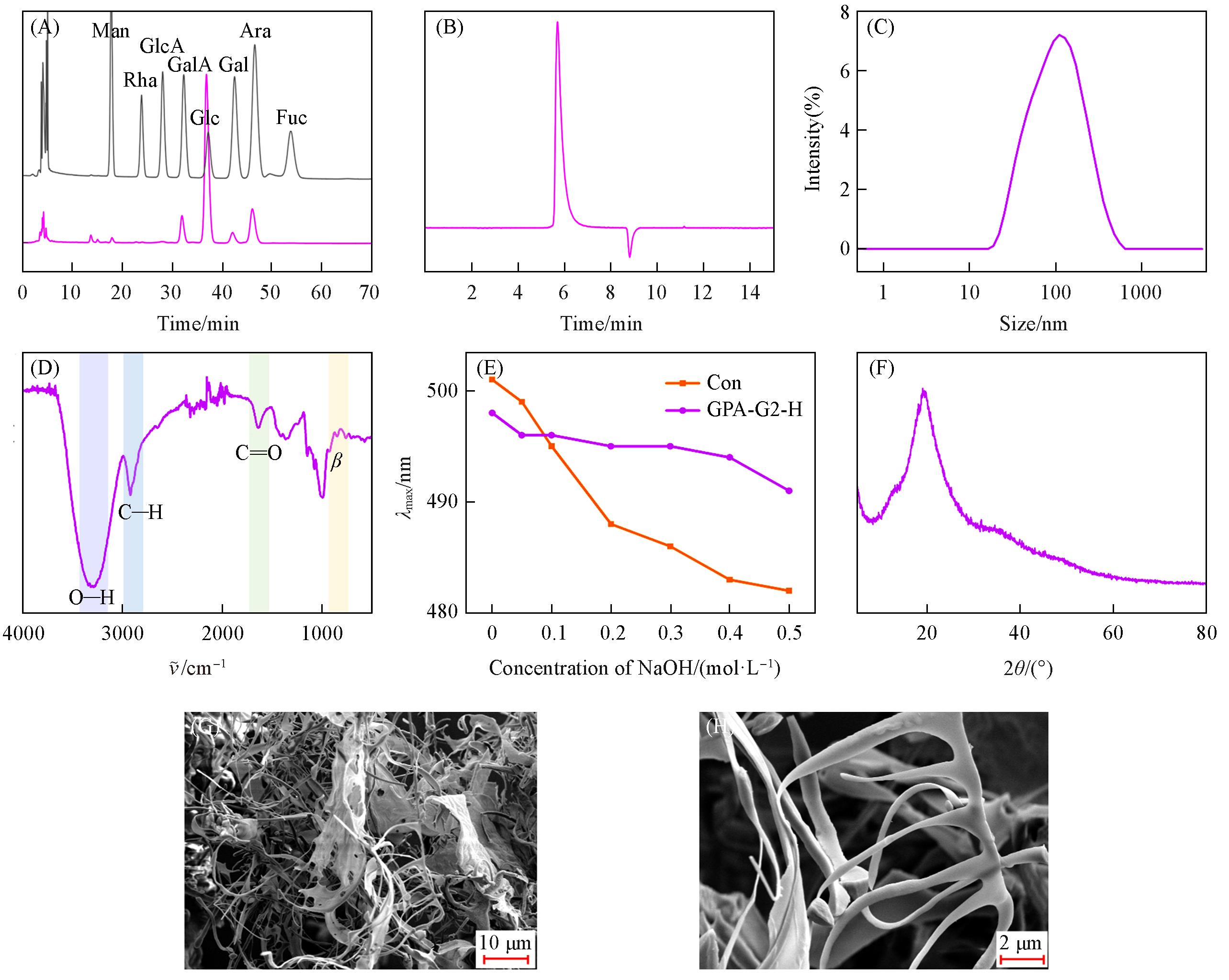
Fig.1 Physicochemical properties of the polysaccharide GPA-G2-H(A) HPLC chromatography; (B) GPC profile; (C) molecular particle size distribution; (D) FTIR spectrum; (E) maximum absorption wavelength of Congo red and Congo red+GPA-G2-H at various concentrations of NaOH solution; (F) XRD spectrum; the SEM images of GPA-G2-H with magnifications of 1000×(G) and 5000×(H).
| Sample | Zeta⁃Average/nm | Zeta⁃potential/mV |
|---|---|---|
| GP | 153.30±5.36 | -7.94±0.29 |
| GPA⁃G2⁃H | 109.69±11.35 | -11.23±0.37 |
Table 1 Particle size and zeta potential of GPA-G2-H
| Sample | Zeta⁃Average/nm | Zeta⁃potential/mV |
|---|---|---|
| GP | 153.30±5.36 | -7.94±0.29 |
| GPA⁃G2⁃H | 109.69±11.35 | -11.23±0.37 |
| RT | PMMA | Type of linkage | Mass fragments, m/z | Molar ratio (%) |
|---|---|---|---|---|
| 10.345 | 2,3,5-Me3-Araf | Araf-(1→ | 45,71,87,101,117,129,145,161 | 1.6 |
| 16.845 | 2,3,4,6-Me4-Glcp | Glcp-(1→ | 45,71,87,101,117,129,145,161,205 | 8.7 |
| 21.660 | 2,3,6-Me3-Glcp | →4)-Glcp-(1→ | 45,87,99,101,113,117,129,131,161,173,233 | 53.6 |
| 24.411 | 2,6-Me2-Glcp | →3,4)-Glcp-(1→ | 45,87,97,117,159,185 | 16.0 |
| 26.629 | 2,3-Me2-Glcp | →4,6)-Glcp-(1→ | 45,71,85,87,99,101,117,127,159,161,201,261 | 7.9 |
Table 2 Methylation analysis of GPA-G2-H using GC-MS
| RT | PMMA | Type of linkage | Mass fragments, m/z | Molar ratio (%) |
|---|---|---|---|---|
| 10.345 | 2,3,5-Me3-Araf | Araf-(1→ | 45,71,87,101,117,129,145,161 | 1.6 |
| 16.845 | 2,3,4,6-Me4-Glcp | Glcp-(1→ | 45,71,87,101,117,129,145,161,205 | 8.7 |
| 21.660 | 2,3,6-Me3-Glcp | →4)-Glcp-(1→ | 45,87,99,101,113,117,129,131,161,173,233 | 53.6 |
| 24.411 | 2,6-Me2-Glcp | →3,4)-Glcp-(1→ | 45,87,97,117,159,185 | 16.0 |
| 26.629 | 2,3-Me2-Glcp | →4,6)-Glcp-(1→ | 45,71,85,87,99,101,117,127,159,161,201,261 | 7.9 |
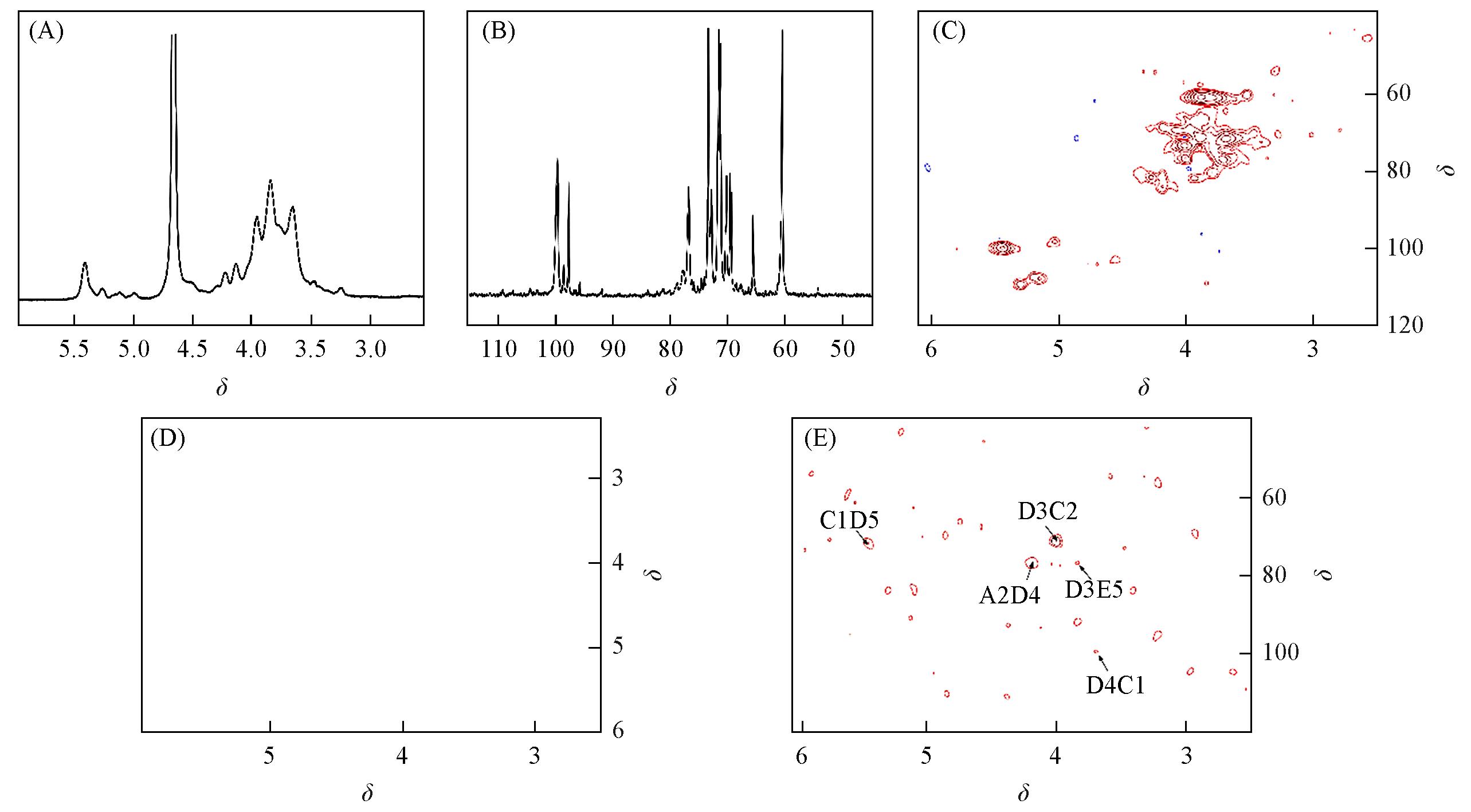
Fig.2 NMR spectra of the GPA-G2-H(A) 1H NMR spectrum; (B) 13C NMR spectrum; (C) 1H-13C HSQC spectrum; (D) 1H-1H COSY spectrum in the anomeric region; (E) 1H-13C HMBC spectrum in the anomeric region.
| Glycosidic bond | H1/C1 | H2/C2 | H3/C3 | H4/C4 | H5/C5 | H6/C6 | |
|---|---|---|---|---|---|---|---|
| A | α-Araf-(1→ | 5.17 108.93 | 4.11 83.13 | 4.14 74.36 | 4.10 83.83 | 3.77 61.21 | — — |
| B | α-Glcp-(1→ | 5.03 98.09 | 3.56 70.95 | 3.70 72.05 | 3.43 69.93 | 3.67 71.43 | 3.65 61.21 |
| C | →4)-α-Glcp-(1→ | 5.44 99.70 | 3.48 71.35 | 3.95 73.96 | 3.63 76.57 | 3.79 71.66 | 3.68 61.43 |
| D | →3,4)-α-Glcp-(1→ | 5.22 107.43 | 3.65 72.05 | 3.86 75.68 | 3.59 77.37 | 3.78 70.15 | 3.66 60.90 |
| E | →4,6)-α-Glcp-(1→ | 5.31 109.82 | 3.57 71.35 | 3.92 75.47 | 3.60 79.42 | 3.77 71.66 | 3.64 64.71 |
Table 3 Chemical shift of signals of 1H NMR and 13C NMR spectra of GPA-G2-H
| Glycosidic bond | H1/C1 | H2/C2 | H3/C3 | H4/C4 | H5/C5 | H6/C6 | |
|---|---|---|---|---|---|---|---|
| A | α-Araf-(1→ | 5.17 108.93 | 4.11 83.13 | 4.14 74.36 | 4.10 83.83 | 3.77 61.21 | — — |
| B | α-Glcp-(1→ | 5.03 98.09 | 3.56 70.95 | 3.70 72.05 | 3.43 69.93 | 3.67 71.43 | 3.65 61.21 |
| C | →4)-α-Glcp-(1→ | 5.44 99.70 | 3.48 71.35 | 3.95 73.96 | 3.63 76.57 | 3.79 71.66 | 3.68 61.43 |
| D | →3,4)-α-Glcp-(1→ | 5.22 107.43 | 3.65 72.05 | 3.86 75.68 | 3.59 77.37 | 3.78 70.15 | 3.66 60.90 |
| E | →4,6)-α-Glcp-(1→ | 5.31 109.82 | 3.57 71.35 | 3.92 75.47 | 3.60 79.42 | 3.77 71.66 | 3.64 64.71 |
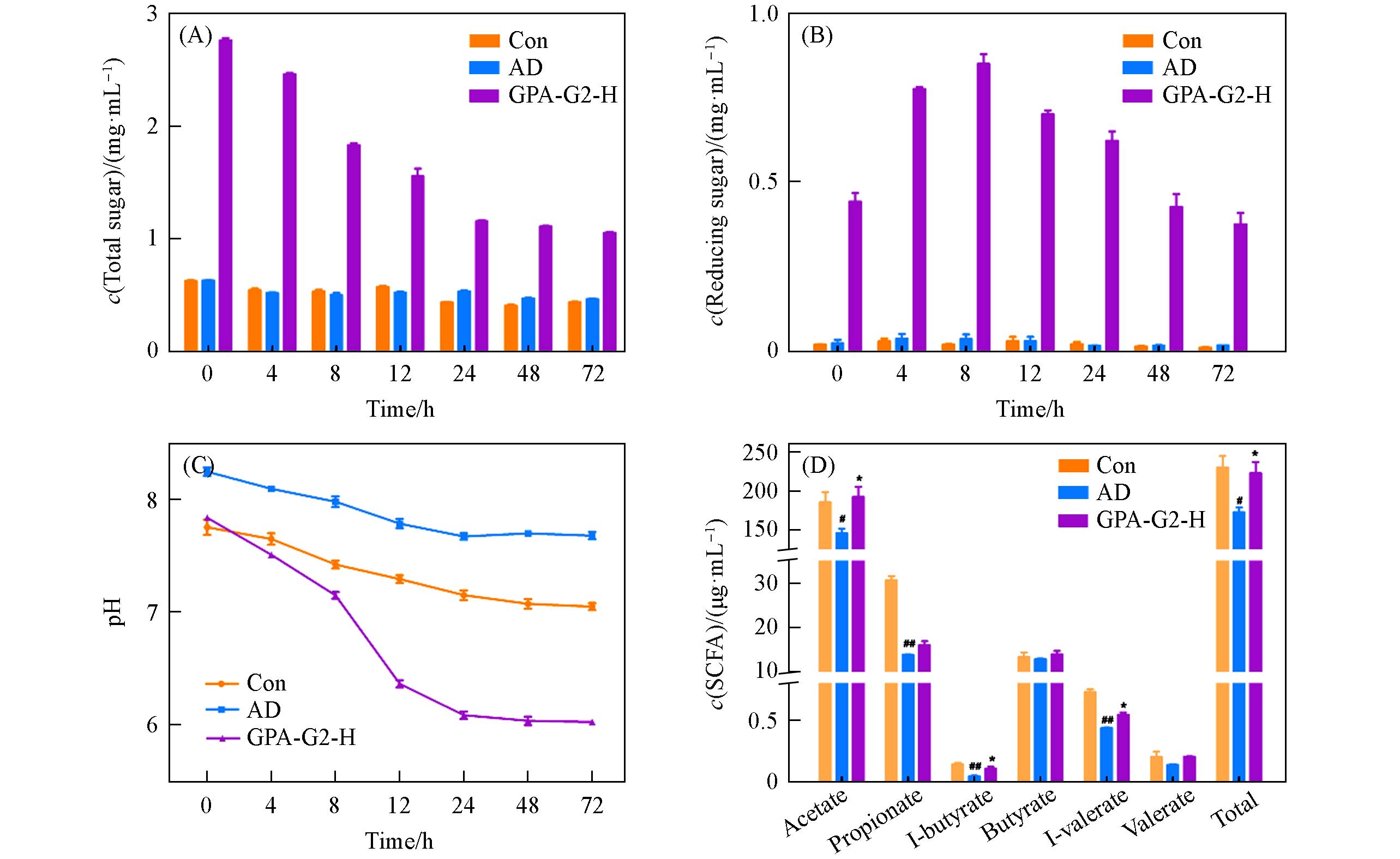
Fig.3 Total sugar concentration changes(A), reducing sugar content changes(B), the pH changes of GPA⁃G2⁃H during in vitro digestion(C) and concentrations of SCFAs(D)
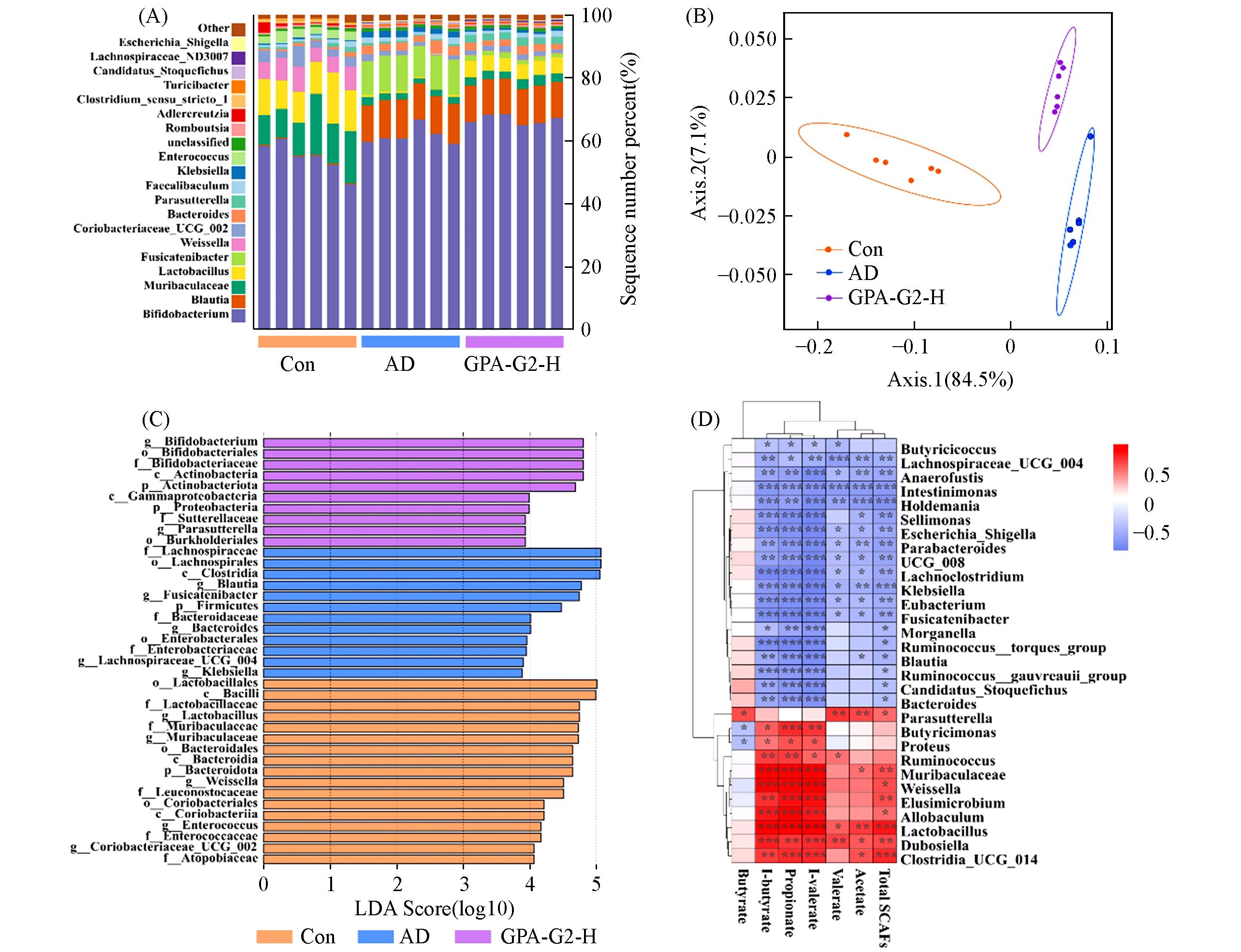
Fig.4 Effect of GPA⁃G2⁃H on intestinal microbiota(A) relative abundance at genus level; (B) PCoA based on Bray-Curtis distances; (C) LDA scores with corresponding phylum; (D) correlation between and SCFAs content and the abundance of microbiota at the phylum level. Data were expressed as means ± SD (n = 6), *P < 0.05, **P < 0.01, ***P < 0.001 vs. AD group.
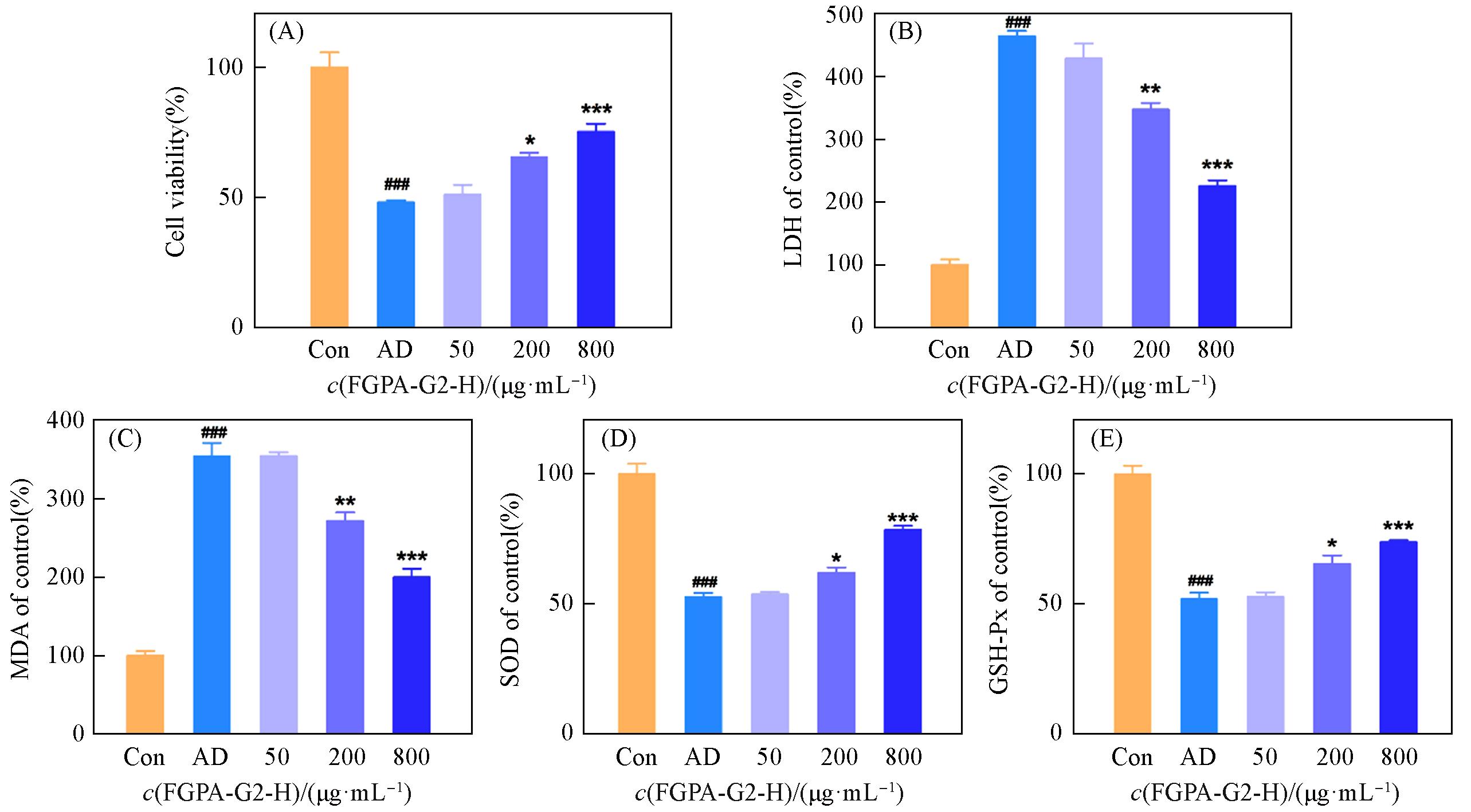
Fig.5 Effect of FGPA⁃G2⁃H(50, 200, 800 μg/mL) on the Aβ25-35 injured PC12 cells viability(A), levels of LDH(B), MDA(C), SOD(D), GSH⁃Px(E) in Aβ25-35 injured PC12 cells
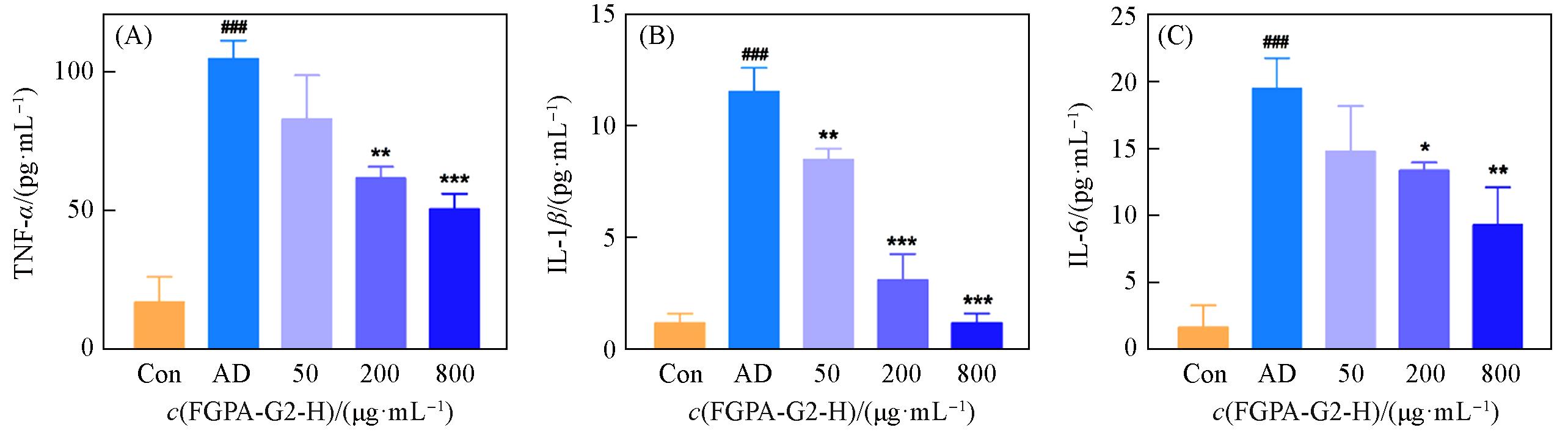
Fig.6 Effect of FGPA⁃G2⁃H(50, 200, 800 μg/mL) onTNF⁃α(A), IL⁃1β(B) and IL⁃6(C) content in Aβ25-35⁃induced PC12 cells
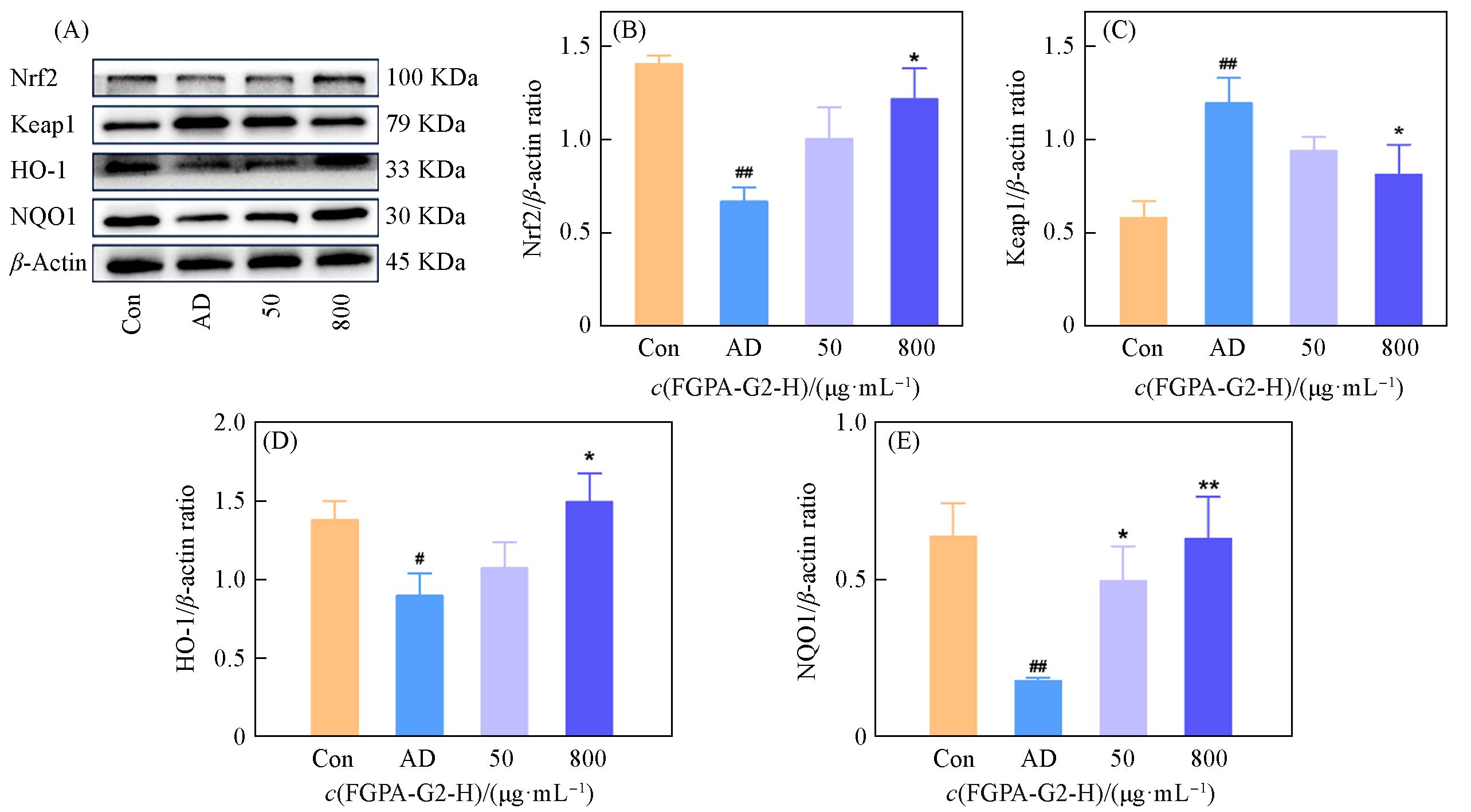
Fig.7 FGPA⁃G2⁃H activated Nrf2 pathway⁃related protein expression in Aβ25-35⁃induced PC12 cells(A) Western blot assay of Nrf2, Keap1, HO-1 and NQO1, the relative ratio of Nrf2(B), Keap1(C), HO-1(D), and NQO1 proteins(F) was quantified. β-actin served as the internal reference. Data were expressed as mean±SD(n=3). Differences are statistically significant at # P<0.01, ## P<0.01 vs. Con group without Aβ25-35, *P<0.05, **P<0.01 vs. AD group treated with Aβ25-35 alone.
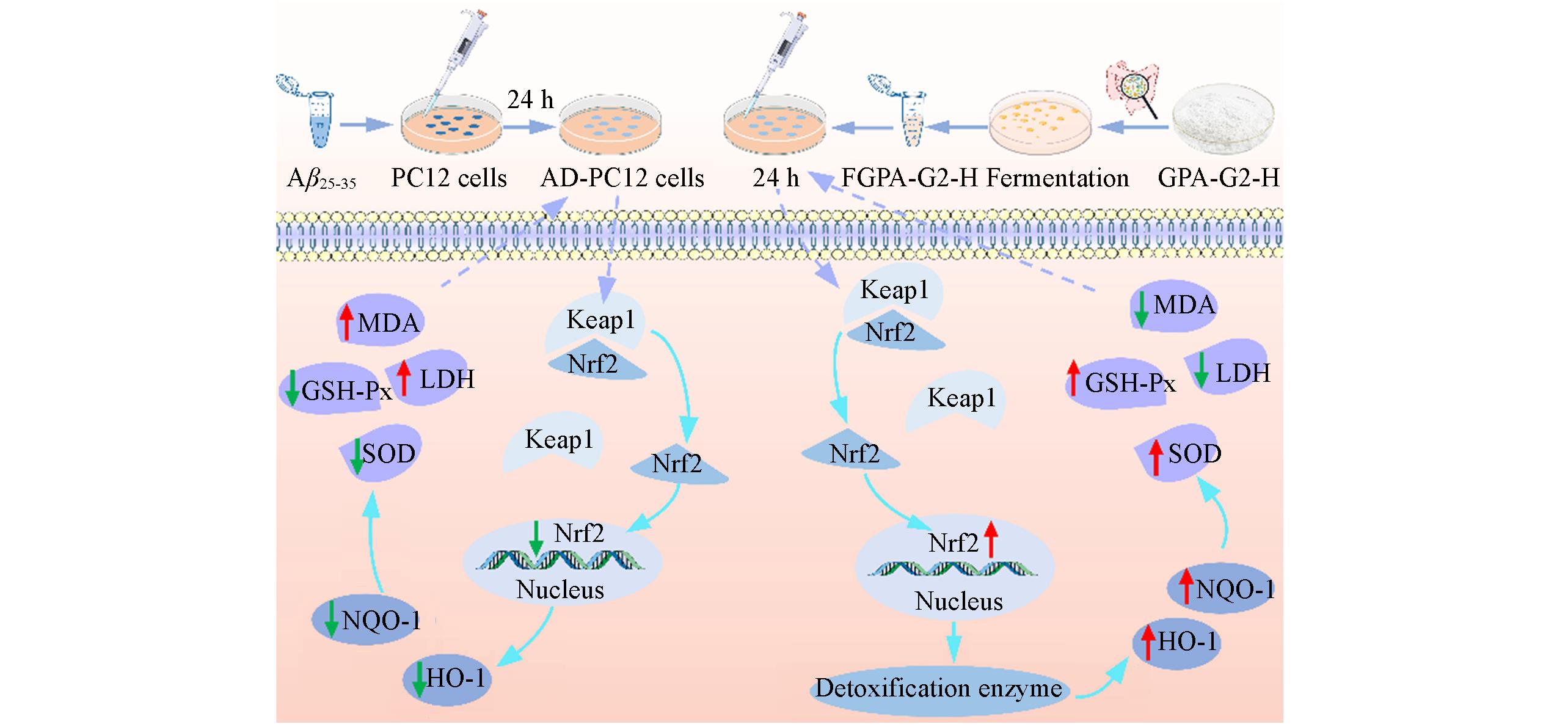
Fig.8 Pathway illustration of the protective activity of FGPA⁃G2⁃H treatment in Aβ25-35⁃induced PC12 cell injury
| [1] | Fu J., Li J. X., Sun Y. Z., Liu S., Song F. R., Liu Z. Y., Int. J. Biol. Macromol., 2023, 232, 123488 |
| [2] | Bian Z. Y., Cao C. Z., Ding J., Ding L., Yu S., Zhang C. X., Liu Q., Zhu L. H., Li J., Zhang Y. Q., Liu Y. H., J. Ethnopharmacol., 2023, 313, 116550 |
| [3] | Zhang R. L., Lei B. X., Wu G. Y., Wang Y. Y., Huang Q. H., Bioorg. Chem., 2023, 133, 106210 |
| [4] | Wang N., Wang X. L., He M. J., Zheng W. X., Qi D. M., Zhang Y. Q., Han C. C., J. Ginseng Res., 2021, 45(2), 211—217 |
| [5] | Zhang S., Liu F. B., Li J. M., Jing C. X., Lu J., Chen X. N., Wang D. D., Cao D. H., Zhao D. Q., Sun L. W., Biomed. Pharmacother., 2023, 167, 115442 |
| [6] | Wang Q. Q., Chen H. M., Yin M. Z., Cheng X., Xia H., Hu H. M., Zheng J. P., Zhang Z. G., Liu H., Front. Cell. Infect. Mi., 2023, 13, 1105335 |
| [7] | Wang D. D., Shao S., Zhang Y. Q., Zhao D. Q., Wang M. X., Front. Immunol., 2021, 12, 683911 |
| [8] | Sun Y., Zhang H. W., Zhang X., Wang W. Z., Chen Y., Cai Z. Y., Wang Q. H., Wang J., Shi Y., Redox Biol., 2023, 62, 102690 |
| [9] | Zhang H., Zou P., Zhao H. T., Qiu J. Q., Mac Regenstein J. , Yang X., Carbohyd. Polym., 2021, 251, 117078 |
| [10] | Qi Z. H., Gao T. X., Li J. J., Zhou S. H., Zhang Z. G., Yin M. Z., Hu H. M., Liu H. T., Food Sci. Hum. Well., 2024, 13(4), 2208—2220 |
| [11] | Su X. M., Wang Y. Q., Bu L. Z., Zhang X., Li Y. N., Sang J. C., Ren G. M., Wen M. H., Chem. Res. Chinese Universities, 2025, 41(4), 919—928 |
| [12] | Wang L. B., Li L. Y., Gao J. Y., Huang J., Yang Y., Xu Y. Q., Liu S., Yu W. Q., Carbohyd. Polym., 2021, 260, 117796 |
| [13] | Han X., Zhou Q., Gao Z., Lin X., Zhou K. X., Cheng X. L., Chitrakar B., Chen H., Zhao W., Food Res. Int., 2022, 162, 112022 |
| [14] | Wu D. T., Yuan Q., Guo H., Fu Y., Li F., Wang S. P., Gan R. Y., Food Res. Int., 2021, 141, 109888 |
| [15] | Xiao R. M., Liao W. C., Luo G. J., Qin Z. N., Han S. Y., Lin Y., ACS Omega, 2021, 6(39), 25486—25496 |
| [16] | Jeong J. H., Hong G. L., Jeong Y. G., Lee N. S., Kim D. K., Park J. Y., Park M., Kim H. M., Kim Y. E., Yoo Y. C., Han S. Y., Curr. Issues Mol. Biol., 2023, 45(8), 6775—6789 |
| [17] | Liu T. L., Zhang M. J., Niu H. Y., Liu J., Ma R. L., Wang Y., Xiao Y. F., Xiao Z. B., Sun J. J., Dong Y., Liu X. L., Int. J. Biol. Macromol., 2019, 126, 179—186 |
| [18] | Wang L. Y., Li K., Cui Y. D., Peng H. H., Hu Y., Zhu Z. Y., Food Res. Int., 2023, 163, 112146 |
| [19] | Zhao H., Liu J. Y., Wang Y. Y., Shao M. T., Wang L. H., Tang W. W., Wang Y. L., Li X. L., J. Sci. Food Agr., 2023, 103(12), 6005—6016 |
| [20] | Su S. Y., Li X. Y., Guo X., Zhou R. M., Li M. M., Ming P. F., Huang Y. Y., Rahman S. U., Ding H. Y., Feng S. B., Li J. C., Wang X. C., Li Y., Wu J. J., Chem. Res. Chinese Universities, 2019, 35(6), 1105—1110 |
| [21] | Lu N., Tan G. J., Tan H. L., Zhang X., Lv Y. L., Song X. J., You D. F., Gao Z. Y., BioMed Res. Int., 2022, 2022, 4243210 |
| [22] | Zhang S. K., He Z. Y., Cheng Y., Xu F. Z., Cheng X. X., Wu P., Carbohyd. Polym., 2021, 260, 117824 |
| [23] | Long X., Xie J., Xue B., Li X. H., Sun T., J. Mol. Struct., 2022, 1262, 133047 |
| [24] | Wang L., Mao Y. G., Zeng X., Liu N., Niu C. F., Li X. X., Ma B. J., Guo L. P., Yang X. L., Front. Nutr., 2022, 9, 877871 |
| [25] | Li X., Wang X. H., Dong Y., Song R. L., Wei J., Yu A. X., Fan Q. Q., Yao J. L., Shan D. J., Lv F., Zhong X. J., She G. M., Ind. Crop.Prod., 2022, 175, 114288 |
| [26] | Zhang W. N., Su R. N., Gong L. L., Yang W. W., Chen J., Yang R., Wang Y., Pan W. J., Lu Y. M., Chen Y., Carbohyd. Polym., 2019, 209, 363—371 |
| [27] | Yuan Q. X., Zhang J., Xiao C. L., Harqin C. G., Ma M. Y., Long T., Li Z. H., Yang Y. L., Liu J. K., Zhao L. Y., Carbohyd. Polym., 2020, 236, 116047 |
| [28] | Bai Y. J., Jia X. C., Huang F., Zhang R. F., Dong L. H., Liu L., Zhang M. W., Carbohyd. Polym., 2020, 246, 116532 |
| [29] | Ji C. F., Zhang Z. Y., Zhang B. H., Chen J. R., Liu R. Y., Song D. X., Li W. L., Lin N., Zou X., Wang J., Guo S. D., Carbohyd. Polym., 2021, 257, 117605 |
| [30] | Wang Y. L., Han J., Yue Y., Wu Y. Z., Zhang W. Q., Xia W., Wu M. Q., Int. J. Biol. Macromol., 2023, 237, 124142 |
| [31] | Pu X. Y., Ma X. L., Liu L., Ren J., Li H. B., Li X. Y., Yu S., Zhang W. J., Fan W. B., Carbohyd. Polym., 2016, 137, 154—164 |
| [32] | Cao J. J., Lv Q. Q., Zhang B., Chen H. Q., Carbohyd. Polym., 2019, 212, 89—101 |
| [33] | Liu Y. T., Duan X. Y., Zhang M. Y., Li C., Zhang Z. Q., Hu B., Liu A. P., Li Q., Chen H., Tang Z. Z., Wu W. J., Chen D. W., Ind. Crop. Prod., 2021, 159, 113079 |
| [34] | Lai Y., Deng H. L., Chen M. Y., Fan C. H., Chen Y., Wang F., Zhou Q., Song C., J. Food Meas. Charact., 2023, 17(5), 5506—5517 |
| [35] | Yang Y. H., Lu M. M., Xu Y. C., Qian J., Le G. W., Xie Y. L., J. Agr. Food Chem., 2022, 70(48), 15225—15243 |
| [36] | Kong Q. H., Zhang R. F., You L. J., Ma Y. X., Liao L., Pedisić S., Food Chem. Toxicol., 2021, 151, 112145 |
| [37] | Xu Z. P., Zhang J. J., Wu J. N., Yang S. Z., Li Y. Y., Wu Y. Y., Li S. Y., Zhang X., Zuo W., Lian X., Lin J. J., Jiang Y. S., Xie L. T., Liu Y. L., Wang P., Front. Neurosci. Switz., 2022, 16, 976358 |
| [38] | Zhu Y. Q., Chen B. R., Zhang X. Y., Akbar M. T., Wu T., Zhang Y. Y., Zhi L., Shen Q., Nutrients, 2024, 16(16), 2660 |
| [39] | Friedland R. P., Chapman M. R., PLOS Pathog., 2017, 13(12), e1006654 |
| [40] | Zhu G. S., Guo M., Zhao J. X., Zhang H., Wang G., Chen W., Nutrients, 2022, 14(4), 735. |
| [41] | Kim H. W., Kim S. M., Park S. J., Park G., Shin H., Park M. S., Kim J., Front. Aging Neurosci., 2021, 13, 709091 |
| [42] | Keung W. S., Zhang W. H., Luo H. Y., Chan K. C., Chan Y. M., Xu J., Carbohyd. Polym., 2025, 352, 123209 |
| [43] | Sun Z., Zeng Z., Chen L. X., Xu J. D., Zhou J., Kong M., Shen H., Mao Q., Wu C.Y., Long F., Zhou S. S., Li S. L., J. Ethnopharmacol., 2025, 337, 118958 |
| [44] | Guo B. B., Zhang W. H., Zhang J. Y., Zou J. W., Dong N. N., Liu B., Food Res. Int., 2025, 199, 115385 |
| [45] | Wang S. Q., Yang X. M., Hou X. N., Zhu Z. Y., Process Biochem., 2022, 122, 272—281 |
| [46] | Govindan S., Jayabal A., Shanmugam J., Ramani P., Food Sci. Hum. Well., 2021, 10(4), 523—535 |
| [47] | Zhan X. H., Hakoupian M., Jin L. W., Sharp F. R., Front. Aging Neurosci., 2021, 13, 7055934 |
| [48] | Yang R. L., Zhu F., Mo W. Y., Li H. L., Zhu D. L., He Z. Y., Ma X. J., Foods, 2024, 13(19), 3177 |
| [49] | Hu D. W., Bao T., Lu Y., Su H. M., Ke H. H., Chen W., J. Agr. Food Chem., 2019, 68(46), 13016—13024 |
| [50] | Meng H. H., Wu J. J., Shen L., Chen G. W., Jin L., Yan M. X., Wan H. T., He Y., Int. J. Biol. Macromol., 2022, 215, 398—412 |
| [1] | XU Yongbin, FENG Shuaixia, CHEN Jie, GONG Huan, SHI Songshan, WANG Huijun, WANG Shunchun. Structural Characterization of a Homogeneous Polysaccharide Isolated from the Flower of Carthamus Tinctorius L. and Its Inhibitory Activity on HepG2 Proliferation [J]. Chem. J. Chinese Universities, 2023, 44(4): 20220600. |
| [2] | ZHANG Endong, LYU Fengting, HUANG Yiming, BAI Haotian, WANG Shu. Diagnostic Imaging and Therapeutic Effects of Nanocatalysts by Intracellular in situ Catalytic Reactions [J]. Chem. J. Chinese Universities, 2022, 43(12): 20220676. |
| [3] | PENG Haiyue, WANG Ting, LI Guorui, HUANG Jing. Synthesis of Melanin and Its Function Regulation by Small Molecules [J]. Chem. J. Chinese Universities, 2021, 42(11): 3357. |
| [4] | MA Chao, LIU Xiaona, NIE Chenyang, CHEN Lu, TIAN Peng, XU Hongyi, GUO Peng, LIU Zhongmin. Applications of X-ray and Electron Crystallography in Structural Investigations of Zeolites [J]. Chem. J. Chinese Universities, 2021, 42(1): 188. |
| [5] | ZHAO Xingling, QI Guodong, WANG Qiang, CHU Yueying, GAO Wei, LI Shenhui, XU Jun, DENG Feng. Structure, Nature and Activity of Ga Species for Propane Aromatization in Ga/ZSM-5 Revealed by Solid-state NMR Spectroscopy [J]. Chem. J. Chinese Universities, 2020, 41(12): 2681. |
| [6] | WANG Xiye, SHAN Xiaotong, WANG Yilin, LI Dan, ZHAO Ming, XU Liang. Mechanism of Salvia Miltiorrhiza on the Improvement of Myocardial Function in Patients with Dilated Cardiomyopathy† [J]. Chem. J. Chinese Universities, 2016, 37(5): 844. |
| [7] | ZHOU Haifeng, YANG Dongjie, QIU Xueqing, WU Xiaolei. Structural Characterization, Adsorption and Dispersion Properties of Sodium Lignosulfonate by Horseradish Peroxidase Incubation† [J]. Chem. J. Chinese Universities, 2014, 35(4): 895. |
| [8] | WEI Yong-Ji, LI Shun-Lai, YU Ming-Wu, DU Hong-Guang. Synthesis of 6-Amino-2-alkylthio Adenosine and Their Anti-platelet Aggregation Activity [J]. Chem. J. Chinese Universities, 2013, 34(11): 2524. |
| [9] | ZHOU Hai-Feng, YANG Dong-Jie, WU Xiao-Lei, QIU Xue-Qing. Structure and Adsorption Characterization of Sodium Lignosulfonate by Laccase Modification [J]. Chem. J. Chinese Universities, 2013, 34(1): 218. |
| [10] | SU Man-Xiu, WANG Li-Feng, DAI Zhi-Jun, YUAN Zhe-Ming, BAI Lian-Yang. Primary Structural Characterizations of Polypeptide and Antimicrobial Peptides QSAM Modeling [J]. Chem. J. Chinese Universities, 2012, 33(11): 2526. |
| [11] | YE She-Fang*, WEN Wen, WANG Yi-Fang, LIN Cui-Lin, WU Yi-Hui, ZHANG Qi-Qing. Multi-walled Carbon Nanotubes Induces Nuclear Factor-κB Activation in A549 Cells [J]. Chem. J. Chinese Universities, 2010, 31(3): 497. |
| [12] |
YE She-Fang1*, ZHONG Li-Ming1, WU Yi-Hui1, ZHANG Qi-Qing1,2* . Multi-walled Carbon Nanotubes Exposure Induces Oxidative Stress and Depolarizes Mitochondrial Membrane Potential in Cultured A549 Cells [J]. Chem. J. Chinese Universities, 2009, 30(3): 497. |
| [13] | WANG Ying, YU Guang-Li, ZHAO Xia, GUAN Hua-Shi, DU Yu-Guo . Preparation and Structural Characterization of Several Oligoguluronic Acids [J]. Chem. J. Chinese Universities, 2005, 26(1): 179. |
| [14] | LI Li, YUAN Fu-Long, FU Hong-Gang, GUANG Huan-Zhu, ZHANG Guo, JIANG An-Xi . Structural Characterization and Catalytic Properties of Three-way Catalyst La 1-xCexFe 1-y-nCoyRunO3 [J]. Chem. J. Chinese Universities, 2004, 25(9): 1679. |
| [15] | SHEN Jian-Zhong, GUO Chong-Dong, CHEN Yu, CAI Rui-Fang . Synthesis and Characterization of Dumbbell-like C70Polystyrene Derivatives [J]. Chem. J. Chinese Universities, 2003, 24(9): 1686. |
| Viewed | ||||||
|
Full text |
|
|||||
|
Abstract |
|
|||||
