

高等学校化学学报 ›› 2026, Vol. 47 ›› Issue (6): 20250347.doi: 10.7503/cjcu20250347
陈梦佳, 桑丽霞( ), 李扬扬
收稿日期:2025-11-12
出版日期:2026-06-10
发布日期:2026-01-24
通讯作者:
桑丽霞
E-mail:sanglixia@bjut.edu.cn
基金资助:
CHEN Mengjia, SANG Lixia(), LI Yangyang
Received:2025-11-12
Online:2026-06-10
Published:2026-01-24
Contact:
SANG Lixia
E-mail:sanglixia@bjut.edu.cn
Supported by:摘要:
通过旋涂法将具有高导电性与局域表面等离激元共振(LSPR)效应的Ti3C2T x 纳米片与金红石型TiO2纳米棒阵列复合, 构建了Ti3C2T x /TiO2肖特基结光电极. 通过X射线衍射(XRD)、 X射线光电子能谱(XPS)、 扫描电子显微镜(SEM)和透射电子显微镜(TEM)等表征结果证实了Ti3C2T x 的制备及其在TiO2表面的均匀负载. 光电测试结果表明, 优化Ti3C2T x 旋涂体积后的复合材料(MT-200)在AM 1.5G光照条件下的光电流密度达到1.21 mA/cm2, 较纯TiO2提升了51.9%. 性能提升归因于Ti3C2T x 与TiO2界面形成的肖特基结有效促进了光生电荷的分离. 同时, Ti3C2T x 本身固有的LSPR特性为复合材料引入了等离激元激发性能, 其诱导产生的光热效应进一步加速了界面反应动力学与载流子传输.
中图分类号:
TrendMD:
陈梦佳, 桑丽霞, 李扬扬. Ti3C2T x /TiO2光电极的等离激元分解水性能. 高等学校化学学报, 2026, 47(6): 20250347.
CHEN Mengjia, SANG Lixia, LI Yangyang. Plasmonic Solar Water Splitting Performance of Ti3C2T x /TiO2 Photoelectrode. Chem. J. Chinese Universities, 2026, 47(6): 20250347.
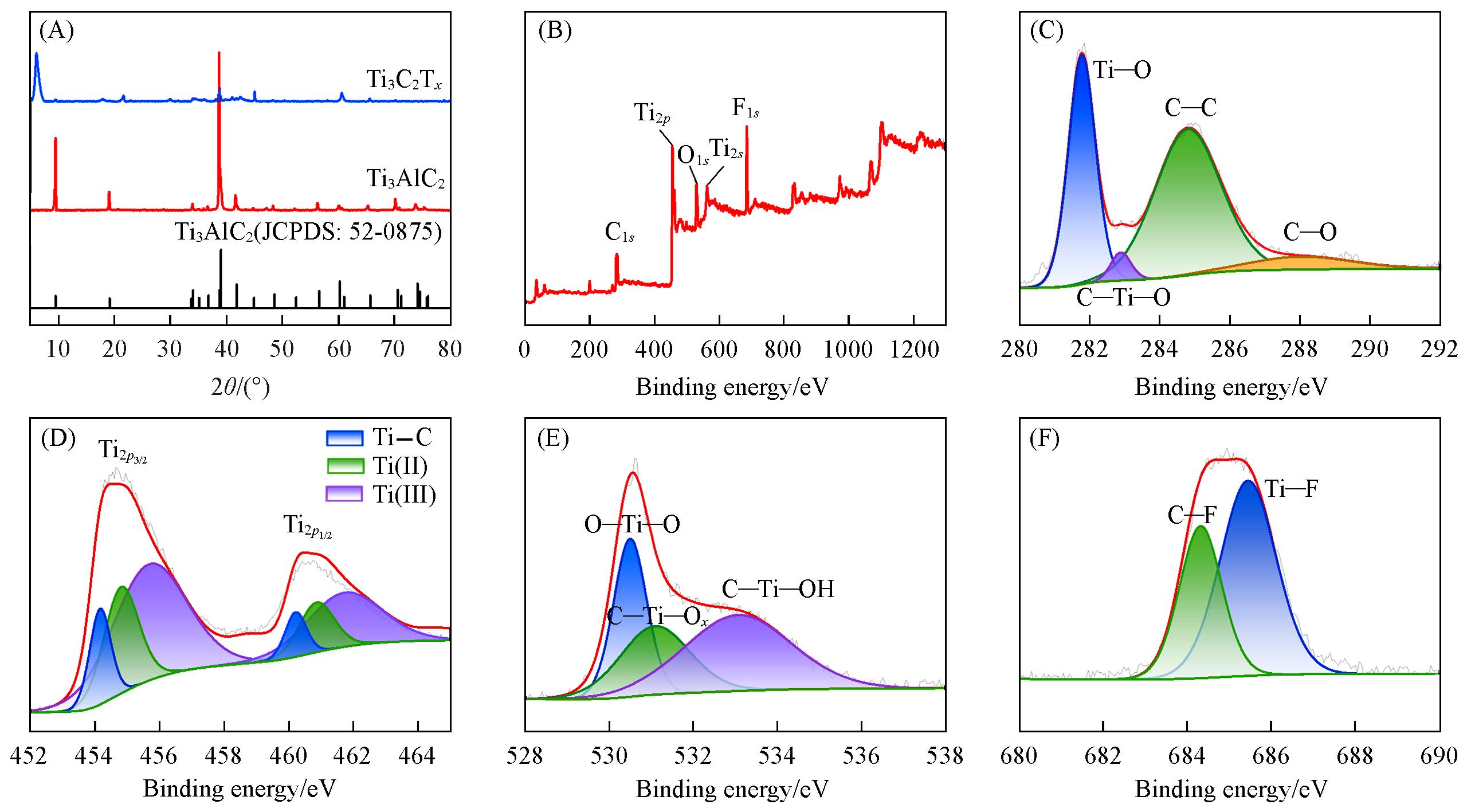
Fig.1 XRD patterns of Ti3AlC2 and Ti3C2T x (A), full⁃scan(B) and high⁃resolution XPS spectra of C1s (C), Ti2p (D), O1s (E) and F1s (F) of Ti3C2T x
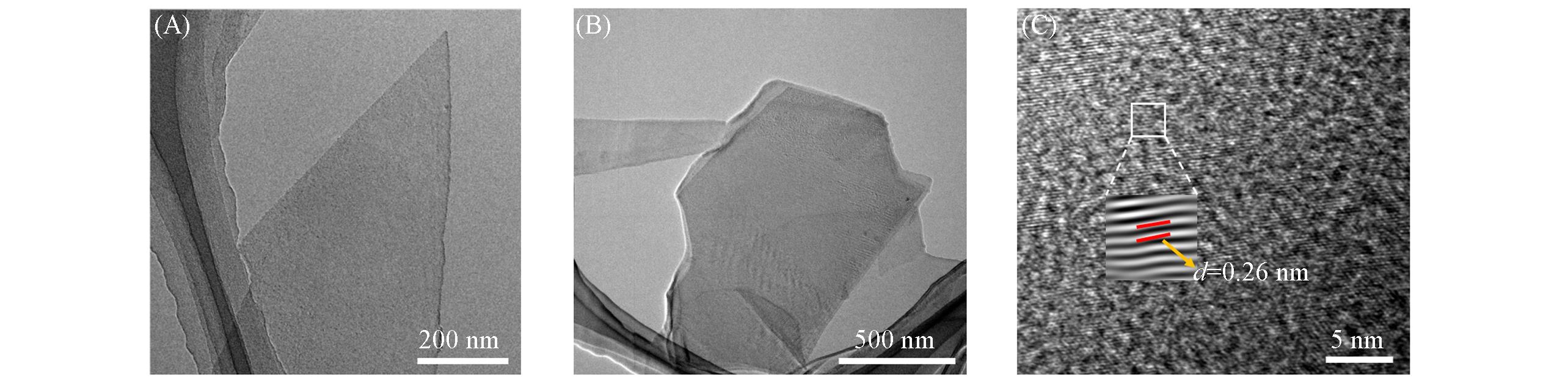
Fig.2 TEM(A, B) and HRTEM(C) images of Ti3C2T x
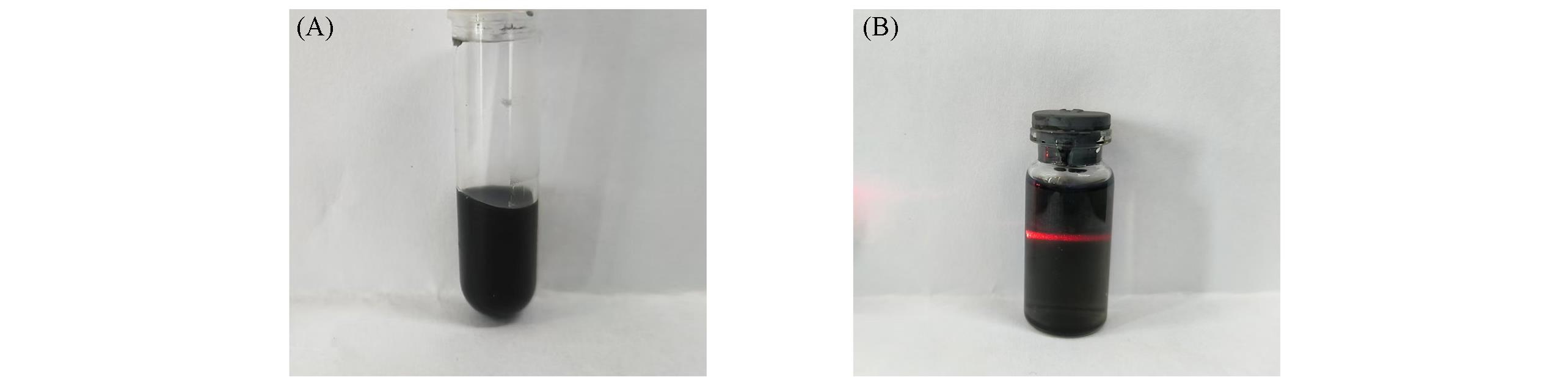
Fig.3 Photographs showing the dispersion(A) and Tyndall effect(B) of Ti3C2T x
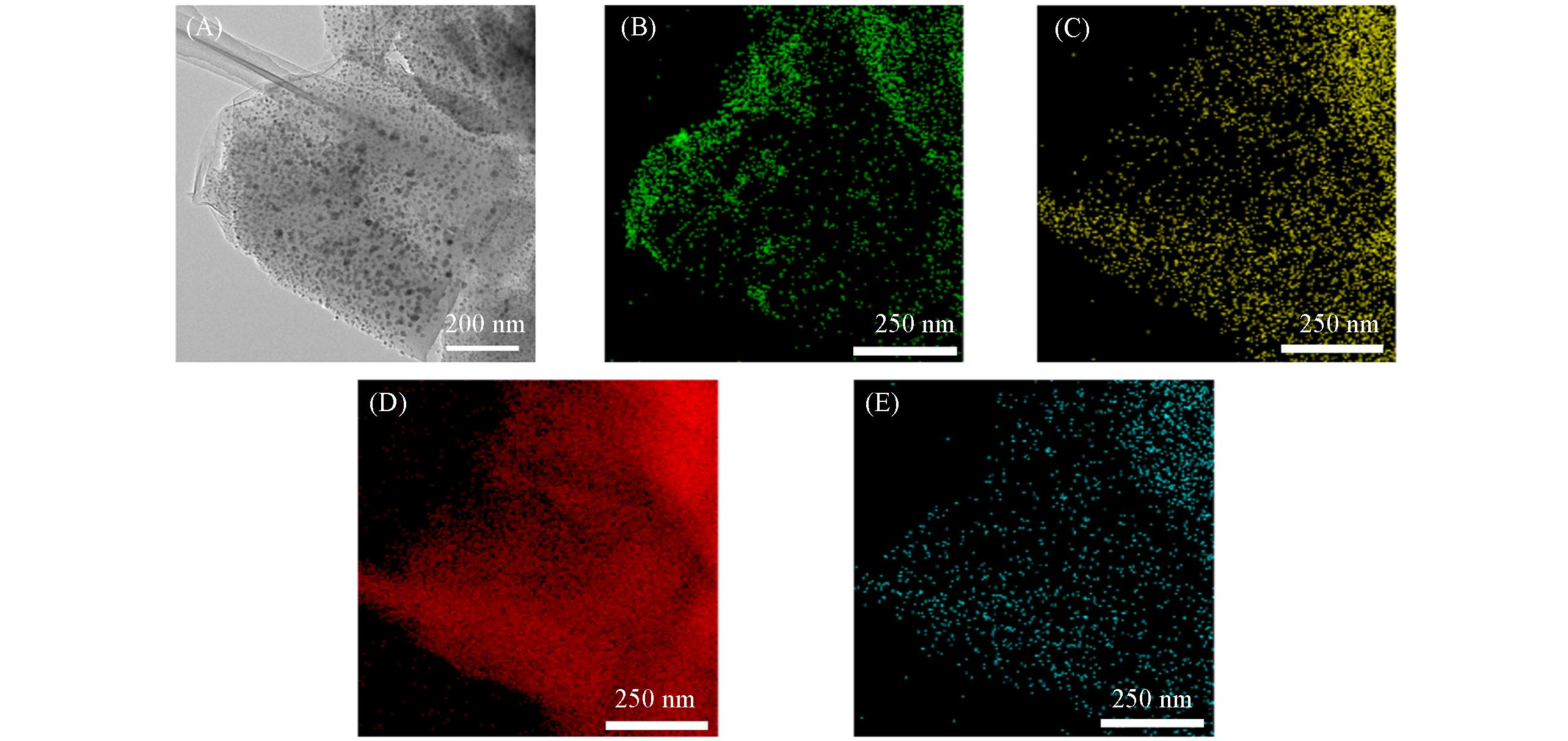
Fig.4 TEM image(A) and corresponding EDS mapping images of Ti(B), O(C), C(D) and F(E) of Ti3C2T x
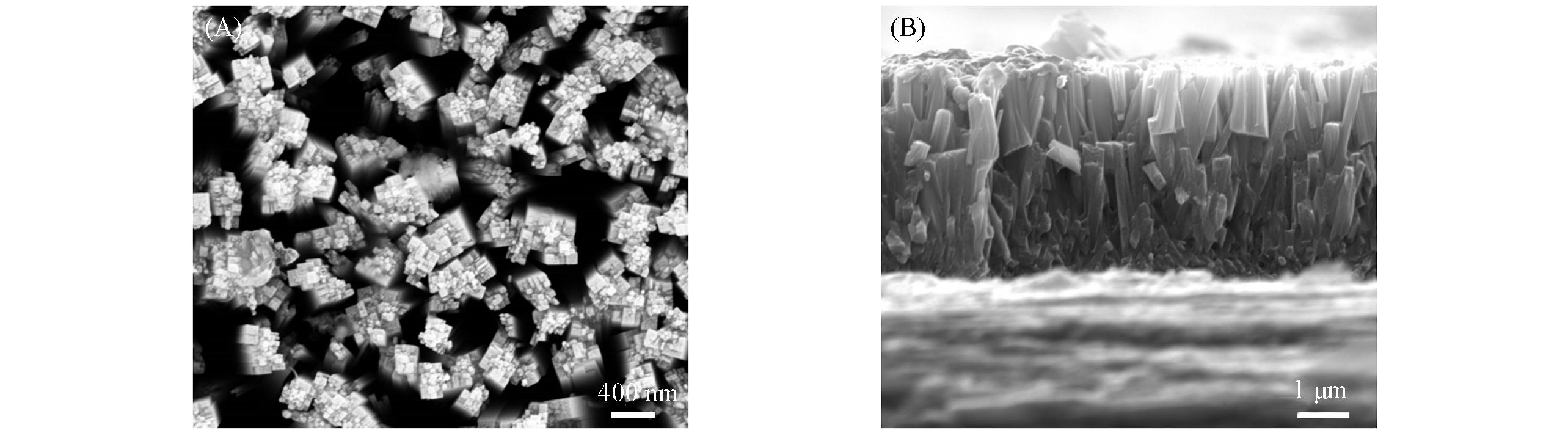
Fig.5 Top(A) and cross⁃sectional(B) SEM images of the TiO2 nanorod arrays
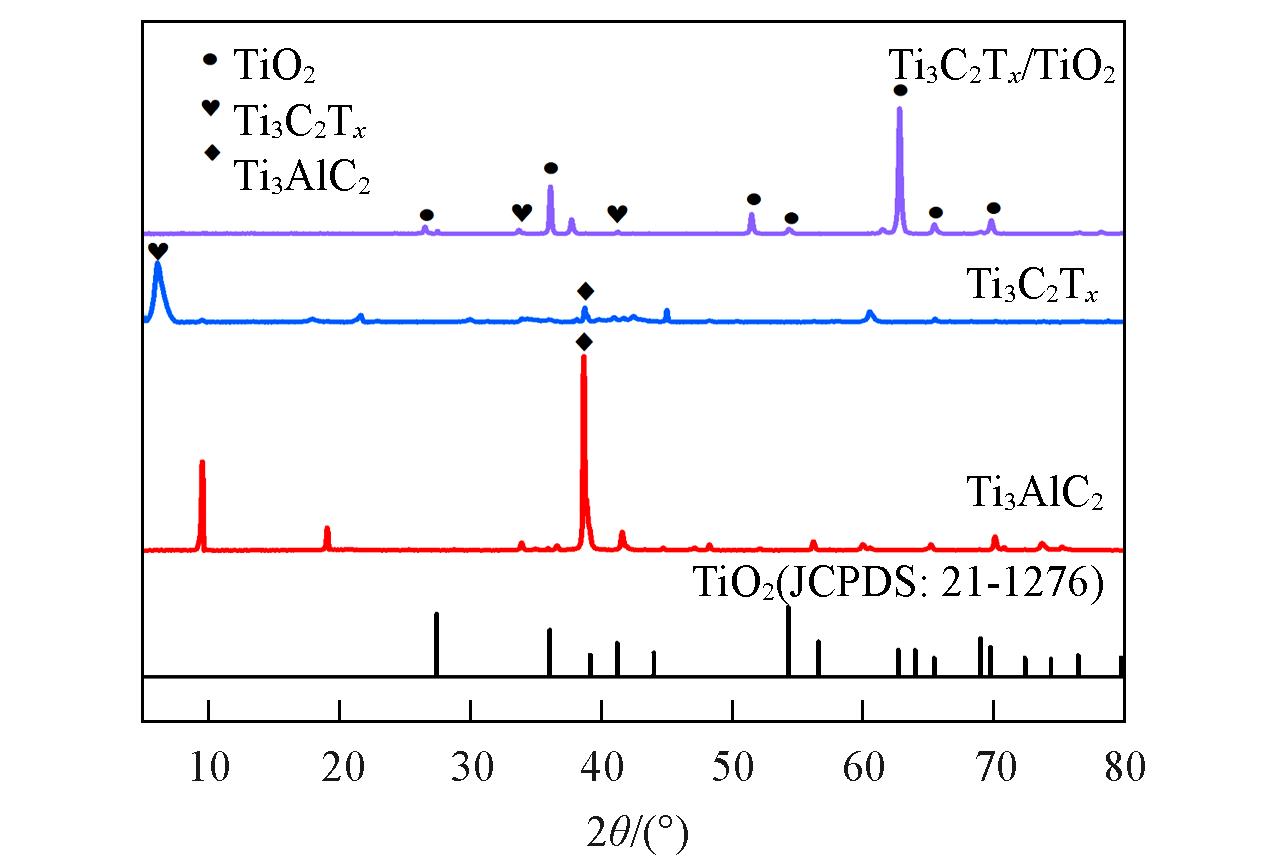
Fig.6 XRD patterns of Ti3AlC2, Ti3C2T x and the Ti3C2T x /TiO2 composite
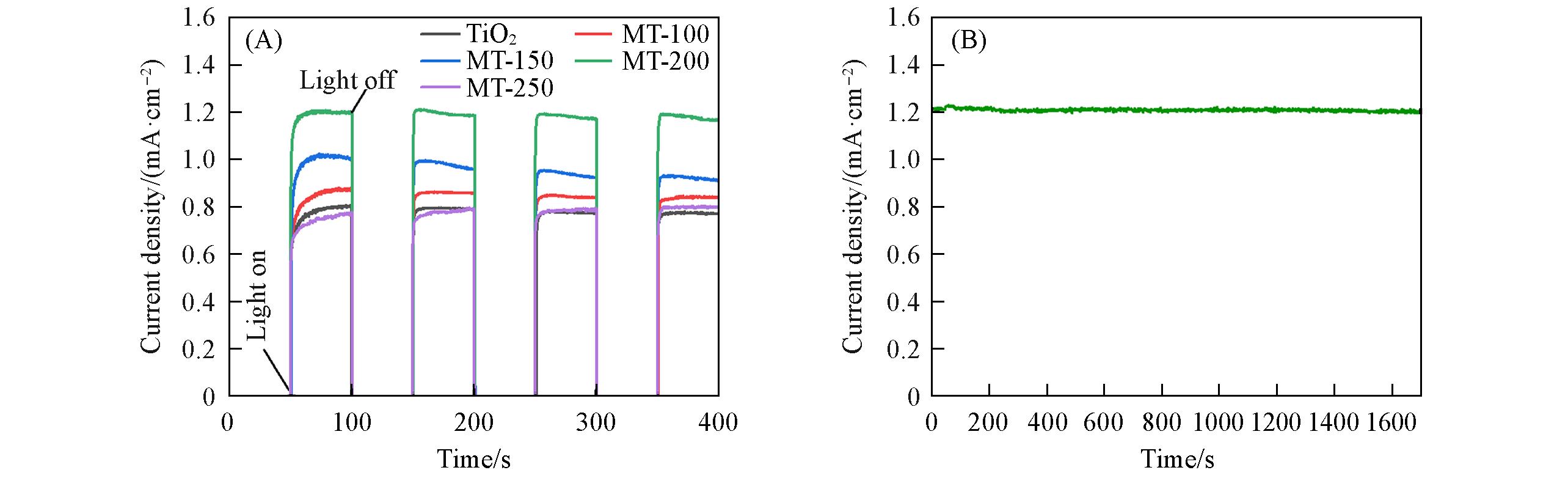
Fig.7 Transient photocurrent density of TiO2 and various TiO2⁃based composite photoelectrodes(A), stability of the MT⁃200 sample(B)Illumination of AM 1.5, 100 mW/cm2.
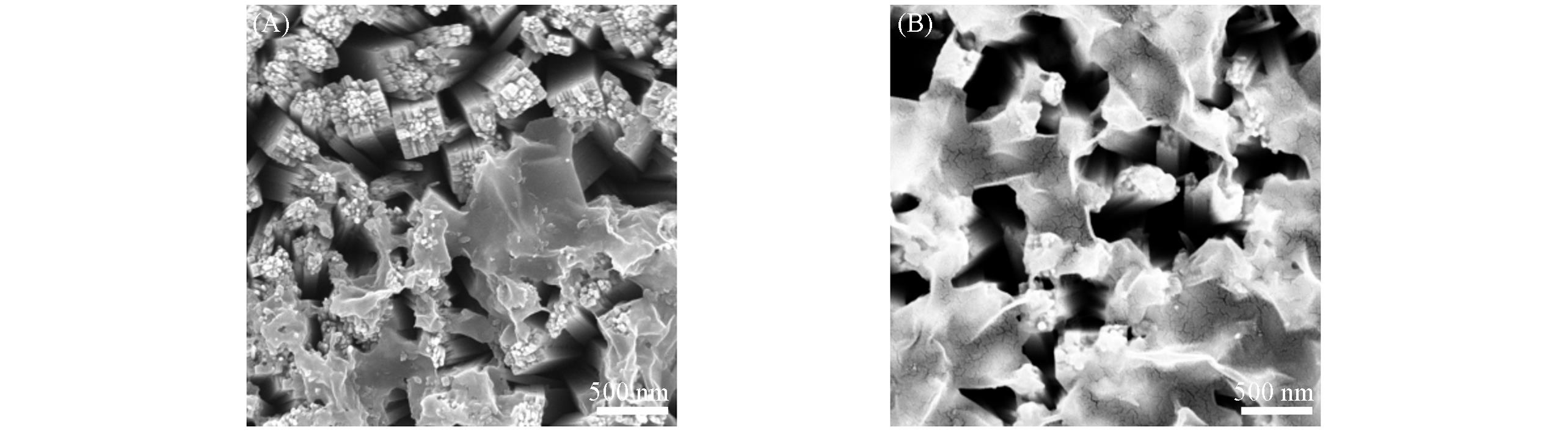
Fig.8 SEM images of MT⁃200(A) and MT⁃250(B)
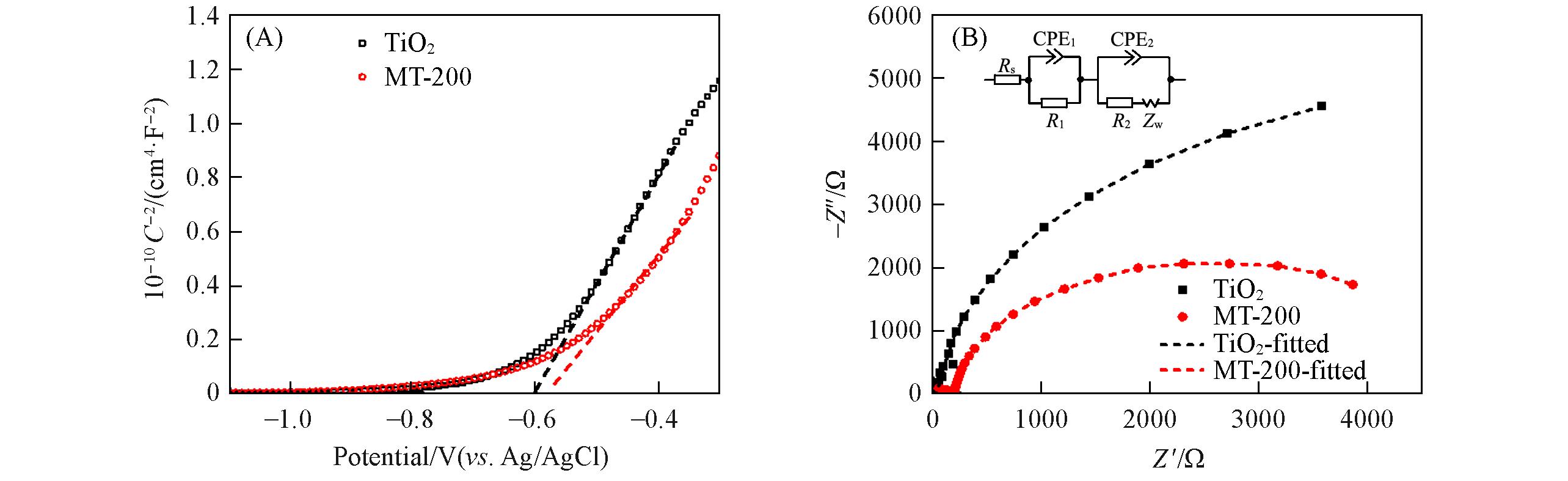
Fig.9 Mott⁃Schottky plots(A) and EIS curves(B) of TiO2 and MT⁃200Illumination of AM 1.5, 100 mW/cm2. The inset in (B) shows the equivalent circuit used for fitting the EIS data.
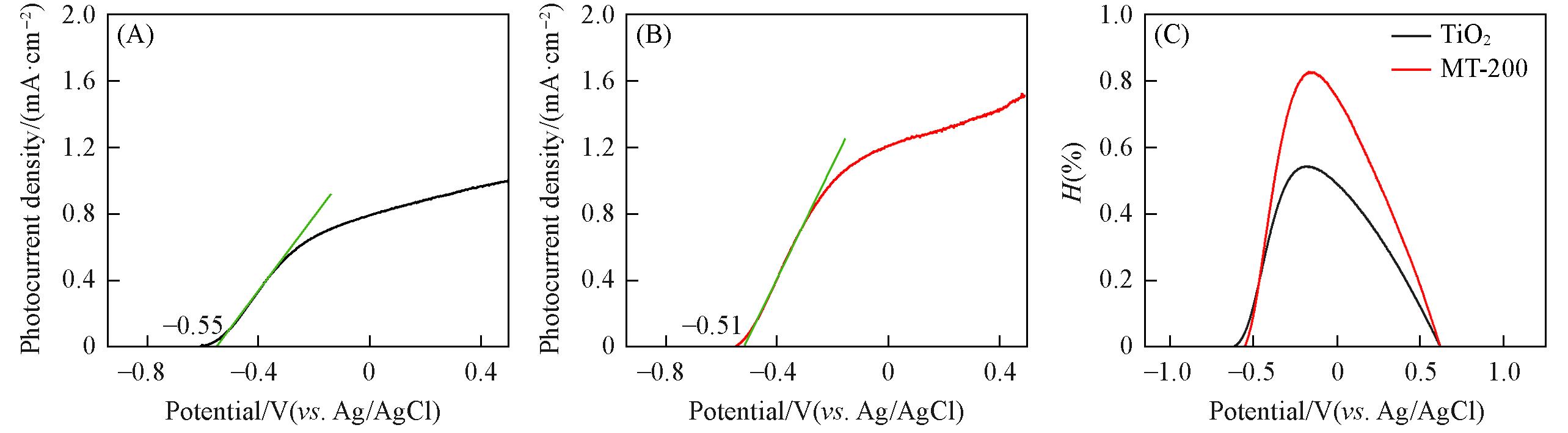
Fig.10 LSV curves of TiO2(A) and MT⁃200(B), applied bias photocurrent efficiency curves(C) of TiO2 and MT⁃200
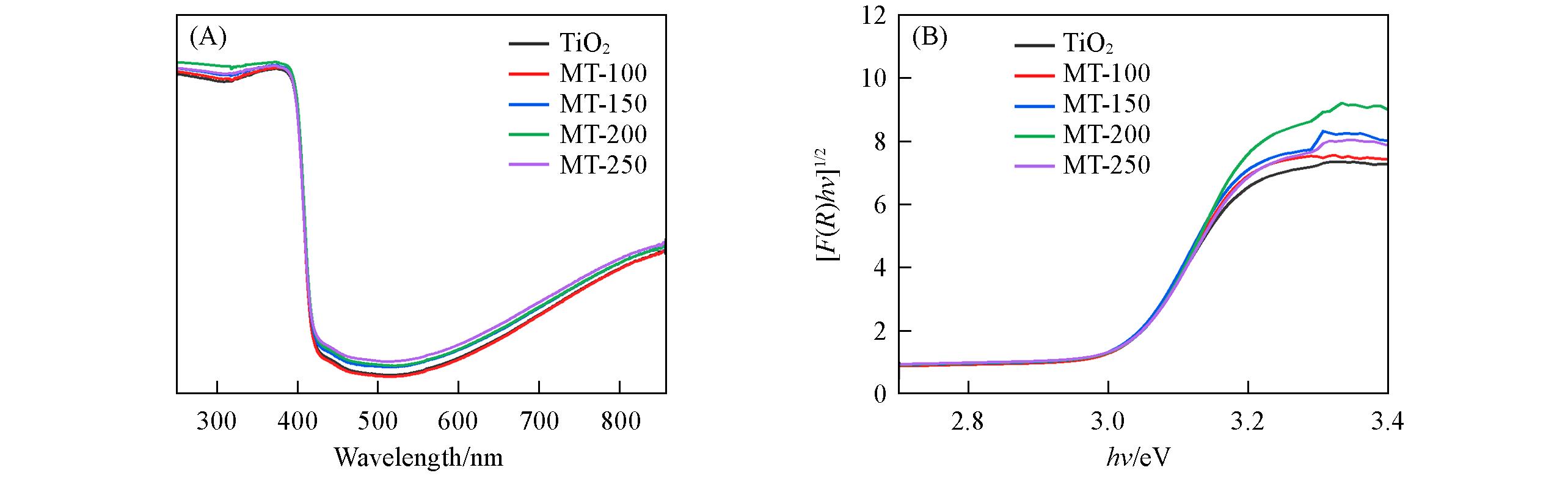
Fig.11 UV⁃Vis absorption spectra(A) and Tauc plots(B) of TiO2 and various TiO2⁃based composite photoelectrodes
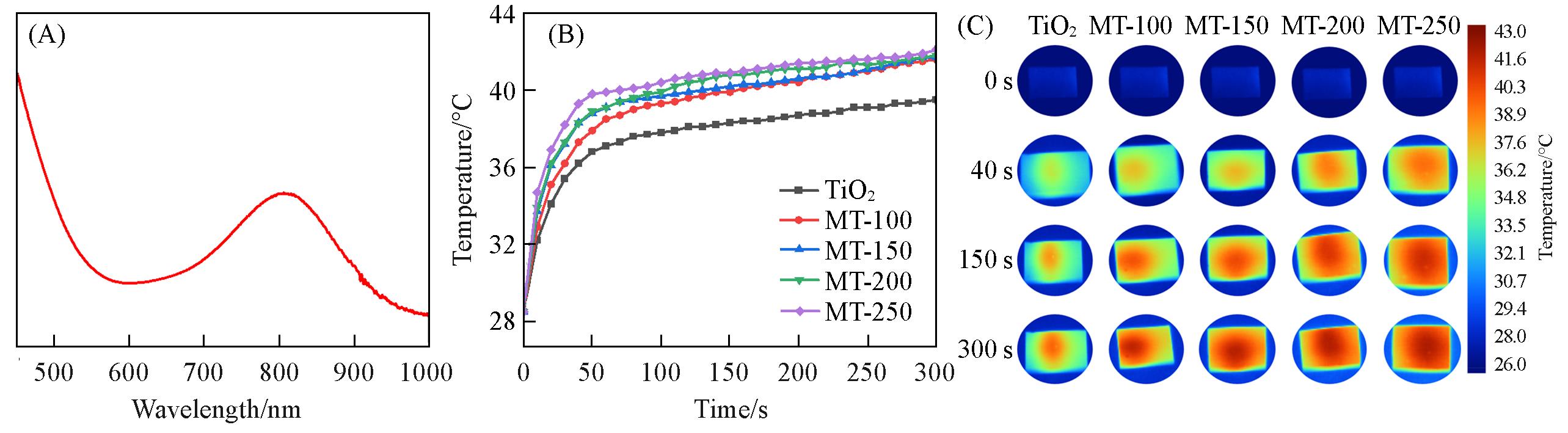
Fig.12 Vis⁃NIR absorption spectrum of Ti3C2T x (A), photothermal heating curves(B) and infrared thermal images(C) of different TiO2⁃based composite photoelectrodes under 300 W xenon lamp illumination
| [1] | Zhao W., Jin B., Wang L., Ding C., Jiang M., Chen T., Bi S., Liu S., Zhao Q., Chin. Chem. Lett., 2022, 33(1), 557—561 |
| [2] | Su T., Shao Q., Qin Z., Guo Z., Wu Z., ACS Catal., 2018, 8(3), 2253—2276 |
| [3] | Khatun N., Roy S. C., Mater. Today: Proc., 2022, 62, 4515—4518 |
| [4] | Sun W., Wang Y., Xiang K., Bai S., Wang H., Zou J., Arramel, Jiang J., Acta Phys. Chim. Sin., 2024, 40(8), 2308015 |
| [5] | Fujishima A., Honda K., Nature, 1972, 238(5358), 37—38 |
| [6] | Kumaravel V., Mathew S., Bartlett J., Pillai S. C., Appl. Catal. B: Environ., 2019, 244, 1021—1064 |
| [7] | Khatun N., Dey S., Behera G. C., Roy S. C., Mater. Chem. Phys., 2022, 278, 125651 |
| [8] | Zhang S., Li X., Xie R., Zhang X., Wang H., Song Y., Zou H., Inorg. Chem. Front., 2025, 12(5), 1979—1993 |
| [9] | Hernández⁃Ramírez E., Wang J. A., Chen L. F., Valenzuela M. A., Dalai A. K., Appl. Surf. Sci., 2017, 399, 77—85 |
| [10] | Hu Y. T., Sang L. X., Du C. X., Chem. J. Chinese Universities, 2025, 46(5), 20240569 |
| 胡煜腾, 桑丽霞, 杜春旭. 高等学校化学学报, 2025, 46(5), 20240569 | |
| [11] | Estrada⁃Vázquez R., Vaca⁃Mier M., Bustos⁃Terrones V., Rangel⁃Peraza J. G., Loaiza J. G., Bustos⁃Terrones Y. A., Reaction Kinetics, Mech. Catal., 2024, 137(2), 1085—1104 |
| [12] | Guo D., Pan Q., Vietor T., Lu W., Gao Y., J. Energy Chem., 2023, 87, 518—539 |
| [13] | Huang D. P., Yu H. H., Zhang H. J., Chem. J. Chinese Universities, 2021, 42(2), 397—411 |
| 黄大朋, 于浩海, 张怀金. 高等学校化学学报, 2021, 42(2), 397—411 | |
| [14] | Zhang J., Kong N., Uzun S., Levitt A., Seyedin S., Lynch P. A., Qin S., Han M., Yang W., Liu J., Wang X., Gogotsi Y., Razal J. M., Adv. Mater., 2020, 32(23), 20011093 |
| [15] | Ba K., Wang J. L., Han M. K., J. Inorg. Mater., 2024, 39(2), 162—170 |
| 巴坤, 王建禄, 韩美康. 无机材料学报, 2024, 39(2), 162—170 | |
| [16] | Wu Z., Shen J., Li Z., Liu S., Zhou Y., Feng K., Zhang B., Zhao S., Xue D., He J., Yu K., Zhang J., Dawson G., Zhang Q., Huang L., Li C., An X., Chi L., Zhang X., He L., ACS Nano, 2025, 19(1), 1832—1844 |
| [17] | Dillon A. D., Ghidiu M. J., Krick A. L., Griggs J., May S. J., Gogotsi Y., Barsoum M. W., Fafarman A. T., Adv. Funct. Mater., 2016, 26(23), 4162—4168 |
| [18] | Luther J. M., Jain P. K., Ewers T., Alivisatos P. A., Materials N., Nat. Mater., 2011, 10(5), 361—366 |
| [19] | Yue F., Meng Y., Zhang S., Li C., Shi M., Qian X., Wang L., Song Y., Li J., Ma Y., Zhang H., J. Colloid Interface Sci., 2025, 677, 758—770 |
| [20] | Li M., Zhang K., Wang P., Zhou Z., Li F., Zhan S., Li Y., Appl. Catal. B: Environ., 2024, 343, 123483 |
| [21] | Lyu C., Wu Y., Wang Y., Liu R., Qu H., Wu X., Chem. Eng. J., 2025, 515, 163581 |
| [22] | Zhang B., Yi H., Chen B. Y., Liu H. Y., Li X. L., Zhu J. F., Yin S., Shi P., J. Chin. Ceram. Soc., 2025, 53(3), 415—426 |
| 张彪, 益恒, 陈毕谣, 刘泓宇, 李学林, 朱建峰, 殷澍, 施佩. 硅酸盐学报, 2025, 53(3), 415—426 | |
| [23] | Zhou F., Yuan X., Xiong X., Wang L., Han K., J. Cent. South Univ., 2024, 31(12), 4397—4410 |
| [24] | Hu Z., Liu H., Kang N., Lv K., Li Q., Appl. Surf. Sci., 2023, 627, 157324 |
| [25] | Yang Y., Deng Z., Xia G., Lu Y., Shi J., Zheng Y., Kuang J., Cao W., Colloids Surf. A, 2025, 706, 135767 |
| [26] | Li Y., Deng X., Tian J., Liang Z., Cui H., Appl. Mater. Today, 2018, 13, 217—227 |
| [27] | Lou S., Zhou Z., Shen Y., Zhan Z., Wang J., Liu S., Zhang Y., ACS Appl. Mater. Interfaces, 2016, 8(34), 22287—22294 |
| [28] | Tian Y., Song Y., Liu J., Ji J., Wang F., Chem. Eng. J., 2020, 398, 125554 |
| [29] | Ghidiu M., Lukatskaya M. R., Zhao M. Q., Gogotsi Y., Barsoum M. W., Nature, 2014, 516(7529), 78—81 |
| [30] | Alhabeb M., Maleski K., Anasori B., Lelyukh P., Clark L., Sin S., Gogotsi Y., Chem. Mater., 2017, 29(18), 7633—7644 |
| [31] | Zhou A., Liu Y., Li S., Wang X., Ying G., Xia Q., Zhang P., J. Adv. Ceram., 2021, 10(6), 1194—1242 |
| [32] | Nguyen T. K. A., Anh N. T. N., Nguyen M. D., Nguyen V. T., Doong R., Sep. Purif. Technol., 2023, 327, 124934 |
| [33] | Zhang J., Wang E., Cui S., Yang S., Zou X., Gong Y., Nano Lett., 2022, 22(3), 1398—1405 |
| [34] | Kou L., Sadri R., Auwal S., Kaur M., Lai N. S., Roberts E. P. L., Haniff M. A. S. M., Othman M., Dee C. F., Ooi P. C., ACS Appl. Electron. Mater., 2024, 6(7), 4948—4962 |
| [35] | Wang H., Zhang J., Wu Y., Huang H., Li G., Zhang X., Wang Z., Appl. Surf. Sci., 2016, 384, 287—293 |
| [36] | Pan W. W., Li J. N., Materials Reports, 2025, 39(Z2), 25060060 |
| 潘伟伟, 李佳楠. 材料导报, 2025, 39(Z2), 25060060 | |
| [37] | Li Y., Yang W., Wang C., Li Z., Lai J., Wang L., Huang L., ACS Appl. Energy Mater., 2019, 2(11), 8229—8235 |
| [38] | Cui X. L., Chemistry, 2017, 80(12), 1160—1170 |
| 崔晓莉. 化学通报, 2017, 80(12), 1160—1170 | |
| [39] | Zhang Z. Y., Sang L. X., Sun B., Zhang X. M., Ma C. F., Acta Phys. Chim. Sin., 2010, 26(11), 2935—2940 |
| 张知宇, 桑丽霞, 孙彪, 张晓敏, 马重芳. 物理化学学报, 2010, 26(11), 2935—2940 | |
| [40] | Tu J., Li J., Pan Z., Zhu X., Ye D., Yang Y., Wang H., An L., Chen R., Liao Q., J. Power Sources, 2025, 628, 235883 |
| [41] | Park J., Lee T. H., Kim C., Lee S. A., Choi M. J., Kim H., Yang J. W., Lim J., Jang H. W., Appl. Catal. B: Environ., 2021, 295, 120276 |
| [42] | Chen X., Li J., Pan G., Xu W., Zhu J., Zhou D., Li D., Chen C., Lu G, Song H., Sens. Actuators B: Chem., 2019, 289, 131—137 |
| [43] | John S., Vadla S. S., Roy S. C., Electrochim. Acta, 2019, 319, 390—399 |
| [44] | Heijne A. T., Schaetzle O., Gimenez S., Fabregat⁃Santiago F., Bisquert J., Strik D. P. B. T. B., Barrière F., Buisman C. J. N., Hamelers H. V. M., Energy Environ. Sci., 2011, 4(12), 5035—5043 |
| [45] | Hutter E., Fendler J. H., Adv. Mater., 2004, 16(19), 1685—1706 |
| [46] | Sarina S., Waclawik E. R., Zhu H., Green Chem., 2013, 15(7), 1814—1833 |
| [47] | Mo F., Zhou Q., He Y., Sci. Total Environ., 2022, 829, 154644 |
| [48] | Xia Y., Li W., Cobley C. M., Chen J., Xia X., Zhang Q., Yang M., Cho E. C., Brown P., Acc. Chem. Res., 2011, 44(10), 914—924 |
| [49] | Robinson J. T., Tabakman S. M., Liang Y., Hailiang W., Casalongue H. S., Vinh D., Dai H., J. Am. Chem. Soc., 2011, 133(17), 6825—6831 |
| [50] | Wang W., Su H., Wu Y., Zhou T., Li T., J. Electrochem. Soc., 2019, 166(6), B505 |
| [51] | Sarycheva A., Makaryan T., Maleski K., Satheeshkumar E., Melikyan A., Minassian H., Yoshimura M., Gogotsi Y., J. Phys. Chem. C, 2017, 121(36), 19983—19988 |
| [52] | Dong Y., Chertopalov S., Maleski K., Anasori B., Hu L., Bhattacharya S., Rao A. M., Gogotsi Y., Mochalin V. N., Podila R., Adv. Mater., 2018, 30(10), 1705714 |
| [53] | Chaudhuri K., Alhabeb M., Wang Z., Shalaev V. M., Gogotsi Y., Boltasseva A., ACS Photonics, 2018, 5(3), 1115—1122 |
| [54] | Debow S., Zhang T., Liu X., Song F., Qian Y., Han J., Maleski K., Zander Z. B., Creasy W. R., Kuhn D. L., Gogotsi Y., Delacy B. G., Rao Y., J. Phys. Chem. C, 2021, 125(19), 10473—10482 |
| [55] | Cao A., Sang L., Yu Z., Zhao Y., Wang X., Wang C., Ma M., Catal. Sci. Technol., 2022, 12(6), 1859—1868 |
| [56] | Zhao Y., Thermoplasmonics Effect of Au Nanoparticles and Its Mechanism in Solar⁃Hydrogen Conversion, Beijing University of Technology, Beijing, 2024 |
| 赵越. 金纳米粒子的热等离激元效应及在光氢转换中的作用机制, 北京: 北京工业大学, 2024 | |
| [57] | Zhang X., Shao J., Yan C., Wang X., Wang Y., Lu Z., Qin R., Huang X., Tian J., Zeng L., Mater. Des., 2021, 207, 109850 |
| [58] | Zhu Z., Zou Y., Hu W., Li Y., Gu Y., Cao B., Guo N., Wang L., Song J., Zhang S., Gu H., Zeng H., Adv. Funct. Mater., 2016, 26(11), 1793—1802 |
| [59] | Li D., Li Y., Liao D., Cao M., Zhang L., Zhang S., Chen L., Chen Y., Wang H., Qi J., You F., Prog. Nat. Sci., 2024, 34(4), 767—775 |
| [60] | Zhou S., Jiang L., Wang H., Yang J., Yuan X., Wang H., Liang J., Li X., Li H., Bu Y., Adv. Funct. Mater., 2023, 33(41), 2307702 |
| [61] | Ta Q. T. H., Sreedhar A., Tri N. N., Noh J., Ceram. Int., 2024, 50(15), 27227—27236 |
| [1] | 任书芳, 郭童, 王子涵, 刘亚慧, 陈雨, 曾俊菱. 基于二维Ti3C2T x 纳米片/导电科琴黑复合材料聚甲基丙烯酸分子印迹电化学传感器的构建及多巴胺检测[J]. 高等学校化学学报, 2025, 46(7): 20250040. |
| [2] | 唐定, 衷水平. Bi1-xFexVO4薄膜光阳极的制备及光电化学性能[J]. 高等学校化学学报, 2021, 42(8): 2509. |
| [3] | 王雅雯, 李东, 梁文凯, 孙迎辉, 江林. 表面等离激元金属纳米粒子的多元化结构及应用[J]. 高等学校化学学报, 2021, 42(4): 1213. |
| [4] | 刘国华, 谷学汇, 李海龙, 郭文滨, 张歆东. 背入射Au/TiO2/Au肖特基结紫外探测器[J]. 高等学校化学学报, 2013, 34(9): 2034. |
| 阅读次数 | ||||||
|
全文 |
|
|||||
|
摘要 |
|
|||||
