

Chem. J. Chinese Universities ›› 2026, Vol. 47 ›› Issue (10): 20260205.doi: 10.7503/cjcu20260205
• Analytical Chemistry • Previous Articles Next Articles
JIA Chenyang1,2, LIN Genxian3,4, JIN Wei1,2( ), YU Bingwen1,2()
Received:2026-05-17
Online:2026-10-10
Published:2026-09-09
Contact:
JIN Wei, YU Bingwen
E-mail:jinweimy@zju.edu.cn;yubingwen007@126.com
Supported by:CLC Number:
TrendMD:
JIA Chenyang, LIN Genxian, JIN Wei, YU Bingwen. Quantitative Analysis of Boron Isotopes in Solution by Microwave Plasma Torch Molecular Isotopic Spectroscopy[J]. Chem. J. Chinese Universities, 2026, 47(10): 20260205.
| Parameter | Value | Parameter | Value | Parameter | Value |
|---|---|---|---|---|---|
| Plasma gas | Argon | Carrier gas flow rate | 0.36 L/min | Sample uptake rate | 1.0 mL/min |
| Support gas flow rate | 0.36 L/min | Frequency of RF generator | 2.45 GHz | Viewing mode | Radial |
| Shielding gas flow rate(O2) | 1.2 L/min | RF generator power | 600 W | Observation height | 18 mm above the torch |
Table 1 Experimental conditions of MPT
| Parameter | Value | Parameter | Value | Parameter | Value |
|---|---|---|---|---|---|
| Plasma gas | Argon | Carrier gas flow rate | 0.36 L/min | Sample uptake rate | 1.0 mL/min |
| Support gas flow rate | 0.36 L/min | Frequency of RF generator | 2.45 GHz | Viewing mode | Radial |
| Shielding gas flow rate(O2) | 1.2 L/min | RF generator power | 600 W | Observation height | 18 mm above the torch |
| Parameter | Optimization range | Number of levels |
|---|---|---|
| Derivative order | 0, 1, 2 | 3 |
| Normalization method | None, max, mean, snv, euclidean, area, minmax | 7 |
| Smoothing window size | 5, 7, 9, 11, 13, 15, 17, 19, 21, 23, 25 | 11 |
Table 2 Optimization ranges of preprocessing parameter
| Parameter | Optimization range | Number of levels |
|---|---|---|
| Derivative order | 0, 1, 2 | 3 |
| Normalization method | None, max, mean, snv, euclidean, area, minmax | 7 |
| Smoothing window size | 5, 7, 9, 11, 13, 15, 17, 19, 21, 23, 25 | 11 |
| Region type | Region index | Wavelength/nm | Region description |
|---|---|---|---|
| Narrow single peak | i | 471―476 | 474 nm peak region |
| ii | 494―498 | 496 nm peak region | |
| iii | 516―521 | 518 nm peak region | |
| iv | 546―550 | 548 nm peak region | |
| v | 577―581 | 579 nm peak region | |
| Broad single peak | vi | 464―486 | 474 nm peak broad region |
| vii | 486―508 | 496 nm peak broad region | |
| viii | 508―538 | 518 nm peak broad region | |
| ix | 538―569 | 548 nm peak broad region | |
| x | 569―589 | 579 nm peak broad region | |
| Two⁃peak combination | xi | 464―508 | 474 nm+496 nm peaks region |
| xii | 508―569 | 518 nm+548 nm peaks region | |
| xiii | 538―589 | 548 nm+579 nm peaks region | |
| Three⁃peak combination | xiv | 464―538 | 474 nm+496 nm+518 nm peaks region |
| xv | 508―589 | 518 nm+548 nm+579 nm peaks region | |
| Multi⁃peak combination | xvi | 464―569 | 474 nm+496 nm+518 nm+548 nm peaks region |
| xvii | 464―589 | All five characteristic peaks region | |
| Full spectrum | xviii | 400―600 | Full spectral range |
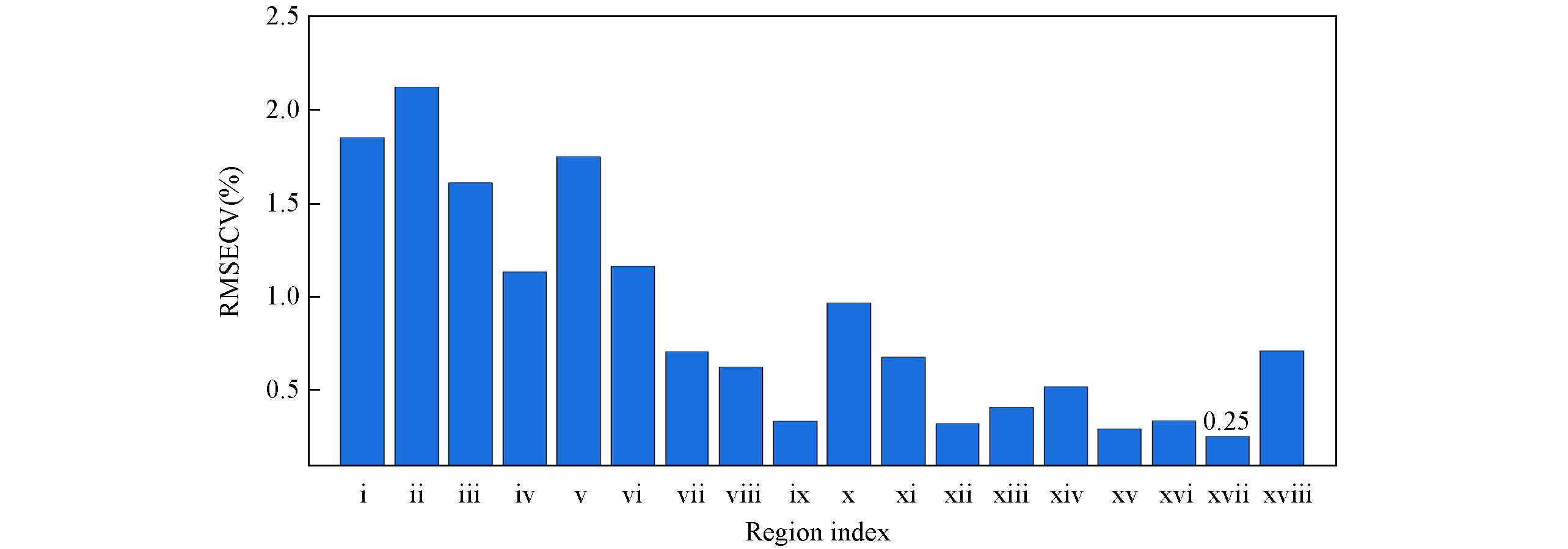
Table 3 Tested spectral region combinations and their descriptions
| Region type | Region index | Wavelength/nm | Region description |
|---|---|---|---|
| Narrow single peak | i | 471―476 | 474 nm peak region |
| ii | 494―498 | 496 nm peak region | |
| iii | 516―521 | 518 nm peak region | |
| iv | 546―550 | 548 nm peak region | |
| v | 577―581 | 579 nm peak region | |
| Broad single peak | vi | 464―486 | 474 nm peak broad region |
| vii | 486―508 | 496 nm peak broad region | |
| viii | 508―538 | 518 nm peak broad region | |
| ix | 538―569 | 548 nm peak broad region | |
| x | 569―589 | 579 nm peak broad region | |
| Two⁃peak combination | xi | 464―508 | 474 nm+496 nm peaks region |
| xii | 508―569 | 518 nm+548 nm peaks region | |
| xiii | 538―589 | 548 nm+579 nm peaks region | |
| Three⁃peak combination | xiv | 464―538 | 474 nm+496 nm+518 nm peaks region |
| xv | 508―589 | 518 nm+548 nm+579 nm peaks region | |
| Multi⁃peak combination | xvi | 464―569 | 474 nm+496 nm+518 nm+548 nm peaks region |
| xvii | 464―589 | All five characteristic peaks region | |
| Full spectrum | xviii | 400―600 | Full spectral range |
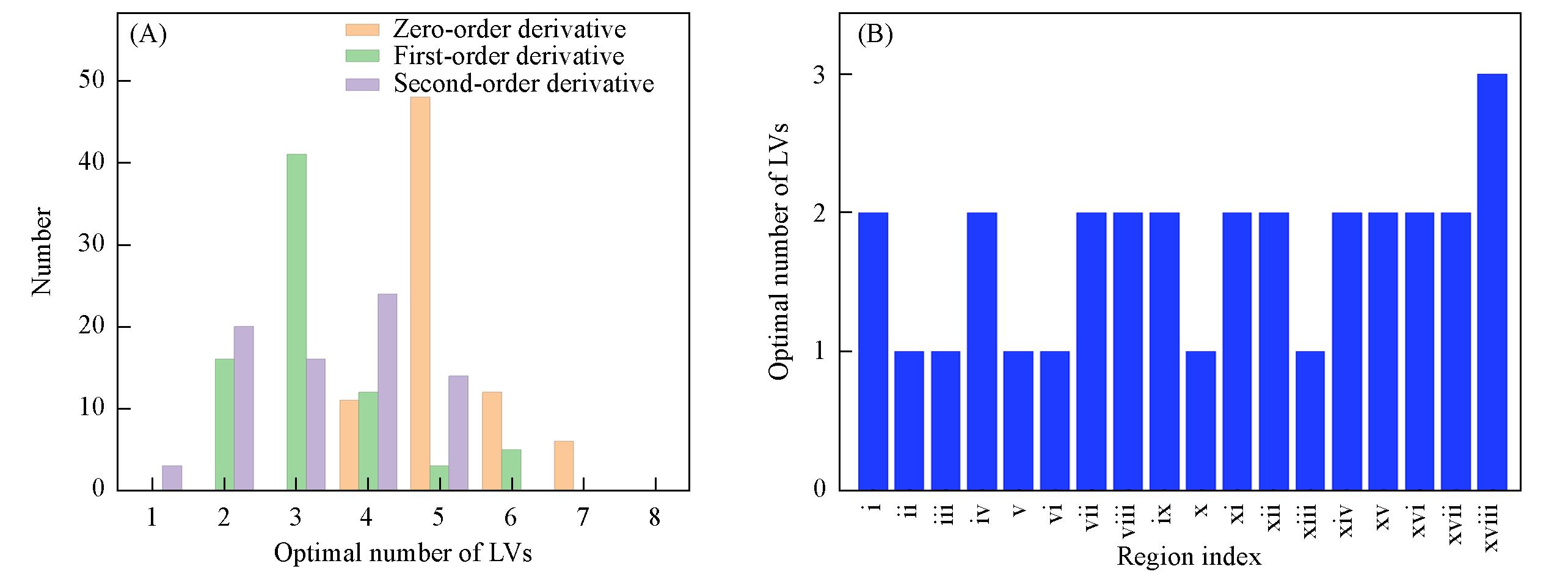
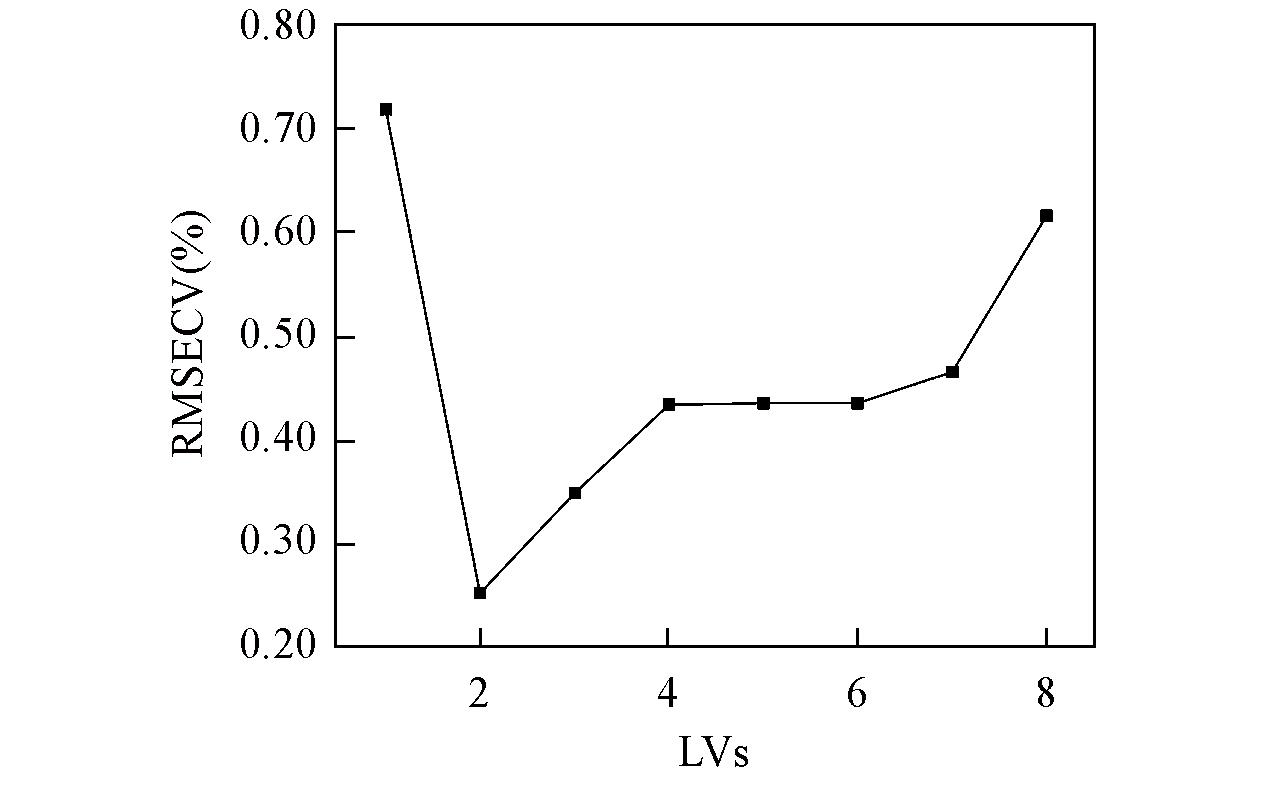
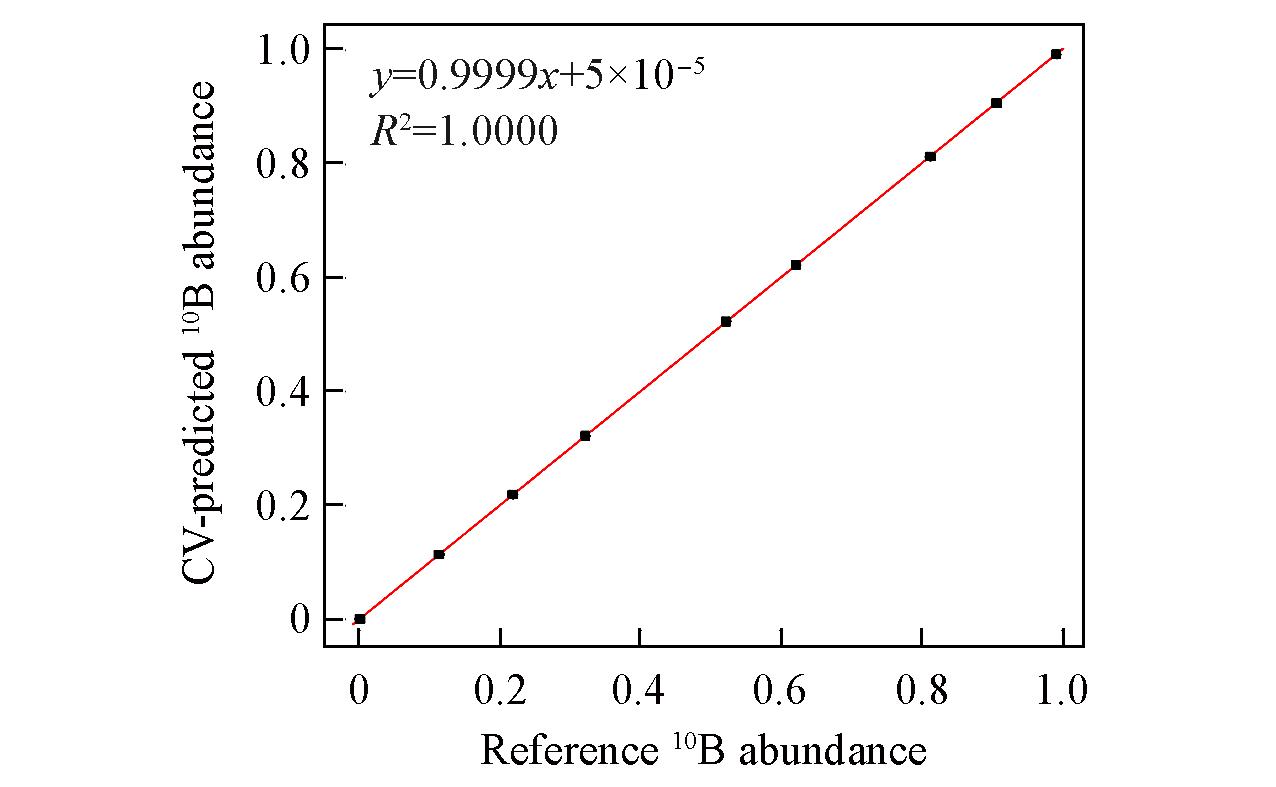
| Sample | 11B/10B(True) | 11B/10B(Predict) | Relative bias(%) | RSD(2σ, %) |
|---|---|---|---|---|
| Natural boric acid | 3.988 | 3.949 | 0.97 | 2.13 |
| #5 | 1.361 | 1.348 | 0.95 | 1.10 |
| #8 | 0.3926 | 0.4006 | 2.04 | 1.24 |
Table 4 Predicted 11B/10B ratios for the validation samples
| Sample | 11B/10B(True) | 11B/10B(Predict) | Relative bias(%) | RSD(2σ, %) |
|---|---|---|---|---|
| Natural boric acid | 3.988 | 3.949 | 0.97 | 2.13 |
| #5 | 1.361 | 1.348 | 0.95 | 1.10 |
| #8 | 0.3926 | 0.4006 | 2.04 | 1.24 |
| [1] | Feng L. X., Li Z. H., Cao Q. X., Tian S. H., Huang W. X., Wang T., Rock Miner. Anal., 2023, 42(1), 16—38 |
| 冯林秀, 李正辉, 曹秋香, 田世洪, 黄文夏, 王田. 岩矿测试, 2023, 42(1), 16—38 | |
| [2] | Li Y. C., Dong G., Lei F., Wei H. Z., Front. Earth Sci., 2020, 27(3), 14—28 |
| 李银川, 董戈, 雷昉, 魏海珍. 地球科学前沿, 2020, 27(3), 14—28 | |
| [3] | He M. Y., Zhang N., Wen X. Q., Cheng Y. Y., Guo J. H., Zhang X. L., J. East China Univ. Technol.,(Natural Science), 2023, 46(6), 597—607 |
| 贺茂勇, 张宁, 文雪琴, 程原原, 郭钧桦, 张晓琳. 东华理工大学学报(自然科学版), 2023, 46(6), 597—607 | |
| [4] | Zhou F. Y., He D., Miao X., Yang C., Dong J. H., Zheng H. T., Cheng Z., Liu X., Zhu Z. L., Anal. Chem., 2021, 93(19), 7196—7203 |
| [5] | Dong J. H., Zhu Z. L., Ding H. Q., Xing P. J., Zhou F. Y., Zheng H. T., Liu X., Spectrosc. Spect. Anal., 2022, 42(8), 2325—2333 |
| 董俊航, 朱振利, 丁涵清, 邢鹏举, 周飞杨, 郑洪涛, 刘星. 光谱学与光谱分析, 2022, 42(8), 2325—2333 | |
| [6] | Palai M., Maji S., Sriram S., Bera S., Sundararajan K., Spectrochim. Acta Part B, 2025, 234, 107346 |
| [7] | Zolfonoun E., Ahmadi S. J., Spectrochim. Acta Part B, 2013, 81, 64—68 |
| [8] | Russo R. E., Bol’shakov A. A., Mao X., McKay C. P., Perry D. L., Sorkhabi O., Spectrochim. Acta Part B, 2011, 66, 99—104 |
| [9] | Sarkar A., Mao X., Russo R. E., Spectrochim. Acta Part B, 2014, 92, 42—50 |
| [10] | Amiri S. H., Darbani S. M. R., Saghafifar H., Spectrochim. Acta Part B, 2018, 150, 86—91 |
| [11] | Jin W., Yu B. W., Zhu D., Ying Y. W., Yu H. X., Jin Q. H., Chem. J. Chinese Universities, 2015, 36(11), 2157—2159 |
| 金伟, 于丙文, 朱旦, 应仰威, 于海翔, 金钦汉. 高等学校化学学报, 2015, 36(11), 2157—2159 | |
| [12] | Yu B. W., Jin W., Ying Y. W., Yu H. X., Zhu D., Shan J., Liu W. L., Xu C., Jin Q. H., J. Anal. At. Spectrom., 2016, 31(3), 759—766 |
| [13] | Yu D. J., Wei H. Z., Li Y. R., Shao Y. B., Jin W., Yu B. W., J. Anal. At. Spectrom., 2023, 38(7), 1402—1411 |
| [14] | Shao Y. B., Yu D. J., Li Y. R., Wei H. Z., Jin W., Yu B. W., Chem. J. Chinese Universities, 2024, 45(8), 20240157 |
| 邵益波, 俞登捷, 李雅瑞, 魏好泽, 金伟, 于丙文. 高等学校化学学报, 2024, 45(8), 20240157 | |
| [15] | Li Y. R., Bai Y. W., Yu D. J., Wang R. Y., Mu Y., Jin W., Yu B. W., Chem. Res. Chinese Universities, 2024, 40(6), 1282—1289 |
| [16] | Tang Q. Y., Chen L., Tian S. H., Hu W. J., Gong Y. L., Zi Y. M., Rock Miner. Anal., 2024, 43(2), 201—212 |
| 唐清雨, 陈露, 田世洪, 胡文洁, 龚迎莉, 字艳梅. 岩矿测试, 2024, 43(2), 201—212 | |
| [17] | He M. Y., Deng L., Lu H., Jin Z. D., J. Anal. At. Spectrom., 2019, 34, 1026—1032 |
| [18] | Chen X. Y., Teng F. Z., Catling D. C., Rapid Commun. Mass Spectrom., 2019, 33, 1169—1178 |
| [19] | Buisson M., Louvat P., Thaler C., Rollion-Bard C., J. Anal. At. Spectrom., 2021, 36, 2116—2131 |
| [20] | Johns J. W. C., Can. J. Phys., 1961, 39(12), 1738—1768 |
| [21] | Gaft M., Nagli L., Eliezer N., Groisman Y., Spectrochim. Acta Part B, 2015, 110, 56—62 |
| [22] | Huber K. P., Herzberg G., Molecular Spectra and Molecular Structure, Vol. 4, Van Nostrand Reinhold, New York, 1979 |
| [23] | Diwu P. Y., Bian X. H., Wang Z., Spectrosc. Spect. Anal., 2019, 39(9), 2800—2806 |
| 第五鹏瑶, 卞希慧, 王姿. 光谱学与光谱分析, 2019, 39(9), 2800—2806 | |
| [24] | Roger J. M., Biancolillo A., Marini F., Chemometr. Intell. Lab. Syst., 2020, 199, 103975 |
| [25] | Stefansson P., Liland K. H., Thiis T., Burud I., J. Chemometr., 2020, 34(3), 1—15 |
| [26] | Zhao N., Wu Z. S., Zhang Q., Shi X. Y., Ma Q., Qiao Y. J., Sci. Rep., 2015, 5, 1164 |
| [1] | SHAO Yibo, YU Dengjie, LI Yarui, WEI Haoze, JIN Wei, YU Bingwen. A Parameter Standardization-based Single Sample Calibration Method and Quantitative Analysis of Cement Based on Microwave Plasma Torch [J]. Chem. J. Chinese Universities, 2024, 45(8): 20240157. |
| [2] | YAN Yuwei,JIN Wei,ZHU Dan,ZHANG Tao,YING Yangwei,SHAN Jin,ZHANG Xuchen,YU Bingwen,CHEN Ting,LIU Chao,JIN Qinhan. Application of Kilowatt MPT-AES in Oil Analysis† [J]. Chem. J. Chinese Universities, 2018, 39(12): 2651. |
| [3] | WANG Xinchen, YANG Meiling, ZHANG Xiaoping. Rapid Qualitative Analysis of Active Molecules in Tablets Using Microwave Plasma Torch Mass Spectrometry by the Regulation of Power† [J]. Chem. J. Chinese Universities, 2017, 38(4): 561. |
| [4] | LI Jiahui, ZHANG Qikai, ZHAO Shanlin, LI Ping. Sensitization for Determination of Iron by Microwave Plasma Torch Atomic Emission Spectrometry† [J]. Chem. J. Chinese Universities, 2017, 38(4): 547. |
| [5] | XIONG Xiaohong, ZHANG Yan, ZHOU Runzhi, WANG Shangxian, JIANG Tao, ZENG Bin, QI Wenhao, ZHU Zhiqiang. Detection of Common Transition Metal in Water by Microwave Plasma Torch Mass Spectra in Negative Ion Mode† [J]. Chem. J. Chinese Universities, 2016, 37(5): 867. |
| [6] | ZHONG Tao, YANG Meiling, PEI Miaorong, ZHANG Xinglei, LE Zhanggao, WANG Guangcai, CHEN Huanwen. Determination of Trace-amount Calcium in Drinking Water by Microwave Plasma Torch Mass Spectrometry† [J]. Chem. J. Chinese Universities, 2016, 37(1): 26. |
| [7] | JIN Wei, YU Bingwen, ZHU Dan, YING Yangwei, YU Haixiang, JIN Qinhan. Development of a New Kilowatt Microwave Plasma Torch(kW-MPT) Excitation Source for Atomic Emission Spectrometry† [J]. Chem. J. Chinese Universities, 2015, 36(11): 2157. |
| [8] | SHI Yu-Hua*, WU Li-Hang, LI Hong-Mei, YU Ai-Min, ZHANG Han-Qi, JIN Qin-Han. Microwave Plasma Torch Double Detector System and It's Response Characteristics for Gas Chromatography [J]. Chem. J. Chinese Universities, 2007, 28(10): 1842. |
| [9] | ZHANG Jin-Sheng, LI Li-Hua, ZHANG Jin-Ping, JIN Qin-Han. Determination of Trace Lead in Unleaded Gasoline by Microwave Digestion-Microwave Plasma Torch Atomic Emission Spectrometry [J]. Chem. J. Chinese Universities, 2004, 25(7): 1248. |
| [10] | ZHOU Jian-Guang, PENG Zeng-Hui, HUAN Yan-Fu, YU Ai-Min, JIN Qin-Han, ZHOU Xiang, LIU Mei . An Investigation on Effect of Desolvation System on Analytical Performance of MPT-AES [J]. Chem. J. Chinese Universities, 2002, 23(7): 1273. |
| [11] | ZHAO Li-Wei, FU Yao, SONG Da-Qian, ZHANG Han-Qi, JIN Qin-Han . A Study of the Coupling Position of the Microwave Plasma Torch [J]. Chem. J. Chinese Universities, 2001, 22(2): 201. |
| [12] | SHI Yu-Hua, LIU Miao, CAO Yan-Bo, PENG Zeng-Hui, SONG Qing-Yu, WU Li-Hang, YU Ai-Min, JIN Qin-Han . Gas Chromatography with Microwave Plasma Torch Atomic Emission Spectrometry Detector for the Determination of Sn, P, Si and B [J]. Chem. J. Chinese Universities, 2000, 21(11): 1642. |
| [13] | SHI Yu-Hua, YANG Wen-Jun, YU Ai-Min, CAO Yan-Bo, JIN Qin-Han . Studies on Microwave Plasma Torch Atomic Emission Detector and Its Response Characteristics for Gas Chromatography [J]. Chem. J. Chinese Universities, 1998, 19(11): 1739. |
| [14] | LIANG Feng, ZHAO Li-Wei, ZHANG Han-Qi, JIN Qin-Han . A Simple Thermospray System Used in Microwave Plasma Torch Atomic Emission Spectrometry [J]. Chem. J. Chinese Universities, 1997, 18(7): 1031. |
| [15] | ZHANG Han-Qi, LIANG Feng, ZHAO Xiao-Jun, LI Yong, JING Qin-Han, WANG Da-Ning, ZOU Ming-Qiang, JIA Rui. An Investigation on Analytical Performance of Microwave Plasma Torch with a Pneumatic Nebulization Sample Introduction System [J]. Chem. J. Chinese Universities, 1996, 17(9): 1377. |
| Viewed | ||||||
|
Full text |
|
|||||
|
Abstract |
|
|||||
