

Chem. J. Chinese Universities ›› 2026, Vol. 47 ›› Issue (5): 20260058.doi: 10.7503/cjcu20260058
• Article • Previous Articles Next Articles
ZHU Gaohua1, SHU Ju1, GENG Jiangtao1, MA Fulong1( ), XIONG Linghong2(), HE Xuewen1()
Received:2026-02-01
Online:2026-05-10
Published:2026-04-09
Contact:
HE Xuewen
E-mail:flma@suda.edu.cn;xionglinghong@suda.edu.cn;xheao@suda.edu.cn
Supported by:CLC Number:
TrendMD:
ZHU Gaohua, SHU Ju, GENG Jiangtao, MA Fulong, XIONG Linghong, HE Xuewen. In situ Activating NIR-II AIE Probe for Highly Sensitive Hydrogen Peroxide Imaging in Tumor[J]. Chem. J. Chinese Universities, 2026, 47(5): 20260058.
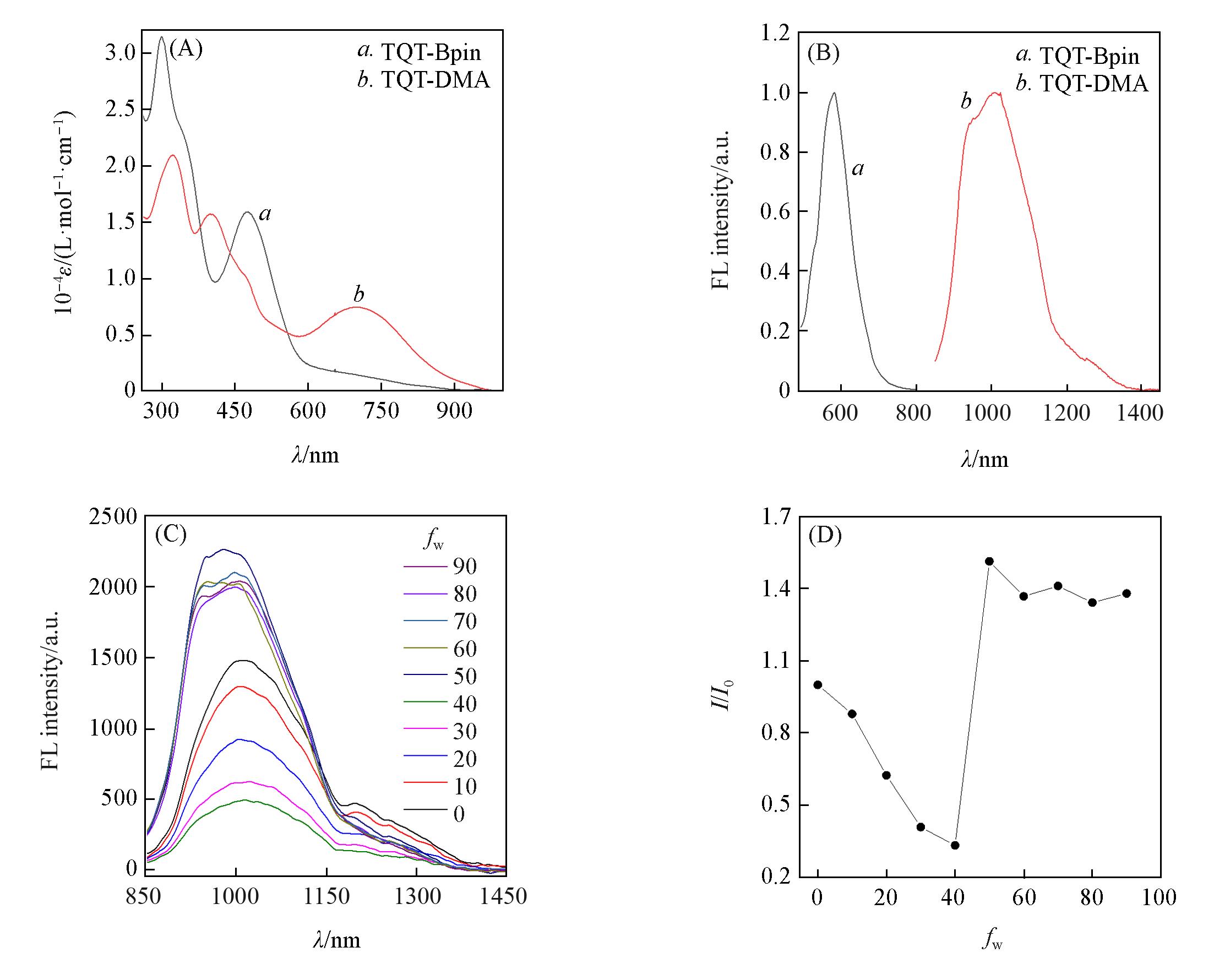
Fig.1 Photophysical characterizations of TQT⁃Bpin and TQT⁃DMA
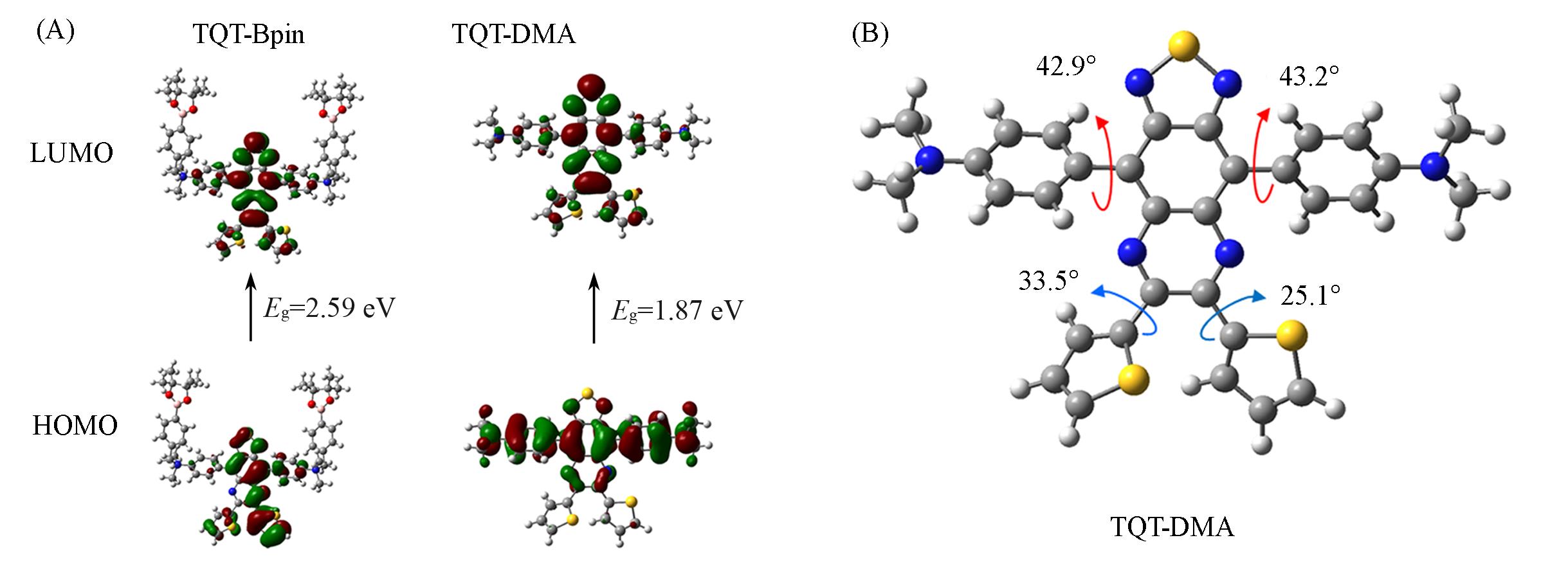
Fig.2 DFT calculation of HOMO, LUMO, and the torsion angle of the designed probes(A) The frontier orbital electron cloud distribution and energy gaps of TQT-Bpin and TQT-DMA; (B) optimized molecular structure and torsion angles.
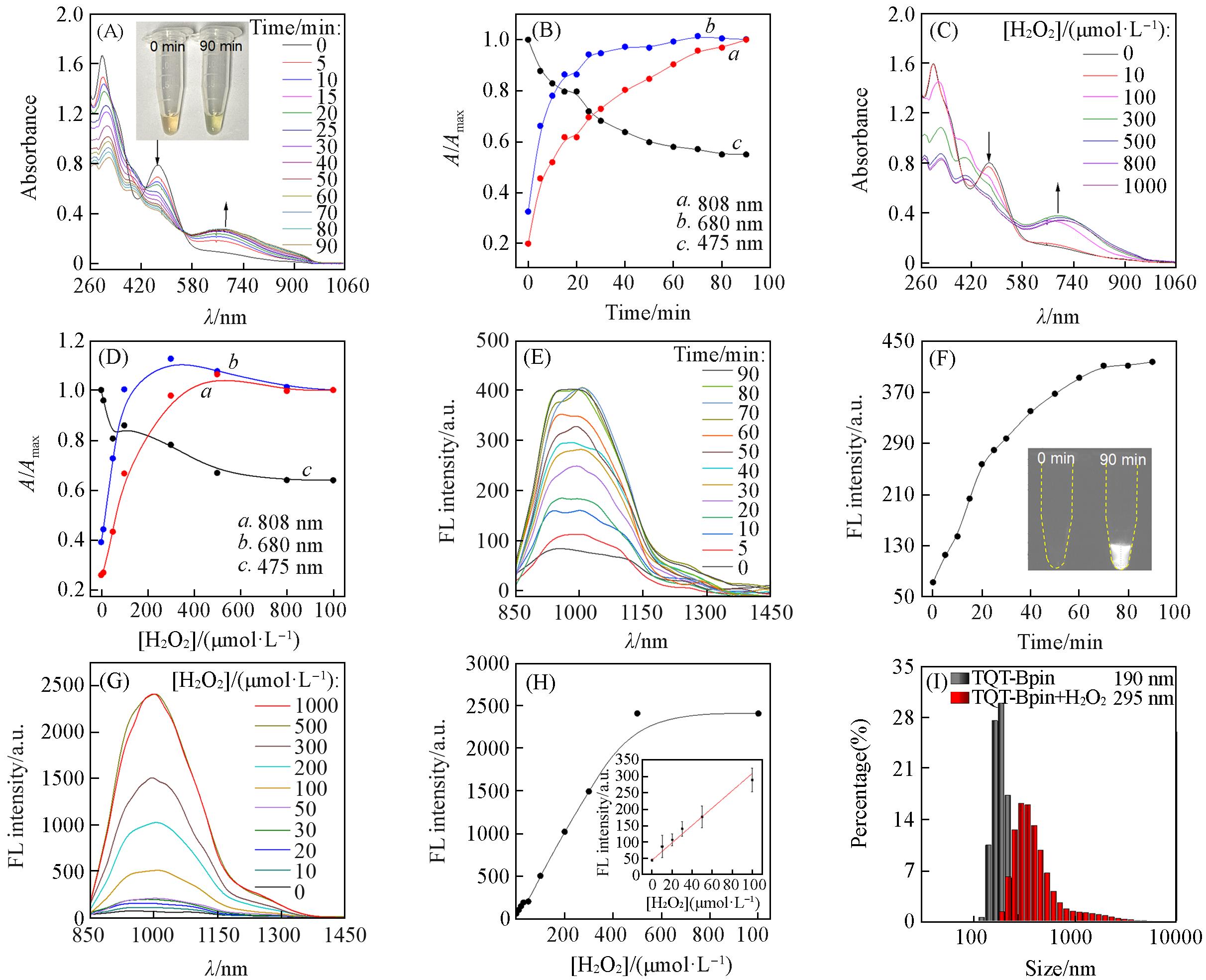
Fig.3 Characterization of the response behaviors of TQT⁃Bpin probe toward H₂O₂(A) Time⁃dependent absorption spectra of TQT⁃Bpin(50 μmol/L) upon response to H2O2(100 μmol/L); (B) the corresponding changes in relative absorption intensity at 475, 680, and 808 nm over time; (C) absorption spectra of TQT⁃Bpin(50 μmol/L) after responding to different concentrations of H2O2 for 1.5 h; (D) the corresponding relative absorption intensity at 475, 680, and 808 nm plotted against H2O2 concentration; (E) time⁃dependent FL spectra of TQT⁃Bpin(50 μmol/L) upon response to H2O2(100 μmol/L); (F) the corresponding changes in FL intensity at 1004 nm over time; (G) FL spectra of TQT⁃Bpin(50 μmol/L) after responding to different concentrations of H₂O₂ for 1.5 h; (H) the corresponding FL intensity at 1004 nm plotted against H₂O₂ concentration: the inset shows the linear fit of the fluorescence intensity change at 1004 nm with H2O2 concentration with fitting equation of y=45.23+2.64x, in which y means FL intensity, x means H2O2 concentration, R2=0.9827. λex=808 nm; (I) dynamic light scattering(DLS) characterization of the diameters of TQT⁃Bpin(50 µmol/L) before and after response to 100 µmol/L H₂O₂.
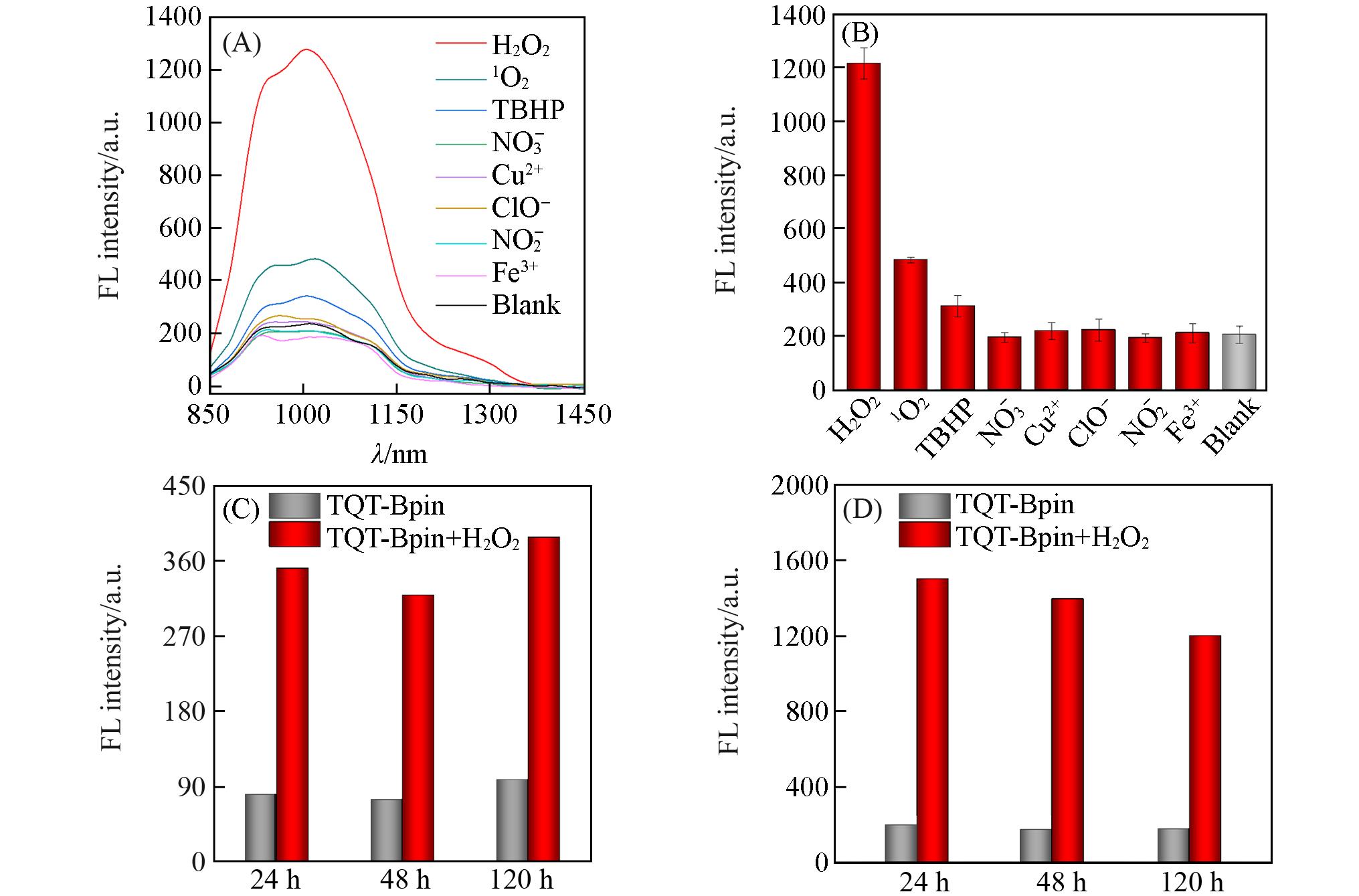
Fig.4 Selectivity and stability test of TQT⁃Bpin(A) FL spectra of the molecule after reacting with different analytes(100 μmol/L) for 1.5 h; (B) the corresponding FL intensity at 1004 nm; (C, D) the response of TQT-Bpin to hydrogen peroxide after being stored in PBS(C) and cell lysate(D) for different numbers of hours.
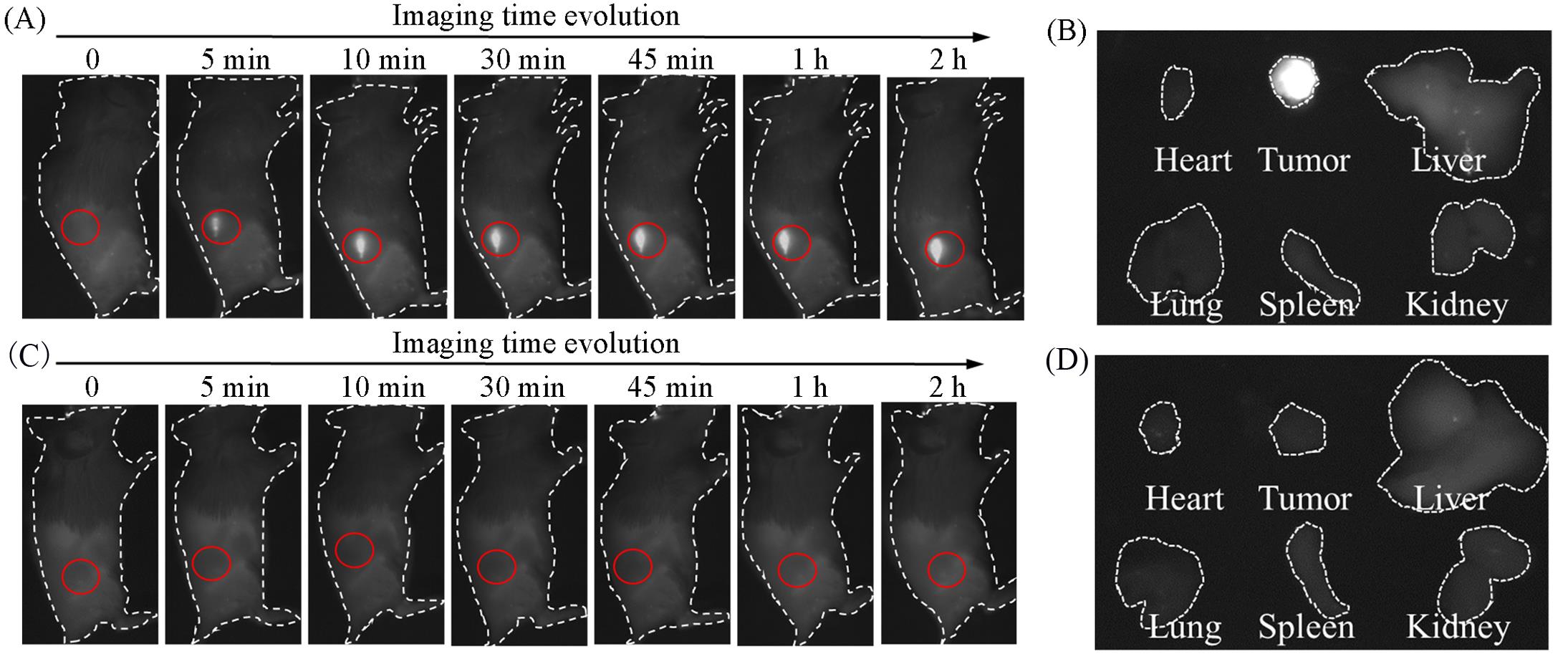
Fig.5 Time⁃dependent imaging in CT26 tumor⁃bearing mice and imaging of various organs and tumors after dissection after intratumoral injection of TQT⁃Bpin probe(A) Experimental group: in vivo imaging of mice over time after intratumoral injection of 100 μL of TQT-Bpin(50 μmol/L); (B) ex vivo imaging of organs and tumors from the experimental group at 36 h post-injection; (C) control group: in vivo imaging of mice over time after intratumoral injection of 100 μL PBS; (D) ex vivo imaging of organs and tumors from the control group at 36 h post-injection.
| [1] | Xu C., Qin X., Wei X., Yu J., Zhang Y., Zhang Y., Ding D., Song J., Pu K., Nat. Nanotechnol., 2024, 20, 286—295 |
| [2] | Xu Z., Lv M., Yang J., Li T., Lv J., Li J., Xiao H., Yang Y., Zhou S., Tan X., Cheng L., Guo H., Xi L., Shao P. L., Zhang B., Aggregate, 2025, 6, e70040 |
| [3] | Hu Y., Gao X., Ma J., Shangguan Z., Chen L., Zhang G., Zhang X. S., Li C., Li Y., Zhang D., Aggregate, 2025, 6, e735 |
| [4] | Chen Y., Wang S., Zhang F., Nat. Rev. Bioeng., 2023, 1, 60—78 |
| [5] | Xiong L. H., He X., Zhao Z., Kwok R. T. K., Xiong Y., Gao P. F., Yang F., Huang Y., Sung H. H. Y., Williams I. D., Lam J. W. Y., Cheng J., Zhang R., Tang B. Z., ACS Nano, 2018, 12, 9549—9557 |
| [6] | Sun J., Xiong L. H., Tang B. Z., He X., Natl. Sci. Rev., 2026 , 13, nwaf424 |
| [7] | Hanaoka K., Iwaki S., Yagi K., Myochin T., Ikeno T., Ohno H., Sasaki E., Komatsu T., Ueno T., Uchigashima M., Mikuni T., Tainaka K., Tahara S., Takeuchi S., Tahara T., Uchiyama M., Nagano T., Urano Y., J. Am. Chem. Soc., 2022, 144, 19778—19790 |
| [8] | Chen L., Peng M., Ouyang Y., Chen J., Li H., Wu M., Qu R., Zhou W., Zhang C., Jiang Y., Xu S., Wu W., Jiang X., Zhen X., J. Am. Chem. Soc., 2025, 147, 17330—17341 |
| [9] | Sun J., Geng J., Tang B. Z., He X., Adv. Funct. Mater., 2024, 34, 2315299 |
| [10] | Zhang Y., Sun J., Xiong L. H., Tang B. Z., He X., Adv. Funct. Mater., 2025, 35, 2509090 |
| [11] | Lam K. W. K., Chau J. H. C., Yu E. Y., Sun F., Lam J. W. Y., Ding D., Kwok R. T. K., Sun J., He X., Tang B. Z., ACS Nano, 2023, 17, 7145—7156 |
| [12] | He X., Zeng T., Li Z., Wang G., Ma N., Angew. Chem. Int. Ed., 2016, 55, 3073—3076 |
| [13] | Li Y., Liu G., Cheng S., Zhang J., Yao X., Xie X., Xu C., Tang Y., Wang X., Tang B., Chem. Rev., 2025, 125, 7725—7810 |
| [14] | Zhou Y., Yang X., Lee H., Yan M., Yoon J., Coord. Chem. Rev., 2025, 541, 216785 |
| [15] | Wang W. X., Jiang W. L., Mao G. J., Tan M., Fei J., Li Y., Li C. Y., Anal. Chem., 2021, 93, 3301—3307 |
| [16] | Xie Z., Huang J., Zeng W., Li X., Cheng D., Zhou J., He L., Sens. Actuators B Chem., 2026, 447, 138814 |
| [17] | Jiang R., Cai Z., Bai H., Liu Y., Zu B., Dou X., Anal. Chem., 2025, 97, 11669—11677 |
| [18] | Ma F., Zhang R., Wang B., Liang Z., Zhang S., Jiang J., Tan H., Xing G., Kwok R. T. K., Lam J. W. Y., Zhao Z., Tang B. Z., J. Am. Chem. Soc., 2025, 147, 29815—29828 |
| [19] | Li J., Dong Y., Wei R., Jiang G., Yao C., Lv M., Wu Y., Gardner S. H., Zhang F., Lucero M. Y., Huang J., Chen H., Ge G., Chan J., Chen J., Sun H., Luo X., Qian X., Yang Y., J. Am. Chem. Soc., 2022, 144, 14351—14362 |
| [20] | Shen H., Sun F., Zhu X., Zhang J., Ou X., Zhang J., Xu C., Sung H. H. Y., Williams I. D., Chen S., Kwok R. T. K., Lam J. W. Y., Sun J., Zhang F., Tang B. Z., J. Am. Chem. Soc., 2022, 144, 15391—15402 |
| [21] | Song Y., Tong X., Han Y., Zhang Q. W., Aggregate, 2024, 6, e680 |
| [22] | Ma F., Zhang S., Jiang J., Liu Y., Sun J., Lam J. W. Y., Zhao Z., Tang B. Z., Adv. Mater., 2025, 37, e2414188 |
| [23] | Hong Y., Lam J. W., Tang B. Z., Chem. Commun., 2009, 29, 4332—4353 |
| [24] | Mei J., Leung N. L., Kwok R. T., Lam J. W., Tang B. Z., Chem. Rev., 2015, 115, 11718—11940 |
| [25] | Lam K. W. K., Zhang Y., Du W., Sun J., Sun F., Chen Y., Ma C. C. H., Lam J. W. Y., Kwok R. T. K., Sun J., He X., Tang B. Z., ACS Nano, 2025, 19, 24701—24712 |
| [26] | Mei J., Hong Y., Lam J. W., Qin A., Tang Y., Tang B. Z., Adv. Mater., 2014, 26, 5429—5479 |
| [27] | Chen P. Y., Zhang G. Y., Li J. G., Ma L. J., Zhao J. Y., Zhu M. G., Li S., Wang Z., Chem. Res. Chinese Universities, 2024, 40(2), 293—304 |
| [28] | Xiong J. Y., Wu M. J., Yao L. Y., Chem. Res. Chinese Universities, 2024, 40(5), 887—893 |
| [29] | Sun Z. H., Yin P. P., He S. Y., Zhang K. G., Pan X. R., Wang J. Y., Hao P. N., Zhou Z., Yang X. G., Ma L. F., Tan C. L., Chem. Res. Chinese Universities, 2025, 41(3), 519—524 |
| [30] | Hong Y. N., Lam J. W. Y., Tang B. Z., Chem. Soc. Rev., 2011, 40, 5361—5388 |
| [31] | Xiong L. H., Yang L., Geng J., Tang B. Z., He X., ACS Nano, 2024, 18, 17837—17851 |
| [32] | Ji A., Lou H., Qu C., Lu W., Hao Y., Li J., Wu Y., Chang T., Chen H., Cheng Z., Nat. Commun., 2022, 13, 3815 |
| [33] | Cabello M. C., Chen G., Melville M. J., Osman R., Kumar G. D., Domaille D. W., Lippert A. R., Chem. Rev., 2024, 124, 9225—9375 |
| [34] | Wu H., Fan X. C., Wang H., Huang F., Xiong X., Shi Y. Z., Wang K., Yu J., Zhang X. H., Aggregate, 2022, 4, e243 |
| [35] | Chen X., Zhang S., Jiang Y., He G., Zhang M., Wang J., Deng Z., Wang H., Lam J. W. Y., Hu L., Tang B. Z., Angew. Chem. Int. Ed., 2024, 63, e202402175 |
| [36] | Zhang W., Kong J., Miao R., Song H., Ma Y., Zhou M., Fang Y., Adv. Funct. Mater., 2023, 34, 2311404 |
| [37] | Huo Y., Qi H., He S., Li J., Song S., Lv J., Liu Y., Peng L., Ying S., Yan S., Aggregate, 2023, 4, e391 |
| [38] | Dou K., Lu J., Xing Y., Wang R., Won M., Kim J., Yu F., Kim J. S., Angew. Chem. Int. Ed., 2025, 64, e202419191 |
| [1] | LI Weijian, XU Xiaoqin, WANG Wei, YANG Haibo. Recent Advances in AIE-active Dendrimers [J]. Chem. J. Chinese Universities, 2026, 47(5): 20260003. |
| [2] | ZHANG Kaiwei, QIN Anjun. Lanthanide Complexes with Aggregation-induced Emission [J]. Chem. J. Chinese Universities, 2026, 47(5): 20260013. |
| [3] | WU Rui, LI Zheng, LI Qi, SHI Jiajun, ZHAO Yan, FENG Weixu, YAN Hongxia. Recent Progress on Unconventional Hyperbranched Luminescent Polymers Containing Si, P and B [J]. Chem. J. Chinese Universities, 2026, 47(5): 20250411. |
| [4] | YIN Shiqi, ZHENG Zhigang, HE Xintong, WANG Shimin, GU Xinggui, WANG Erjing. From Protogenesis to Functionalization: Luminescence, Modification and Application of AIE⁃active Natural Products [J]. Chem. J. Chinese Universities, 2026, 47(5): 20260042. |
| [5] | JIAO Haili, ZHENG Xiaoyan. Progress on Theoretical Study of Organic Luminescence Enhancement Induced by Confined Environments [J]. Chem. J. Chinese Universities, 2026, 47(5): 20260060. |
| [6] | ZENG Xianping, QIN Yi, WANG Dong. Aggregation-induced Emission Probes for Imaging-guided Surgery [J]. Chem. J. Chinese Universities, 2026, 47(5): 20260066. |
| [7] | ZHAI Zhe, LIU Leijing, TIAN Wenjing. Molecular Design of Aggregation-induced Emission Probes and Their Applications in Organelle Imaging [J]. Chem. J. Chinese Universities, 2026, 47(5): 20260078. |
| [8] | PAN Jingke, QI Xin, ZHANG Lulu, WANG Beibei, LU Chao. Synthesis and Application of Aggregation-induced Emission Supramolecular Polymers Constructed by Host-guest Interaction [J]. Chem. J. Chinese Universities, 2026, 47(5): 20260130. |
| [9] | WU Zeyi, SI Wenni, QI Chunxuan, LI Shuo, FENG Haitao. Construction and Enantiorecognition Property of Red Emission Chiral Probes Based on Triphenylamine [J]. Chem. J. Chinese Universities, 2026, 47(4): 20250258. |
| [10] | CHENG Jianshuo, YE Wenyan, ZHOU Lulu, LIU Mouwei, LI Zhongyu, TANG Ziran, YU Wanting, ZHU Liangliang. Photoexcitation-induced Biomacromolecular Self-assembly [J]. Chem. J. Chinese Universities, 2026, 47(4): 20250398. |
| [11] | GAO Xin, QING Jia, HU Yichen, SHANGGUAN Zhichun, LIANG Tongling, ZHOU Yongsheng, ZHANG Guanxin, ZHANG Deqing. Novel AIE Fluorescent Probes for Ultrahigh Sensitivity and High Photostability in Lipid Droplets Imaging [J]. Chem. J. Chinese Universities, 2026, 47(4): 20250410. |
| [12] | ZHANG Yangdaiyi, SHAO Yan, JIANG Shimei. Multi-responsive Hydrogel Featuring Synergistic Regulation of AIE and Mechanical Behaviors via Dynamic Hydrogen Bonding Network [J]. Chem. J. Chinese Universities, 2026, 47(4): 20250381. |
| [13] | MA Huan, DONG Shilong, YANG Juncheng, ZHU Haitao, FENG Haitao. Chiral AIEgens Based on Calix[4]arene for Enantioselective Recognition of Acids and Amino Acids [J]. Chem. J. Chinese Universities, 2026, 47(4): 20260049. |
| [14] | SUN Yan, ZHU Dongxia. Construction of Near-infrared Triggered Organic Photosensitive Materials and Their Applications in Disease Treatment [J]. Chem. J. Chinese Universities, 2026, 47(4): 20260002. |
| [15] | LI Yuting, LUO Liang. Cutting-edge Advances in Raman Imaging Technology and Its Interdisciplinary Research with Aggregate Science [J]. Chem. J. Chinese Universities, 2026, 47(4): 20260008. |
| Viewed | ||||||
|
Full text |
|
|||||
|
Abstract |
|
|||||
