高等学校化学学报 ›› 2026, Vol. 47 ›› Issue (10): 20260131.doi: 10.7503/cjcu20260131

• 物理化学 • 上一篇    下一篇

织物基聚苯胺叉指电极的可控制备与电容性能

常金辉1, 牟文斌1, 王鹏伟1(), 董旭峰1(), 吴雨辰2()   

  1. 1.大连理工大学材料科学与工程学院, 大连 116024
    2.吉林大学化学学院, 长春 130012
  • 收稿日期:2026-03-28 出版日期:2026-10-10 发布日期:2026-06-09
  • 通讯作者: 王鹏伟 E-mail:pwwang@dlut.edu.cn;dongxf@dlut.edu.cn;chembg@jlu.edu.cn
  • 作者简介:董旭峰, 男, 博士, 教授, 主要从事智能复合材料及生物医用复合材料方面的研究. E⁃mail: dongxf@dlut.edu.cn
    吴雨辰, 男, 博士, 教授, 主要从仿生智能界面调控与制备、 有机光电功能材料微纳结构组装、 光电功能器件制备及应用方面的研究. E-mail: chembg@jlu.edu.cn
  • 基金资助:
    国家自然科学基金(52403316);中央高校基本科研业务费专项资金(批准号: DUT23RC(3)068)资助

Controllable Preparation and Capacitance Performance of Fabric-based Polyaniline Interdigitated Electrodes

CHANG Jinhui1, MOU Wenbin1, WANG Pengwei1(), DONG Xufeng1(), WU Yuchen2()   

  1. 1.School of Materials Science and Engineering,Dalian University of Technology,Dalian 116024,China
    2.College of Chemistry,Jilin University,Changchun 130012,China
  • Received:2026-03-28 Online:2026-10-10 Published:2026-06-09
  • Contact: WANG Pengwei E-mail:pwwang@dlut.edu.cn;dongxf@dlut.edu.cn;chembg@jlu.edu.cn
  • Supported by:
    the National Natural Science Foundation of China(52403316);the Fundamental Research Funds for the Central Universities, China(No.DUT23RC(3)068)

摘要:

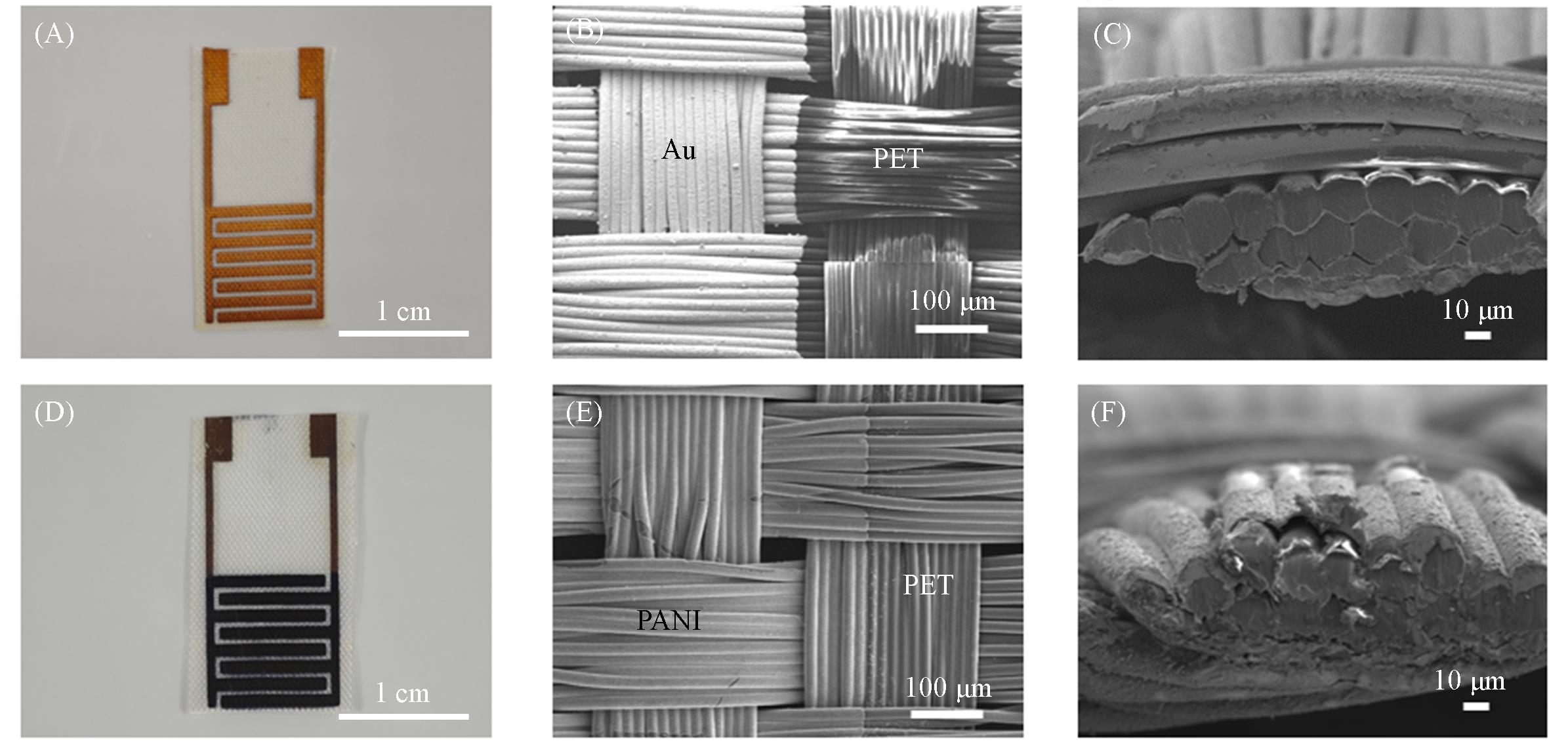
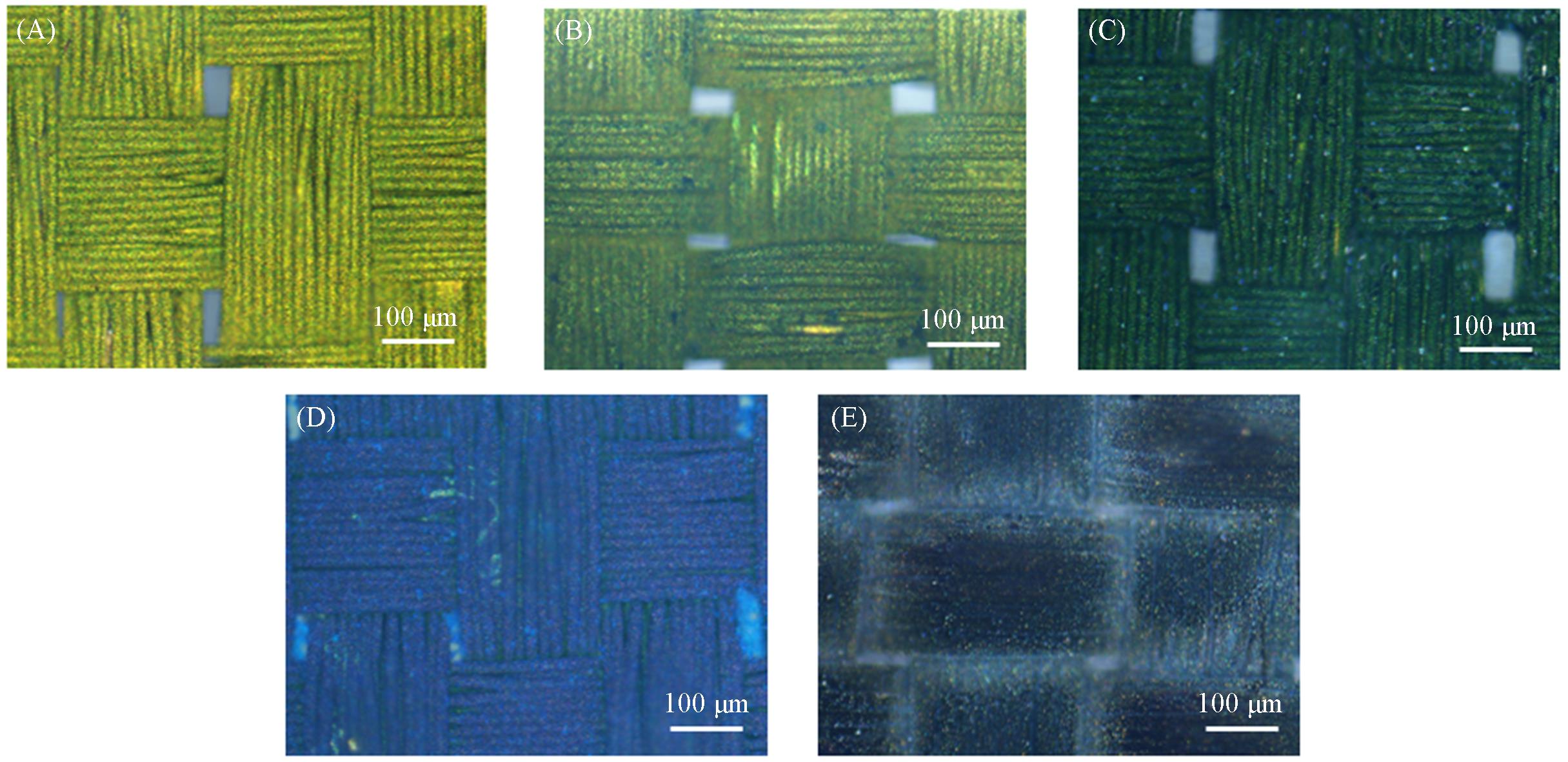
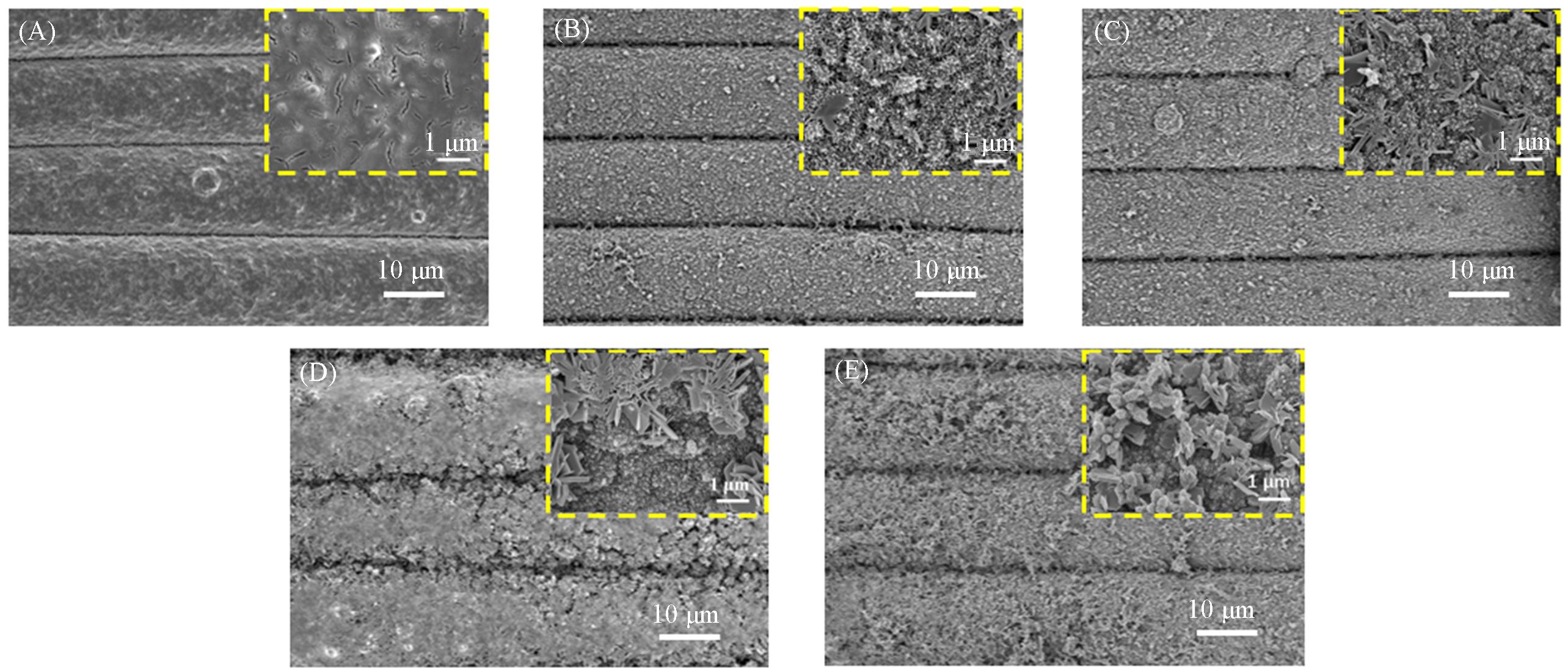
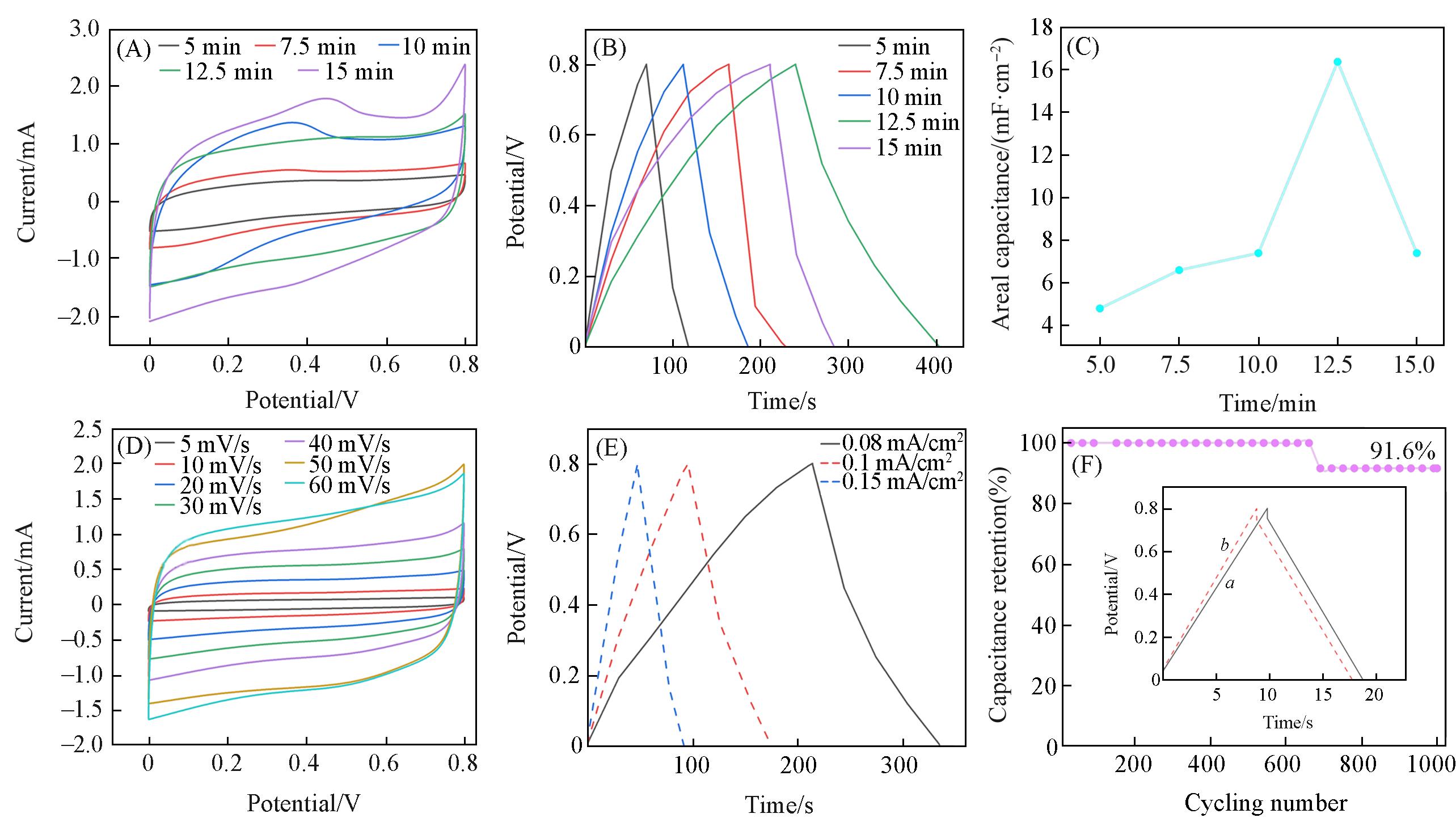
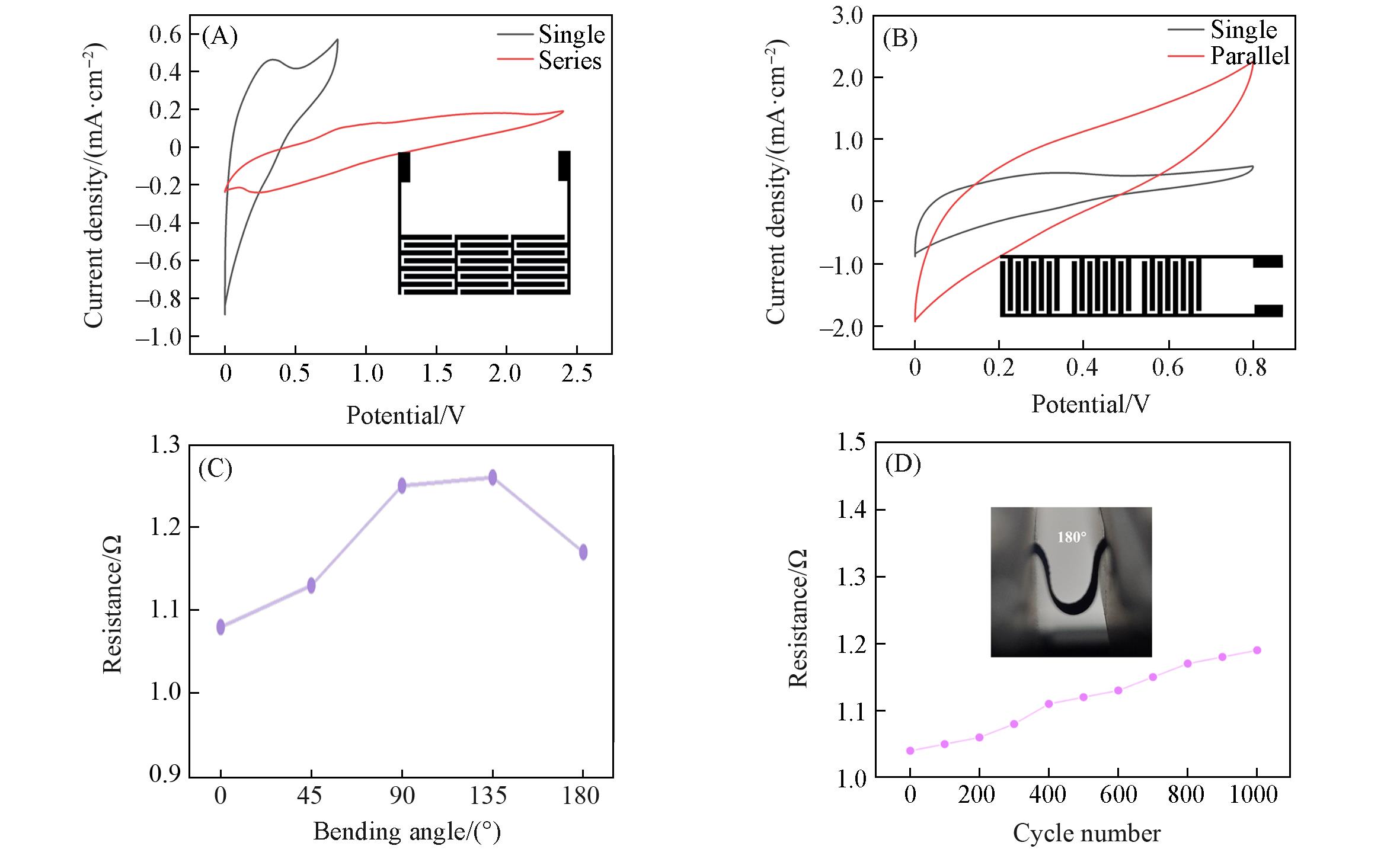
采用“聚合物辅助金属沉积-织物内光刻-可控电聚合”协同策略, 实现了织物基聚苯胺叉指电极的可控制备. 以聚酯纤维织物为基底, 通过聚合物辅助金属沉积法实现织物金属化, 再经织物内光刻得到高分辨率金属叉指集流体, 最后以恒电位法在金属集流体表面电聚合聚苯胺, 调控聚合时间为5~15 min, 实现了活性材料的可控负载. 结果表明, 12.5 min为最佳聚合时间, 在该条件下制备的电极面积比电容达16.4 mF/cm²; 在0.15 mA/cm²电流密度下经1000次充放电循环, 电容保留率达91.6%, 且在不同扫描速率及电流密度下均表现出优异的倍率性能. 柔性测试结果显示, 电极在不同弯曲角度下电阻稳定, 180°弯折1000次后电阻仅增加0.15 Ω, 机械柔韧性良好. 该方法制备的电极充分保留了织物固有的三维网状结构, 实现了高电容性能与优异柔性的协同, 为织物基平面叉指超级电容器的制备提供了新思路.

关键词: 织物基底, 聚苯胺, 电聚合, 叉指电极, 电容性能

Abstract:

A synergistic strategy of “polymer-assisted metal deposition-intra-fabric lithography-controllable electropolymerization” was adopted to realize the controllable preparation of fabric-based polyaniline interdigitated electrodes. Polyester fiber fabric was used as the substrate: the fabric was metallized via the polymer-assisted metal deposition method, then high-resolution metal interdigitated current collectors were fabricated through intra-fabric lithography, and finally polyaniline was electropolymerized on the surface of metal current collectors by the potentiostatic method. The controllable loading of active materials was achieved by adjusting the polymerization time in the range of 5—15 min. The results showed that the optimal polymerization time was 12.5 min, and the areal specific capacitance of the electrode prepared under this condition reached 16.4 mF/cm². After 1000 charge-discharge cycles at a current density of 0.15 mA/cm², the capacitance retention rate reached 91.6%, and the electrode exhibited excellent rate performance at different scan rates and current densities. Flexibility tests indicated that the electrode had stable resistance at different bending angles, with its resistance only increasing by 0.15 Ω after 1000 cycles of 180° bending, showing good mechanical flexibility. The electrode prepared by this method fully retains the inherent three-dimensional network structure of the fabric and achieves a synergistic combination of high capacitive performance and excellent flexibility, which provides a new approach for the preparation of fabric-based planar interdigitated supercapacitors.

Key words: Fabric substrate, Polyaniline, Electropolymerization, Interdigitated electrode, Capacitive performance

中图分类号: 

TrendMD: