| [1] |
ZHANG Yu, WU Yang, LI Jiaqi, XU Chao, WANG Shaozhen, LI Xinyu, WANG Cunmin, ZHANG Shenghui, XU Huan.
Efficient Radiative Cooling Performance of MOF-functionalized Self-cleaning Polylactic Acid Fiber Membranes with Multi-scale Pores
[J]. Chem. J. Chinese Universities, 2026, 47(3): 20250239.
|
| [2] |
HE Yutong, LI Hanxi, FAN Xiaoyan, YU Meihui, ZHANG Jijie.
Research Progress of MOF-SACs in Water Splitting for Hydrogen Evolution Reaction
[J]. Chem. J. Chinese Universities, 2026, 47(3): 20250333.
|
| [3] |
WANG Longsheng, LI Zhaohui, HE Xuan, LI Weixin, CHEN Hui, WANG Daheng, FANG Wei, DU Xing, ZHAO Lei.
Controllable Preparation and Carrier Mobility Regulation of Cu-THQ Thin Films
[J]. Chem. J. Chinese Universities, 2025, 46(3): 20240470.
|
| [4] |
WEN Gehua, XUE Jingyi.
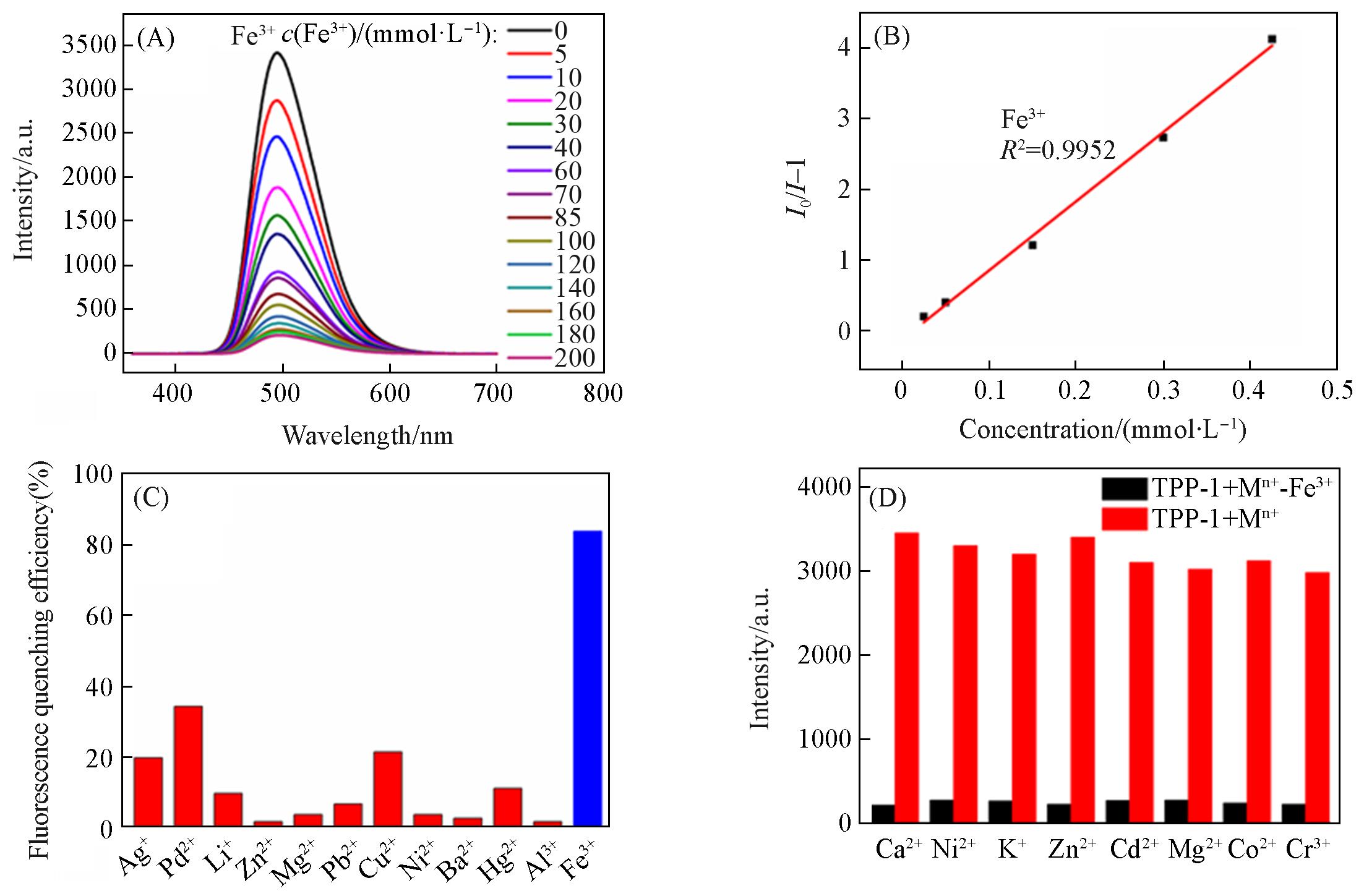
One-Dimensional Uranyl Carboxyphosphonate Coordination Polymer for Highly Sensitive and Selective Detection of Fe3+ ion in Aqueous Media
[J]. Chem. J. Chinese Universities, 2025, 46(12): 20250165.
|
| [5] |
WANG Delong, XING Shilu, LI Chunli, ZHOU Nan, HAO Yaling, HUO Rong, LI Xiuhua, LIU Huifeng.
Synthesis and Electrochemical Performance of Nanostructured Co-Nd-MOF/GO Electrode Materials
[J]. Chem. J. Chinese Universities, 2025, 46(11): 20250191.
|
| [6] |
ZHANG Long, MA Liang, XU Chao, WU Yang, GAO Na, WANG Shaozhen, LI Xinyu, WANG Cunmin, XU Huan, ZHANG Shenghui.
Highly Electroactive and Permeable Janus Filter Membranes by Direct MOF Functionalization of PLA Nanofibers
[J]. Chem. J. Chinese Universities, 2025, 46(11): 20250215.
|
| [7] |
ZHU Xuanqi, CUI Liying, ZHAO Xinyu, JIANG Ling, ZHANG Xue.
Fe3+-doped Polyaminopyrrole Nanoparticles for in situ Magnetic Resonance Imaging and Photothermal Therapy of Breast Cancer
[J]. Chem. J. Chinese Universities, 2025, 46(1): 20240156.
|
| [8] |
GONG Wenpeng, ZHOU Linnan.
Fluorescent Detection of Hydrogen Sulfide Using Metal-organic Framework CAU-10-NH-DNBA Functionalized with 3,5-Dinitrobenzoic Acid
[J]. Chem. J. Chinese Universities, 2024, 45(8): 20240069.
|
| [9] |
CHEN Xiaoping, WANG Xutan, LIU Ning, WANG Qingxiang, NI Jiancong, YANG Weiqiang, LIN Zhenyu.
MOFs-based Microfluidic Chips for Real-time Online Determination of Multiple Heavy Metal Ions
[J]. Chem. J. Chinese Universities, 2024, 45(2): 20230395.
|
| [10] |
JI Chao, LI Wen, ZHANG Lirong, HUA Jia, LIU Yunling.
Construction of a Eu-MOF Material with Fe3+ and Nitro-aromatic Explosives Fluorescence Detection Performance
[J]. Chem. J. Chinese Universities, 2024, 45(2): 20230455.
|
| [11] |
TANG Haiyan, ZI Limeng, ZHANG Bing, FU Yu.
Preparation and Application of CuBDC-NH2/PmPD Mixed Matrix Membranes for Photothermal Conversion
[J]. Chem. J. Chinese Universities, 2024, 45(2): 20230379.
|
| [12] |
LU Chunyu, JING Yuan, WEI Xiaofei, YAO Shiwei, WANG Zhifei, WANG Shubin, DAI Fangna.
Advantages and Research Progress of Metal-organic Framework in Supercapacitors
[J]. Chem. J. Chinese Universities, 2024, 45(2): 20230450.
|
| [13] |
LI Jiahui, ZHANG Jian, YAN Long, FENG Yun, ZHANG Jiali, LIU Yongxin, YANG Shaoming.
Preparation and Detection Performance of Norfloxacin Imprinted Electrochemical Sensor
[J]. Chem. J. Chinese Universities, 2024, 45(12): 20240322.
|
| [14] |
ZHANG Mengjia, ZOU Nan, LUO Jiamei, ZHONG Xionghui, LI Ling.
Catalytic Performance of Zr-MOF Supported Poly Ionic Liquid for CO2 Cycloaddition Reaction
[J]. Chem. J. Chinese Universities, 2024, 45(10): 20240113.
|
| [15] |
HUANG Rongting, ZHU Guiying, LI Xinyu, TANG Daoyuan, ZHANG Yong, WANG Bin, ZHU Jintuo, HE Xinjian, XU Huan.
Morphological Manipulation of Highly Electroactive Poly(lactic acid) Nanofibrous Membranes for Efficient Removal of Airborne PM0.3
[J]. Chem. J. Chinese Universities, 2024, 45(1): 20230353.
|
 ), ZHANG Yue3, WEI Xubing2, LI Xiaowei2, HU Songqing3