高等学校化学学报

• 研究论文 • 上一篇    下一篇

[汤心颐专辑]二甲氧基取代的环戊联噻吩共轭聚合物的电致变色性能与稳定性

唐一潇1, 2,王博涵2,夏思琪1,董玉杰1,李维军1,马於光2   

  1. 1. 浙江工业大学化学工程学院,绿色化学合成与转化技术全国重点实验室 2. 华南理工大学材料科学与工程学院,发光材料与器件全国重点实验室
  • 收稿日期:2025-10-31 修回日期:2025-12-03 出版日期:2025-12-06 发布日期:2025-12-06
  • 通讯作者: 马於光 E-mail:ygma@scut.edu.cn
  • 基金资助:
    国家自然科学基金(批准号:52103232)和浙江省自然科学基金(批准号:LY24E030012, LY19E030006)资助

Electrochromic Properties and Stability of Dimethoxy-Substituted Cyclopentadithiophene-Based Conjugated Polymers

TANG Yixiao1, 2, WANG Bohan2, XIA Siqi1, DONG Yujie1, LI Weijun1, MA Yuguang2   

  1. 1. State Key Laboratory of Green Chemical Synthesis and Conversion, College of Chemical Engineering, Zhejiang University of Technology 2. State Key Laboratory of Luminescent Materials and Devices, College of Materials Science and Engineering, South China University of Technology

  • Received:2025-10-31 Revised:2025-12-03 Online:2025-12-06 Published:2025-12-06
  • Supported by:
    Supported by the National Natural Science Foundation of China (No.52103232) and Natural Science Foundation of Zhejiang Province (Nos.LY24E030012, LY19E030006)

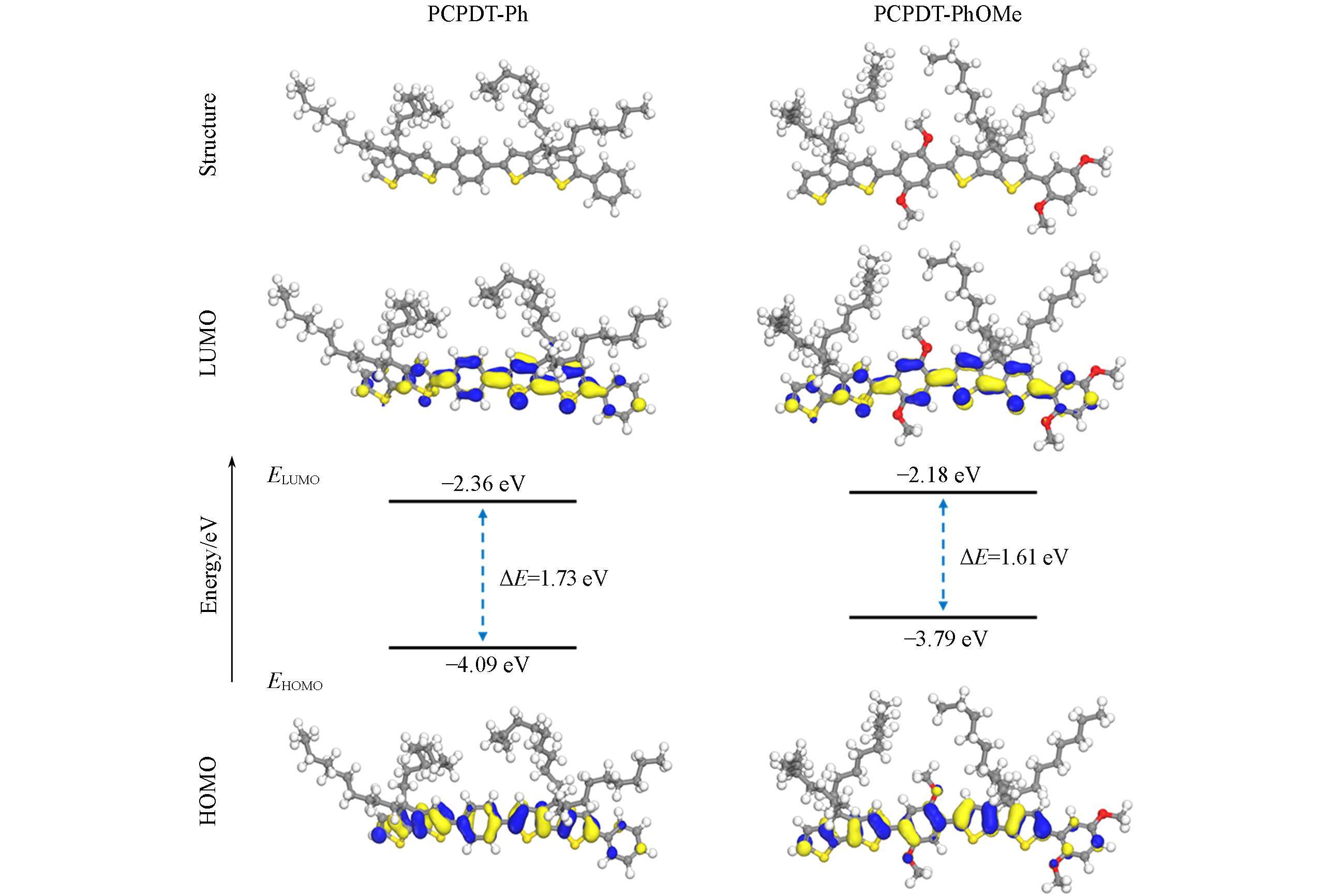
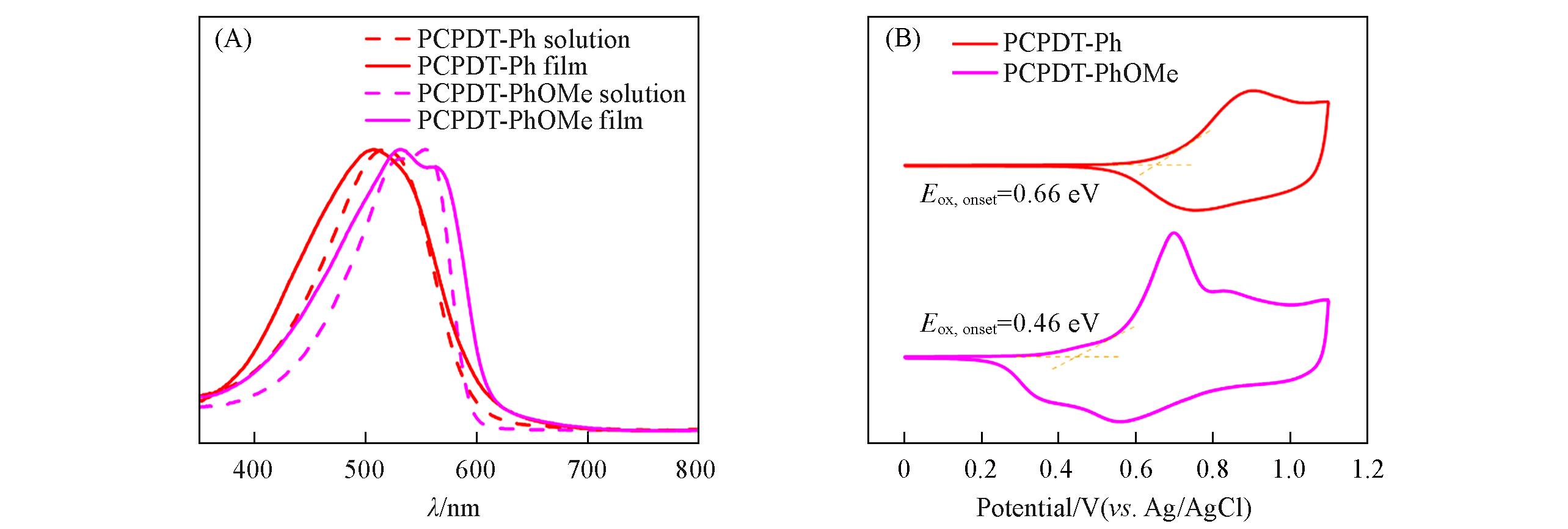
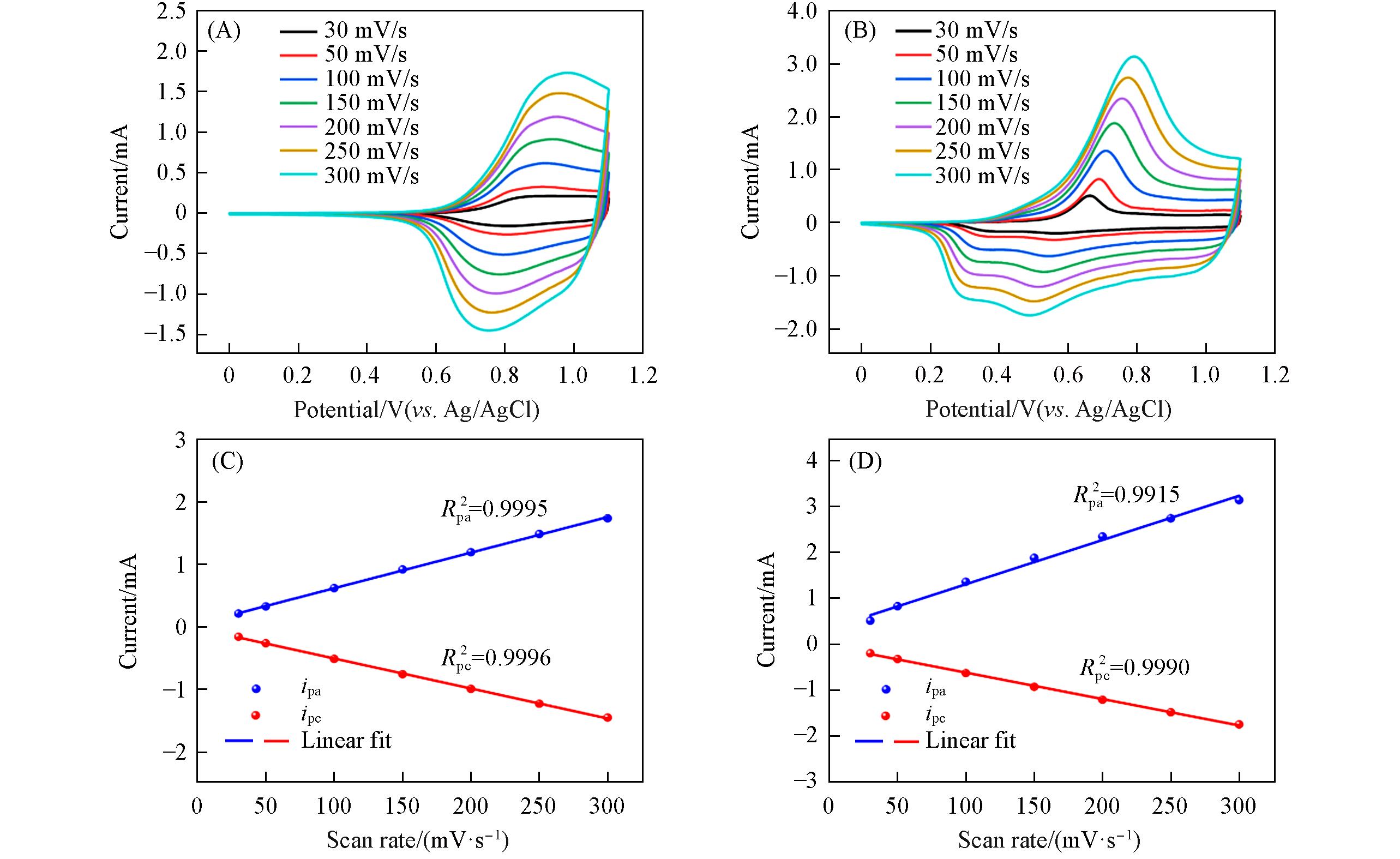
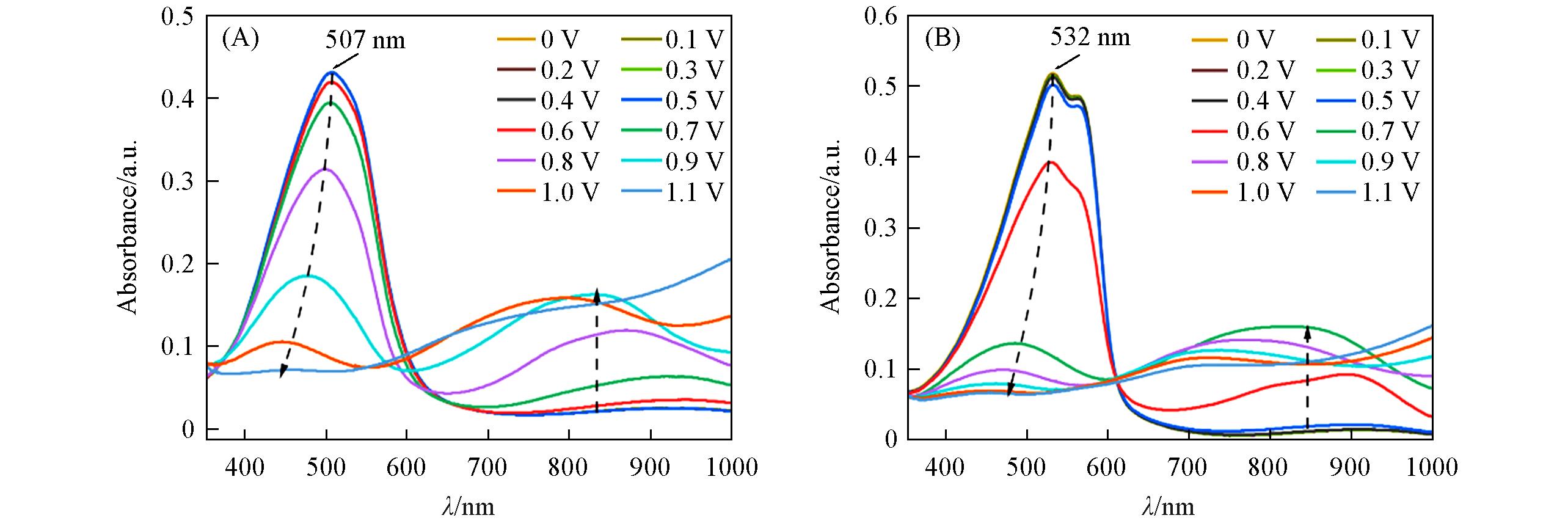
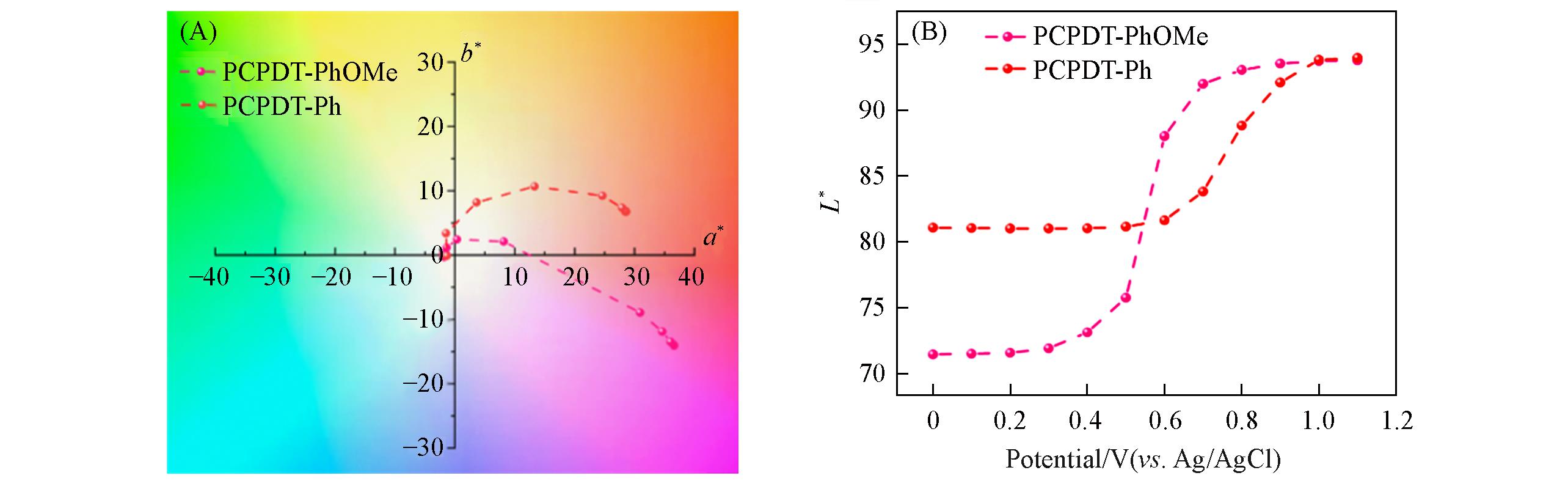
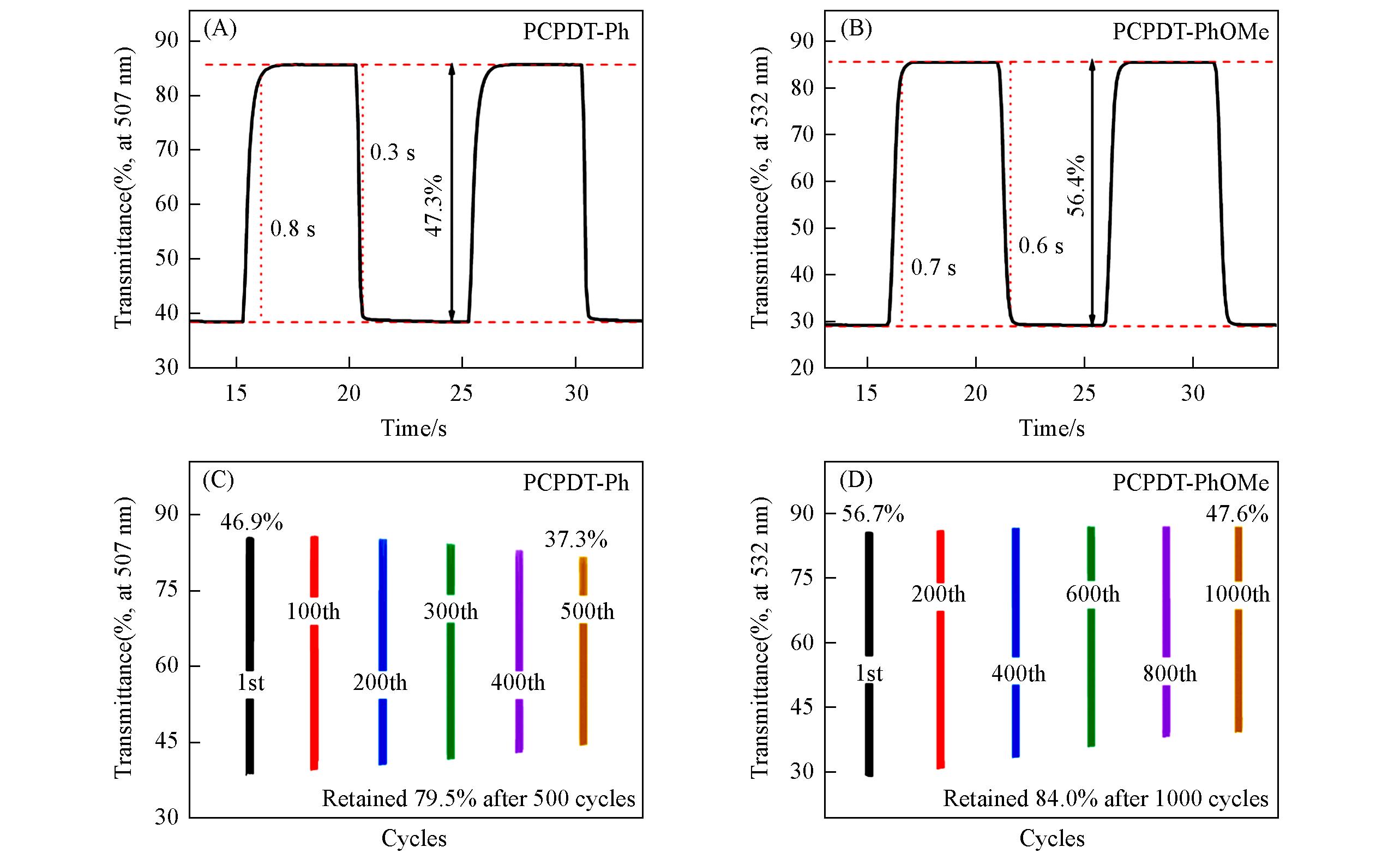
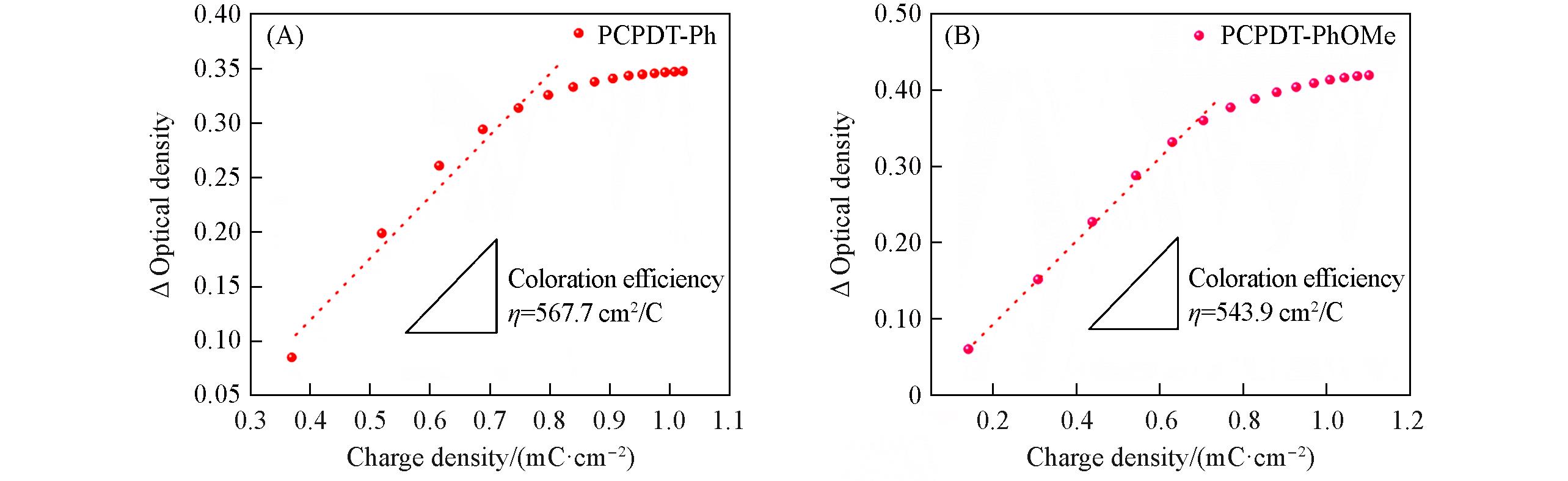
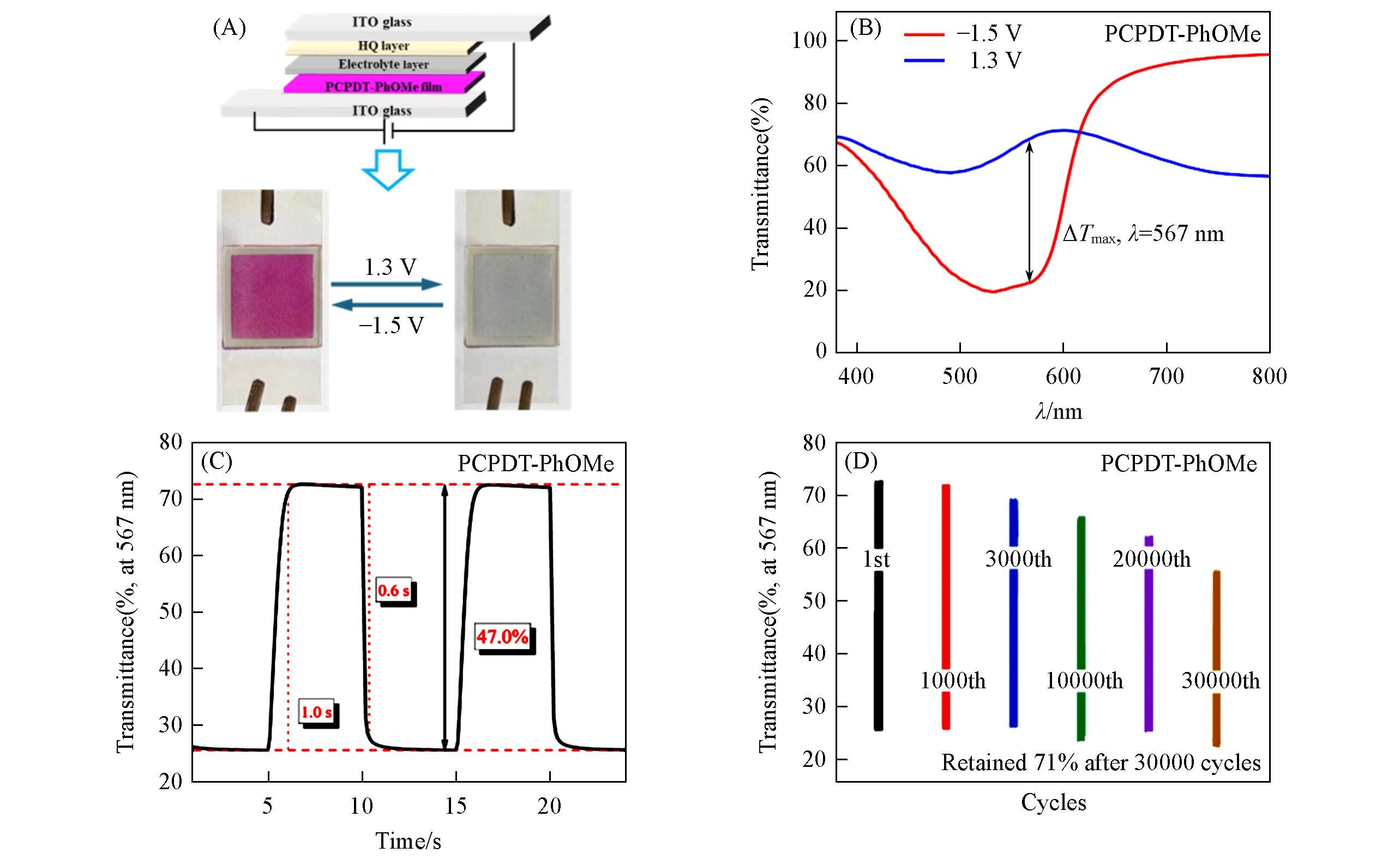
摘要: 环戊联噻吩(CPDT)类聚合物因其良好的色彩可调性,成为多色电致变色材料的潜在研究平台. 然而,循环稳定性不足的问题,限制其实际应用的推进. 本研究设计并合成了2种不同取代基的CPDT共轭聚合物:PCPDT-Ph(以无取代苯环为共聚单元)和PCPDT-PhOMe(以二甲氧基取代苯环为共聚单元),系统探究二甲氧基取代对聚合物电致变色性能与稳定性的影响. 电化学与电致变色性能测试表明,二甲氧基的给电子效应实现了聚合物性能的有效调控,并改善了循环稳定性. 相较于PCPDT-Ph,PCPDT-PhOMe的电化学起始氧化电位由0.66 V(vs. Ag/AgCl)降低至0.46 V,最高占据分子轨道(HOMO)能级上移,理论计算光学带隙由1.73 eV减小至1.61 eV. PCPDT-PhOMe薄膜在中性态呈现品红色,氧化态则为透明,色差值(ΔEab?)达46.36;着色/褪色响应速度为0.7/0.6 s,经1000次循环后光学对比度保留率达84%,优于PCPDT-Ph薄膜(500次循环后对比度保留率为79.5%),且着色效率为543.9 cm2/C,展现出良好的电致变色综合性能. 基于PCPDT-PhOMe组装的电致变色器件可实现品红至透明的可逆切换,响应时间不大于1.0 s,且经30000次循环后对比度保留率仍达71%,稳定性良好. 本研究揭示了取代基电子效应在CPDT类聚合物电致变色性能调控中的作用,为可溶液加工的噻吩类电致变色材料的分子设计提供了理论支撑与实验依据,同时证实了PCPDT-PhOMe在智能窗、电子显示等领域具有潜在应用价值.

关键词: 电致变色, 环戊联噻吩, 电致变色器件

Abstract: Cyclopentadithiophene (CPDT)-based polymers have emerged as promising research platforms for multicolor electrochromic materials due to their favorable color tunability. However, insufficient cyclic stability has hindered their translation into practical applications. In this study, two CPDT-based conjugated polymers with distinct substituent groups were designed and synthesized: PCPDT-Ph (copolymerized with unsubstituted benzene units) and PCPDT-PhOMe (copolymerized with dimethoxy-substituted benzene units). The influence of dimethoxy substitution on the electrochromic properties and stability of the polymers was systematically investigated. Electrochemical and electrochromic characterizations demonstrated that the electron-donating ability of the dimethoxy groups not only effectively regulated the polymer’s intrinsic properties but also significantly enhanced its cycling stability. Compared with PCPDT-Ph, PCPDT-PhOMe exhibited a reduced onset oxidation potential from 0.66 V (vs. Ag/AgCl) to 0.46 V, an upshifted highest occupied molecular orbital (HOMO) energy level, and a narrowed optical band gap (calculated theoretically) from 1.73 eV to 1.61 eV. The PCPDT-PhOMe film showed magenta in the neutral state and transparency in the oxidized state, with a color difference (ΔEab?) of 46.36. The coloring/bleaching response times were measured as 0.7/0.6 s, and the optical contrast retention reached 84% after 1000 cycles, outperforming the PCPDT-Ph film (79.5% retention after 500 cycles). Additionally, it exhibited a coloration efficiency of 543.9 cm2/C, demonstrating favorable comprehensive electrochromic performance. Electrochromic devices assembled with PCPDT-PhOMe achieved reversible switching between magenta and transparent states, with a response time of ≤ 1.0 s and a contrast retention of 71% after 30,000 cycles, indicating good stability. This work clarifies the role of substituent electronic effects in regulating the electrochromic properties of CPDT-based polymers, providing experimental basis and theoretical support for the molecular design of solution-processable thiophene-based electrochromic materials. Furthermore, it validates the potential application of PCPDT-PhOMe in smart windows, electronic displays, and other related fields.

Key words: Electrochromism; Cyclopentadithiophene, Electrochromic device

中图分类号: 

TrendMD: